Contents:
Germany has changed its coins many times. For a long period, there was no single currency. Different regions used their own money. Several coin types existed at the same time.
Each of these types can be identified with the world coin identifier and value checker.
What Is a German Mark?
The German Mark was the national currency of Germany before the euro. It was introduced in 1871 with the unification of the country.
It existed in different forms over time. The German Gold Mark was used in the German Empire. After World War I, it was replaced by the Reichsmark until the end of World War II.
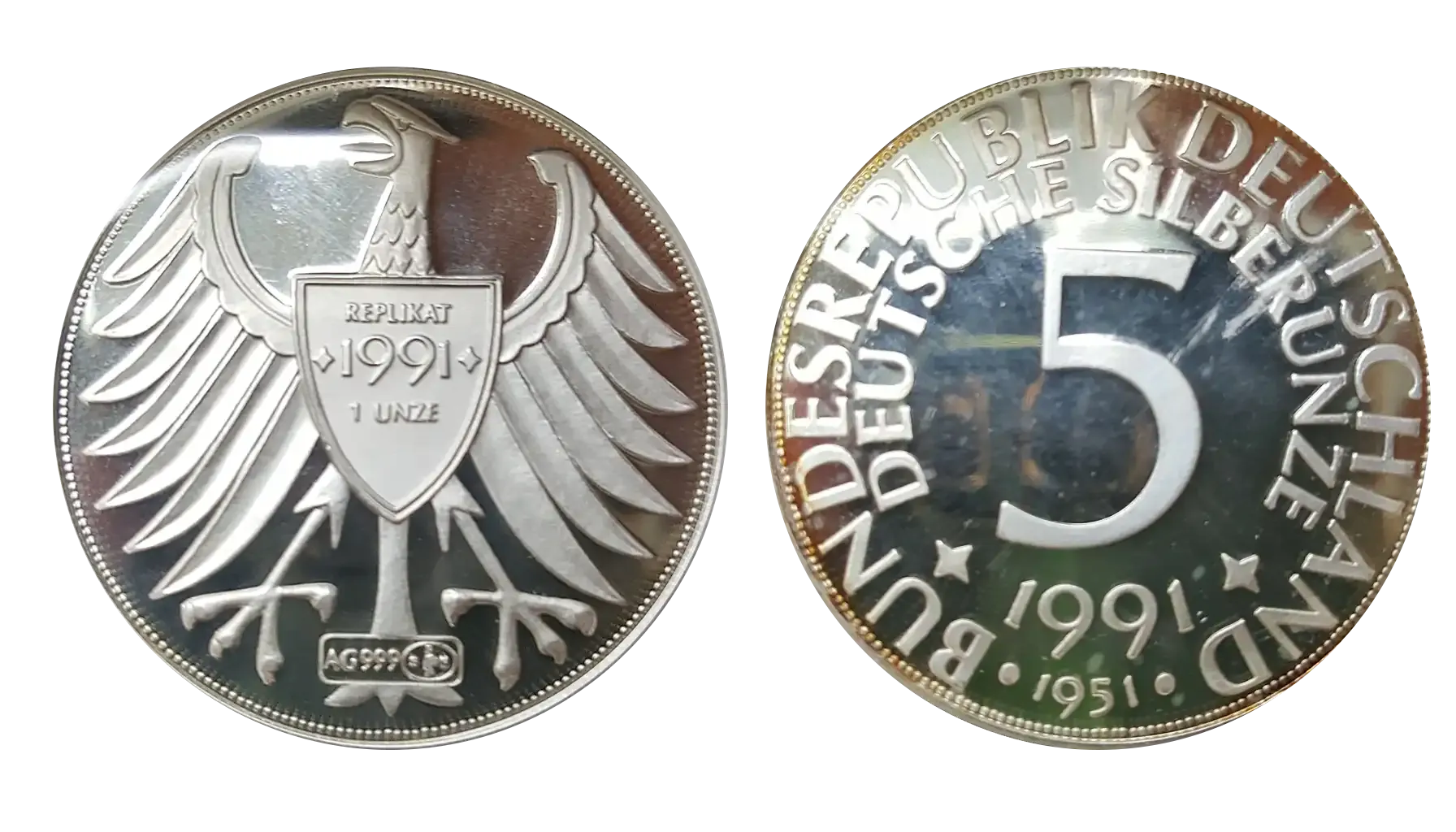
In 1948, West Germany created the Deutsche Mark (DM), which later became known for its stability and strong purchasing power.
History of the Deutsche Mark
In 1948, the old Reichsmark had lost almost all value, and everyday trade barely worked. The currency reform was meant to bring order back into daily life and the economy.
In the years that followed, the German Deutsche Mark became the basis for economic recovery. Prices stabilized, savings became meaningful again, and people slowly began to trust money.
The Bundesbank appreciated price stability, which helped keep inflation low. In 1990, after reunification, the Deutsche Mark replaced the East German one and became the common currency of the whole country.
It was used until 2001 and was replaced by the euro in 2002.
“The Deutsche Mark became the anchor of monetary stability in postwar Europe.”
– Harold James, Economic historian, Princeton University
International Monetary Cooperation Since Bretton Woods
Read in German: Deutsche Mark.
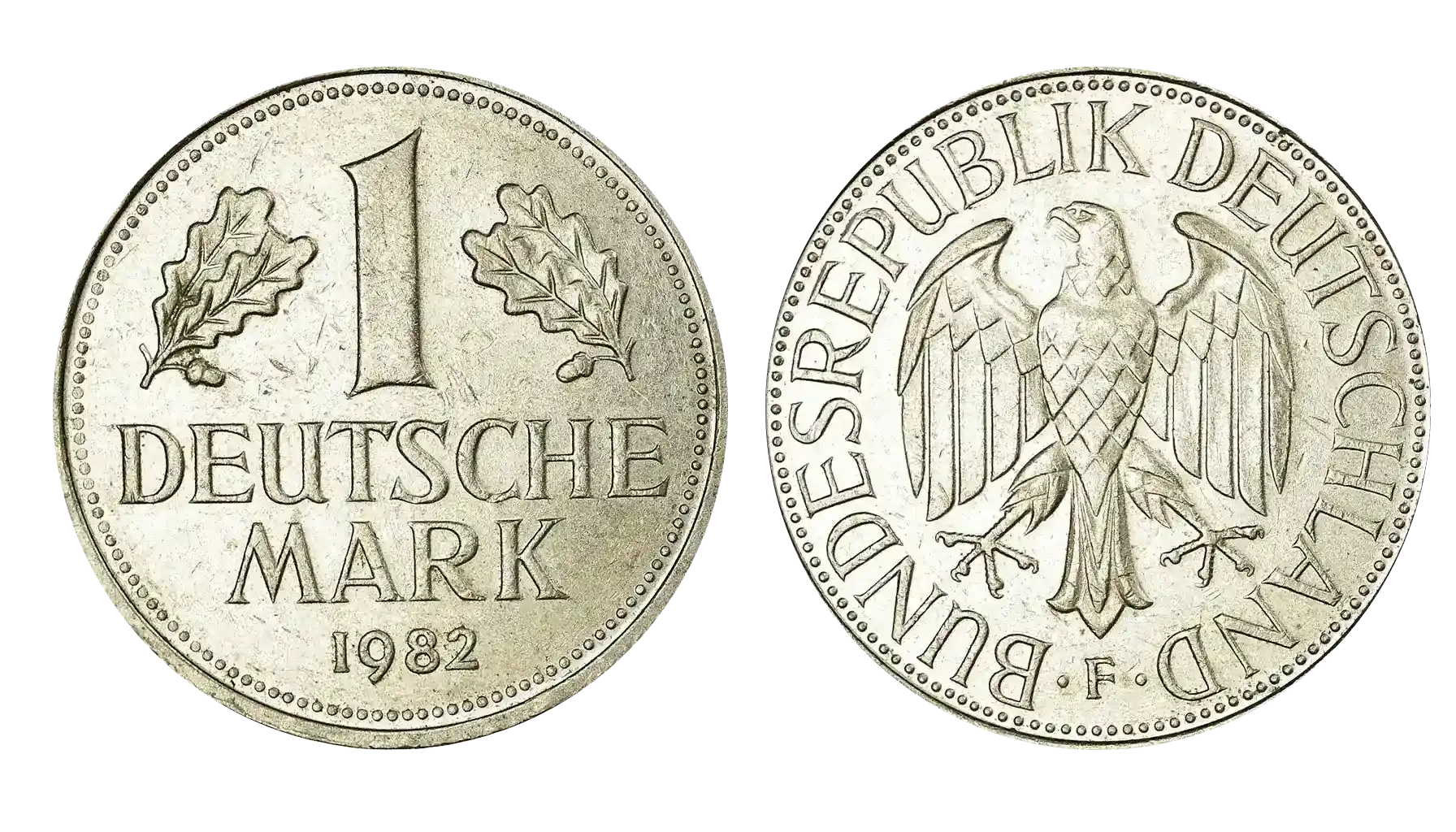
Deutsche Mark Coins Overview
These German coins were part of everyday life in West Germany for more than fifty years. They were meant to be durable, easy to recognize, and practical, not decorative. That’s why many pieces survived in usable condition. So, the Deutsche Mark coin value is driven less by age and more by condition, metal, and issue period.
Denomination | Diameter | Weight | Material | Average Value* |
1 Pfennig | ~17 mm | ~1.7 g | Bronze | €0.10–0.50 |
2 Pfennig | ~18 mm | ~2.6 g | Bronze | €0.10–0.70 |
5 Pfennig | ~19.5 mm | ~3.5 g | Bronze | €0.20–1 |
10 Pfennig | ~21.5 mm | ~4 g | Copper-nickel | €0.50–2 |
50 Pfennig | ~24.5 mm | ~7 g | Copper-nickel | €1–3 |
1 Mark (DM) | ~24.5 mm | ~5 g | Nickel | €2–6 |
2 Mark (DM) | ~26.5 mm | ~8.5 g | Nickel | €3–10 |
5 Mark (DM) | ~29.5 mm | ~11 g | Silver (early) / Bimetal (later) | €5–15 |
*Average prices for circulated coins. High-grade pieces and low-mintage years can be worth more.
All the coins fall into two different collecting categories and mark German coinage at their own. Early silver issues, especially 5-DM coins, are influenced by silver content. Later base-metal and bimetal coins depend on collector demand and condition. Small Pfennig coins are very common, but complete sets or mint-state examples are more interesting.
Can You Still Exchange Deutsche Marks?
Step 1: Check if Your Money is Eligible
Both DM banknotes and coins are accepted. There is no time limit and no minimum amount. Condition matters, but normal wear is fine.
Step 2: Prepare the Currency
Sort your specimens by type (banknotes, coins). No special forms are required. You do not need to convert them into euros yourself.
Step 3: Use the Bundesbank
Exchange is handled only by the Deutsche Bundesbank. You can:
visit a Bundesbank branch in person, or
send the DM by post to the Bundesbank.
Commercial banks no longer exchange Deutsche Marks.
Step 4: Exchange Rate
The rate is fixed:
1 euro = 1.95583 DM
There are no fees.
Step 5: Receive Euros
In person, you receive euros directly.
By mail, the Bundesbank transfers the amount to your bank account.
Collector coins, rare years, or silver issues are often worth more than face value. Exchanging them removes any collector premium. Always check the value before exchanging.
Conclusion
Each monetary system of the country followed political change, not design preference. The contrast between periods is visible in materials, denominations, and purpose.
Nazi coins, for example, reflect wartime economy and state control. They are collected mainly for historical documentation, not monetary stability.
The Deutsche Mark represents the opposite phase: post-war reform, price stability, and long-term use. Knowing this context helps classify German coins correctly and understand why their value and meaning differ by period.

 Facebook
  X (Twitter)
  Pinterest
  LinkedIn