Contents:
- What Is a Silver Certificate Dollar Bill?
- Silver Certificate 1 Dollar Bill Value
- Silver Certificate 2 Dollar Bill Value
- Silver Certificate 5 and 10 Dollar Bills
- Silver Certificate 20 and 100 Dollar Bills
- How Much Is a Silver Certificate Dollar Bill Worth?
- Are Silver Certificate Dollar Bills Worth Anything?
Some years ago, many inherited collections included Silver Certificate dollar bills that sat untouched for decades. Instead of guessing their worth, owners now use special tools, like an old coin value checker for metal money, to confirm whether the note is a standard issue or an earlier, more valuable series.
What Is a Silver Certificate Dollar Bill?
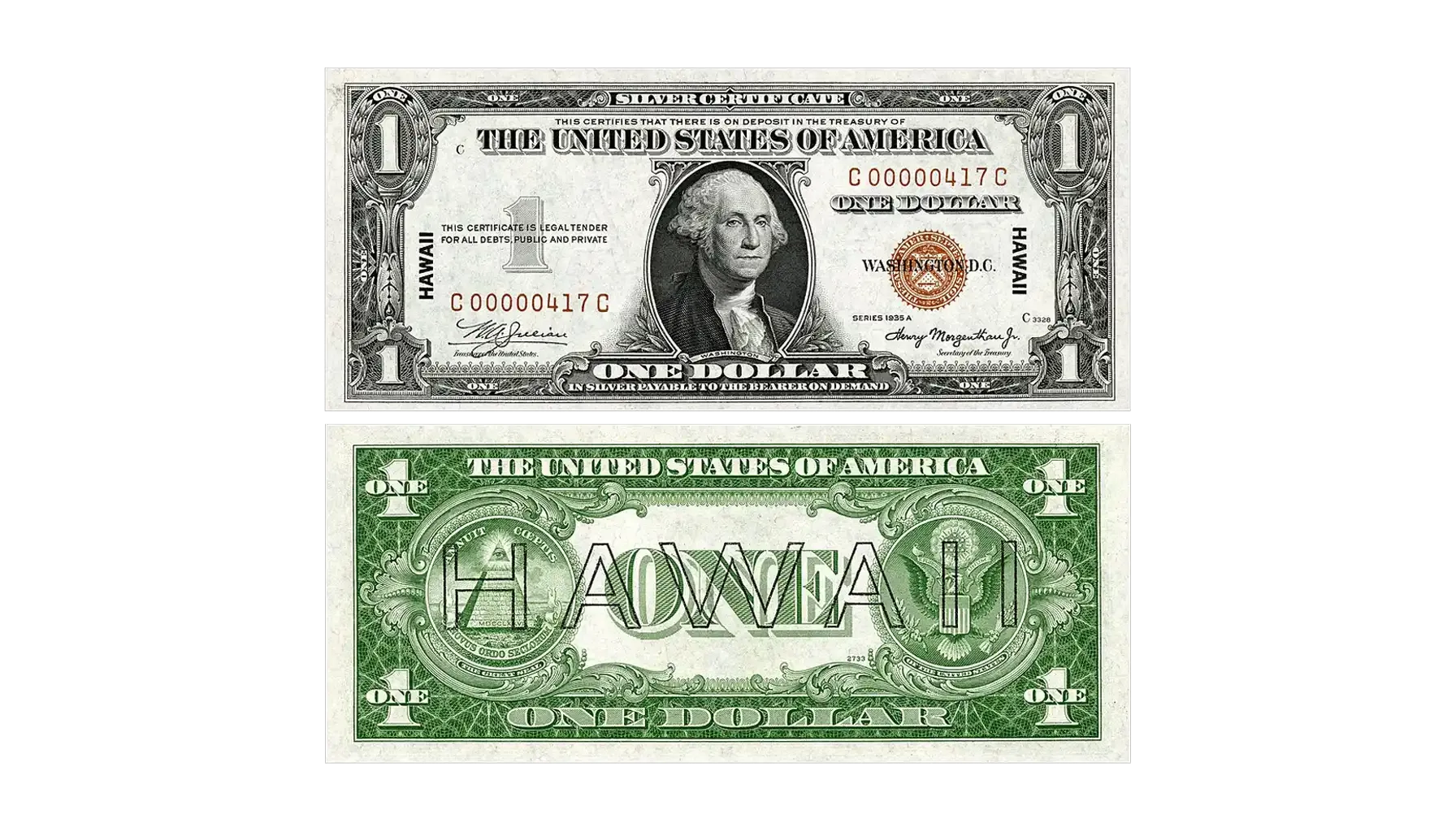
It is a former type of U.S. paper currency that represented a claim on physical silver. It was issued by the United States Department of the Treasury and could originally be redeemed for coin or bullion.
They were issued between 1878 and 1964. But is a silver certificate dollar bill worth anything?
How It Worked
The bill stated that it was “payable to the bearer on demand” in silver. Early versions were redeemable for standard dollars. Later issues could be exchanged for Ag bullion.
Redemption in silver officially ended in 1968. Today, these notes are no longer convertible into metal but remain legal tender at face value.
“In 1963, the House of Representatives passed PL88-36, repealing the Silver Purchase Act and instructing the retirement of $1 silver certificates.12 The act was predicated by a prospective shortage of silver bullion.”
– David Gorton, CPA, CMAа
Investopedia
Treasury Seals
These notes were backed by silver held by the U.S. Treasury. The blue seal and blue serial numbers visually distinguished them from:
Federal Reserve Notes (green seal)
United States Notes (red seal)
Main Types
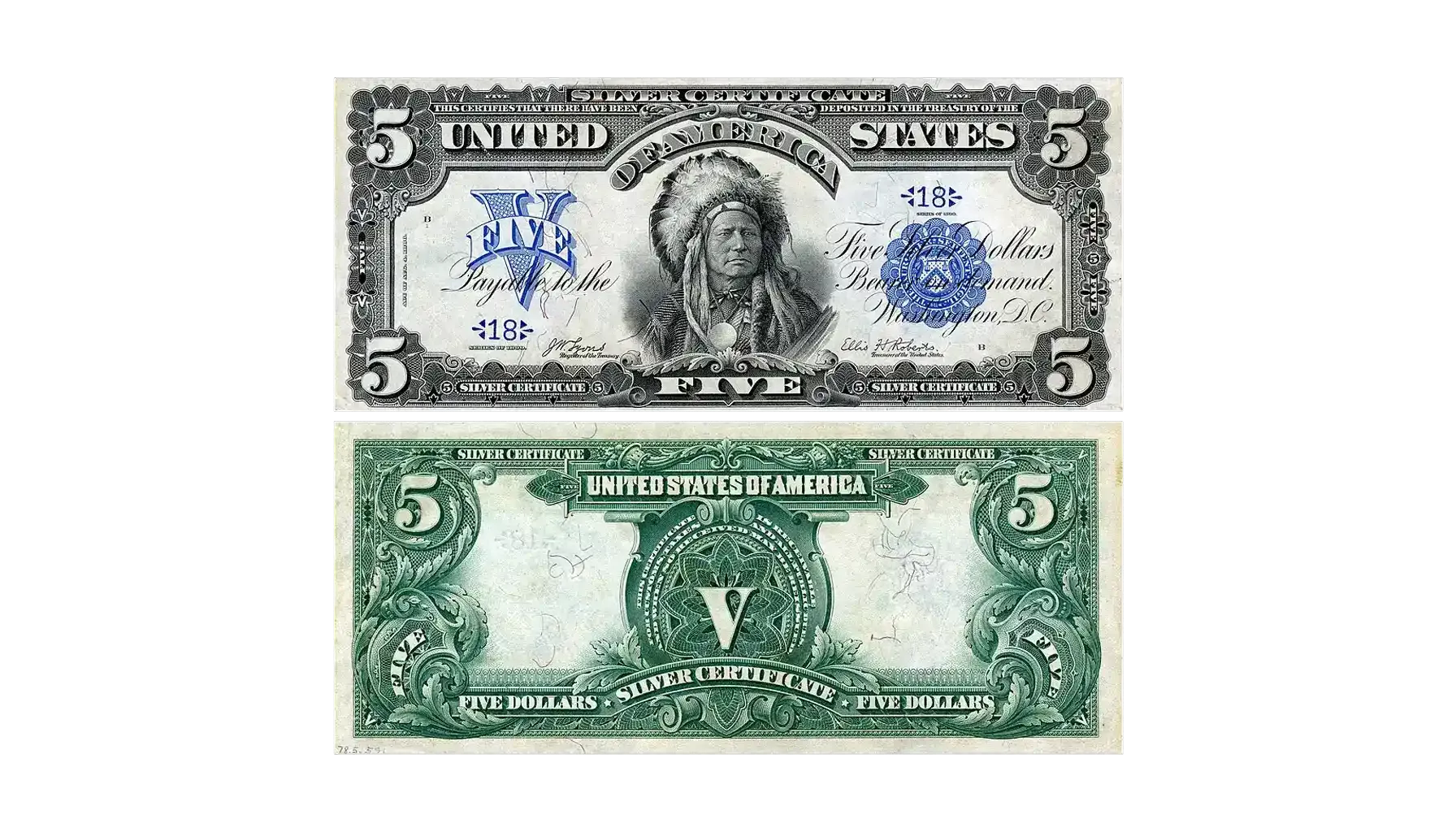
1. Large-Size Notes (1878–1923)
Often called “horse blanket” notes
Larger format than modern pieces
Includes series like 1896 “Educational Notes”
2. Small-Size Notes (1928–1964)
Same size as modern $1 banknotes
Blue Treasury seal and blue serial numbers
Most common are 1935 and 1957 series
More about other money types here: Parts of a Dollar Bill Explained.
Silver Certificate 1 Dollar Bill Value
Type of a 1 dollar bill silver certificate | Circulated | Uncirculated |
1935 $1 | $2 – $6 | $10 – $30+ |
1957 $1 | $2 – $5 | $8 – $25+ |
Star notes (1935–1957) | $5 – $15 | $20 – $60+ |
Rare varieties / low serial | $20 – $100+ | $50 – $250+ |
How much is a silver certificate one dollar bill worth if it has star notes? Such stars at the end of the serial are replacement notes and usually sell for more.
Crisp uncirculated specimens command premiums; top grades can sell well above the average ranges.
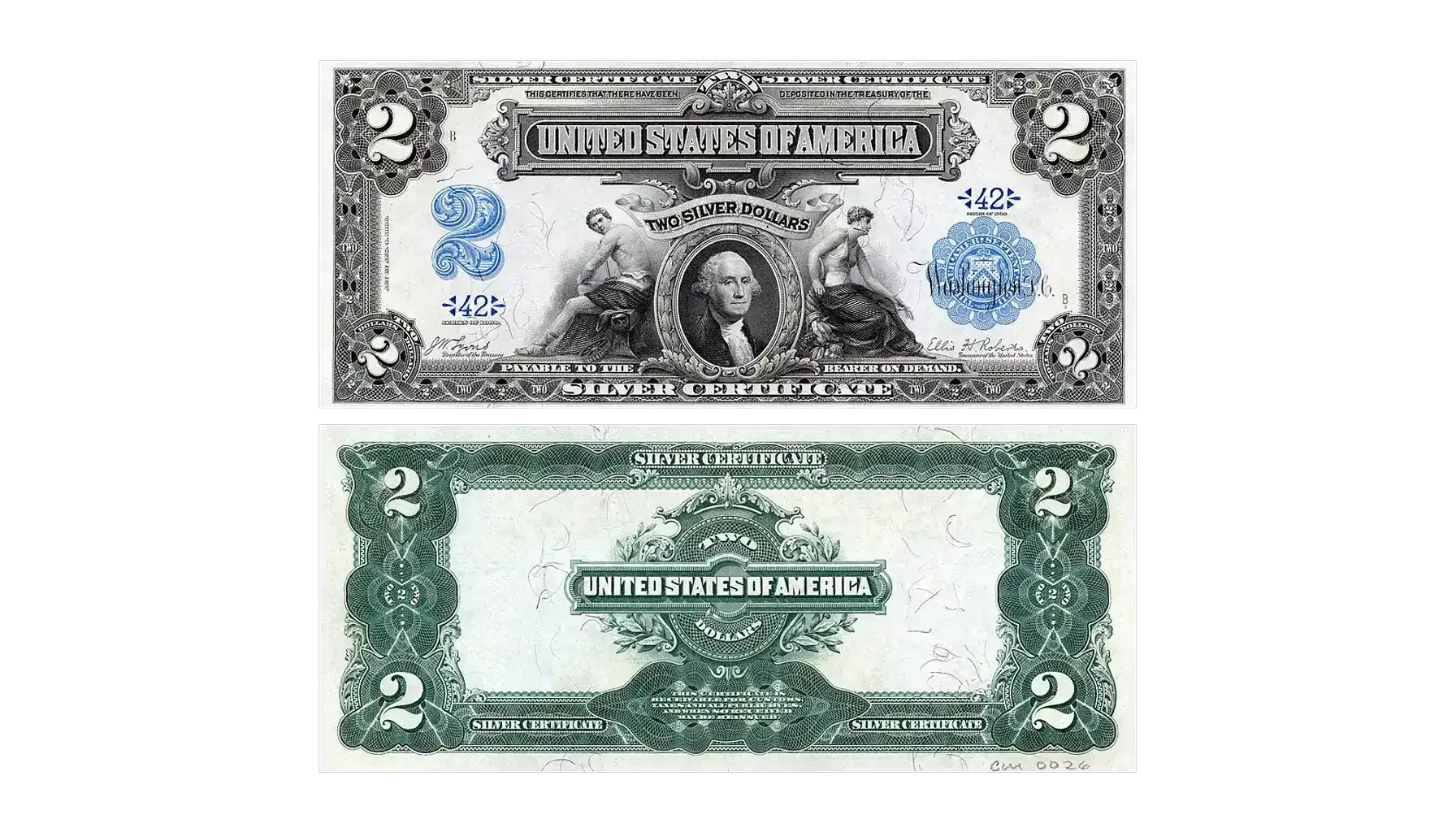
Silver Certificate 2 Dollar Bill Value
These pieces are scarcer than $1s and often attract stronger collector demand.
Type of a 2 dollar bill silver certificate | Circulated | Uncirculated |
1928 $2 | $15 – $40 | $60 – $150+ |
1953 $2 | $10 – $30 | $50 – $120+ |
Star notes (1928–1953) | $30 – $80+ | $100 – $300+ |
Key varieties | $100 – $500+ | Premiums vary |
The 1928 series is generally more valuable than the 1953 series due to lower survival rates. Condition and eye appeal have a big impact; minor tears or heavy folds reduce value.
Silver Certificate 5 and 10 Dollar Bills
Notes in $5 and $10 denominations were issued in the early 20th century. They are less common than $1 and $2 pieces, and older large-size formats can be collectible.
Silver Certificate 5 Dollar Bill
Large-size issues circulated mainly before 1929.
Later small-size versions were not issued in $5 denomination.
Type | Circulated | Uncirculated |
Large-size common series | $30 – $70 | $100 – $300+ |
Rare varieties | $100 – $300+ | $300 – $800+ |
Condition matters strongly. Tears, heavy wear, or missing portions are worth less than crisp, intact examples. Certified high grades fetch the strongest prices.
Also read: Australian Notes Value.
Silver Certificate 10 Dollar Bill
Large-size $10 certificates exist from the early 1900s.
No small-size $10 certificates were issued.
Type | Circulated | Uncirculated |
Large-size common series | $40 – $100 | $150 – $400+ |
Scarce star notes / portrait variations | $100 – $300+ | $400 – $1,000+ |
Collectors seek clean paper, complete margins, and strong centering. Very low serial numbers or star notes increase appeal further.
Silver Certificate 20 and 100 Dollar Bills
Large-size $20 and $100 silver certificates are among the rarest high-denomination paper money with this backing. They were mostly issued in the early 1900s; no small-size $20 or $100 notes were printed.
Silver Certificate 20 Dollar Bill
Fewer survivors than lower denominations.
Early series often show classic designs and portraits of Andrew Jackson.
Type | Circulated | Uncirculated |
Common large-size | $200 – $500 | $800 – $2,500+ |
Scarce star notes/varieties | $500 – $1,500+ | $2,500 – $10,000+ |
What is a silver certificate dollar bill worth driver? Rare varieties or exceptional grading by PCGS/NGC can push prices much higher.
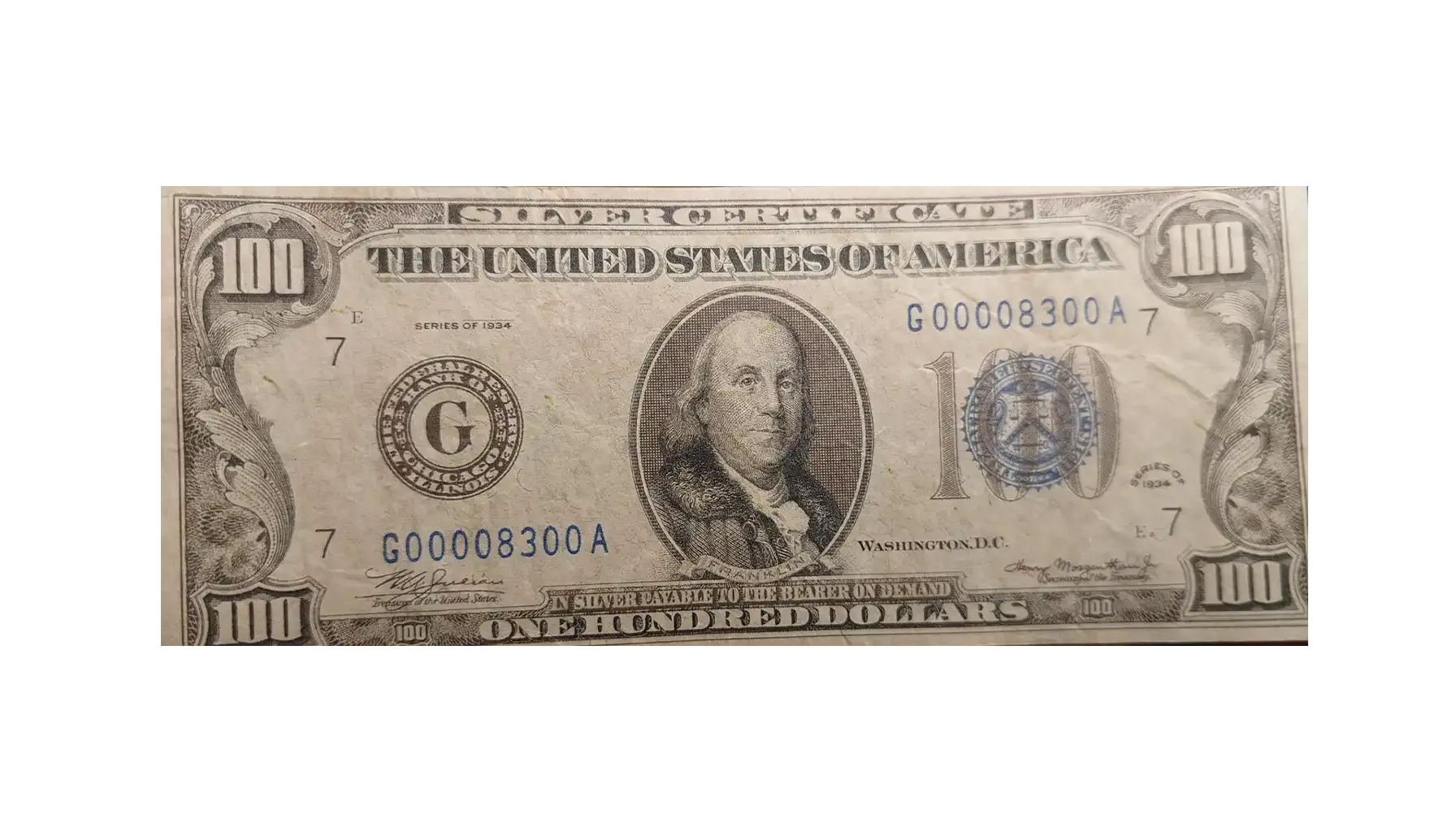
Silver Certificate 100 Dollar Bill
High denomination notes are very rare survivors.
Often seen in prized collections rather than circulation.
Type | Circulated | Uncirculated |
Common large-size | $400 – $1,000 | $1,500 – $5,000+ |
Scarce star notes/varieties | $1,000 – $3,000+ | $5,000 – $20,000+ |
High values reflect both rarity and collector demand. Notes in exceptional condition or with a significant pedigree may exceed published auction results.
How Much Is a Silver Certificate Dollar Bill Worth?
The value of a silver certificate dollar bill depends on four main factors: series year, condition, rarity, and special features such as star notes or unusual serial numbers.
Most Common Notes (1935 and 1957 Series)
These are the blue-seal $1 notes most people find in drawers or old collections. In circulated condition—with folds, light wear, or minor staining—they sell for $2 to $5. That is only slightly above face value because millions were printed.
If the note is crisp, bright, and free of folds (uncirculated), values usually range from $10 to $25, sometimes more for well-centered examples.
Star Notes
What is silver certificate dollar bill with a small star at the end of the serial number? It is a replacement note. For 1935 or 1957 star notes:
Circulated examples often bring $5 to $15.
Uncirculated examples can reach $20 to $60.
Scarcer star blocks can go higher, but most common ones remain modestly priced.
Also read: Dollar Bill Errors.
Large-Size Certificates (1878–1923)
These are much larger than modern paper money and far more collectible. Even in worn condition, most large-size one dollar bill silver certificate pieces start around $60 to $150. Cleaner, well-preserved examples commonly sell for $200 to $600.
Are Silver Certificate Dollar Bills Worth Anything?
Legal Tender Status
They are still legal tender. You can spend them at face value. However, collectors will usually pay more than $1 for most examples, so spending them is rarely the best option.
Historical Context
These notes represent a period when U.S. paper currency was directly backed by Argentum. Even common 1935 and 1957 issues carry educational and collectible appeal because they reflect monetary policy before 1968, when silver redemption ended.
Collector Demand vs. Scarcity
Not all specimens are scarce. Many were saved in large quantities once redemption stopped. That is why common small-size notes remain affordable today. Demand also depends on paper money specialists rather than metal investors.
Condition Sensitivity
Paper money grading is unforgiving. A single heavy fold, tear, or stain can reduce the silver certificate dollar bill value. Notes graded by services like PCGS Currency or PMG often bring stronger prices because the condition is defined.

 Facebook
  X (Twitter)
  Pinterest
  LinkedIn