Contents:
Ancient Cleopatra coins immerse collectors in the ancient Egyptian coins world, revealing an insight into the life of ancient Egypt. Her image is found on samples of various metals minted during her reign from 51 to 30 BC. These coins will be a great addition to your collection, whether you are a beginner or an advanced numismatist.
Make your collection great again with the coin identifier app for free.
Cleopatra VII Ancient Coin Overview
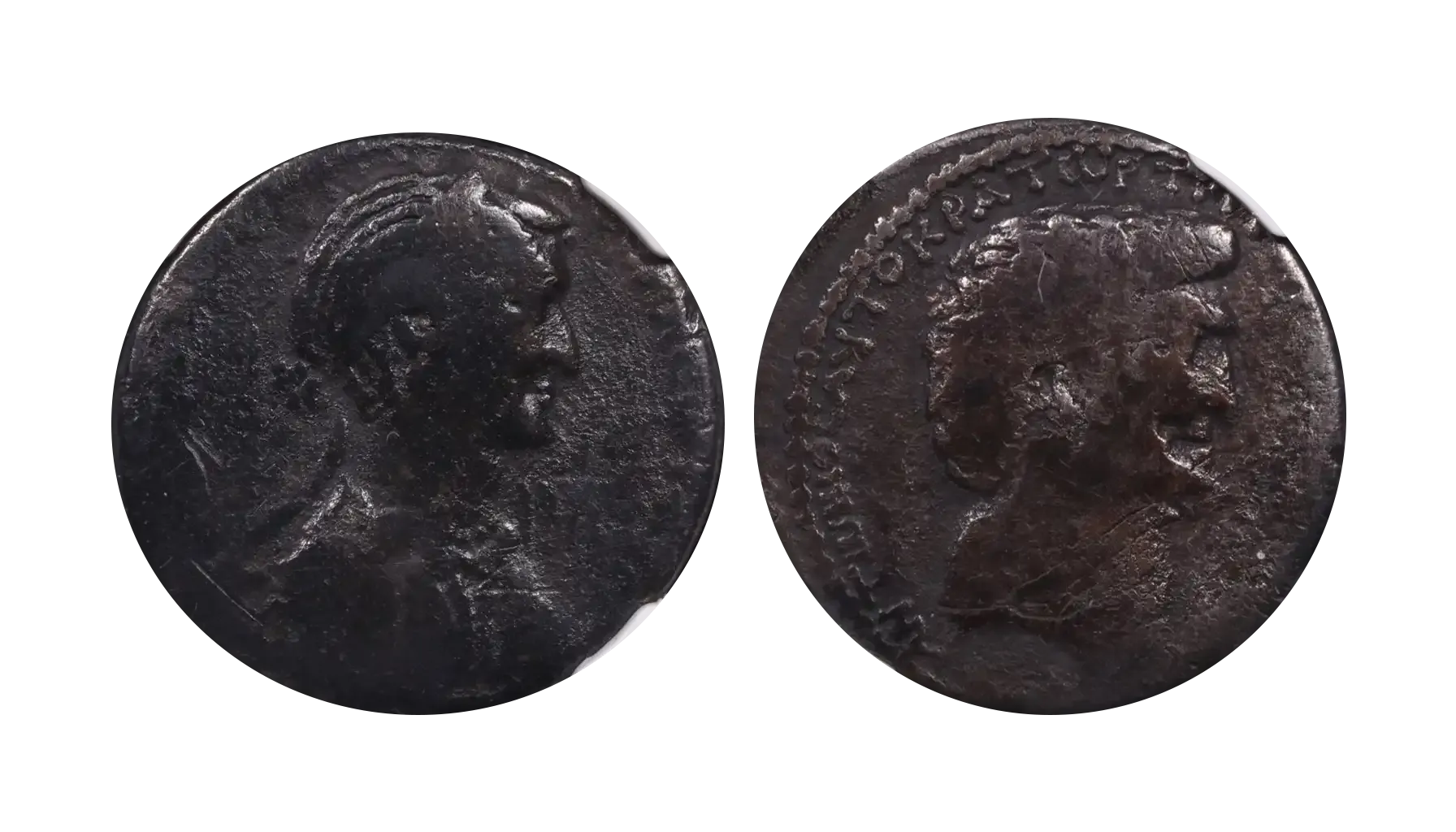
Today, Cleopatra VII coin portrait on the Philopator items remains among the most debated and sought-after in ancient numismatics. Unlike the Hollywood image of the queen, her contemporary coinage reveals a ruler focused on political legitimacy and Roman alliances.
Item Example: Major Characteristics
Piece | Cleopatra VII & Marc Antony Tetradrachm |
Composition | Silver |
Obverse | Cleopatra Ancient Coin Portrait |
Reverse | Marc Antony |
Item History
Three eras make up the base of this ancient piece of history:
51–47 BC
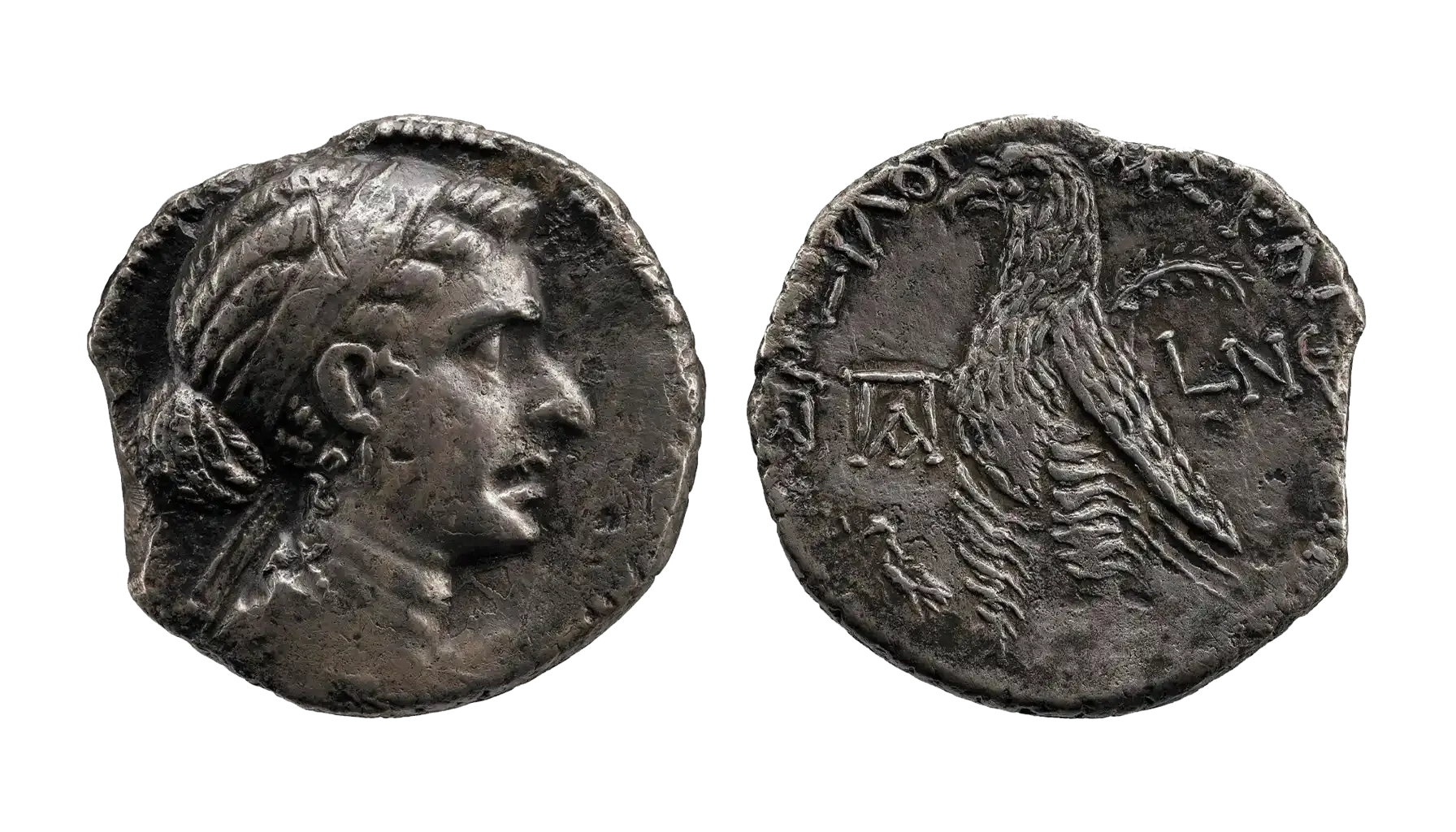
When she took the throne at age 18, her first priority was proving she was a true Ptolemy. Cleopatra VII coin profile is the first silver tetradrachm struck in Alexandria. To the modern eye, they are confusing because they bear the portrait of her ancestor, Ptolemy I Soter.
47–44 BC
After years, Julius Caesar restored Cyprus to her. She used coinage to celebrate her new role as a mother and a conqueror. She issued a famous bronze item in Cyprus showing her as the goddess Aphrodite, holding the infant Caesarion (her son by Julius Caesar).
37–30 BC
The final decade of her history produced the most famous and controversial gems in the ancient world. As she allied with Mark Antony, they began striking silver tetradrachms and denarii. These featured Antony on one side and her on the other.
Cleopatra Coin Portrait and Profile
Unlike the statues of earlier Ptolemaic queens, which were often idealized and soft, portraits adopted the Roman Veristic style – an approach that emphasized character over beauty.
The Diadem
The Aquiline Nose
The Firm Chin (Masculine Look)
The "Melon" Hairstyle (Melonenfrisur)
Overall, two main portrait varieties are dominant: Alexandria and The Alliance. The distinguishing features of the first one are a more youthful, traditionally Greek image, a softer chin, and a slightly smaller nose. The second one is rugged, mature, and romanized.
Real Cleopatra Coin Identification
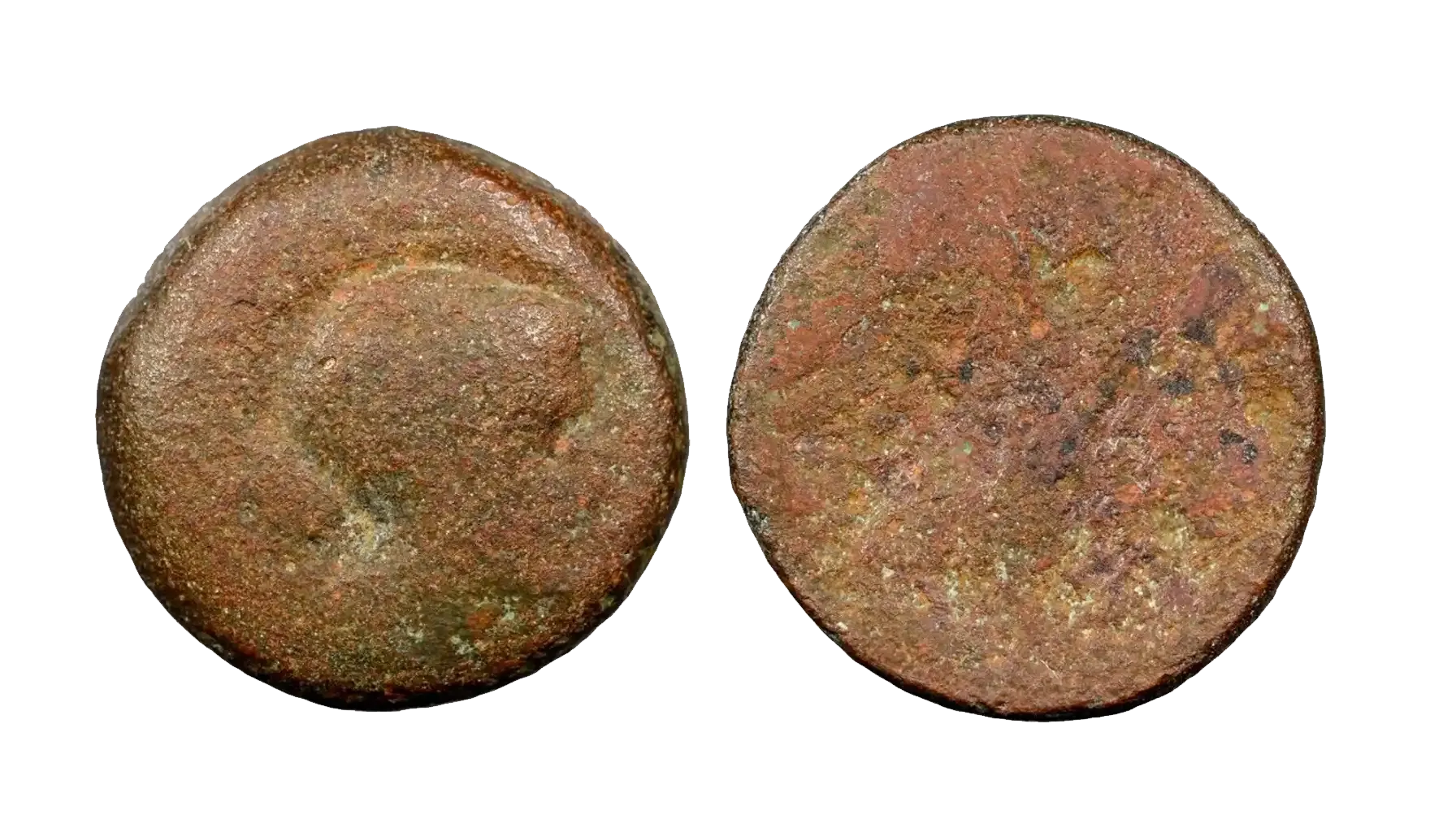
These three types represent the most significant numismatic records of her VII's reign. Prices have remained high due to her enduring cultural status and the rising value of ancient silver.
Type | Composition | Average Weight / Diameter | Details |
Alexandrian Bronze | Bronze / Copper | 16 g / 26 mm | Melon hairstyle and a diadem, Greek letter |
Silver Tetradrachm | Silver | 13 g / 24 mm | Follows Ptolemaic tradition |
Antony & Cleopatra | Silver | 13.5 g / 25 mm | “Power Couple” item |
Ancient Cleopatra Silver Coin
In early 2026, the market for ancient silver ones is divided into two distinct worlds: the Traditional Egyptian items that hide her identity, and the Alliance items that show her face.
As silver prices hover near $77/oz this February, the melt value of these items is irrelevant. Their true value lies in their direct connection to the last Pharaoh of Egypt.
Cleopatra Gold Coin Issues
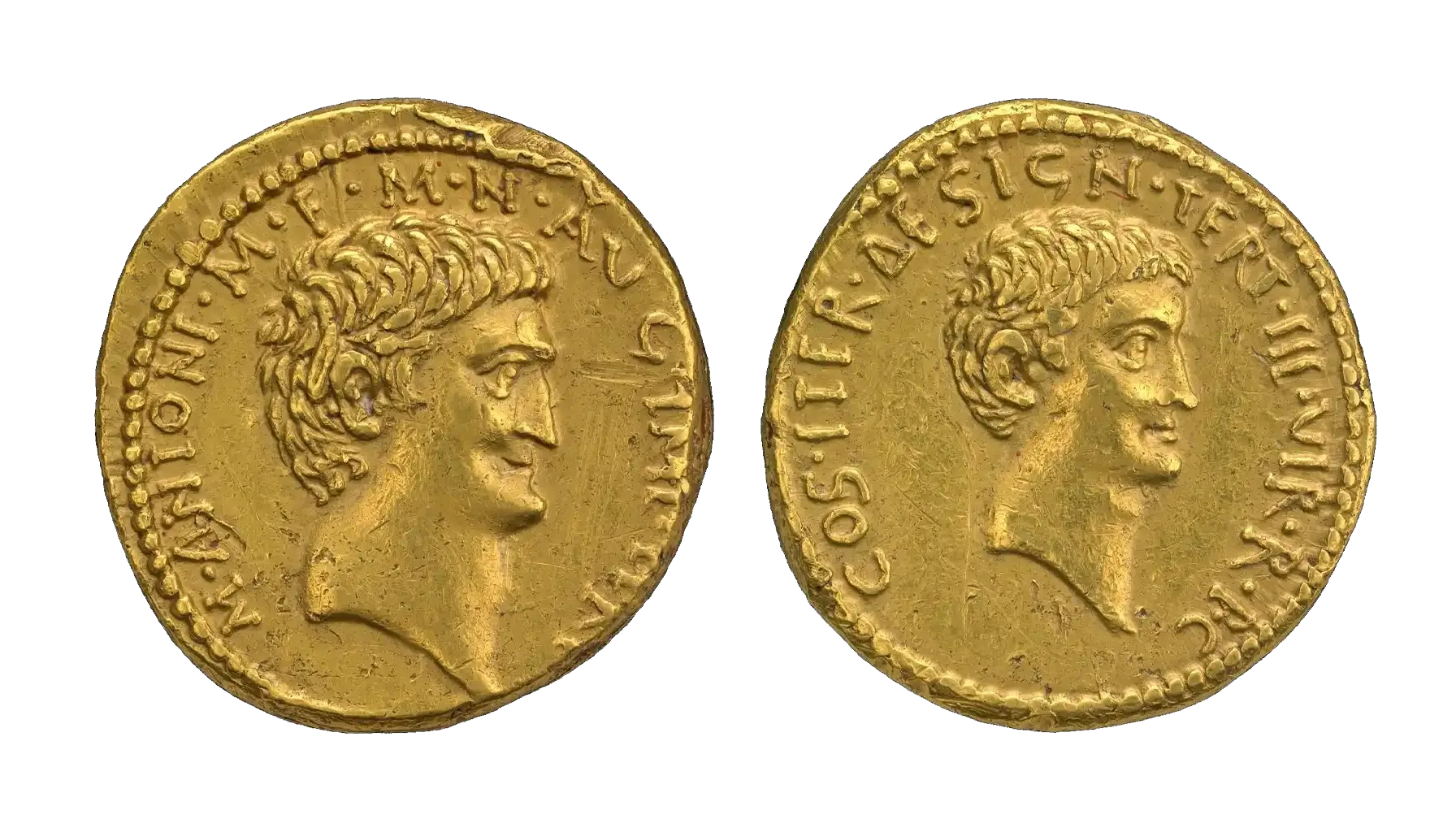
Gold Cleopatra coin VII was never issued with her own portrait during her reign. While her predecessors (like Arsinoe II) were famous for massive gold octadrachms, her reign was marked by economic instability and the debasement of silver. If you see a gold one, it is almost certainly one of the following three things:
Modern Commemoratives (Egypt 100 pounds, Chad 300 francs)
Ptolemaic Gold (Gold Octadrachm of Arsinoe II)
The Mark Antony Gold (Aureus Roman currency)
Cleopatra Coin Value Today
Type | Price |
80 Drachmae | $600–$2,800 |
Ptolemaic Tetradrachm | $1,300–$2,500 |
Antony & Cleopatra Denarius / Tetradrachm | $3,500–$30,000+ |
The 80 Drachmae is the most common way to own Cleopatra on coin. These are thick bronze items minted in Alexandria. It actually shows her face with her characteristic, unique hairstyle.
Most Silver Tetradrachms depict the face of her ancestor, Ptolemy I. You identify it as hers by the Regnal Year on the back (e.g., L IH for Year 18). The Mark Antony & Cleopatra are the most expensive because they commemorate the alliance that defined the end of the Roman Republic.
“By pairing their faces on coinage, the rulers advertised their powerful partnership, which was so strong that Cleopatra’s profile is an exact copy of Antony’s portrait.”
– Unnamed opinion piece “Tetradrachm Portraying Queen Cleopatra VII”
Art Institute Chicago
Original Coin of Cleopatra VII
Identification process of an authentic Cleopatra VII portrait coin is more challenging than ever due to high-quality struck forgeries. Authentic items of the last Pharaoh were made by hand-striking a metal blank between two engraved dies, a process that creates specific physical markers.
Fake or Original Cleopatra Coin
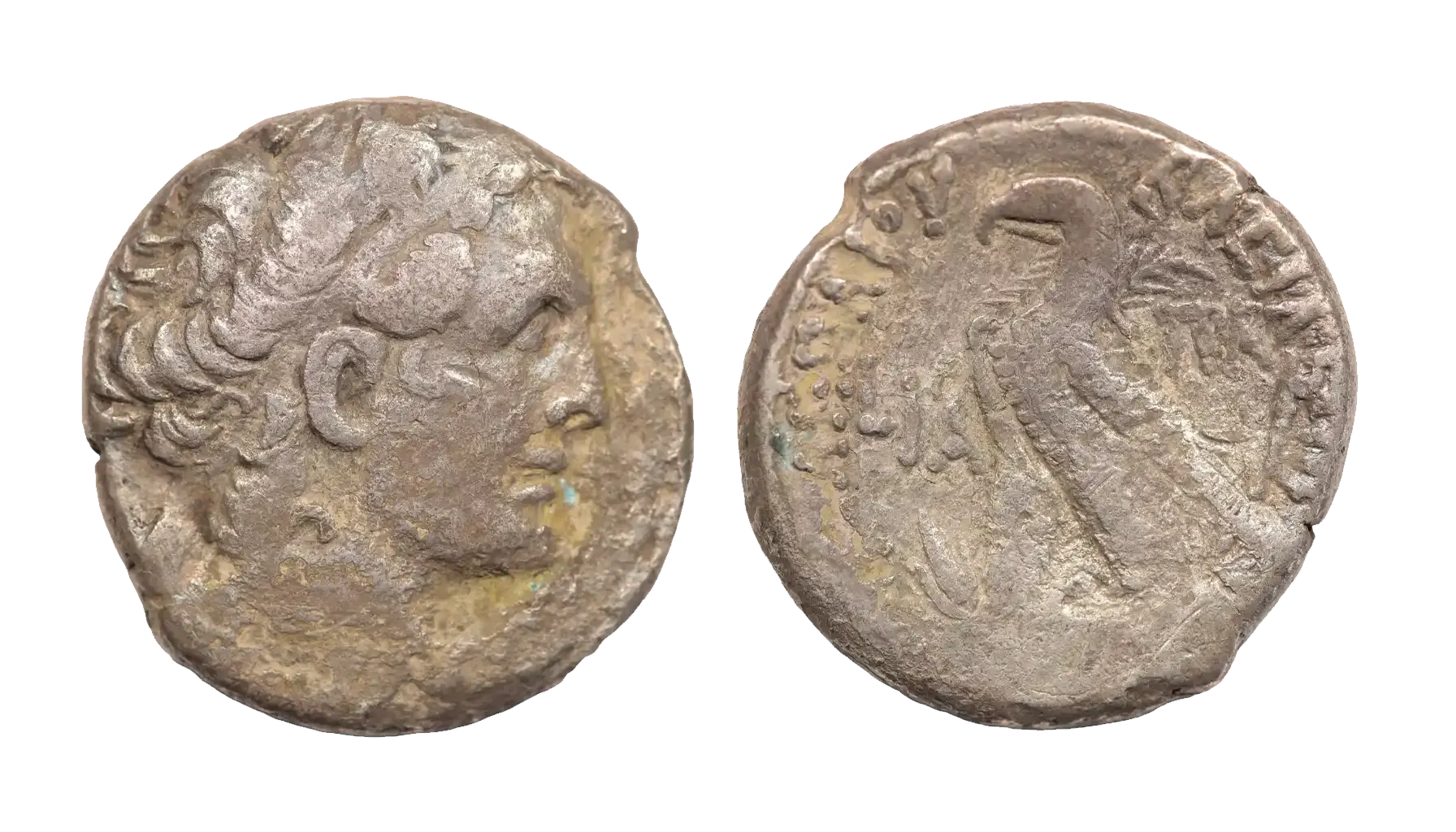
For a successful distinction process, you should mark such things:
Check the portrait features
Microscopic flow lines after struck with a hammer

 Facebook
  X (Twitter)
  Pinterest
  LinkedIn