Contents:
There’s something weirdly magnetic about old money pulled from wrecks or tied to the age of piracy. This survived hurricanes, saltwater, cannon fire, and three centuries.
Some people like identifying foreign coins for the romance and the metal value. Others because they watched Pirates of the Caribbean too young and never emotionally recovered. And all of those are valid reasons.
What Defines a Pirate Coin?
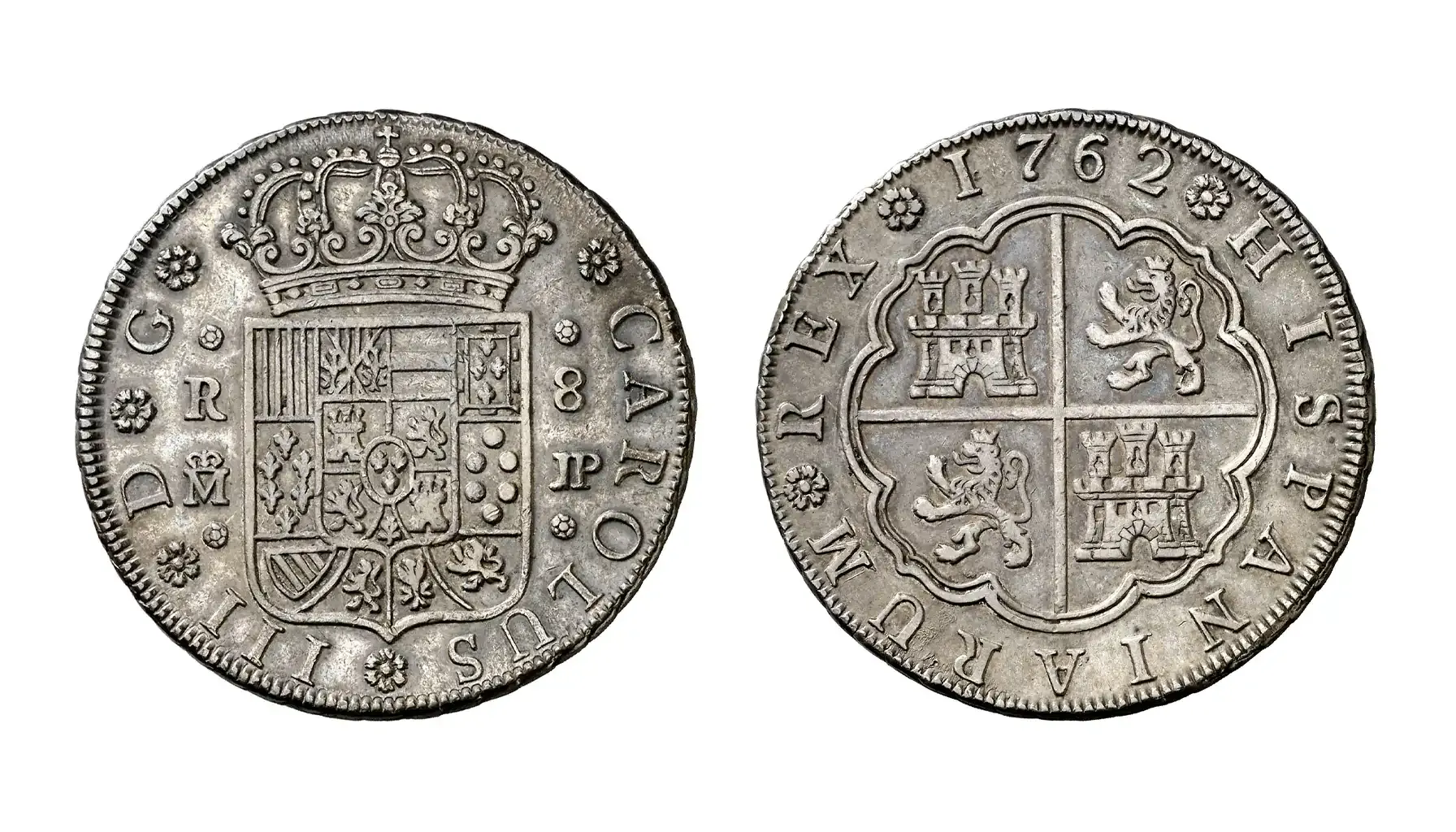
Not every old Spanish coin counts as a pirate coin, but a lot of them get grandfathered in by association. If we’re being picky, a pirate-era coin is one that circulated roughly from the mid-1500s through the early 1700s, especially in New Spain, the Caribbean, and coastal trade lanes.
Some examples:
A coin linked to Blackbeard’s era, a Spanish 8 Reales cob from Mexico City or Potosí, dated between 1690–1718
Kidd operated earlier (late 1600s), and his voyages were to the Indian Ocean, not the Caribbean. Good examples for his time would be Mughal silver rupees, minted under Emperor Aurangzeb (late 1650s–1707).
A Portuguese gold escudo minted in Bahia or Lisbon around 1675
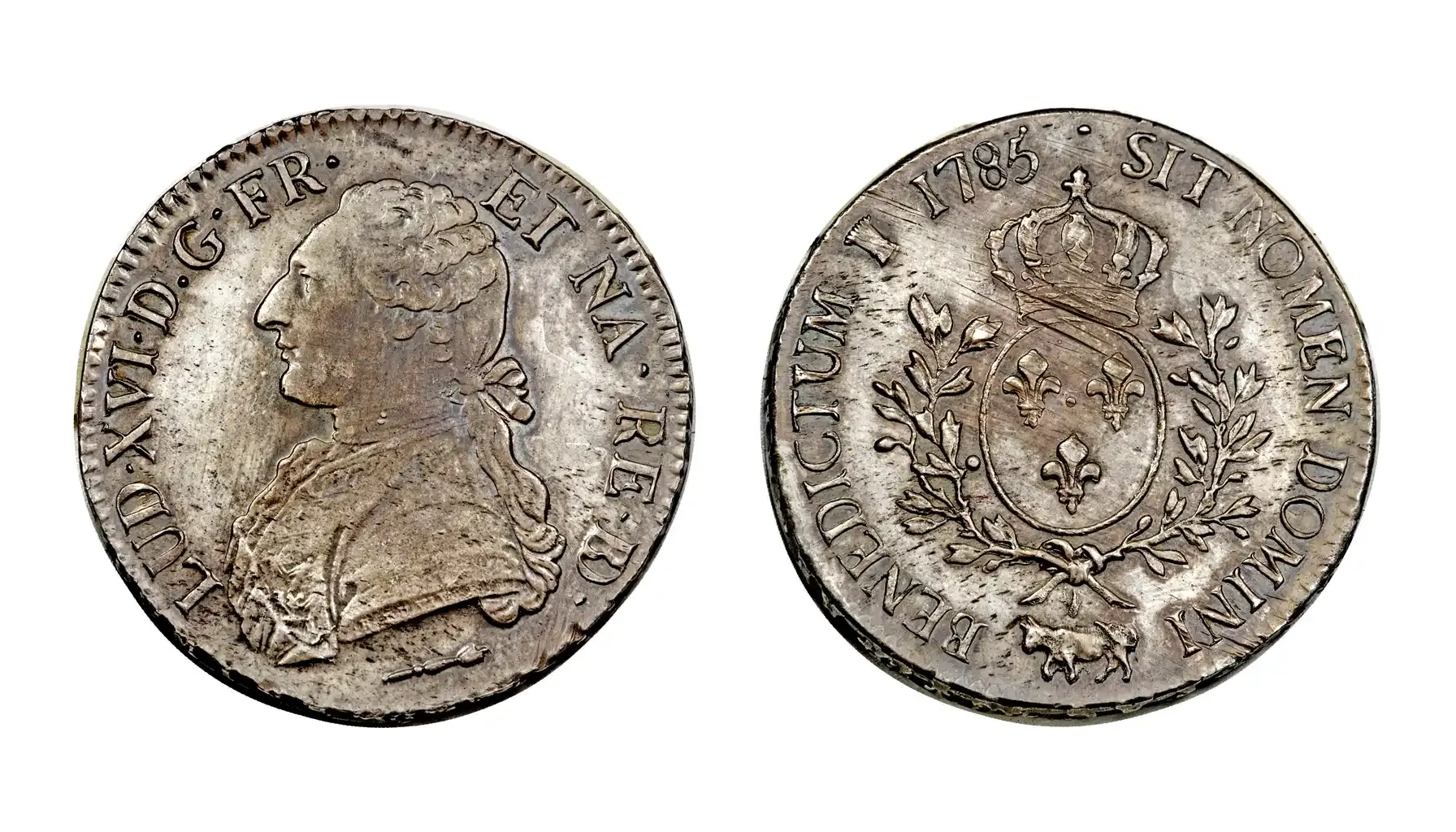
La Buse worked the Indian Ocean and Madagascar region into the 1720s. A fitting coin would be a French écu, Spanish pillar dollar, or even Dutch VOC stuiver, since trade across the Cape routes mixed multiple currencies
Roberts captured over 400 ships, mainly in the Atlantic and West African trade lanes between 1719–1722. Coins common in his orbit had: Portuguese gold "Johannes" coins, Spanish 4 and 8 Reales, English guineas, A French Louis d’or from the late 1600s
You’ll see strange shapes: clipped, irregular “cobs”, because these weren’t mass-machined. They were hammered, cut, and struck by hand. No two are perfectly alike. You can spot mint marks like P (Potosí), M (Mexico City), and L (Lima).
Pieces from the Atocha, Concepción, and other documented wrecks are the most precious because they went through wars, smuggling, storms, colonial economics, and greed. That’s what makes real pirate coins for sale so compelling: they tell a story even before you research anything.
Gold Pirate Coins: Overview & Types
Even after centuries, gold barely tarnishes. That’s one reason pirate gold coins such as gold escudos (1, 2, 4, and 8-escudo denominations) are the crown jewel.
“Pirates burying treasure was rare. The most well-known story of a pirate supposedly burying treasure was William Kidd, who is believed to have buried at least some of his wealth on Gardiners Island near Long Island before sailing into New York City.”
— David Cordingly
from Under the Black Flag: The Romance and Reality of Life Among the Pirates
The famous doubloon, the big one, is the most pirate-looking coin. In the modern market, especially with pieces mounted in 14K or 22K settings, these can be anywhere from “two months of rent” to “I could’ve bought a small used car.”
Modern classified pendants and loose specimens float anywhere between roughly $7,600 – $12,000+ for top-tier gold shipwreck pieces. Grade, provenance, and mounting push price wildly. You’ll see listings where the metal pirate coins component is worth a fortune on its own.
Silver Pirate Coins and Pieces of Eight
Rough edges, off-center strikes, cross motifs, lions and castles: they’re all there, imperfect and brutally practical. The silver pirate coins vary a ton depending on size, mint, and whether they’ve been mounted.
They can spread from around $470 at the low end (half-real or simply worn cob pieces) to $2,600–$2,750 USD and up for larger, well-preserved examples. Silver reacts to saltwater differently: soft frosting, pitting, and a kind of ghost-gray tone. But some collectors love that.
Real Pirate Coins vs. Replicas
The market is full of everything: authentic wreck coins, authenticated land finds, modern strikes made from original molds, fantasy tokens, and straight-up Amazon cosplay metal discs.
A real pirate coin usually comes with:
Documentation
Photo evidence from the seller
Known wreck source (Atocha, Concepción, El Cazador, and so on)
Mint marks or visible partial vision of design components
Weight consistent with the type
Replicas aren’t necessarily bad; they’re fun props for cosplay, for example. They just shouldn’t cost what a real pirate coin price is. And they shouldn’t pretend to be something they’re not.
Quick Price Overview Table
Type | Typical Range Seen in Listings | Notes |
Low-end small silver (½ reale / worn cob) | ~$430–$880 | Mounted or loose examples, heavy wear |
Mid-range silver (1–2 reales) | ~$980–$1,750 | Better detail, often mounted |
Larger or premium silver (4–8 reales) | ~$1,630–$3,900 | Strong detail, known wreck provenance adds value |
High-tier historical or gemstone-set silver | ~$2,700–$4,300+ | Unique settings, rare shipwrecks, and collector demand |
Gold pirate coins (various Spanish pieces) | ~$7,500–$12,000+ | Premium category, often with limited availability |
Again, these figures aren’t law. They’re just what the current market seems to be doing.

 Facebook
  X (Twitter)
  Pinterest
  LinkedIn