Contents:
Spain coins were traveling all over the world for several centuries (it is because of the colonization, yes). You may find pieces in Europe, the Americas, Africa, and Asia because of the large colonial trade network and its control of New World silver mines.
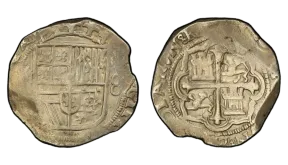
The most important denomination was the silver 8 reales, known as the “piece of eight.” It was the first widely adopted global trade currency. This Spanish reale was trusted because it had a standard silver weight and purity, which was rare in the 15th century. The piece became the model for the U.S. dollar, the Chinese yuan, the Japanese yen, and other world currencies.
An online coin scanner is a good way to know if you have a legit piece or something from a marketplace.
Overview of Spanish Coins and Their Historical Significance
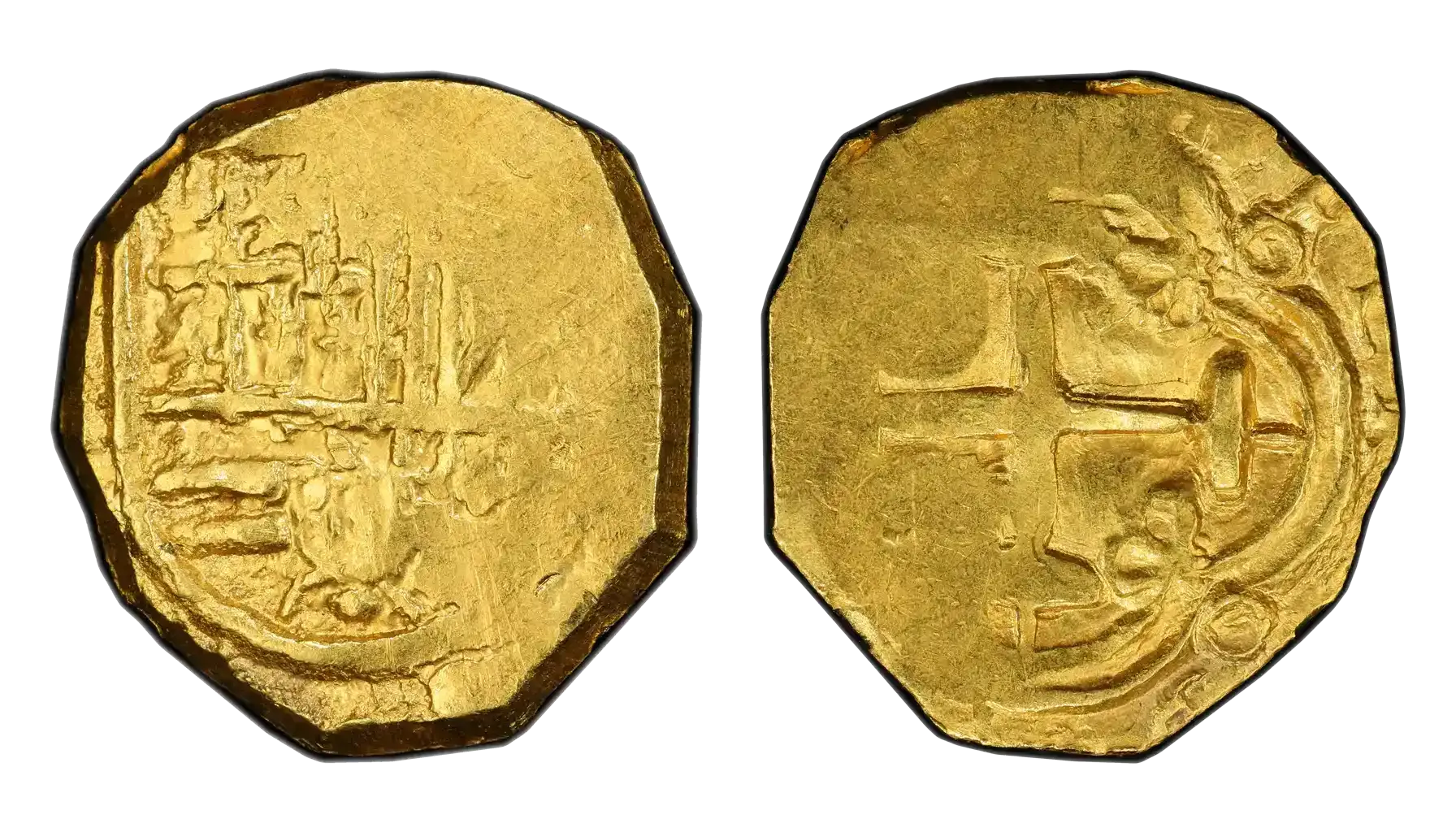
Spanish gold coins like the escudo and doubloon were issued because of high-value transactions. Many old Spanish coins also have mint marks from colonial territories: for example, Mexico City (M), Potosí (PTS), Lima (LM), and Guatemala (NG).
The coin in Spanish culture was not only for a transaction, but it also showed a symbol of imperial prestige and economic reach. The Spanish real began in the mid-14th century under King Pedro I of Castile. It was minted as a high-purity silver piece valued at 3 maravedíes.
By the monetary reform of 1497, most other coins were discontinued, and the real became the standardized unit. From then on, the real was struck in multiple denominations: ½, 1, 2, 4, and 8 reales
The largest of these denominations, the 8-real coin, evolved into the Spanish dollar, one of the most valuable coins in Spanish history. Known as the real de a ocho, peso, duro, or “piece of eight,” it traveled with Spanish merchants, conquistadors, and naval fleets on different continents.
“By far the leading specie coin circulating in America was the Spanish silver dollar, defined as consisting of 387 grains of pure silver. The dollar was divided into ‘pieces of eight,’ or ‘bits,’ each consisting of one-eighth of a dollar. Spanish dollars came into the North American colonies through lucrative trade with the West Indies. The Spanish silver dollar had been the world's outstanding coin since the early 16th century, and was spread partially by dint of the vast silver output of the Spanish colonies in Latin America. More important, however, was that the Spanish dollar, from the 16th to the 19th century, was relatively the most stable and least debased coin in the Western world.”
— the 2nd United States Congress
from Coinage Act of 1792
The Spanish dollar, also known as the piece of eight, was released in 1497 and was based on earlier European thalers. Spain’s access to massive silver reserves in colonial mints, like in Potosí, Mexico City, and Lima, made it possible for a piece to be produced in huge quantities.
It influenced local currencies everywhere: the US dollar was directly modeled on it in 1792, and it remained legal tender in America until 1857. In Asia, Spanish dollars often carry Chinese chop marks. Merchant-applied stamps confirming silver purity and acceptance in trade. The peso also became the basis for modern currencies such as the Mexican peso, Philippine peso, Japanese yen, and Chinese yuan.
Spain’s monetary system went through multiple reforms. From the 17th century, there was financial instability, which created divisions in real valuation. The real nacional retained its purity and value in colonial usage because Spain made the real de vellón, a reduced-silver version.
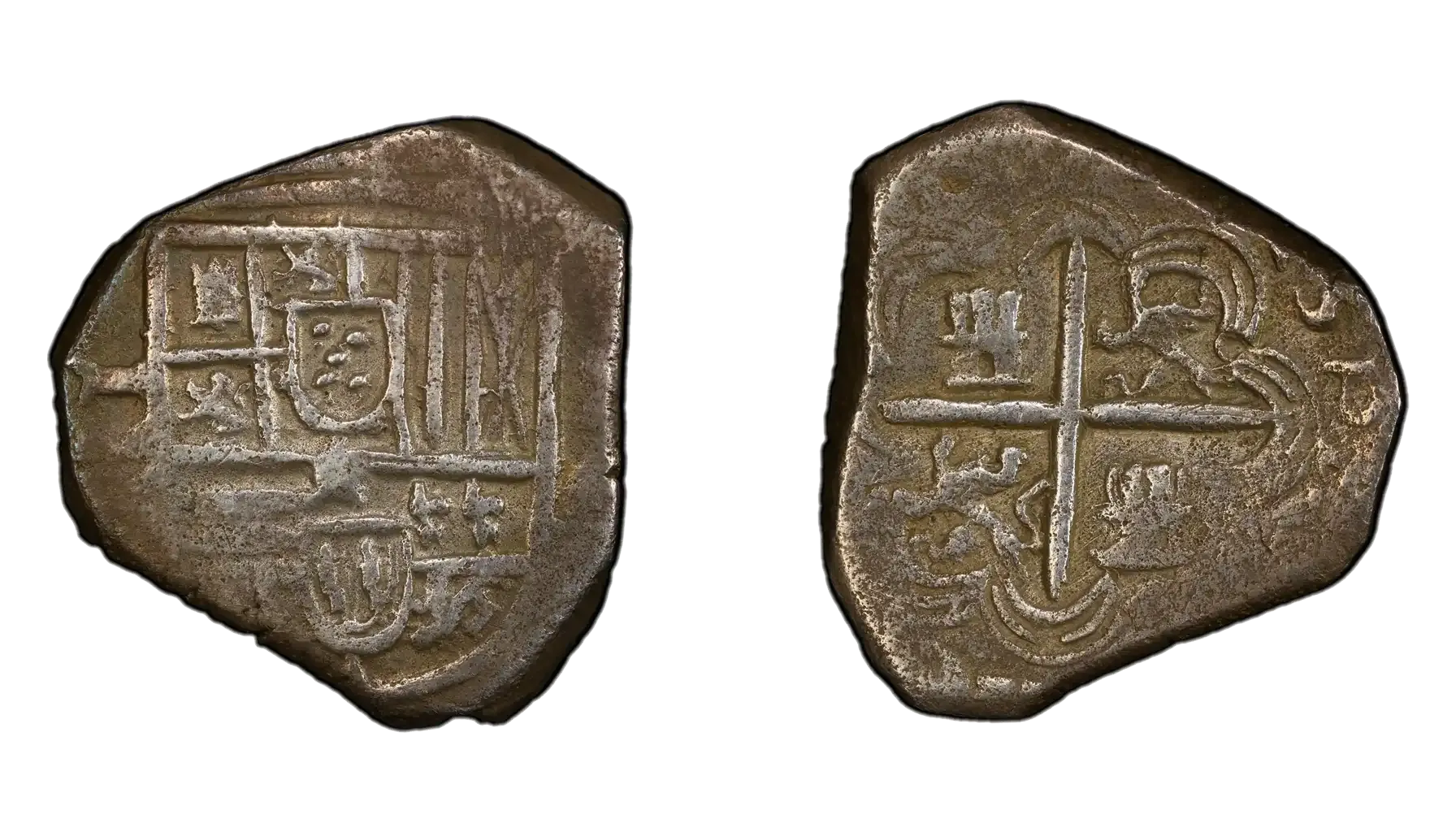
After Spain lost its American colonies, the supply of New World silver collapsed. French currency increasingly entered circulation, and Spain’s monetary reforms changed to decimal systems. In 1868, the real was finally replaced by the new peseta at a conversion of 1 dollar = 20 reales = 5 pesetas. Interestingly, the name “real” did not entirely disappear immediately, surviving colloquially as the 25 céntimos piece, a “quarter peseta.”
Spanish Reale Coin Value Guide
An approximate Spanish reales coin value:
Type | Common Value Range | Notes |
1 Real | $10 – $80 | Small silver coin; value rises with strong details |
2 Reales | $25 – $120 | Often seen with trade wear from circulation |
4 Reales | $60 – $250 | Harder to find undamaged |
8 Reales (pillar & portrait dollars) | $150 – $2,500+ | Core collector coin; price depends on mint and monarch |
Error strikes / clipped coins | $300 – $5,000 | Includes misaligned and irregular strikes |
Rare colonial mint marks | $500 – $10,000+ | Certain locations, such as Lima or Guatemala, command premium prices |
Provenance coins (shipwreck, museum-tagged) | $1,000 – $50,000+ | Highly collectible |
A Spanish real coin struck in Mexico or Potosí is usually worth more than one struck in mainland Spain.
Old Spanish Coins (Pre-Euro Currency)
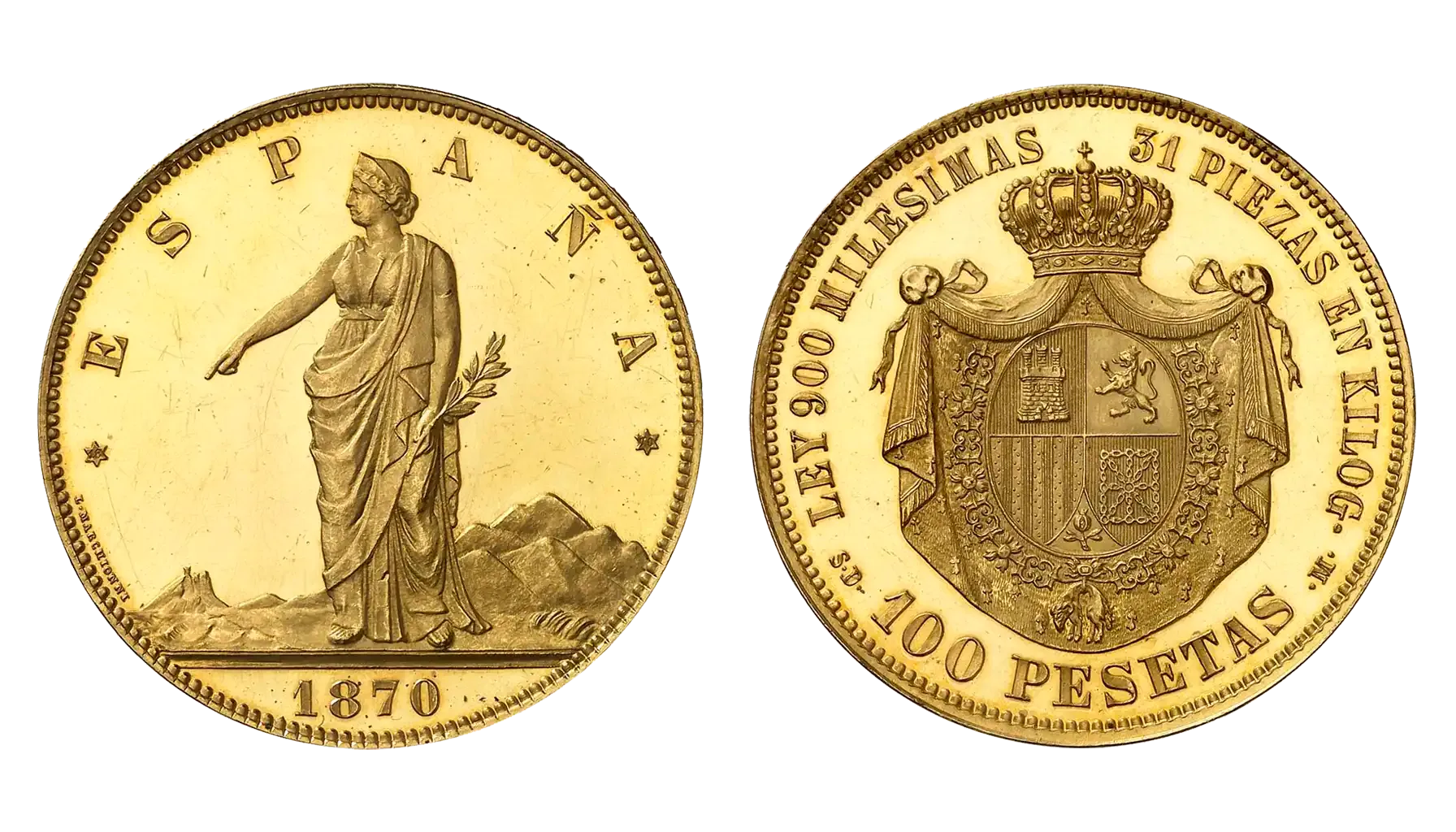
Before Spain adopted the euro, its currency had a very wide range of historical denominations. The peseta replaced the real in 1868 and lasted until 2002.
Era | Currency | Material | Example |
Medieval & Early Kingdoms | maravedí | copper | 1–8 maravedíes |
Real (14th–19th century) | reales | silver | 8 reales — pillar dollar |
Escudo era | escudos | gold 1–8 escudos | |
Peseta era (1868–2002) | pesetas | silver, copper-nickel, aluminum-bronze | 5-peseta duro |
Commemorative & Franco era | special pesetas | various | low-mintage issues |
The most sought old Spanish coin types are early reales, colonial mint strikes, pre-reform pesos, and rare Spanish silver coins tied to trans-oceanic trade and piracy lore.
How to Identify Authentic Spanish Coins
Weight and Purity
8 reales should weigh around 27.07g (± small wear loss)
Real silver purity is typically 0.900–0.930 fineness
Too-light coins are suspect unless clearly worn
Correct Edge Treatment
True Spanish colonial coins often have:
Machine-milled edges (post-1732)
Earlier hammered coins appear irregular
Mint marks
Examples:
M = Mexico
PTS = Potosí
LM = Lima
Mint marks must match the monarch’s era.
Monarch Inscriptions
Example texts include:
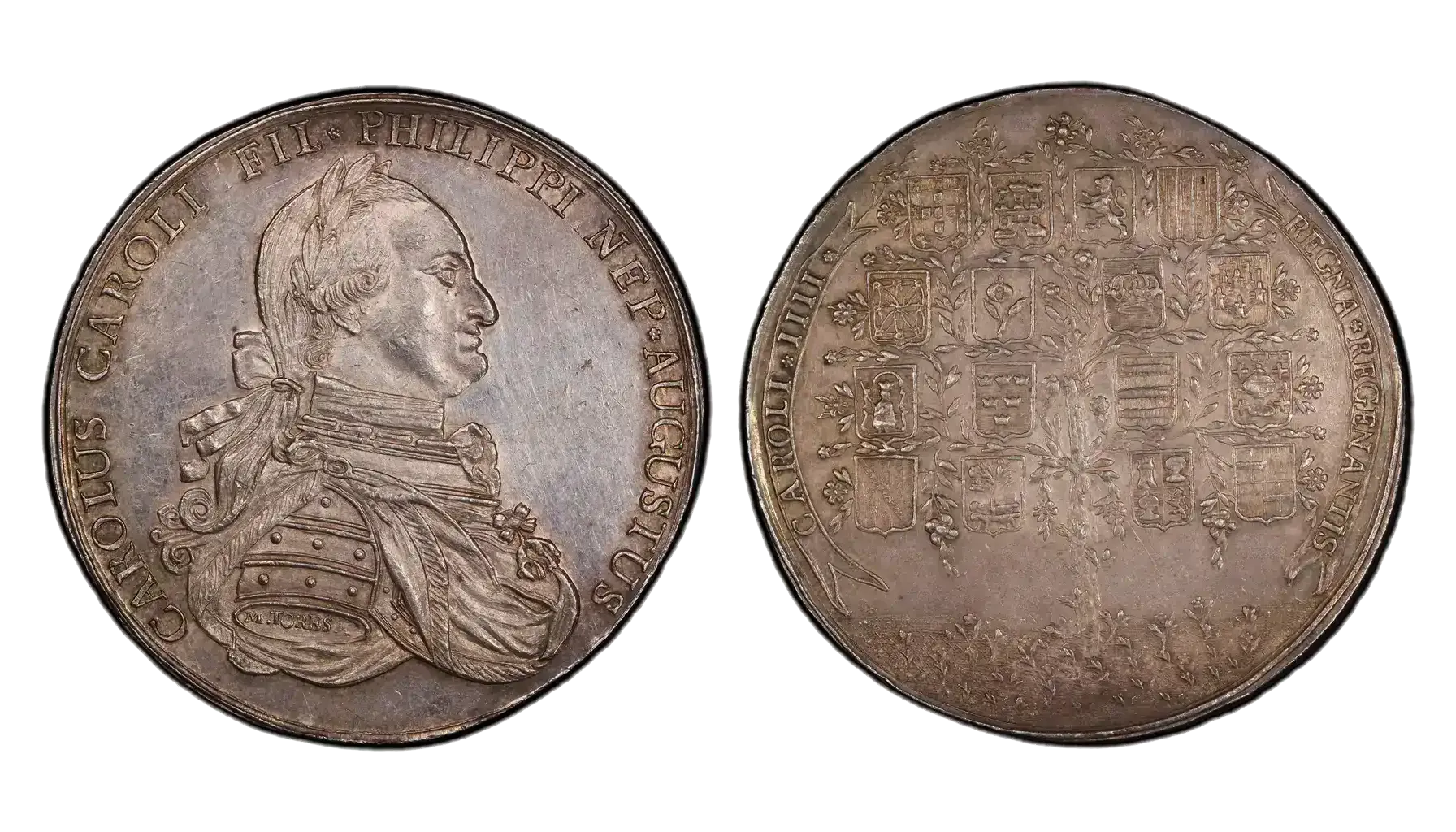
CAROLUS IIII DEI GRATIA
FERDINANDUS VII
Any misspelling or modern typography is suspicious.
Chop Marks
Coins with authentic Chinese-market chop marks are not damaged. The stamps were applied by merchants in the Qing-era trade to certify that the coin’s silver purity had been personally verified.
A Spanish reale with genuine chop marks often sells for more than a clean specimen because it shows that the piece participated in global commerce.
Professional Certification
For expensive Spanish reale coin varieties, grading by PCGS or NGC is recommended. Because many valuable Spanish reale coins have been heavily counterfeited, collectors and auction houses place much more trust in coins authenticated by PCGS or NGC. Certification confirms that the piece is genuine, verifies the correct mint and monarch attribution, and gives you an official grade that directly determines market value.
A slabbed piece has higher prices and is easier to sell. It also gives long-term protection of the coin itself, preventing damage or environmental wear.

 Facebook
  X (Twitter)
  Pinterest
  LinkedIn