Contents:
Yen coins have always been associated with Asia, but lately, we have heard more and more of them. Perhaps it’s time to let the curtain fall and learn more about this monetary piece of history.
Get ready for a Yen coin review. We will learn about the Yen’s history, design, composition, and more.
Have you ever heard of a Coin Scanner Online? It’s an app that can scan a coin in seconds and tell you everything to know about it, from value to country.
Overview of Japanese Yen Coins
The Japanese yen (¥) is an old coin, but not as ancient as we might think.
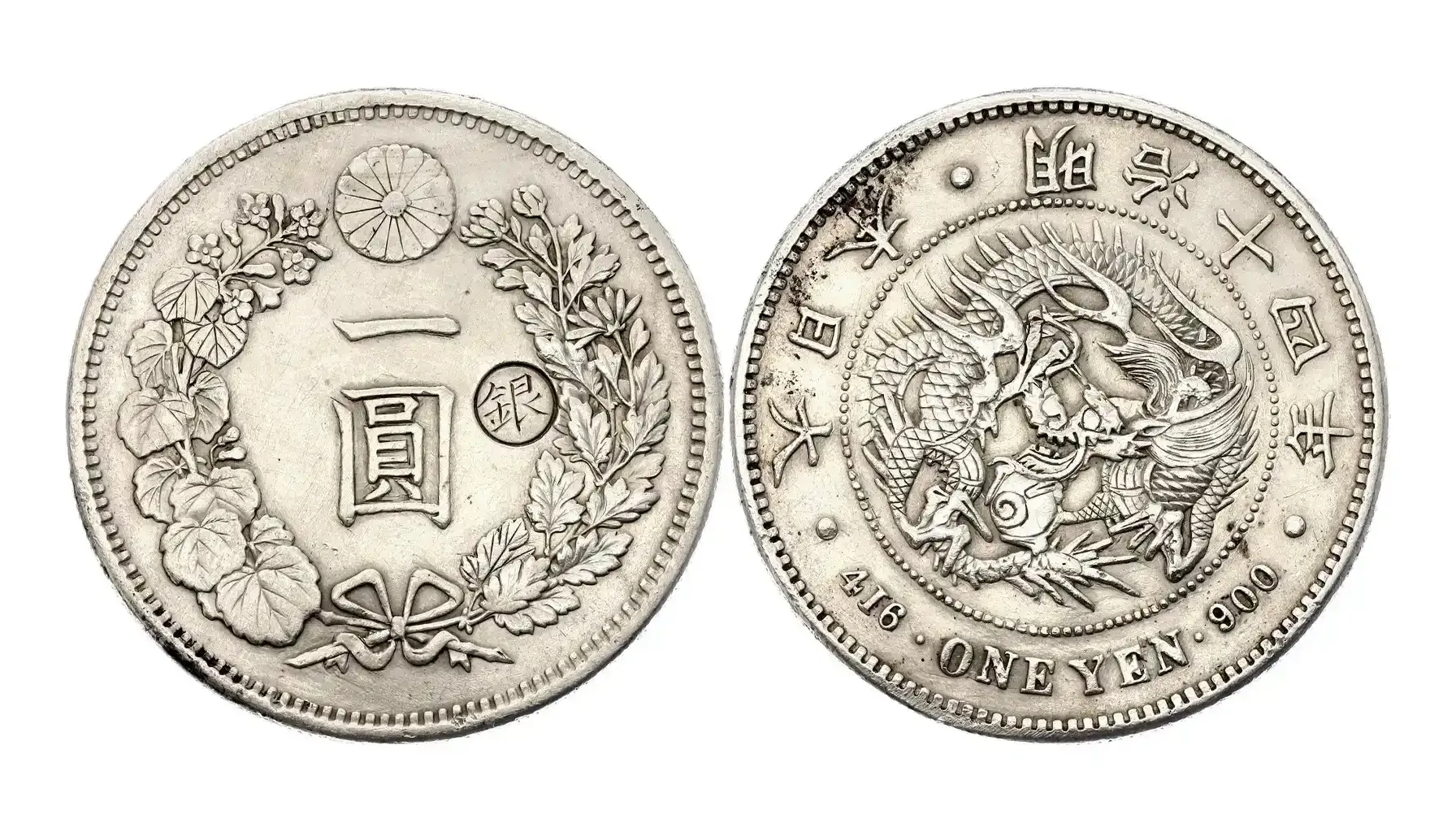
Yen in Japan was introduced in 1871 during the Meiji Restoration period. A period when Japan took a lot of inspiration from the West, especially regarding technologies. Minting is also a part of technology, so a new currency had to be expected.
The Yen replaced the complex Edo-period monetary system with a modern, decimal-based currency. The first few yen were gold coins. Funnily, there was no one yen coin in the initial release. There were “two”, “five”, even “twenty” yen, but not the base coin.
In just a few years, the “set” was complete, and today we have 1, 5, 10, 50, 100, and 500 yen coins. Each denomination carries unique symbolism drawn from Japanese culture and history. Some feature the rice stalks (5 yen), others show off the cherry blossoms (100 yen). We will focus on the 1 yen denomination, though, as the base.
All Yen are durable, simple in an elegant way, and uphold consistent design standards. Most coins are minted by the Japan Mint, which ensures their high-quality finish and precise weight.
The 1 Yen Coin – Japan’s Lightest Currency
Among all denominations, the Japanese 1 yen coin stands out for its minimalism and engineering precision. Even the Canadian Loonie, which took over a year to form and meticulously took notes even from foreign coins, would not feel absolutely confident competing here in precision.
Of course, to reach this level of precision, the one yen had to undergo a lot of trial and error. There were first the gold ones. Then the new design was inspired by bimetallism. Then, brass, until Japan finally reached the aluminum standard in 1955, which we still have today.
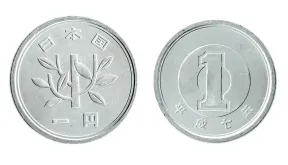
Indeed, the 1 yen coin is made entirely of aluminum, making it remarkably light, weighing exactly 1 gram. The bit could even float in water, as long as you place it carefully.
Attribute | Details |
Country | Japan |
Years of Minting | 1955 – Present |
Type | Circulating |
Shape | Round |
Edge | Smooth |
Metal Content | 100% Aluminum |
Total Weight | 1.0 gram |
Diameter | 20.0 millimeters |
Thickness | 1.5 millimeters |
The design is also interesting. Very minimalistic.
The obverse side features a young tree, symbolizing Japan’s growth and development in the years following World War II. You will see the words "State of Japan" above, and "1 Yen" below
The reverse side bears the denomination “1” and the inscription “Nippon” (Japan) along with the year of minting, written in Japanese characters.
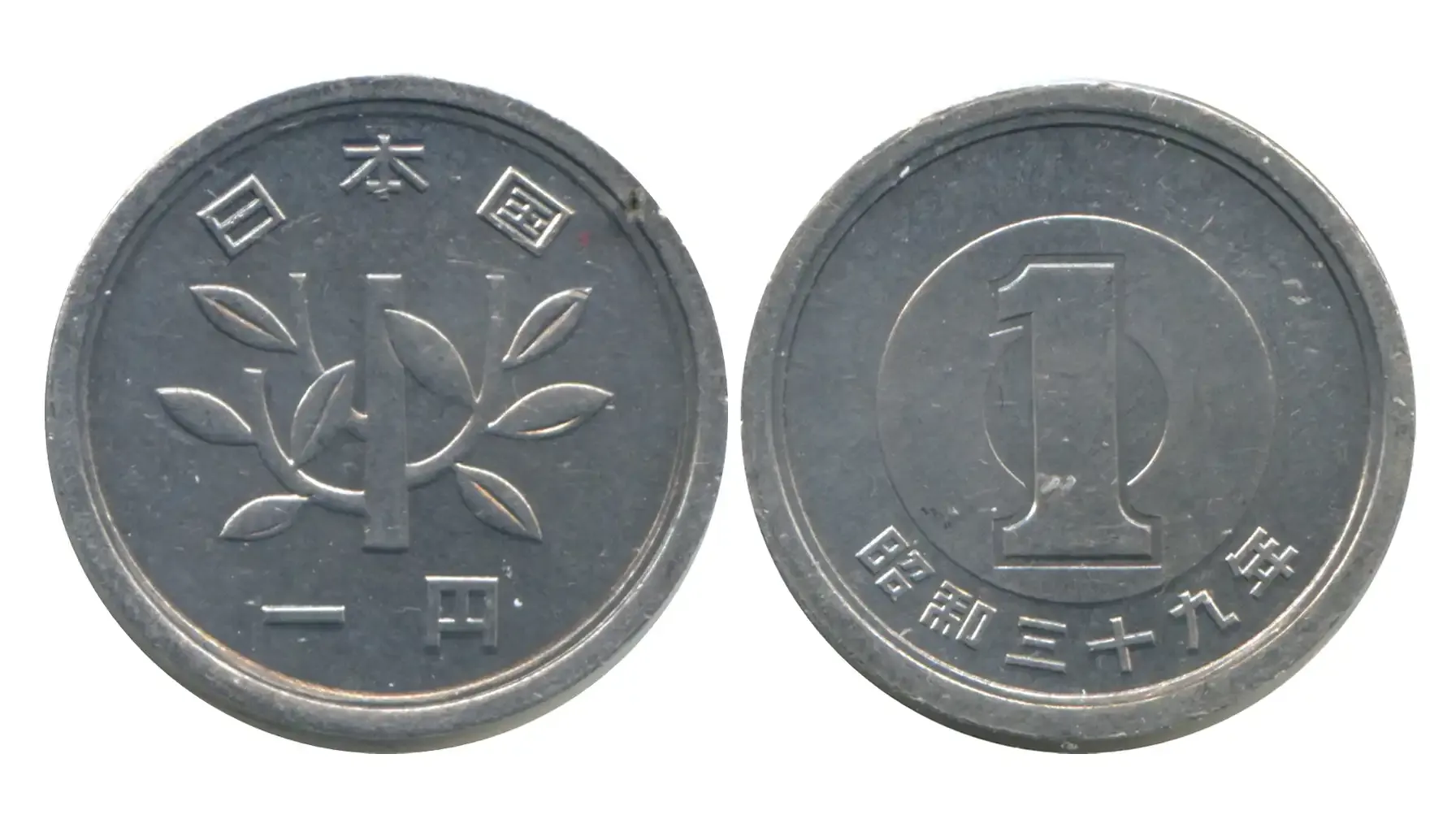
"The 1-yen coin, which was first issued in 1955, is the oldest coin among presently-manufactured coins and marked its 50th anniversary in 2005."
— Japan Mint
Official Website
The Value of the 1 Yen Coin
In many ways, this coin is minimalist. The design, the weight… the value is minimalistic too, unfortunately.
In practical terms, the 1 yen coin holds minimal purchasing power today. It is roughly equivalent to less than one U.S. cent. However, it still plays an important role in Japan’s economy and everyday transactions. Prices of goods and taxes in Japan can drop to a single yen, so they remain in circulation.
One exception remains, though. Particular bits from low-mintage years or with errors are valuable. Most are old-timers, and they are primarily valuable due to precious metals.
Year (Era) | Material / Type | Auction Year | Sale Price (USD) | Notes |
1870 (Meiji 3) | Silver | 2019 | $1,550 | One of the first silver yen was struck. Rare in high grade |
1874 (Meiji 7) | Silver | 2022 | $5,280 | Rare design variety (shallower than most) |
1880 (Meiji 13) | Gold | 2011 | $97,750 | One of the rarest Japanese gold bits |
Of course, there’s always more to a bit than monetary value. The folks from the US may remember the Peace dollars. Relatively valuable, of course, but their symbolism of peace after World War I was priceless.
1 yen coin value is rather educational and symbolic. Many Japanese children learn basic math and money-handling skills using 1 yen bits, while tourists often keep them as souvenirs. So, despite its humble value, the 1 yen is a significant cultural and historical piece.
How to Collect Yen Coins
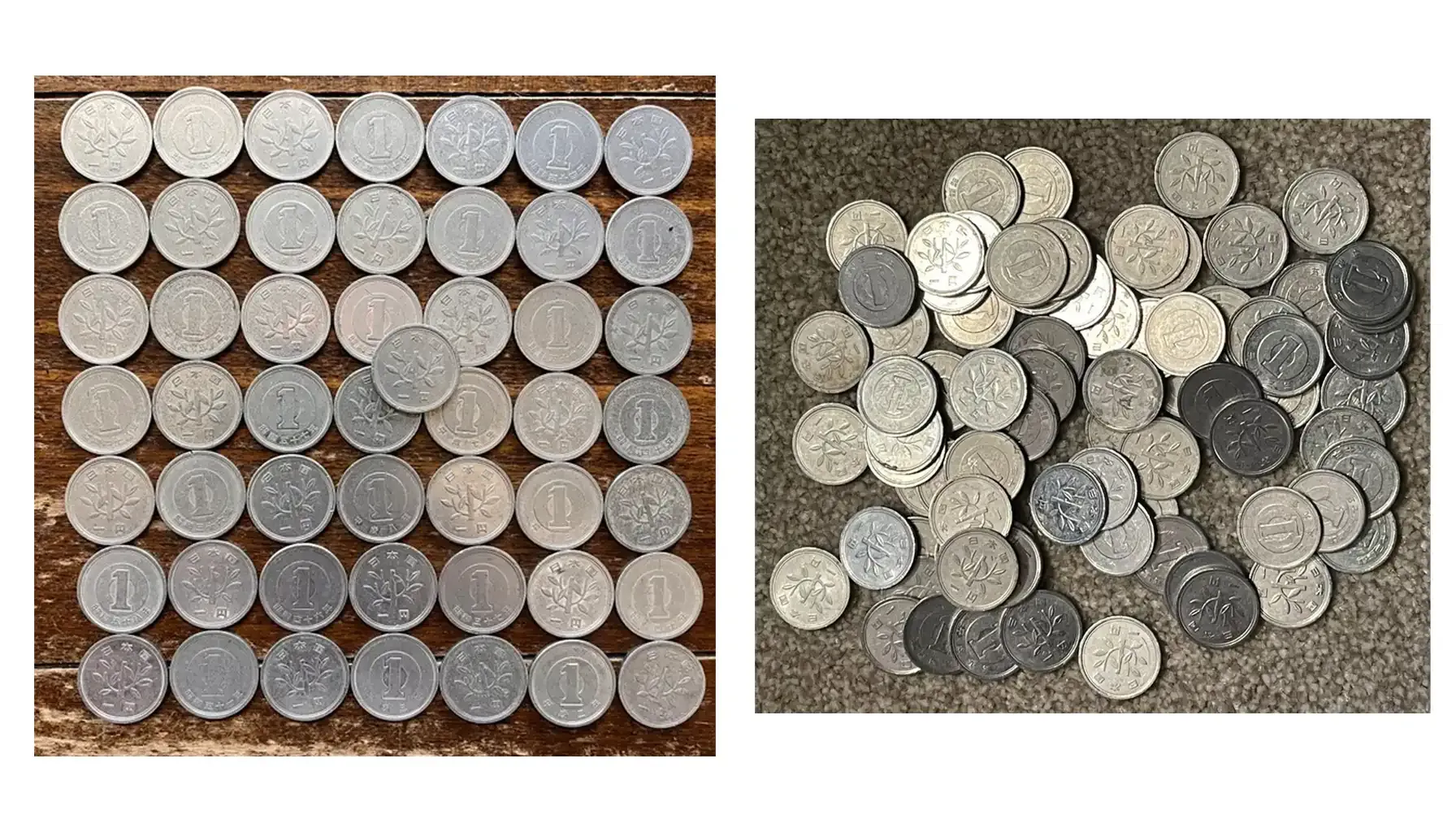
Collecting is a hobby all too familiar to the Japanese. You can start collecting their currency. That might be difficult if you are living outside Japan, but our world is anything but full of possibilities.
They generally start collecting different years and mint marks of coins from everyday transactions or souvenir shops. The Japan Mint also occasionally issues a variety of commemorative coins to celebrate important events.
Serious collectors, though, are keen on a specific piece. Collectors often look for:
Proof bits, struck with special dies for a mirror-like finish.
Low-mintage bits, which are rarer and increase in value over time.
Historical bits, such as pre-World War II silver and bronze bits. Gold and silver bits are technically older, but you are more likely to find them in museums nowadays.
Error bits, which feature minting anomalies and are highly sought after. The errors are not unique, the same off-centre strikes and double dies can happen to any bit.
After you’ve successfully acquired a piece, you need to think about storage. Proper storage is essential. Coins should be kept in protective cases or albums. Such casing helps against oxidation, a chemical reaction that makes aluminum bits look speckled and dusty.
Conclusion
Japan’s artistry, history, and technological advancement all combined to create Yen. The 1 yen in particular captures Japan’s spirit: practical, minimalistic, and yet enduring, meaningful.
While most coins like that are rarely used outside convenience stores, yen coins show off Japanese culture in every small detail. And, globally, they are doing very well. The third most often used currency in the world!
Currency | Approximate Share | Notes |
US dollar (USD) | ~47–55% | Dominant currency for trade, especially in precious metals. |
Euro (EUR) | ~21–23% | Second after the dollar, and the king of the Eurozone. |
Japanese yen (JPY) | ~16.8% | Highly active in forex (exchange) markets. The third best. |
Collectors would need a lot of guidance to successfully complete a collection of Japanese bits. Gladly, an app like Coin ID Scanner has most of the world’s coins in its database, including Japanese. The app comes with an AI assistant and guides. Both could teach you about collecting and trading.

 Facebook
  X (Twitter)
  Pinterest
  LinkedIn