Contents:
Dollar coins entered circulation in 1794, and since then, they have comprised one of the most popular and extensively collected categories of American coinage.
The value of $1 coins differs proportionally, depending on the period, key dates, types, and grades, as attributed by reputable coin-grading services: for example, the most expensive $1 piece was issued in 1794 and was worth $6,600,000 (Heritage Auctions, 2021).
Even though the major part of 1-dollar units is rather affordable, outstanding numismatic creations typically exceed the face value by hundreds or thousands of dollars, and these differences remain obvious on the market. So, what dollar coins are worth money, and how to check coin value in order to estimate the market price of a specific piece?
Why Some One Dollar Coins Are Valuable?
The $1 dollar coin value is a complex variable that depends primarily on rarity, condition, and status of the coin (e.g., key date, error, commemorative issue, proof variety, etc.), even though the face value is always standard. The market price, in turn, is a true reflection of how desirable the coin is at a given time, which may fluctuate over time anyway.
Smaller mintage figures usually mean that the coins are naturally scarce and, hence, their survival rates are lower than those of extensively produced numismatic creations.
Well-preserved units of currency, i.e., those with little wear, pronounced features, and original luster, may be worth hundreds or thousands of dollars.
Sometimes, production years and mint locations may be seen as exceptional, as they relate to special minting decisions and/or key dates (e.g., units from Carson City and West Point).
Every design deviation, which makes a coin exclusive, be it an off-center strike, a doubled die error, a wrong planchet, or any other unusual feature, can make a coin especially collectible.
Silver, gold, platinum, and palladium coins are intrinsically valuable (which is multiplied by collectors' interest), and precious metal rates rarely depreciate.
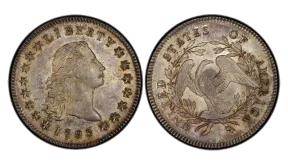
“The Flowing Hair design appeared on the first United States Silver Dollars in 1794, but only lasted until sometime in 1795 <...>. The 1794 $1 is a rare coin, represented by approximately 150-200 survivors. The 1795 $1 is much more common, but the demand from type collectors keeps the prices high.”
— Ron Guth, PCGS expert, licensed Certified Public Accountant
PCGS CoinFacts
What One Dollar Coins Are Worth Money?
Not every release has been fortunate enough to become valuable from the numismatic perspective. However, every category (=coin type) may boast unique varieties and special issues that managed to turn into collectible items with strong market demand. So, which dollar coins are worth money by design type (as per PCGS)?
Flowing Hair $1 (1794–1795): First-year types
Draped Bust $1 (1795–1804): Early silver key dates
Seated Liberty $1 (1836–1873): Scarce collector issues
Trade $1 (1873–1885): Proofs and rare dates
Morgan $1 (1878–1921): Key dates and VAM varieties
Peace $1 (1921–1935): Better dates and premium grades
Ike $1 (1971–1978): Silver collector issues
Susan B. Anthony $1 (1979–1999): Proofs and error coins
Sacagawea $1 (2000–...): Cheerios dollars and varieties
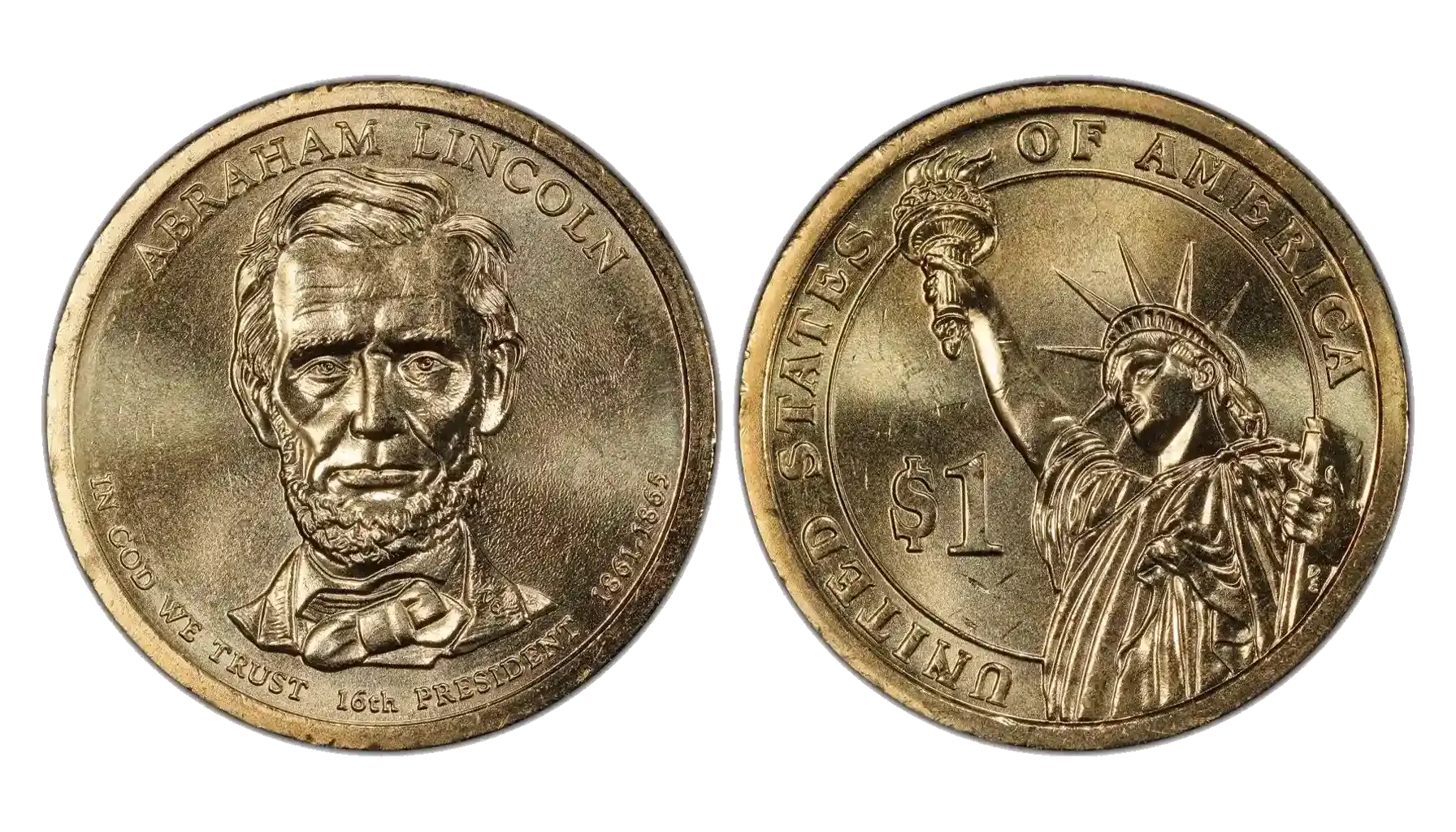
Presidential Program (2007–...): Missing-edge-lettering errors
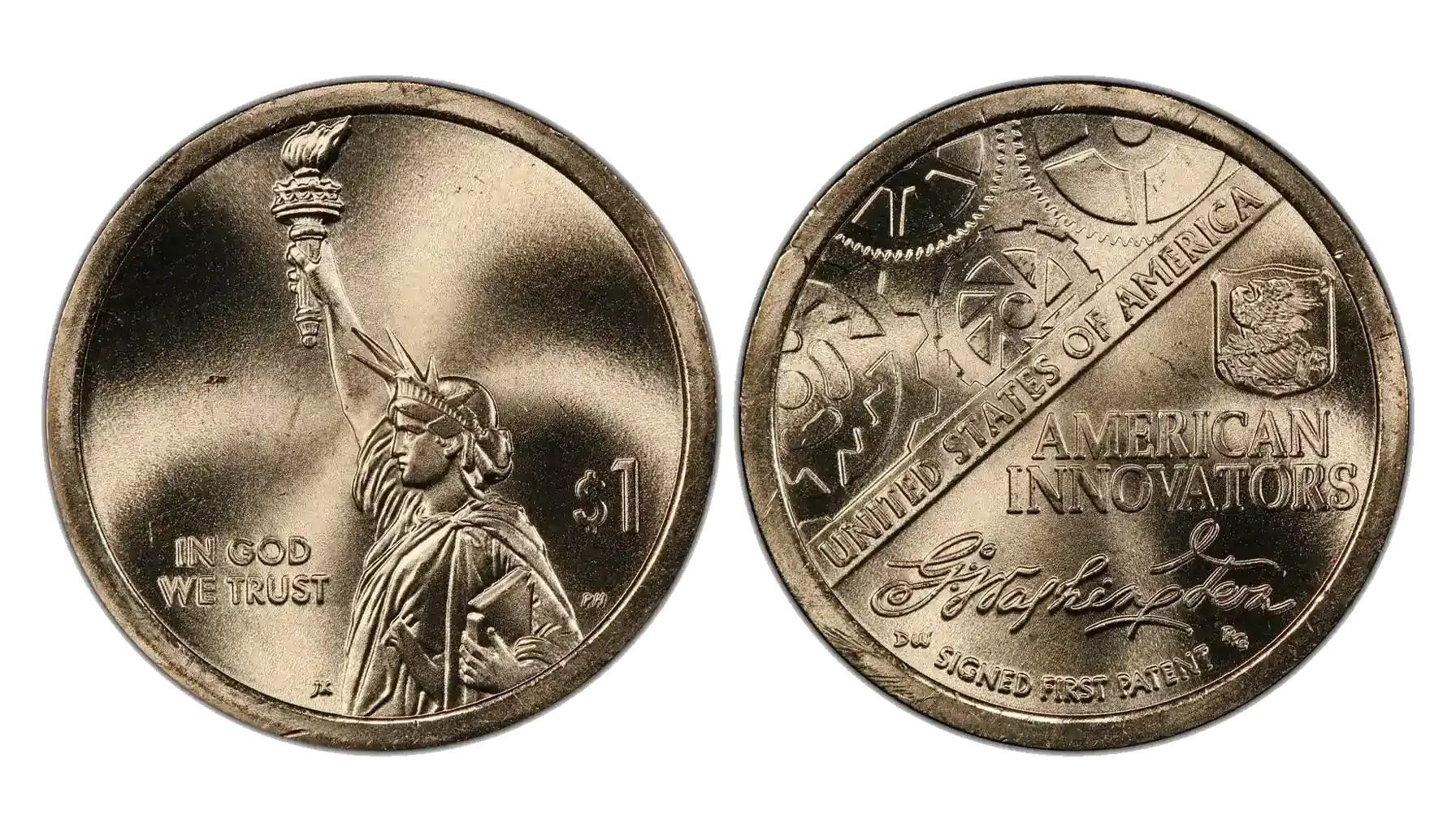
American Innovation $1 (2018–2032): Modern key varieties
Morgan and Peace Dollar Reproductions: Limited modern revival issues
One Dollar Coins Worth Money List
Over the years, the denomination showed numerous silver and gold dollar coins worth money that set ultimate records at auction. Besides, the most expensive pieces are considered legendary in US numismatics (see the 1794 Flowing Hair Silver dollar as an outstanding example).
Name | Key Feature | Auction record |
1794 $1 | First U.S. silver dollar | $6,600,000 |
1885 T$1 | Extremely rare proof issue | $3,960,000 |
1804 $1 | Legendary original proof rarity | $3,877,500 |
1849-C G$1 | Charlotte Mint, Open Wreath | $1,560,000 |
1796 $1 Small Date | Small Date, Small Letters variety | $1,175,000 |
1884 T$1 | Rare proof Trade dollar | $1,140,000 |
1866 $1 No Motto | Pattern-style No Motto type | $1,050,000 |
1854 G$1 Type One | Unique proof gold dollar | $720,000 |
1889-CC $1 | Key-date Carson City Morgan | $660,000 |
These are the most precious coins (according to Heritage Auctions) within the denomination group. For more detailed info, please refer to Coin ID Scanner to identify numismatic creations, analyze their specs and backgrounds, and explore other, less expensive varieties found on the market.
Rare 1 Dollar Coins Worth Money to Look For
1794 Flowing Hair $1
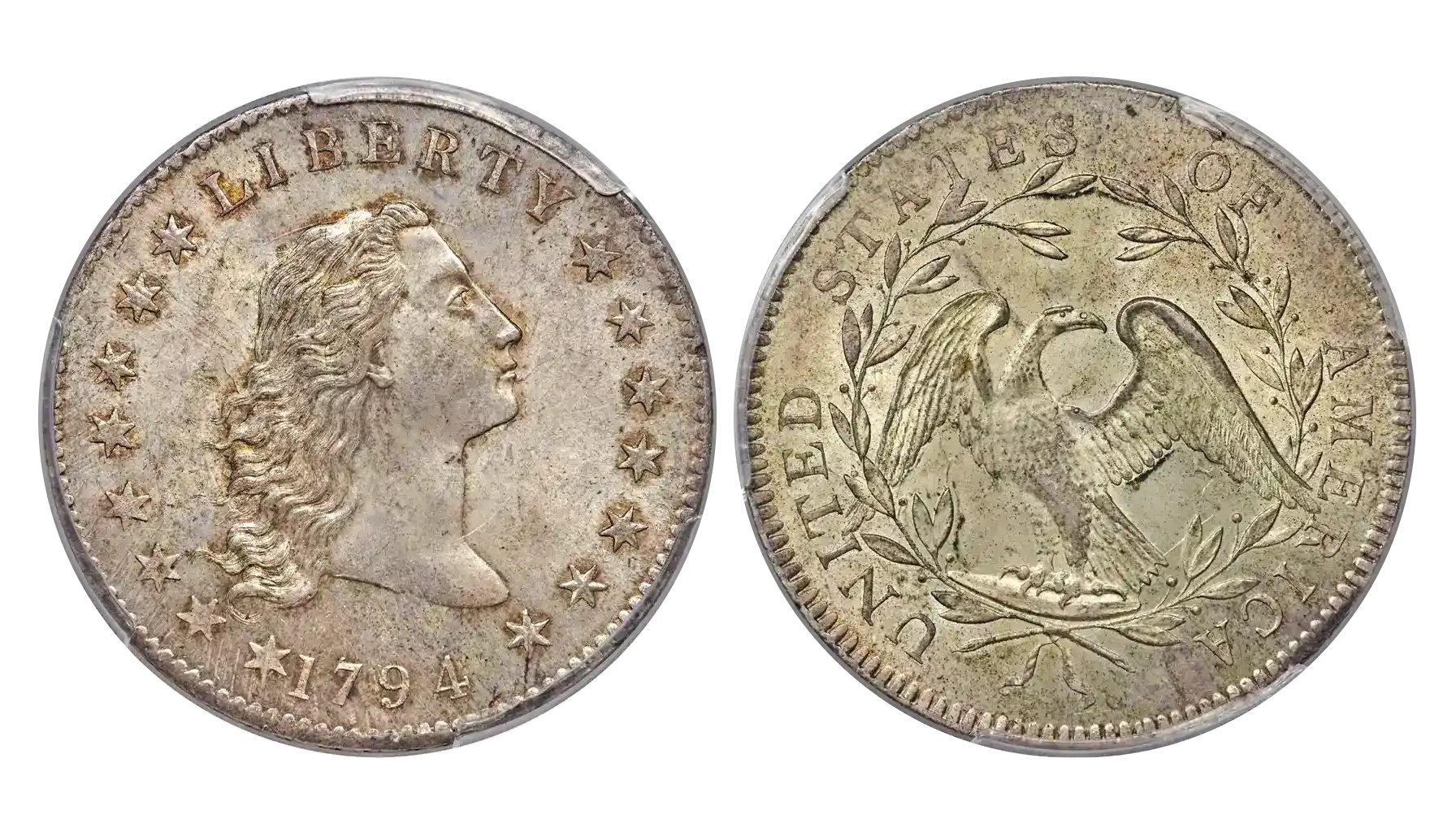
Record: $6,600,000
The very first dollar coin appeared in the system in 1794 within the Flowing Hair design group. This was the start of official US coinage, and this can be honorably considered one of the most important numismatic instances, thanks to its restricted production and association with American history.
1804 Draped Bust $1
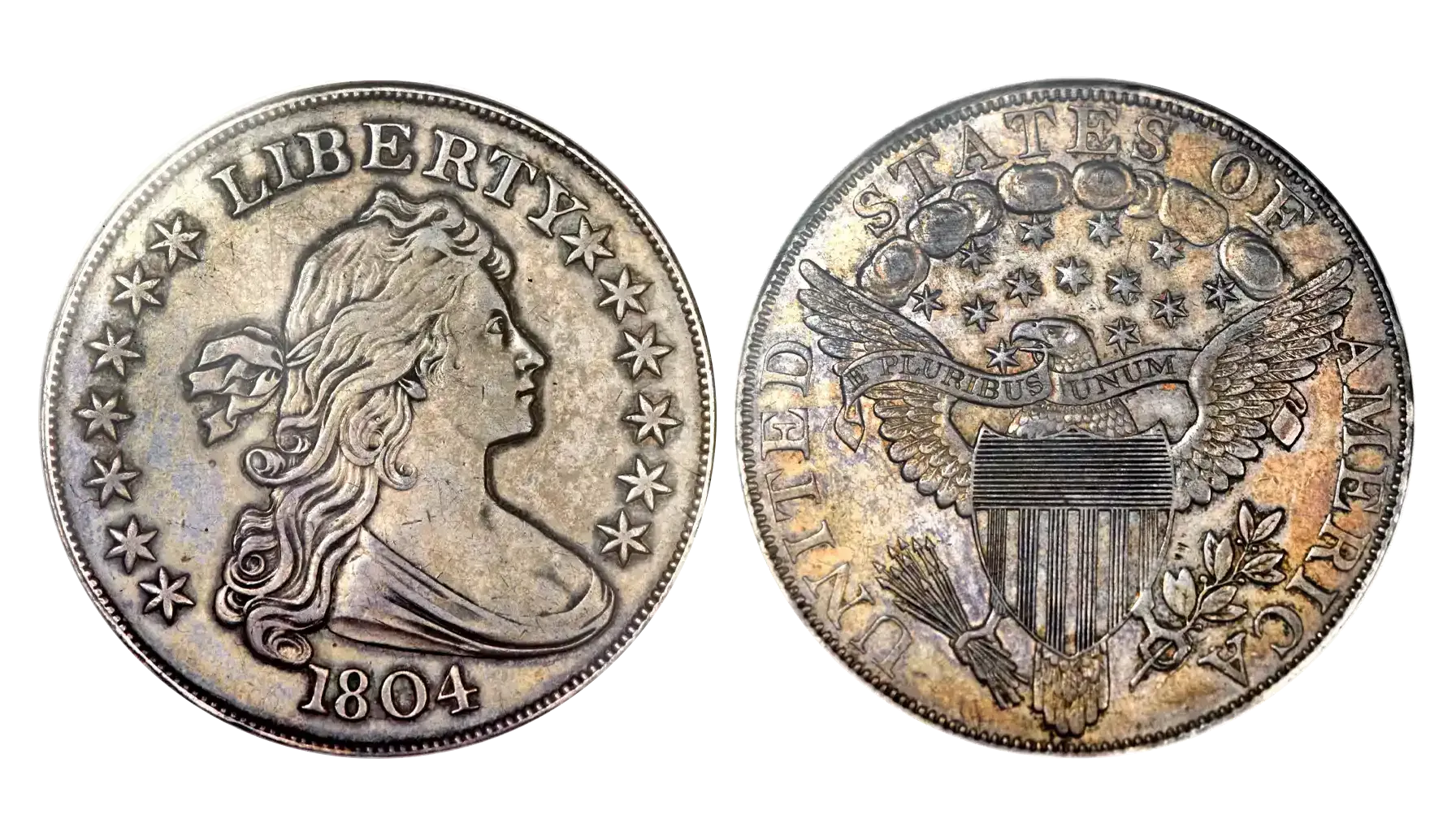
Record: $3,877,500
In the professional community, the 1804 Draped Bust variety is widely known as the "King of American Coins", and it was actually struck as a diplomatic gift, though the real date of coinage refers to the 1830s. Essentially, the coin became valuable because of its design, too, as it showed Lady Liberty on the front and a heraldic eagle on the back; the fact of its coinage itself turns this instance into a true numismatic relic.
1836 Gobrecht $1
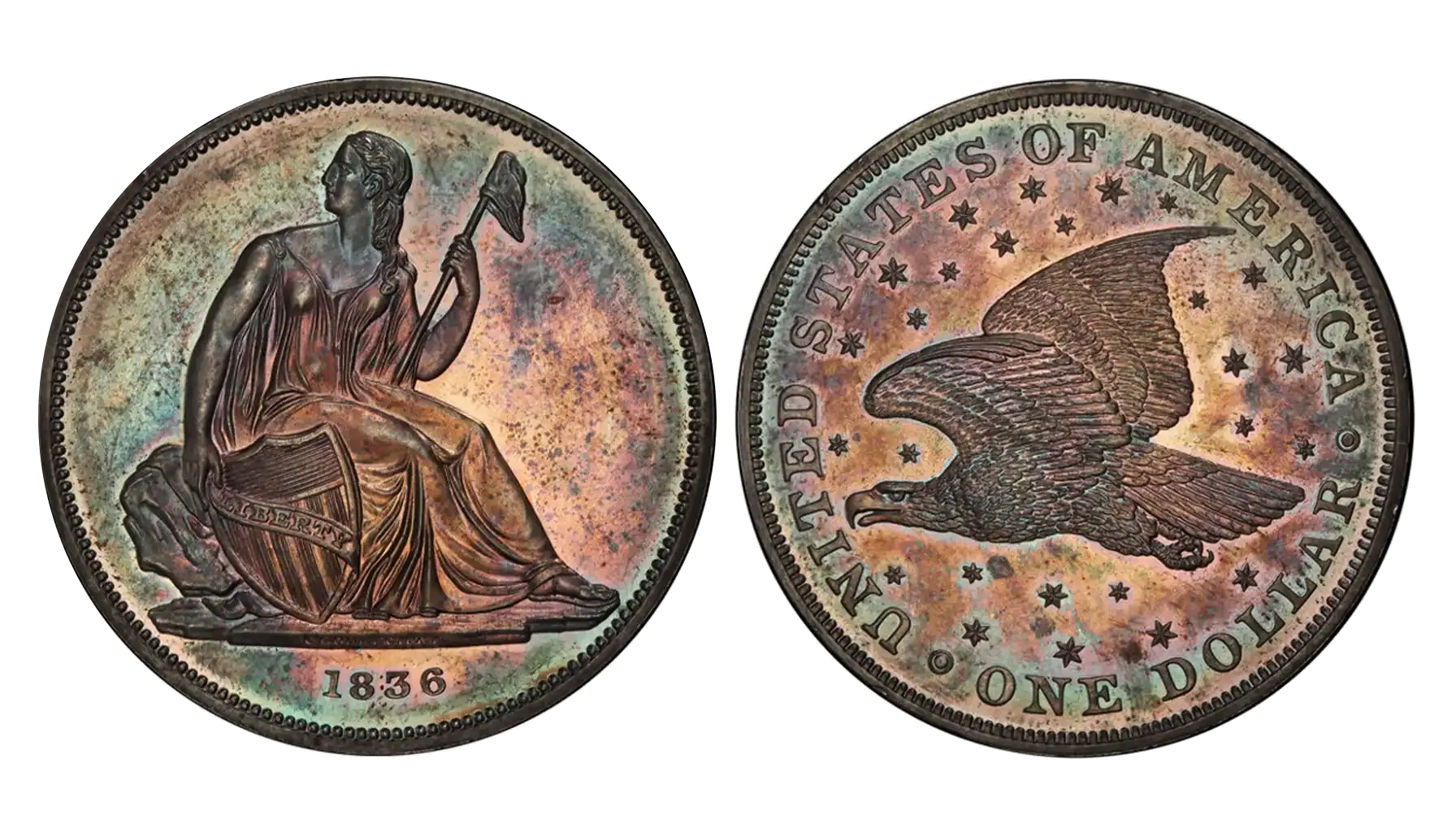
Record: $264,000
30 years after the release of the last silver coin, the United States Mint returned to its profitable numismatic section and introduced the new dollar in 1836, which was designed by Christian Gobrecht and featured a soaring eagle on the reverse and a seated Liberty on the obverse side. And so as to test the public’s reaction toward “reimagined” coinage, these were produced in small quantities.
1870-S Seated Liberty $1
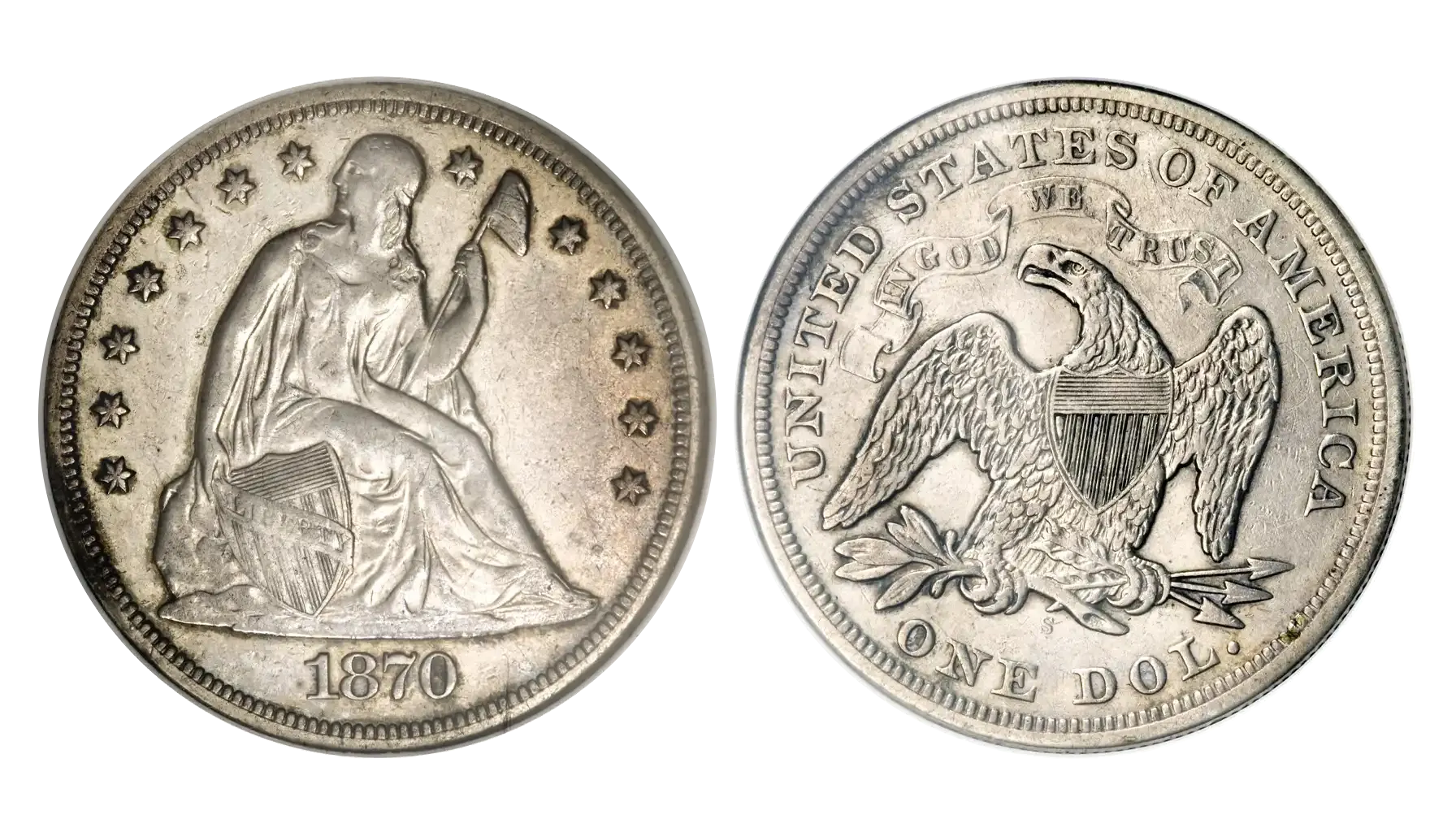
Record: $805,000
At times, the place of the coin's origin is the main factor that defines its value. This is the case when instances minted in San Francisco, i.e., the 1870-S Seated Liberty silver dollar coins worth money, are scarce and, thus, collectible. Like the majority of coins, it shows Lady Liberty yet sitting on a rock with a pole and a shield in her hands. But why is it so special? The mystery lies in its unofficial minting and possible connection to the establishment of the San Francisco Mint.
1885 Trade $1
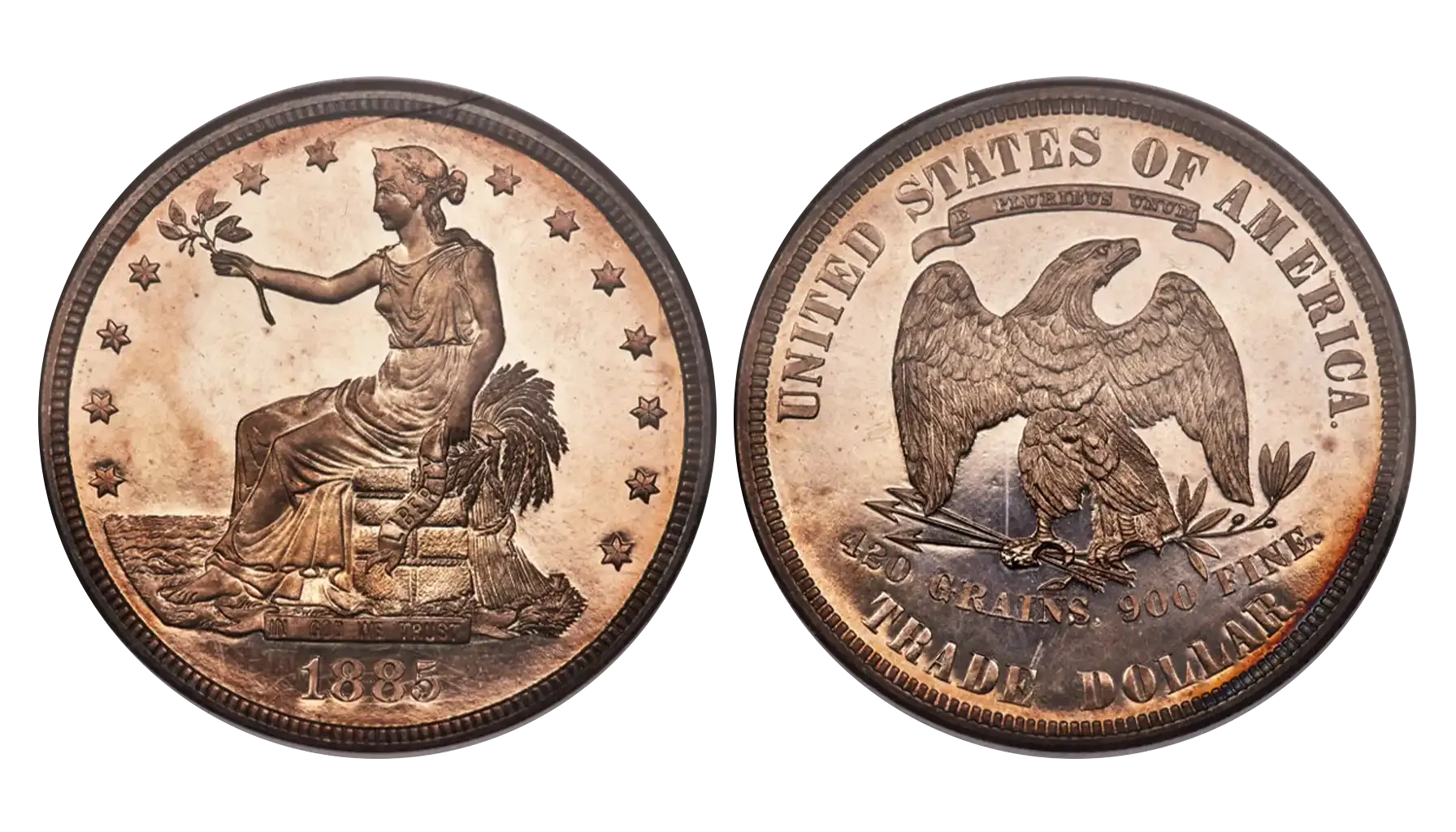
Record: $3,960,000
Having never been formally put into circulation, the 1885 Trade $1 refers to US dollar coins worth money cloaked in mystery. It featured Lady Liberty sitting atop a bale of goods, but barely could we see it in real life, for there are only a few examples known to exist. It was the end of the production of Trade instances, and this case represents the series at its best.
1893-S Morgan Silver $1
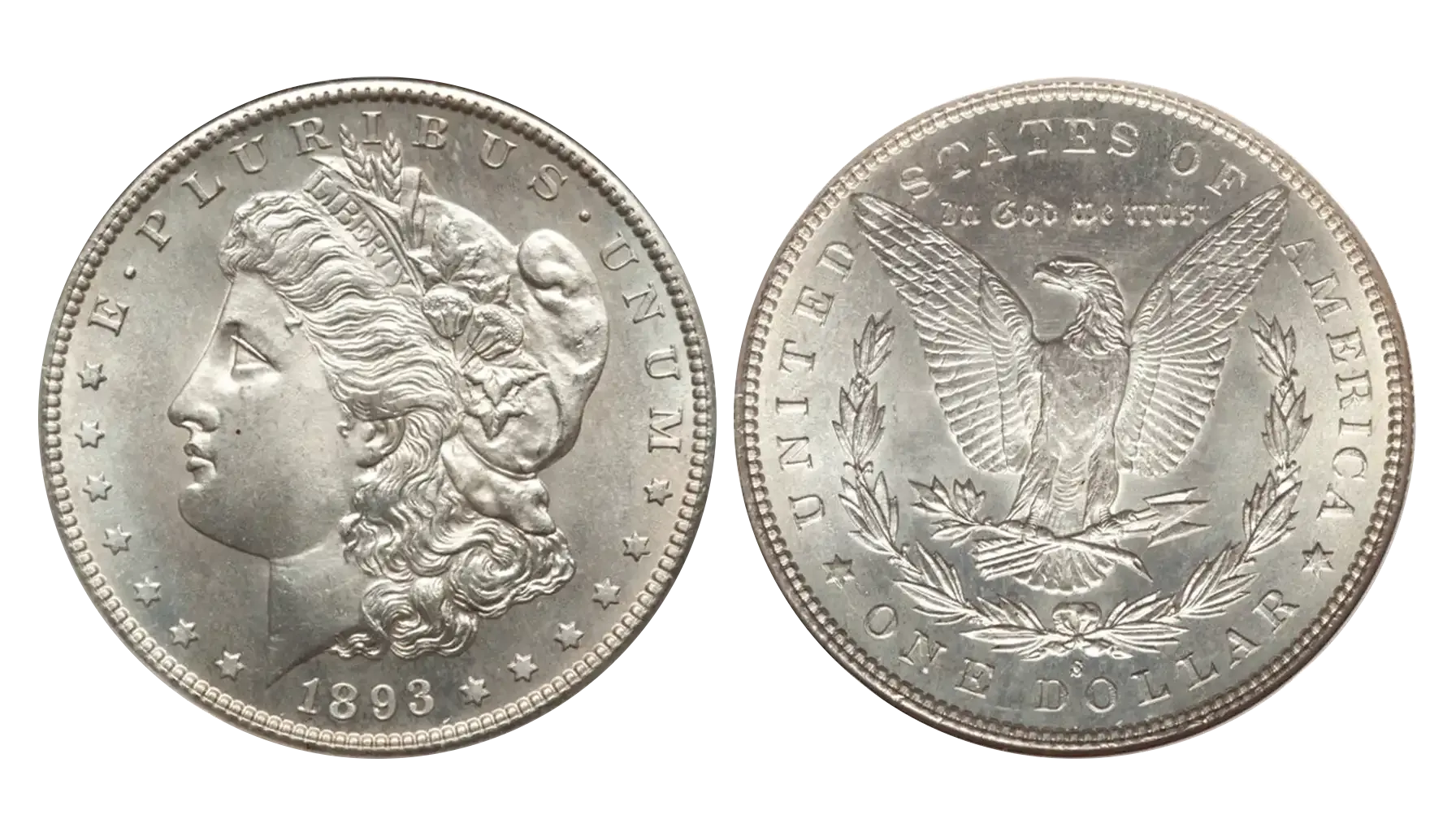
Record: $546,250
What year dollar coins are worth money? One should note the Morgan option minted at the San Francisco Mint in 1893. Only 100,000 were produced, and it has an eagle on the back and the famous image of Lady Liberty on the front. Because of low production during the 1893 economic slump, surviving specimens are extremely rare and overly valuable.
1921 Peace $1 (High Relief)
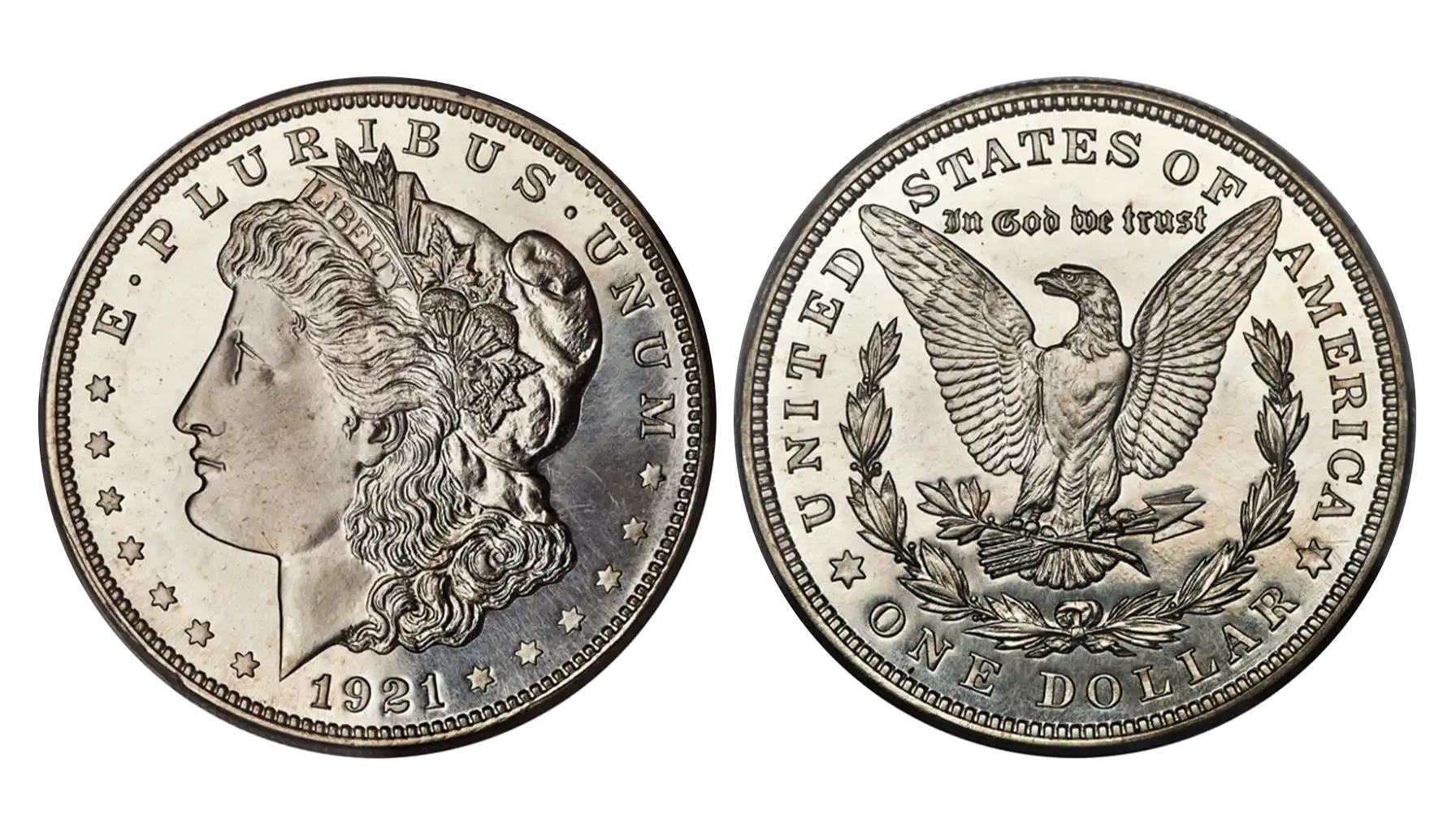
Record: $240,000
Commemorative coins represent the finest category of numismatic products: the 1921 Peace variety, for example, was designed in order to honor and perpetuate the peace after World War II, which is why it bore the depictions of an eagle on a rock on the reverse and a high-relief image of Liberty on the obverse side. The perfect condition of these instances is rare, so obtaining high-grade examples of this sort is a collecting miracle.
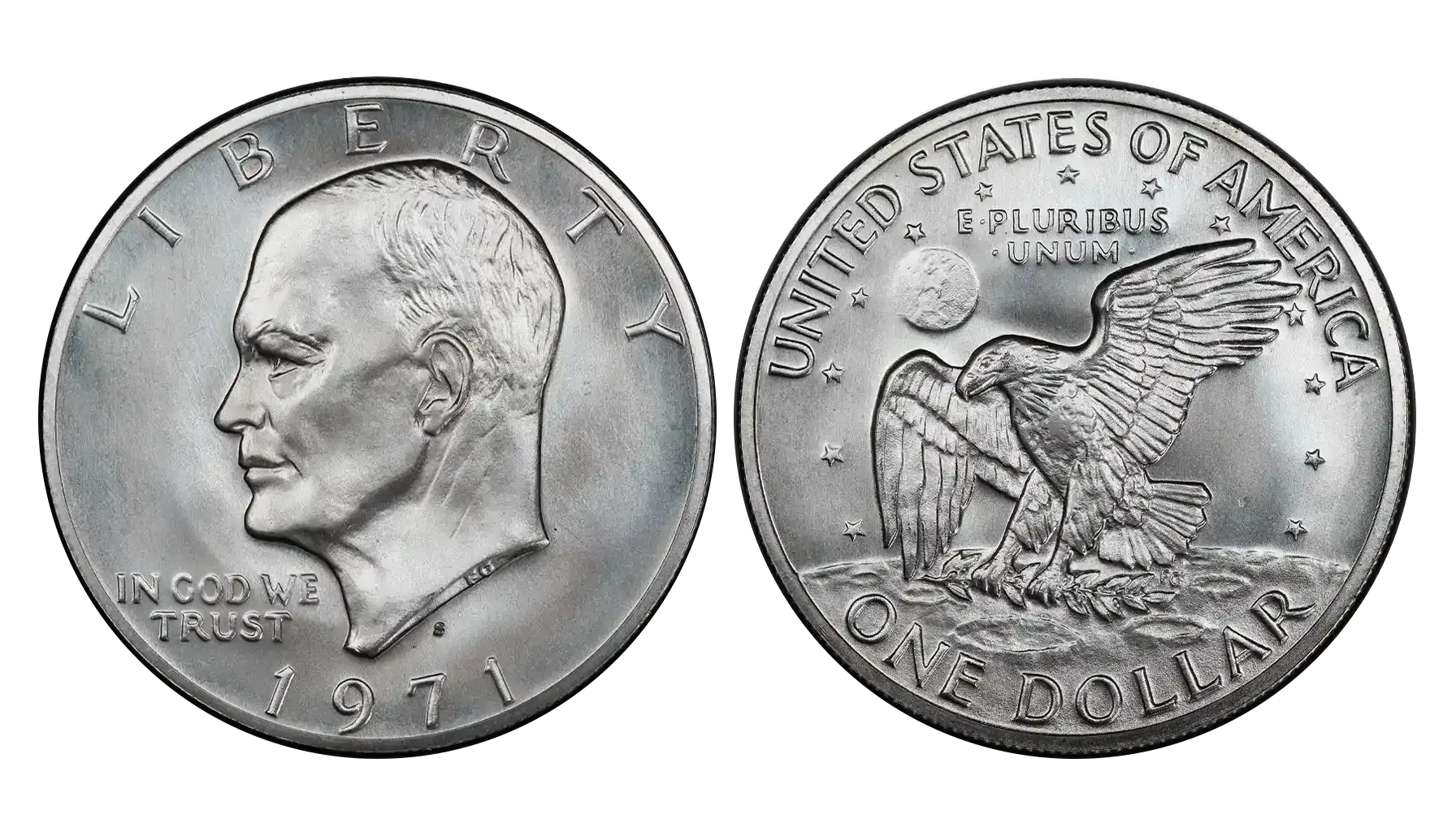
1971 Eisenhower $1 (Silver Proof)
Record: $264,000
The 1971 Eisenhower Dollar, which honored President Dwight D. Eisenhower, was the first dollar numismatic creation to have been minted after a protracted break. Even though the regular program was also interesting to explore, the prototype variety is considered the most valuable either way. The dramatic design of Eisenhower's profile and an eagle landing on the moon was manufactured by the San Francisco Mint in a silver proof variant, which has 40% silver content in it.
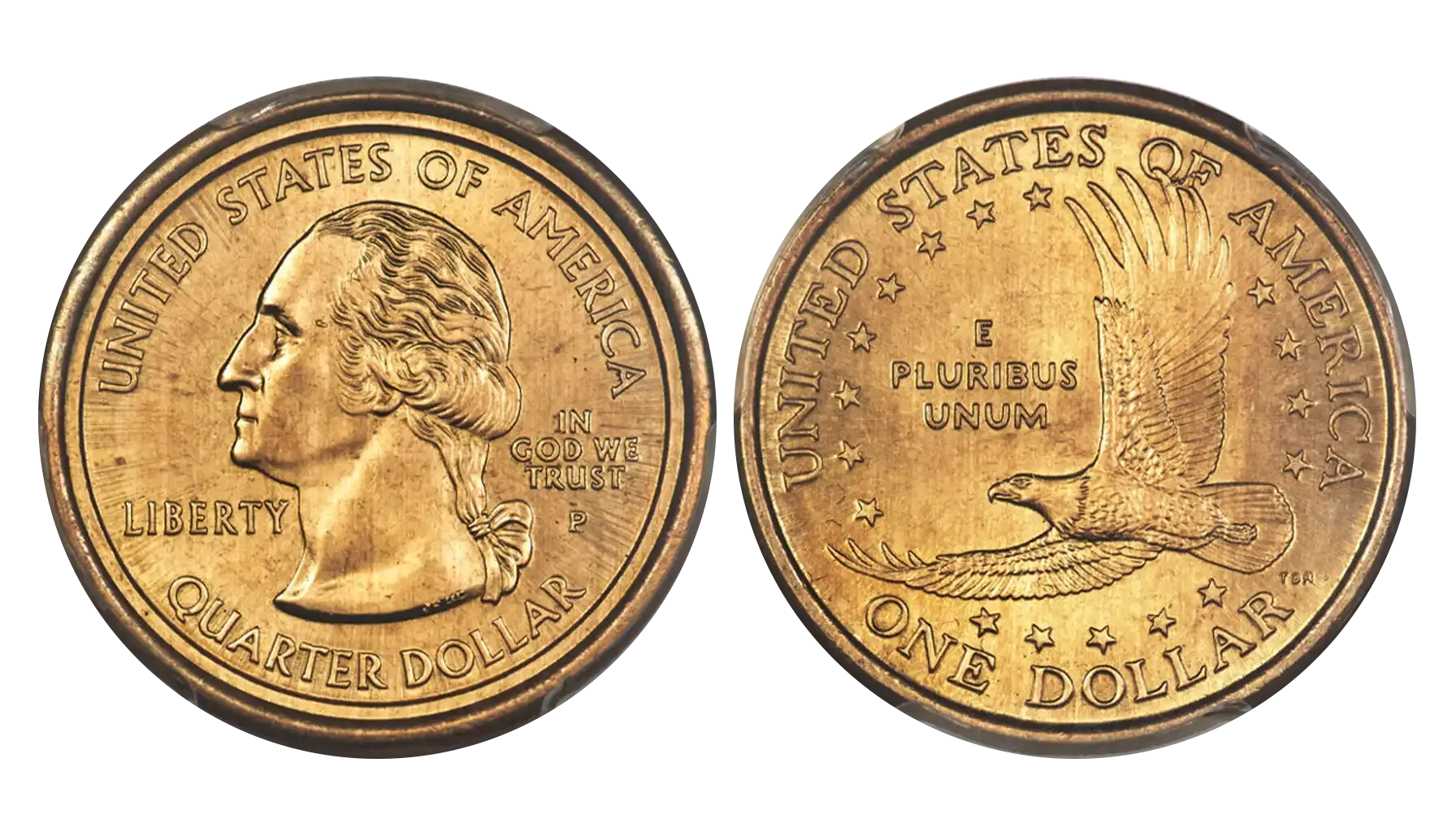
2000-P Sacagawea $1 "Cheerios" Variety
Record: $144,000
Most collectors know that Sacagawea dollar coins worth money are diverse though rare. A notable example comes down to the 2000 P Sacagawea dollar, "Cheerios" variety, which was distributed via cereal boxes as part of a promotion of a product. Unlike standard striking, which features Sacagawea, these coins have an improved tail feather design on the reverse. And yet, no matter how bizarre this campaign may seem, the coin is greatly prized by collectors.
Should you find Sacagawea dollar coins that are worth money, do not hesitate to obtain and preserve them in your collection.
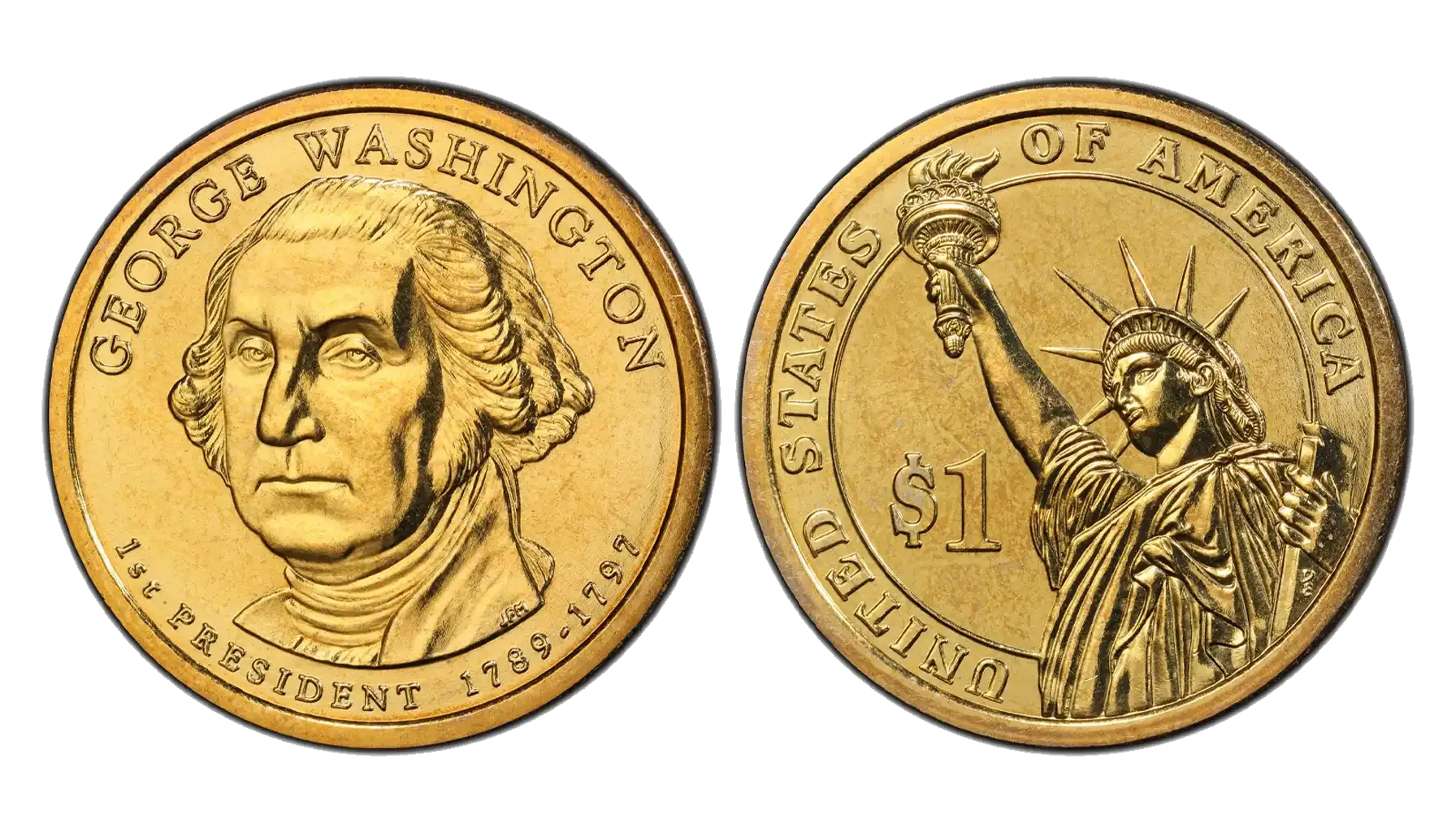
2007-P Presidential $1 (Missing Edge Lettering)
Record: $1,000
Which one dollar coins are worth money? The mistakes make sense, especially when peculiar. The 2007-P most valuable presidential dollar coins value takes one back to the George Washington variety that has a mistake where the date and mintmark were inadvertently left out of the edge text.
This error coin, which dates from the first year of the Presidential series, is especially appreciated because of its unique production flaw and is known as the "Godless Dollar" because the slogan "In God We Trust" is absent.
How to Tell If Your One Dollar Coin Is Valuable
Owning such a numismatic creation may be exciting, but not all units can reach the heights of the rarest ones. So as to understand how rare, valuable, and beneficial (from the investment perspective) the coin is, it might be reasonable to use relevant tools that do not require advanced numismatic knowledge, much time, or professional expertise.
Inspect the date, design details, mintmarks, and its finish.
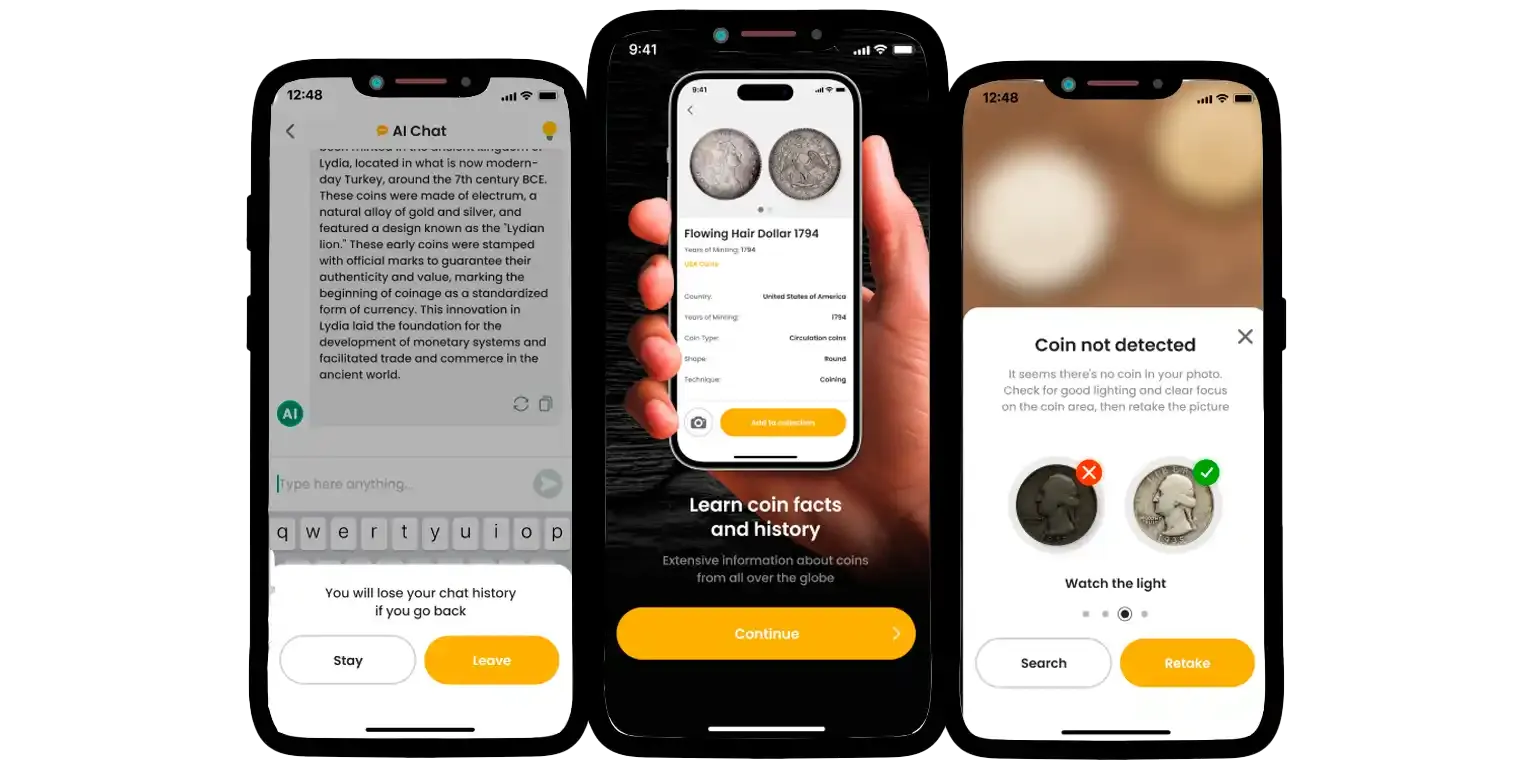
Use the camera to scan the obverse and reverse sides via Coin ID Scanner (high-quality pictures needed).
Wait for the system to analyze the design.
See related coin cards and choose the one that suits the intended search.
Review the details, specs, background, and the estimated value ranges for different grades.
Watch for errors and varieties, and if something is different from the standard strike, appeal to a grading service.
Where to Sell Valuable One Dollar Coins
Should the unit of currency possess the real numismatic value, it might be quickly sold via reputable selling channels. In most cases, these are specialized media, such as dealers, auction houses (for the most expensive units), online marketplaces (e.g., eBay), coin shows, and forums.
However, do not fall into the trap of accepting the first offer – each platform may connect you with scammers and speculators.
FAQs
What $1 coins are valuable?
The strongest candidates are early silver units, e.g., Flowing Hair and Draped Bust pieces, as they have been originally scarce. However, more recent key dates and mid-range varieties with grade certificates, errors, and precious-metal composition may be equally valuable, too.
Which 1 dollar coins are rare?
Among the rarest $1 coins are the 1794 Flowing Hair, the 1804 variety, and the proof-only 1884 and 1885 Trade types.
How much is a $1 coin worth?
As a rule, the worth of a coin equals its face value, but certain numismatic creations (e.g., those from key dates, those bearing errors, or those made of precious metals) may sell for much higher: a category auction record is set at the price of $6,600,000.
What U.S. coin is worth $19 million?
The famous example closest to that figure is the 1933 Double Eagle, which sold at Sotheby’s in June 2021 for about $18.9 million.
Which $1 coins are worth money?
The focus should be directed at the early silver issues, key-date Morgan and Peace types, rare Trade dollars, and any modern unit with a major error, provenance proof, or a grade certificate.
What gold dollar coins are worth money?
These shall include the 1849–1889 Gold Dollar series, i.e., branch-mint issues, better dates, proofs, and high-grade varieties in particular. Look for early Charlotte and Dahlonega issues – these are desirable as well.

 Facebook
  X (Twitter)
  Pinterest
  LinkedIn