Contents:
Chinese civilization is one of the oldest in the world. It is no surprise that modern people are interested in studying it. Chinese teas like GABA and written characters are all popular these days.
Numismatics from China also attracts attention. Identifying foreign coins can be hard but Coin ID Scanner will definitely help you.
History of Ancient Chinese Coins
7th–4th century BCE (Zhou period)
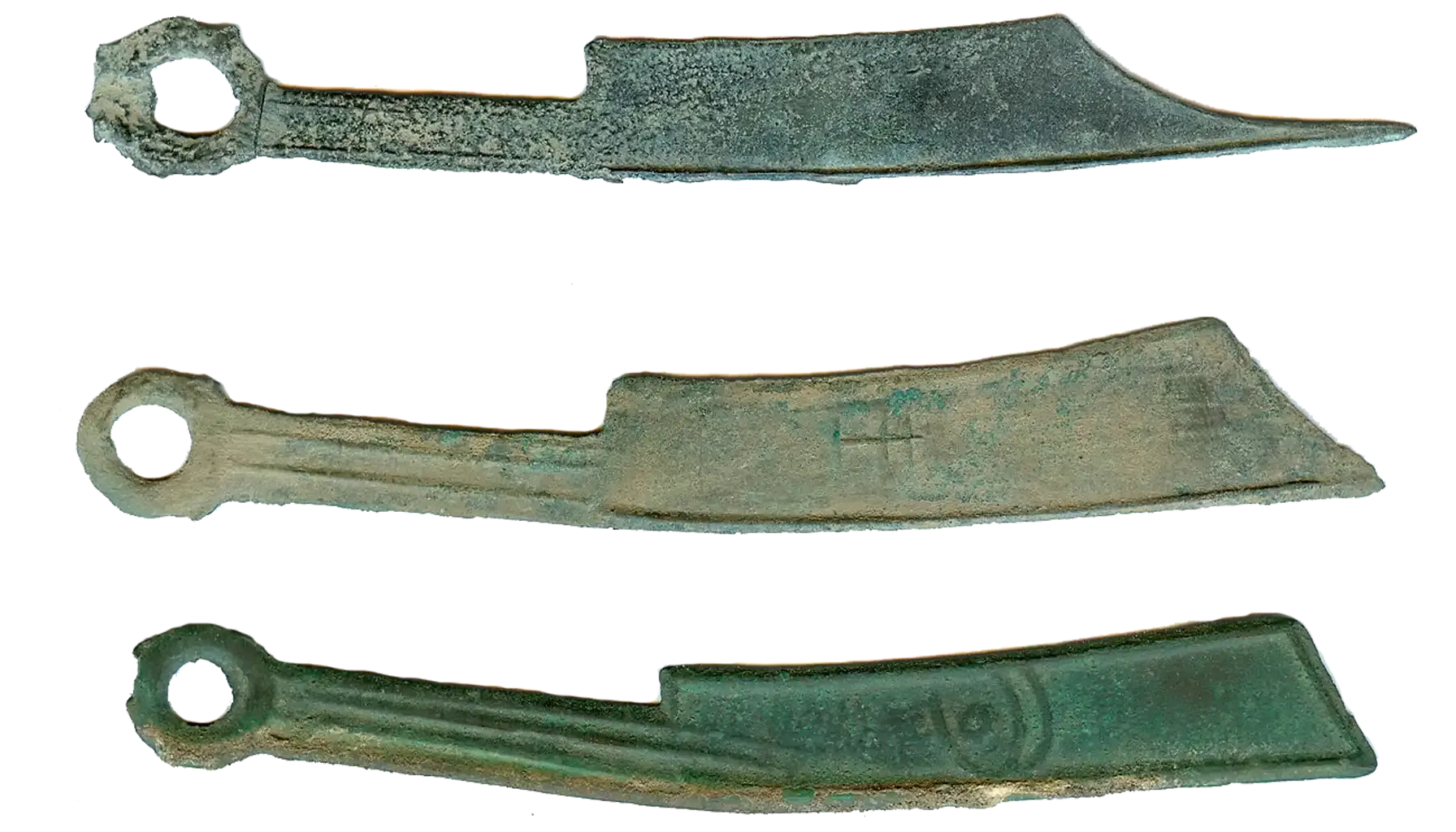
The earliest forms of money in China were bronze objects, e.g., spade money and knife money, used by different states during the late Zhou era and the Warring States period (c. 475–221 BCE). Many pieces carry inscriptions naming cities or regions.
221 BCE – Qin unification
When the Qin state unified China in 221 BCE, it abolished regional currencies and introduced a single standard piece: the Ban Liang. This was the first widely used round coin with a square hole, a format that would dominate Chinese coinage for nearly two thousand years.
206 BCE – 220 CE (Han dynasty)
The Han dynasty replaced Ban Liang with Wu Zhu around 118 BCE. Wu Zhu remained in circulation, with adjustments, until the 7th century. Few money types in world history were used for so long.
7th century CE (Tang dynasty)
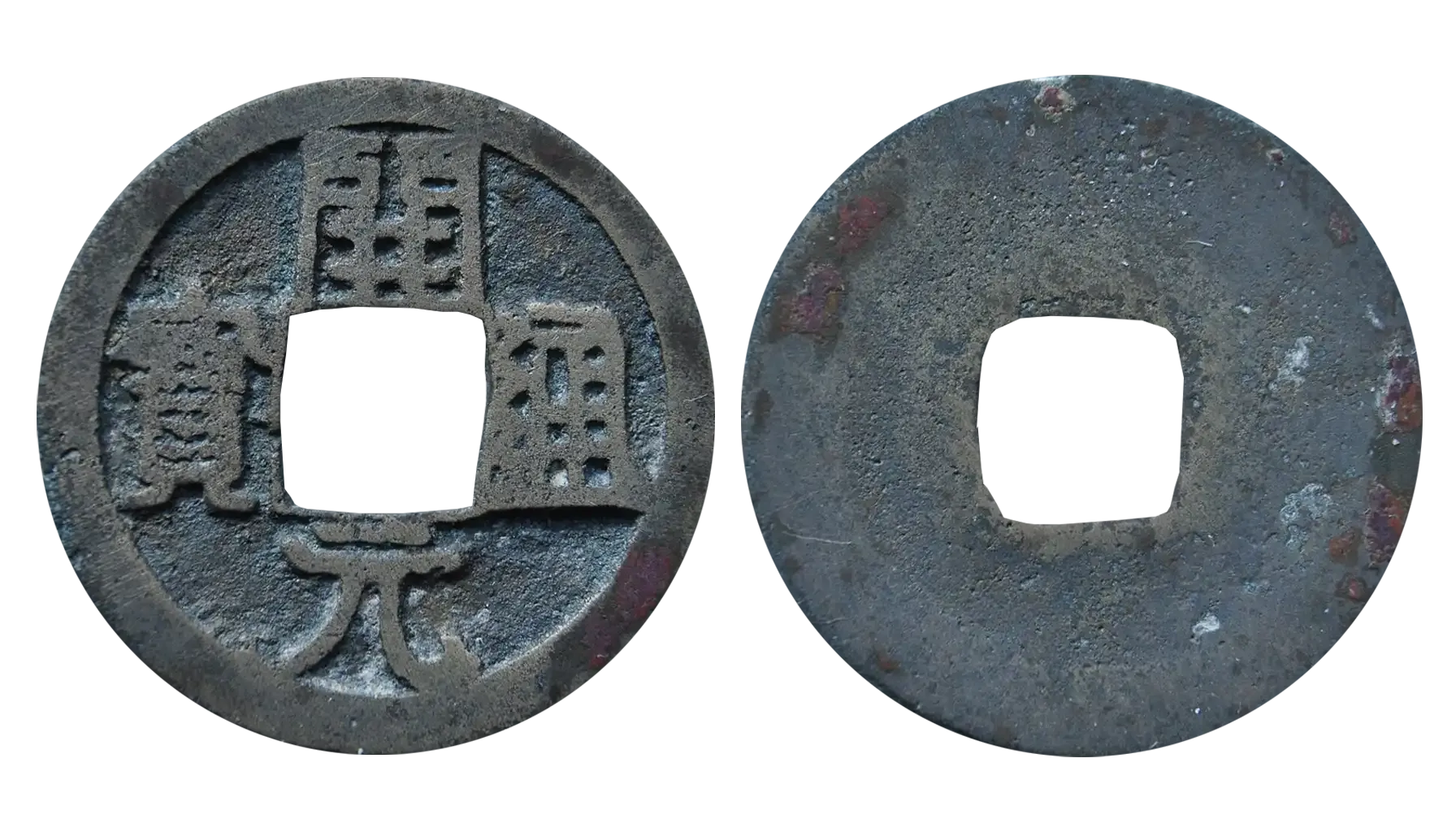
In 621 CE, the Tang dynasty introduced ancient old Chinese coins called Kaiyuan Tongbao. Later dynasties reused the same basic format, often changing only the inscription.
Materials Used in Ancient Chinese Currency Coins
Cowrie shells
What were ancient Chinese coins made of? Before metals, cowrie shells were used as money. They were valued for their rarity, portability, and meaning. Even after metal pieces appeared, cowries remained influential.
Bronze
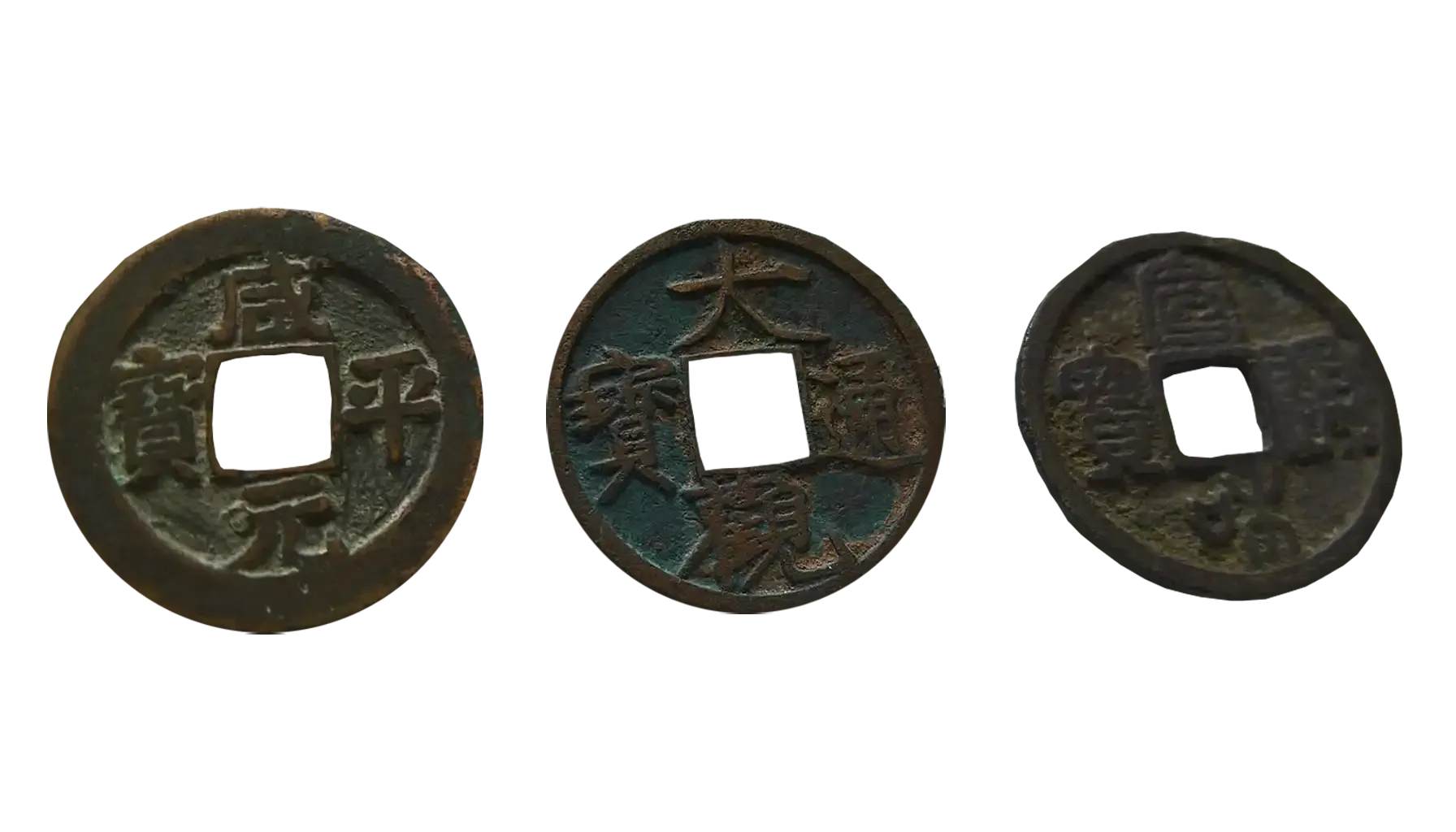
Bronze became the foundation of the Chinese system during the Zhou dynasty and remained dominant for centuries. Early spade and knife money, as well as later round specimens, were cast from bronze alloys made of copper, tin, and sometimes lead. Bronze was durable, easy to cast, and well suited to large-scale state production.
Copper
During the Han dynasty (206 BCE–220 CE), coins like the Wu Zhu were copper-based. Copper allowed better control of weight and consistency, which helped stabilize the ancient Chinese copper coins and the currency.
Iron
In regions where copper was scarce, especially during the Song dynasty, the state issued iron money. These Chinese coins ancient were heavier and less convenient but allowed monetary circulation to continue despite metal shortages.
Silver
Silver was not commonly used for small money types but became important for large payments and taxation. By the Ming dynasty (1368–1644), silver ingots known as sycee were central to the economy.
Gold
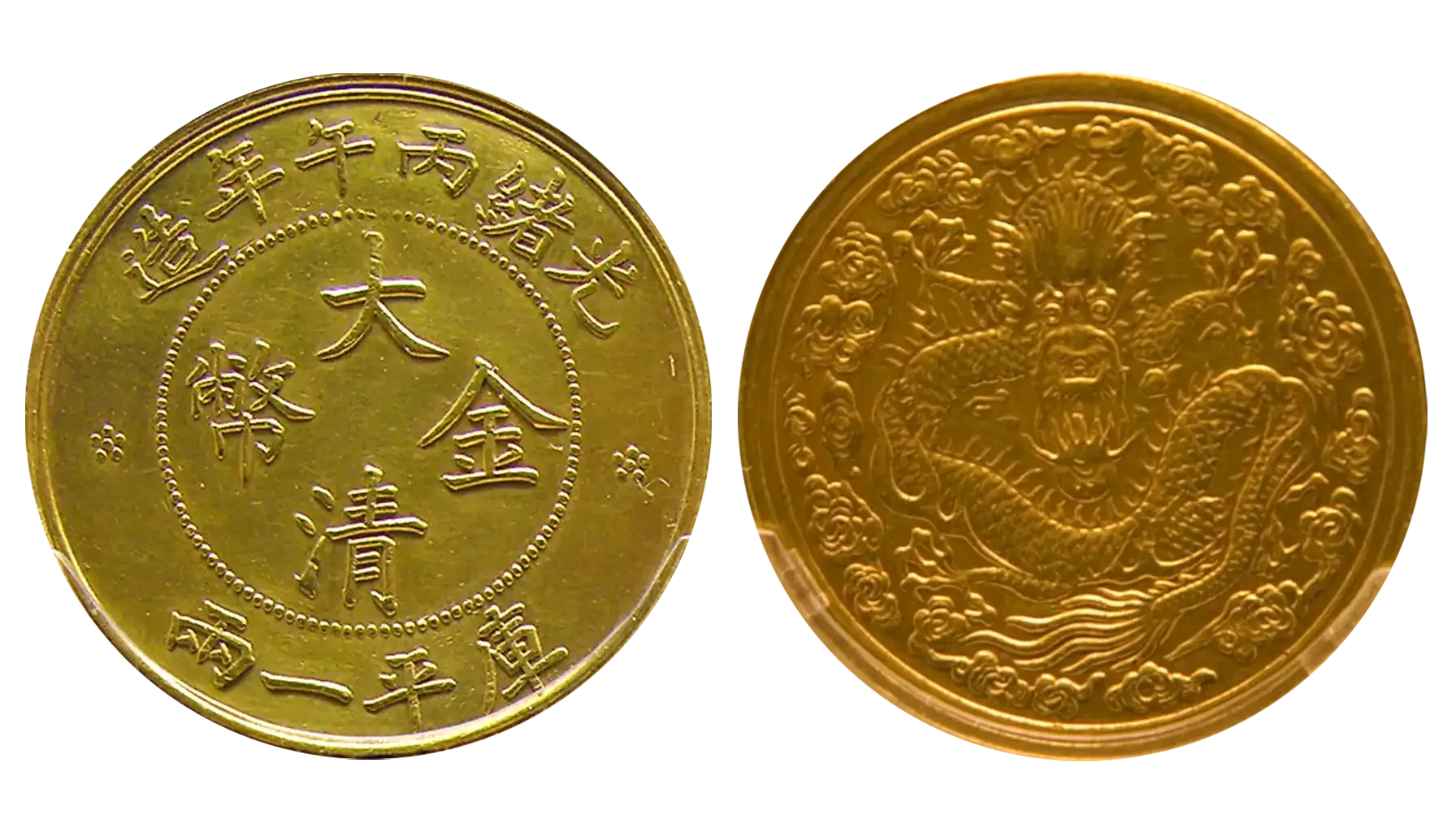
Gold was rarely used for everyday transactions. When it appeared, it was reserved for elite exchange, tribute, or ceremonial purposes. Gold leaf and small ingots existed but never replaced silver or copper as the primary medium.
Ancient Chinese Silver and Gold Coins
Silver Sycee
This ancient Chinese silver coins type called sycee was boat-shaped or loaf-shaped ingots used from roughly the 7th century CE, becoming dominant during the Ming dynasty (1368–1644) and continuing into the Qing dynasty (1644–1912).
Each piece was weighed, and purity was tested at the point of use. Sycee were used for taxes, trade, and large payments.
Tang Dynasty Gold Pieces
These were likely ceremonial or experimental issues rather than circulating currency. Surviving examples are rare today and are considered museum-level artifacts.
Song Dynasty Silver Ingots
During the Song dynasty, silver became more important as trade expanded. Silver ingots circulated alongside copper ones and early paper money. Regional forms varied.
Qing Dynasty Gold Sycee and Plates
Under the Qing dynasty, gold appeared mainly as sycee or flat plates used by the court and wealthy merchants. While silver handled most monetary functions, gold represented stored wealth and political power.
Ancient Chinese Coins Value
Values vary with condition, rarity, and age.
Type | Approximate Value (USD) |
Bronze Ban Liang (Qin, 221–207 BCE) | $300 – $1,500+ |
Wu Zhu (Han, 118 BCE–220 CE) | $5 – $150+ |
Tang Kaiyuan Tongbao (Tang, 621 CE) | $25 – $250+ |
Knife Money / Spade Money (Warring States) | $50 – $2,000+ |
Silver Sycee (Ming/Qing, 1368–1912) | $1,000 – $50,000+ |
Gold Sycee / Plates (Qing) | $2,000 – $100,000+ |
Tang Dynasty Gold Pieces (rare) | $10,000 – $250,000+ |
Collecting Ancient Chinese Coins
Begin with common Chinese ancient coins such as Wu Zhu.
Study the characters; inscriptions matter more than portraits or dates.
Be cautious of replicas, especially for knife money, spade money, and sycee.
Do not clean your collectibles—original surfaces are valued.
FAQ
What were ancient Chinese coins called?
Most were known as cash coins, such as Ban Liang, Wu Zhu, or Kaiyuan Tongbao.
Are ancient Chinese coins worth money?
Yes. Common types can be inexpensive, while rare issues, early forms, or ancient Chinese gold coins pieces can be valuable.
Why are ancient Chinese coins so cheap?
Many were produced in huge quantities and survived in large numbers.

 Facebook
  X (Twitter)
  Pinterest
  LinkedIn