Contents:
The legacy of classic numismatic creations from the long-gone powerful civilizations can still be seen in the coins of modern times. It is an open secret that the European coinage traditions have always been interconnected, even though the paths might have changed.
The florin (fiorino d'oro), i.e., the gold coin from Florence, officially entered the monetary sector of the UK in 1849, and it was a logical continuation of the long-standing European practice of borrowing influential monetary names and creating new denominations of their own. It was merely a practical solution, meant as an experiment to decimalize the pound.
But was this initiative successful? What is the double florin coin? Which rare coins were the most exquisite, and how much would they cost today? Let us check.
What Is a Florin (British Coin)?
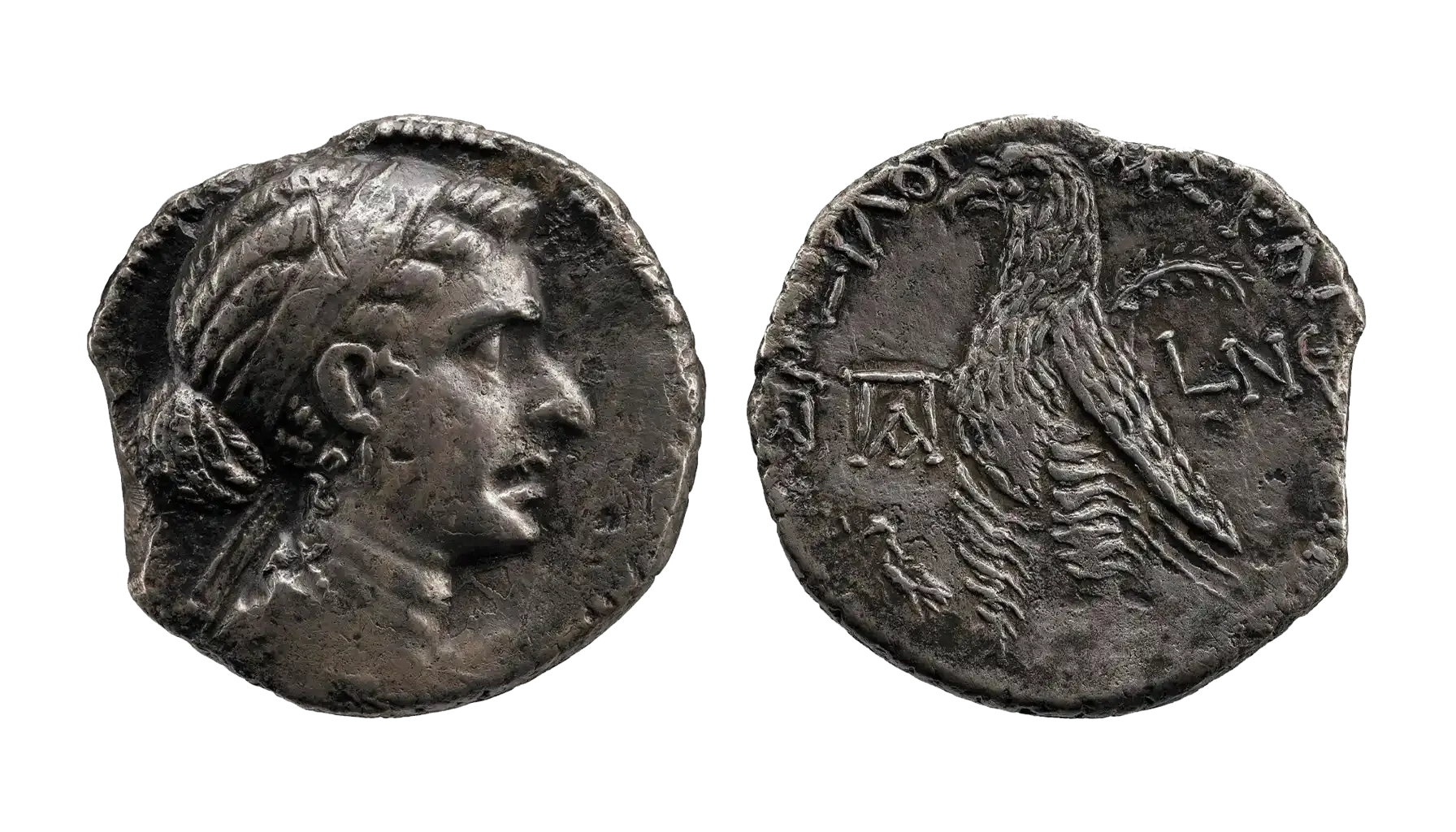
Originally, the florin, or fiorino d'oro, was the gold Italian coin minted in medieval Florence, which managed to become one of the most influential units of currency throughout Europe.
The UK followed the same tradition when different monetary systems turned to the famous denominations (ducats from Venice, thaler, etc.), and borrowed the renowned name to create its own two shilling coin, introduced in 1849 as part of an early attempt to simplify calculations and eventually launch the decimal currency.
In fact, it was to represent one-tenth of a pound, yet the success of such an innovation was not immediate. The coin, however, survived and became a standard unit of currency in the British monetary system (the broader decimal reform did not actually happen in the mid-19th century, though).
Why "florin"?
By the time of its introduction, other countries (i.e., the Netherlands and Austria) had already issued florin, or gulden, coins, and the British unit was meant to be broadly comparable to an already familiar, reputable denomination in value and size (though this claim is said to be subject to debate).
Florin Coin UK: Issues by Period and Monarch
The history of the 1 florin coin is the path toward decimalization, a test which was carried so as to understand if a decimal-friendly denomination could work within the old monetary system. The designs changed with the monarchs, whose reign significantly affected their appearance, metal composition, and monetary policies as a whole.
Monarch | Years | Main Types/Features |
Victoria | 1849–1901 | First issues; Godless, Gothic, Jubilee, and Veiled Head types |
Edward VII | 1902–1910 | Standing Britannia reverse design |
George V | 1911–1936 | Return to shields design; silver reduced to .500 in 1920; redesigned in 1927 |
Edward VIII | 1936 | No circulating florins issued |
George VI | 1937–1952 | New reverse type; silver until 1946, cupronickel from 1947; “IND IMP” removed in 1949 |
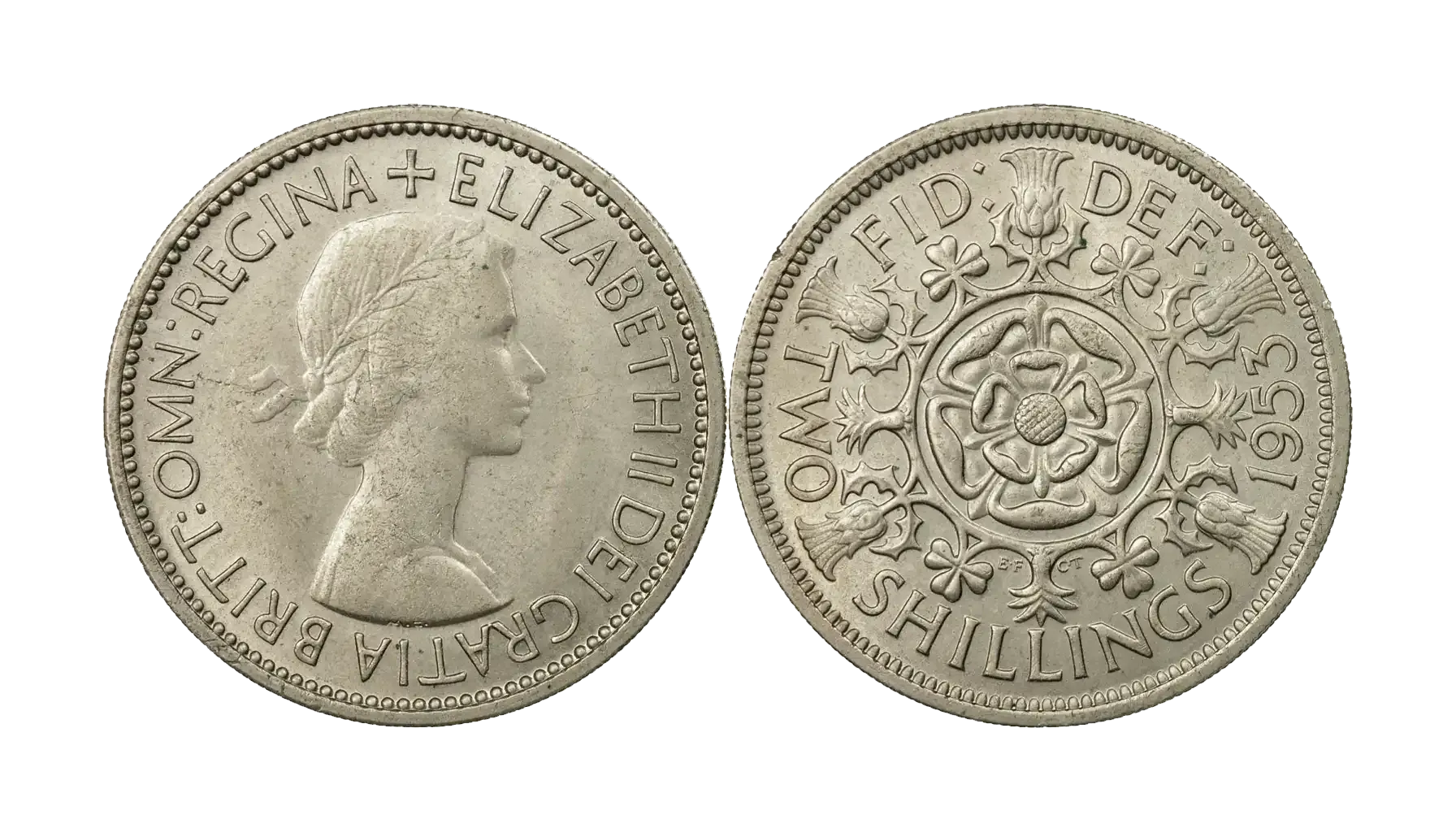
Elizabeth II | 1953–1970 | 1953 type, then revised legend from 1954; replaced by the 10p ahead of decimalisation |
Victoria (1849–1901)
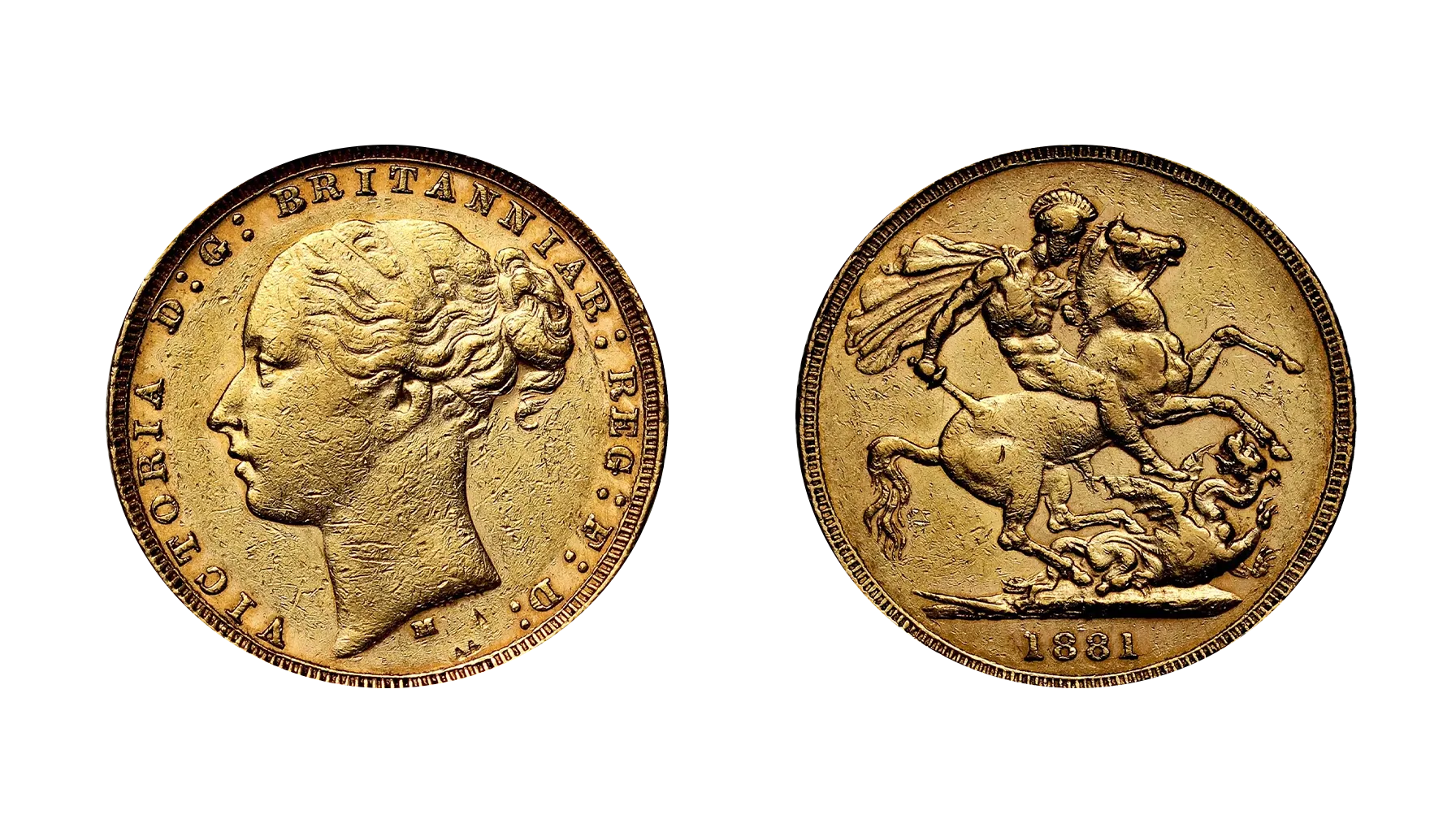
Upon the release, here came the most diverse period of florin development. It was a shocking variety: the very first issue is known as the "Godless florin", for its inscription on the obverse side did not include the usual reference to God, and it was for the first time in 200 years that the monarch depicted on the coin wore the crown.
Nevertheless, the design was repeatedly modified (e.g., Gothic, Jubilee, and Veiled Head types).
Edward VII (1902–1910)
The Victorian coinage traditions were meant to be broken one day, and the units of currency of that time showed Britannia standing on the bow of a ship, instead of classic heraldic symbols.
George V (1911–1936)
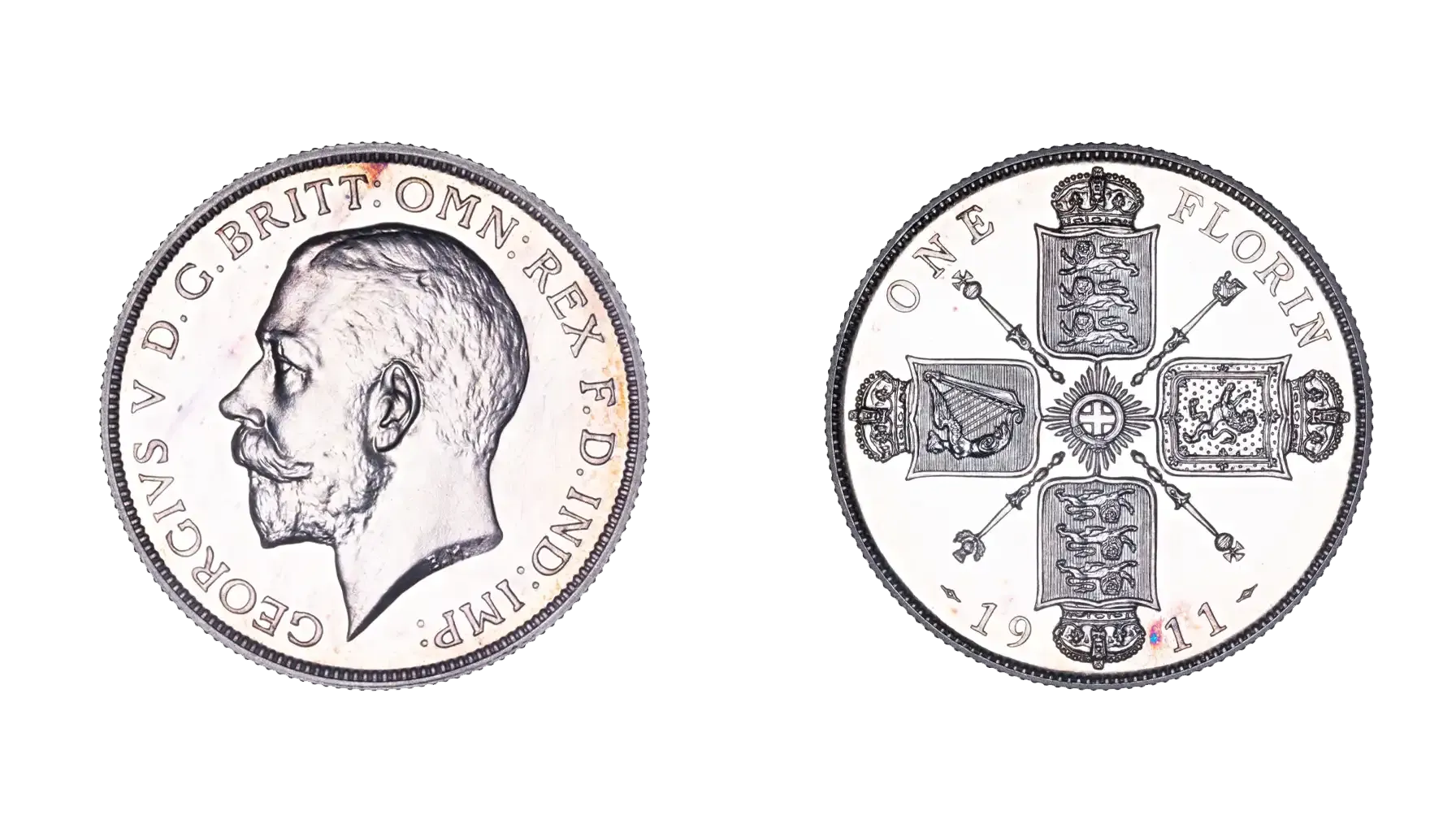
When George V succeeded to the throne, the coins of this type turned to a more traditional heraldic format, as they featured shields and scepters on the reverse side again. In fact, the period was characterized by major compositional reform: in 1920, the silver content was reduced from sterling silver (.925) to 50% silver.
Edward VIII (1936)
There were no regular florins released under the name of Edward VIII, for the main part of circulating coinage continued the design of George V. However, the Mint did prepare the pattern issue for the new king, but it was never approved because his abdication brought the process to an abrupt end.
George VI (1937–1952)
The florin coins of George VI looked like the ones originally prepared for his brother, Edward VIII. Until 1946, all numismatic creations of this type were still struck in 50% silver, but from 1947, the denomination changed to cupronickel composition as a response to the postwar aftermath.
Elizabeth II (1953–1970)
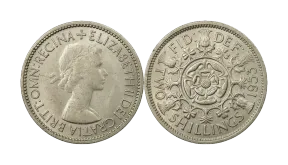
It was the last chapter of florin coinage. The 1953 issue had its own distinctive inscription, while a revised legend appeared from 1954 onward and remained standard through the end of circulation striking.
These numismatic creations continued to circulate, but the decimalization, which had been planned long ago, made the coin impractical to use (especially after the introduction of the 10p piece in 1968). This is how florins disappeared and turned into a valuable remnant rather than a circulating piece.
“Established by the Act of 1967, the Decimal Currency Board was charged with overall supervision of the change-over. The strategy of the Board was to draw the sting from Decimal Day, soon to be firmly set for 15 February 1971. <...> The first of the new coins, the 5p and 10p, began to be issued to the public in April 1968.”
— A representative of the Royal Mint, “Decimalisation” page
The official website of the Royal Mint Museum
Silver Florin Coin vs. Gold Florin Coin
The metal is the first factor that may point to the true nature of the unit, its worth, and place in history. Remember that these are two completely different coins from different countries and periods of time.
Gold types were also released, but they mainly referred to non-circulating, pattern/trial/proof versions.
Feature | Gold Florin Coin | Silver Florin Coin |
Origin | Medieval Florence, Italy | United Kingdom |
First appearance | 13th century | 1849 |
Metal | Gold | Silver |
Original name | Fiorino d’oro | British florin |
Value/role | High-value trade coin | Two-shilling circulating coin |
Main purpose | International commerce and prestige | Domestic circulation |
Historical context | Renaissance and medieval European trade | British monetary reform |
Rare Florin Coins to Look For
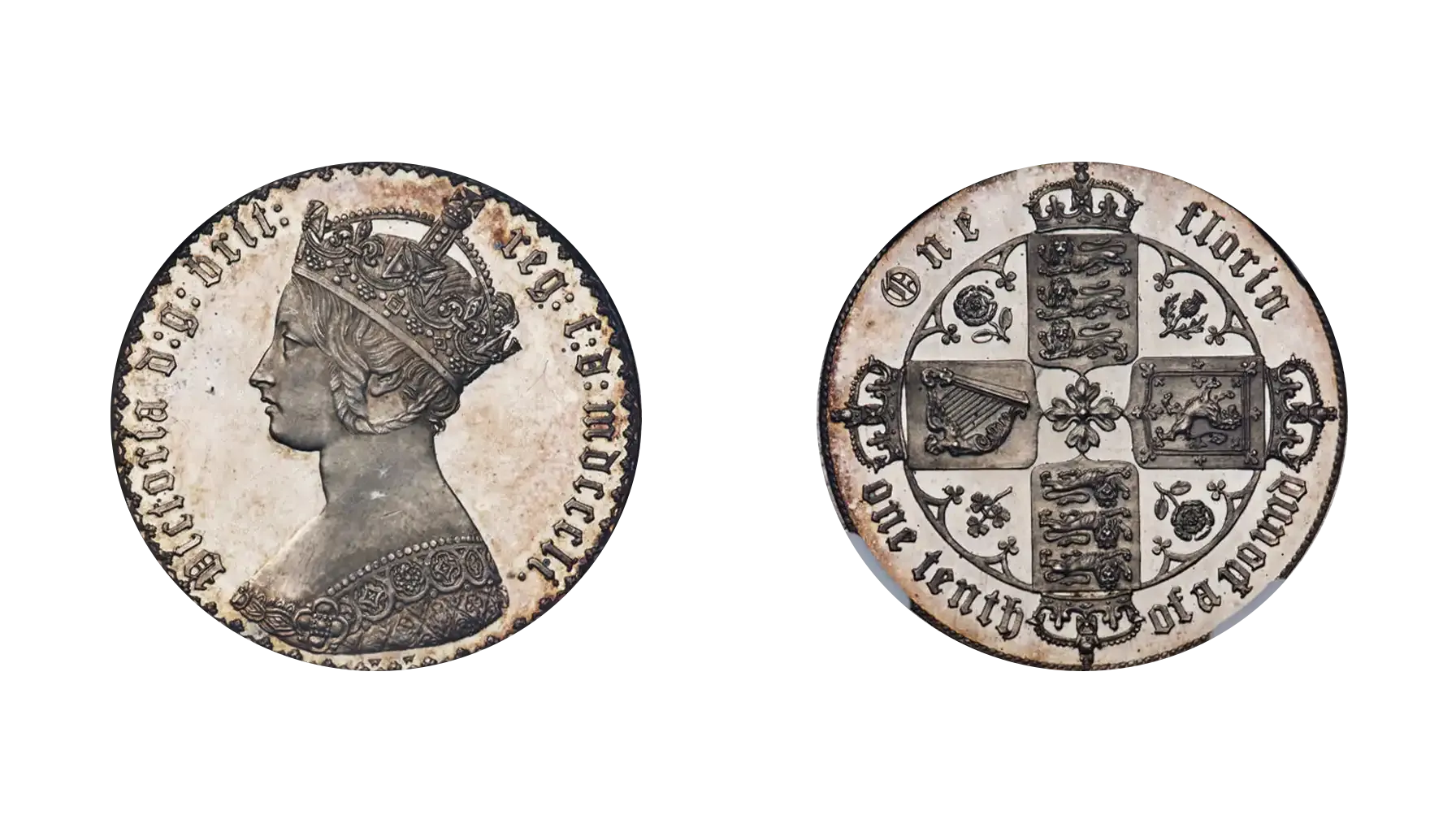
1851 "Gothic" Florin (Proof)
Mintage: 1,540
Auction record: $51,240
This is one of the rarest coins in the series, which features the medieval-inspired heraldic design. Even among other key dates in the history of British coinage, it is considered one of the most valuable and interesting pieces to explore. According to the online coin auctions, there were only 3 survivors in high grades in the last two decades, which makes them exceptionally desirable on the market.
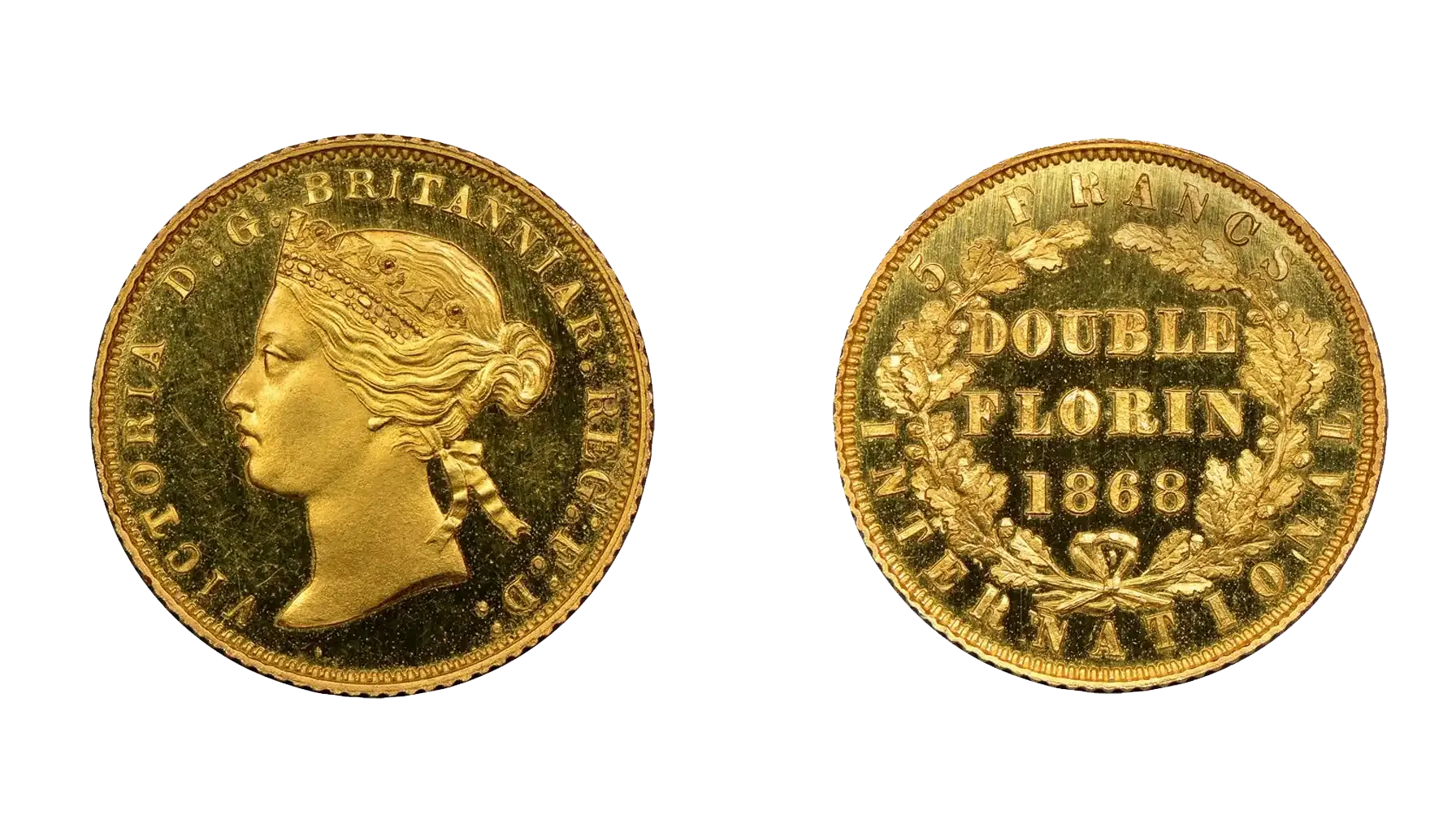
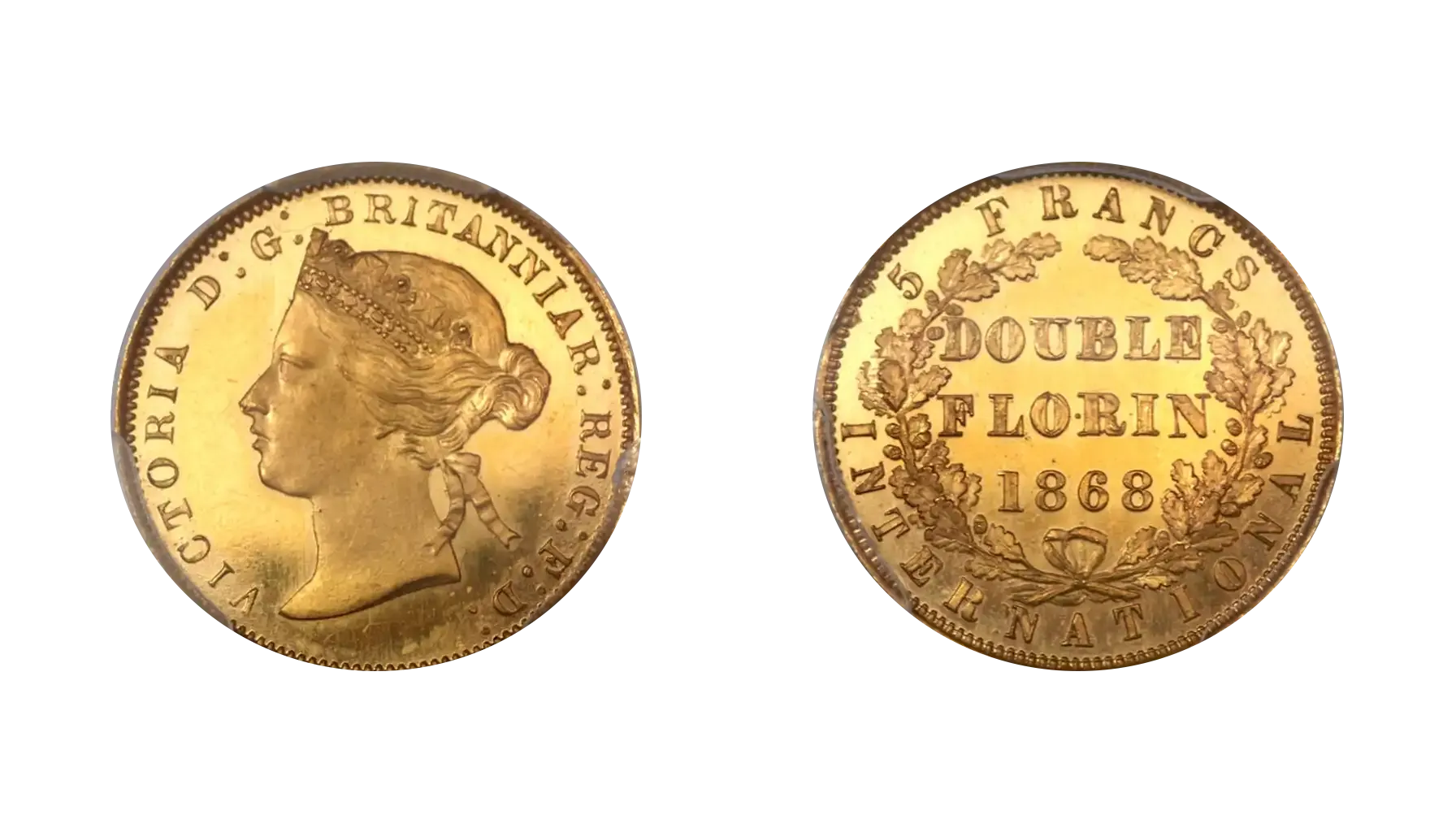
1868 Gold Pattern Double-Florins
Mintage: Not officially published, ~30 pieces are known to exist
Auction record: $38,187.
Although the regular circulation coins were produced in silver, the Mint also released gold issues, e.g., the double florins (i.e., four-shilling pieces), which were struck as an experiment, destined to test the units for international trade and cross-border monetary compatibility. Their reverse explicitly referenced the 5-franc standard, and the coins themselves became a major rarity within the series.
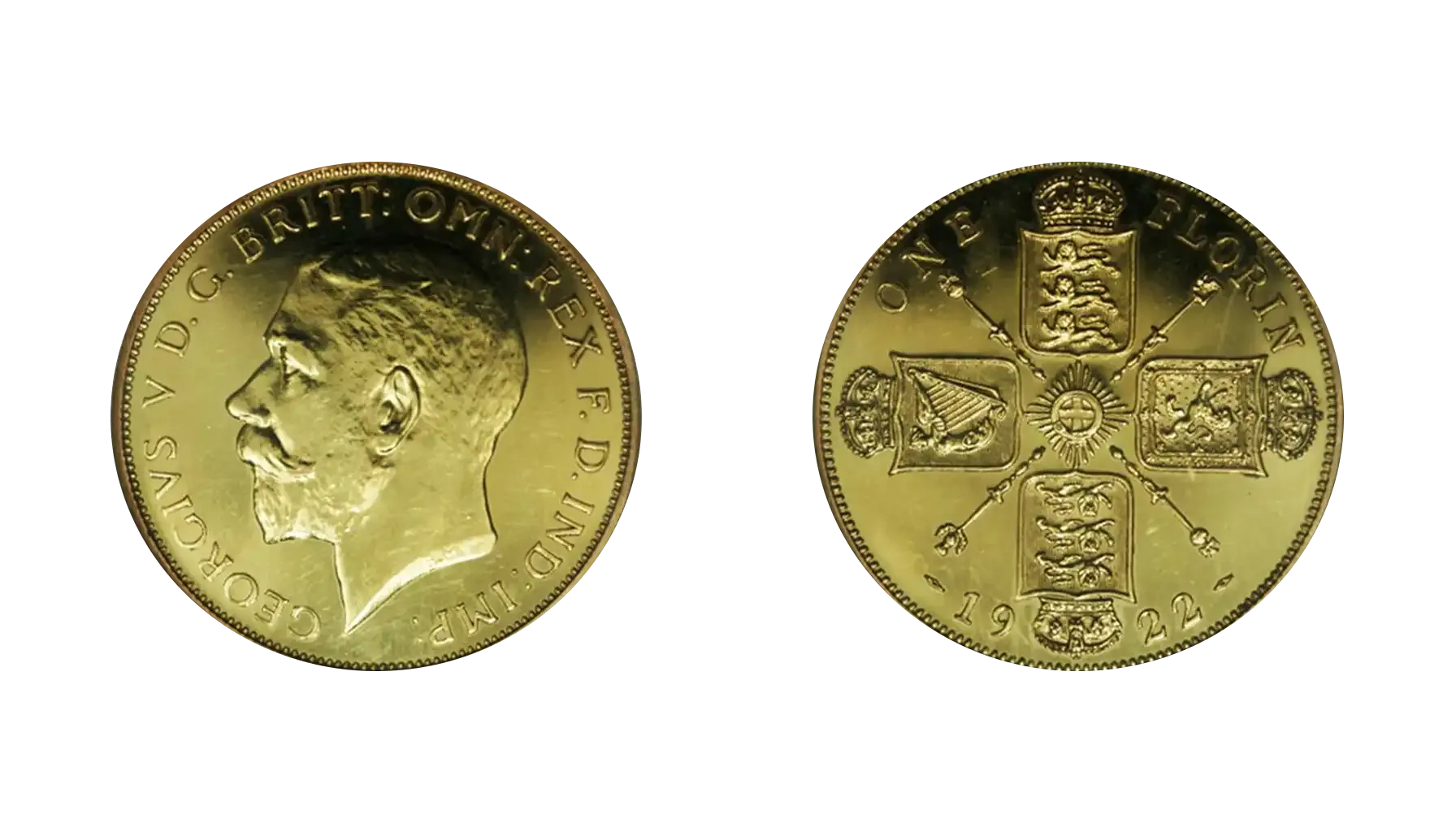
1922 George V Florin In Gold
Mintage: ~5 pieces are known to exist; exact numbers are unknown
Auction record: $9,775
The 1922 variety was also never intended for everyday use. Instead, it belongs to the tiny class of off-metal record or trial pieces that survive in extremely small numbers, for it reproduces a familiar circulating design in a completely unexpected metal.
Florin Coins Value Today
The one florin coin value usually depends on three main factors, i.e., the monarch, the date, and the condition of the unit. Common later pieces, as a rule, do not exceed the price of a few pounds, yet early dates and rare varieties are initially valuable.
What Is a Florin Coin Worth?
Typical Price Range | |
Victoria (common circulation issues) | £10–£1,100 |
Victoria (better dates) | £1,200–£17,500+ |
Edward VII | £12–£2,000 |
George V (.925 silver) | £7–£250 |
George V (.500 silver) | ~£4–£170 |
George VI (silver) | £4–£45 |
George VI (cupronickel) | £1–£9 |
Elizabeth II | £1–£50 |
The prices, however, tend to fluctuate. For more relevant information, use Coin ID Scanner, your personal numismatic assistant and companion in identification, collection management, and numismatic studies.

 Facebook
  X (Twitter)
  Pinterest
  LinkedIn