Contents:
For over four centuries, shilling coins passed through the hands of workers, traders, soldiers, and monarchs, and others in the British Empire. The coin is a history symbol in the past and now.
Today, the shilling holds a different kind of worth. It draws attention not only from numismatists but from historians and economists. For new insights about rare silver coins and other items – download the best coin value checker app.
What Is a Shilling?
The term shilling likely derived from the Old English scilling, a word that described both – a coin and a measure of value. By the time of the Tudor era, the coin was a stable part of England’s monetary system.
“The silver coinage could well be made up of shillings and sixpences alone.”
– Thomas Graham, a numismatic historian
Royal Mint Museum
Definition and Role in the British Monetary System
The shilling (British coin) served as a cornerstone of Britain’s pre-decimal currency system. It stood between the penny and the pound and represented a twelfth of one pound, or twelve pence. Within the British economy, it functioned as a practical middle denomination for everyday trade, wages, and taxation.
When and Where the Shilling Was Used
Britain introduced the shilling across the kingdom and throughout its empire. It circulated in England, Scotland, Wales, Ireland, and overseas territories. Its presence spread through trade routes and colonial systems.
It marks economic influence from London to Africa, Asia, and the Caribbean. Even after independence, several Commonwealth nations adopted coinage influenced by the British shilling.
The History of the British Shilling
The coin era started with Henry VII in the 15th century. The earliest form appeared as the testoon, a silver coin valued at twelve pence. The testoon’s design and weight laid the foundation for what later became known as the shilling. Under Henry VIII, the coin gained wider circulation and began to display the monarch’s portrait, a feature that continued for centuries.
Origins of the Shilling in the 16th Century
Henry VIII reduced silver content, reflecting early struggles to balance monetary stability and state finance. Under Edward VI, the coin took its modern name—shilling. It bore the young king’s portrait, to signal both royal legitimacy and the growth of coinage artistry.
By the 16th century, the shilling had become a regular part of England’s monetary system. It functioned as a practical coin for trade and wages. Silver from English and European mines supplied the metal, and the Royal Mint struck the silver coins under strict regulation.
Evolution of the Shilling Through the Centuries
By the 17th century, the shilling became a symbol of continuity. During the reign of Charles I, minting shifted between royal and parliamentary control amid civil war.
The Restoration revived standardized designs, and later monarchs refined its appearance. The Victorian era brought mass production, improved striking technology, and national uniformity.
Period | Monarch | Metal | Design |
Tudor 1500s | Henry VII–Elizabeth I | Silver | Royal bust with shield |
Stuart 1600s | James I–Anne | Silver | Crowned shield or harp |
Victorian 1800s | Victoria | Sterling silver | Seated Britannia |
20th Century | George V–Elizabeth II | Silver to Cupronickel | Lion or crowned shield |
The End of the Shilling – Decimalisation in 1971
The shilling’s official end came in 1971 when Britain adopted a decimal system. One shilling became equivalent to five new pence. The last minting of shillings occurred under Queen Elizabeth II, and although withdrawn, some remained legal tender into the 1990s. This shift closed a chapter of over 400 years of numismatic history.
How Much Was a Shilling Worth?
The coin equaled twelve pence, and twenty shillings made one pound sterling. A single shilling represented a meaningful sum of money in earlier centuries, enough to buy food, clothing, or small household items.
The Pre-Decimal Value of One Shilling
British money was divided up into pounds, shillings and pence (until 1971).
One pound = 20 shillings.
One shilling = 12 pennies.
One penny = two halfpennies / four farthings.
Purchasing Power of a Shilling in the Past
In the early 1900s, shilling was equal to a day's food supply or a ticket on public transport. An average factory worker earned around 25 shillings per week.
Comparison with Modern-Day Currency
How much is a shilling worth today? Compared with modern inflation, that single coin might equal several pounds today.
Year | Approx. Purchasing Power | Typical Purchase |
1600 | £6 in modern terms | A loaf of bread |
1900 | £4 | Two cinema tickets |
1950 | £1.50 | A modest meal |
1970 | £0.25 | One bus fare |
How Much Would a Shilling Be Worth Today?
In 1971, the United Kingdom switched to a decimal system. One shilling became equivalent to five new pence. By the end of 1990 it finished.
Inflation-Adjusted Value in Today’s Money
Economists estimate that one pre-decimal shilling equals about £5–£6 in current value, depending on the year. This inflation-adjusted figure highlights its former utility in daily transactions.
Historical Examples of What a Shilling Could Buy
In the 1920s, a shilling could buy a pound of butter or three newspapers. By the 1950s, it covered a cinema ticket or a pint of beer. In modern Britain, £5–£6 offers a similar sense of modest everyday spending.
Modern Monetary Equivalents and Conversions
Pre-Decimal – 12 pence
Decimal (post-1971) – 5 new pence
Inflation-adjusted 2025 value – ~£5.50
In US dollars (2025 rate) – ~$6.70
One Shilling Coin Value for Collectors
The value of a shilling coin to collectors varies enormously, ranging from a few pounds for common, post-silver issues to thousands for rare, early, or high-grade examples. The price is determined by several numismatic factors, including rarity, condition, and precious metal content.
Factors That Affect a Shilling’s Value
Year
Metal content
Rarity
Condition
Rarity and Key Dates to Look For
Period | Average Value (Fine) | Rare Mint Year | Potential Auction Value |
Tudor | £300–£2,000 | 1551–1553 | £5,000+ |
Georgian | £40–£200 | 1787 | £600+ |
Victorian | £29–£350 | 1840 | £8,000+ |
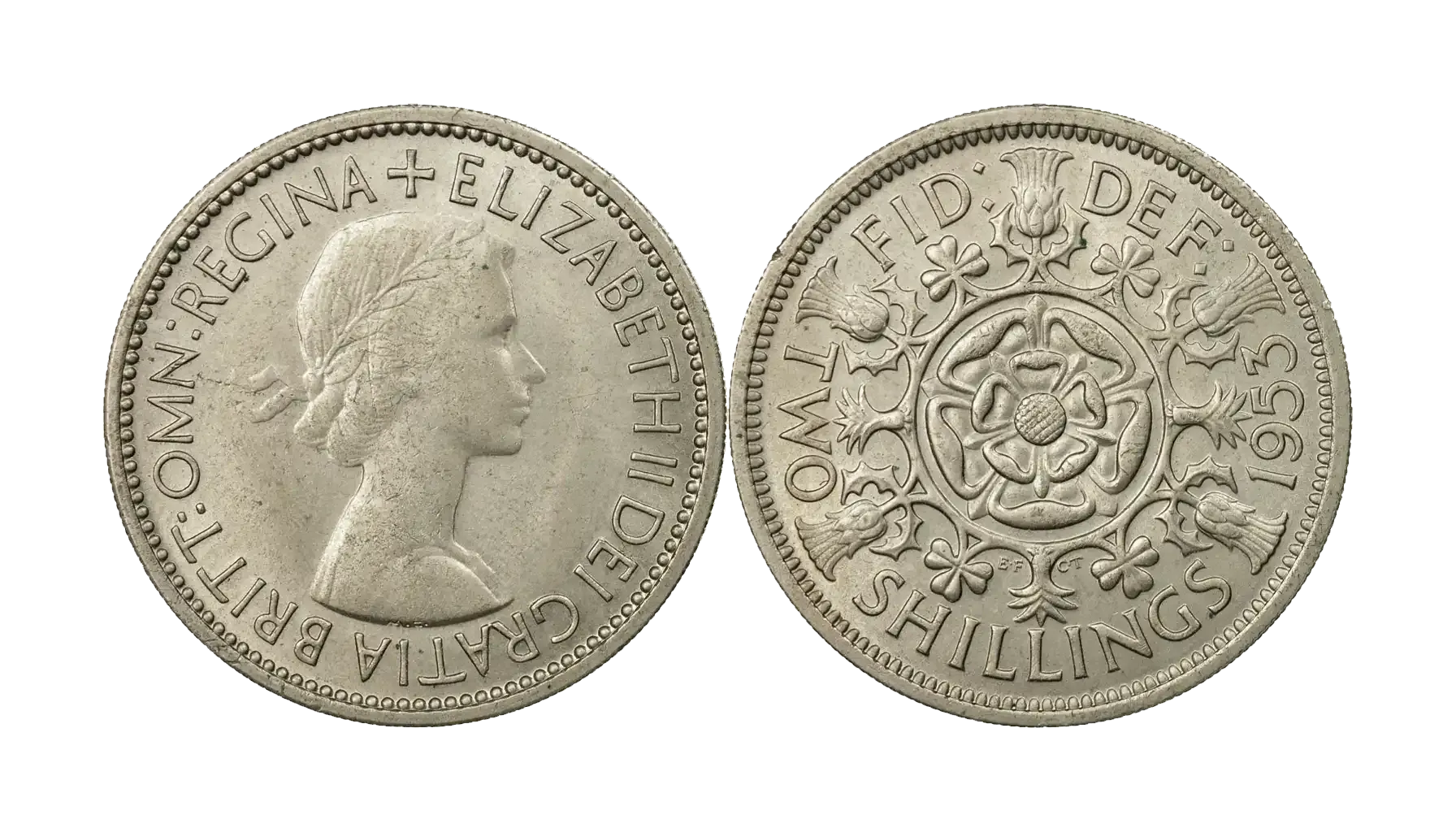
Elizabeth II | £2–£15 | 1953 | £240+ |
Henry VII Testoon: One of the earliest Tudor shillings, 1504. Can reach prices of $36,000–$50,000 or more at auction.
Average Market Prices for Common vs. Rare Coins
Modern shillings from 1947–1970, composed of cupronickel, trade between £1 and £5 depending on grade. Silver issues before 1920 carry intrinsic melt value in addition to numismatic interest.
Shilling Coin Designs and Variations
Tudor: Testoon was a hammered silver coin with the royal arms, later including its denomination.
Stuart: Consistent milled coinage, often featuring cruciform shields on the reverse.
Georgian: Continued this milled tradition, sometimes with special mintmarks like LIMA for captured silver.
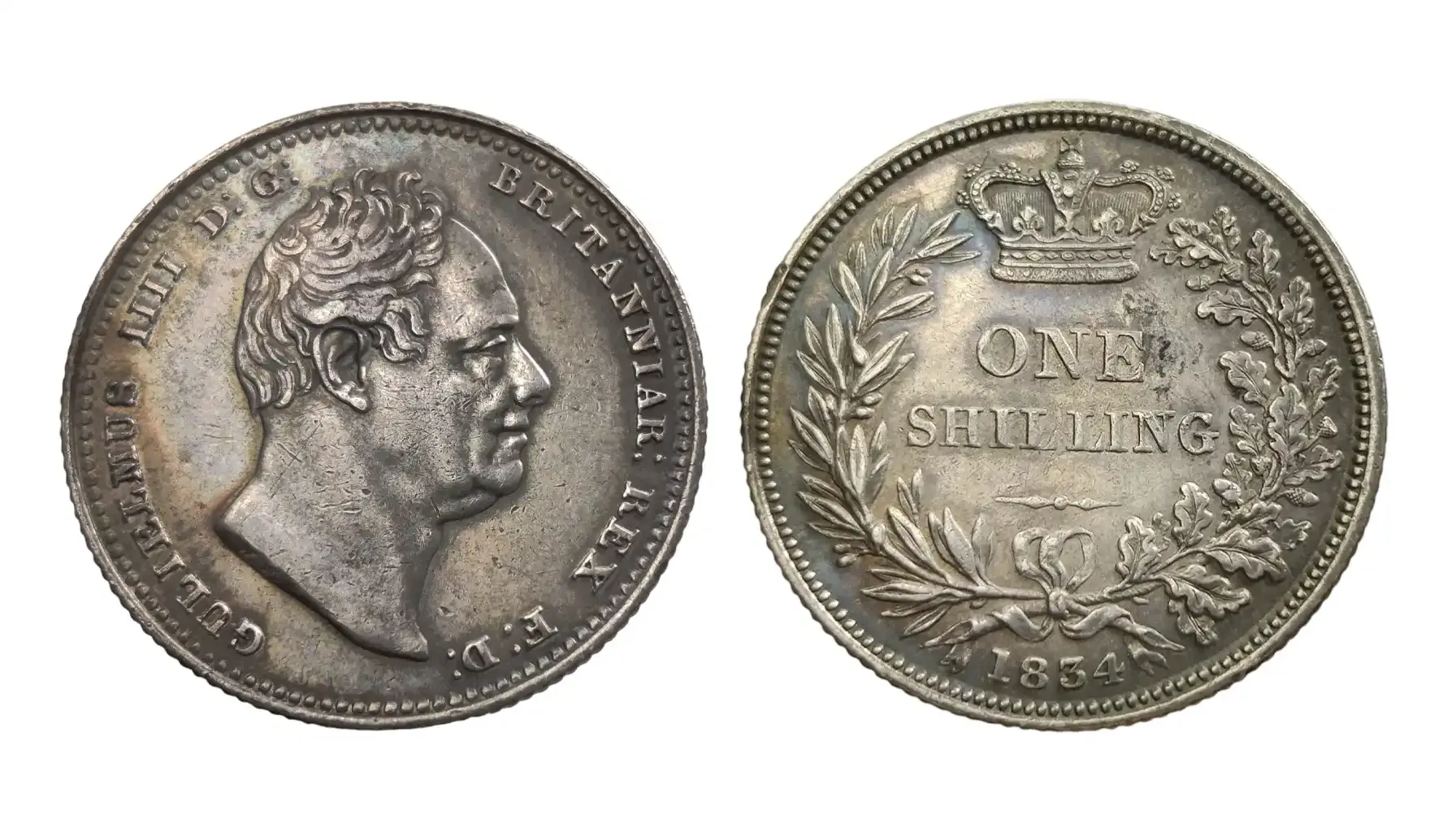
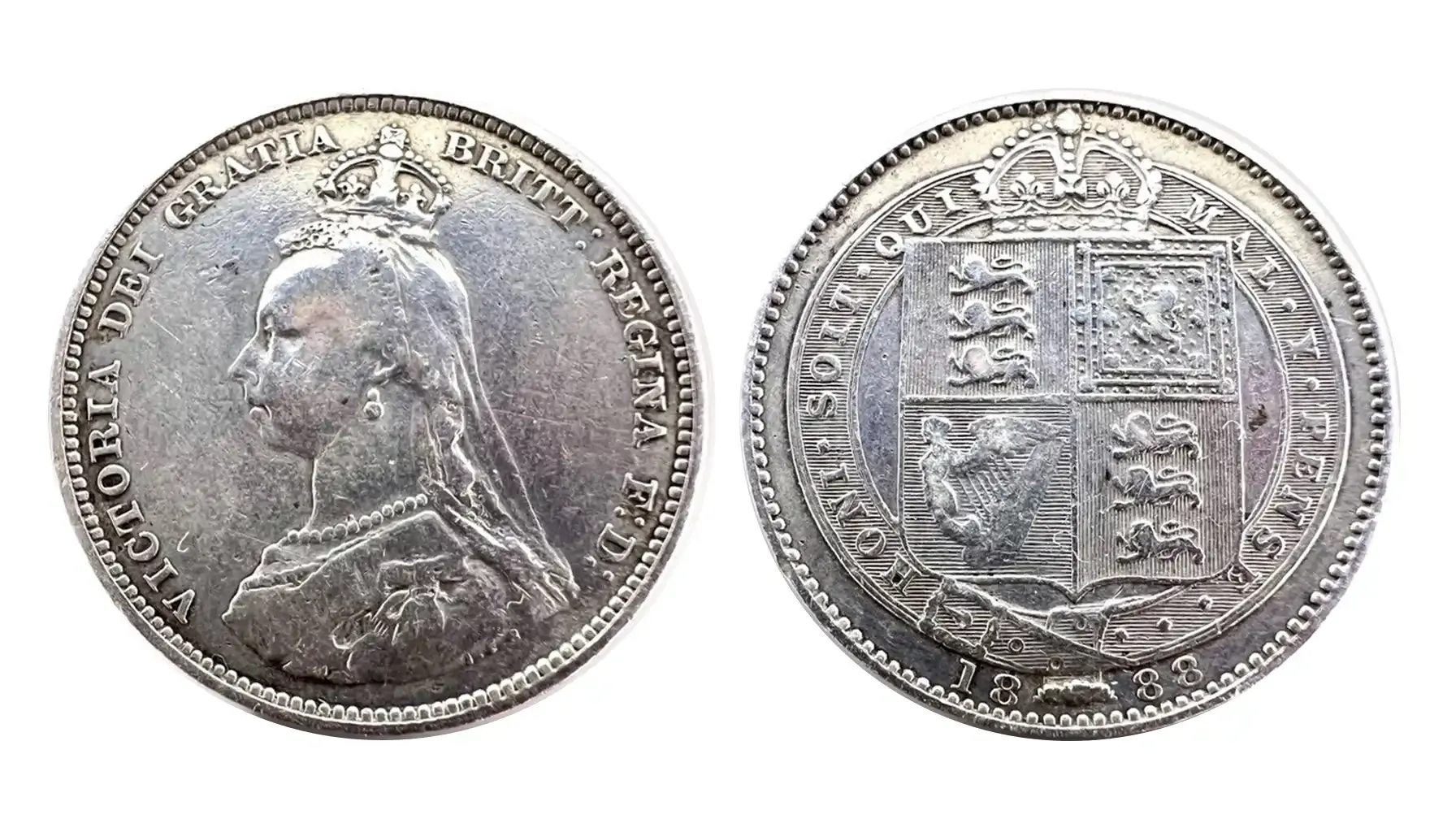
Victorian: Different portraits of Queen Victoria and varied reverse designs
Elizabeth II: English and Scottish designs.
English vs. Scottish Shilling Designs
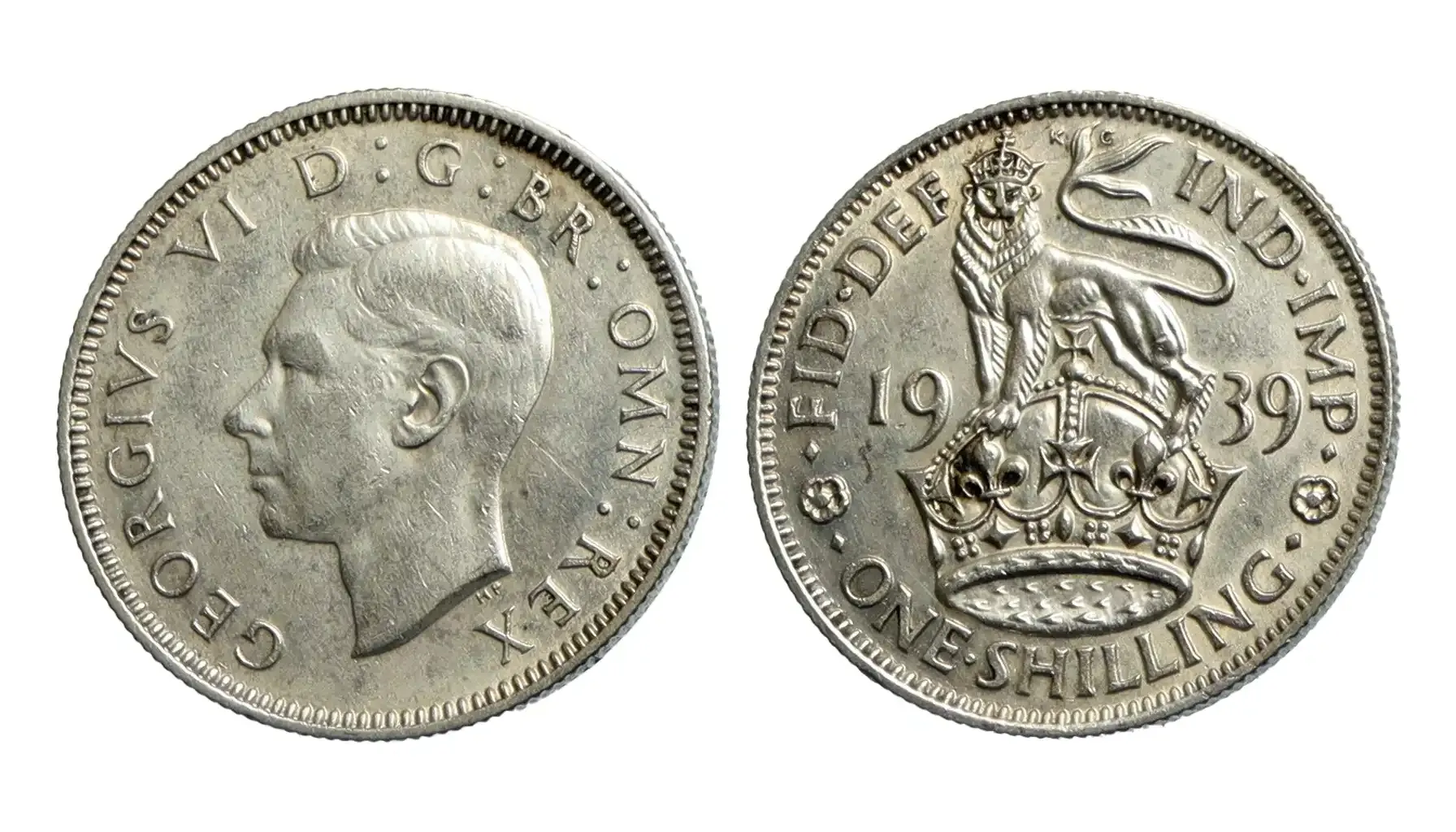
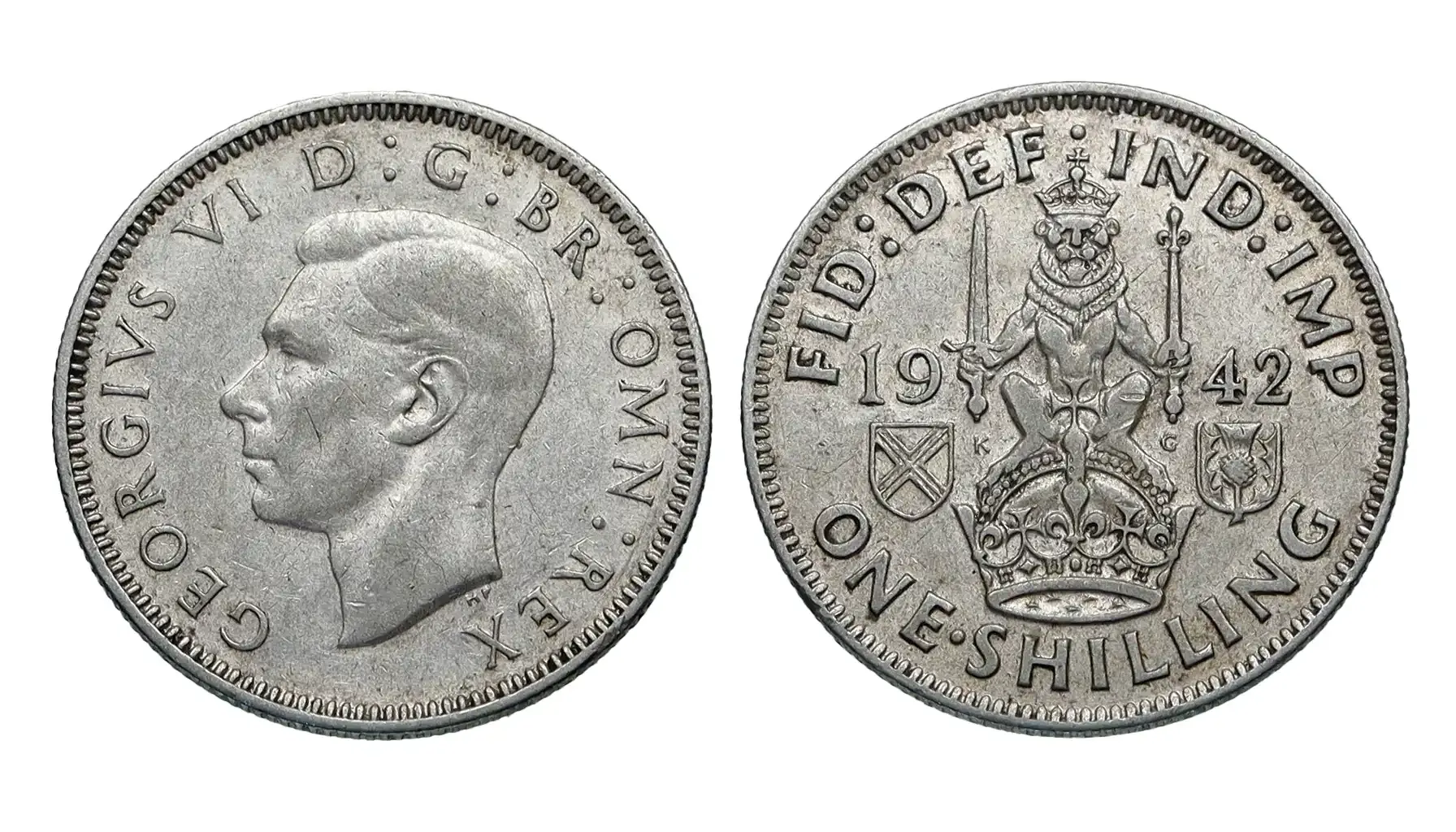
From 1937, the Royal Mint issued two designs: the English version showing three lions and the Scottish version with a crowned lion rampant. Both circulated across the United Kingdom.
Both have a portrait of the reigning monarch. The Scottish shillings are typically rarer than their English counterparts because fewer were minted.
Notable Monarchs Featured on Shilling Coins
Designs changed with each monarch. Henry VIII’s testoon bore his portrait in Renaissance armor, while Queen Victoria’s shilling featured a youthful effigy by William Wyon. George VI and Elizabeth II modernized the imagery with simplified heraldic motifs.
Metal Composition: Silver, Nickel, and Cupronickel Versions
Years | Content | Silver |
1500-1919 | Sterling | 92.5% |
1920-1946 | Nickel | 50% |
1947-1970 | Cupronickel | 0% |
How to Identify and Appraise a Shilling Coin
How to identify fake coins:
Mint mark
Year
Grading
Condition
Digital tools
Checking Mint Marks and Year of Issue
A shilling’s reverse typically bears the date beneath the shield. Early pieces may include mint marks identifying locations such as Tower Mint or Bristol Mint.
Grading and Condition Assessment
Condition affects every coin’s market position. Grading ranges from Good to Mint State. A lightly circulated silver shilling can triple in value compared to a worn specimen.
Using Online Tools and Numismatic Catalogs
Modern collectors rely on digital references like the Royal Mint Museum Database or NGC’s online coin census. These resources confirm authenticity and provide verified market averages.
Now you can confidently evaluate shilling coins because you understand the subtle differences between an ordinary copy and a valuable collector’s item.
Install the Coin ID Scanner app to keep your knowledge up-to-date and manage your collection conveniently. It will become your digital assistant in the world of numismatics.
F&Q
What is a British shilling?
Silver coin that is worth one-twentieth of a pound.
How much is 1 shilling worth?
One shilling equals five new pence.
When was the shilling discontinued?
It was discounted in 1971.
What metals were used in shilling coins?
Silver, nickel, cupronickel metals are used.
Is a one shilling coin valuable today?
Common cupronickel 1 shilling in today’s money holds small value, while early silver issues can reach hundreds or thousands of pounds.
Are old British coins still valid?
Old British items are valid in the numismatic field.
Can I still use shillings as legal tender?
No. You can use them in the collector market.
Why do some shillings say ‘English’ and others ‘Scottish’?
Between 1937 and 1970, separate designs represented the two nations within the United Kingdom.

 Facebook
  X (Twitter)
  Pinterest
  LinkedIn