Contents:
A unit of currency can be different: big or small, precious or ordinary, common or collectible. The variations may be quite astonishing to observe, yet certain types represent the most illustrative chapters in American history – US silver coins.
Legal tender with privileges – it is all about numismatic creations that have been minted a few centuries ago and during the past months – their worth is undeniable and will only grow.
Gold and silver coins are among the most coveted artifacts that may be hidden behind the inconspicuous names and price tags, and the challenge is to spot them on time. But what coins are silver? Which features identify these coins as exceptionally collectible, and where to seek genuine pieces without fear of being fooled?
What Do the US Silver Coins Mean?
The age of silver coinage is rather long – the first creations were born in the kingdom of Lydia in Asia Minor (600 BC). However, these were quite unpretentious – simple and naive. As technologies advanced, so did the coinage, and the epitome of the modern numismatic achievements is the coinage of the United States of America.
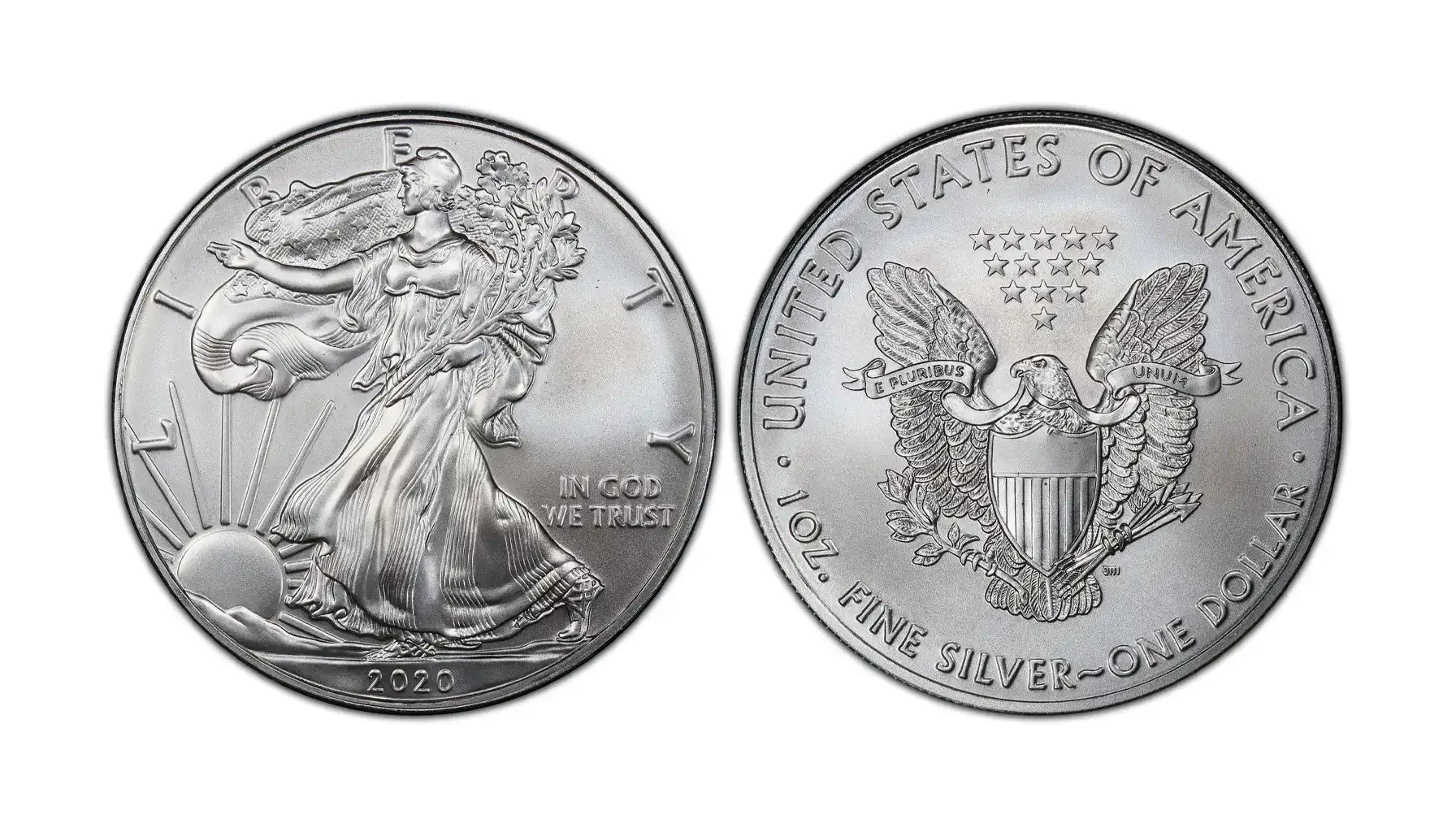
The first pure silver coins appeared in 1794, and unlike paper money, they hold tangible, obvious value because of their precious metal content. Originally, they circulated as everyday currency, but today, it is more of a collectible and an investment-grade asset than a medium of daily exchange. These days, the US Mint continues its tradition as it produces bullion and commemorative creations that are valuable from both materialistic and aesthetic perspectives.
Popular Silver Coins for Sale by Type
There exist numerous types of numismatic creations that have been minted in silver: denominations vary, though not all of them may boast the presence of precious contents in their vaults. Here is a quick overview of the most prominent and collectible items, with old silver coins prices revealed.
Type | Name | Mint | Mintage | Auction Record |
1851 3CS (Proof) | Philadelphia | 4 | $176,250 (PR66) | |
Nickel (Wartime Issue) | 1942-P 5C Silver | Philadelphia | 57,873,000 | $5,950 (MS68) |
Half Dime | 1794 Flowing Hair H10C | Philadelphia | 7,756 | $93,500 (CH UNC) |
Quarter Dollar | 1823/2 Capped Bust 25C | Philadelphia | 17,800 | $246,750 (AU58) |
Half Dollar | 1919-D Walking Liberty 50C | Denver | 1,165,000 | $270,250 (MS66) |
One Dollar | 1893-CC Morgan $1 | Carson City | 677,000 | $161,000 (MS66) |
Modern Bullion Dollar | 1986 $1 Silver Eagle | San Francisco | 5,393,005 | $21,150 (MS70) |
Trime – 1851 3CS (Proof)
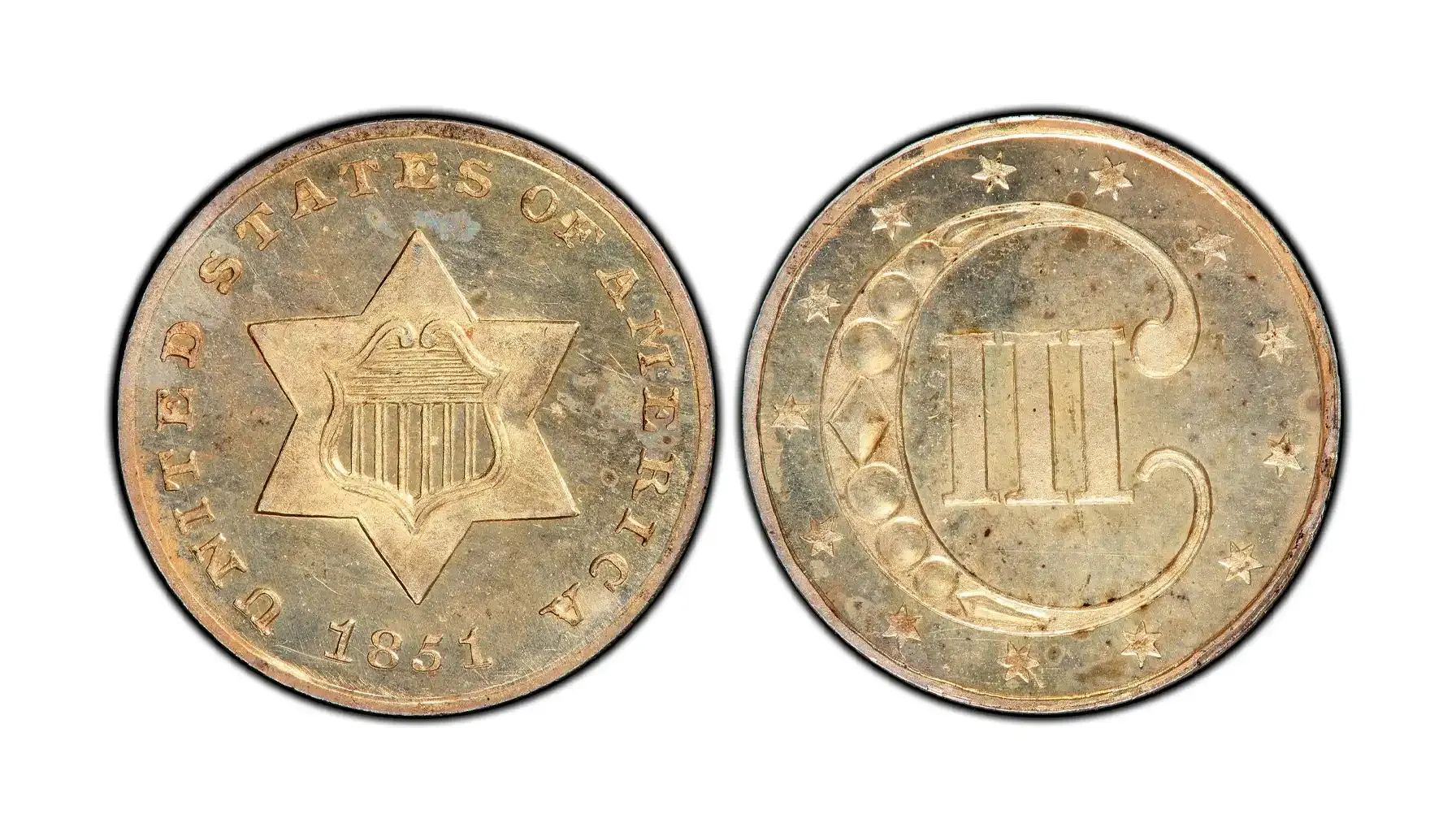
Produced by: Philadelphia Mint
Mintage: 4
Composition: 75% Silver, 25% Copper
Auction Record: $176,250 for PR66
Three-cent coins were not the most popular creations of the American monetary sector, but the 1851 Proof issue is indeed among the rarest of all small-denomination APMEX silver coins. According to Jaime Hernandez, only 4 pieces are known to exist, likely created for presentation or archival purposes.
Nickel – 1942-P 5C Silver (Regular Strike)
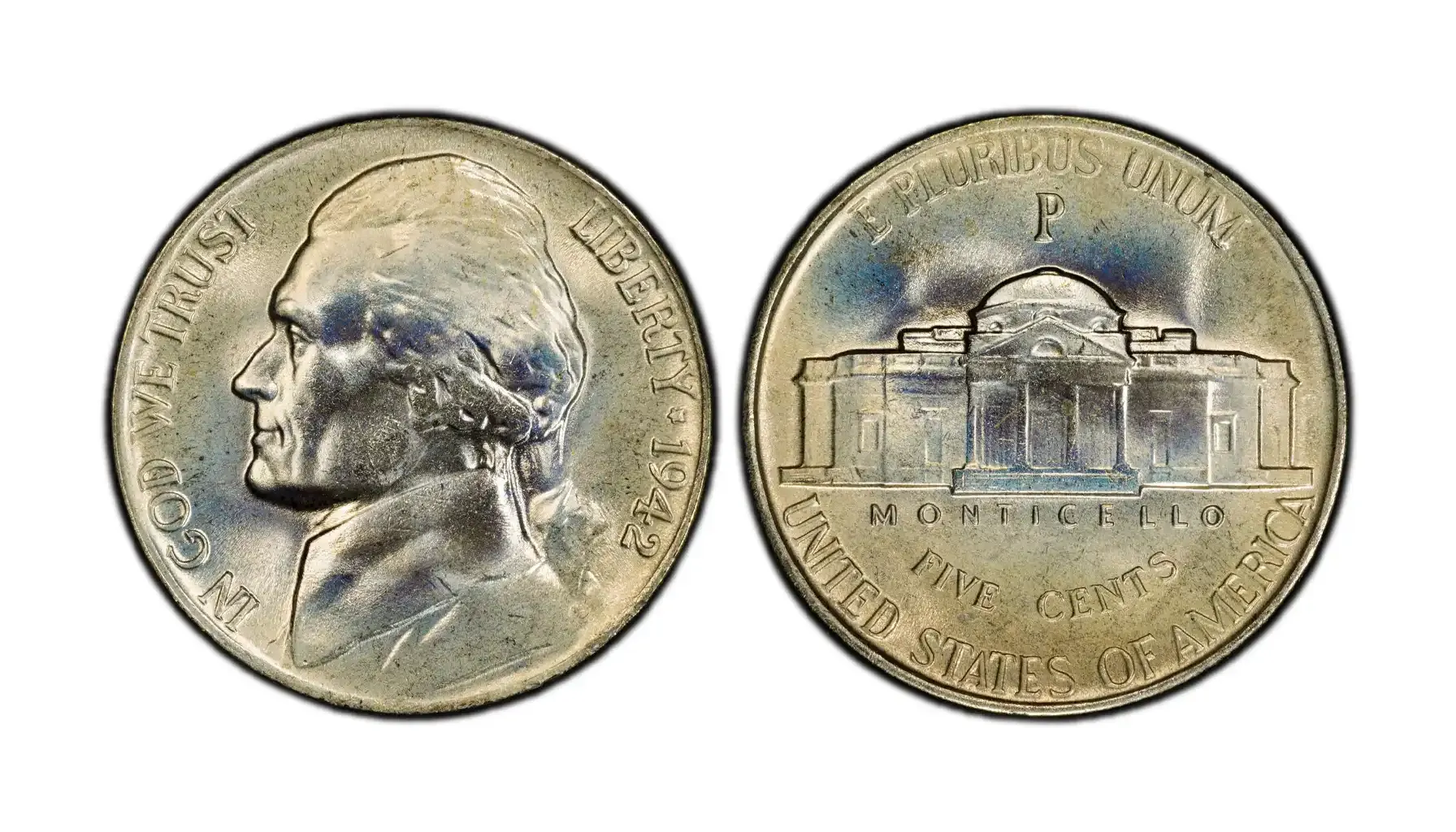
Produced by: Philadelphia Mint
Mintage: 57,873,000
Composition: 56% Copper, 35% Silver, 9% Manganese
Auction Record: $5,950 for MS68
In 1942, World War II was still far from being finished, and the nations urgently needed any resource they could take for the military effort so as to make one step closer to their victory. This is why the US Mint altered the composition of the Jefferson Five Cents, leaving new 1942 nickels with 35% silver. Over time, they gracefully tone to a soft green-gray hue, which makes them even more appealing than they were before.
Half Dime – 1794 H10C (Regular Strike)

Produced by: Philadelphia Mint
Mintage: 7,756
Composition: 89.2% Silver, 10.8% Copper
Auction Record: $93,500 for CH UNC
The 1794 Flowing Hair Half Dime is among the first units of currency produced by the new US Mint. Although the mintage was rather low, a surprising number of items managed to survive in high grades, thanks in part to an 1880s hoard discovered by dealer William Woodward.
Quarter Dollar – 1823/2 25C (Regular Strike)
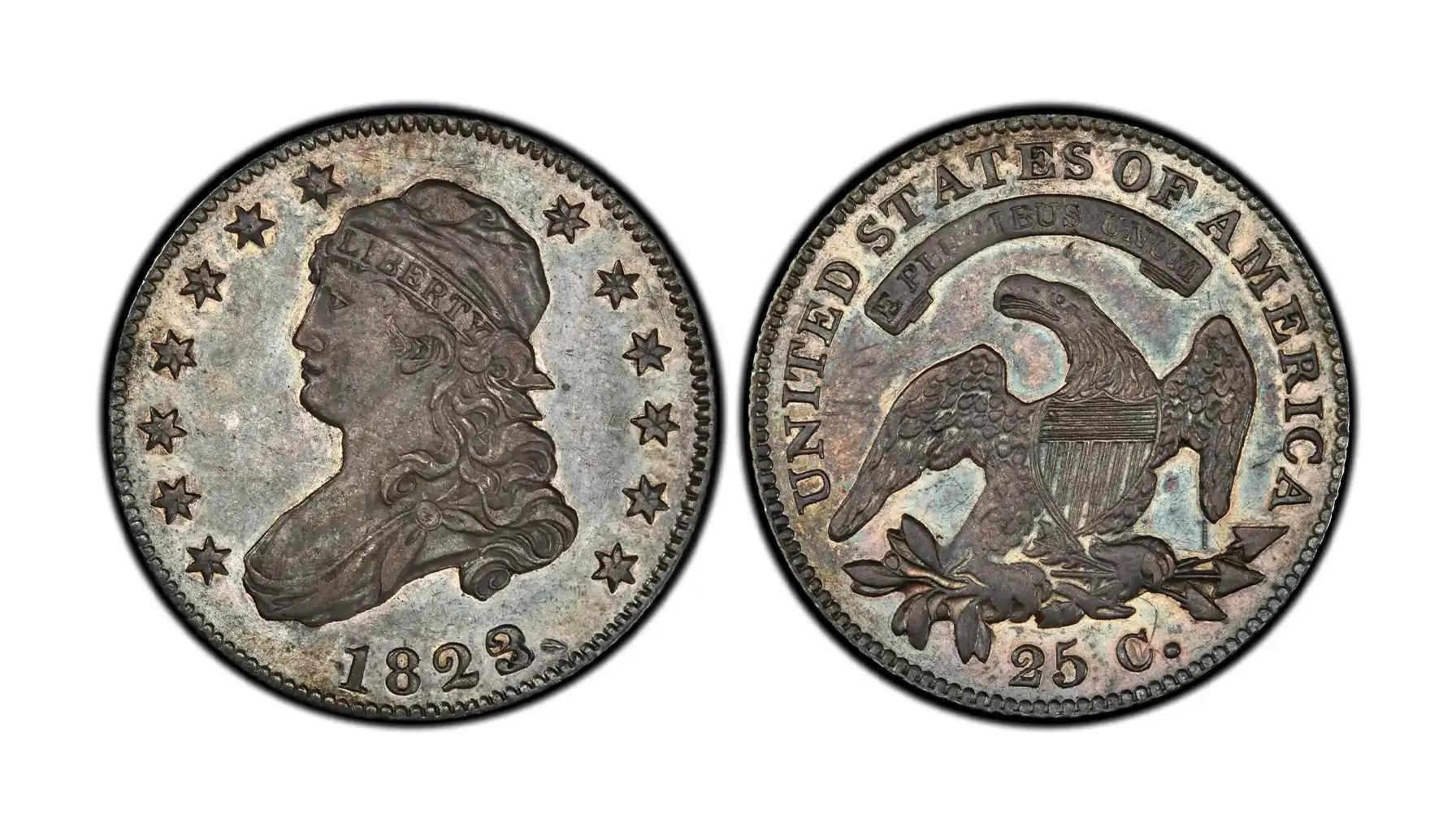
Produced by: Philadelphia Mint
Mintage: 17,800
Composition: 89.2% Silver, 10.8% Copper
Auction Record: $246,750 for AU58
Errors are also intriguing to explore, for they represent the most exclusive coins (with no other creation being the same). In particular, this overdate Capped Bust Quarter features an error where the “3” in the date was struck over a “2”. But how many could be found? This is the question that has not been resolved yet.
“According to Steve Tompkins' recent reference, 31 examples of this famous rarity are known. I'd guess there are a few low-grade ones yet to be discovered. The finest seen is a gem Proof with a pedigree tracing all the way back to Levick. Two Mint States are next, followed by two AU's (one from Norweb 1538) and four XF's, including Eliasberg 1386. More than half of the known specimens grade VG or lower.”
– Denis Loring, Harvard- and MIT-trained actuary, Early American Coppers club charter member, and renowned U.S. coin collector and researcher.
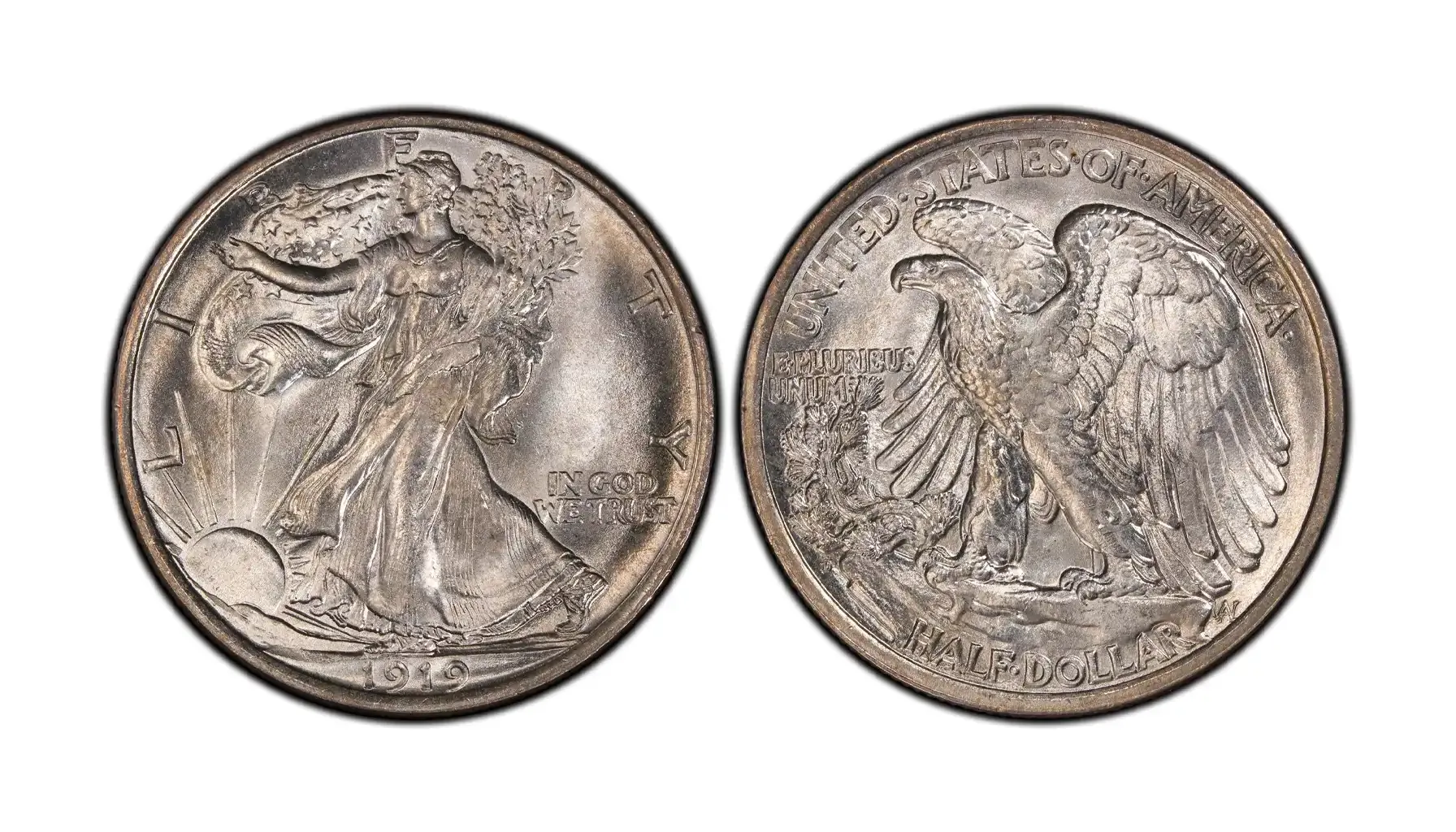
Produced by: Denver Mint
Mintage: 1,165,000
Composition: 90% Silver, 10% Copper
Auction Record: $270,250 for MS66
The 1919-D Walking Liberty Half Dollar is a true masterpiece that can be extremely valuable in gem condition. Since most were poorly struck, obtaining a high-grade piece is a fortune (yet the design itself makes it appealing and emblematic of early 20th-century artistry.
Silver Dollar – 1893-CC $1 (Regular Strike)

Produced by: Carson City Mint
Mintage: 677,000
Composition: 90% Silver, 10% Copper
Auction Record: $161,000 for MS66
The silver dollar coins are diverse by nature, yet certain instances may be more or less prized because of a peculiar background, unusual appearance, or circumstances that surrounded their emergence. 1893 was the final year of the Carson City Mint’s operation, which turned a simple unit of currency (i.e., a Morgan dollar) into a well-cherished relic of the Old West.
Modern Silver Bullion Coin – 1986 $1 Silver Eagle (Regular Strike)

Produced by: San Francisco Mint
Mintage: 5,393,005
Composition: 99.93% Silver, .007% Copper
Auction Record: $21,150 for MS70
The silver eagle coins are indeed the most coveted pieces out of all the above-mentioned numismatic creations, thanks to their appearance and precious metals content, too. This coin was a sign of a new era of US bullion coinage. Authorized by Congress under the Liberty Coin Act, it became the first official silver bullion coin of the United States, with .999 fine silver and a nominal value of only $1.
Where to Buy Silver Coins in 2025/26
Finding a credible place to purchase a genuine piece is the first challenge that many collectors face. In fact, there are multiple channels available for one to consider, which may present the most outstanding units of currency on the market in 2025/2026.
US Mint/Government Mints
U.S. Mint Official Store: Offers new silver releases (proof sets, bullion coins, commemoratives). It is indeed one of the cleanest ways to get “first-run” coins.
Authorized Dealers: The US Mint usually works with approved dealers and distributors, which means popular bullion and collectible coins could appear through these channels almost simultaneously, too (the prices are generally a bit higher, though).
Reputable Online Dealers & Bullion Platforms
APMEX: Huge selection of US and world silver coins, bars, and numismatic rarities.
JM Bullion: Easy-to-use storefront for numismatic creations of all sorts.
SD Bullion: Good for bullion, including US and foreign coins.
Wholesale Coins Direct: Specializes in coins (including rare ones) and bullion.
Provident Metals: Offers both bullion and collector units of currency.
Local Coin Shops & Rare Coin Dealers
Local markets may offer the most comprehensive experience, for it is possible to touch, feel, and explore units of currency in person. Nonetheless, the selection may be limited to what is present in the moment. Try googling coin shows, numismatic society meetings, or auction houses in the place you live – they often offer collectibles that do not circulate online.
A Few Tips for Those Who Buy
Always check the premium over spot, shipping & insurance, and return policies.
Prefer dealers with certificates from the renowned grading services like NGC or PCGS.
Be especially careful with rarity claims — get documentation or authentication where possible.
For European buyers, be aware of VAT or import taxes on silver coins or bars. Some coins are VAT-exempt in certain jurisdictions.
If possible, use escrow or secure payment methods when buying from less familiar sources.
Employ additional digital tools like Coin ID Scanner to identify numismatic creations, check their heritage, and manage collections on the spot.
Designs may evolve, but the significance is perpetuated in precious metals forever – the only thing you need is a fine coin with a story to share.

 Facebook
  X (Twitter)
  Pinterest
  LinkedIn