Contents:
Numismatics has long ceased to be just a hobby - it has turned into a market with billions of dollars in annual turnover, where each coin is assessed not only by rarity and grade, but also by official certification. That is why Professional Coin Grading Service (PCGS) has become the standard in the industry. This company was the first to offer a system of independent grading and encapsulating coins in protective holders.
Nowadays, the company’s services are used by collectors, investors, and prominent auction houses. Knowing how PCGS coin grading works helps people not only judge a coin’s true value, but also feel safer from counterfeits. And if you’re curious about spotting hidden rarities yourself, modern tools can make it easier to identify coins.
What is a Professional Coin Grading Service (PCGS)?
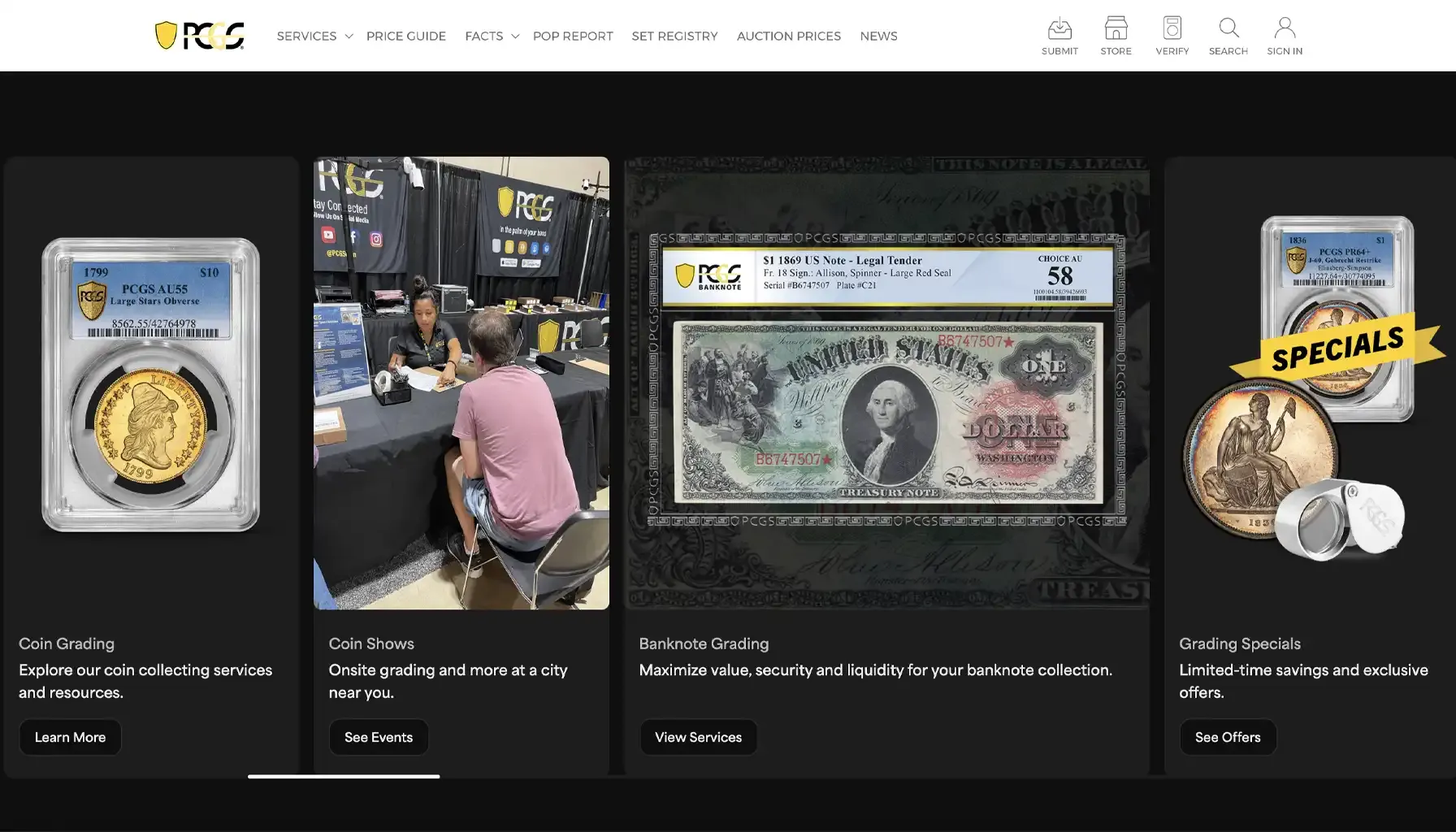
PCGS was founded in 1986 by a group of leading US numismatists. Before that, the coin market struggled with subjectivity: one dealer might grade a coin as 'near fine,' another as simply 'average'.” There was no generally accepted system. PCGS (Professional Coin Grading Service) introduced a standardized grading scale and thus set the rules that are still in effect today.
Role of PCGS in the Coin Market
Sets standards for grading on the Sheldon scale from 1 to 70.
Issues encapsulated holders with labels indicating grade, year, and variety.
Publishes the PCGS price guide, a reference point for collectors and investors.
Provides tools like the PCGS Photograde for self-grading.
This ensures that buyers are confident that they are buying a genuine item, and sellers can expect a fair price.
The PCGS Grading Process
To understand what makes PCGS professional coin grading service special, it is important to look at the step-by-step certification process.
Step 1: Submission
The coin is sent to one of the official PCGS grading locations either in person, through a dealer, or by mail. Along with it, an application is filled out, where the expected variety, year of issue, estimated value and selected service level (Economy, Regular, or Express) are indicated. At this stage, it’s important to insure the shipment properly, because even an inexpensive coin at first glance may prove to be a rarity once graded.
Step 2: Authentication
First, experts check the authenticity: they analyze the metal, weight, diameter and die features. Both visual methods and devices are used. This step protects the market from counterfeits and so-called "altered coins" - coins where the date or mint mark has been changed.
Step 3: Grading
Next, the coin is graded on the Sheldon scale. Each coin is examined by several independent experts to reduce subjectivity. Factors such as the presence of abrasions, strike quality, luster and the preservation of details are taken into account. The final grade is averaged and recorded in the system.
Step 4: Encapsulation
After the grade is set, the coin is encapsulated in a tamper-resistant plastic holder that is resistant to moisture and ultraviolet radiation. The holder label indicates the year, variety, grade, as well as a unique serial number and QR code. Authenticity can be easily verified through PCGS Verify or the PCGS Coin Lookup service, which is especially convenient at auctions and in online transactions.
Step 5: Return
At the final stage, the coin, holder, and certificate are returned to the owner. Depending on the service level chosen, the process takes from several days to a couple of months. A certified coin is immediately ready for sale, long-term storage, or inclusion in a collection, which increases its market appeal.
PCGS Price Guide and Market Influence
The PCGS price guide is not just a list of prices, but a dynamic tool that is updated based on auction sales and market trends.
Example:
Grade | Average Price (Example for Barber Dime) |
G-4 | $8–10 |
VF-20 | $40–60 |
MS-65 | $400–700 |
PR-67 | $4,000+ |
The guide helps you understand how much rare coins actually sell for, and serves as a key reference point for both beginners and professionals. By comparing this data, you can also see how interest in series like the 1902 Indian Head Penny, which remains in demand a century later, is changing.
PCGS Photograde
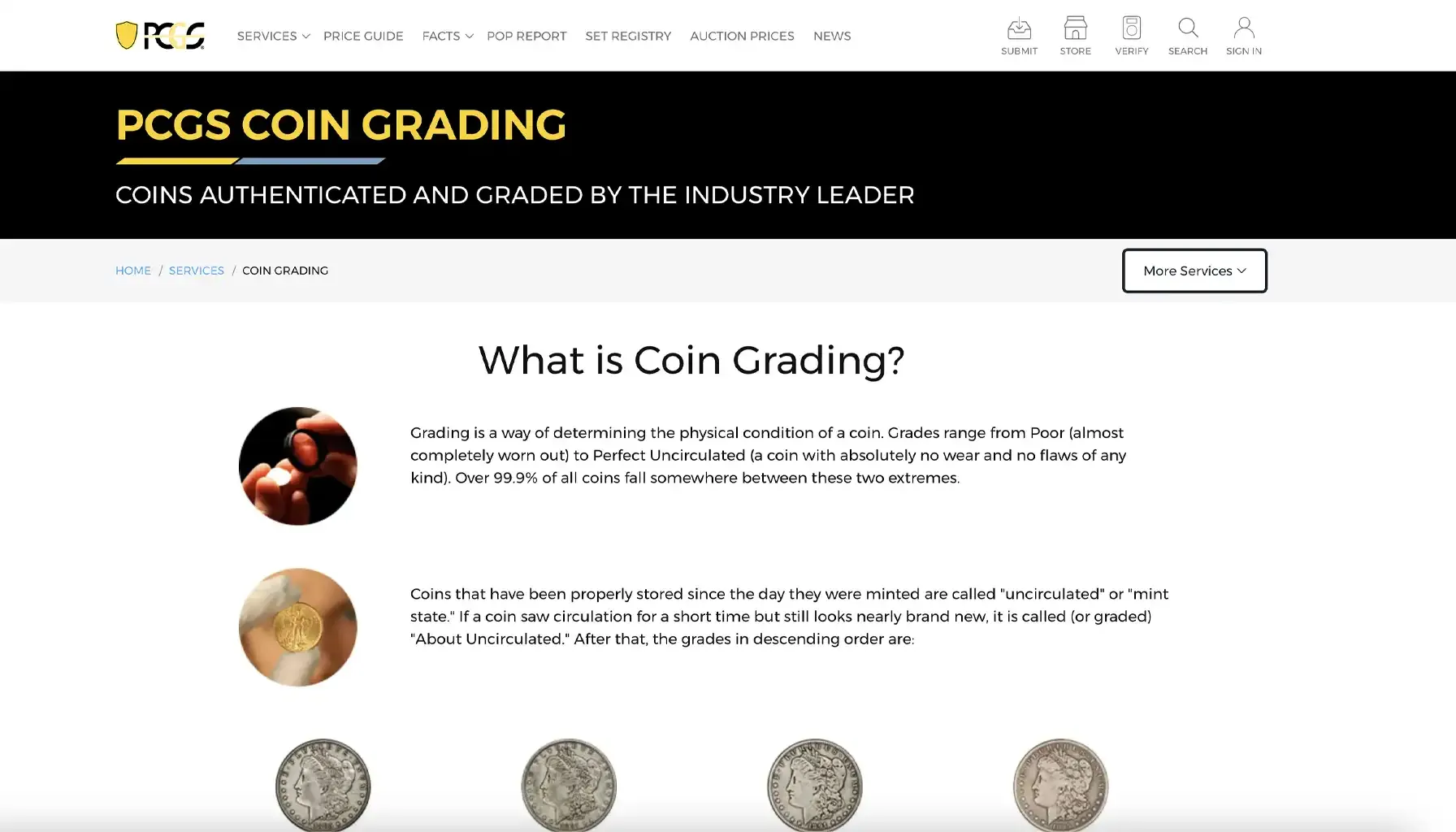
For those who want to estimate the condition of a coin on their own, there is the PCGS Photograde service. It is based on photographic examples, which show all levels of wear.
Advantages:
Convenient for quick evaluation before sending a coin for certification.
Helps distinguish between XF-40 and AU-50.
Used by both dealers and collectors.
While the final grade is determined only by experts, Photograde allows you to avoid inflated expectations and better prepare for the sale.
PCGS Verify and Coin Lookup
To protect the market from counterfeits, the PCGS verify system works. It is enough to enter the unique serial number from the holder on the site, and the owner receives all the information: year, grade, variety and even the history of trades.
Through this, you can quickly check the data for rare issues. This is especially important when buying valuable coins, such as the 1935 Quarter, where the price depends heavily on the accuracy of the grading.
PCGS Grading Cost
The cost of services depends on the selected service level and the estimated price of the coin.
Service Type | Turnaround Time | Price (Approx.) |
Economy Tier | up to 60 days | $22–30 |
Regular Tier | up to 30 days | $40–50 |
Express Tier | up to 10 days | $75–100 |
Premium / High Value Tier | 3–5 days | % of the item’s value |
The PCGS grading fee may seem high, but when selling a rare coin the investment pays off: the difference between a raw coin and a certified one can be hundreds or thousands of dollars.
PCGS Grading Locations

The company has several branches to serve customers around the world.
USA: head offices in California and Florida.
Europe: Paris, serving the EU.
Asia: Hong Kong, where the silver and gold coin market is particularly developed.
This extensive network makes the services available globally.
Professional Coin Grading Service News
This news section helps you keep up with the latest updates. It publishes:
new series announcements;
auction record reports;
grading rule changes.
For example, in 2023, the PSGC professional coin grading service announced an expansion of its database to include images of all major rare Roosevelt Dime varieties. This news has sparked strong interest among collectors, as it makes it easier to track the value of rare issues like the Gold Kennedy Half Dollar.
Why Collectors Choose PCGS
The reasons why collectors trust this system:
High liquidity at auctions — coins in PCGS holders are easier to sell, since buyers see the official grade and are willing to pay a premium for the transparency of the transaction.
Recognition on major auction platforms — PCGS certification is required or welcomed at Heritage Auctions, Stack’s Bowers and other international auctions, which expands the market for the owner.
Protection against counterfeiting — a tamper-resistant holder and a unique serial number eliminate the risk of replacement or forgery, and the built-in QR code allows you to instantly verify the data through the official service.
Objectivity of grading — several independent experts make a decision, which reduces the likelihood of errors and increases the confidence of collectors and investors.
Compared with competitors, PCGS coin grading remains the benchmark thanks to its strict standards and international recognition.
Future of PCGS and Coin Collecting
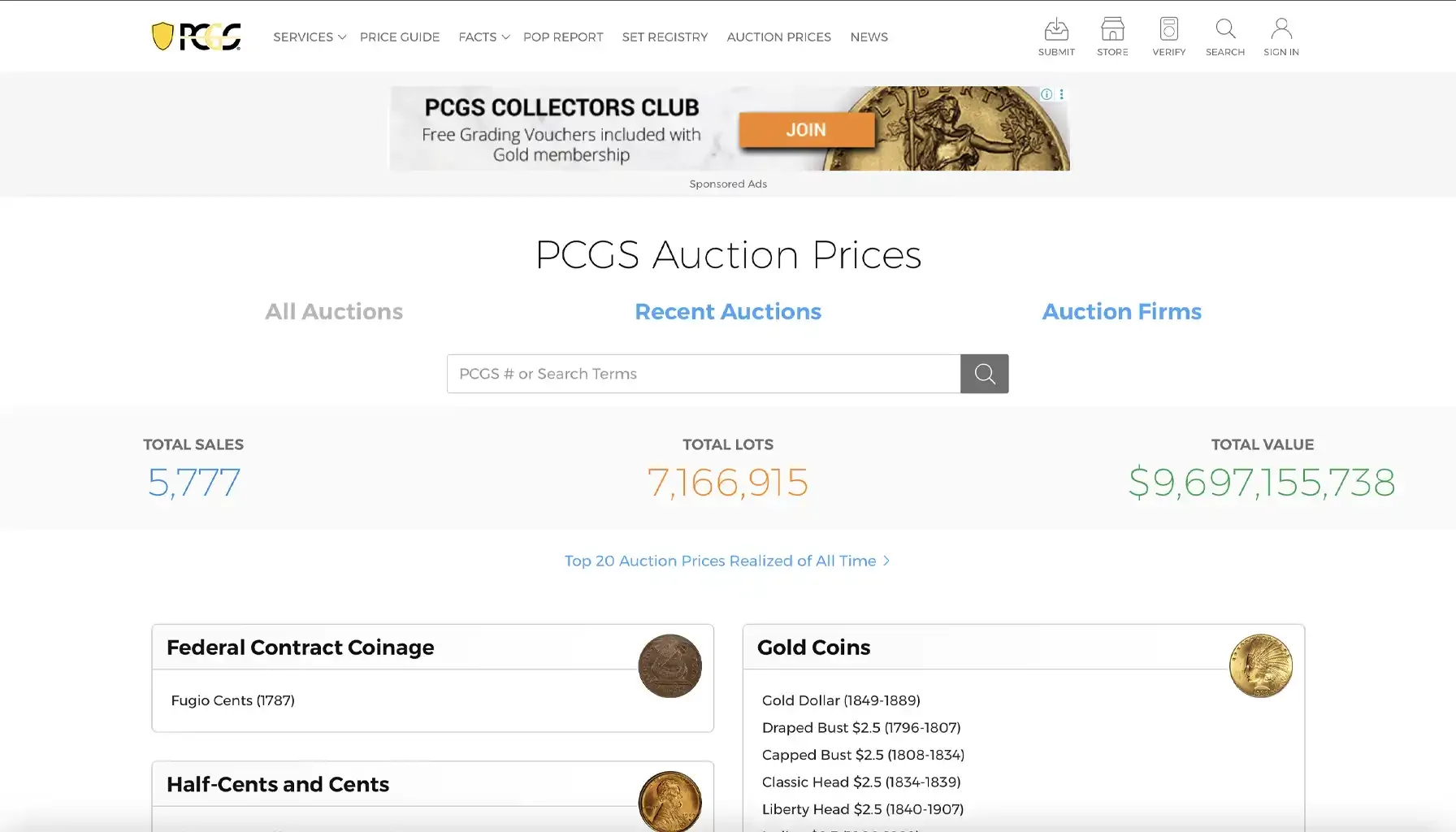
Technological developments also affect numismatics. PCGS actively implements digital solutions: online verification, electronic catalogs and databases with high-resolution images. All this simplifies access to information and helps to form a transparent market.
Collectors increasingly consider certification as a necessary step before investing in rare coins. This applies not only to American issues, but also to worldwide numismatics.
Practical Outlook for Collectors
Certification through PCGS is not just a grading process, but a tool for preserving value and transaction transparency. Comprehending the pricing framework, grading characteristics, and rare classifications gives collectors a greater advantage. Some view it as a method to safeguard investments, while others see it as a pastime — yet in both cases, the benefits are clear.

 Facebook
  X (Twitter)
 : Comprehensive Guide to Coin Grading and Verification) Pinterest
Pinterest  LinkedIn