Contents:
The cultural part of the Isle of Man has been a unique piece for numismatists from all over the world for many years. For example, the Clock of the Castle of Rashen is 20 pence, which was produced over a period of more than 10 years.
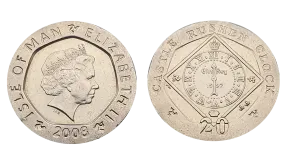
It depicts an antique clock with one hand, which is located in the castle of Rushen above Castletown. This type of watch is rare, so only a few copies of the sixteenth century have survived.
How to identify rare coins in the modern world?
Castle Rushen Clock 20p Overview
Location: The Isle of Man
First Issue: 2004
Last Issue: 2016
Mint: The Pobjoy Mint in Surrey
Shape: the Reuleaux Heptagon
The clock depicted on the reverse is depicted there for a reason. Queen Elizabeth I presented this watch in 1597, when the island was in trust during a legal dispute. This wonderful watch has only one hand, but it shows the exact time.
Item Characteristics
Period | 2004–2016 |
Diameter | 21.5 mm |
Weight | 5 g |
Thickness | 1.7 mm |
Composition | Copper–nickel |
Shape | 7-sided |
Note: For more insights, check the details about collecting Queen Elizabeth II items.
Production Item History
While the Isle of Man has its own items, they are not minted by the Royal Mint in Wales.
The Pobjoy Mint
The Isle of Man used the Pobjoy Mint in Surrey as a private mint for many decades. Coins from this era carry a distinguishing feature: a small PM mint mark. This mark usually appears in the vicinity of the date or beside the clock face.
The Die Letters
If you look closely at the item, you might see small letters (AA, etc.). These are die markers used by the mint to track which specific stamps were used during production. Collectors often try to find every letter combination for a single year.
The Final Issue
The Castle Rushen design was retired after 2016. In 2017, the Isle of Man switched to the Tower Mint for its minting contract and introduced a fresh set of designs; the current 20p proudly showcases a Viking Longship.
The Clock Legend
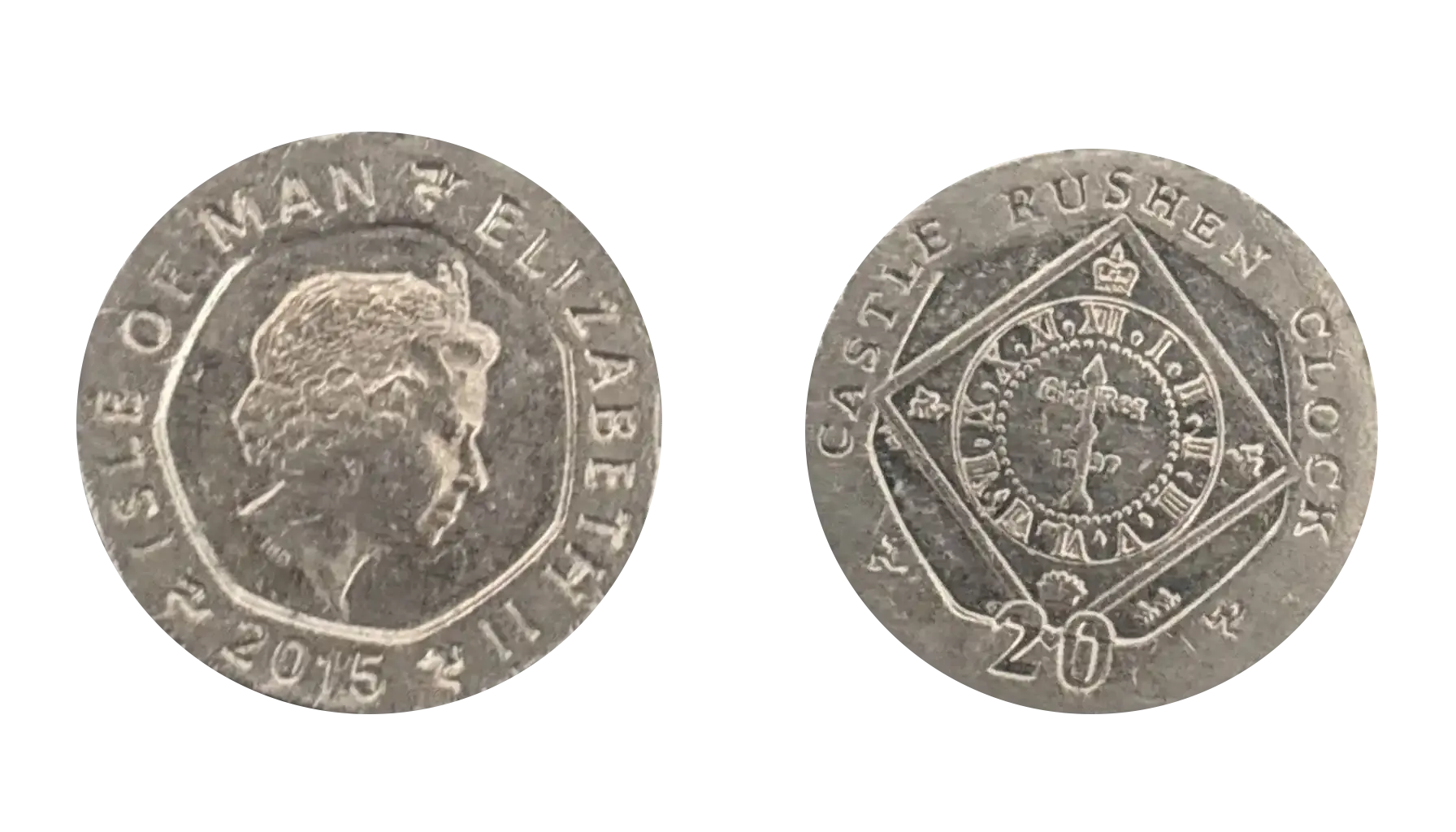
The reverse of the item features a single-handed clock face, which represents a real clock located in the medieval fortress in Castletown. There are two main legend theories.
The Gift
According to long-standing tradition, the clock was a gift from Queen Elizabeth I in 1597. At the time, the English Crown held the Isle of Man in trust during a legal dispute between the heirs of the Earl of Derby.
The Mysterious One
While the casing and some parts are very old, some experts believe the actual mechanism might date closer to the mid-17th century. Regardless, the Elizabethan gift remains the most popular and enduring story. The clock is famous for having only one hour hand. In the 16th century, minutes weren't considered particularly important for daily castle life.
Is It a Rare Clock Hand Variety?
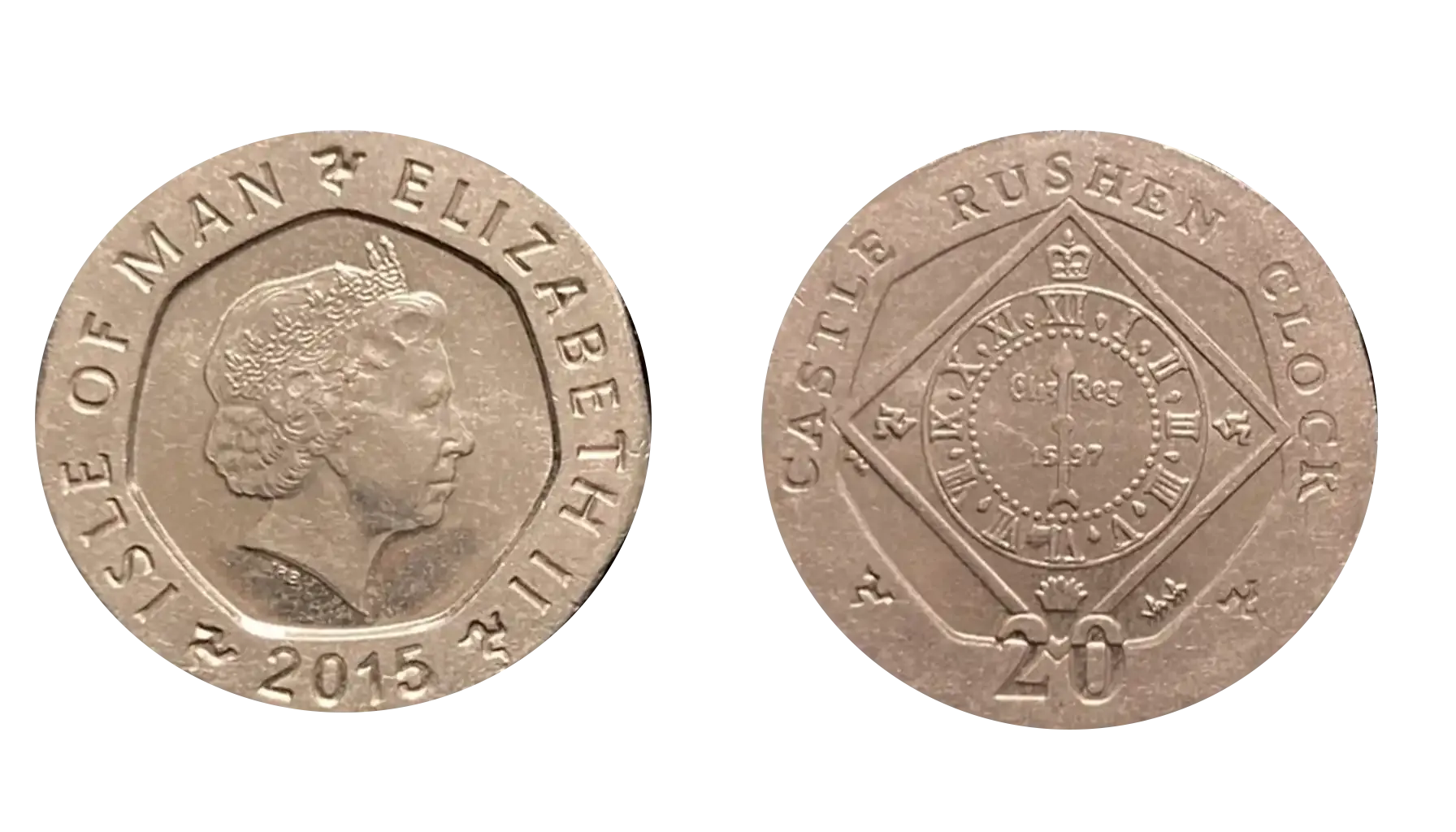
There is frequent talk of error versions where the single clock hand points to a different time. However, in the vast majority of cases, these are not official varieties but rather:
Machine damage or ghosting from the striking process.
Environmental wear that makes the hand look shifted.
Misinterpretation of the design.
Two Reasons Why the Item Is Rare
From a technical standpoint, these coins are frequently encountered on the Isle of Man. However, compared to other rare 50p UK items, they have a lower mintage.
Manx items are legal tender on the island, but not in the UK. Because they occasionally hitchhike into British purses, they are a prized find for UK change hunters.
Two Reasons Summary
Population Gap
Legal Tender Status
Castle Rushen Clock 20p 2015 Issue
Numismatists' analysis provides insight into availability, with 17% of collectors reporting ownership of the 2015 PM issue. This percentage places the 2015 date among the more commonly represented years in private collections.
The 2015 PM issue appears with approximately 4% frequency for a second variety, suggesting multiple die combinations exist.
Why 2015 Is a Significant Issue?
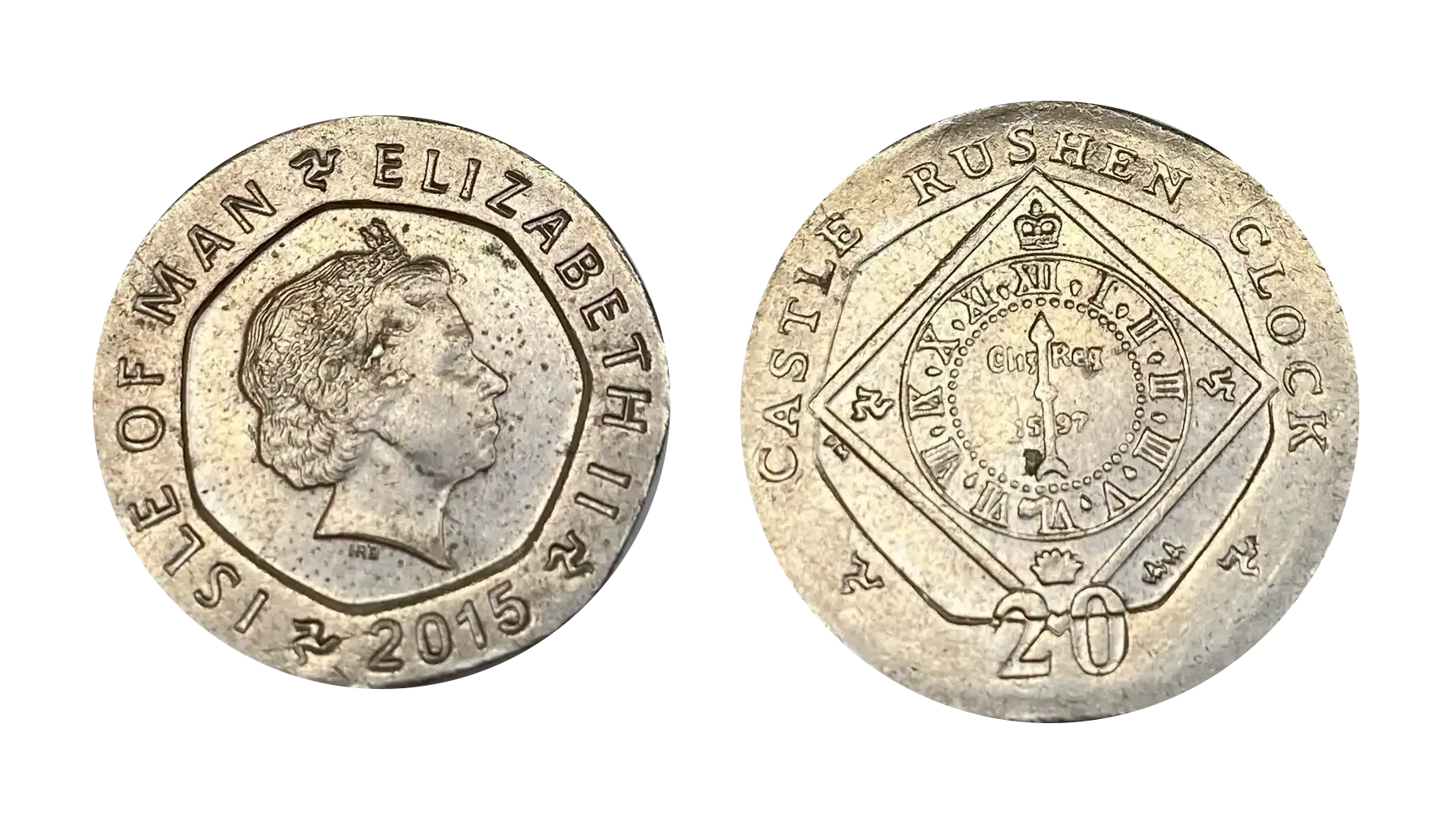
First of all, it happens because it was near the end of the series. Often, the final years of an item design have lower mintages as the Treasury prepares for a new series.
Because of the final series, numismatists tended to hoard the Castle Rushen Clock 20p 2015 worth and 2016 dates more aggressively, which might be why they show up so prominently in collection data.
Variety | Mintmark Position | Collector Frequency |
2015 PM AA | Left PM, lower-right AA | 17% |
2015 PM AB | Left PM, lower-right AB | 4% |
Other Die Letters Details
In contrast to the Pobjoy Mint, they stamped small two-letter codes on the reverse to identify which specific die. For a casual type collector, they look like a mistake. But for a professional numismatist, they are important to finding a rare version of an otherwise common piece.
If you look at the reverse (the clock side), the letters are usually very small and located at the bottom right, near the edge of the coin or just below the "20." The most common die mark is AA, but several other combinations exist depending on the year:
2004–2006 – AA, AB
2007–2008 – AA, AB, BA
2009 – AA, AB
2014– AA, BA
2015 – AA, CA
2016 – AA AB
Why Do These Varieties Exist?
The Pobjoy Mint used these letters as a quality control measure. If a batch of coins came out with a defect, the mint could check the letter to see exactly which die was failing. Because some dies were used for much shorter runs or only for specific collector sets that accidentally made it into change, they are much harder to find than the standard AA die.
How Much Is the Castle Rushen Clock 20p Worth?
"There are no special Proof versions. There are small differences on the reverse side that indicate the location and the die used to stamp the coin."
– Unnamed opinion piece “British Coins”
Chancery Collection
On average, a circulated 20p Castle Rushen Clock sells for between £1.50 and £5.00. However, the price depends on several basic factors:
Years (2007–2009): These are the most frequently seen in collections. They typically sell for £1.50–£2.50.
Late Issues (2015 & 2016): Despite the common reports in collector data, these often fetch slightly more (around £3.00–£5.00) because they were the final years of the design.
Uncirculated Condition: If the coin looks like a new one and has never been spent, it can reach £8.00–£12.00.
Die Varieties: Coins with rarer die letters like 2015 CA or certain AB variants can command a premium from specialist collectors, sometimes reaching £10+.
Castle Rushen Clock 20p Value Comparison Table
Condition | Value |
Circulated (Average) | £1.75–£3.50 |
Excellent/High Grade | £4.00–£7.00 |
Brilliant Uncirculated (BU) | £10.00–£15.00 |
Note: For the circulated 2015 Liberty Nickel, the price range is similar.
Warning for Collectors
Before buying this Castle Rushen Clock 20p coin, you should check several characteristics and better understand the questions below.
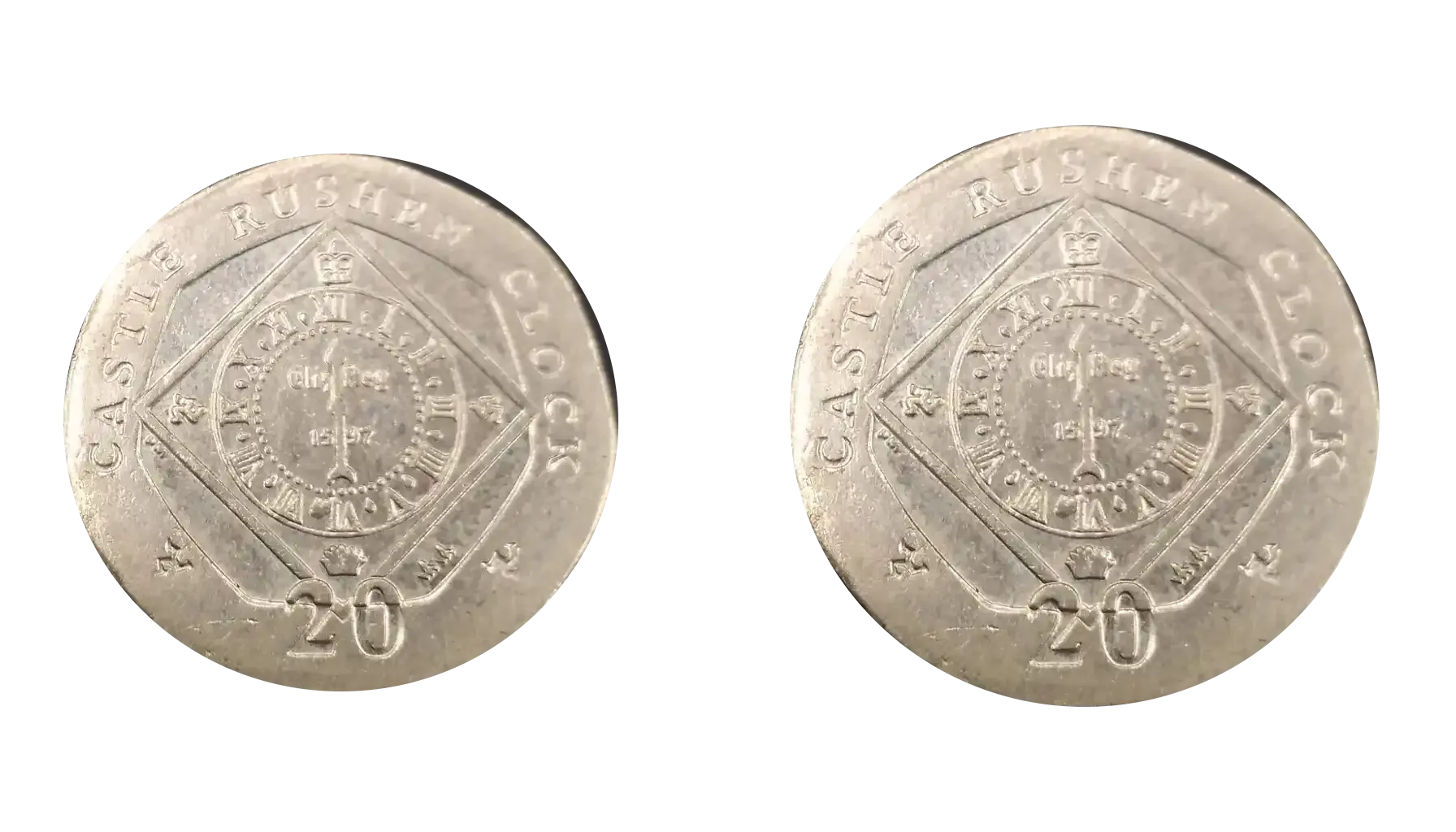
Die Marks
As you’ve noted, the tiny letters on the reverse are the real game-changer. While AA is the standard, look for these specific ones in the series:
2015 CA: This is currently one of the most sought-after varieties due to its lower frequency (roughly 4% of 2015 logs).
2007/2008 BA: These years often have a BA mark, which is considered a significant find for a date-and-variety set.
2005/2006 AB: While AA is common, many collectors find AB much harder to source in high grades.
Set Is Better
If you want a Brilliant Uncirculated (BU) version, don't look for loose coins. Look for the Isle of Man Annual Coin Sets from the Pobjoy Mint.
If you ask why, the items found in change (even in good condition) will have bag marks and scratches. A 20p taken directly from an annual set will have a mirror-like finish and sharp edges that can triple its value.
Storage Matters
Do not touch the item without gloves because of the fingerprint oils. Store it in a PVC-free coin flip or a capsule. Cheap plastic holders contain softeners that can turn the coin green or sticky over a few years.

 Facebook
  X (Twitter)
  Pinterest
  LinkedIn