Contents:
It has served the UK monetary system faithfully for centuries. While it was being paid, it saw the whole movement of the economy and the evolution in the minting of issues like it.
After all this time, many collectors are now interested in it: characteristics, special facts, trying in every possible way to identify the coins and evaluate their value.
The Legacy of the British Half Penny
Mass | (1860–1967) 5.67 g | |
Diameter | (1860–1967) 25.48 mm | |
Edge | Plain | |
Composition | (1672–1860) Copper | (1860–1967) Bronze |
Years of minting | 1672–1967 | |
What Is a Half Penny?
Until 1971, before the decimal system was introduced, the coin was valued at halfpenny. If converted to pounds sterling, then 1/480. However, after 1971, the cost became 0.5 new pence. This has made it easier to perform precise operations at low cost.
The Role of the Half Penny in Everyday Life
It became an important element of the whole story. Allowing you to accurately change money and set prices for inexpensive goods.
On the one hand, there are many preserved specimens, but what about their condition and specific varieties? All this should be taken into account and the total number of coins issued has nothing to do with it.
History of the Half Penny Coin
Period | Date/Monarch | Material | Characteristics |
Early Origins | 1672 (William III) | Silver | Irregular shapes, hand-minted |
Victorian/ Edwardian | Victorian/Edwardian | Bronze | Machine-minted, Queen Victoria portrait |
Decimal | 1971 (Post-decimalisation) | Bronze | 0.5 pence face value |
Early Origins and Hammered Issues
The very first copies were minted in 1672, the beginning of the New Era. William III of Orange ruled then. At that time, they were mostly minted from silver.
The early issues were characterized by irregular shapes and hand-minted designs. Often with profiles of monarchs and simple cross-shaped patterns.
Victorian and Edwardian Half Pennies
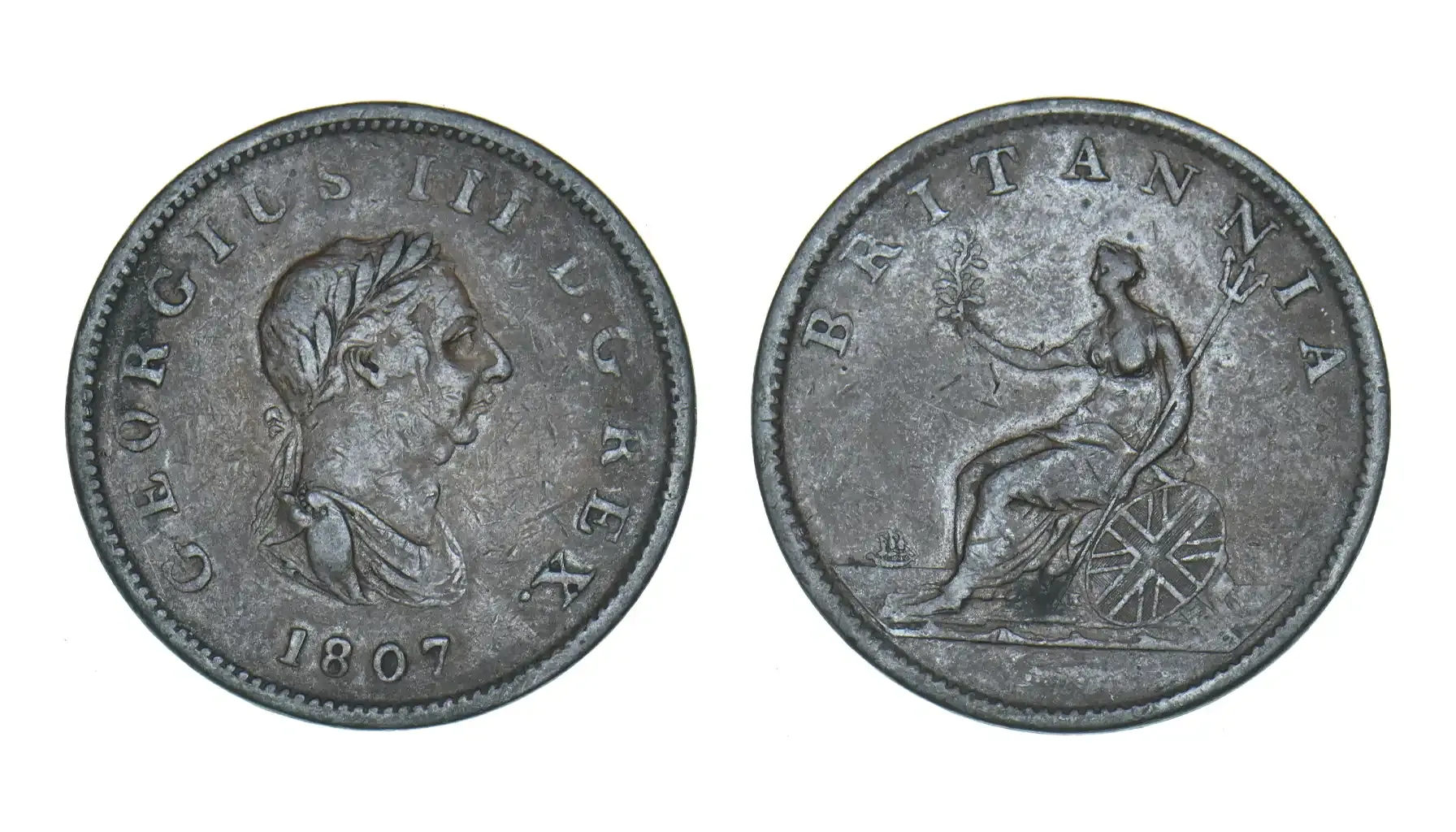
In the Victorian era, the production of bronze was widespread. They were minted by machine.
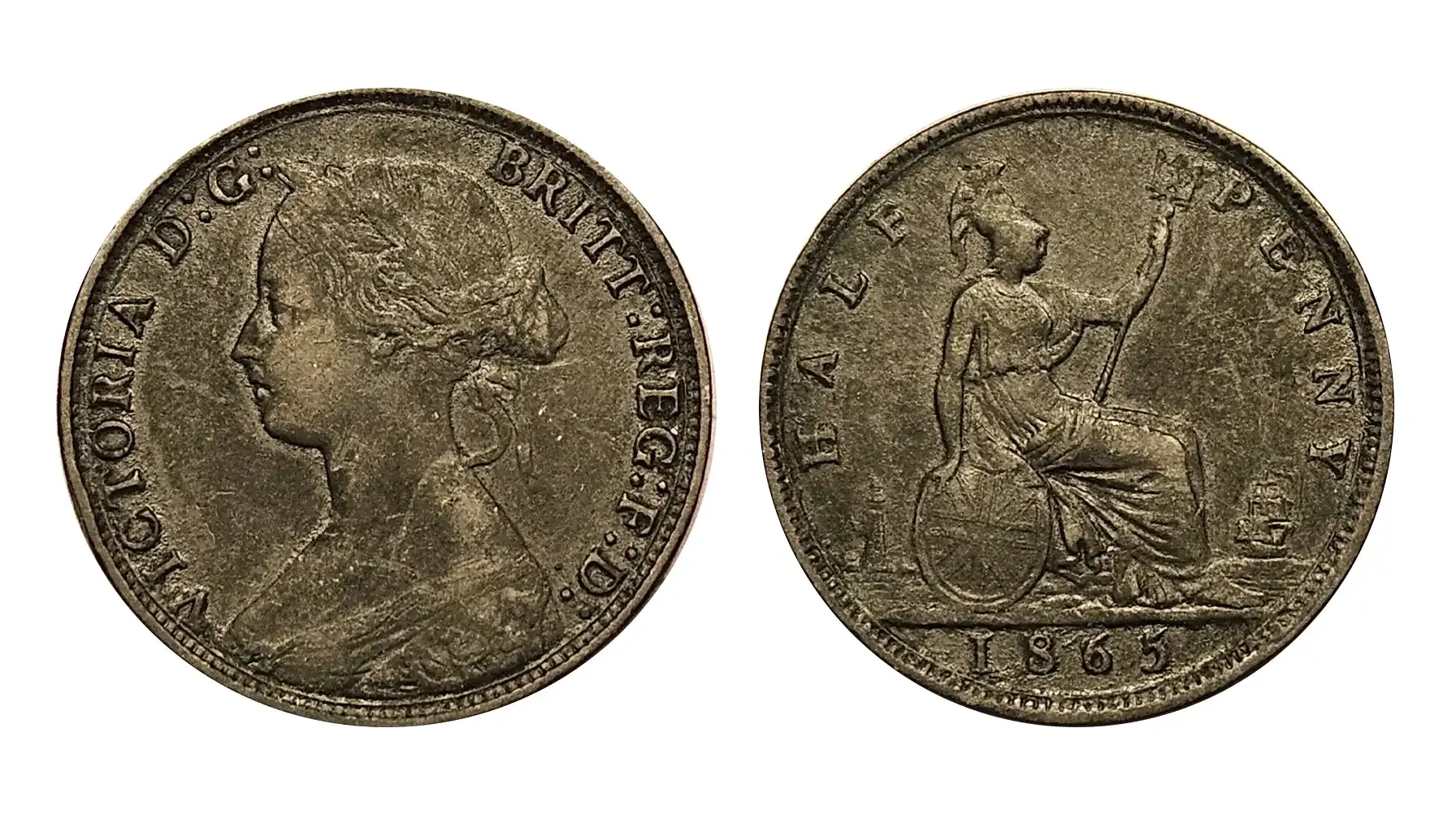
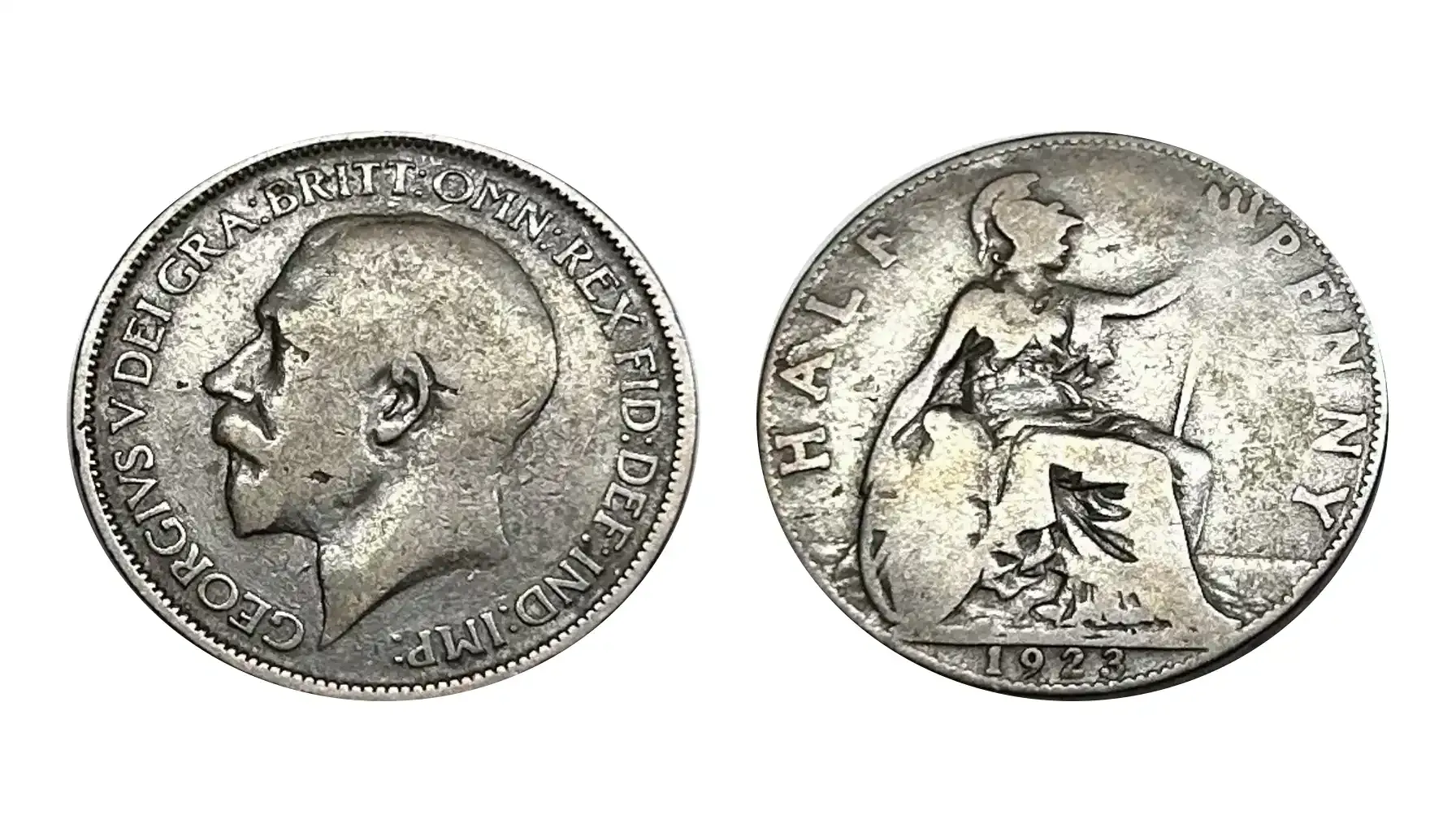
On the obverse was a portrait of Queen Victoria, and on the reverse was the famous seated Britannia. This design largely survived into the Edwardian period.
Decimal Half Pennies and the 20th Century
In 1971, a new bronze coin was issued. It had a face value of 0.5 pennies.
On its reverse was a portcullis in a crown with chains. It was borrowed from the emblem of King Henry VII. This coin had a relatively short service life.
Design and Appearance
Iconic Britannia and Ship Designs
Seated Britain, representing the country – from the end of the 17th century to the middle of the 20th century in bronze.
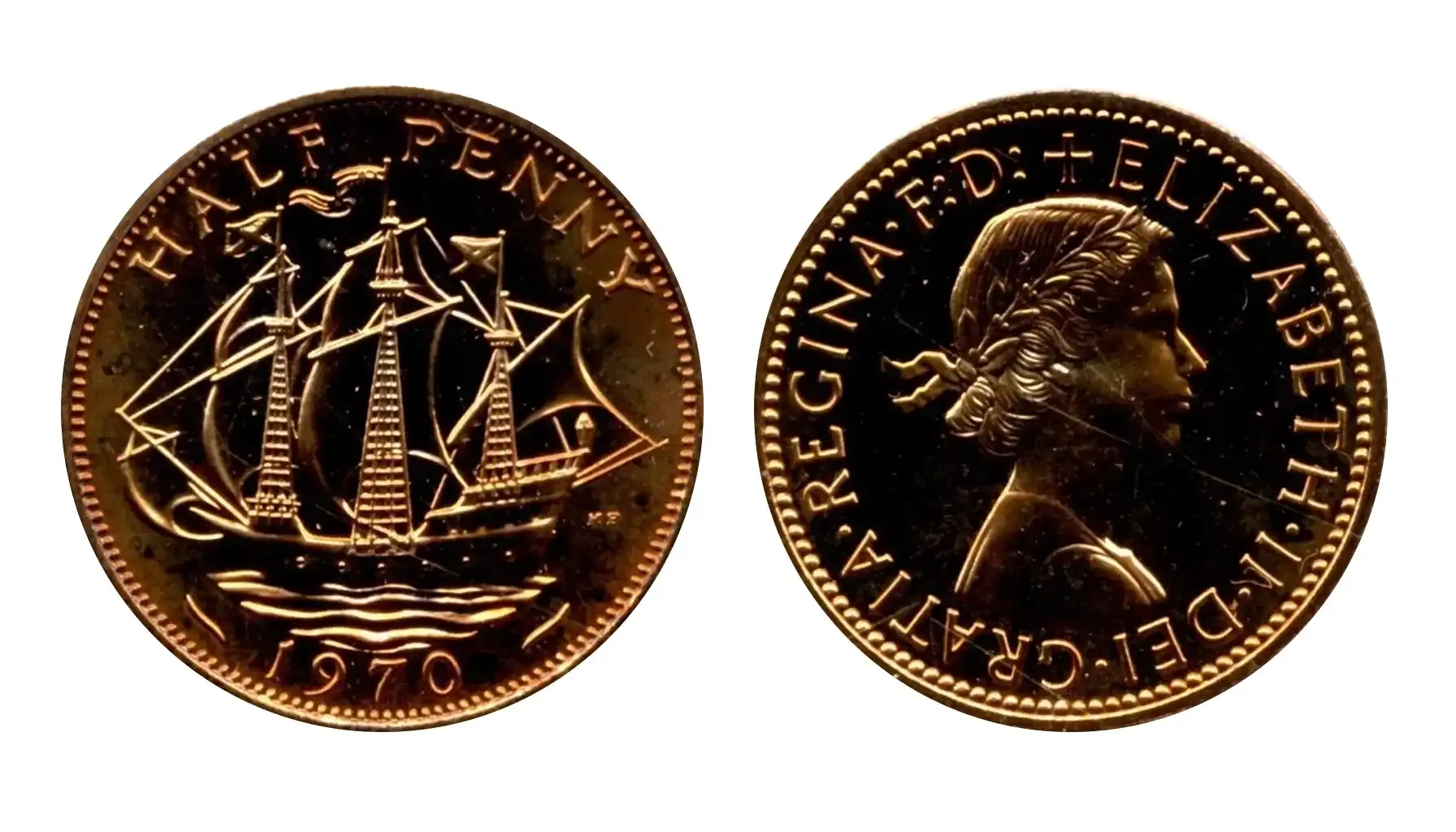
The Golden Hind by Sir Francis Drake – on later issues, especially from 1937 to 1967.
Portraits of British Monarchs
The obverse of almost every halfpenny coin depicts the monarch who ruled at the time of its issue.
For example, portraits of Victoria, Edward VII, George V, George VI and Elizabeth II.
Materials and Metal Composition
The materials changed. At first it was silver. But since the end of the 17th century, copper has become the standard.
In the Victorian era, bronze appeared. It was a more durable alloy: 97% copper, 2.5% zinc, 0.5% tin. It remained the standard for pre-decimal coins and decimal halfpennies until their discontinuation.
When Did the Half Penny Go Out of Circulation?
Withdrawal in 1984
On December 31, 1984, the decimal halfpenny coin ceased to be legal tender in the United Kingdom.
From the point of view of numismatics, the production of the coin stopped and it went out of general use.
Why the Coin Was Discontinued
The main reason was inflation. Rising prices throughout the 1970s and early 1980s significantly reduced the coin's purchasing power. She became practically useless.
Public Reaction and Legacy
The withdrawal from circulation has sparked discussions about the feasibility of minting low-value coins.
Half Penny Value and Worth Today
Collector Value vs. Face Value
The collector's value may often differ from the nominal value. Absolutely everything is affected here: rarity, errors, historical features of coinage and sometimes today’s silver price per ounce, for example.
Factors That Influence Coin Prices
Grade: The degree of wear, the presence of the original gloss and clarity of details.
Rarity: Lower values for a particular year or variety add value.
Errors: Misaligned coinage, double stamps, incorrect plates, and so on increase the cost.
Demand: Collectors' interest in certain periods, monarchs, or specific specimens can affect market prices.
Examples of Modern Market Values
An ordinary half-penny coin from the Victorian era or the 20th century, which was in circulation, can cost from 0.50 to 2 pounds.
The cost of rare coins, depending on their condition, can range from tens to hundreds or even thousands of pounds. For an accurate estimate, it is necessary to use a free foreign coin identifier app.
Half Penny Value Chart
Pre-Decimal Half Penny Values
Condition | Common Dates | Rare Dates | Rare Varieties/Errors |
Circulated | £0.50 - £2 | £10 - £50 | £100 - £500+ |
Uncirculated | £5 - £15 | £50 - £200+ | £500 - £2,000+ |
Proof | £10 - £30 | £100 - £500+ | £500 - £5,000+ |
Decimal Half Penny Values
Condition | Standard Dates (1971-1984) | Proof Issues (from sets) |
Circulated | £0.10 - £0.50 | £1 - £5 |
Uncirculated | £1 - £5 | £3 - £10 |
Condition Grades and Price Ranges
Good (G) | £0.10 - £0.50 |
Very Good (VG) | £0.25 - £1 |
Fine (F) | £0.50 - £2 |
Very Fine (VF) | £1 - £5 |
Extremely Fine (EF) | £3 - £10 |
Uncirculated (UNC) | £5 - £15 |
Proof (PF) | £8 - £20 |
*prices are valid for 27th October and for the most common dates and varieties.
Rare Half Penny Dates (UK)
Most Valuable Victorian Half Pennies
Production of the Heaton Mint in 1874 and 1876. They have a lower circulation in comparison. An 1895 halfpenny is also difficult to find in an unconverted form.
Scarce 20th Century Issues
The 1923 halfpenny is much rarer than in other years. After the Second World War, the editions of such halfpennies as 1950 and 1951 were limited. This increased their collectibility in an unconverted form.
Errors and Low-Mintage Varieties
Off-centre strikes: Where the die struck the planchet improperly.
Double Dies: Visible doubling of design elements or lettering.
Wrong Planchet Errors: A coin struck on a blank intended for another denomination.
Mule Errors: Incorrect combination of obverse and reverse dies.
FAQ
What is a British half penny coin?
This is a small denomination coin. It was used in the UK and was priced at halfpenny.
When did the half penny go out of circulation in the UK?
On December 31, 1984, it was officially removed from circulation due to a decrease in purchasing power because of inflation.
How much is a half penny worth today?
Common copies cost less than 2 pounds. However, rare examples can fetch anywhere from 10 to hundreds or even thousands of pounds, depending on the rarity and variety.
Which half penny dates are rare or valuable?
The most valuable UK coins like rare half penny dates list UK are 1874, 1876, and 1895, and 20th-century dates such as 1923, 1950, and 1951, especially of high quality. Minting errors are also very valuable rarities.
What is the difference between pre-decimal and decimal half pennies?
Coins issued before the decimal system had a ratio of 240 pence to the pound. The coins introduced in 1971 were smaller, cost 0.5 new pence, and had a crown design.
Are old half pennies made of copper or bronze?
Most half penny UK coins, which were issued before the decimal system, were made of bronze. Earlier minted coins were silver, and some 17th-century coins were made of copper.
How can I find the value of my half penny coin?
To determine the value, you need to determine the date of its manufacture, any mint marks, and evaluate its physical condition. You can use specialized services to calculate a specific cost.

 Facebook
  X (Twitter)
  Pinterest
  LinkedIn