Contents:
Some coins turn into valuable assets over time, others remain ordinary for many years. The 1968 Lincoln cent may be simultaneously common and precious, standard and rare – this depends on the production site and condition in which the coin is traded.
Although the auction records may reach $14,375 (for PR67), the average value of common issues remains rather modest, within the range from a few cents to several dollars per piece. Its errors, special designation, and mint marks may significantly influence the value in both financial and cultural ways, though.
In this material, we are to define the main factors that make pennies top-tier, check coin value, and learn how to get fine samples for your collection.
What Is a 1968 Penny? (Lincoln Cent Overview)
In the middle of the XX century, no place was serene and quiet in the world. The United States, for example, had to deal with different international disputes like the Vietnam War, the civil rights movement, and the space race, all of which can be considered determining and even fatal to some degree.
1968 was a significant year in numismatics, too, for the US Mint finally restored mint marks, which had been temporarily removed from 1965 to 1967 as a response meant to deter hoarding once and for all. The Lincoln cent was a vital component of daily transactions, with millions of coins produced across three different mint facilities during that year.
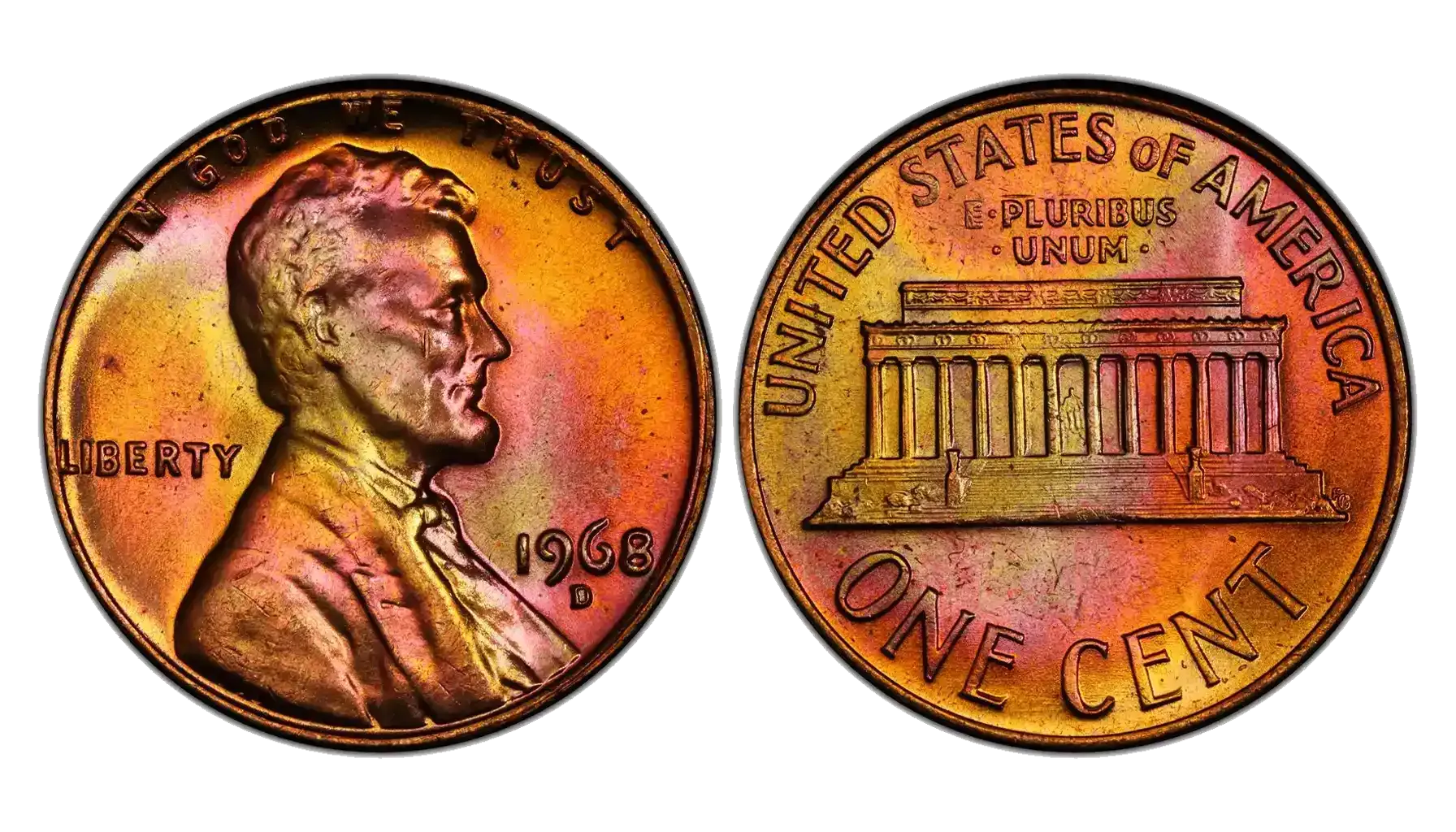
The Main Characteristics of the 1968 Penny | |
Obverse Design | A portrait of Abraham Lincoln by Victor D. Brenner (the first numismatic creation of this kind was the 1909 VDB penny) “IN GOD WE TRUST" "LIBERTY" "1968" The mint mark (if applicable) |
Reverse Design | The Lincoln Memorial by Frank Gasparro "UNITED STATES OF AMERICA" "E PLURIBUS UNUM" "ONE CENT" |
Composition | 95% copper, 5% tin and zinc |
Weight | 3.11 grams |
Diameter | 19.05 mm |
Thickness | 1.52 mm |
Edge | Plain |
Mint Marks | None for Philadelphia “D” for Denver “S” for San Francisco |
The appearance of this coin was a commemoration of Abraham Lincoln’s legacy. It served as a tribute to the nation's 16th president, whose benevolent endeavors managed to become momentous.
How Much Is a 1968 Penny Worth Today?
As soon as the 1968 Lincoln penny was minted by three different facilities, namely Philadelphia, Denver, and San Francisco Mints, its worth can be influenced by the place (and circumstances dependent on the place) and the mint marks left on the obverse. Nonetheless, this is not the only factor that may affect the price of a coin from 1968.
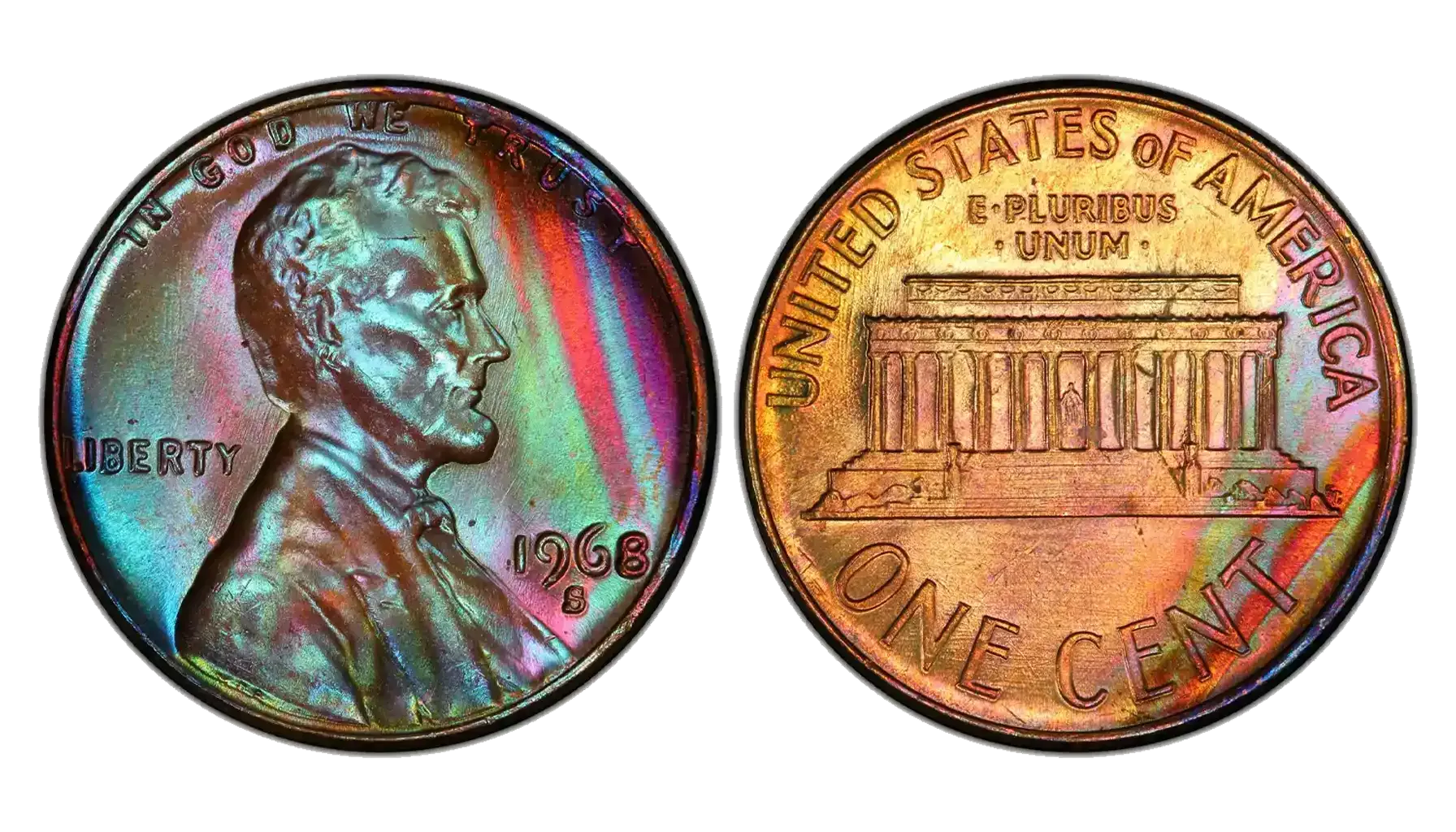
Factors That Affect the Value of a 1968 Penny
Grades are considered the primary factor that should influence the way the coin sells on the market. Well-preserved instances tend to be worth more than coins that have suffered significantly from circulation. Uncirculated examples can sell for a premium (up to a few thousand dollars per piece).
Certification comes as the second aspect, as the officially graded coins bear certificates of authenticity and a grade on the coin slabs they go with. Professional grading can make a difference.
Color designations (BN – Brown, RB – Red and Brown, RD – Red) reflect the surface finish, and instances with original red color are considered the most valuable.
There are proof and regular strikes, originally intended for different applications, and numismatists are ready to pay more for proof pennies made for collectors only.
Errors, i.e., the deviations from the standard design and/or specifications, may substantially increase the price, as they are always unique and one-of-a-kind.
“...Because the Mint produced 1968-D Lincoln Cents by the hundreds of millions, most examples carry little premium. While many rolls were saved by speculators, the vast majority of high-quality survivors originate from 1968 Mint Uncirculated Sets. The Mint produced over 2.1 million of these sets, originally issued at $2.50…”
— Charles Morgan, PCGS manager of numismatic research and programs
PCGS CoinFacts
Briefly about Designations
Should you wish to uncover the true value of pennies, it is important to pay attention to those strange combinations of letters always attributed to a coin by a grading service like PCGS or NGC. They always go after the denomination to indicate the color, quality of strike, and finish.
To be more precise, Lincoln cents made of copper are graded based on their color, which affects/reflects the value. These include:
BN (Brown) – An instance with the brown toning because of oxidation over time.
RB (Red-Brown) – Red and brown color, often found in lightly circulated or older uncirculated coins.
RD (Red) – A well-preserved coin with at least 95% of its original red luster.
Apart from that, proof coins can be distinguished on the basis of their surface reflectivity:
CAM (Cameo) – A frosted design with a reflective background.
DCAM (Deep Cameo) – An intense frosted design with a deep mirror-like background.
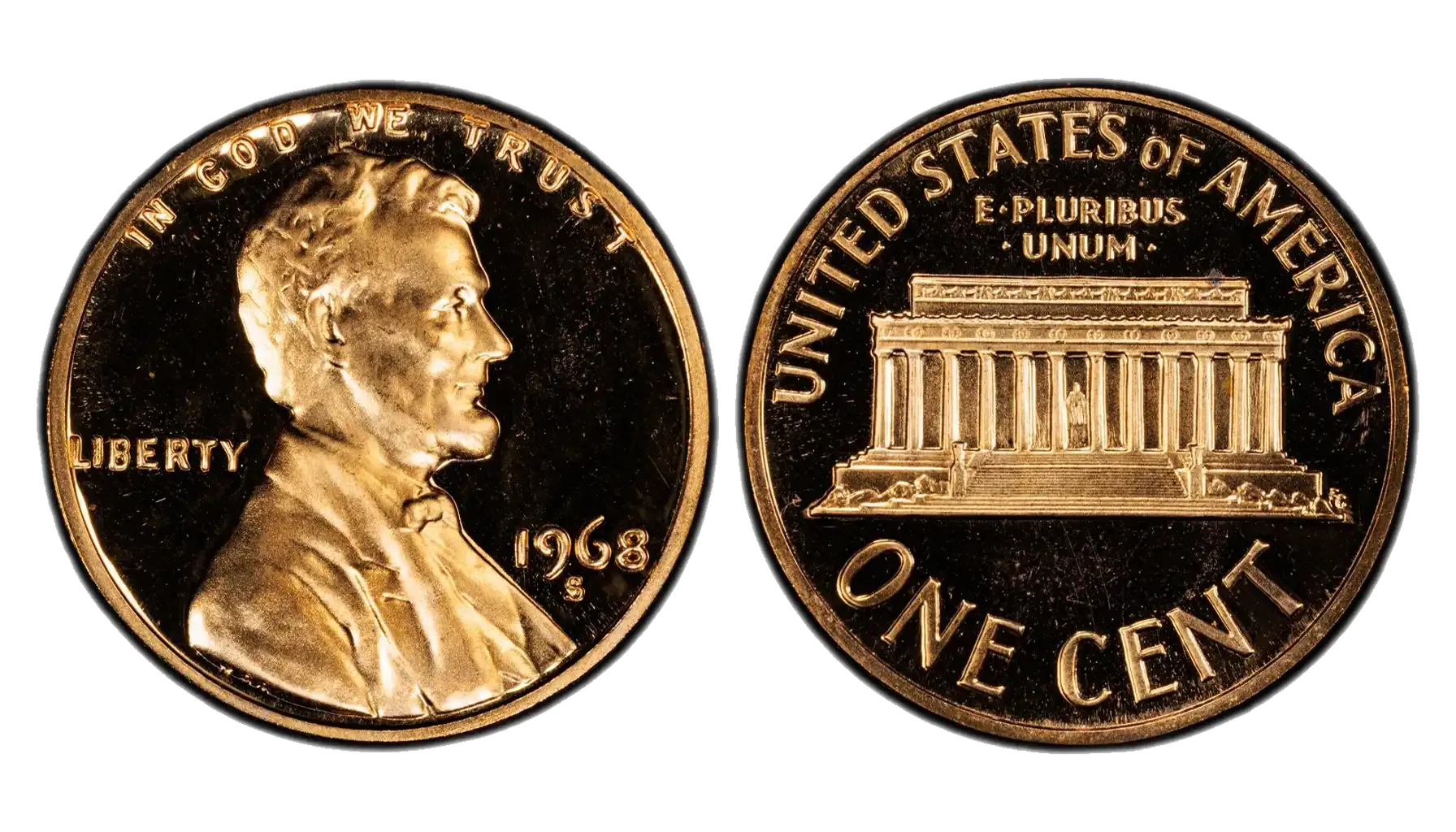
1968 Penny Value by Mint Marks
The condition of a 1968 Lincoln penny has a significant impact on its value. However, it is always about the combination of factors (e.g., the above-mentioned designations, mint marks, and errors). Coins in circulation (grades G-4 to AU-50) are typically valued between 3 and 10 cents for the amount of copper they contain, though their erroneous issues can be far more expensive. But how much do they cost, and why is a 1968 D penny worth so much?
1968 Penny No Mint Mark Value
The 1968 penny value no mint mark is usually the most modest, as these coins were struck in large quantities by the Philadelphia Mint. And because of its very high mintage, most circulated examples are worth only face value or slightly above, but well-preserved Mint State pieces can be much more desirable to collectors.
Mintage: 1,707,880,970
Coin | Designation | Grade | Auction Price |
1968 1C | BN | MS68 | $154 |
RB | MS66 | $158 | |
RD | MS67+ | $2,880 |
1968 D Penny Value
Here comes the penny 1968 D value, and it demonstrates an interesting phenomenon: although Denver struck an even larger number of coins than Philadelphia that year, the collectible 1968 penny value D rises when the coin is found in condition or the RD designation.
Mintage: 2,886,269,600
Coin | Designation | Grade | Auction Price |
1968-D 1C | BN | MS62 | $546 |
RB | MS63 | $253 | |
RD | MS67 | $2,300 |
1968 S Penny Value
The worth of the 1-cent coins from San Francisco is always different, as there were two types released, i.e., the business-strike coins and proofs. Regular examples are generally affordable, but top-quality proof coins represent the finest part of the program release.
Mintage: 258,270,001 (regular issue) and 3,041,506 (proof coins)
Coin | Designation | Grade | Auction Price |
1968-S 1C | BN | MS65 | $225 |
RB | MS67+ | $499 | |
RD | MS66+ | $5,000 | |
1968-S 1C Proof | CAM | PR63 | $2,760 |
DCAM | PR69 | $3,795 | |
RD | PR67 | $14,375 |
1968 Penny Error List with Pictures and Values
One may not believe, but there may exist an uncountable number of errors that may occur during the minting process. As for the pennies, collectors may find off-center strikes, clipped planchets, and die cracks or cuds. However, we are to focus on three less common imperfections that managed to draw the attention of dozens of coin enthusiasts and sparked heated debates.
Here is a quick 1968 D penny error list with pictures that should serve as a reference guide, not the final word on authentication or value.
1968-D Lincoln Cent Obverse Misaligned Die
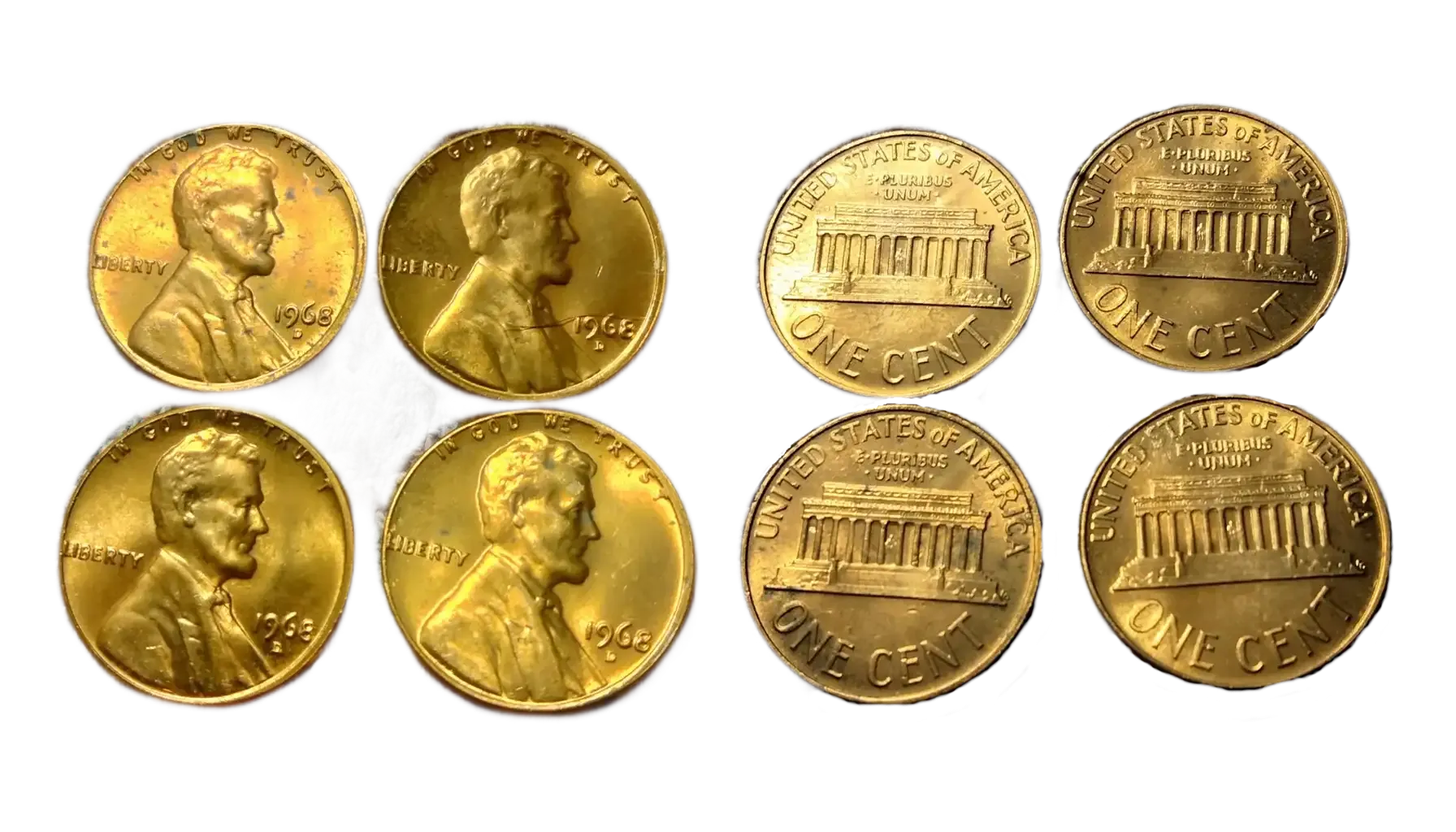
Approximate value: $30 to $100+
When the obverse die and reverse die are not correctly aligned before striking, an off-center error might appear on the surface. The worth of the penny is determined by the degree of misalignment, and more significant shifts are being favored even more.
1968-D/D Lincoln Cent RPM (Repunched Mint Mark)
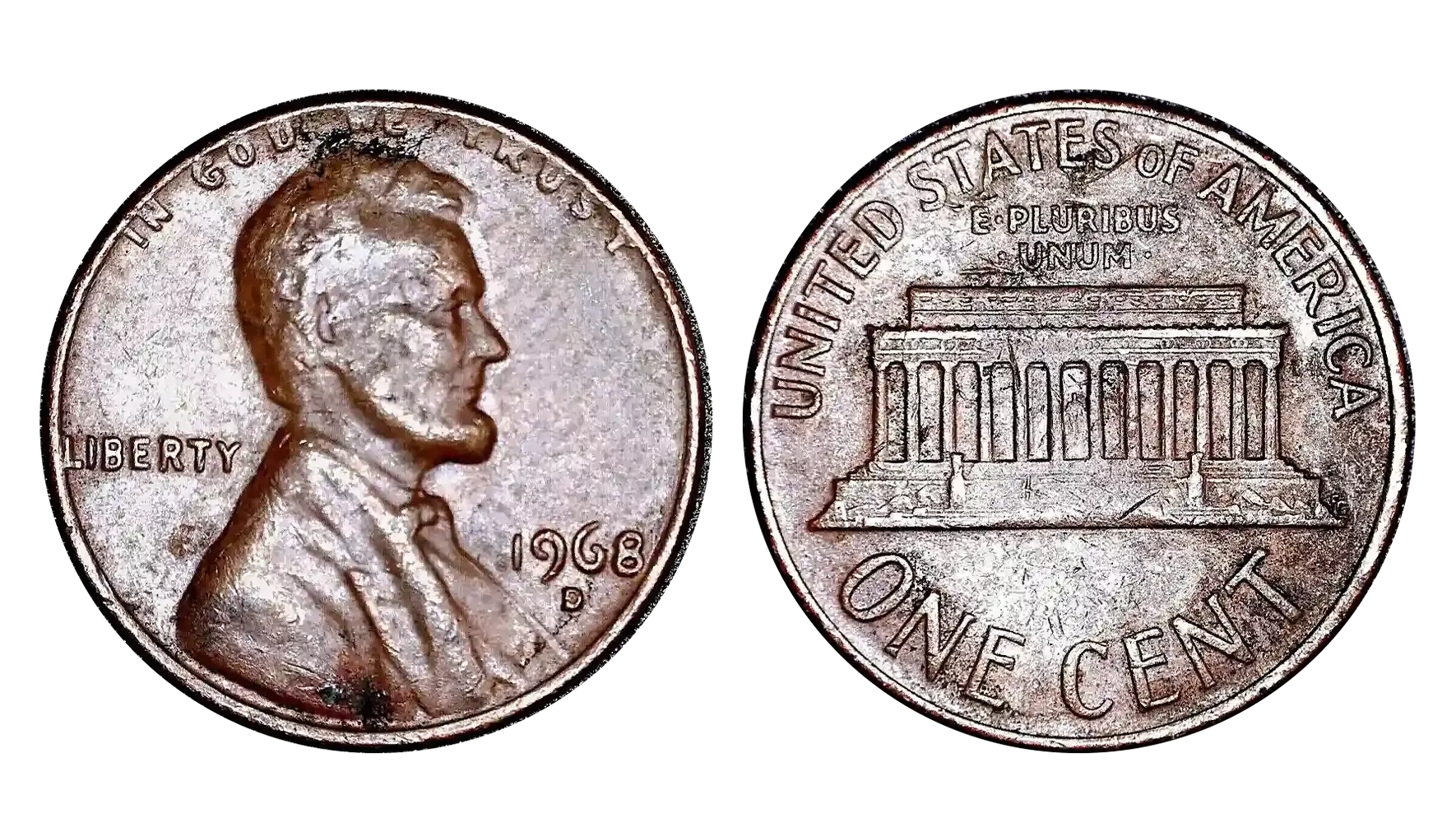
Approximate value: $5 to $150+
The reason for this deviation lies in the fact that the Denver mint mark was punched into the die more than once, which led to a visible doubling or slight overlap. Stronger repunching, particularly in uncirculated form, is more uncommon and brings more money than expected.
1968-D Lincoln Cent DDR (Doubled Die Reverse)
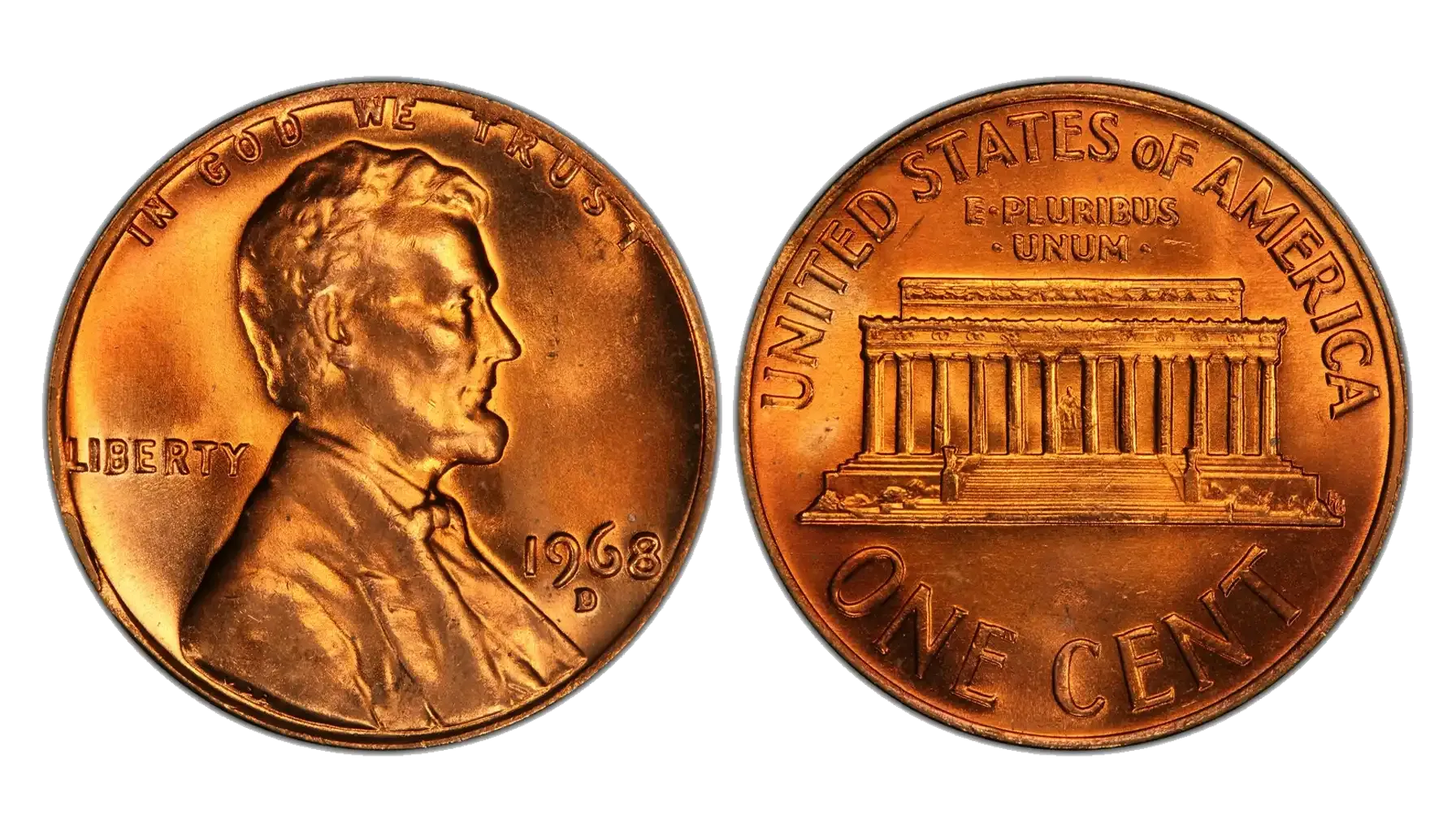
Approximate value: $250 to $400+
Finally, there is an instance that most collectors strive to find but fail (though it surely exists). DDR (or doubled die reverse) means that inscriptions like "UNITED STATES OF AMERICA", "E PLURIBUS UNUM", and the Lincoln Memorial columns exhibit a visible doubling, for the reverse die has been struck multiple times at slightly different angles. The stronger the doubling, the higher the value.
What Is the “In God We Trust Touching Rim” Error?
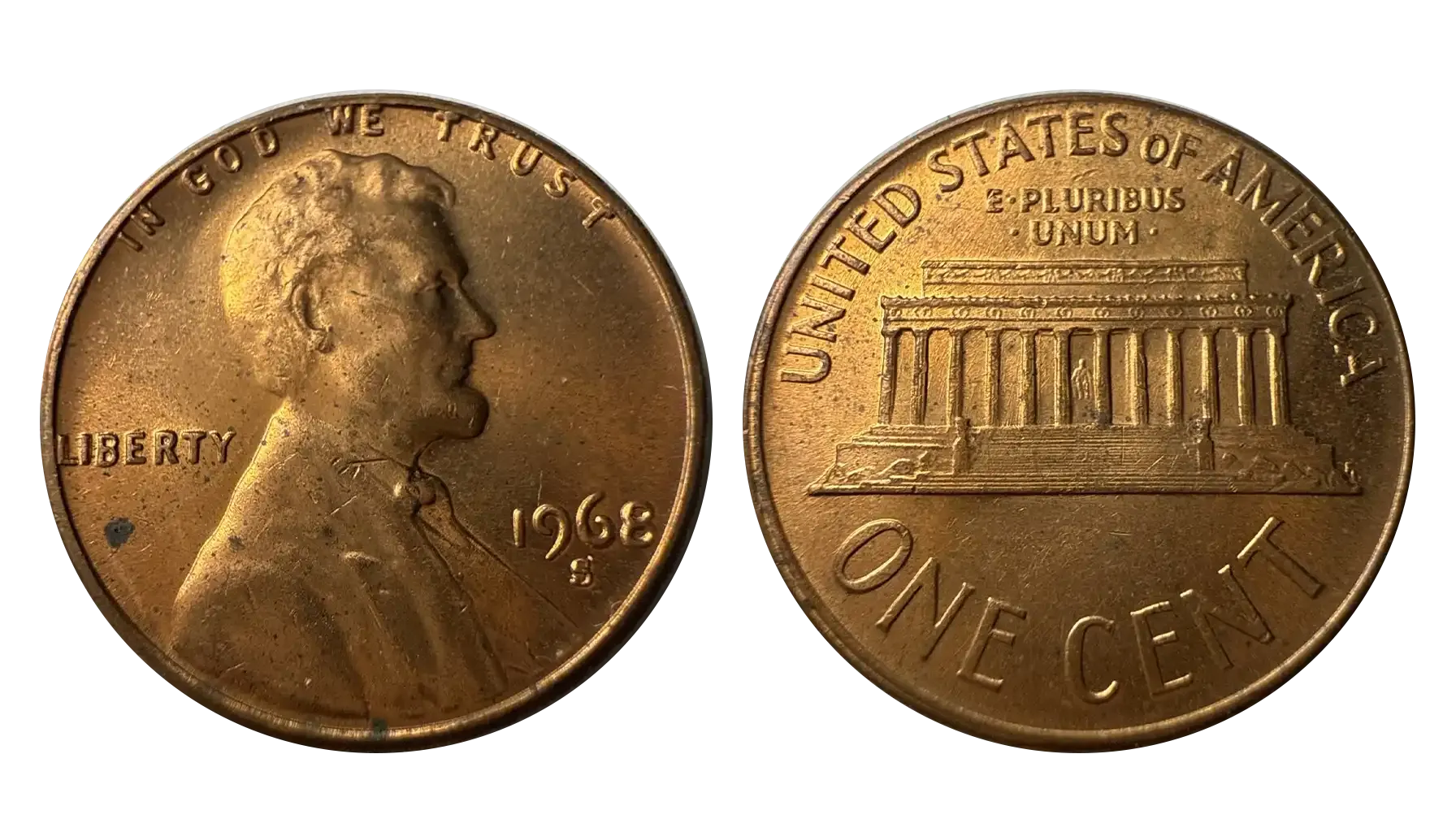
Approximate value: $500+
The “In God We Trust Touching Rim” error is a deviation that presupposes that the inscription IN GOD WE TRUST appears so close to the edge that the tops of the letters nearly touch or actually touch the rim. This happens because of a misaligned die or slightly off-center strike, and its value is among the highest within the group of erroneous types.
How to Identify a Valuable 1968 Error Penny
This process usually requires special training and professional equipment. But fear not! Should you wish to understand if the 1968 Lincoln cent is a common coin or a valuable piece, do not hesitate to employ identification tools like Coin ID Scanner: scan the coin and see data regarding its origin, specifications, design features, interesting facts, and value ranges by grade.
Before grading, always know what you own – this may save time, effort, and costly mistakes.
FAQs
Is a 1968 penny worth anything?
Yes, indeed. First of all, it is worth its face value, i.e., 1 cent. But above that, each numismatic creation, depending on condition and type, may be worth more.
What is the error on the 1968 penny?
There are different errors that appear on the market associated with the 1968 pennies. These may come down to misaligned dies, repunched mint marks, doubled dies, off-center strikes, and more.
What is so special about a 1968 penny?
Although it is a common date, some varieties, e.g., erroneous types or proof coins from San Francisco, are unique, as they are initially scarce.
How much is a 1968 D penny worth today?
A 1963-D cent is worth up to $546 (BN), $253 (RB), or $2,300 (RD). However, prices are subject to fluctuations and may change instantly.
Is the 1968 S penny rare?
Not really. The business strike is common (258,270,001 pieces produced), but the proof versions in top grades are the most expensive.

 Facebook
  X (Twitter)
  Pinterest
  LinkedIn