Contents:
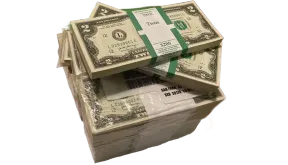
A $2 dollar bill is a United States paper currency banknote with a face value of two dollars. It is real legal tender, issued by the U.S. Treasury, but it is seen less often in everyday circulation. The majority of them are worth their face value, but certain ones can cost much more.
But how much is a two dollar bill worth exactly? The Coin ID Scanner team will tell you.
Are $2 Dollar Bills Valuable or Just Worth Face Value?
Most $2 bills are only worth their face value — two dollars. They are still legal tender and can be spent like any other U.S. money piece.
When It Is Just Worth $2
Modern ones (1976–present) in circulated condition
High print-run series
Ordinary serial numbers
No printing errors
Banks still receive bundles of new $2 banknotes. Collectors and the public often save them. This makes them seem uncommon in daily use.
When It Can Be Worth More
Some examples carry a collector premium:
Older pieces
Large-size issues (before 1928); Early small-size series like 1928 or 1953.
“The older the bill, the more valuable it tends to be, with bills from the 19th and early 20th centuries being particularly sought after by collectors.”
— Caitlyn Moorhead, Finance writer
Yahoo! Finance
Condition matters
Crisp, uncirculated specimens can sell for several dollars above face. Gem examples graded professionally may also bring higher prices.
Special serial numbers
Star notes (replacement ones)
Low numbers (for example 00000025)
Solid or repeating patterns
Errors and unusual varieties
Misprints or cutting errors
Rare print runs
How Much Is My 2 Dollar Bill Worth? Typical Value Ranges
Circulated modern piece costs about $2. Uncirculated modern ones are more expensive and fetch $3–$10.
Older collectible issues are wanted by many collectors. That is why their price is about $10–$100+.
What Makes a $2 Dollar Bill Worth Money
Not all of them are worth more than their face value. However, certain editions and unique characteristics can increase the sums of how much is a 2 dollar bill worth. The most common factors that influence the price are:
Historical Importance
Ones that commemorate important historical events, like the 1976 Bicentennial one, are often $2 bills worth money for collectors, especially if they feature rare serial numbers or printing errors.
Condition
Are $2 bills worth anything? Uncirculated ones are usually much more valuable than those that have been in circulation and show signs of wear. This is especially true for older $2 notes.
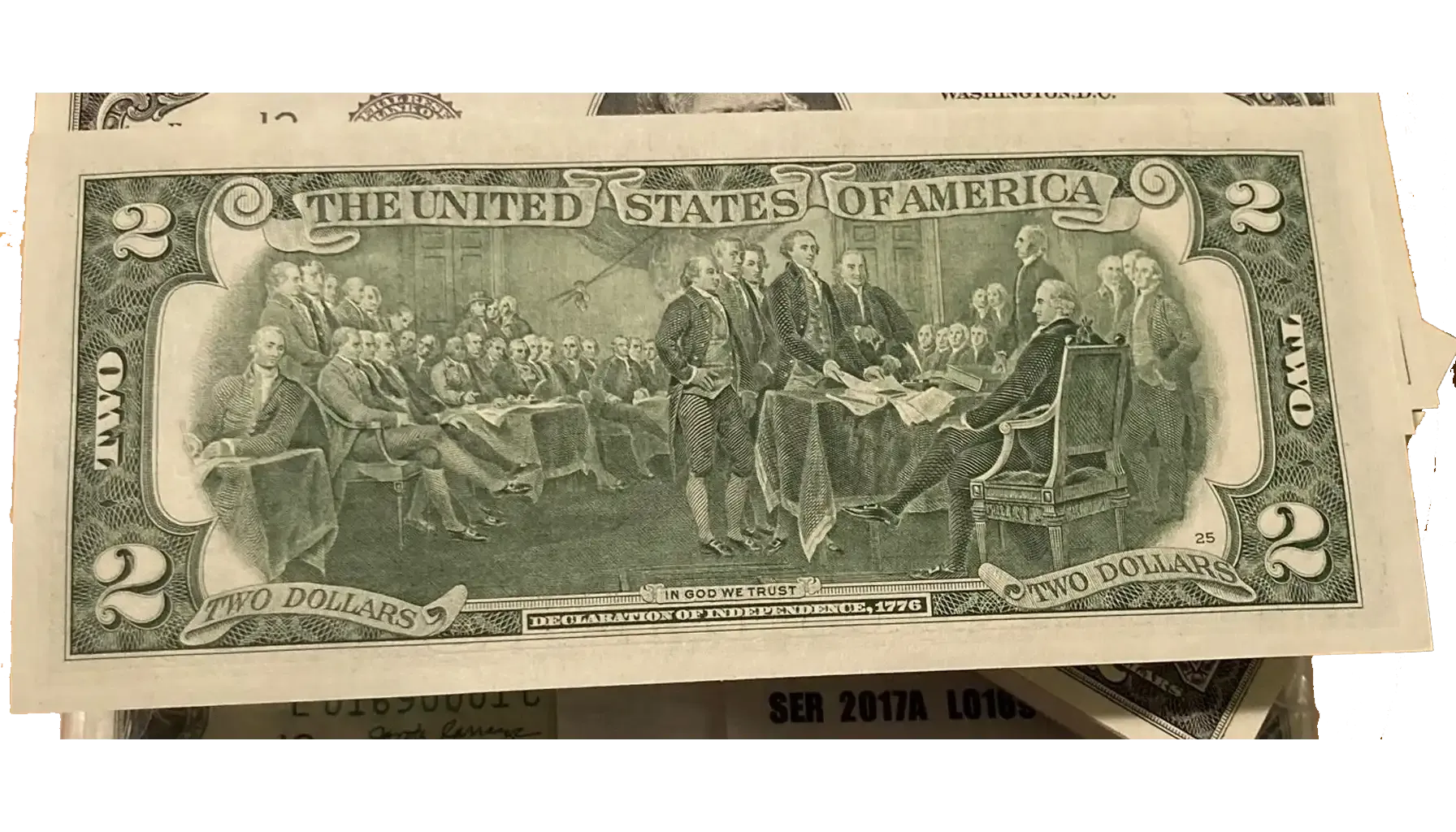
Serial Numbers
Rare serial numbers—such as ladder (numbers that follow a sequence, like 12345678)—are valuable $2 bills. If you are interested in the worth, you can use a 2 dollar bill serial number lookup to find out more.
Errors and Misprints
Like coins, $2 notes with errors, e.g., double prints or misplaced seals, can fetch a high price at auction. These anomalies are often very desirable by collectors.
Read more about paper money: $20 bills value.
$2 Dollar Bill Value Chart by Year
Series | Type | Seal | Value of $2 Bill Circulated / F–XF | Value of 2 Dollar Bills Uncirculated |
1862 | United States Note | Red | $500–$1,000 | $2,800+ |
1869 | Red | $500–$1,200 | $3,800+ | |
1874 | Red | $400–$1,000 | $2,400+ | |
1875 | Red | $300–$650 | $1,100+ | |
1875A | Red | $300–$650 | $1,100+ | |
1875B | Red | $375–$1,100 | $2,300+ | |
1878 | Red | $275–$475 | $1,100+ | |
1880 | Brown / Red serial | $125–$350 | $550+ | |
1880 | Brown / Blue serial | $600–$2,200 | $3,500+ | |
1880 | Red / Blue serial | $175–$350 | $500+ | |
1886 | Silver Certificate | Red | $350–$900 | $1,300+ |
1886 | Brown | $350–$900 | $1,400+ | |
1890 | Treasury Note | Red | $550–$2,500 | $4,500+ |
1890 | Brown | $550–$2,500 | $4,500+ | |
1891 | Red | $200–$750 | $1,400+ | |
1891 | Silver Certificate | Red | $250–$900 | $2,000+ |
1896 | Red | $300–$1,100 | $2,100+ | |
1899 | Blue | $75–$225 | $475+ | |
1917 | United States Note | Red | $50–$100 | $200+ |
1918 | National Currency | Blue | $175–$375 | $1,000+ |
1928 | United States Note | Red | $7–$20 | $75+ |
1928A | Red | $50–$80 | $275+ | |
1928B | Red | $70–$175 | $1,000+ | |
1928C | Red | $10–$20 | $90 | |
1928D | Red | $5–$12 | $45 | |
1928E | Red | $10–$25 | $85 | |
1928F | Red | $4–$15 | $35 | |
1928G | Red | $5–$10 | $25.50 | |
1953 | Red | $2.25–$2.50 | $12.75 | |
1953A | Red | $2.25–$5.00 | $12.75 | |
1953B | Red | $2.75–$5.50 | $12.75 | |
1953C | Red | $3.50–$6.50 | $12.50 | |
1963 | Red | $6.00 | $20.50 | |
1963A | Red | $5.00 | $18.50 | |
1976 | Federal Reserve Note | Green | $2.50 | $4.50 |
1976 | Federal Reserve Note, Apr. 13, 1976 postmark | Green | — | $13.00 |
1976 | Federal Reserve Note, Jul. 4, 1976 postmark | Green | — | $9.00 |
1995 | Federal Reserve Note | Green | $2.25 | $3.25 |
1995* | Federal Reserve Note, BEP Millennium Folder | Green | — | $42.50 |
1995* | Federal Reserve Note, BEP Premium Set of 12 | Green | — | $500+ |
2003 | Federal Reserve Note | Green | $2.25 | $3.00 |
2003* | Federal Reserve Note, BEP Premium Set of 12 | Green | — | $900+ |
2003A | Federal Reserve Note | Green | $2.25 | $3.00 |
2009 | Green | $2.15 | $2.30 | |
2013 | Green | $2.10 | $2.25 | |
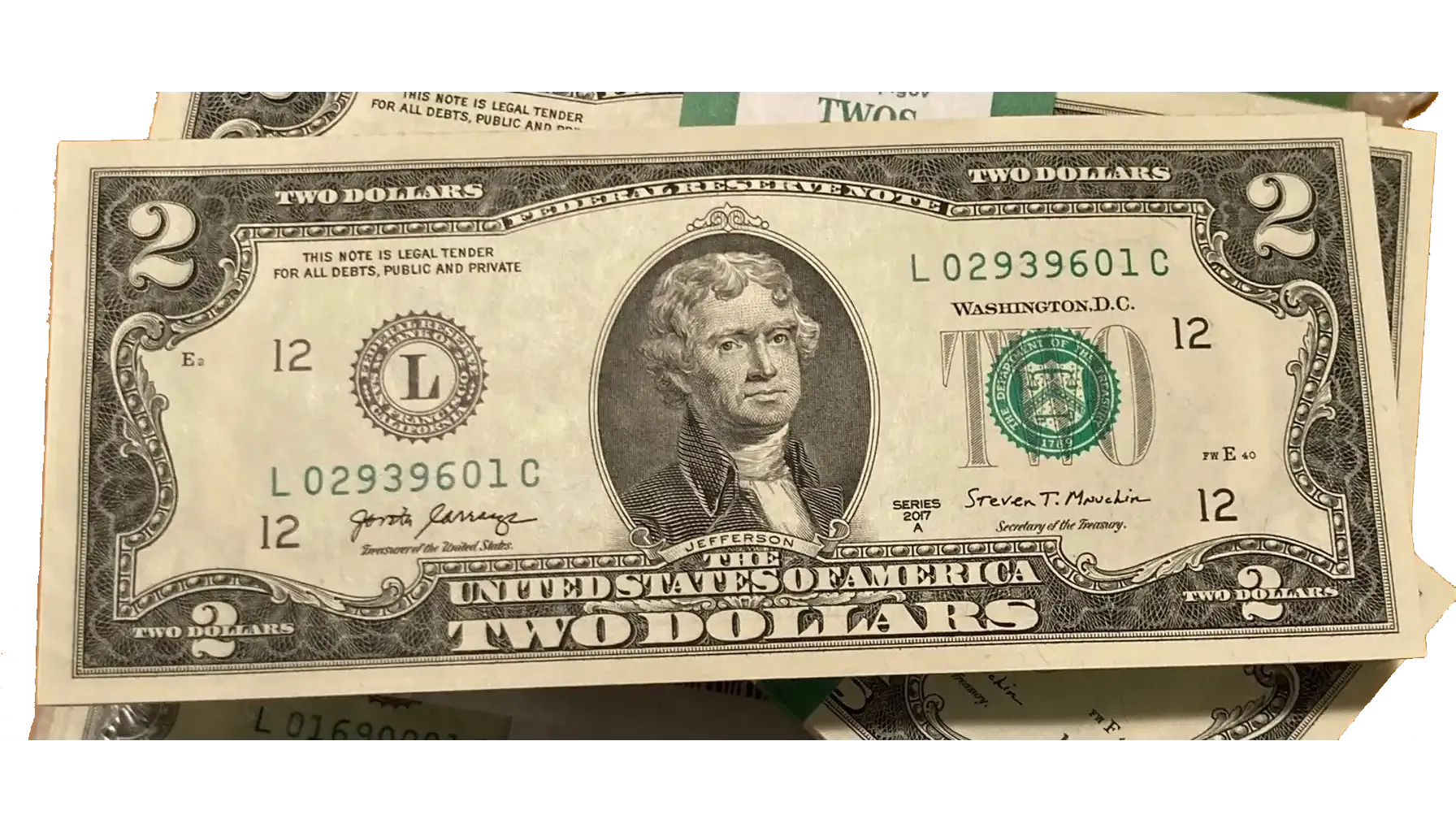
2017 | Green | $2.00 | $2.10 | |
2017A | Green | $2.00 | $2.00 |
The values are based on average realized auction prices and fixed-price retail sales, but seller and buyer prices can be substantially more or less, and it does not guarantee that each two dollar bill value is current at every moment.
Most Valuable $2 Dollar Bills Ever Sold
1. 1890 $2 Treasury Note — $93,000
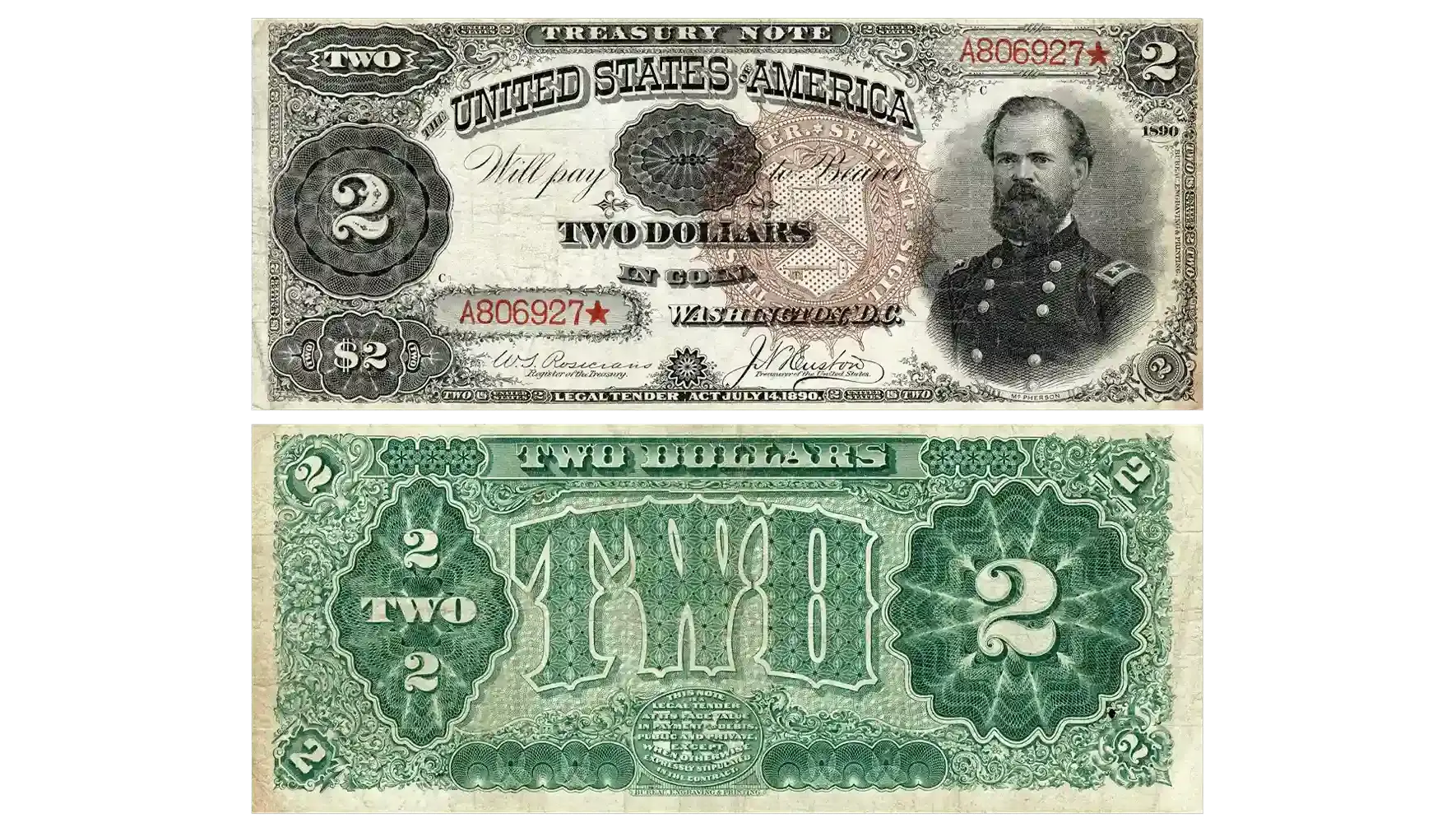
Sale date: April 5, 2022
Auction: Stack’s Bowers Spring 2022 Auction
Grade: PMG Gem Uncirculated 66 EPQ
Which 2 dollar bills are worth money? The 1890 $2 Treasury piece sits in a different class from ordinary collectible deuces. It belongs to the famous Treasury Note series, the large-format federal issues with ornate engraving and a portrait of General James B. McPherson.
2. 1918 $2 Federal Reserve Banknote, Dallas, Serial Number 1 — $40,800
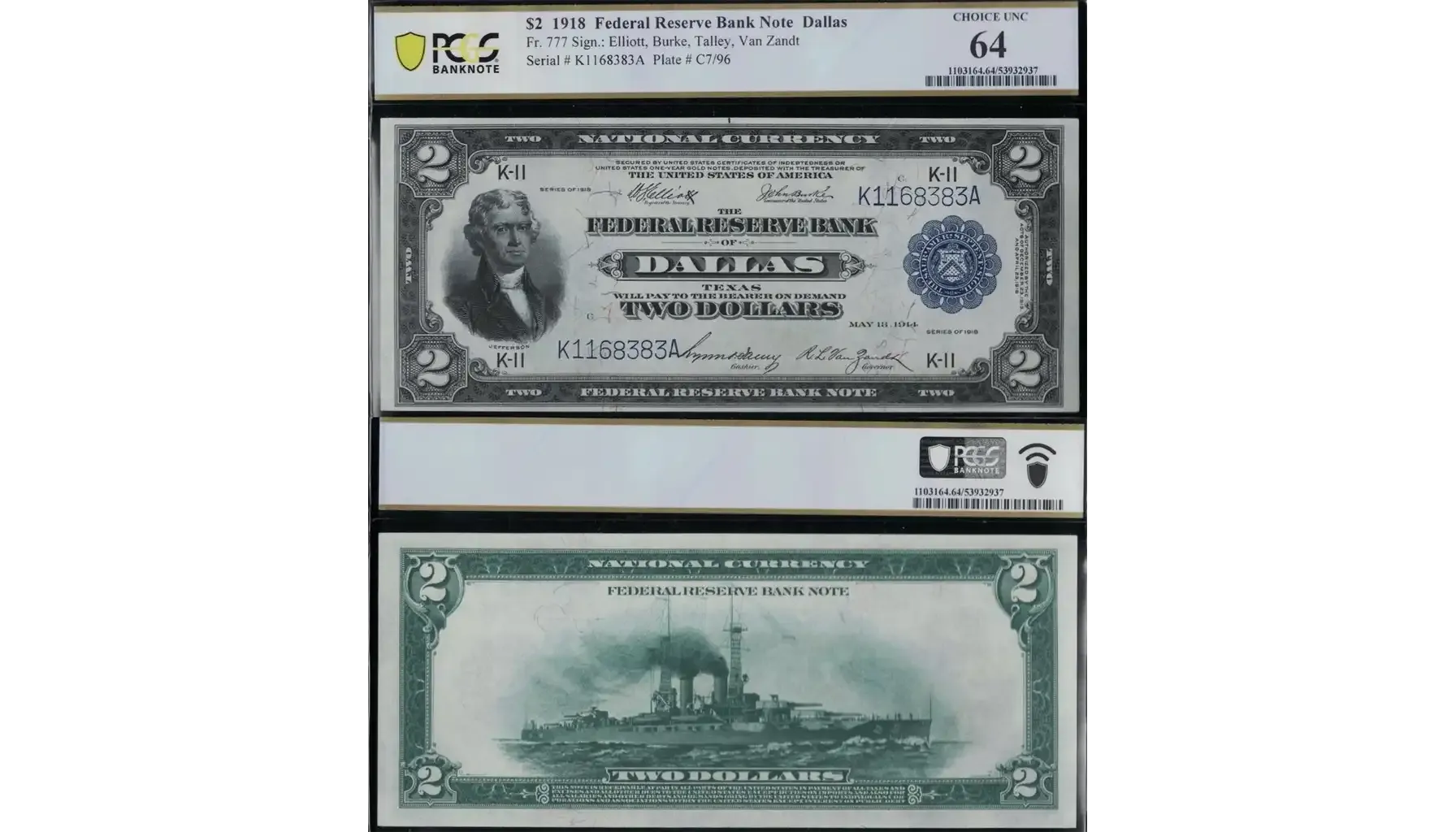
Sale date: August 2024 Global Showcase Auction, reported September 3, 2024
Auction: Stack’s Bowers
Grade: PMG Choice Uncirculated 63 EPQ
This is the “Battleship” deuce, the only $2 Federal Reserve Bank Note design of the 1918 series, with the warship vignette on the back. The Dallas district is already a collected issue, but Serial Number 1 makes the rest. Serial-number collectors, district specialists, and type-note buyers all have a reason to want it.
Are 2 dollar bills rare? Stack’s Bowers noted that only three Dallas examples are theoretically available with serial number 1, which explains why this specimen moved well past normal type-note territory and into trophy-piece pricing.
3. 1875 $2 Legal Tender Note — $37,200
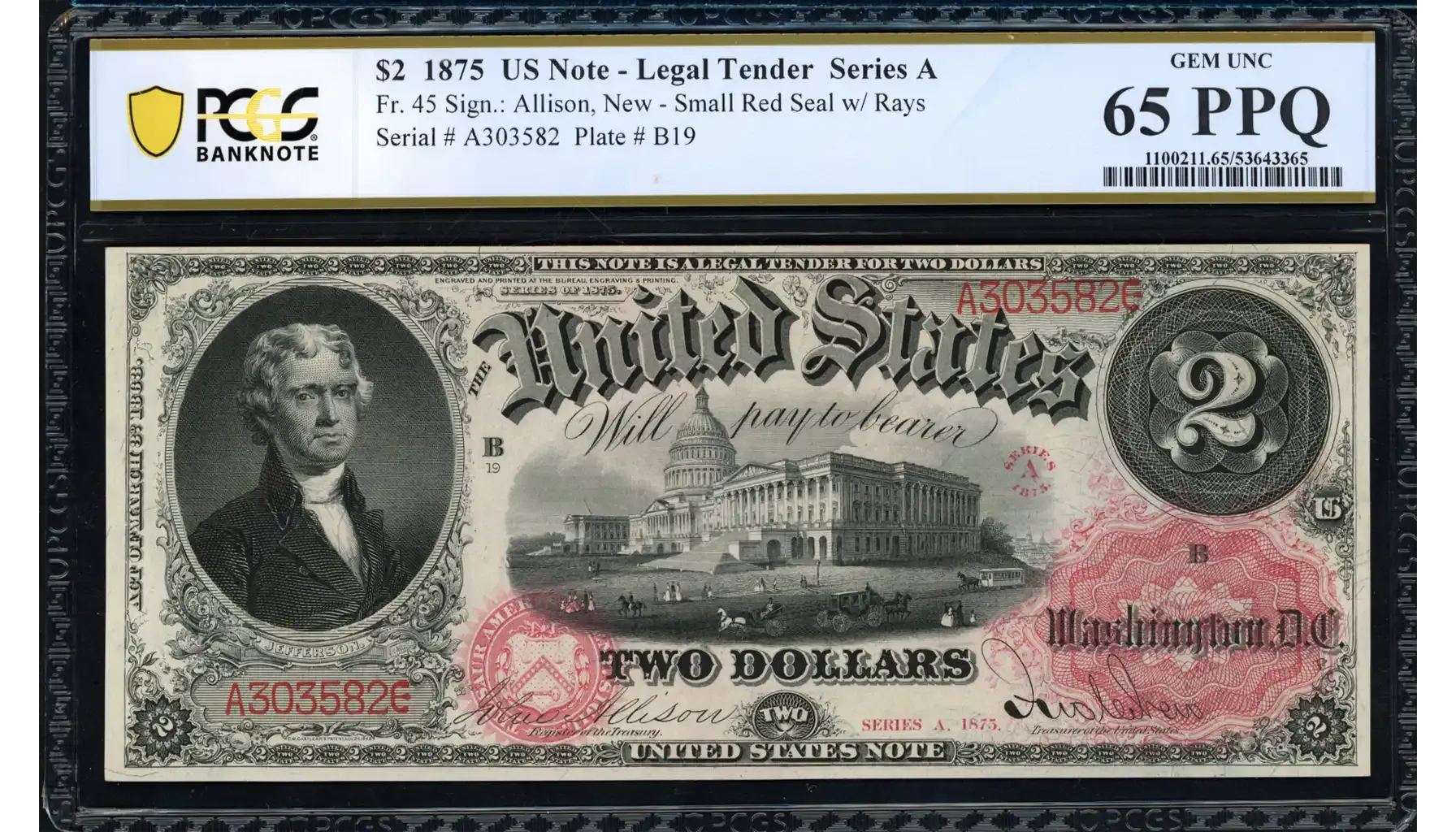
Sale date: Spring 2025 Showcase Auction, reported April 15, 2025
Auction: Stack’s Bowers
Grade: PMG Gem Uncirculated 65 EPQ
The 1875 $2 Legal Tender piece is an early federal large-size issue, and grade matters here. Collectors do not see many examples that combine full originality, strong paper, and Gem-level eye appeal. At 65 EPQ, it crosses from scarce collectible into a much tighter supply bracket.
4. 1875 $2 “Lazy Deuce” National Bank Note, La Crosse, Wisconsin — $35,250
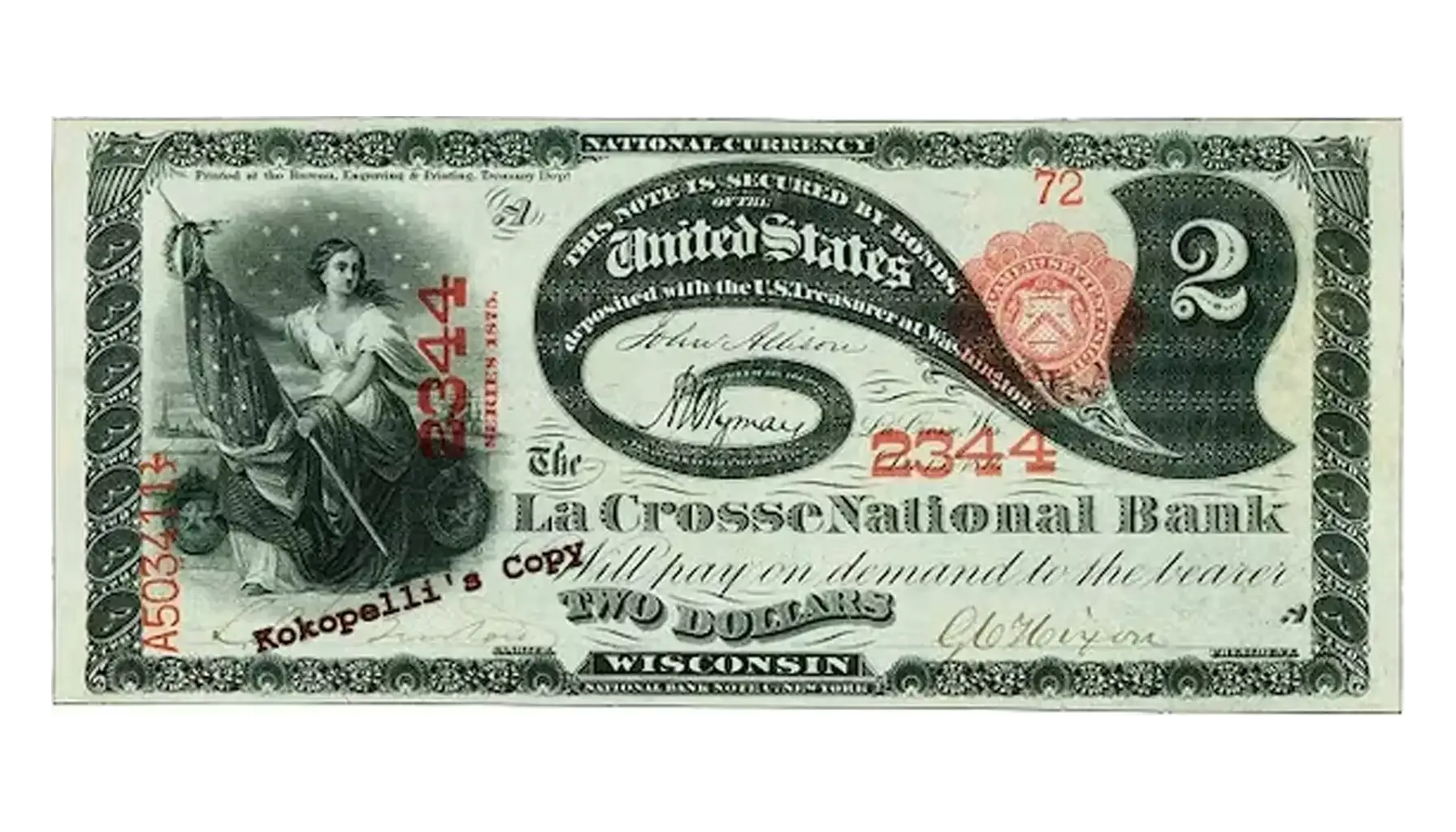
Sale date: August 14–17, 2015
Auction: Stack’s Bowers ANA World’s Fair of Money Currency Auction
Grade: PMG Gem Uncirculated 65 EPQ
Among national banknote collectors, the “Lazy Deuce” design has a loyal following. This La Crosse example was special. Stack’s Bowers described it as one of only nine examples of the design type graded by PMG at Gem 65 EPQ, with none higher.
5. Cambridge, Ohio $2 Original National Bank Note — $26,400
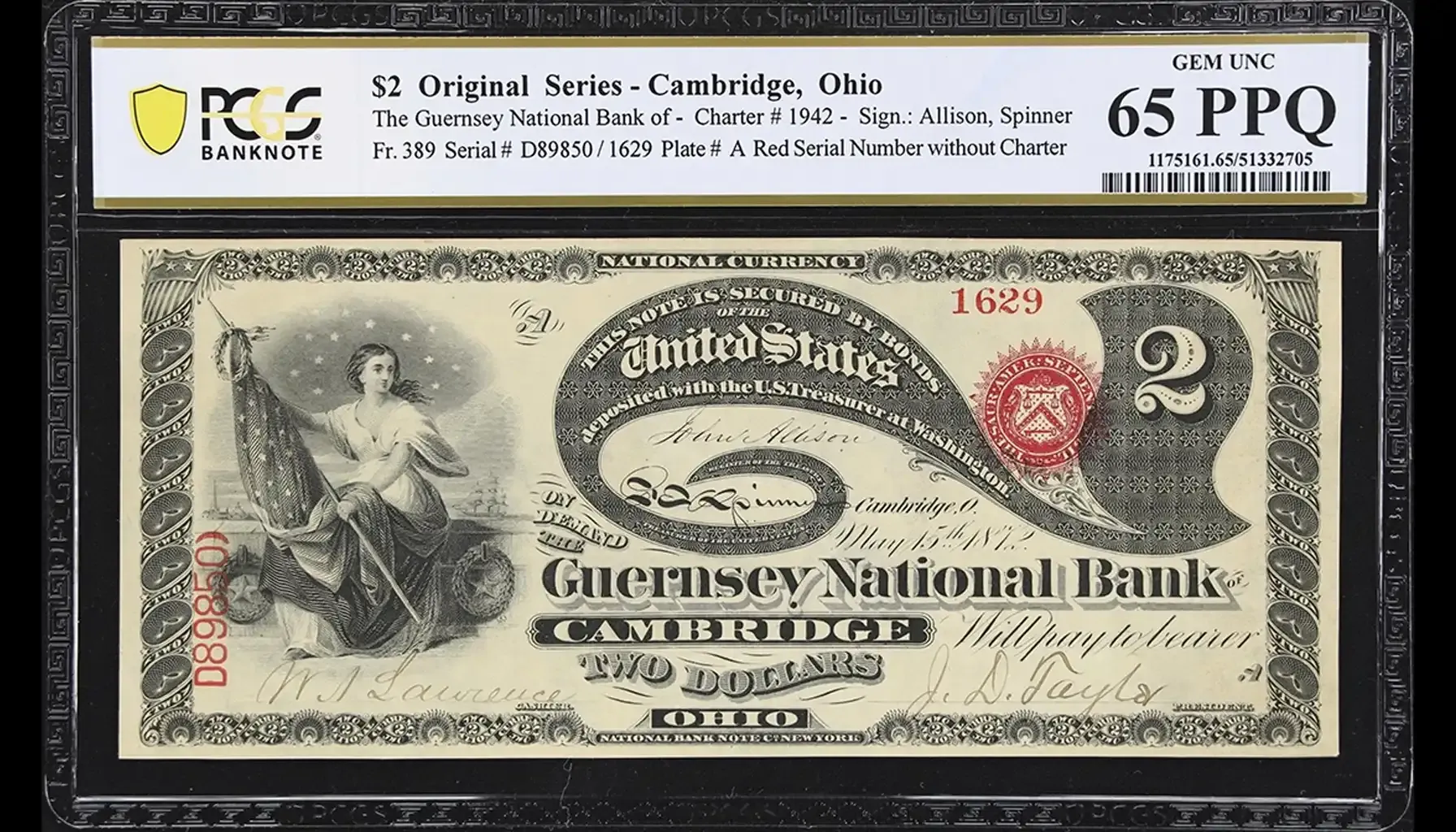
Sale date: Spring 2025 Showcase Auction, reported April 15, 2025
Auction: Stack’s Bowers
Grade: PCGS Banknote Gem Uncirculated 65 PPQ
It is an Original Series $2 National Bank Note from the Guernsey National Bank of Cambridge, Ohio. Original Series bills already carry stronger visual appeal than later national issues, and when one is preserved at Gem 65 PPQ, the price moves quickly.
How much is a $2 bill worth? It is not the kind of money casual collectors know by name, but it is exactly the sort of specimens advanced national-bank specialists fight over.
Related article: Australian Notes Value.
Rare $2 Dollar Bills to Look For in Circulation
Most notes you see in circulation are modern and are not 2 dollar bills worth money. The current design dates to Series 1976, and the most recent printing is Series 2017A. The Bureau of Engraving and Printing says there are no plans to redesign it.
So, what dollar bills are worth money?
Star Notes
Look at the end of the serial number. If there is a star instead of the last letter, it is a replacement specimen. Some of them are common, but lower-print examples can bring a premium.
Fancy Serial Numbers
These are often the best finds in ordinary circulation. Are 2 dollar bills worth anything? Keep those with:
very low serial numbers
solid numbers like 77777777
repeaters like 34343434
radars like 12344321
ladders like 12345678
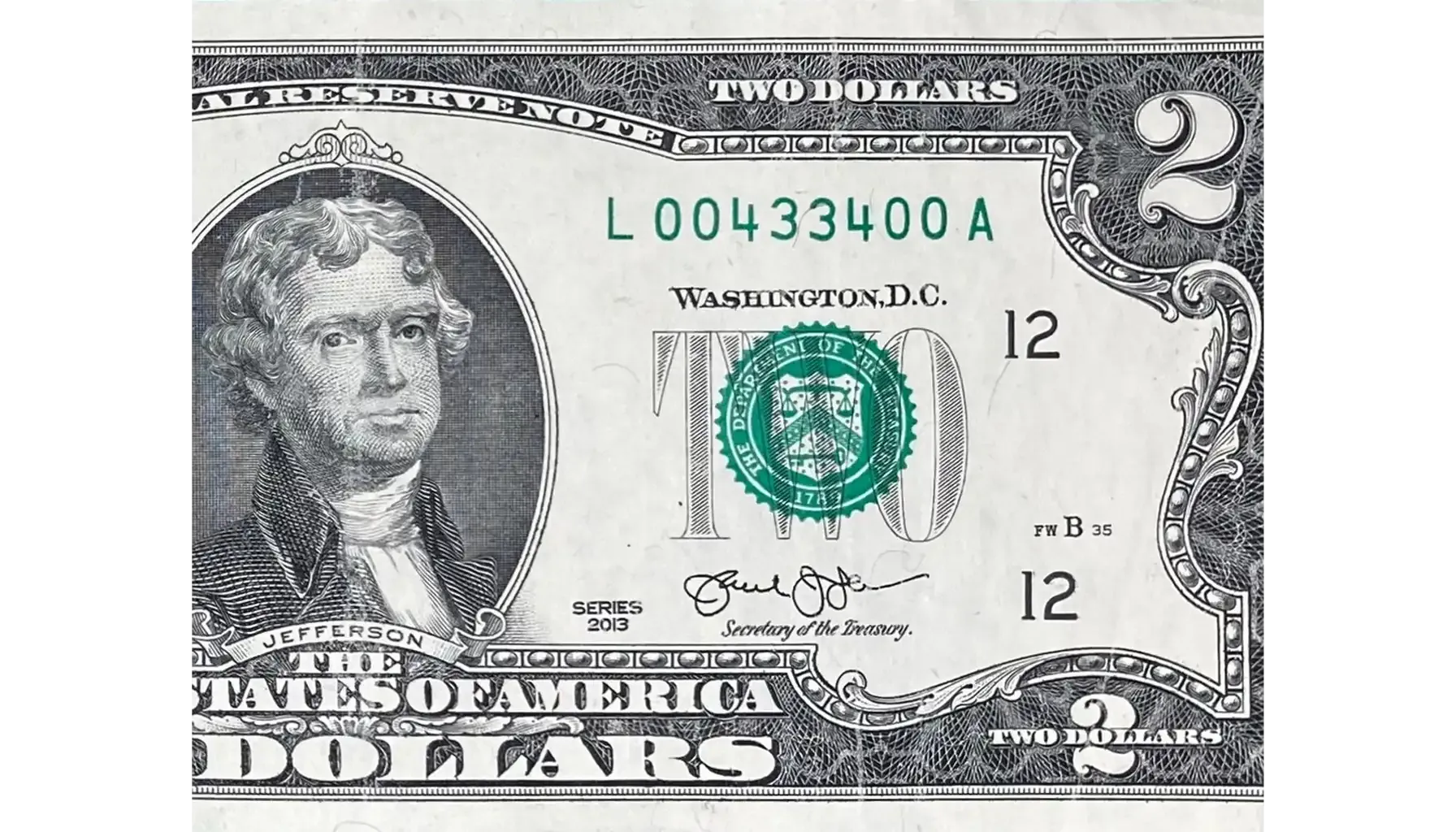
Older Red Seal Notes
If you ever find a 1928, 1953, or 1963 red seal specimen, keep it. These are older United States Notes, not the later green-seal Federal Reserve ones, and they usually carry collector value above face.
Errors
misaligned printing
cutting errors
ink shifts
major serial-number mismatches
Crisp Uncirculated Modern Ones
Modern $2 bills from 1995, 2003, 2003A, 2009, 2013, and 2017A are usually common, but clean, crisp notes are more collectible than worn ones. How much are $2 bills worth? According to US Currency Auctions, ordinary values for these later series are usually only slightly above face unless it has a better serial, star status, or error.
How to Check the Value of Your $2 Dollar Bill
Check the Series Year: Those from earlier series are much more valuable than modern issues.
Examine the Condition: An uncirculated specimen is far more valuable than a worn or circulated one. Look for any creases, folds or tears.
Look for Errors: What $2 bills are worth money? Errors like double printing, off-center ones or unusual serial numbers can increase the value.
Use Serial Number Lookup: Check the $2 bill value by serial number. A money serial number lookup for value can help you determine if your piece is special.
If you are interested in the quickest way to identify and research your metal currency, the Coin ID Scanner app is the perfect option.
More about foreign money: Japanese Yen Banknotes.
Where to Sell Rare $2 Dollar Bills
Major auction houses are the best for high-value notes. Firms like Heritage Auctions or Stack’s Bowers attract serious collectors and can achieve record prices.
Online marketplaces such as eBay allow direct sales. They are good for mid-range specimens, but prices depend on photos, grading, and seller reputation.
Currency dealers and coin shops are fast and simple. Dealers buy immediately, though offers are usually below retail market value.
Collector forums and groups provide targeted audience of paper-money collectors. Here you may ask how much is my $2 bill worth and just use it for niche varieties or fancy-serial items.
FAQ
Are $2.00 bills worth anything?
Most are worth face value. Older issues, star notes, errors, or high-grade examples can sell for more.
Are $2.00 bills still being printed?
The answer to the question (are 2 dollar bills still made) is yes. The Bureau of Engraving and Printing still produces them, though in smaller quantities than other denominations.
Do $2 dollar bills exist?
Yes. They are legal tender in the United States and can still be used in everyday transactions.
Why is a $2 bill rare?
They circulate less often because people save them. How rare is a 2 dollar bill? Some older series also had lower print runs.
Is it worth keeping $2 bills?
Keeping crisp, older, or unusual notes can make sense. How much are 2 dollar bills worth in these cases? It depends.
What do rare $2 bills look like?
They may show red seals, star symbols in the serial number, unusual serial patterns, printing errors, or very sharp condition. These features increase the 2$ bill worth.
How to tell if a $2 bill is worth anything?
Check the series year, condition, serial number type, and whether it is graded or has known varieties.
Why is a $2 bill valuable?
Value comes from scarcity, collector demand, historical interest, and condition. Rare 2 dollar bills or exceptional preservation raise prices.

 Facebook
  X (Twitter)
  Pinterest
  LinkedIn