Contents:
Australian bank notes are the paper or polymer currency issued by the Reserve Bank of Australia (RBA) and used as legal tender across the country.
The material used is polymer since 1992. Australia was the first nation to fully adopt polymer banknotes.
Banknotes are legal tender under the Reserve Bank Act 1959, while coins are governed by the Currency Act 1965.
The History of Australian Notes
1910–1966
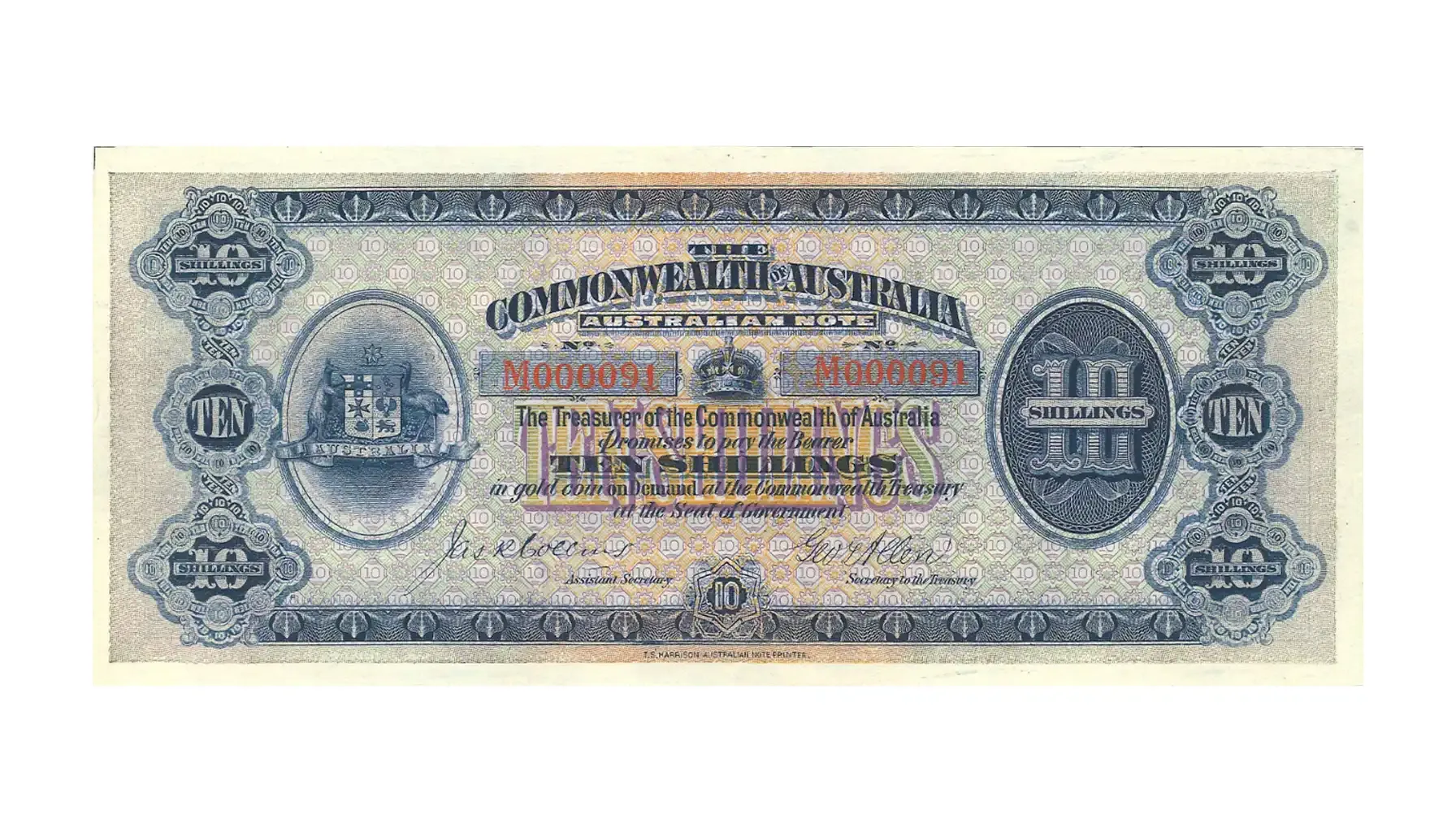
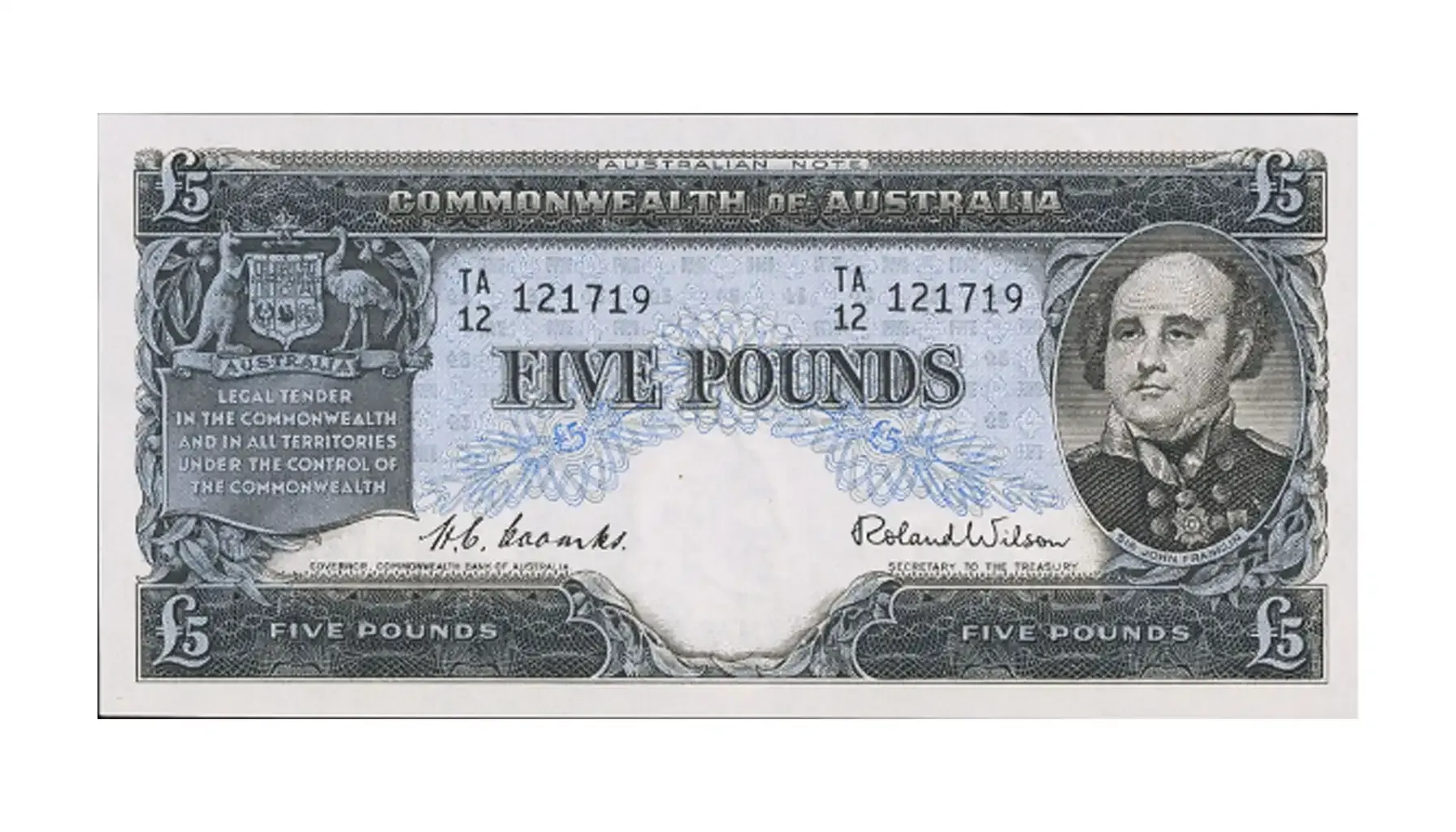
Australia’s first official banknotes appeared in 1913, after the Australian Notes Act 1910 ended private banknote circulation. The Commonwealth Treasury issued the new Australian notes and coins. It gave the young federation a unified national currency.
By 1920, the Commonwealth Bank became responsible for printing and distribution. Early notes were large, printed on paper, and carried designs with the British monarch, national symbols and engravings for security. Each note was signed by hand. This influences the value of old Australian notes because of their rarity at the time.
1966
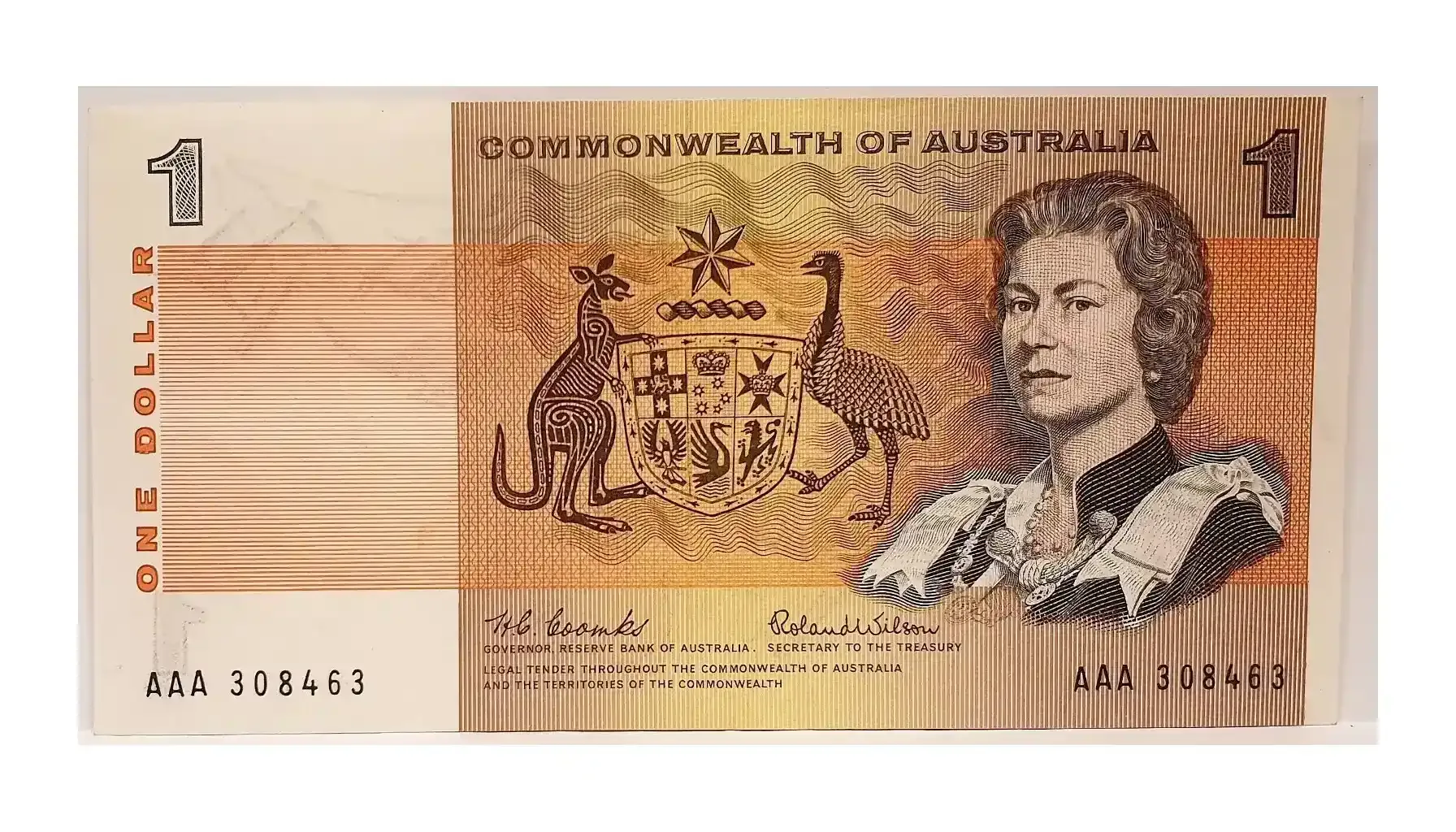
On 14 February 1966, Australia introduced a new system — decimal currency. It replaced pounds, shillings, and pence with dollars and cents. The conversion rate was set at £1 = $2, and the day became known nationwide as “C-Day.”
The first notes of the modern era were designed by Gordon Andrews and featured Australian figures, technology, and landscapes. Denominations included $1, $2, $5, $10, and $20.
The Reserve Bank of Australia (RBA), established in 1960, became the sole issuing authority.
1980s–1990s
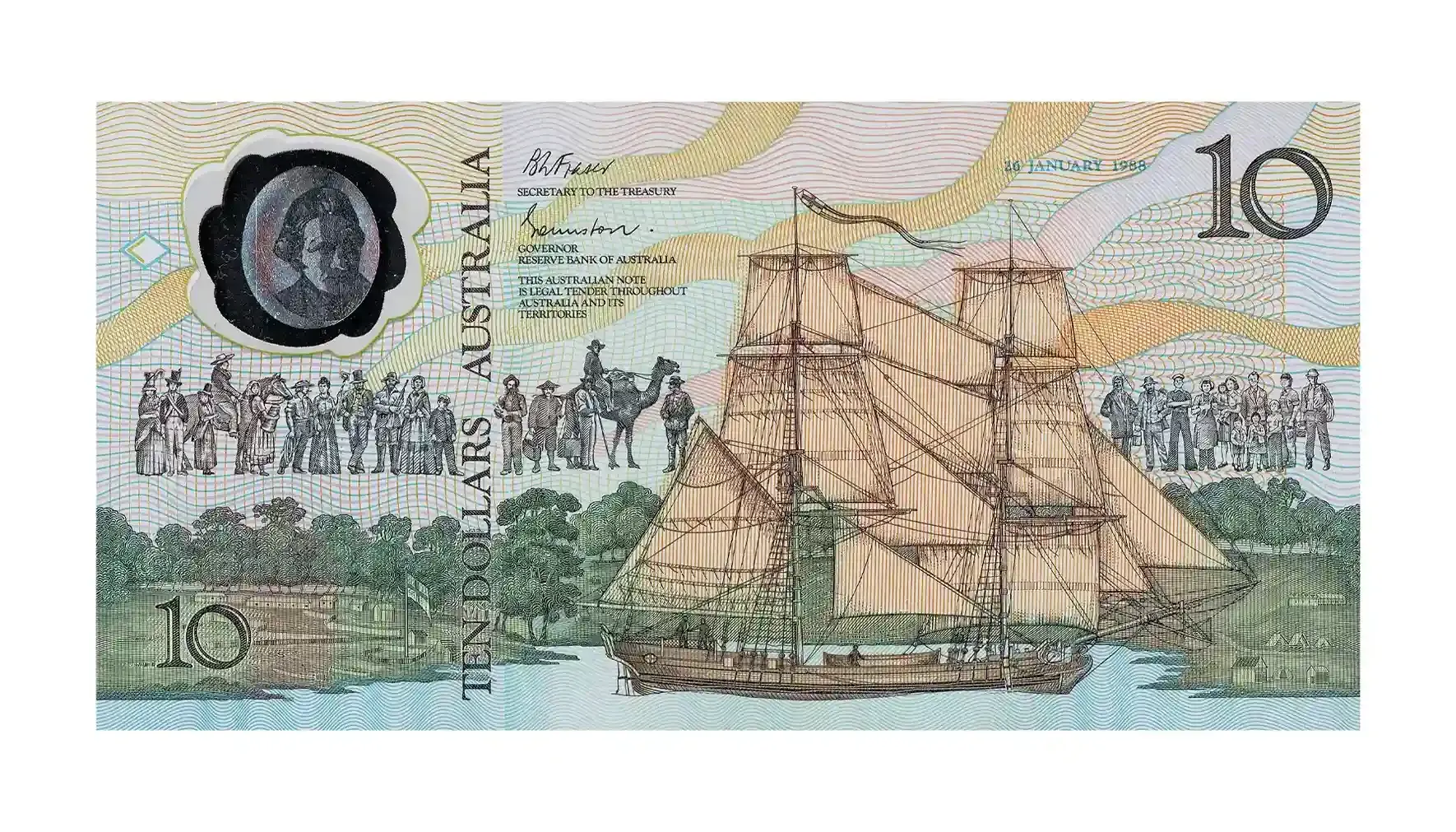
By the late 1970s, counterfeiting had become a big problem. In response, the RBA worked with the CSIRO to develop a new kind of banknote made from polymer instead of paper. It was a world-first innovation.
In 1988, a $10 commemorative polymer note marked the 200th anniversary of European settlement.
From 1992 to 1996, all denominations were gradually converted to polymer.
The new Australian dollar notes were stronger, waterproof, and featured advanced anti-forgery elements, e.g., clear windows, micro-printing and optically variable devices. They also lasted four to five times longer than paper notes, which reduced production costs and waste.
2016–2020
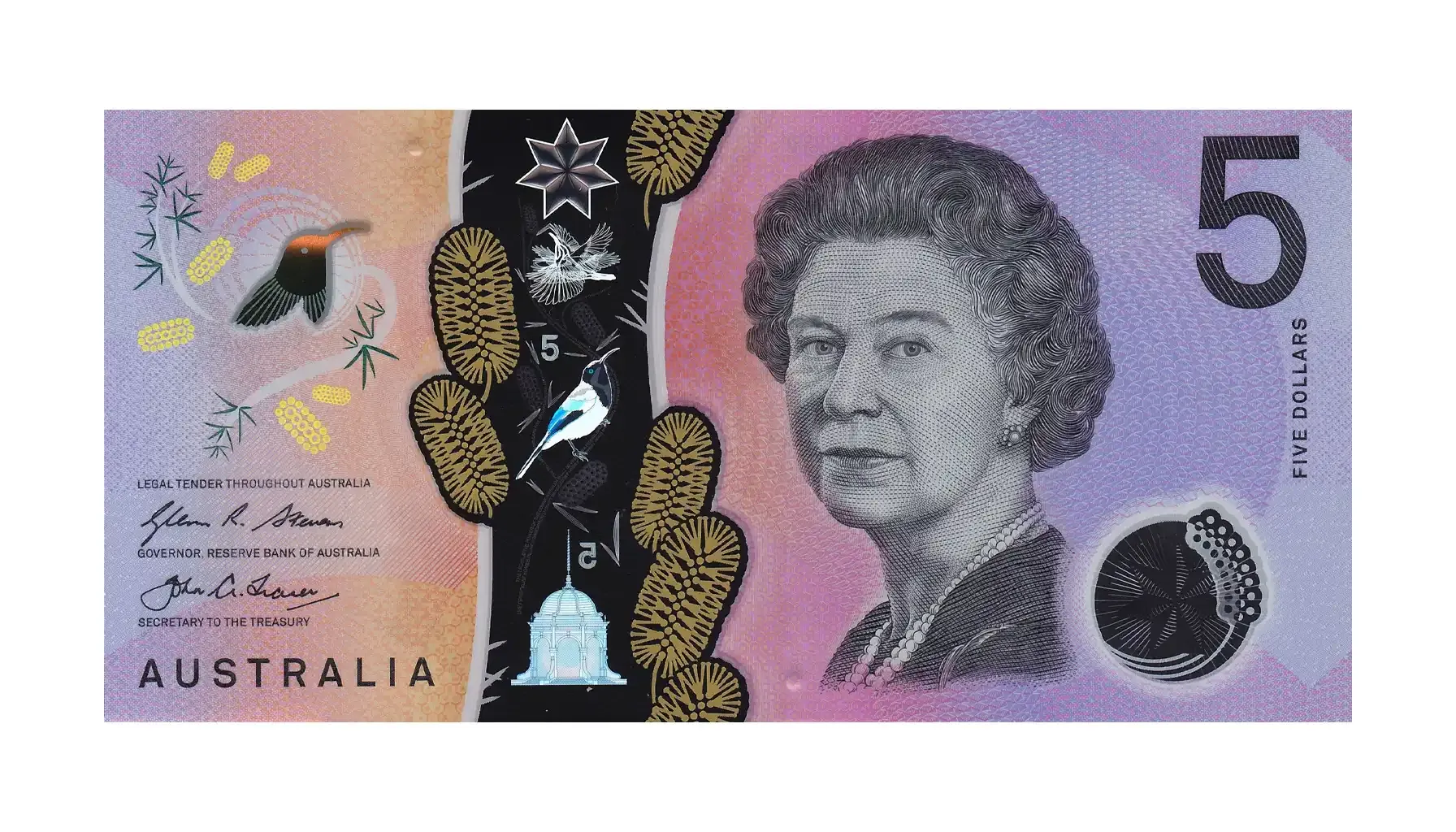
The RBA introduced the Next Generation Banknote Series with enhanced security and accessibility without changing the familiar colors or portraits.
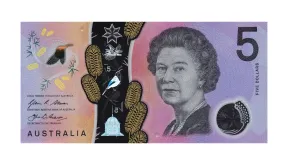
In 2016, the first new $5 note was released. It featured Queen Elizabeth II and Parliament House.
Over the next four years, redesigned $10, $20, $50, and $100 Australian money notes followed.
Tactile features were added for the visually impaired, along with rolling color effects and transparent elements for security.
2023–Present
After the passing of Queen Elizabeth II in 2022, Australia began updating its currency to feature King Charles III. The Royal Australian Mint and the RBA confirmed that new coins and, eventually, new Australian notes would carry the new design.
“There are more than 1.6 billion banknotes currently in circulation in Australia, so you would think that it would be relatively easy to come across a rare banknote. Unfortunately, it’s not a simple numbers game when it comes to collecting Australian banknotes.”
— Andrew Crellin, Managing Director of Sterling & Currency
Sterling & Currency, “Why Condition and Quality Matters When It Comes to Collecting Australian Banknotes”
Understanding Australian Currency Notes and Coins
Australia’s modern currency system is based on the Australian dollar (AUD), introduced on 14 February 1966, when the nation shifted from the old pound–shilling–pence system to decimal currency. The system divides one dollar into 100 cents. This makes calculations simpler and aligns Australia with international trade standards.
The Reserve Bank of Australia (RBA) issues the current Australian currency notes. The Royal Australian Mint in Canberra is responsible for minting the coins.
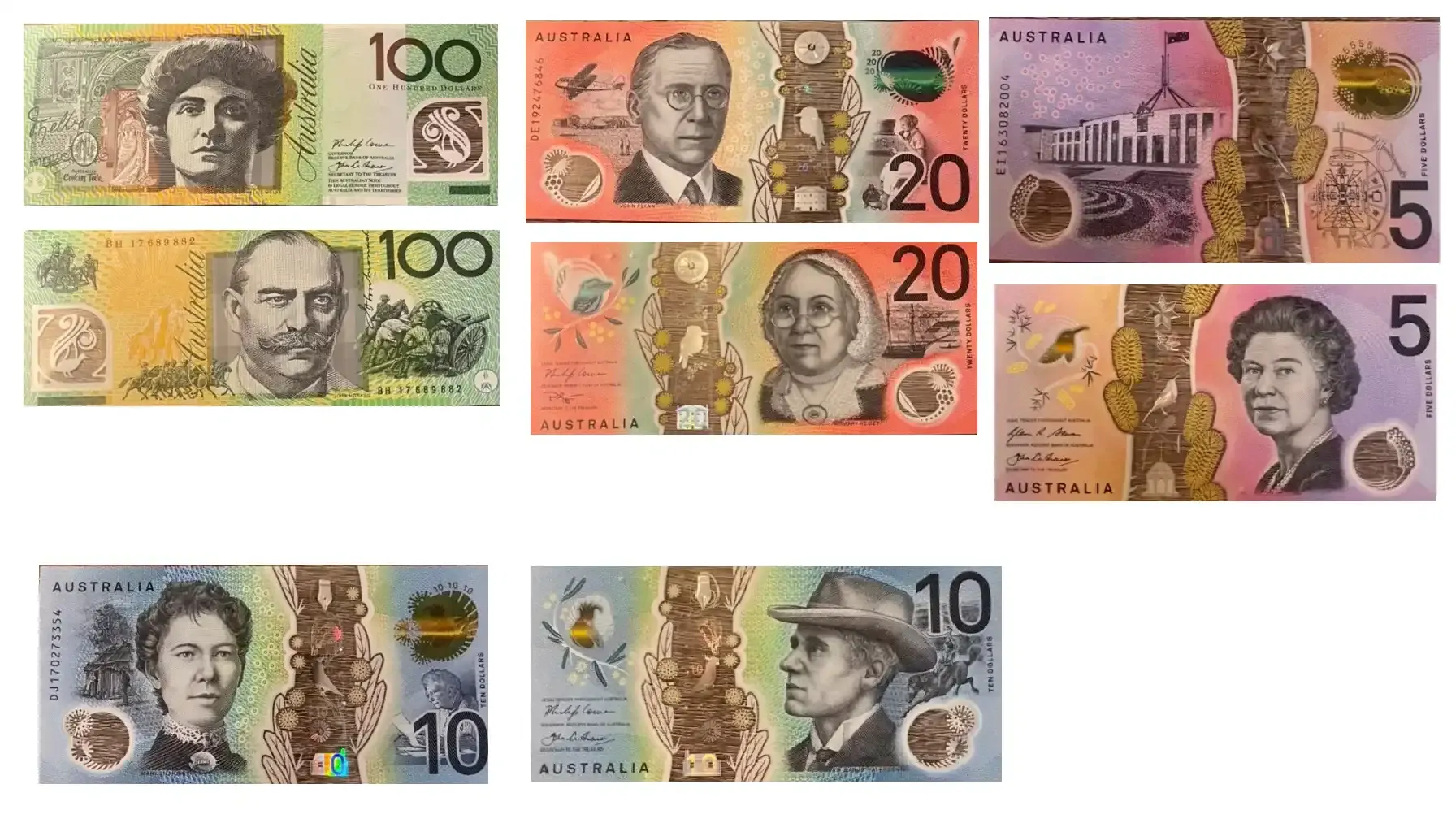
Current Denomination | Figures | Design |
Queen Elizabeth II / Parliament House | Transparent window, pink-violet color scheme | |
Banjo Paterson / Dame Mary Gilmore | Literature and poetry theme, blue tone | |
Mary Reibey / Rev. John Flynn | Aviation and trade heritage, red-orange color | |
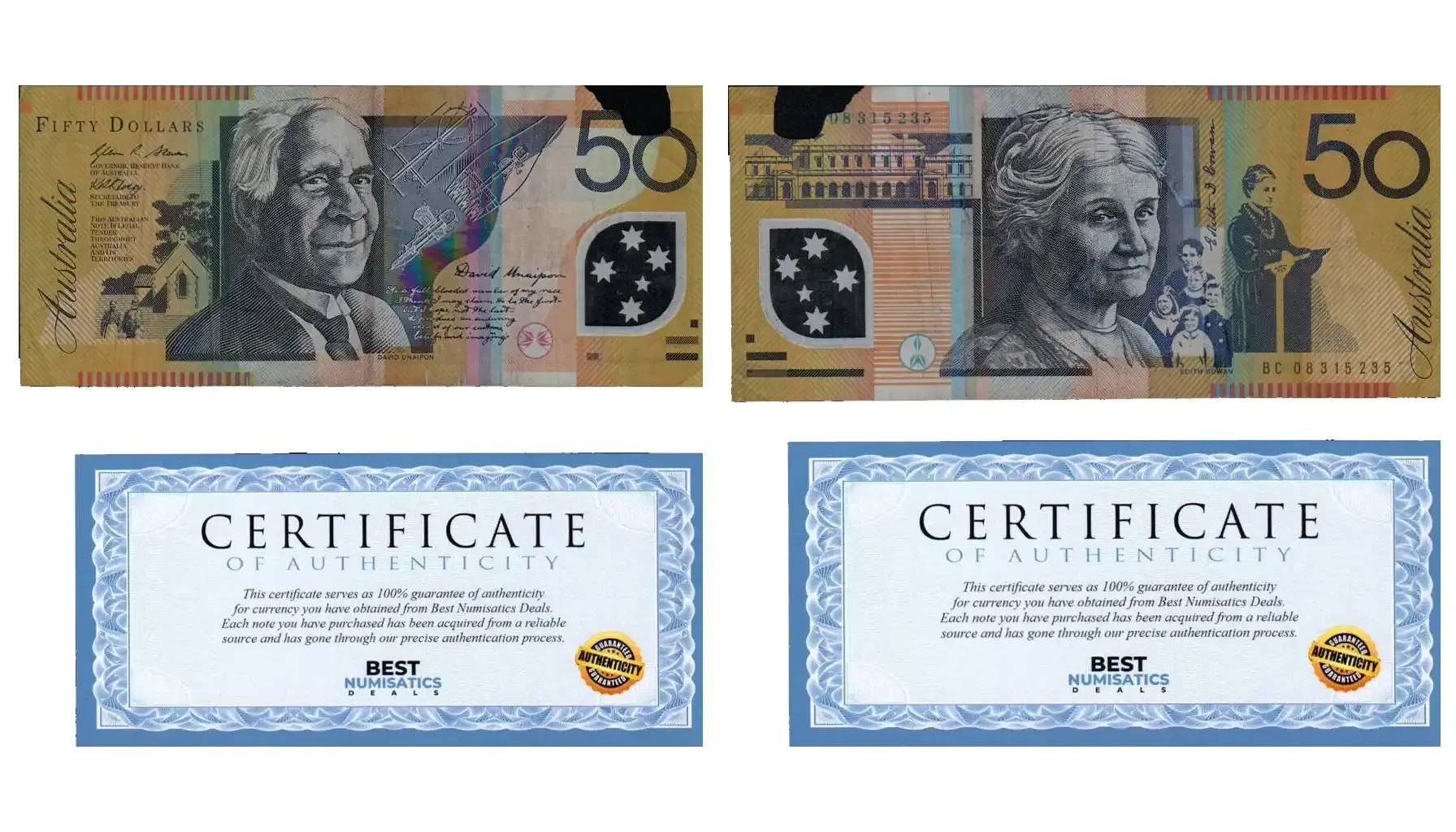
David Unaipon / Edith Cowan | Innovation and education, yellow-gold palette | |
Dame Nellie Melba / Sir John Monash | Culture and leadership, green color scheme |
There is no $1 note in Australia today. But there once was. When Australia introduced decimal currency on 14 February 1966, the $1 note was among the first denominations issued.
It was discontinued in 1984 and replaced by the $1 coin, introduced that same year to reduce printing costs and improve durability.
Early collectors still value the 1966–1984 $1 notes, however they are no longer legal tender. Today, the smallest Australian note is $5, and the $1 value exists only as a coin.
Rare Australian Notes and Serial Numbers
# | Note & Year | Serial / Prefix | Why It’s Rare | Price |
1 | Ten Shillings (1913) | M000001 | First Australian banknote ever issued | A$1,909,000 (sold) |
2 | Ten Shillings (1913) – Pair | M000004 & M000005 | Presentation notes once owned by PM Andrew Fisher | A$295,000 (sold) |
3 | Ten Shillings (1913) | M000091 | Presentation note signed by PM Fisher | A$120,000 (sold) |
4 | One Hundred Pounds (1914) | Z006943 | Early Collins/Allen £100 | A$90,000 (sold) |
5 | Ten Pounds (1913) | W002238 | Early Collins/Allen £10 | A$44,000 (sold) |
6 | $20 (1967) Star Replacement | Star serial (Coombs/Randall) | Rare 20-dollar replacement issue | A$10,000–22,000 |
7 | $5 (1969) Star Replacement | ZNC 93663* | Scarce decimal star note in top grade | ≈A$16,000 (est.) |
8 | $10 (1968–69) Star Replacement | Star serial (Phillips/Randall) | Very rare $10 star issue | A$8,000–20,000 |
9 | $5 (1967–69) Star Replacement | Star serial (Phillips/Randall) | Early decimal star issue | A$6,000–18,000 |
10 | $50 (1973–74) Star Replacement | Star serial (Phillips/Wheeler) | Late-era replacement note | A$4,000–10,000 |
11 | $1 (1982) Error Note | DHY 000000 | All-zeros serial number error | ≈A$10,000 (est.) |
12 | $5 (1974) Mismatched Serials | Two numbers differ | Front/back serial mis-match error | A$2,000–8,000 |
13 | $100 (1996 polymer) Error | Partial serial digits | One digit missing in serial | A$2,000–7,000 |
14 | $20 (1994 polymer) Error | Foldover / gutter fold | Folded sheet causing blank strip | A$1,200–5,000 |
15 | $10 (1988 polymer) Error | Missing print / overprint | First polymer issue with major print error | A$1,500–6,000 |
Disclaimer: These examples include verified serials and public sale data from major Australian numismatic auctions and press coverage. They consist of the most historically significant or serial-number-unique notes documented in the open market.
For validation of serial ranges and prefixes, the RBA’s serial-number tables help corroborate print runs by year/denomination.
The Future of Australian Notes
The Monarch Transition and New Designs
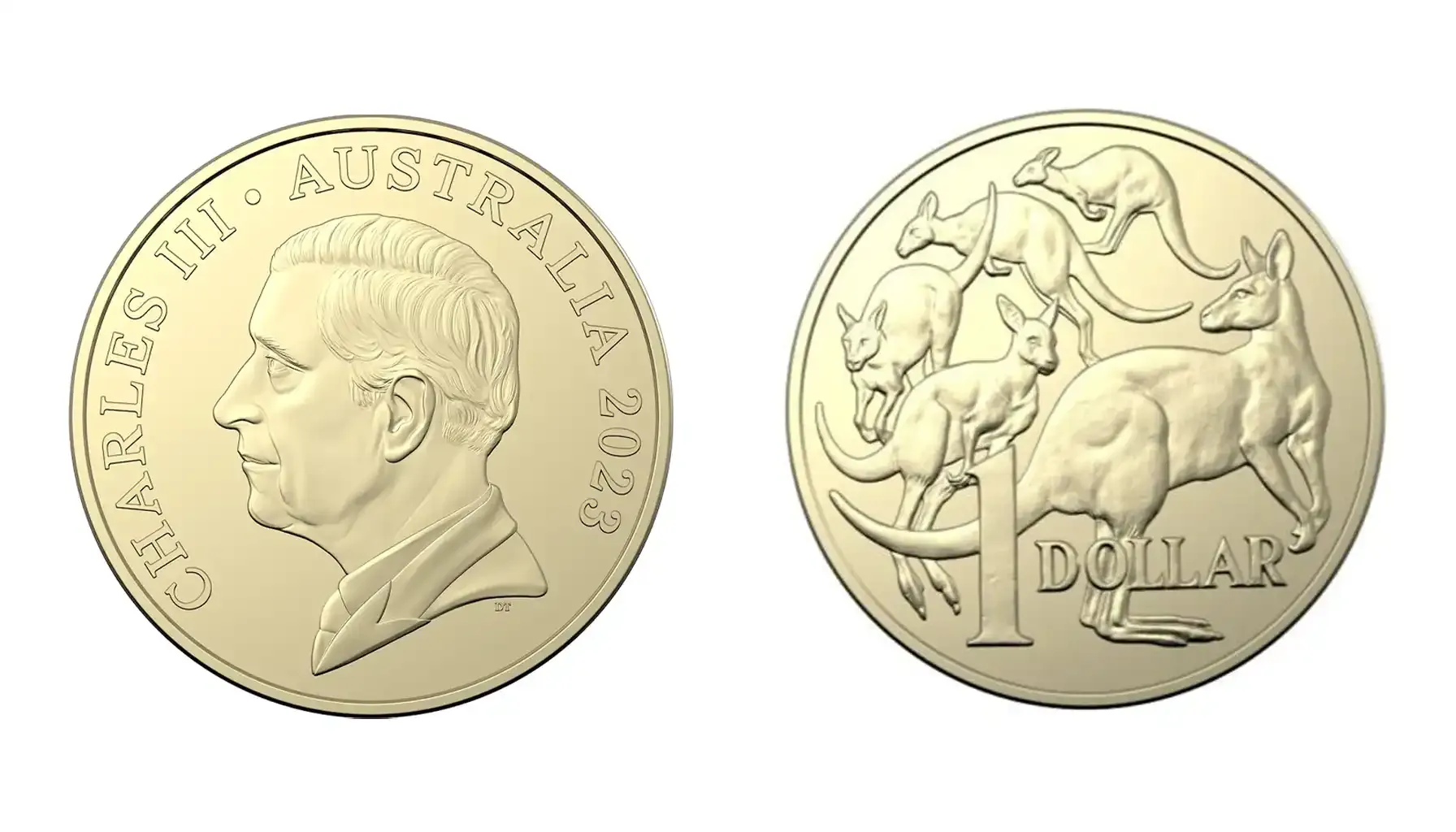
The most immediate change for Australian coins and notes is the transition from Queen Elizabeth II to King Charles III.
The Reserve Bank of Australia (RBA) confirmed though that the next $5 design will not feature King Charles III directly but will instead highlight Indigenous heritage and cultural identity.
Coins, by contrast, already bear King Charles III’s effigy (since 2024).
Technology and Security Innovations
By 2030, Australia’s polymer notes are projected to undergo further security and traceability upgrades.
Main directions the RBA and CSIRO are exploring:
Advanced polymer substrates with nanostructured layers;
Next-generation holographic elements and color-shifting inks;
Embedded micro-QR verification;
Continued improvement of tactile features for visually impaired users.
Digital Economy
Digital payments and mobile banking now dominate. However, physical cash is still used for financial stability and inclusion.
RBA data shows:
About 7 % of payments in 2024 were made in cash, down from 27 % in 2019.
Despite that, cash holdings increased during crises (e.g., COVID-19 and inflation spikes) as people chose tangible assets.
Through 2030:
The RBA plans to retain all five denominations ($5–$100).
Lower denominations may see reduced production but not elimination.
New sustainability goals will ensure polymer recycling programs expand, keeping Australia’s notes eco-efficient.
Cultural Direction and Commemorative Trends
Australia is expected to release limited-edition commemorative notes within the next decade. It will continue traditions from the 1988 Bicentenary and 2016–2020 Next Generation series. There might be the following themes:
250 Years of Multicultural Australia (2028 concept year).
100 Years of the Royal Flying Doctor Service (planned 2028–2029).
Global leadership in sustainable currency materials.
Global Influence and Export of Polymer Technology
Australia’s polymer banknote technology, managed by Note Printing Australia (NPA) and Securency, is already licensed to more than 60 countries.
By 2030, this export industry will continue expanding across Asia, Africa, and Latin America. Future polymer generations developed for Australian notes will likely be prototypes for international contracts — positioning the RBA as both a monetary innovator and green-tech leader.
Collecting Australian Notes – A Growing Passion
Collectors focus on first-prefix notes, star replacements, and rare Australian notes serial numbers that reveal the evolution of printing and design. As new designs appear and old ones disappear, collecting Australian notes is becoming more and more popular.
Modern tools, e.g., Coin ID Scanner for coins, make it easy to identify and record notes by photo. It can help collectors track authenticity and value. Try already now!

 Facebook
  X (Twitter)
  Pinterest
  LinkedIn