Contents:
Oh, that crunch of new banknotes... or are they not completely new, but very old, rare and so valuable? That's exactly what these Australian banknotes are. Do you want to know their designs, features, and what makes them so valuable? Well, you're in the right place.
The History of the Australian 1 Dollar Note
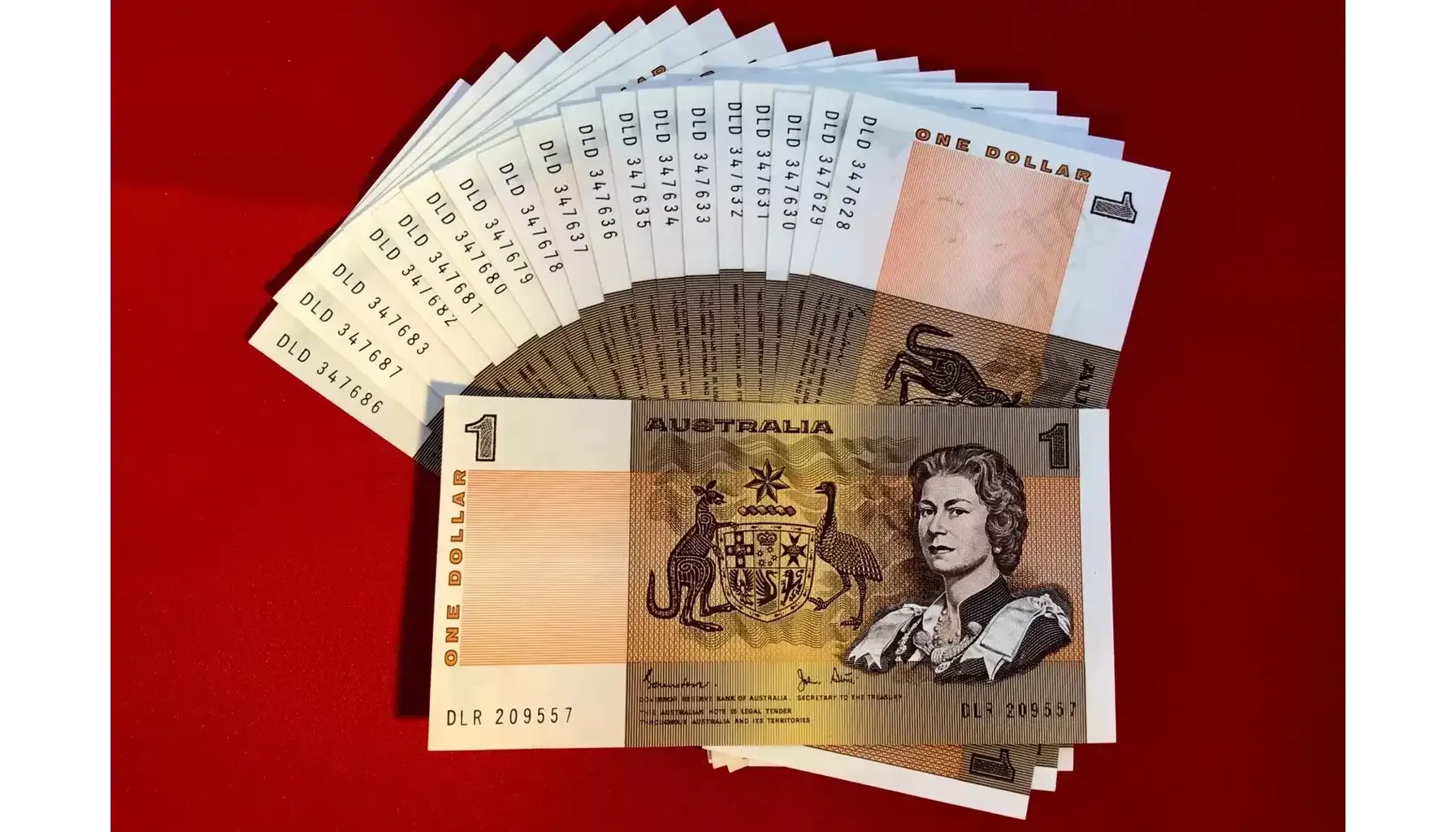
So, it's hot outside on May 29, 1966. The country is switching to decimal currency. And here it is, the first issue of the $1 Australian note.
It became a replacement for the 10-shilling banknote, but retained a similar color scheme. This was done to facilitate the transition for the population.
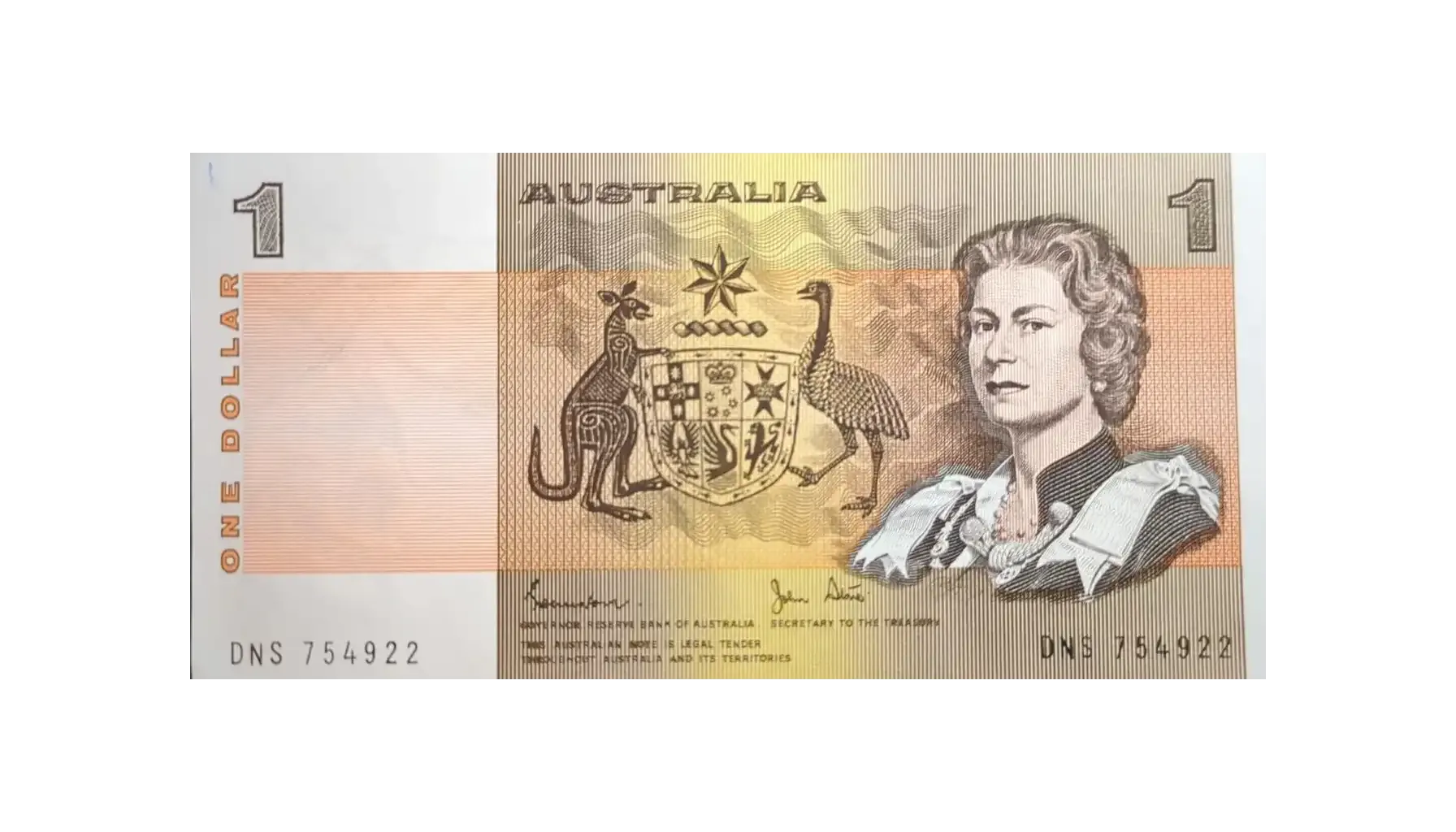
The obverse of the banknote depicts Queen Elizabeth II based on a portrait painted by Pietro Annigoni. And on the reverse there are cave paintings of aborigines, in particular "Sleeping" figures from Arnhem Land, and the landing of Captain James Cook in Botany Bay.
This design is quite different from previous versions of Commonwealth Bank banknotes.
However, on May 14, 1984, the banknote was officially replaced by a 1 dollar coin. This happened due to the short circulation time of the banknote and the high cost of replacement. This coin was more valuable than the notes and even the Australian $5 Note.
As a result, the banknotes of recent years have become especially popular with collectors. Especially in their pristine uncirculated form.
Understanding the Australian $1 Dollar Note Value Chart
Types | Features | Condition | 1 dollar note Australia value |
Common Issue | Standard serial number | Circulated | $2 – $15 |
Uncirculated | $30 – $120 | ||
Gem UNC (MS 64+) | $120 – $500 | ||
Coombs/Wilson 1966 | Early series | Circulated | $10 – $40 |
Uncirculated | $80 – $600 | ||
Rare Signature Combination | Knight/Stone, Phillips/Randall | Uncirculated | $100 – $800 |
Johnston/Fraser | Standard serial number | Circulated | $5 – $30 |
Uncirculated | $40 – $300 | ||
Star Note | Serial with asterisk | Circulated – UNC | $80 – $700 |
Low Serial Number | 000001 – 0001xx | UNC / Auction | $500 – $8,000+ |
Solid Serial Number | 777777, 000000 | UNC / Auction | $200 – $6,000+ |
Radar Serial Number | 1234321 | UNC / Auction | $150 – $3,500 |
Ladder/Repeater Serial Number | 1234567 / 121212 | UNC / Auction | $100 – $2,500 |
Minor Printing Error | Slight miscut, ink smear | Circulated – UNC | $50 – $800 |
Significant Printing Error | Brash miscut, missing ink | UNC / Certified | $500 – $20,000+ |
Wrong Planchet/ Material Error | Extremely rare | Auction / Certified | $1,000 – $25,000+ |
Unique/ Museum Grade | Record sales | Auction | $5,000 – $30,000+ |
Preservation and Collecting Tips
Purchasing a rare copy does not mean that you have received a high $1 note Australia value. It is also important to preserve this very value. And here, you must admit, it's more complicated.
Storage
Archival-Safe Holders
Use acid-free packaging or PVC-free holders. Otherwise, parts of your collection will simply become obscene over time.
Usually, experienced numismatists use mylar inserts. They are inert and provide excellent protection.
But don't use plastic envelopes or albums. They may contain chemicals that degrade the paper over time. This will cause discoloration or sticking.
Flat Storage
Always keep them flat. Even slight bending can affect the quality and value of the specimen.
Environmental Control
Stable conditions, away from direct sunlight, extreme temperatures and high humidity. Humidity can lead to mold or brown spots, and dryness can make banknotes brittle. So keep an eye on everything that surrounds your collection.
Handling
Gloves
Use cotton or nitrile gloves and hold the banknotes by the edges. If dirt gets off the skin, the specimens can spoil.
Clean Surface
Work on a clean, dry surface. Prevent accidental damage or contamination.
Identification and Research
Guides
First of all, pay attention to official sources and popular numismatic reference books and catalogs.
They contain detailed information about signature combinations, serial number ranges, and known varieties. All this is necessary to successfully identify the dollar.
Online Resources
Also, pay attention to numismatic websites, forums, and auction archives. There you will find information about current market trends and examples of various currencies like Australian $100 Note, and errors.
Magnification
A jewelry magnifying glass or a good magnifying glass will help you examine small details. Print quality, security features, and any minor errors.

 Facebook
  X (Twitter)
  Pinterest
  LinkedIn