Contents:
Every banknote has its own story, and the $50 note is no exception. For some, it's simply a familiar denomination, while for others, it's a symbol of the times, a reflection of technological change and cultural shifts.
The old paper series, the new polymer version, the faces on the note, and the anti-counterfeiting features — all of this makes the 50 dollar note Australia one of the most recognizable and respected banknotes in the country.
This banknote has been with Australians for half a century. First came the early paper issues, then the modern plastic series, which are nearly impossible to counterfeit. And if you've ever held one in your hands, you've held a piece of national history—a part of what connects eras, generations, and even Australian notes collectors.
The History of the Australian 50 Dollar Note
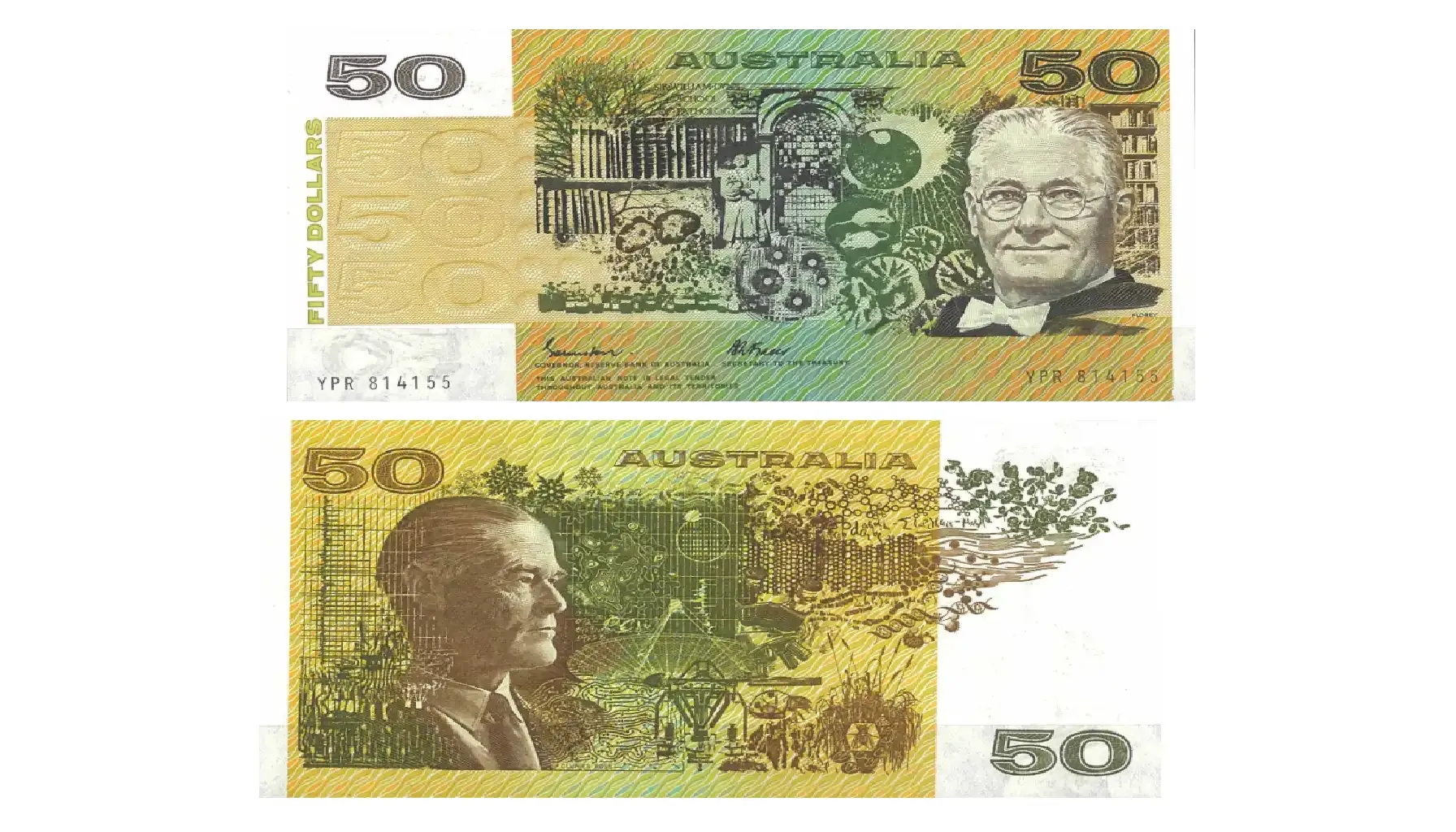
The paper banknote with a denomination of Australian 50 dollar note was first issued in October 1973. Before that, the introduction of this denomination was driven by inflationary pressure and the need for new banknotes.
Until 1995, the Australian $50 note existed only in paper form. After that, production shifted to polymer, making it one of the first banknotes to feature an innovative plastic coating that greatly increased durability.
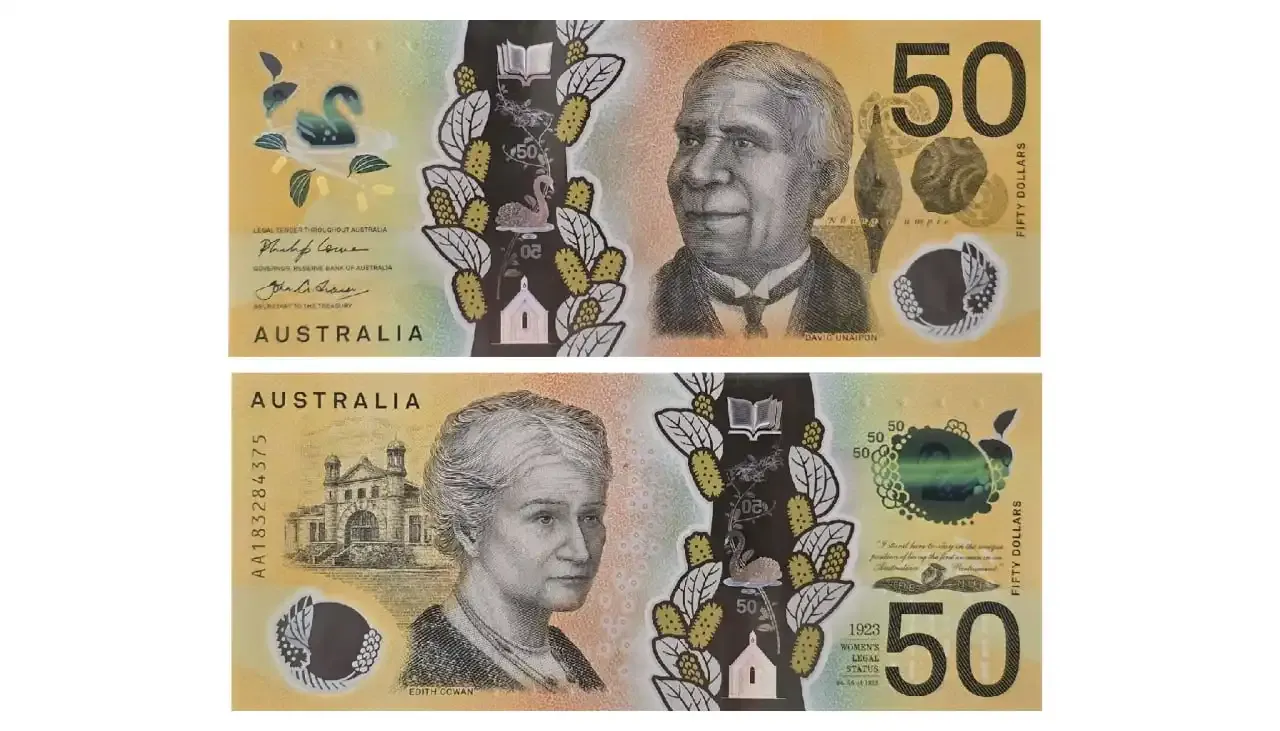
In 2018, a new version appeared with portraits of David Unaipon and Edith Cowan, reflecting science, education, and social progress, along with enhanced security elements. This updated note became part of a broad modernization of the country’s currency. The same approach was later applied to other denominations, including the Australian $10 note, showing how systematic the renewal program was.
The paper version — the old 50 dollar note Australia — is now particularly prized by collectors, as it has long been out of circulation, and the number of surviving copies is limited.
The Role of the 50 Dollar Note in Australian Currency
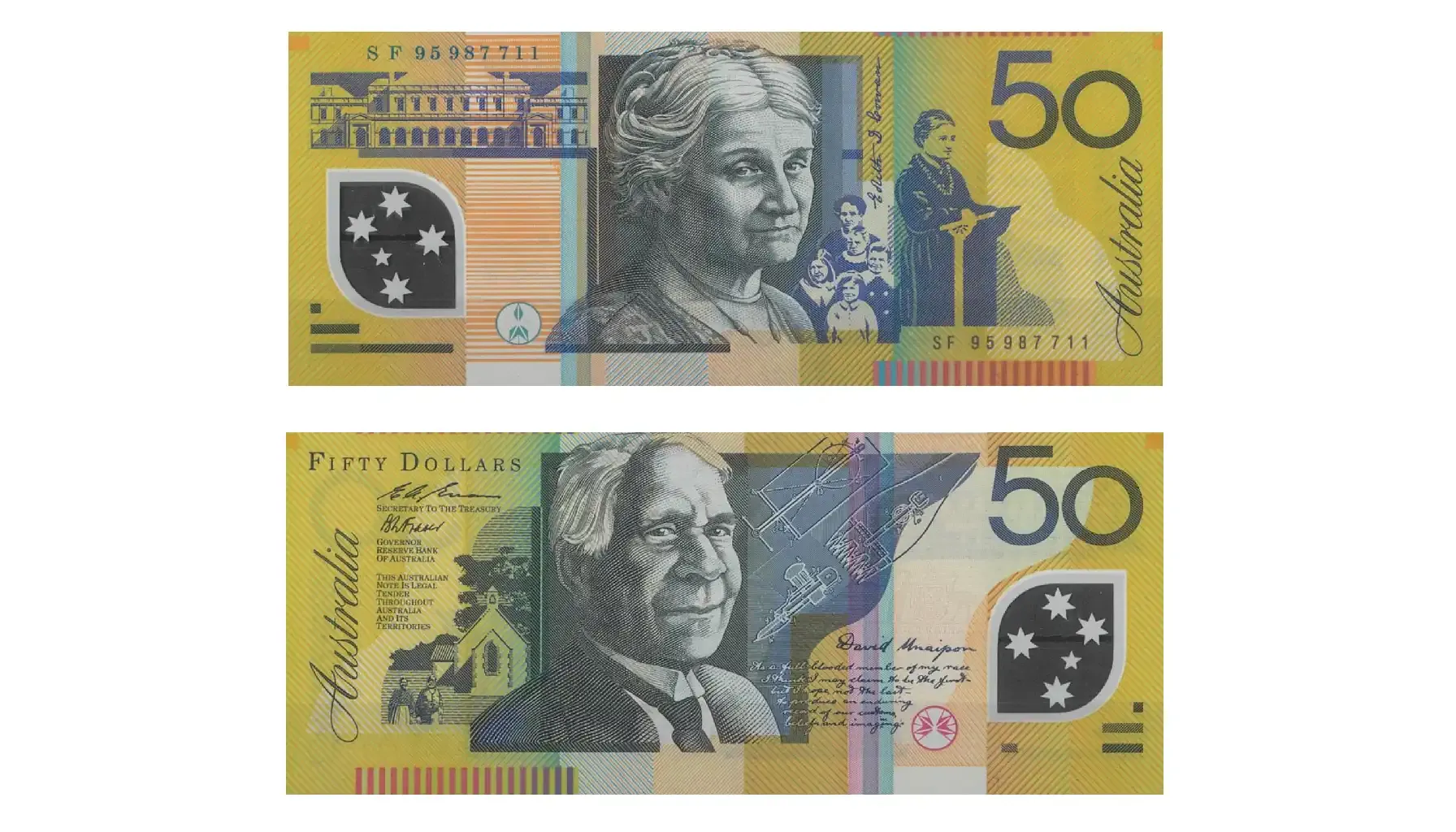
The banknote has become an important part of the financial system. Australia 50 dollar note is widely used in trade and banking transactions, remaining one of the most widely issued denominations. Polymer versions offer protection against counterfeiting thanks to a transparent window, microtext, and color-changing elements.
For collectors, the banknote is a source of stable value. Authenticity and condition can be easily verified using the Coin ID Scanner app, which analyzes security features and determines an approximate market value.
Collecting and Valuing the $50 Australian Note
The $50 note Australia is interesting for a variety of reasons. The most compelling are the early polymer and paper copies, especially those with serial numbers from the first batches.
Issue Type | Approximate Value (AUD) | Comment |
Paper Issue (1973–1993) | 300 – 1,000 + | First-generation paper notes. Rare on the collectors’ market, especially in mint condition. |
Polymer First Issue (1995) | 200 – 500 | First generation of polymer banknotes with the original design and early security features. |
Polymer Update (2016–2018) | 50 – 200 | New Next Generation Banknote series featuring advanced security and updated portraits. |
Values are indicative and depend on denomination, serial rarity, and condition (uncirculated vs. circulated).
“Paper $50 bank notes could be worth between $60 and $1,500 depending on a few key details.”
— Joel Kandiah, a numismatist and educator
Finance.yahoo website
Pay special attention to:
Rare prefixes. Series AA, AB, DAA, and radar numbers are rare. The closer a banknote is to its first printing, the higher its numismatic value. At auction, such specimens fetch premiums of up to 150%.
Print quality. Background shifts, double lines, or ink defects are recorded as manufacturing defects. It's important to ensure that these are manufacturing defects and not wear and tear. This can be verified with a magnifying glass or certified RBA photo archives.
Material condition. Paper banknotes from older issues are sensitive to humidity, so they are stored in acid-free capsules. Polymer versions are less susceptible to wear, but will fade with prolonged exposure to sunlight, especially in the transparent window area.
Original packaging. Bank Issue folders or sealed envelopes with a factory seal always increase the value. For collecting purposes, it is preferable that the banknote be kept in its packaging.
Among all denominations, the Australian 50 dollar note is considered a "working classic." It's accessible to beginners, yet consistently sought after by experienced collectors. This balance between rarity and real liquidity makes the note a profitable asset for long-term storage.
The Legacy and Future of the Australian 50 Dollar Note
The modern $50 note is a successful blend of design, functionality, and innovation. Cutting-edge polymer technology ensures durability and prevents counterfeiting, while vibrant elements make the banknote visually recognizable.
Thanks to this modernization, the $50 Australian note retains its economic and cultural significance. Each new issue reflects key features of Australian identity: respect for history, attention to detail, and a commitment to technology.
Interest in the note is also growing among investors: rare varieties of the Australian 50 dollar note with low serial numbers or printing defects consistently rise at auction.
For those building a collection, the Australian $20 note is also worth considering—it will provide a more complete understanding of the evolution of modern Australian currency.
Tip: Use an airtight container with a desiccant—silica gel is great for removing excess moisture. Avoid placing banknotes near metal or low-quality paper—they may leave marks and damage the surface. Inspect your banknotes once a year: a gentle inspection under neutral lighting will help you spot early signs of fading or deformation before they can be corrected.

 Facebook
  X (Twitter)
  Pinterest
  LinkedIn