Contents:
The dollar, perhaps, is the most important denomination among all AU notes.Among all of them, the Australian 10 dollar note is one of the most often used. This banknote works well for everyday shopping, and for this reason will always stay prominent.
Introduction
What is the most used dollar in Australia? A 20 dollar note? Maybe. But the note we use every day is probably the 10 dollar one. It works well for our routine, like shopping or giving the kids some pocket money.
In this article, we will see how this dollar evolved, what it looks like, and why collectors want it.
The History of the Australian 10 Dollar Note
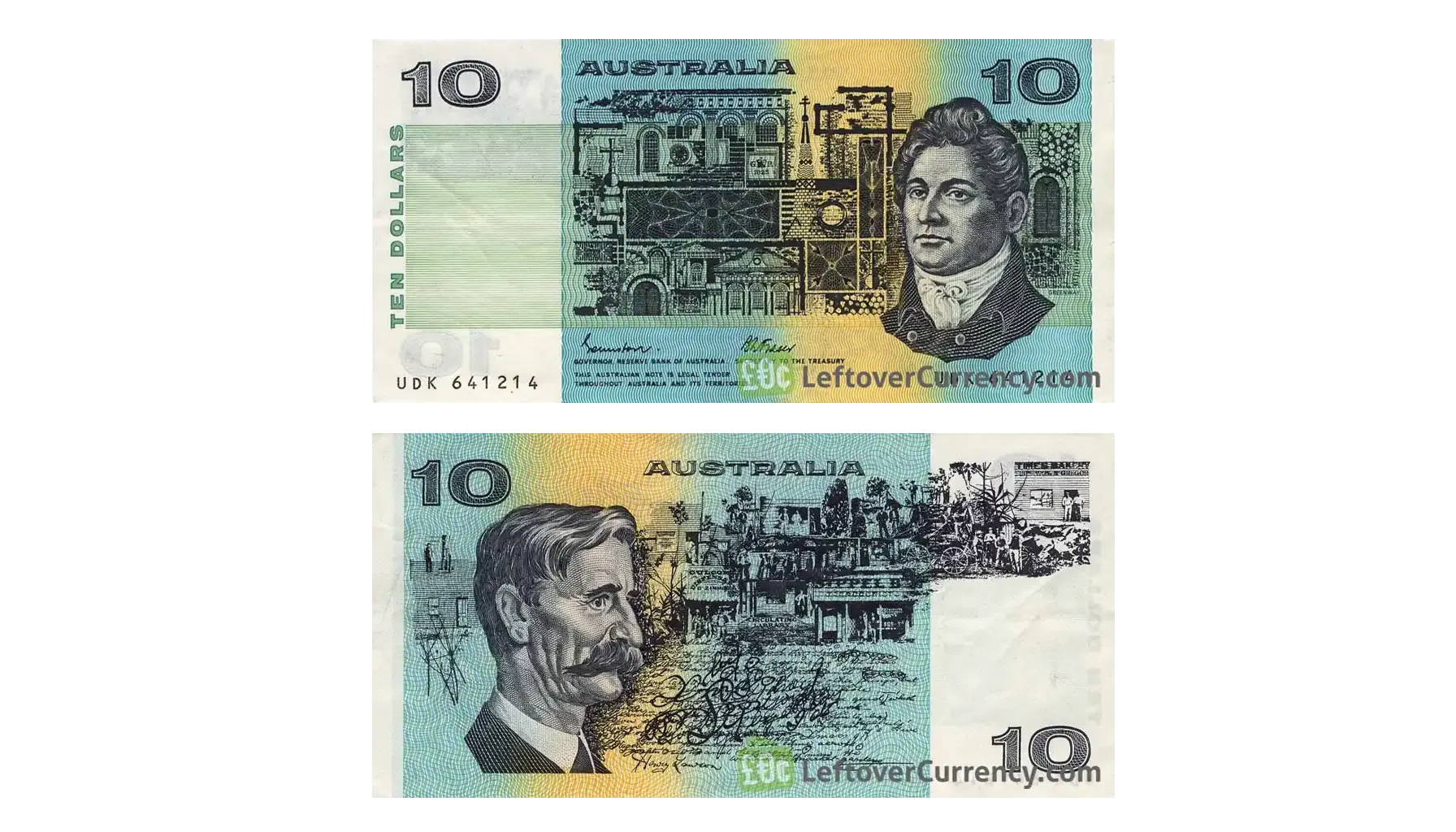
The first $10 note was issued in 1966 in Australia. Back then, the country was transitioning from the imperial system to decimal currency. This old 10 dollar note from Australia was made of paper back then, and it successfully replaced the £5 note.
This first paper $10, featured two important Australian figures:
Francis Greenway, explorer and architect, on the front. He designed and oversaw the building of many Sydney structures.
Henry Lawson, poet on the back. One of the first Australian poets.
These figures represented the creative and pioneering spirit of early colonial Australia.
The last development in the banknote happened in 2017, when the Reserve Bank of Australia (RBA) launched a security update for all banknotes except the 1 dollar note (which stayed largely the same).
Australian Aboriginal Influence in the 10 Dollar Note Design
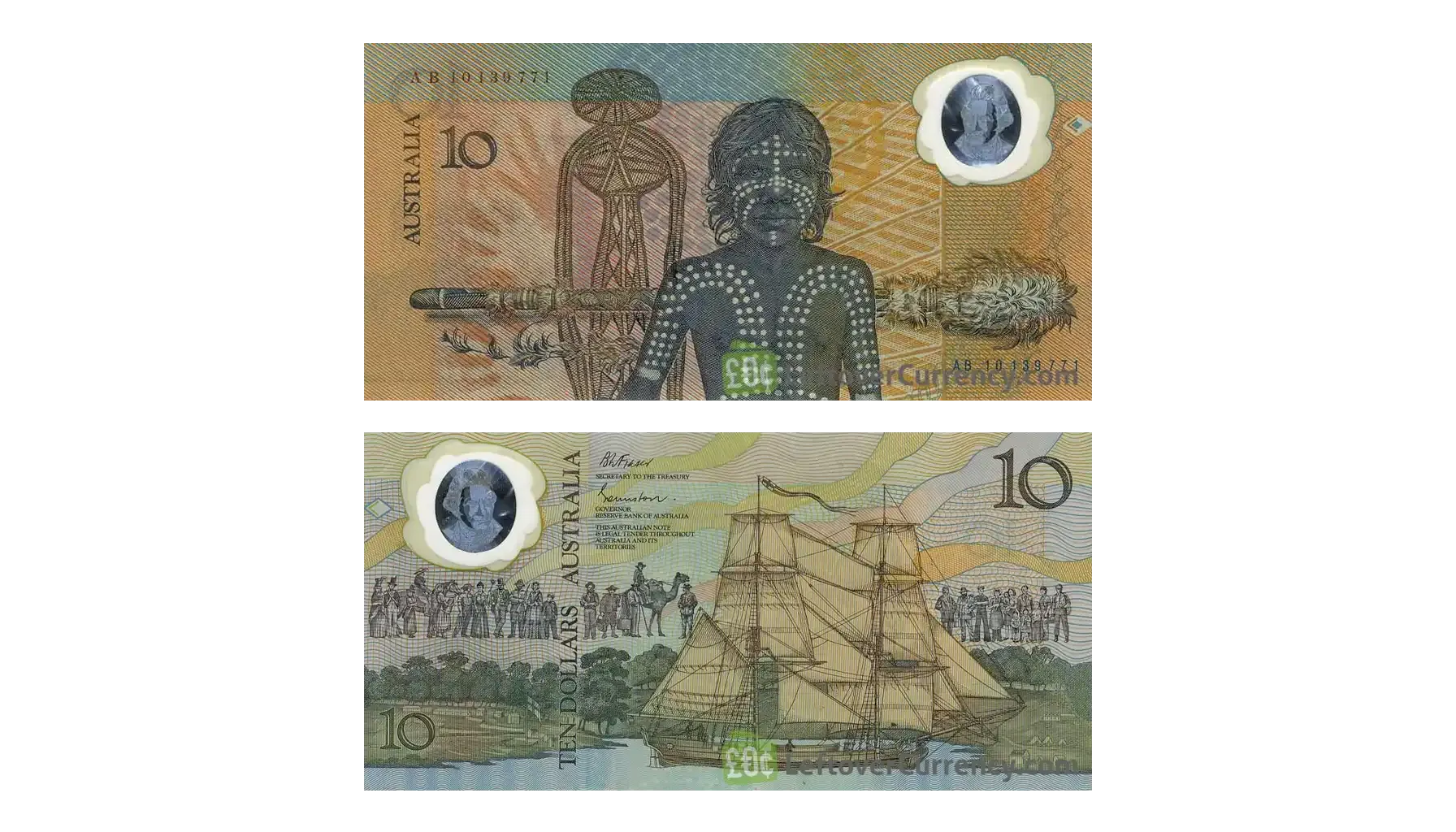
This dollar had multiple designs, and one of the commemorative editions had a design inspired by the native Australian people. Aborigens, as some might call them. Indigenous culture plays a subtle yet powerful role in most things about Australia.
The 1988 commemorative polymer note featured a special Indigenous design. The art was based on designs by Aboriginal artist David Malangi, whose work was also used on the earlier $1 note. This art style encapsulated themes of the Dreaming, connection to the land, and traditional law.
When this commemorative edition came out, many praised it as a landmark in recognising Aboriginal contributions to national identity.
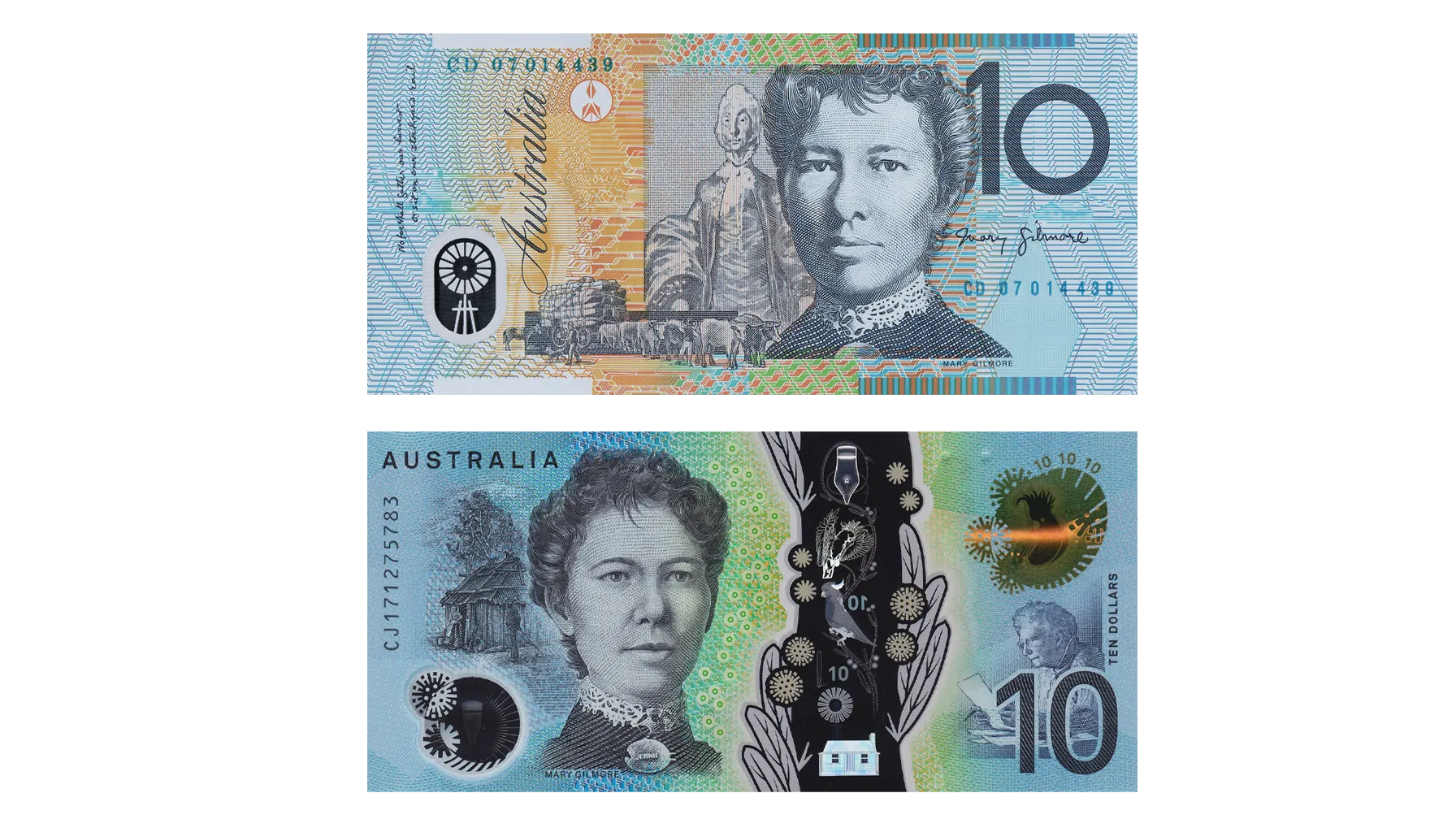
The current $10 polymer note still has some national callbacks, like background patterns inspired by traditional motifs and images of native Australian flora and fauna, such as the wattle and the lyrebird.
Security Features and the Move to Polymer
Australia made a big step, not just for its country, but for the world itself. Australia became the first country to introduce polymer banknotes and therefore revolutionised global currency production.
Before, as you know, dollars came almost always on paper. The move to polymer was driven by the need for more secure, durable, and environmentally sustainable money. Paper notes were prone to wear and damage. It was also easy to counterfeit them.
The need for progress and currency protection led the RBA and the Commonwealth Scientific and Industrial Research Organisation (CSIRO) to collaborate on the development of polymer technology.
The 1988 commemorative dollar was technically the first new polymer model, but by 1933, all other dollars had been updated. The new $10 note was now made of polymer and had security measures in its design, so no one could easily counterfeit the banknote.
A clear window with dynamic holographic elements, featuring flying birds that appear to move when the note is tilted.
Microprinting.
A rolling colour effect.
A raised ink for tactile identification.
This innovation has been widely adopted internationally, with many countries following Australia’s lead by introducing their own polymer-based currencies.
Collectible and Cultural Value of the $10 Note
Australian ten dollars made a long way from the 1966 paper to the modern polymer version. Through this dollar, we see how artistic and technical trends changed, and national identity formed.
Logically, through these many years, some banknotes have become especially valuable. The 10 dollar note Australian Aboriginal value is especially high because it was commemorative. And marked the dawn of a new era in currency technology.
Some of the highest auction sales:
Rank | Item auction name | Realised price (AUD) | Auction house / date |
1 | 1988 $10 polymer (Johnston/Fraser) — single banknote (lot) | AU$320 | Stamp Auctions Network (10 Nov 2022) |
2 | Australian $10 uncut polymer banknote sheet (error sheet) | AU$231 | Grays (6 Aug 2023) |
3 | Typical realised prices for circulated / UNC $10 notes (examples on marketplaces) | ~AU$10–$100+ (depends on possible errors and condition) | eBay (various dates) |
Most examples, of course, go for face value (3 rank). Some had errors, for example, the banknotes themselves were not separated during production (rank 2). Finally, dollars in excellent condition, especially from commemorative editions, are always pricy (rank 1).
Ten dollars might not be the biggest denomination, but they are useful and carry a piece of Australian heritage on them.

 Facebook
  X (Twitter)
  Pinterest
  LinkedIn