Contents:
The euro as a cash currency is built around banknotes used across the euro area under common rules. The logic of their distribution, design features, and renewal principles are important here.
If a coin comes into your possession without an obvious context—for example, outside the eurozone or from an older series—a foreign coin identifier can be used to quickly confirm its type, issue, and status before further examination.
What Are Euro Bills and Euro Banknotes?
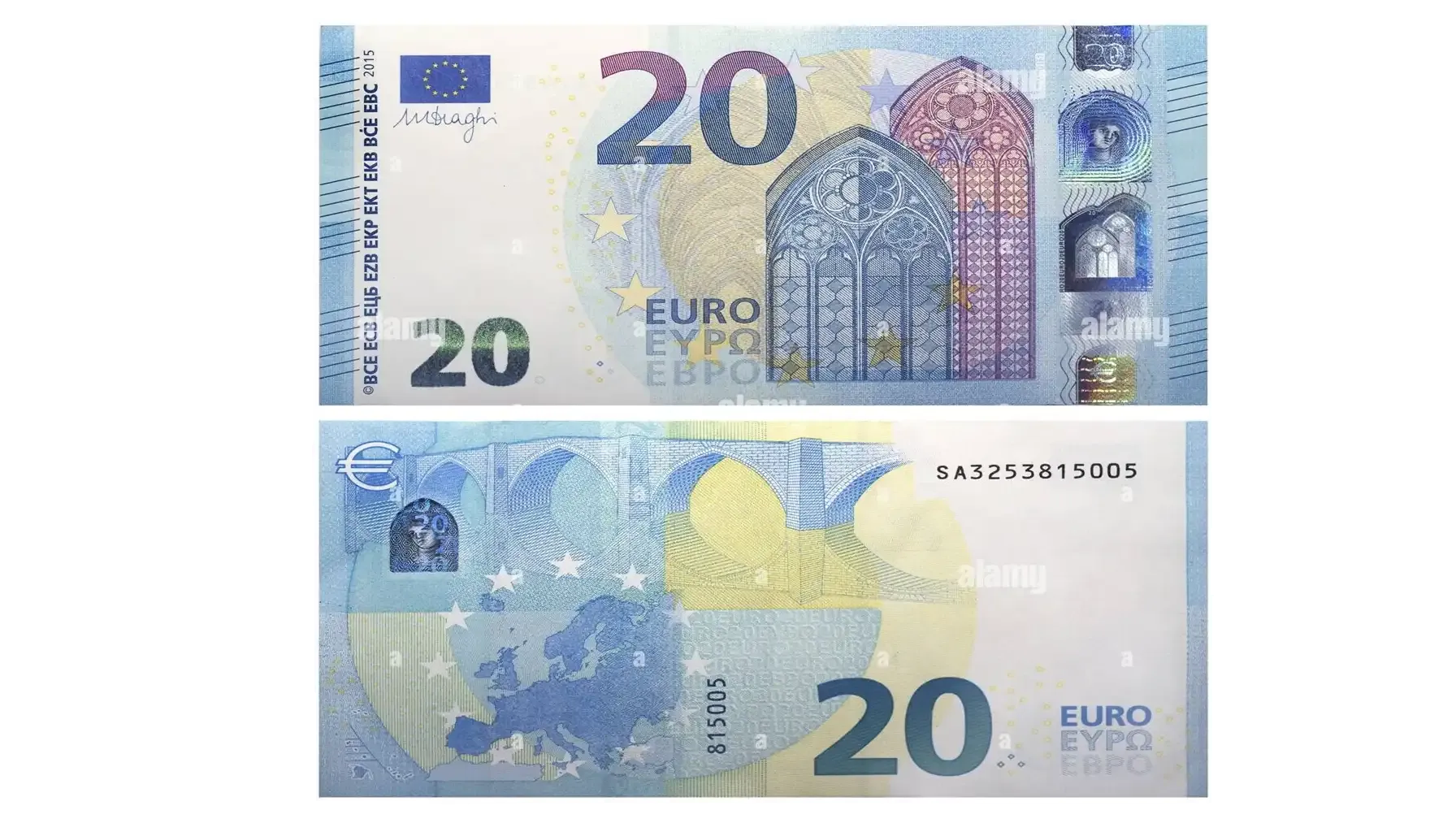
These are paper money units of the single eurozone currency, issued by the national central banks of the euro area. The terms bills and banknotes are used in parallel.
Each such note is legal tender throughout the entire monetary union, regardless of the country of issue. There are no national design variants for banknotes—this is a fundamental difference from coins. Serial numbers and letter codes only indicate which central bank was responsible for issuing a specific note.
In everyday speech, people often use the term euro bill when referring to an individual note rather than the system as a whole. In any case, it refers to the same class of cash, intended for medium and large transactions.
Euro Banknote Denominations List
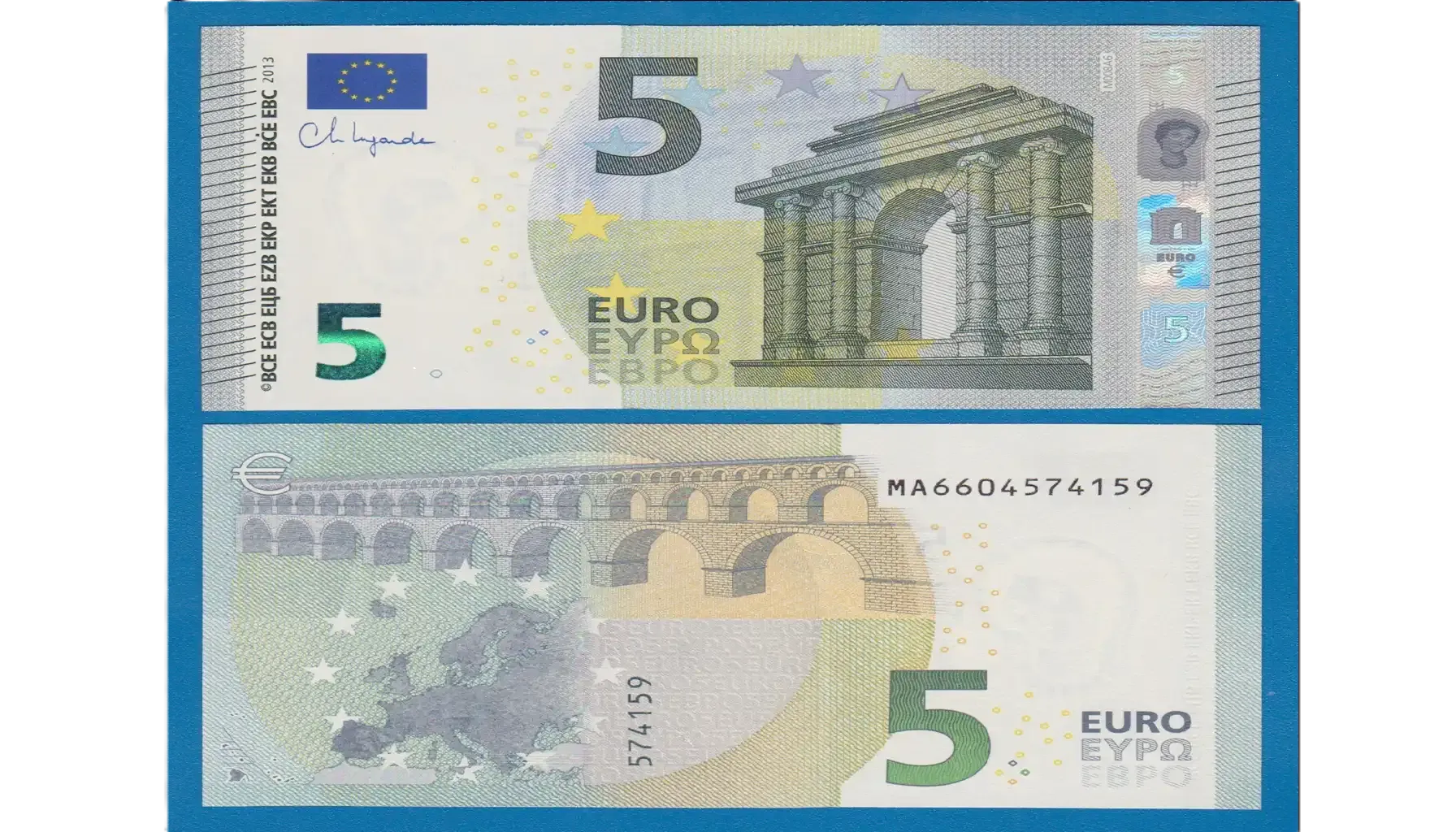
The euro banknotes’ denominations system was designed as a complete set without intermediate values. This reduces the number of exchange transactions and makes settlements predictable.
Euro bill denominations are free of unnecessary amounts that could complicate payments or the operation of vending machines.
For reference, it's useful to consider the basic parameters of banknotes:
Denomination | Size (mm) | Primary color |
€5 | 120 × 62 | gray |
€10 | 127 × 67 | red |
€20 | 133 × 72 | blue |
€50 | 140 × 77 | orange |
€100 | 147 × 82 | green |
€200 | 153 × 82 | yellow-brown |
€500 | 160 × 82 | purple |
All Euro Bills Currently in Circulation
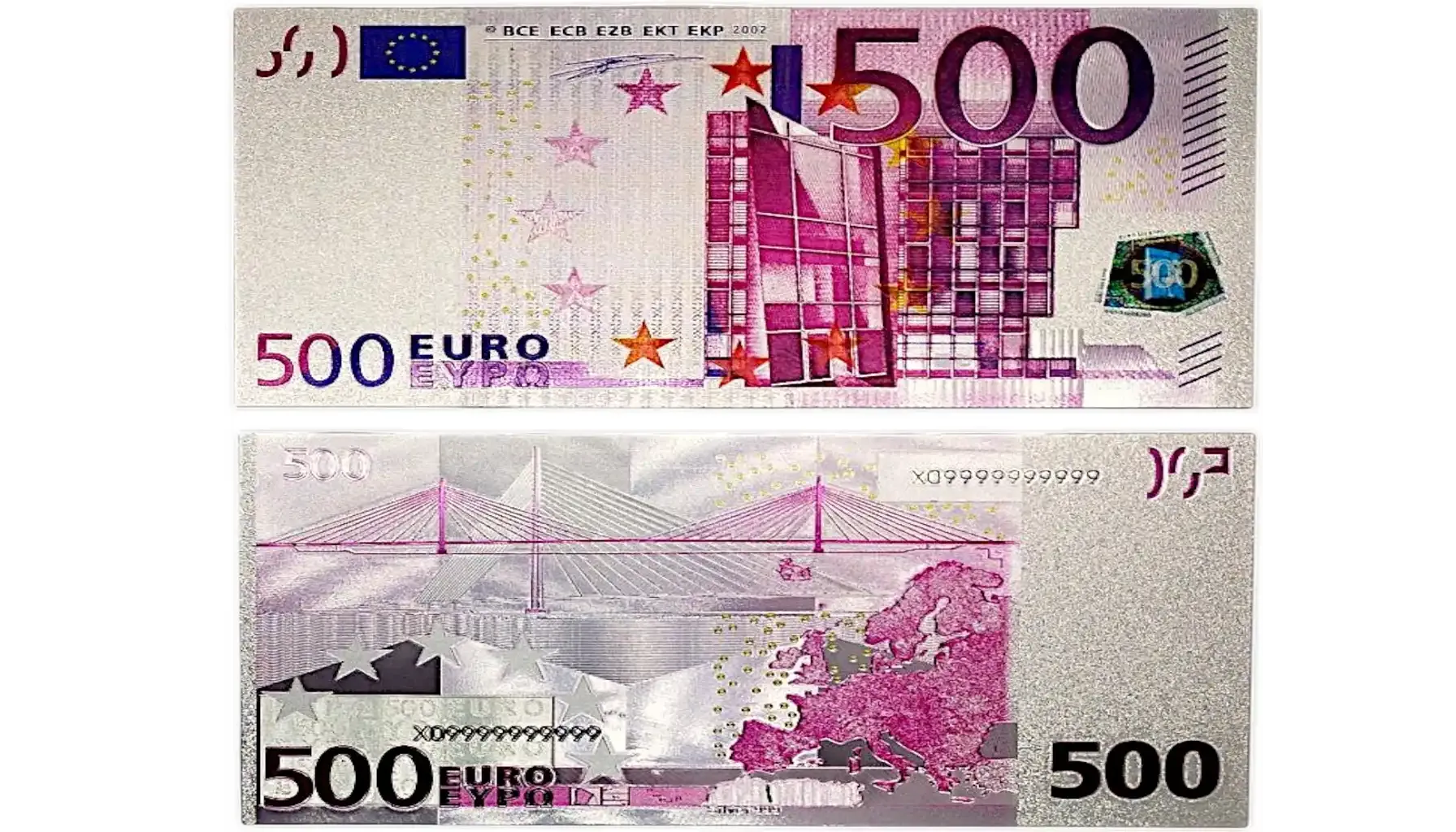
Today, the following are encountered in real circulation:
Banknotes of the first euro series;
Notes of the Europa series, which have gradually replaced earlier issues;
The 500 euro denomination, formally retained but no longer produced.
From the user’s perspective, all these euro paper bills are equal. They are accepted in retail, banks, and vending machines, provided their condition allows the denomination and authenticity to be identified.
Within circulation, euro money bills are distributed unevenly. By quantity, €20 and €50 notes make up the bulk. €100 and €200 notes are more concentrated in the banking and corporate segment. This reflects practical cash-use patterns.
How Euro Paper Money Works in Practice
At the level of everyday use, a euro paper bill remains part of a hybrid payment environment. Cashless methods are growing, but cash continues to serve as a reserve and universal instrument.
Key features of circulation:
Centralized regulation of cash volumes through the European Central Bank and national central banks;
Free movement of banknotes between eurozone countries without restrictions or mandatory exchange;
Use of banknotes in payments in accordance with the internal rules of retail and financial institutions;
Continuous sorting of notes by fitness for circulation within the banking system, not only by authenticity;
No expiration date for banknotes regardless of series or year of issue;
No link to citizenship, residency, or place of issuance when using cash;
Common exchange and withdrawal principles are applied by national central banks in line with ECB guidelines.
This is why the system continues to function predictably decades after its introduction.
Modern banknotes are designed with machine processing in mind. During sorting, parameters are used that are not obvious to humans: magnetic markers, infrared zones, and the precise placement of security elements. Banknotes are quickly checked for authenticity, denomination, and condition without manual counting.
New Euro Banknotes and Design Updates
The design update of euro banknotes took place in stages. The Europa series became a key step in the development of the cash euro. These notes were introduced by denomination, not all at once, in order to avoid abrupt changes in circulation.
Key features of new euro bills:
Improved readability of denominations;
Enhanced security elements;
Preservation of the overall architectural theme without reference to real-world structures.
As for the new euro banknotes 2025, the current structure remains unchanged. All updates so far have focused on security features and visual details rather than on the denominations themselves.
“The euro is the single currency of 330 million people and enjoys a high degree of confidence…”
— Jean Claude Trichet, former ECB President
Goodreads website
Special attention should be given to the banknote anatomy—the set of structural elements that make banknotes convenient to use in circulation. These include tactile marks, element orientation, and proportions. Such details were taken into account during design so that notes could be easily distinguished.
What Is the Largest Euro Bill?
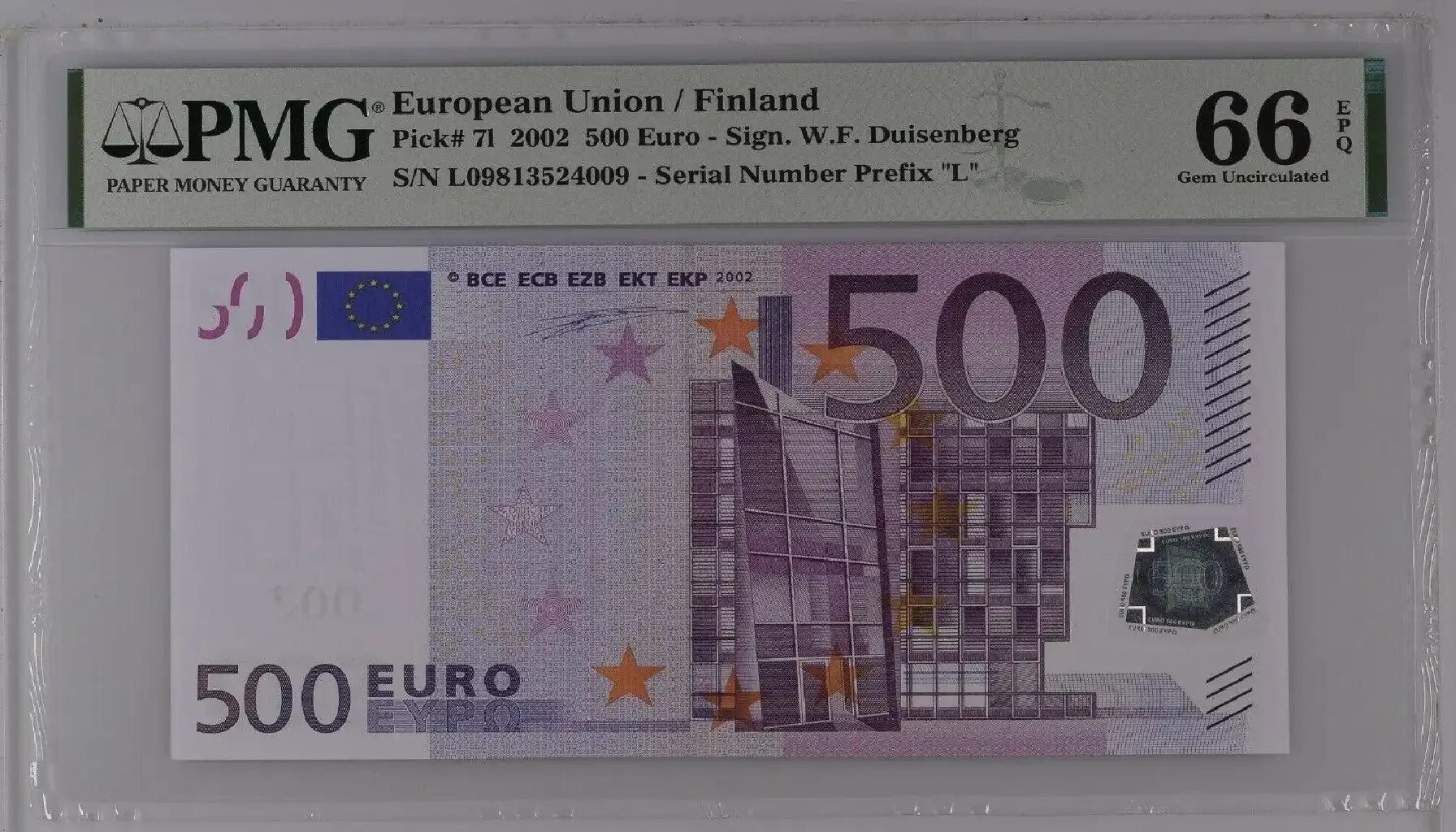
The biggest euro bill is €500. The note remains legal tender and can be used or exchanged through banks.
The reasons for discontinuing the printing of this denomination are linked to cash circulation control. Large notes are less involved in everyday payments and are more often used as a store of value.
From a practical standpoint, such a denomination is convenient for transporting large sums, but it is accepted reluctantly in retail trade. This is due to financial control requirements and internal business policies.
The absence of denominations above €200 in current issuance does not mean a reduced role for cash. On the contrary, euro currency bills are adapted to real-world use: mid-range denominations cover most transactions, while higher values remain a supporting instrument.
Practical Notes for Users and Collectors
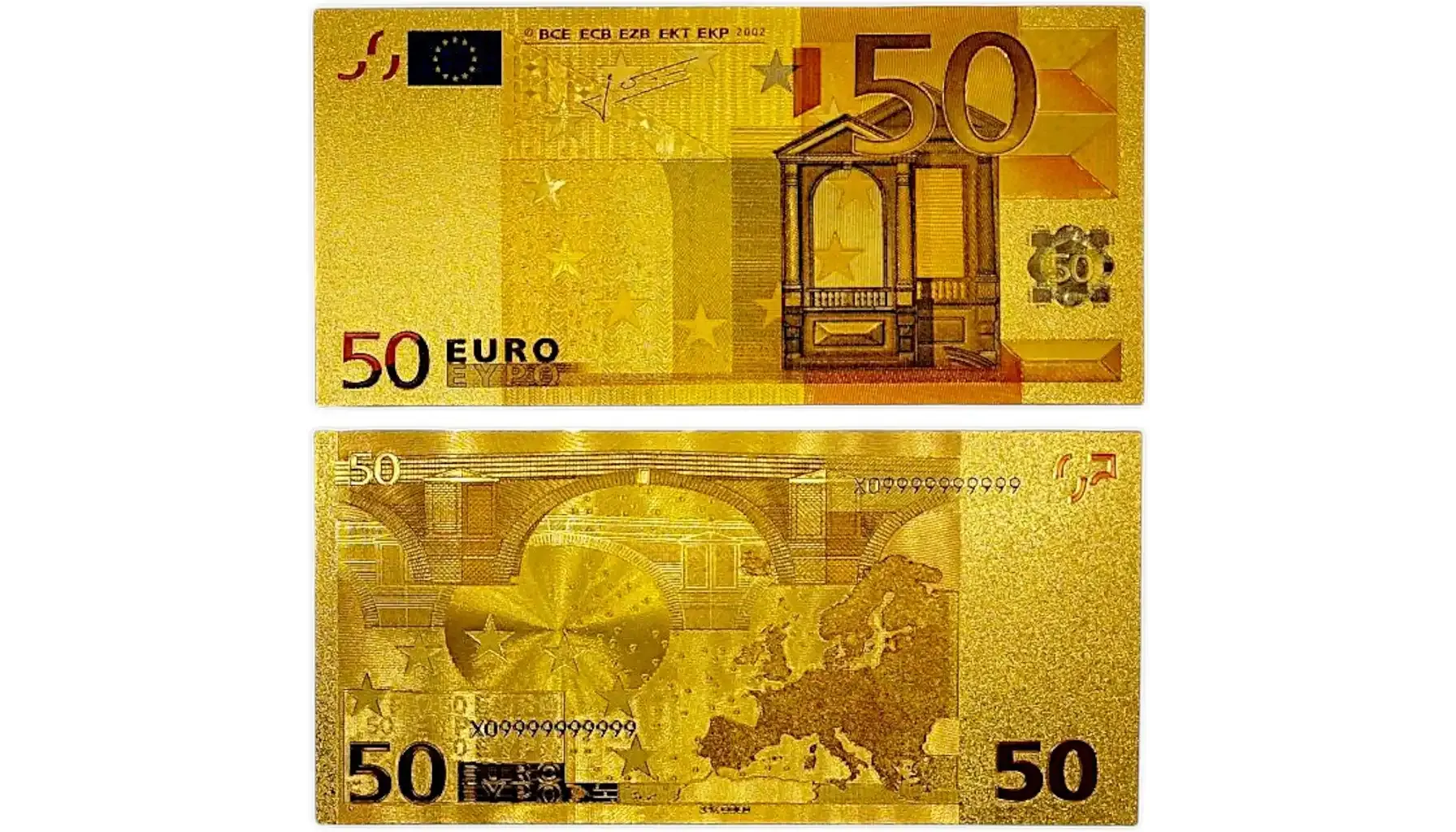
For everyday users, convenience and authenticity matter most. For collectors, condition, series, and rare deviations are key. In both cases, it is useful to be aware of paper money errors:
Misaligned printing, where design elements extend beyond standard margins or appear asymmetrical;
Incomplete printing, when certain colors, numbers, or image fragments are missing;
Double printing, visible through repeated lines or blurred details;
Numbering errors, including missing, inverted, or duplicated serial numbers;
Defects in security features, such as incorrect placement of the security thread or watermark;
Paper defects related to manufacturing flaws rather than wear from circulation.
For quick checks of euro denominations bills, Coin ID Scanner is the easiest option. You can upload an image from your gallery or take a photo instantly, then the app compares the banknote with its database and returns the relevant parameters without additional steps involved afterward.
As a result, an issue profile opens with information on the year, country, size, type, and estimated value.
Sometimes attention shifts not to banknotes but to coins, such as 10 euro cents, which are often used alongside bills in everyday payments. Understanding the entire cash structure helps with better orientation in daily situations.

 Facebook
  X (Twitter)
  Pinterest
  LinkedIn