Contents:
In all euro coins, the one cent remains the lowest denomination, but not the least. Let’s give it an overview.
Collectors need help from time to time. A free coin app can help a collector with coin identification and trading.
What Is the 1 Euro Cent Coin?
Among all euro bits, the 1 cent euro coin is the smallest-denomination, valued at €0.01.
The euro 1 cent coin was introduced in 2002 alongside the rest of the euro denominations. Cent might be small, but it is used more often than you’d think. When we go shopping, we often see deals with €0.99 style pricing. That’s when we need the cent. It might be small, but it’s vital for the Eurozone.
“The euro is our money, our European currency, and it is a concrete symbol of success that our citizens carry.”
— Charles Michel
European Council Press Release
Design and Symbolism of the 1 Cent Coin
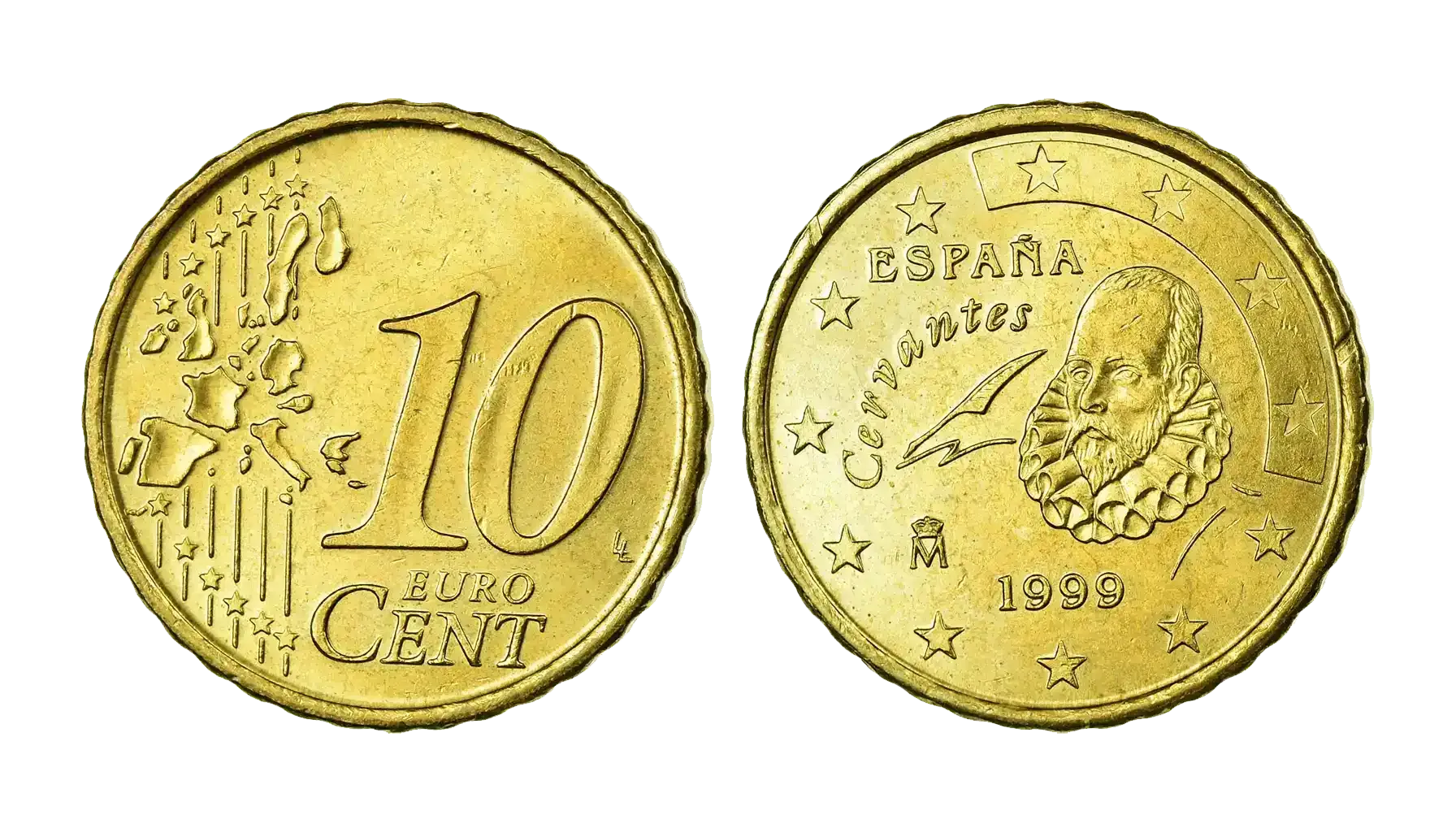
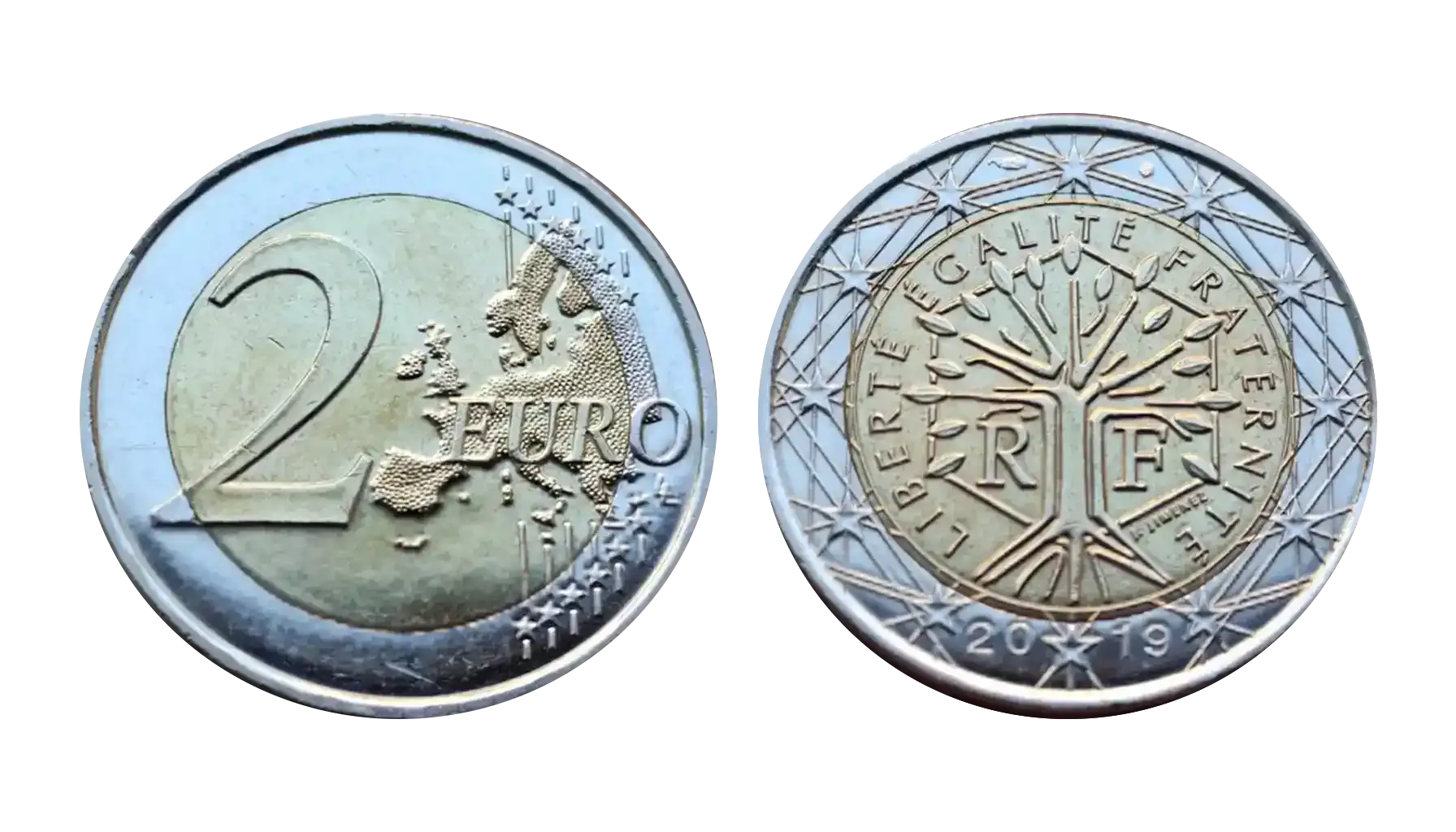
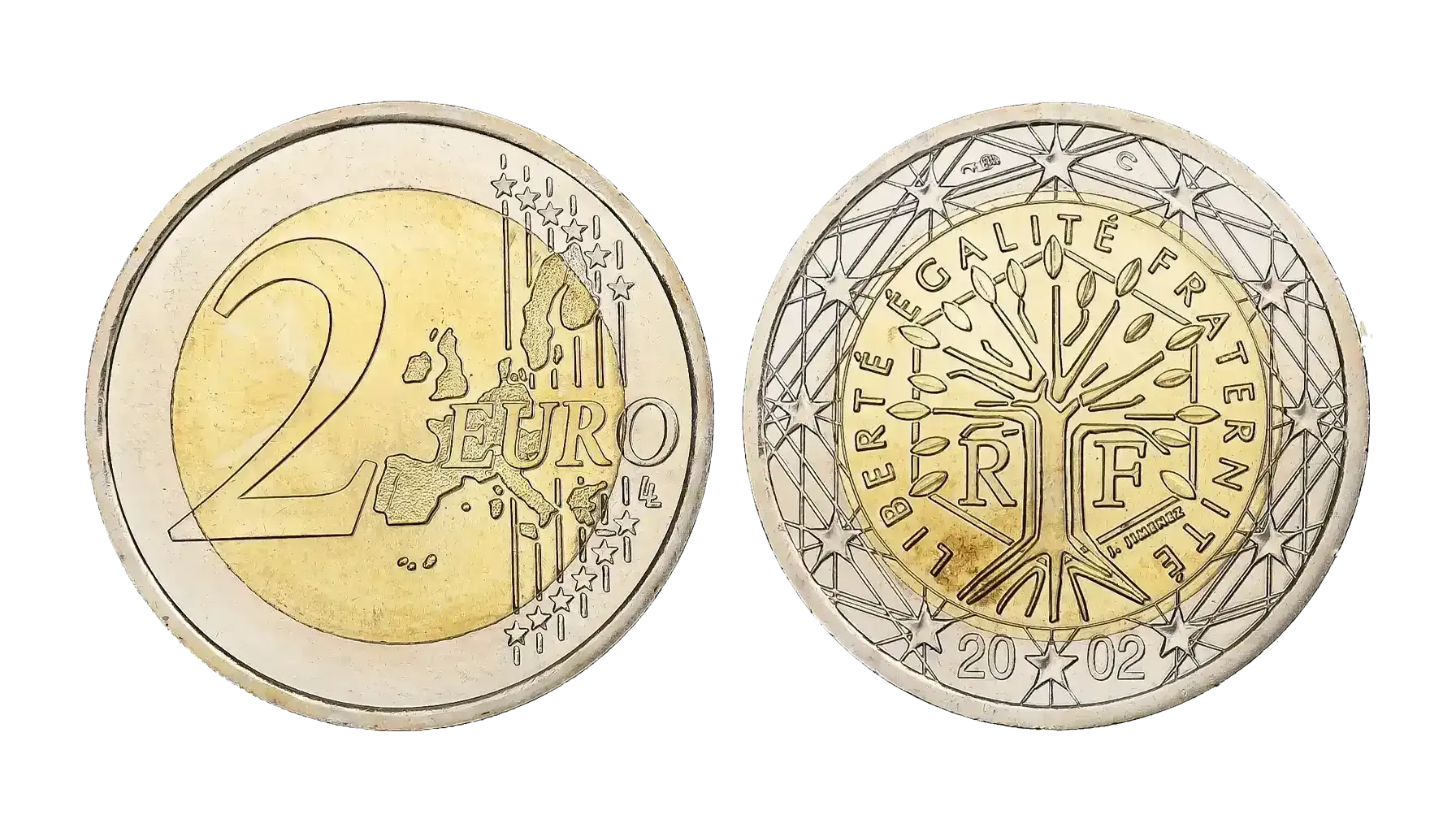
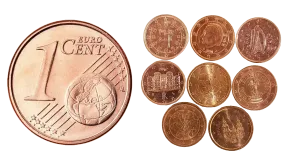
Like other euros (e.g., the 2 euro), the cent has a single obverse design across many issues, but also a unique reverse depending on the minting country.
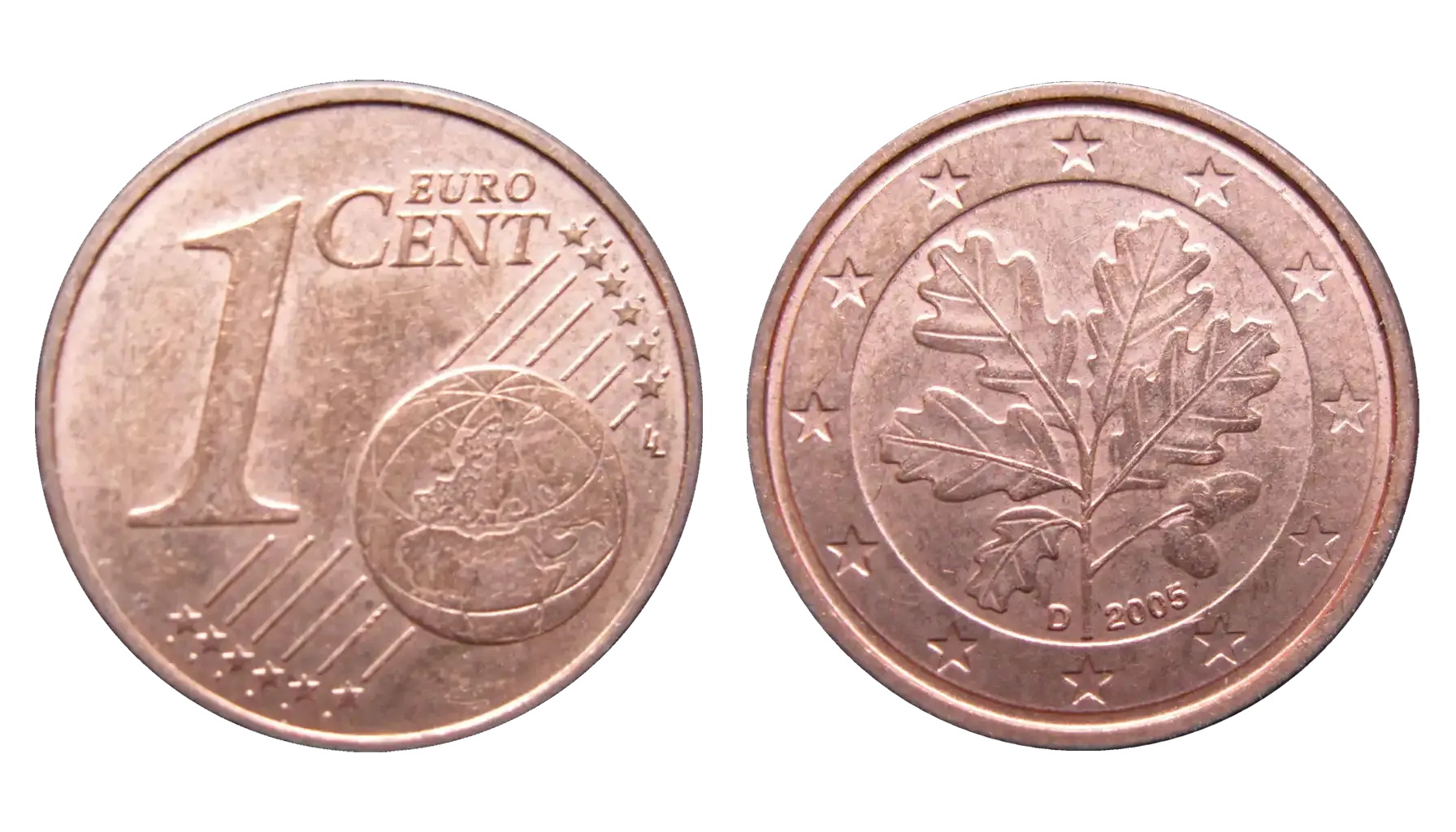
The obverse, designed by Luc Luycx, shows a globe (highlighting the European outline). Six diagonal lines spread from the globe and disperse into twelve stars (the same that appear on the EU flag). Finally, above, you will see the denomination “1 Euro Cent”.
This design highlights unity and European origin. It might be a symbol, but the coin still conveys a message.
National Variants Across Eurozone Countries
Each Eurozone country and microstate issues euros with a special reverse design:
Country | 1-Cent Reverse Design |
Austria | Alpine gentian flower |
Belgium | King’s portrait (currently King Philippe) |
Cyprus | Mouflon sheep |
Estonia | Map outline of Estonia |
Finland | Finnish heraldic lion |
France | Young Marianne, symbol of the French Republic |
Germany | Oak twig (inspired by traditional pfennig coins) |
Greece | Greek cargo ship |
The list could go for miles. Each Eurozone country did its best to make a unique design honouring its country.
Collectible Years, Mint Marks & Errors
In most cases, the 1 cent euro coin value is very low. This denomination is naturally low in value, widespread, and made out of common metals.
However, certain issues are worth a higher price:
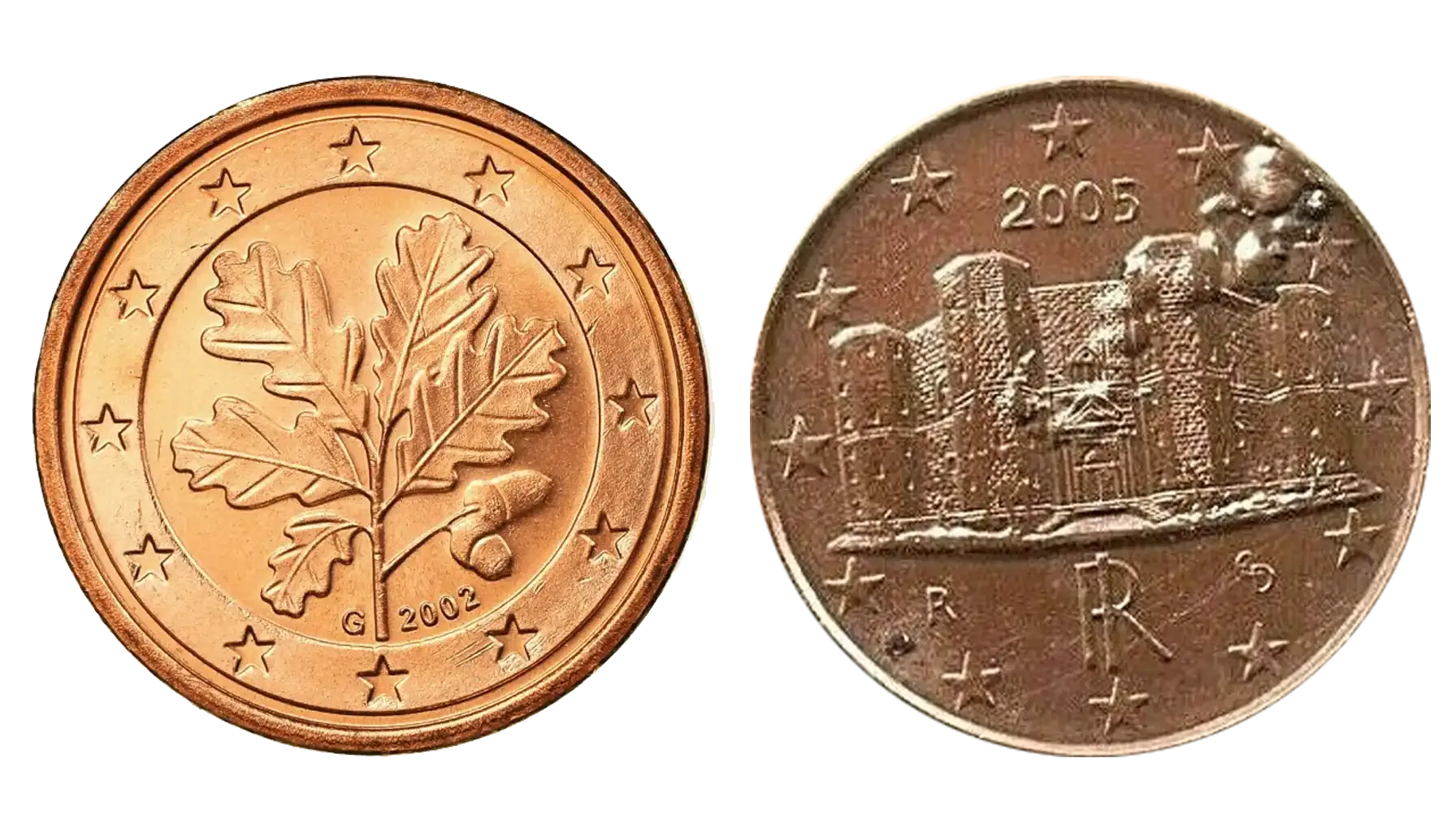
Collectible years. Some years of issue had limited mintages and became rare:
First year of issue (2002) from smaller countries.
Years with significantly reduced mintages (e.g., commemorative coins).
Mint marks. Mint marks identify the minting location:
Each country has its own mint mark system. Germany has A, D, F, G, J marks from five different Mints. Finland has only one mint mark.
Collectors are interested in rare mint marks that have a low mintage.
Error coins. Error 1-cent coins can be extremely valuable.
Off-center strikes, broadstrikes, and clipped planchets are relatively rare.
Wrong planchets and double die errors are extremely rare and valuable.
Errors and collectible years are worth about €10+ ($11). Common cents, however, are worth face value.
How to Identify Valuable 1 Cent Coins
Now, how do you find these valuable cents?
Look at the year: Low-mintage or first-issue years are collectible. If you see the year “2002”, take this coin into consideration.
Check the country and mint mark: Some national variants are scarcer. Vatican cents have an “R” mint mark, and they are rare.
Examine the bit for errors: Use a magnifier and inspect the letter, stamps, and metal colour. Any differences could be a sign of an error.
Conclusion
Without cents, we wouldn’t have euros. This denomination might be small, but in the grand scheme of things, it’s anything but small.
The Coin ID Scanner app can scan and identify cents and other denominations from all over the world.

 Facebook
  X (Twitter)
  Pinterest
  LinkedIn