Contents:
The pfennig is one of the oldest and most recognizable small coins in German monetary history. It appeared in the early Middle Ages as a simple silver piece and remained in use, in different forms, for many centuries.
For a long time, Germany was not a single country but a collection of many states and cities. Each issued its own ones, which differed in weight, appearance, and metal.
To study the pfennig is to follow how ordinary people handled money over centuries along with identifying foreign coins. Museum numismatic collections and historical mint records show how this small coin adapted to changing economies, ideologies, and governments.
What Is Pfennig?
It was a small-denomination coin used across German territories for many centuries. It served as the basic unit of everyday currency long before Germany became a unified nation and remained in use until the euro was introduced in 2002.
“The pfennig was a humble coin, yet it carried emotional weight for generations of Germans.”
— The New York Times
Article “Farewell to the Pfennig”, January 1, 2002
First appeared in the early Middle Ages as a small silver coin used for daily trade.
After German unification in 1871, it became the official subdivision of the mark: 100 pfennigs = 1 mark.
Materials over time were changing
Unlike larger gold or silver coins that signified wealth or state power, this piece reflected daily life—market prices, wages, and small purchases. It was the coin of ordinary exchange.
Period / Type | Years | Metal | Weight | Diameter |
1 Pfennig (German Empire) | 1873–1916 | Bronze | ~2.0 g | 17 mm |
2 Pfennig (German Empire) | 1873–1916 | Bronze | ~3.0 g | 19 mm |
1 Pfennig (Weimar Republic) | 1916–1922 | Iron / Zinc | ~2.0–2.5 g | 17 mm |
1 Pfennig (Nazi Era) | 1936–1940 | Bronze | ~2.0 g | 17 mm |
1 Pfennig (Nazi Wartime) | 1940–1945 | Zinc | ~1.9 g | 17 mm |
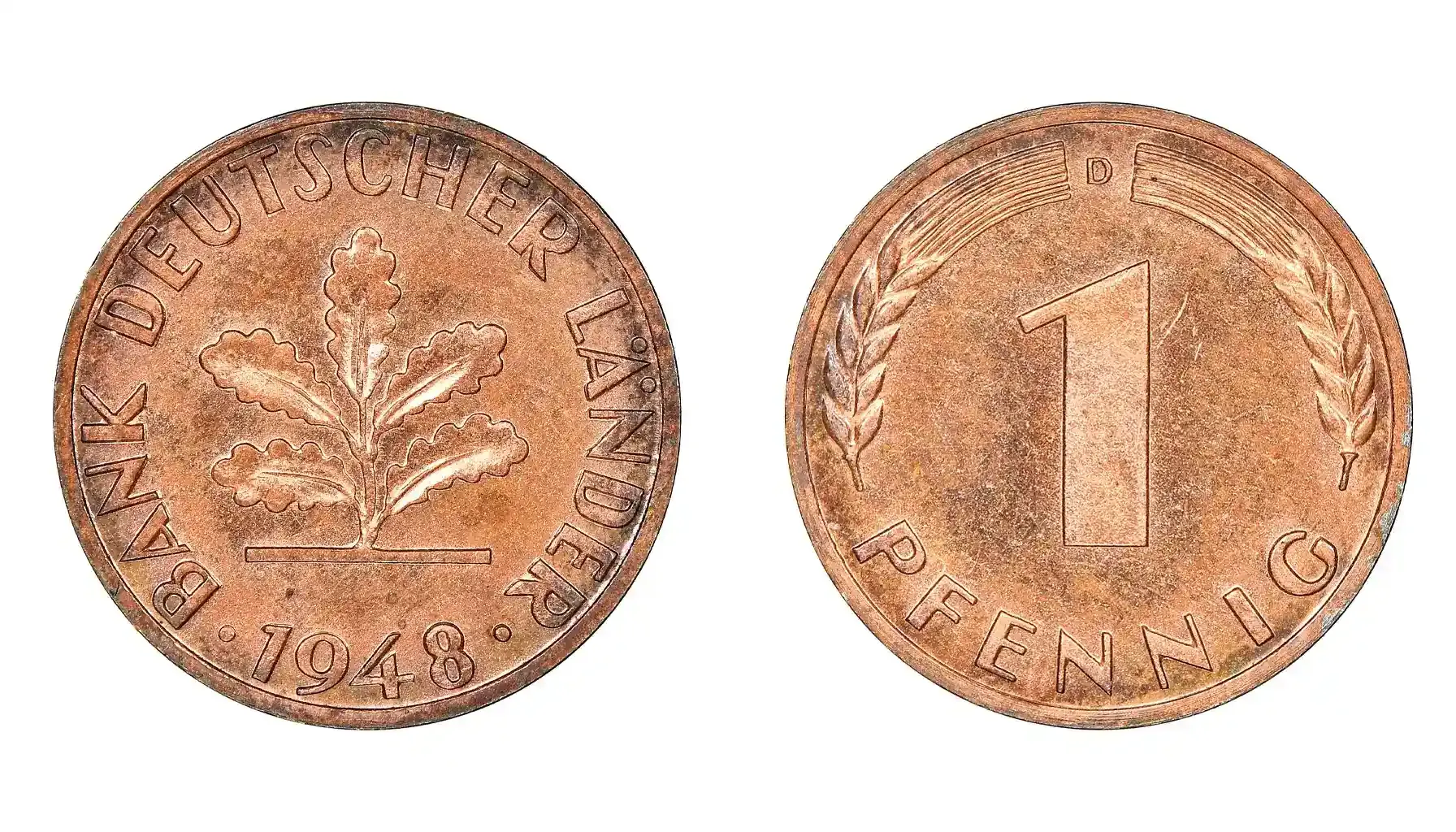
1 Pfennig (West Germany, FRG) | 1948–2001 | Copper-plated steel | ~1.96 g | 16.5 mm |
1 Pfennig (East Germany, GDR) | 1948–1990 | Aluminum | ~1.0 g | 17 mm |
History of the Pfennig Coin
Early Origins (8th–15th Century)
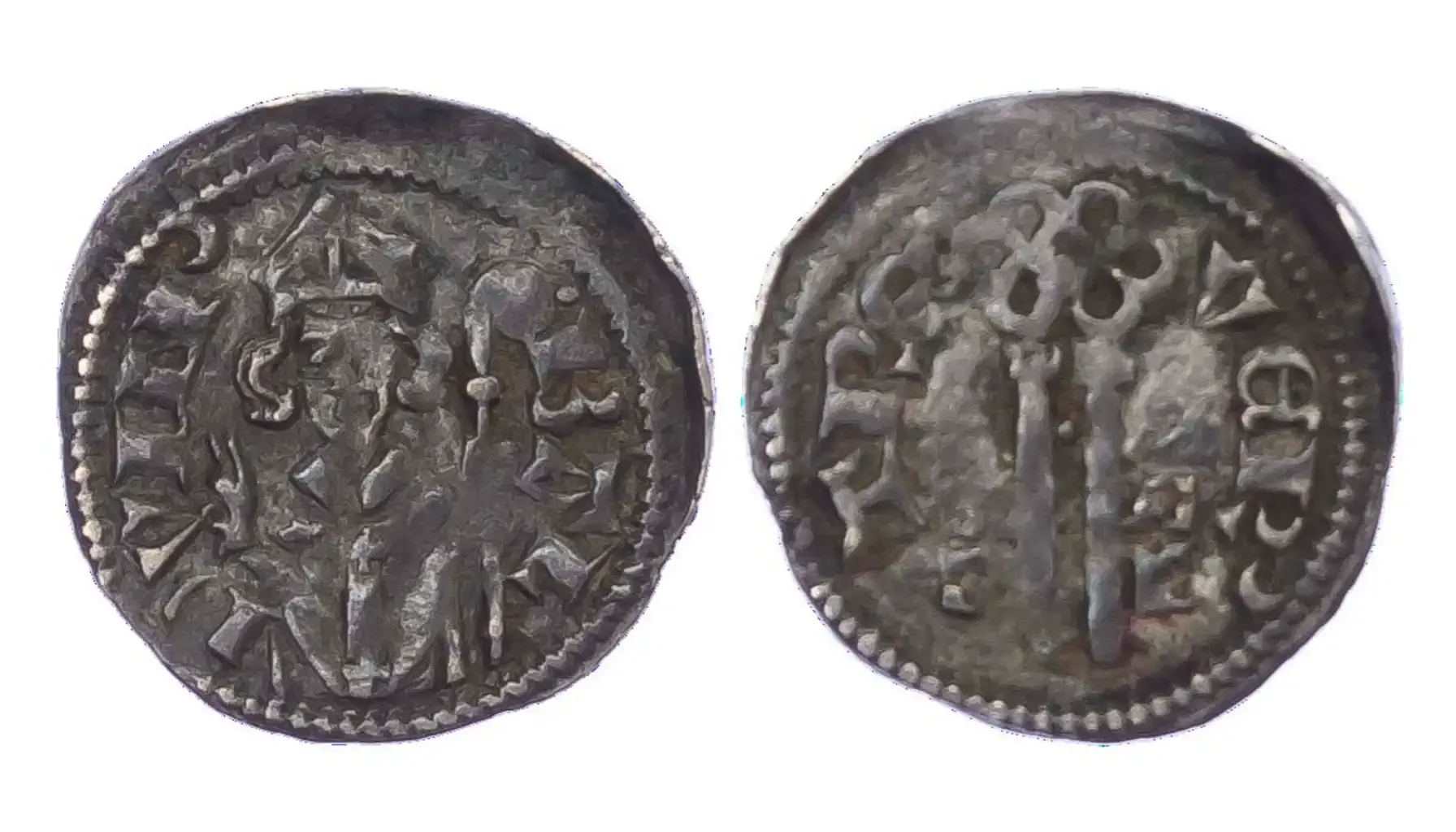
Everything began in the early Middle Ages as a small silver item that was used in many German-speaking regions.
There was no unified German state then. Different rulers issued their own versions. Yes, there were local differences, but anyway it was the main everyday coin for buying basic goods and paying wages.
Regional Variations (16th–18th Century)
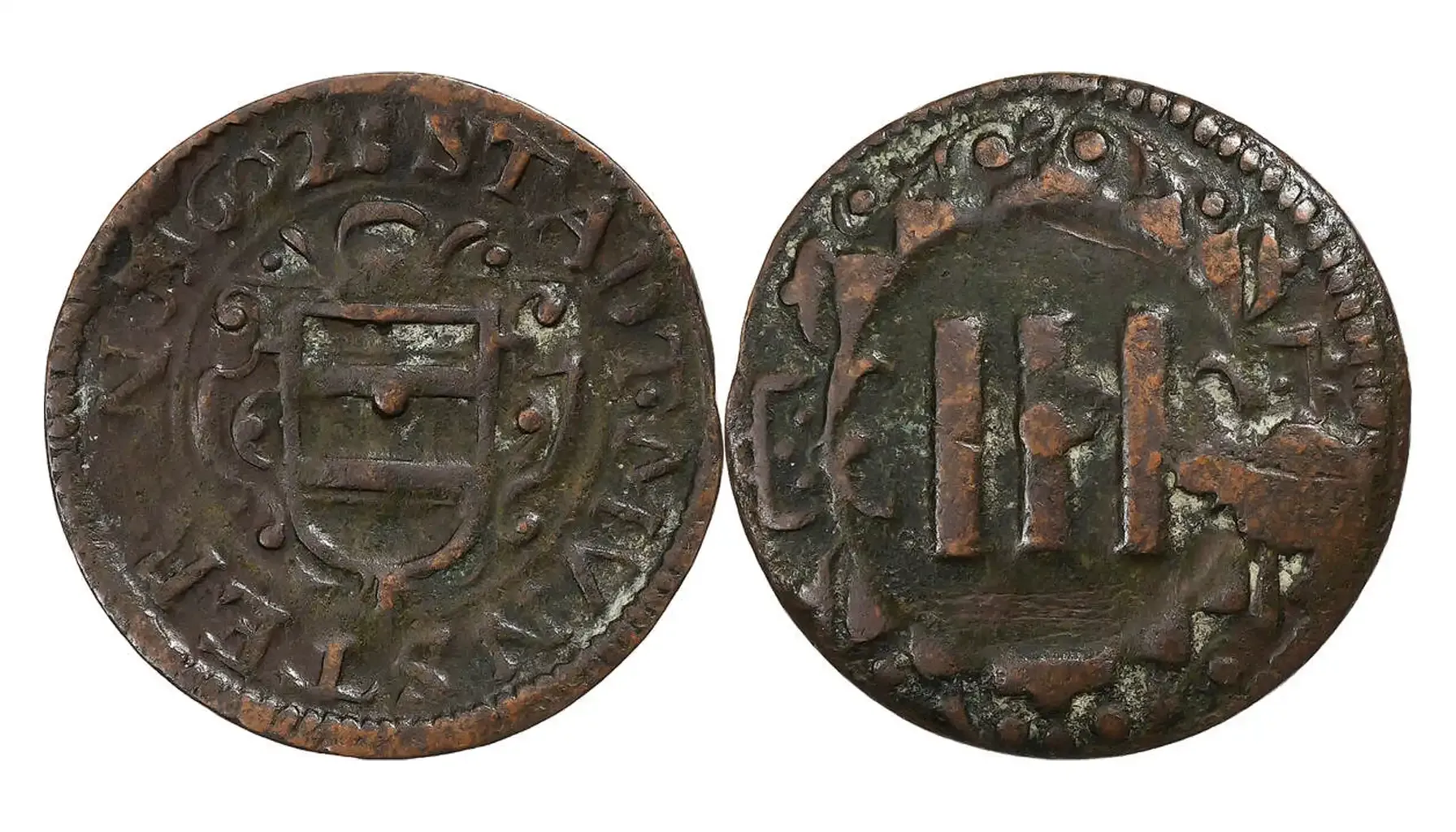
Trade grew and larger coins came into use. The money stayed the smallest unit of currency.
Each region minted its own specimens with different weights and designs. Their purpose stayed the same: they were the practical coins used in daily market transactions and payments.
Unification and Standardization (1871–1918)
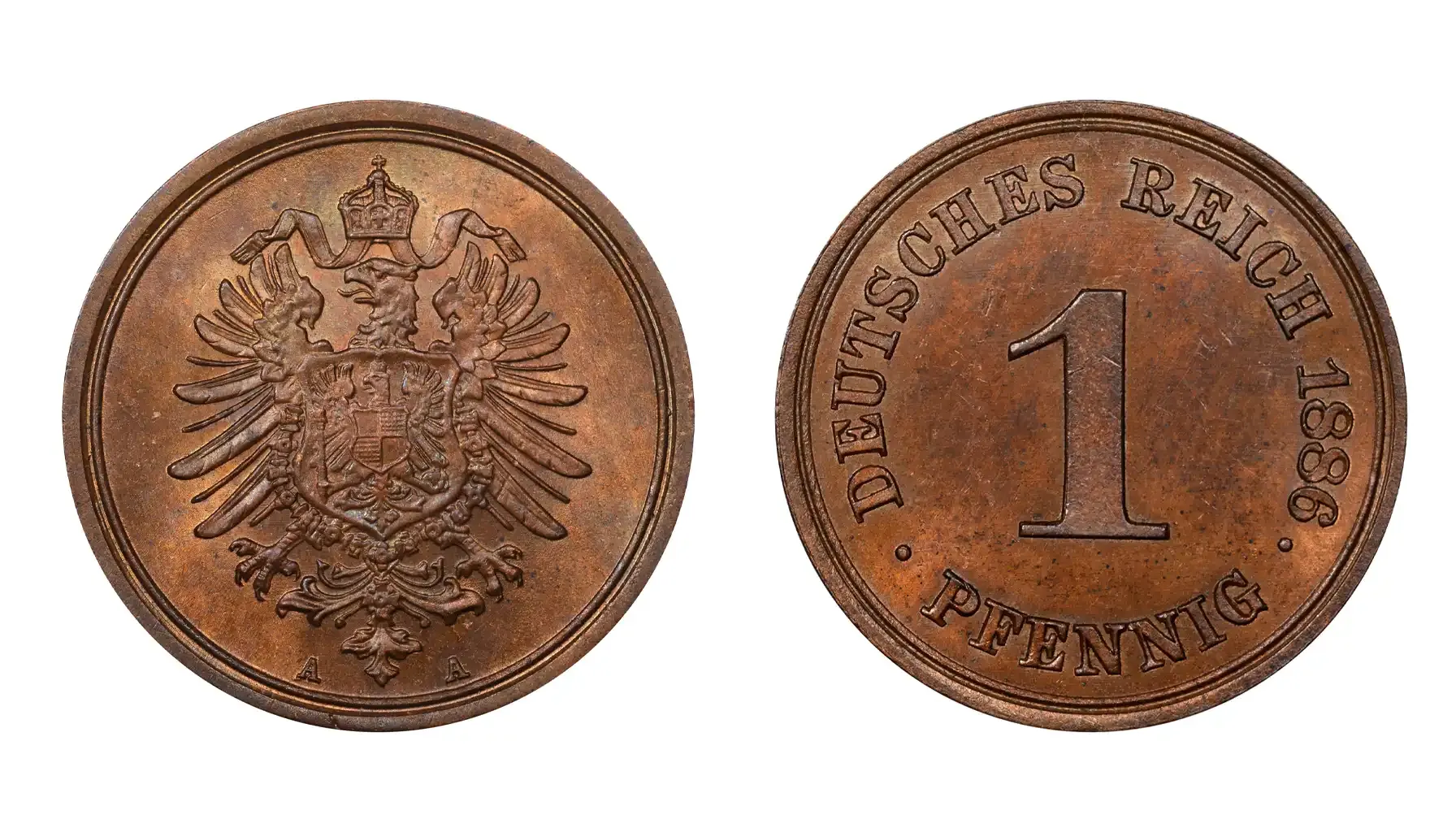
In 1871 Germany was unified. The pfennig became the official subdivision of the mark:
100 pfennigs = 1 mark
This was the end of centuries of regional differences. The money piece now had a single national standard with consistent size, metal, and value across the country.
World Wars and Material Changes (1914–1945)
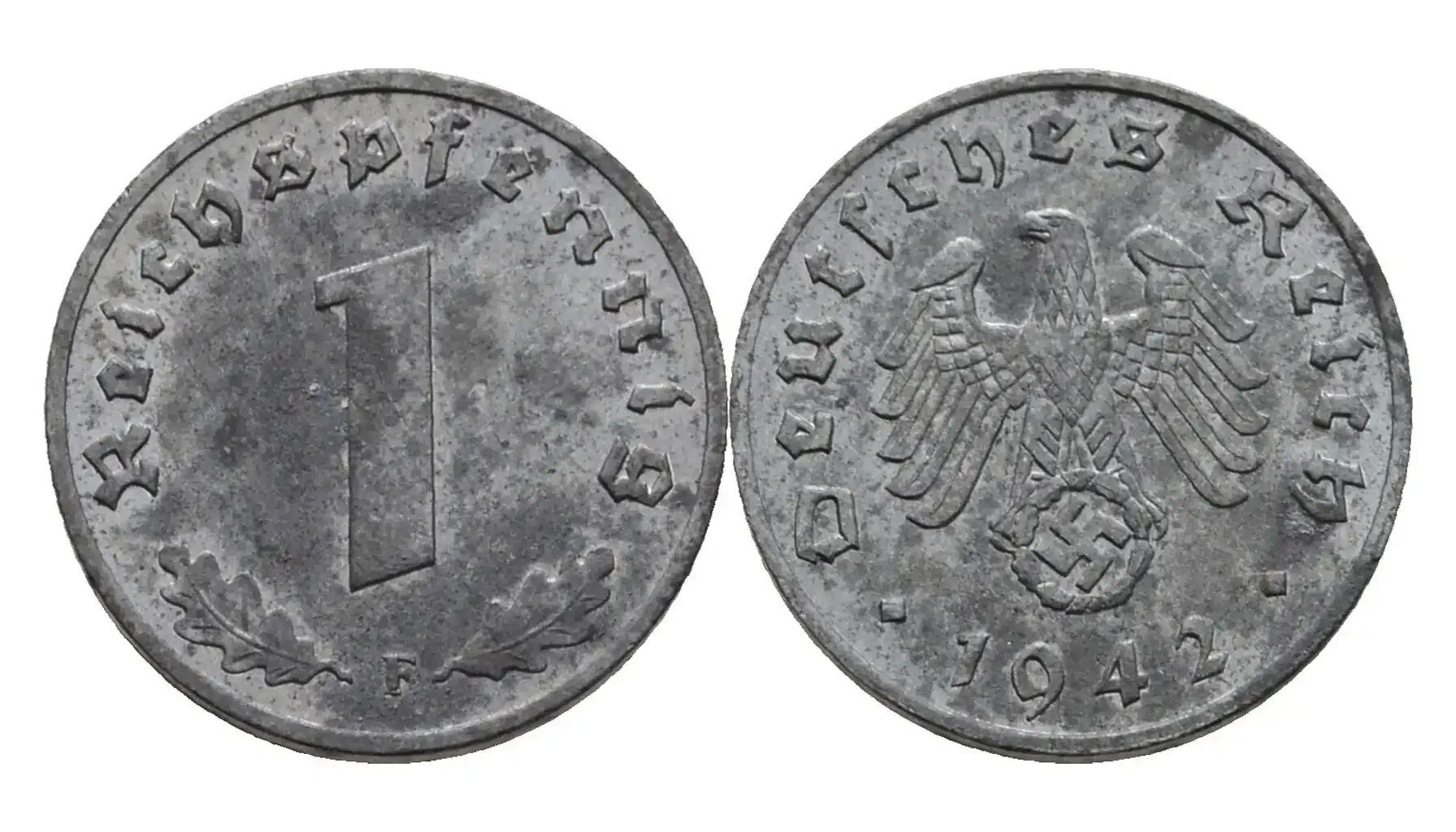
The First and Second World Wars brought shortages of bronze and copper. So, pfennigs were made from iron and zinc. Their designs also changed with each government.
Post-War Division and Later Use (1948–2001)
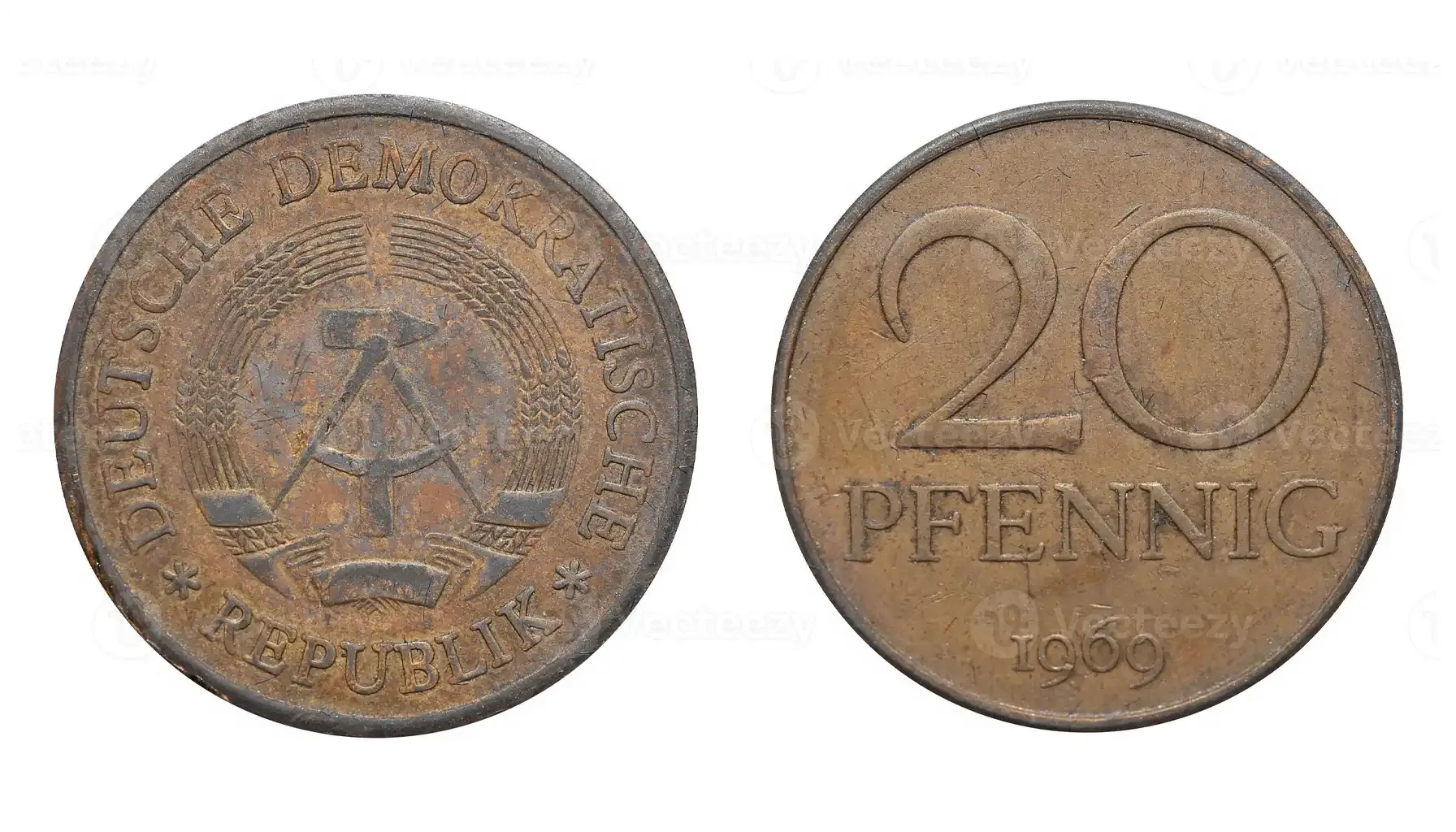
After 1945, Germany split into East and West, and each issued its own money.
West Germany: copper-plated steel pieces with the familiar oak sprig.
East Germany: lighter aluminum ones with a simpler state emblem.
Even in a divided country, the pfennig continued to be the basic unit of everyday currency.
End of Circulation (2002)
Germany adopted the euro in 2002. So, the pfennig was withdrawn. After more than a thousand years of continuous use in various forms, it left everyday commerce but remains an important part of German monetary history.
Pfennig Coin Values
Coin Type | Metal | Condition Example | Approx. Value |
West Germany (1948–2001), 1 & 2 Pfennig coin value | Copper-plated steel | Circulated | $0.05–$0.50 |
East Germany (1950s–1980s), Aluminum | Aluminum | Circulated | $0.10–$0.40 |
Wartime (1939–1945) | Zinc | Worn / Corroded | $0.50–$3 |
Wartime (1939–1945) | Zinc | Clear detail, minimal corrosion | $5–$30 |
Weimar Bronze (1919–1933) | Bronze | Circulated | $0.50–$2 |
German Empire (1871–1918) | Bronze / Copper-Nickel | Fine–Very Fine | $3–$15 |
German Empire | Bronze / Copper-Nickel | Uncirculated | $20–$120+ |
Medieval Regional | Silver | Identifiable inscriptions | $40–$300+ |
Free Imperial City or Bishopric | Silver | Well-preserved | $80–$600+ |
Pfennig Multiples (Silver or Gold) | Silver / Gold | Strong preservation | $150–$1,000+ |
1, 2, 5, 10, and 50 Pfennig Coin Overview
1 Pfennig
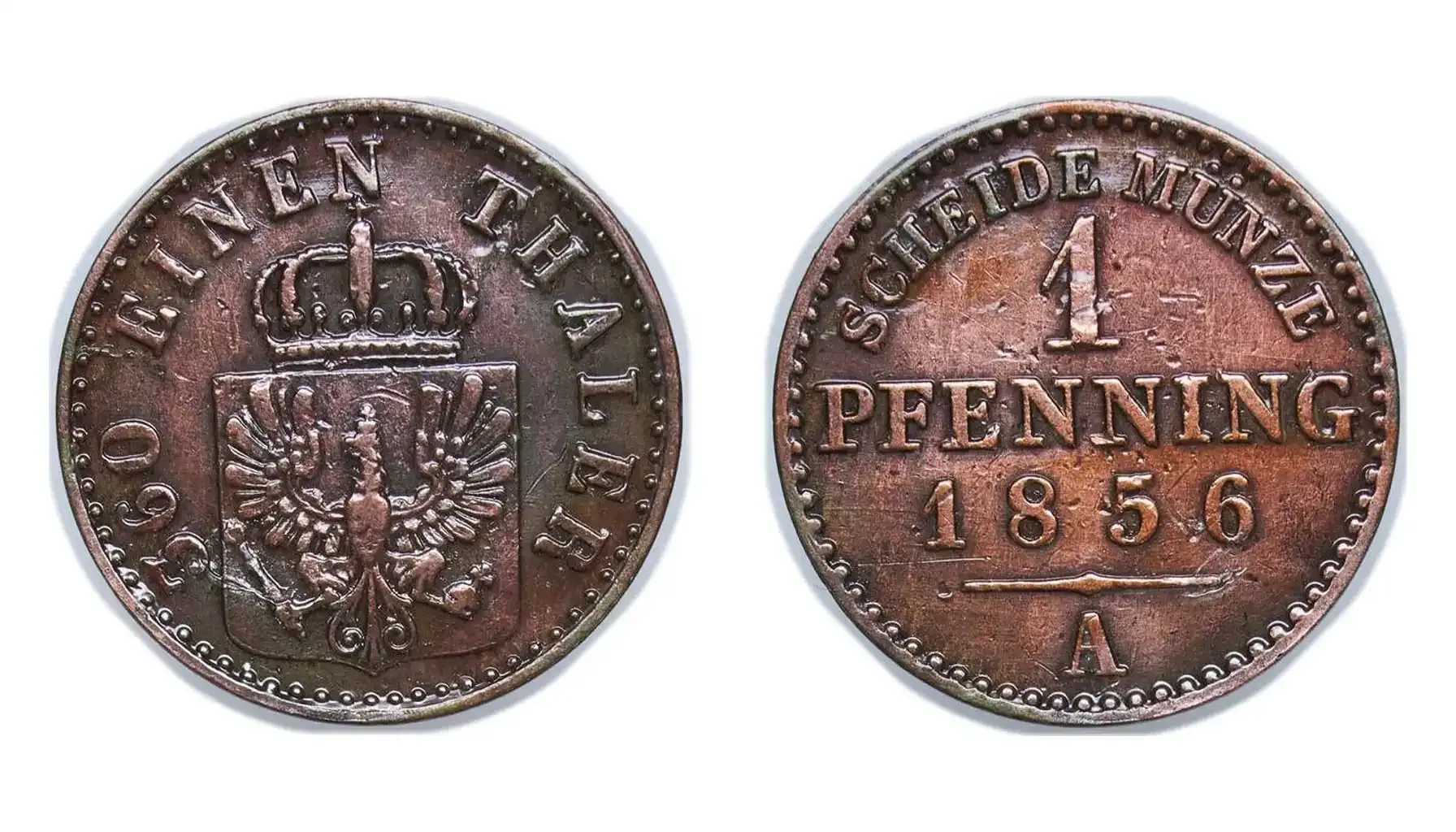
It was the smallest coin in circulation.
It was struck in copper-plated steel and had a warm reddish color. The oak twig on the reverse is a traditional symbol of strength and renewal. Because they were used constantly, most show clear wear.
Collectors look for bright, unworn pieces, especially from the early 1950s. They still have an affordable 1 Pfennig coin value but remain rather wanted.
2 Pfennig
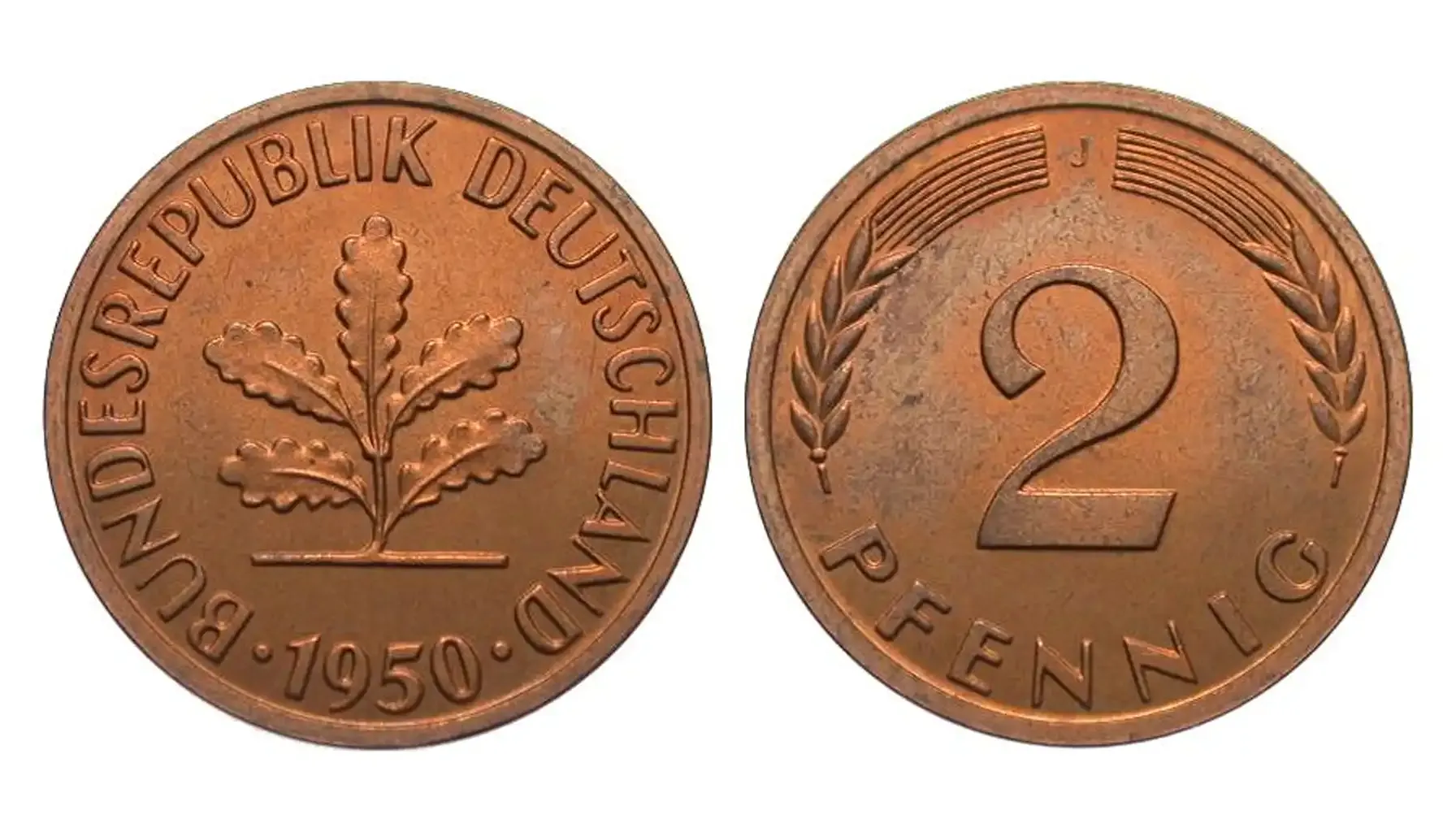
This one looks similar to the 1 Pfennig, just a bit larger.
It has the same copper tone and oak design. Like the 1 Pfennig, it was handled daily, which makes uncirculated examples noticeably harder to find today.
Rolls that were never opened are particularly appreciated among collectors.
5 Pfennig
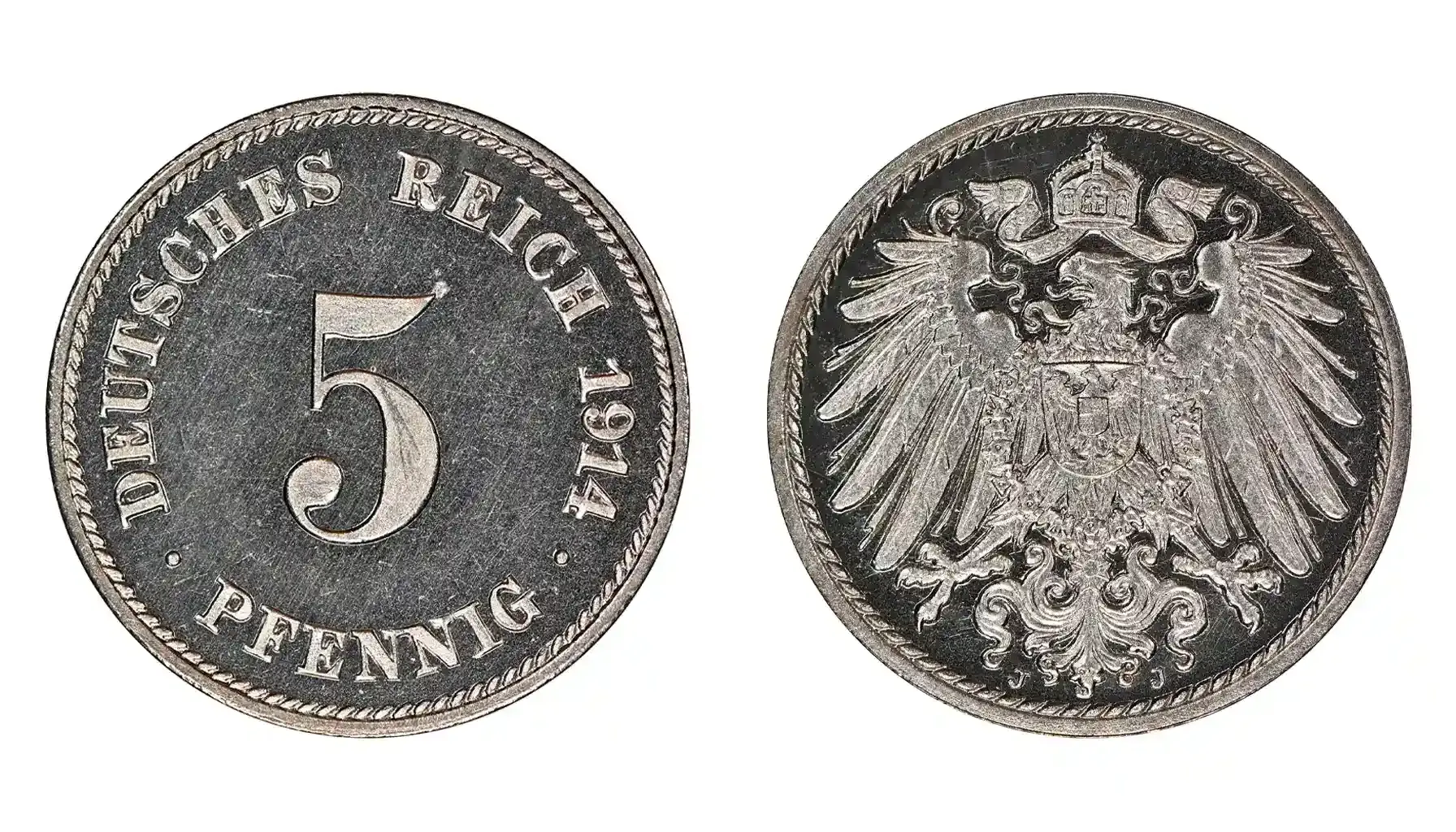
It has a brass-colored appearance, usually lighter and more yellow than the smaller coins.
Because brass reacts to humidity, many pieces became dull or blotchy over time. A clean, bright surface stands out.
This denomination was common in vending machines and everyday purchases, so well-preserved examples are not as frequent as the mintage numbers might suggest.
10 Pfennig
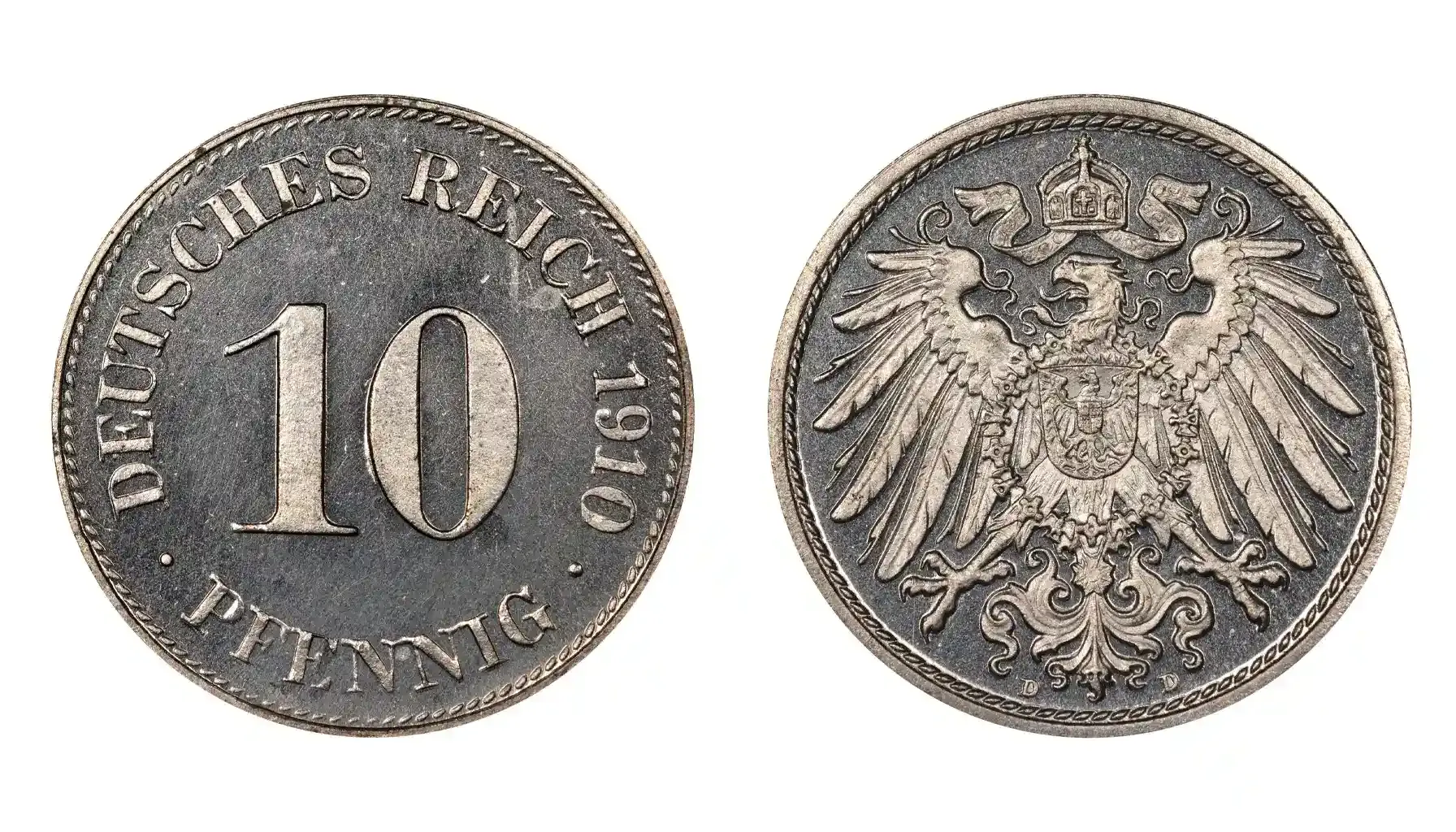
This one was made from aluminum-bronze. This material gives it a soft golden tone and a light weight.
This was one of the most frequently used denominations, so sharp, undamaged specimens are worth noting. The best pieces with still affordable 10 Pfennig coin value sums are those with full detail and no flattening of the oak leaves or lettering.
50 Pfennig (often called the “Heiermann”)
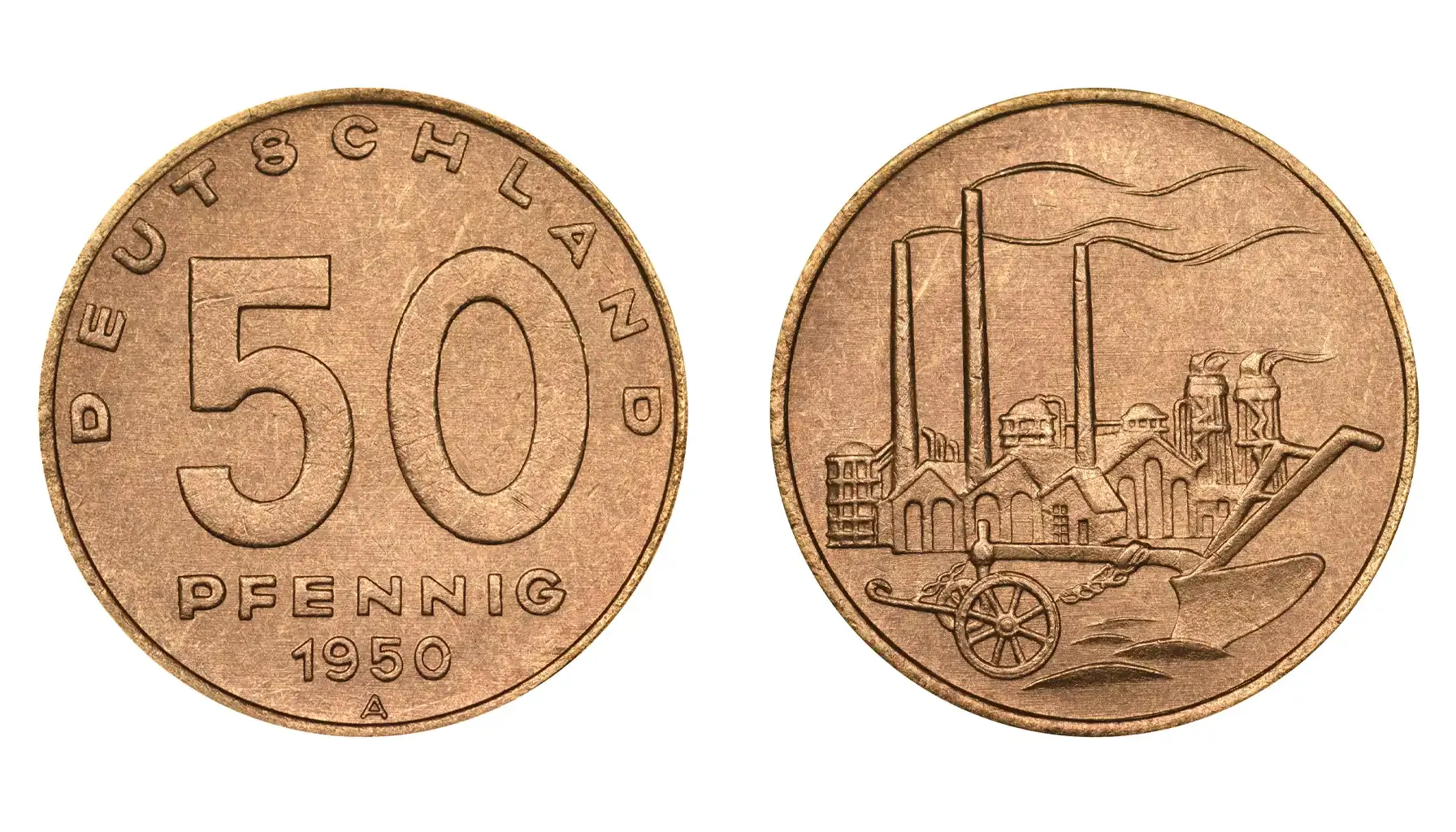
The specimen was the highest coin of the series.
Its design shows a woman planting a sapling. It is a reference to rebuilding Germany after the war. It was struck in a copper-nickel alloy, which resists wear better than the alloys used for smaller coins.
Early dates in excellent condition, with clear detail in the figure’s hair and clothing, are especially admired by collectors.
Conclusion
Generally, Pfennig coins are not strong investment pieces on their own. Most were made in very large numbers and circulated heavily, so their value is usually low. However, there are exceptions, and those can make sense to set aside.
When They Are Not Good Investments
Common dates
Circulated (used) condition
Dark, worn, scratched surfaces
These usually remain worth only a few cents to collectors.
When They Can Be Worth Holding
There are three areas with real potential:
Early 1950s issues in top condition. These can bring clear premiums when the surfaces are bright and untouched.
Scarcer mintmarks. Some mint locations produced much smaller quantities. Example: Specimens marked “J” (Hamburg) or certain “G” (Karlsruhe) years.
Proofs and mint-sets. These were not made for circulation. Their surfaces are sharper, and collectors compete for them.

 Facebook
  X (Twitter)
  Pinterest
  LinkedIn