Contents:
The Legacy of the Gold Guinea
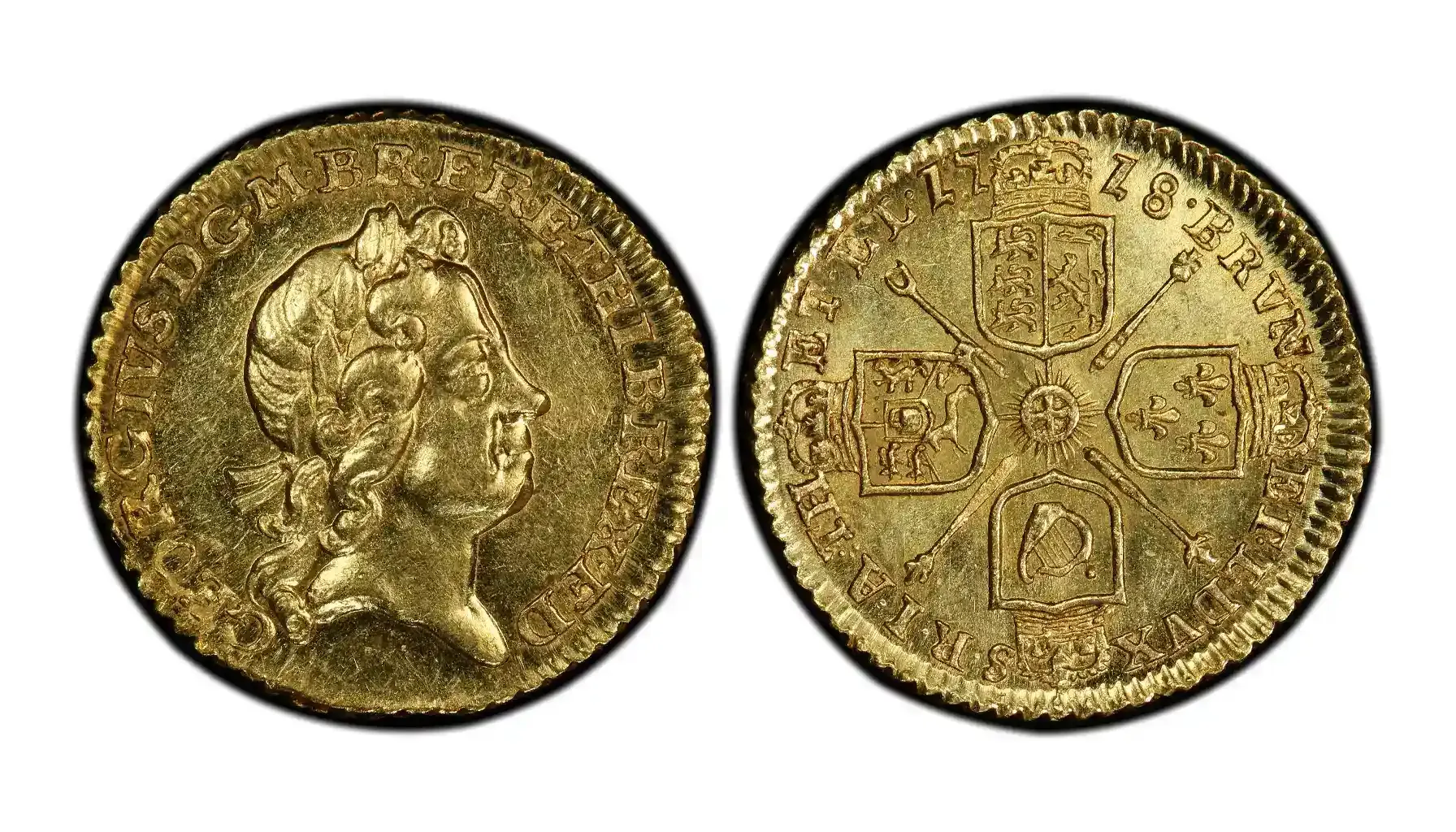
The Gold Guinea coin stands among the most recognizable British coins. It holds a mix of elegance, political weight, and a trace of economic history. First struck in the 17th century, it quickly became a sign of prestige. To own one was to belong to the elite, and its golden shine reflected the drive and ambition of the British Empire.
It also mixes rarity, history, and the lasting value of gold. Wondering how much is a guinea worth today? The demand keeps growing year after year.
To check a coin fast, a coin scanner app does the job well — snap a photo, and it shows the year, metal, size, and current market value.
What Is a Guinea Coin?
The 1 guinea coin served as England’s official currency from 1663 to 1813. At first, it was valued at 20 shillings, but as gold prices shifted, its real worth soon began to climb.
Over time, it ceased to be simply money: it was used in jewelry transactions, becoming a kind of standard of wealth. Even after minting ceased, the word "guinea" remained in the language as a symbol of prestigious value.
“What is a guinea? ‘Tis a splendid thing.’”
— Stephen Kemble, English actor and playwright
Wikipedia website
Origins of the Name and Its African Connection
The name derives from the Guinea region of West Africa, which supplied the gold for minting. Some early issues featured a small elephant—the symbol of the African Company, which owned the mines. This linked the coin to the era of colonial trade, British naval supremacy, and the origin of precious metals, including white gold.
History of the Gold Guinea Coin
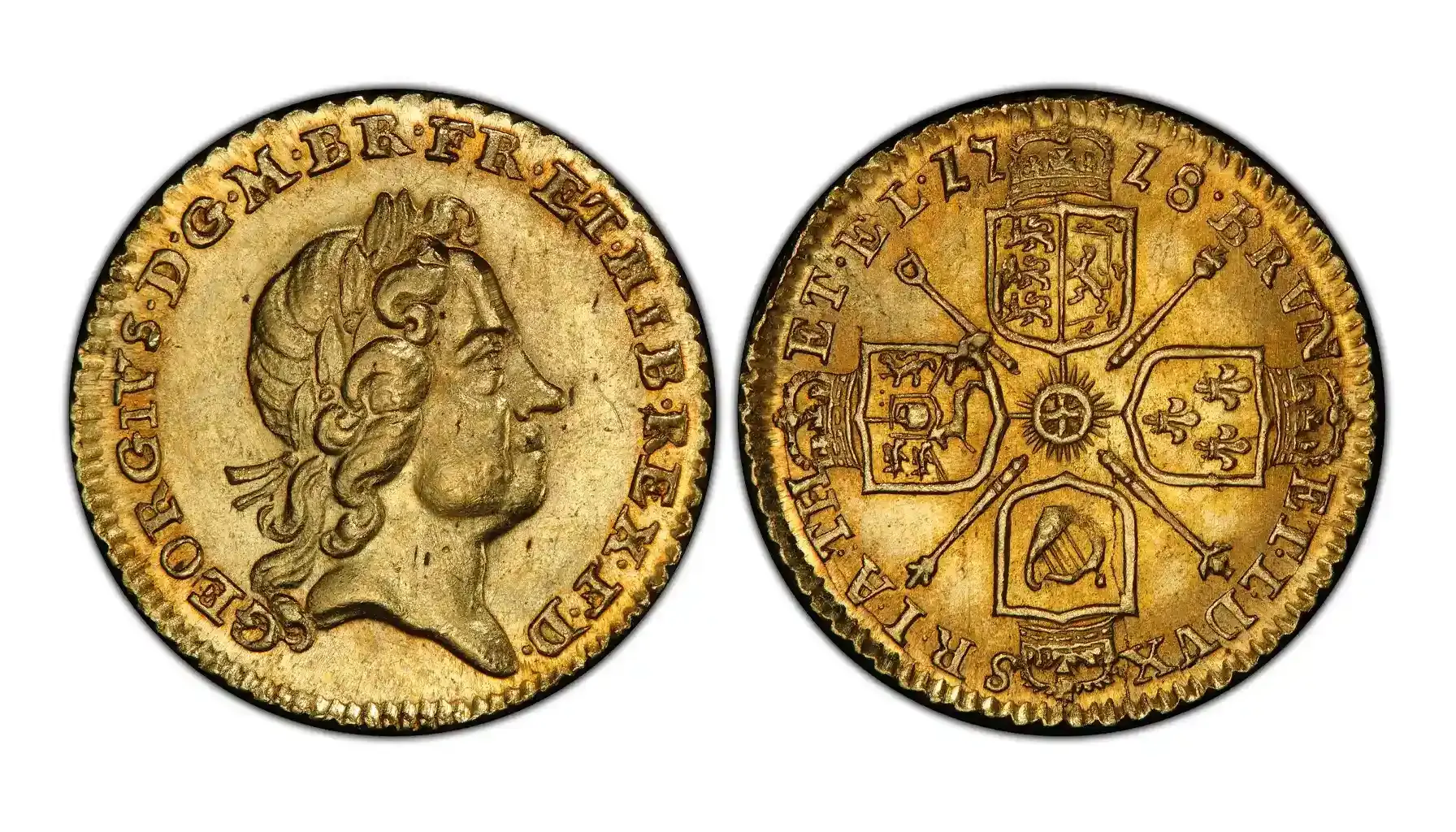
The First Guinea Under Charles II (1663)
In 1663, under the decree of Charles II, the first golden guinea coin was struck. Unlike earlier issues, it was made by machine, which guaranteed consistent weight and quality. The coins were produced on screw presses powered by waterwheels. The technology was borrowed from the French. This method eliminated the need for edge trimming and made each coin of exactly the same weight.
The obverse shows Charles II in profile, a laurel wreath on his head — the mark of victory and the return of the crown after the republic years. On the back, there’s a cross made of four shields with the arms of England, Scotland, Ireland, and France, and a crown placed in the middle. The whole design was meant to show the kingdom as one and to remind people that royal power was back and steady again.
For the London Mint, this became a symbol of a new era. Machine-made coinage allowed for the application of complex designs and fine security features to prevent counterfeiting. It was then that the inscription on the edge first appeared: DECVS ET TVTAMEN ("decoration and protection"), which later became a defining feature of British gold coins.
Evolution Through the Reigns of British Monarchs
The coin’s design changed under subsequent kings.
Under William III (1695–1702), a new coat of arms appeared, showing the fleur-de-lis of France.
During George II’s reign, two designs were used — the “Young Head” and the “Old Head,” matching the monarch’s age and appearance.
Under George III (1760–1820), the famous "spade guinea" was created—the shield on the reverse resembled a spade.
The End of Circulation and Replacement by the Sovereign
After the 1816 reform, the guinea gave way to the sovereign coin. Its value was fixed at 20 shillings, which made everyday calculations simpler and more practical. This coin remained a symbol of prestige—for example, at auctions and in horse racing betting, prices were denominated in guineas.
Design and Symbolism
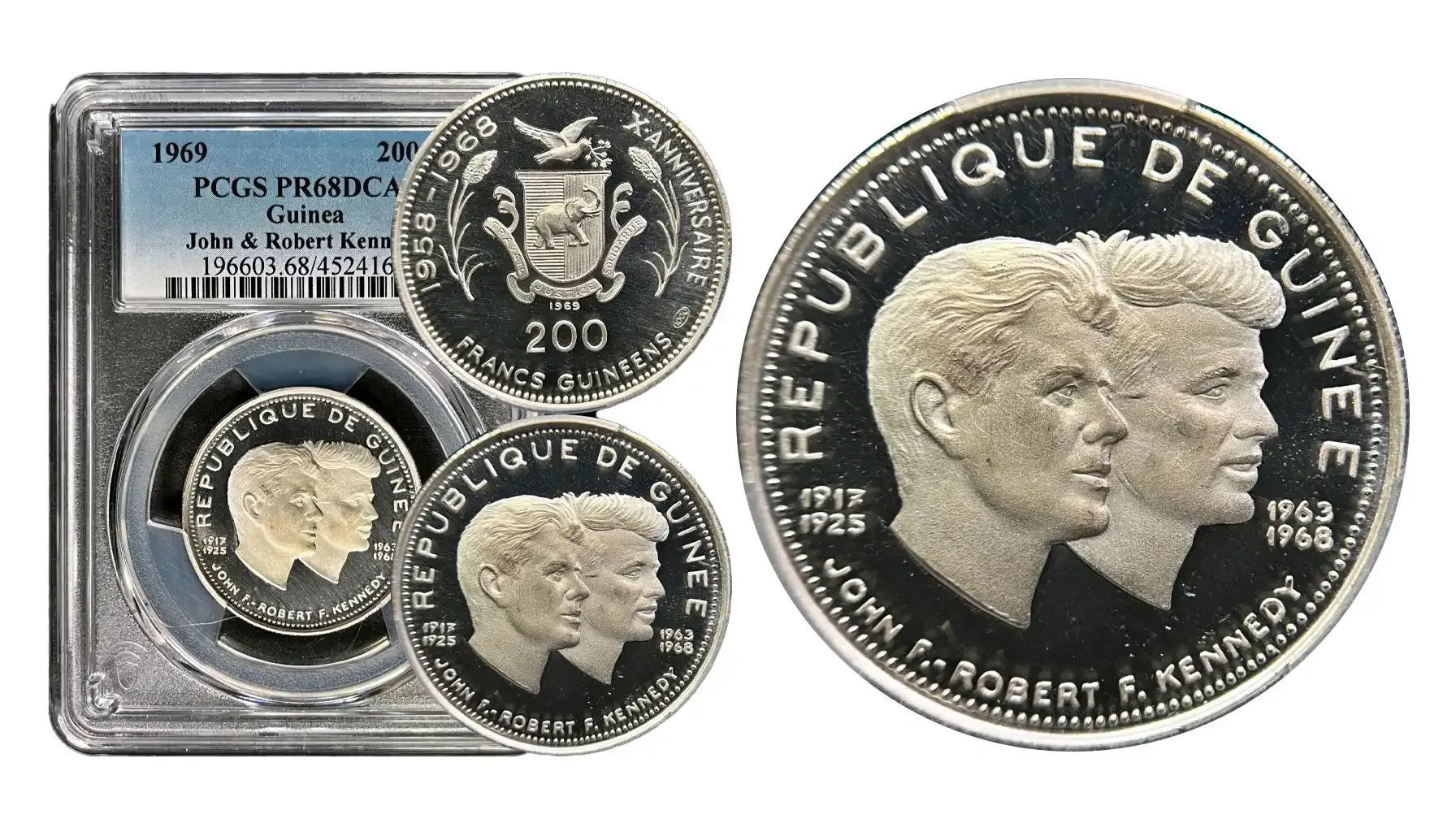
Portraits of Monarchs on Guinea Coins
The obverse on each coin said something about power. Charles II was shown in a classical way, copying the old European look, while George III had a more real face, the kind you’d recognize, showing that the monarchy had found its balance again. Later portraits got tighter and more detailed, a sign that English engraving was getting better with every generation.
Reverse Designs and Royal Arms
The reverse side always showed the national coat of arms. It pulled together the shields of England, Scotland, Ireland, and France with a crowned cross in between. When Britain stopped claiming France, the fleur-de-lis was dropped, and the Hanover emblems were added instead.
Mint Marks and Artistic Details
Collectors pay special attention to coins with mintmarks. The London mintmark was the most common, but Cornwall and Bristol mintmarks are also known. These tiny marks can significantly increase the price.
The relief and clarity of the strike also affect the value. Even a slight die offset or uneven edge can make a coin rare — as seen with certain Buffalo Nickels, prized for their distinctive minting details.
Value of the Guinea Through Time
Historical Worth and the 21 Shilling Standard
When the coin was first issued, it was valued at 20 shillings. As gold prices climbed, its worth rose too, and by 1717 the Bank of England had fixed it at 21 shillings. Since then, it has become a kind of "supreme" currency.
In business, people often referred to the guinea rather than the pound, especially when paying for jewelry and medical services.
The Gold Content and Metal Value
The coin was minted from 22-karat (916-fineness) gold, an alloy that contains a small amount of copper — giving it a slightly warm tone, similar to modern rose gold.
Parameter | Value |
Denomination | 21 shillings |
Weight | 8.35 g |
Purity | 91.6% (22 carats) |
Diameter | 25 mm |
Metal | Gold |
Years of Issue | 1663–1813 |
With gold prices at around $75 per gram, the coin's metal value is around $625, but its collector value often exceeds $2,000.
Modern Collector and Bullion Value
Condition Category | Approximate Price* |
Fine (VF) | $600–700 |
Extra Fine (XF) | $1,000–1,500 |
Proof or Rare Date | $3,000 and above |
*Prices are current at the time of writing.
At Heritage Auctions' 2024 auction, this 1763 coin in MS64 condition sold for $8,700.
Types of Guinea Coins
One, Half, Two and Five Guinea Pieces
Various denominations were minted:
½ guinea (≈ 4.2 g gold)
1 guinea — the main issue
2 guineas (≈ 16.7 g)
5 guineas — a heavy coin with a diameter of 37 mm, used for ceremonial purposes
The latter, especially the early issues of 1668–1670, are today considered among the rarest.
Proof, Pattern and Commemorative Issues
Pattern and proof issues were struck in limited quantities for royal gifts and presentations. Their distinctive features include a mirror-like surface and resistance to wear.
A 1701 example bearing a portrait of William III was sold at Bonhams in 2023 for £12,500. This raises the question: how much is a gold guinea worth today?
Identifying Rare Varieties
The most famous are:
"Spade Guinea" (1787–1799) — a spade-shaped shield
"Elephant & Castle" (1663–1675) — an elephant beneath a portrait
"Rose Crown" (1701) — a rare edge pattern
Collectors say the gold guineas for sale market holds steady, even when gold prices swing. The coin keeps its charm as an investment — people still trust it to store value.
Curious about what your coin is really worth? Just open the Coin ID Scanner app, snap a photo, and it’ll show the year, metal, and current market price. Quick, clear, and no risk of a wrong appraisal.
FAQ
How much is a guinea coin worth?
It depends on the year and condition of the coin. Prices range from $600 to $10,000, and rare proof issues are valued much higher.
Why was 21 shillings called a guinea?
After the price of gold rose in 1717, the Bank of England fixed the exchange rate at 21 shillings per guinea.
What was the point of a guinea coin?
It served as the main gold denomination and stood as a symbol of prestige during the expansion of the British Empire.
How much is 1,000 guineas?
At the historical rate, 21 shillings equals £1,050 — about 2.5% more than £1,000.
What is a guinea coin used for today?
Now it’s used only in collecting and investment. Collectors buy specimens for portfolios and auctions.
Are there any Guinness families left?
Yes, there are, but they’re not related to the coin. Guinness is an Irish surname, not derived from “guinea.”
Which guineas are the most valuable to collectors?
The rarest ones include Charles II’s “Five Guineas,” William III’s “Elephant & Castle,” and the “Rose Crown.”
What is the difference between a guinea and a sovereign?
The guinea gold came first and was a bit heavier, while the sovereign took its place after 1816, fixed at exactly 20 shillings.

 Facebook
  X (Twitter)
  Pinterest
  LinkedIn