Contents:
Buffalo nickels are one of the most recognizable series in the nickel denomination. But which ones are worth the most? Coins are not made equal. Some had a mintage so small that they became a rarity, and others are still common today.
In this article, you will learn how much 1936, 1937, 2005, and other Buffalo nickels are worth, and some rare errors that could boost their value.
Why won’t you try out an AI Coin Identifier? This app can scan and identify all kinds of coins, and most importantly, they do it in a flash.
About Buffalo Nickels
This series is one of the most iconic and collectible coins in U.S. history. Some people also refer to them as Indian Head Nickels (not to be confused with the likes of a 1900 Indian Head penny. That’s a totally different denomination).
As we will focus on many different pieces, we need to first give Buffalo Nickels a general overview.
The nickel was designed by the sculptor James Earle Fraser. This sculptor had already been famous for his Native American motifs, and the US Mint chose him to bring this design into the American coinage.
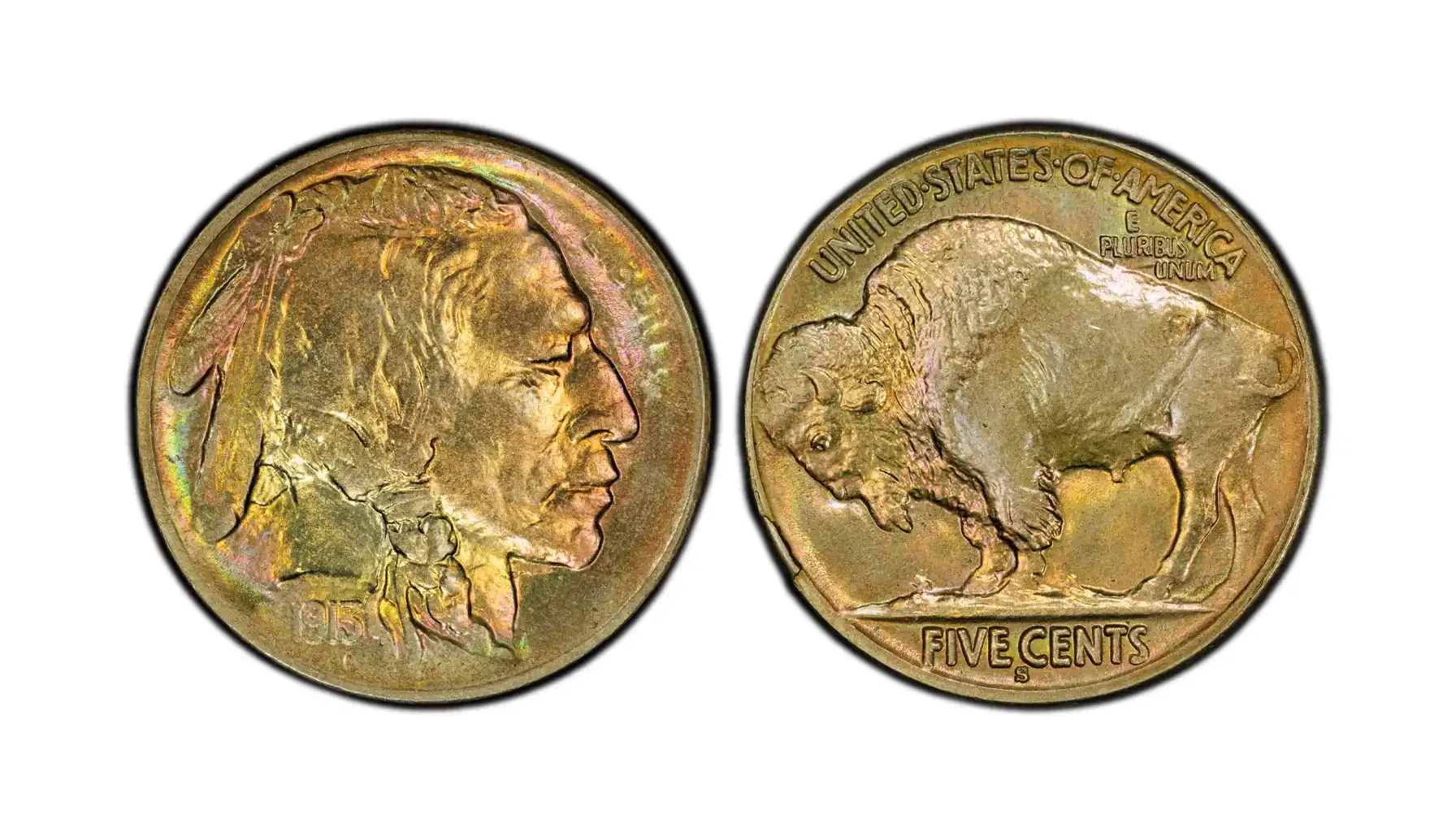
Obverse (Front): Features the profile of a Native American man. The portrait is based on the general image of Native American chiefs like Iron Tail (Sioux), Two Moons (Cheyenne), and John Big Tree (Seneca). The word “LIBERTY” appears near the rim, and the date is on the shoulder of the portrait.
Reverse (Back): Shows an image of an American Bison. The model was believed to be “Black Diamond,” a bison from the Central Park Zoo in New York. The words “UNITED STATES OF AMERICA” and “E PLURIBUS UNUM” are inscribed above the animal. The face value “FIVE CENTS” appears below.
The Buffalo Nickel represents an aesthetic turn toward uniquely American themes in coinage, celebrating the country’s Native American heritage and the wildlife. The design you’ve just seen broke away from classical European motifs and reflected the growing national identity of Americans in early 20th-century art.
Buffalo Head Nickel Overview | |
Country | United States of America |
Years of Minting | 1913–1938 |
Type | Circulating |
Shape | Round |
Composition and metal content | 75% copper, 25% nickel |
Diameter | 21.2 mm |
Weight | 5 grams |
Fun fact: While many people think the buffalo is on the reverse of this coin, it is actually a bison. The misconception is so big that his coin is called “buffalo” anyway. A different, but somewhat similar misconfusion happened with the 1776-1976 dollar coin. In reality, it is not from 1776, but just celebrates this date of Independence.
Notable Buffalo Nickels
Let’s start with some of the most famous Buffalo nickels. They might not all be the most expensive ones, but they are popular and desired by most collectors. We will give each coin here a little info, values, and what is so special about each one.
1936 Buffalo Nickel Value
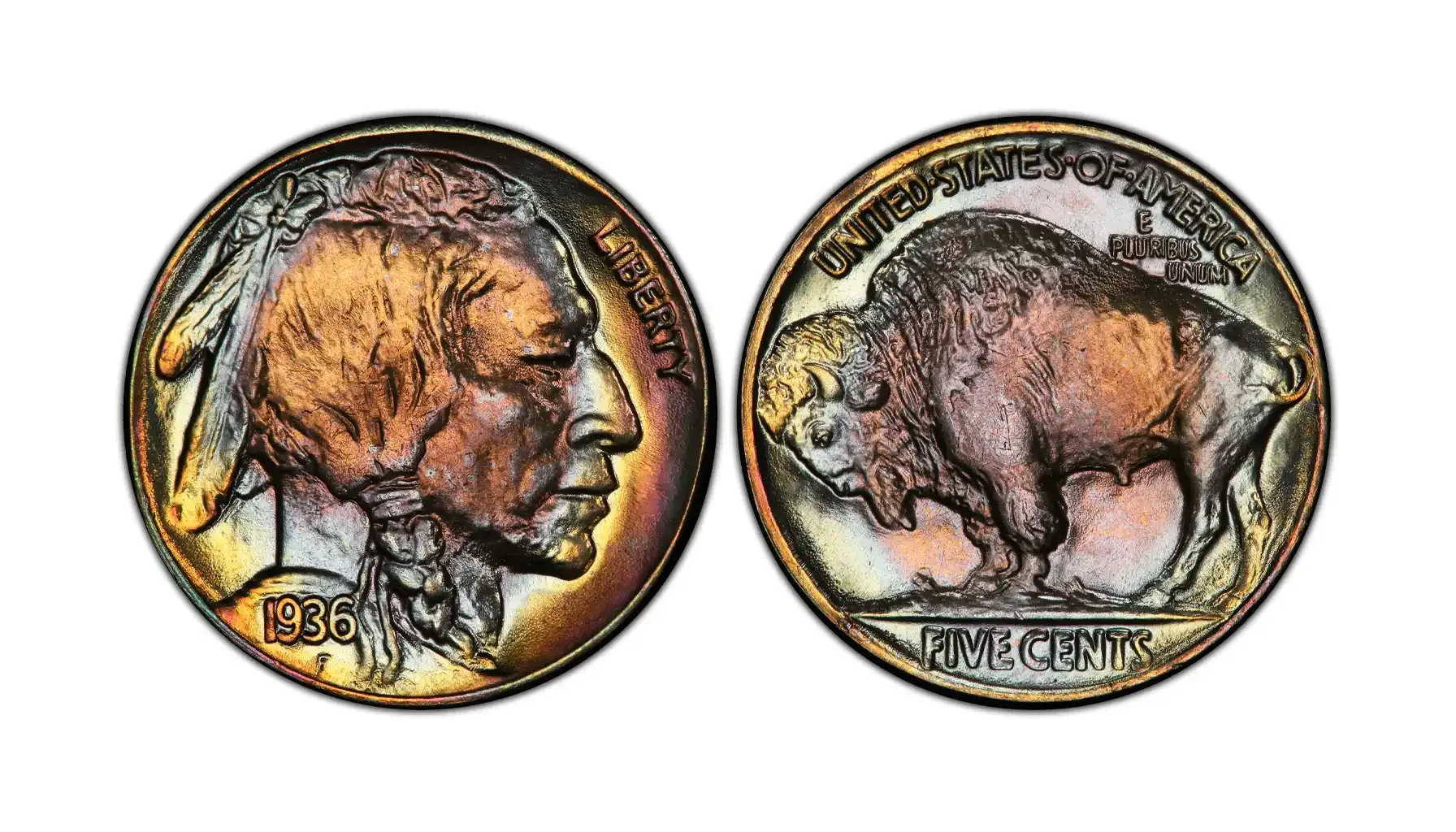
Mintage: 118,997,000 (Philadelphia), 24,814,000 (Denver), 14,930,000 (San Francisco).
What makes it valuable: Generally not valuable. Yet Double Die errors and proofs could greatly boost the value.
The 1936 nickel is one of the most common Buffalo Nickels. This ubiquity is what makes it notable. If you own a nickel, you likely have this coin exactly. The last few years before the series ended in 1938.
Value-wise, this piece is interesting. You see, many old coins were not struck perfectly, and many eroded. Therefore, while coins with low quality are not worth much, the ones that were preserved with all the details have exceptional value:
Condition | Typical Value | Notes |
Circulated | $1 – $5 | Common date |
Uncirculated | $25 – $500+ | Bright luster, well-struck. One exceptionally rare 68 MS nickel was sold for $16,500! |
Doubled Die | $300 – $5,000+ | Rare error. Some rare examples were sold for $50,000! |
Proof | $1,000 – $10,000+ | Collector’s item from the San Francisco Mint |
1937 Buffalo Nickel Value
Mintage: 79,480,000 (Philadelphia), 17,826,000 (Denver), 5,635,000 (San Francisco).
What makes it valuable: It has one of the most famous mint errors in U.S. coin history, the “Three-Legged Buffalo.”
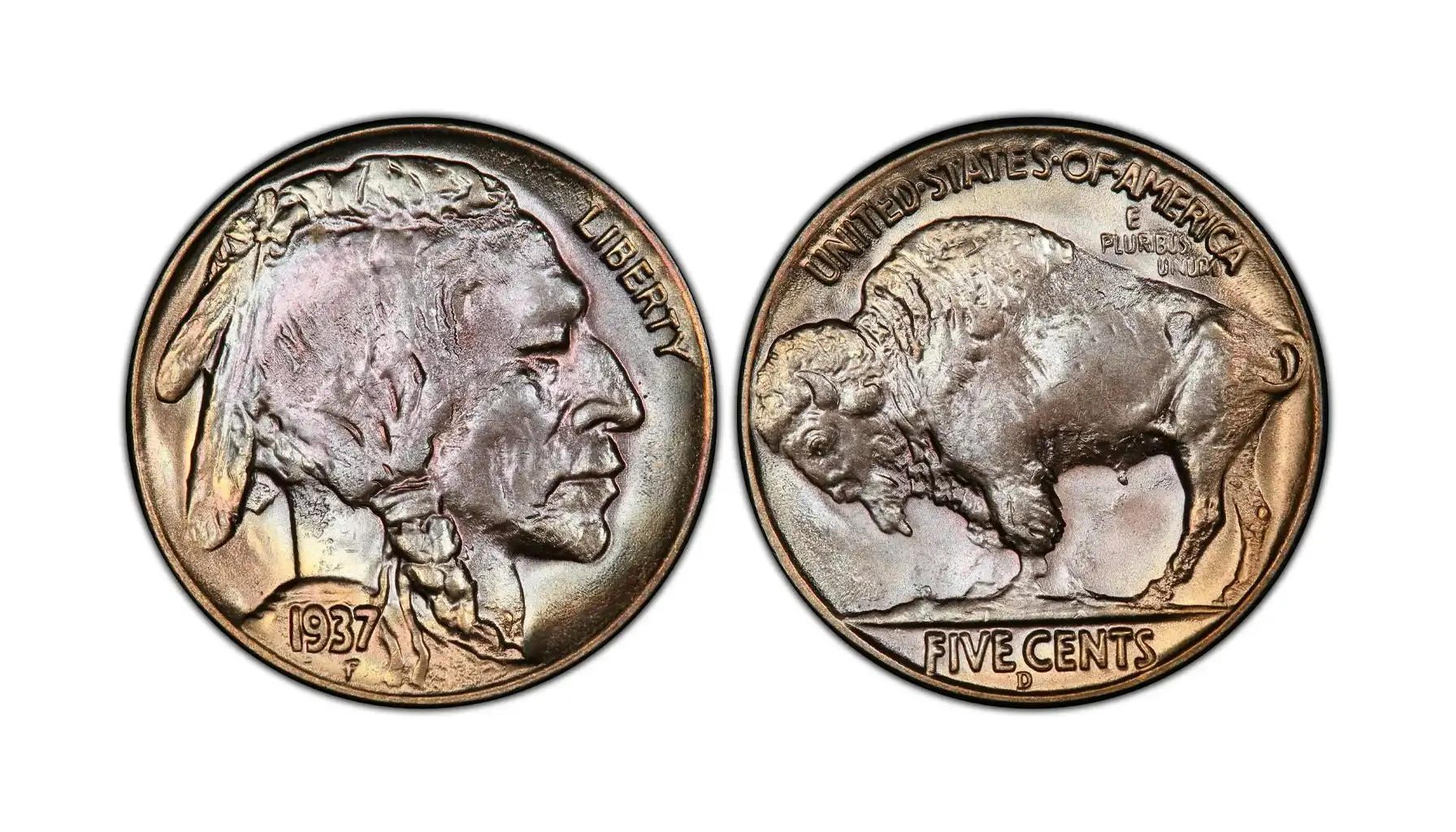
By itself, a 1937 nickel is not worth much more than any others, but it has a very desirable and recognizable error, the 1937-D “Three-Legged Buffalo” variety. This error was caused by excessive die polishing that removed one of the bison’s front legs.
Condition | Typical Value | Notes |
Circulated (regular) | $1 – $4 | Common |
Uncirculated (regular) | $30 – $100 | Collectible. One rare example in MS 68 was sold for $8,000! |
1937-D 3-Legged | $400 – $6,000+ | Rare and famous error |
Proof (Philadelphia only) | $1,000 – $5,000+ | Low-mintage collector issue |
2005 Buffalo Nickel Value
Mintage: 448,320,000 (Philadelphia), 487,680,000 (Denver).
What makes it valuable: It has one of the most famous mint errors in U.S. coin history, the “Three-Legged Buffalo.”
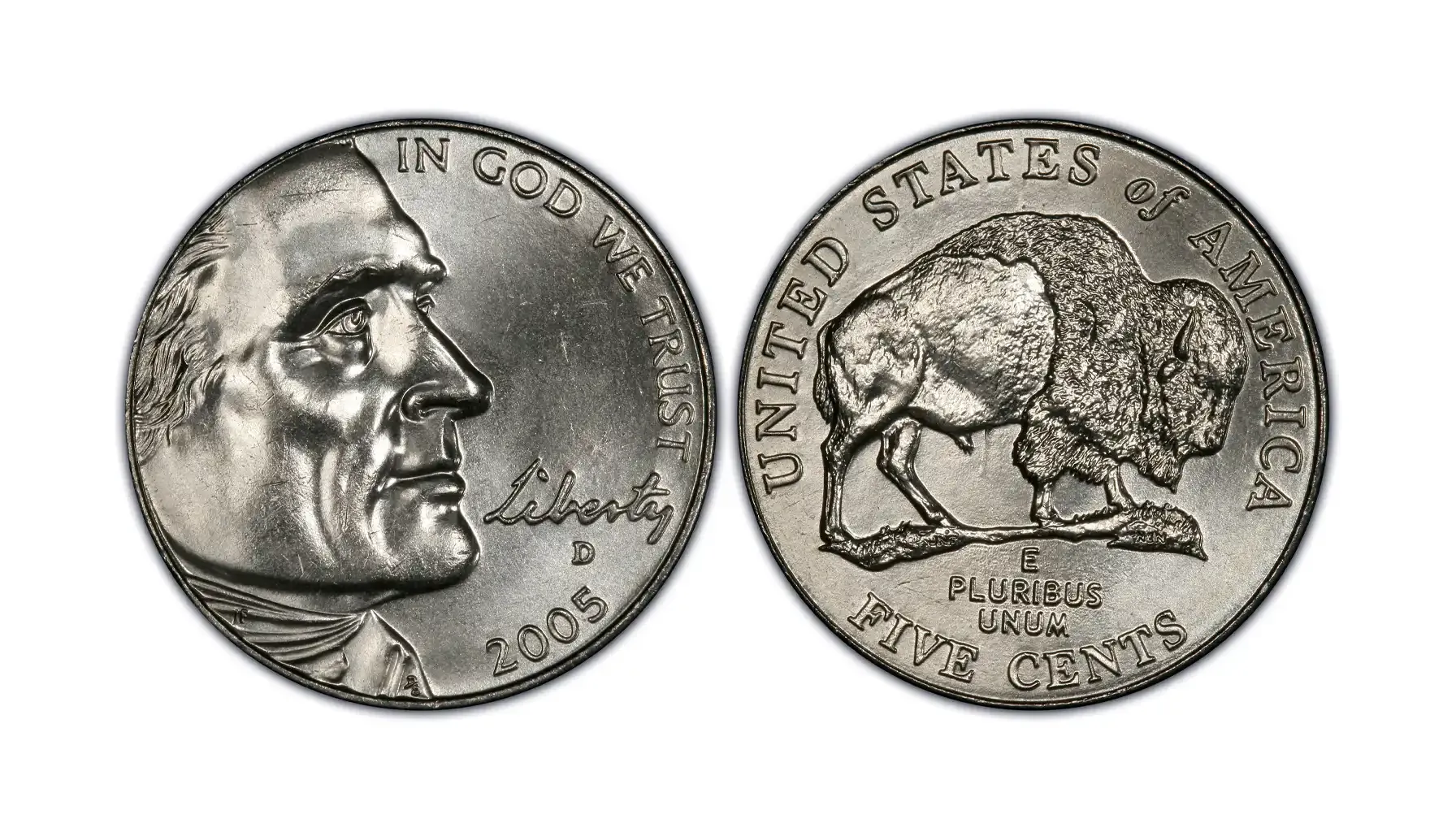
Technically, the 2005 nickel is a very different coin from a different Jefferson Nickel series. The 2005 commemorated the Buffalo series that was over many years ago at that point.
Regular buffalo nickels 2005 are common, but one major error variety exists, the “Speared Bison”. In this error, a die crack is running through the bison’s back, resembling a spear.
Condition | Typical Value | Notes |
Circulated | 5¢ (face value) | Extremely common |
Uncirculated | $10 – $30+ | Nice collector piece. A rare MS67 was sold for over $1,000 |
“Speared Bison” Error | $250 – $1,000+ | Rare and valuable error |
Most Valuable Buffalo Nickels
Now it’s time to tackle the most interesting part. How much is a buffalo nickel worth for its best pieces? We will see now.
Here is a chart with the 10 most Valuable Buffalo nickels.
№ | Year / Variety | Why It’s a Valuable / Notable Feature | Estimated Value Range* |
1 | 1913-S Type 2 | One of the earliest Buffalo nickels, low mintage, strong demand | $300 – $10,000+ |
2 | 1913-D Type 2 | Denver version of 1913 Type 2, scarcer | $200 – $5,000+ |
3 | 1916 Doubled Die Obverse | Strong doubling on “LIBERTY” & date; one of the major error issues | $500 – $10,000+ |
4 | 1926-S | Very low mintage and scarce in high grades | $100 – $100,000+ |
5 | 1937-D “Three-Legged Buffalo” | Famous mint error where one leg of the bison is almost missing | $400 – $6,000+ |
6 | 1918/7-D Overdate | Overstruck “7” under “8, a rare overdate error | $100,000+ (at the high end) |
7 | 1913-S Type 1 | Early San Francisco issue of the first design type | $100 – $3,000+ |
8 | Proof (various years, e.g., 1936 Proof) | Special proof strikes are rare | $1,000 – $10,000+ |
9 | 1913-S Type 2 (High grade, mint state) | Uncirculated high-grade examples push prices far higher | $1,000 – $20,000+ |
10 | 1936 Doubled Die (if exists in strong form) | Doubled die varieties in later years are rarer and more sought after | $300 – $5,000+ |
Why Is the 1913 Nickel so Valuable?
1913 nickels seem to be exceptionally valuable pieces. The 1913 edition covers a few spots in the table simultaneously. What makes it so valuable and desirable?
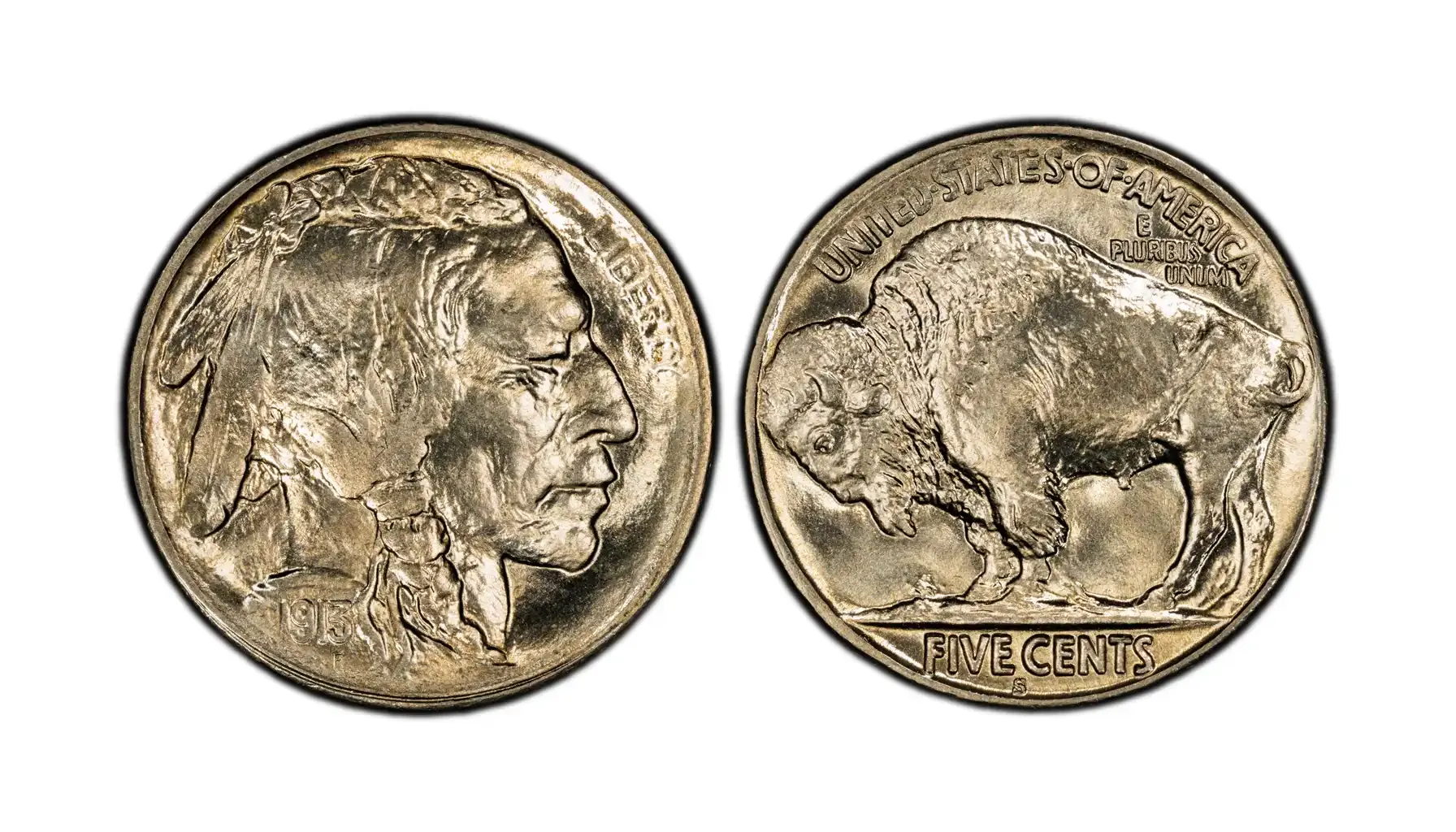
1913 was the first year of mintage for Buffalo nickels. The first year, as it often happens, had many different types because the US Mint was getting its bearings. We know about 5 types for the 1913 release:
1913 TYPE 1 5C MS
1913 D TYPE 1 5C MS
1913 S TYPE 1 5C MS
1913 TYPE 2.5C MS
1913 D TYPE 2 5C MS
1913 S TYPE 2 5C MS
Among them, S TYPE 2 had the smallest mintage, only 1,209,000 pieces.
Moreover, hoarding was a big trend at the beginning of the 20th century. S TYPE 1 was hoarded and recorded, and TYPE 2 was mostly ignored back then. With fewer people holding it, this made TYPE 2 S the king of Buffalo nickels.
Valuable Errors and How to Identify Them
As we were learning about the most notable and precious coins, we saw some errors. No, as a bonus, we will talk about these and many other errors in more detail, and the ways you can identify these errors.
1. 1937-D “Three-Legged Buffalo”: Over-polishing of the die erased one of the bison’s front legs. One of the most famous minting mistakes in U.S. history.
How to spot it: On the reverse, the right front leg is missing. The area looks smooth.
2. Doubled Die Obverse: The die struck the design twice, making it slightly offset.
How to spot it: Noticeable doubling on the date and “LIBERTY.” This error was not recognized on all coins, but the 1936 edition had this error.
3. Doubled Die Reverse: Doubling on the reverse lettering. Rarely happens, and more common for modern pieces. Found in the 1935 edition.
How to spot it: The words “FIVE CENTS” or the date appear thick or shadowed.
4. 2005 “Speared Bison” Nickel: A die crack across the bison’s back looks like a spear.
How to spot it: A raised line runs diagonally through the bison’s midsection.
5. Off-Center Strike: The planchet wasn’t properly centered during striking. Sometimes there's a blank spot if the design was shifted dramatically.
How to spot it: Part of the design is shifted off-center with a blank crescent edge.
6. Buffalo Nickel No Date: The date area has worn completely smooth due to circulation and the coin’s weak date placement on the design.
How to spot it: The date area (above the Native American’s shoulder) is blank or barely visible.
Coin ID Scanner

The Coin ID Scanner is a mobile tool designed to help users quickly identify and value coins by taking a photo. It uses AI-based image recognition to match your coin against a large online database and provide basic details and estimated values.
Let’s have a look at the main features of the app:
Photo Identification: The app allows you to take or upload a photo of your coin. Using artificial intelligence, it analyzes the image and compares it to a database to identify the coin’s details.
Large Database: The app contains information on more than 150,000 coins from many countries and time periods, including both modern and historical pieces.
Coin Details: Once a coin is recognized, the app displays details such as its denomination, country of origin, year of issue, composition (metal content), and sometimes the mintmark.
Value Estimates: The app provides a rough estimate of the coin’s market value based on recent data. These prices are approximate and can vary depending on the coin’s condition and current market trends.
My Collection Feature: Users can save identified coins, organize them into categories, add personal notes, and build a digital collection within the app.
Coin ID scanner is free, and you can download it on your Android or iPhone device today!
FAQ
What Is the 1935 Buffalo Nickel Value?
The coin is one of the more common late-year issues, but condition and mintmark make a big difference. It goes for $1 – $3 in circulated condition, and $50 – $150 in uncirculated condition. San Francisco pieces are worth the most due to scarce mintage, $75 – $250.
What Is the 1929 Buffalo Nickel Value?
This coin is from the middle years of the series, minted during the Great Depression era. Many pieces from that era are very precious. 1929 nickel is not exceptionally valuable, but worth more than most. It goes for $1 – $2 in circulated condition, $50 – $150 in uncirculated condition, and proofs go for $75 – $300.
What Was the Next Nickel Series?
In 1938 Jefferson nickel series started. The Jefferson series is America's longest-running nickel design series. The series has seen a few redesigns (notably in 2004–2006 and the 2020s), but Jefferson remains on the coin today.

 Facebook
  X (Twitter)
  Pinterest
  LinkedIn