Contents:
The 5 euro cent coin is one of the smallest circulating denominations in the Euro currency system. The piece has been in use since 2000 and is pretty common.
But you still may find some mint marks, condition, and country-specific designs. You may have a big collection of European coinage, just made of 5 euros, because each country has its own design.
And if you are lucky, there are some coins worth much more than 5 euros, but which ones? Check it with a coin scanner online and read the article.
Introduction to the 5 Euro Cent Coin
Feature | Details |
Official denomination | 5 Euro Cent |
Metal composition | Copper-plated steel |
Diameter | 21.25 mm |
Thickness | 1.67 mm |
Weight | 3.92 g |
Edge | Smooth |
Designer (reverse) | Luc Luycx |
The 5 euro cent coin values equally one-twentieth of a euro. It is made from copper-plated steel and weighs 3.92 grams. It entered circulation across the Eurozone in 2002. Some countries minted early batches dated 1999 and 2000.
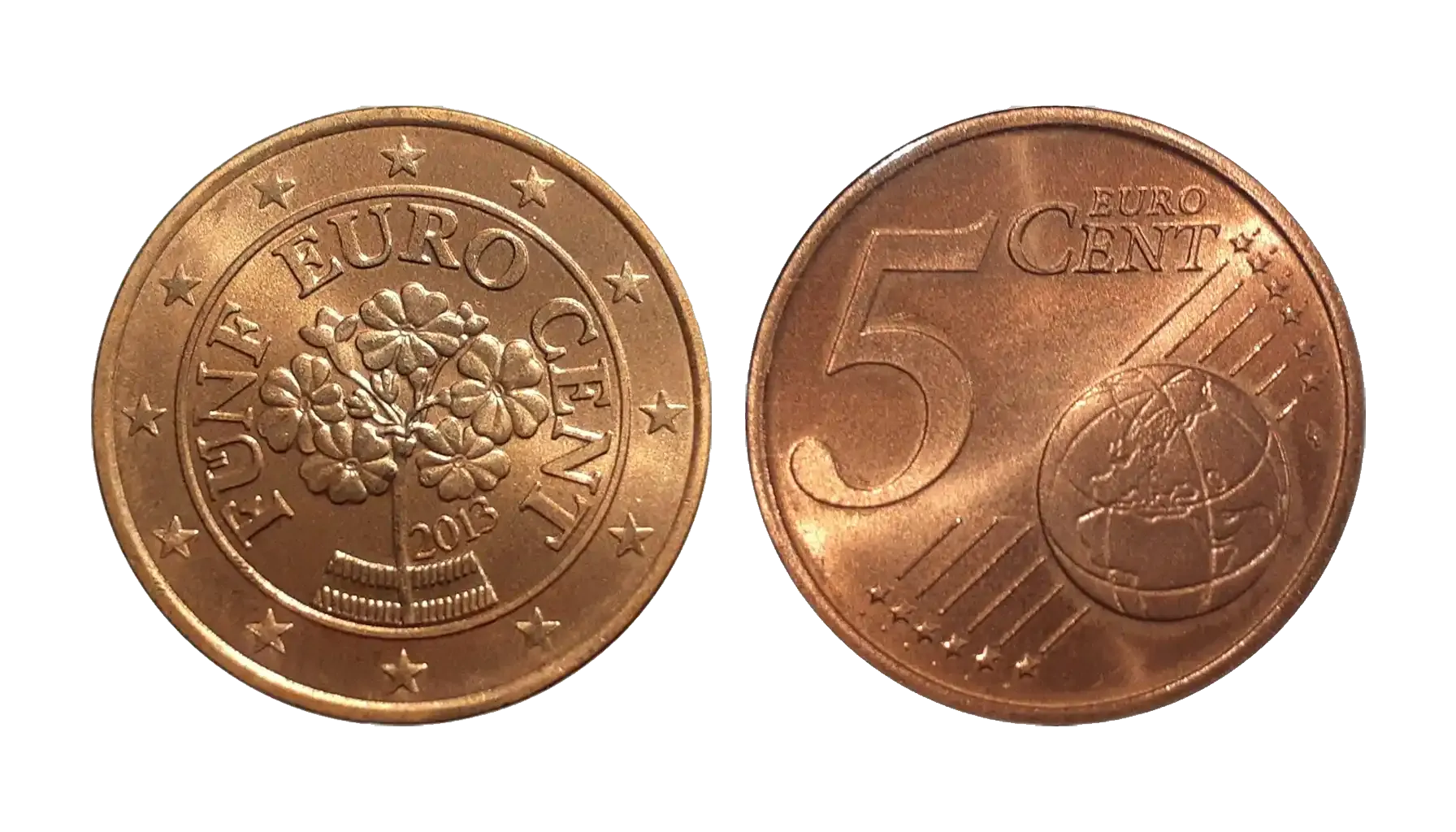
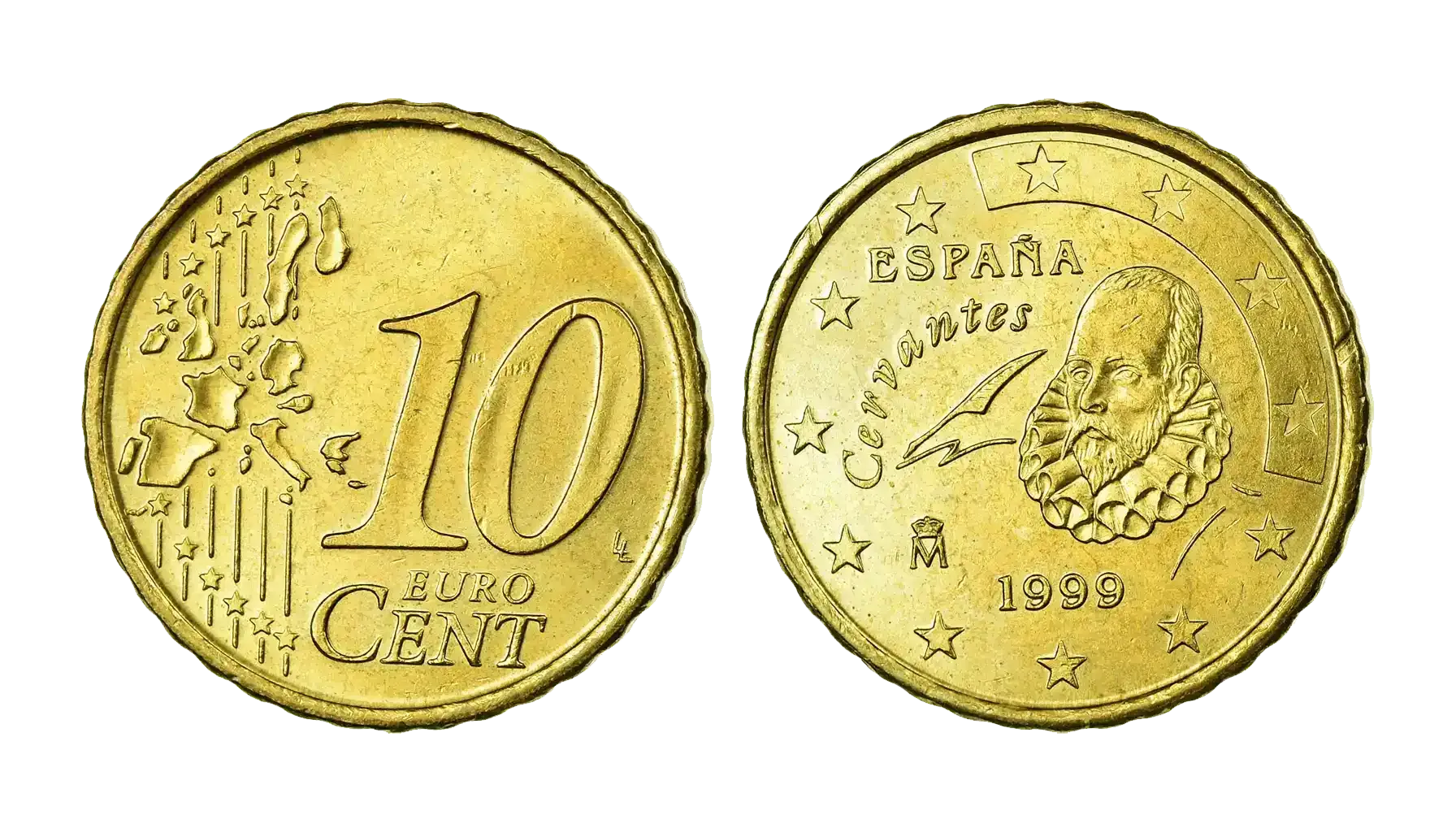
The reverse (it is the same in each European country) was created by Belgian designer Luc Luycx. This side has Europe on a globe beside Africa and western Asia, a dozen stars representing the European Union, and a large numeral 5 with the words “Euro Cent.”
Design Elements and Symbolism
The euro 5 cent coin has a common reverse and a country-specific obverse, just like each euro denomination. The reverse shows Europe’s place in a global context; the faint outline of EU countries is intentional, designed to show unity without strict borders. The 12 stars are the European flag, and they show ideals like unity, identity, and harmony.
“National designs were not allowed to change until the end of 2008, unless a monarch (whose portrait usually appears on the coins) dies or abdicates. This happened in Monaco and the Vatican City, resulting in three new designs in circulation. However, starting in 2007, some national designs underwent minor changes due to regulations requiring national designs to meet a series of specifications.”
— Unknown author
from the Wikipedia 5 Euro page
The obverse changes in each issuing country. Each state has its name or abbreviation, the year of minting, and the ring of 12 stars around the design. The themes are: national emblems, monarch profiles, heritage sites, animals, or cultural icons. Some designs have changed over time because of new monarchs or updated European minting guidelines.
Rare 5 Cent Euro Coins and Key Varieties
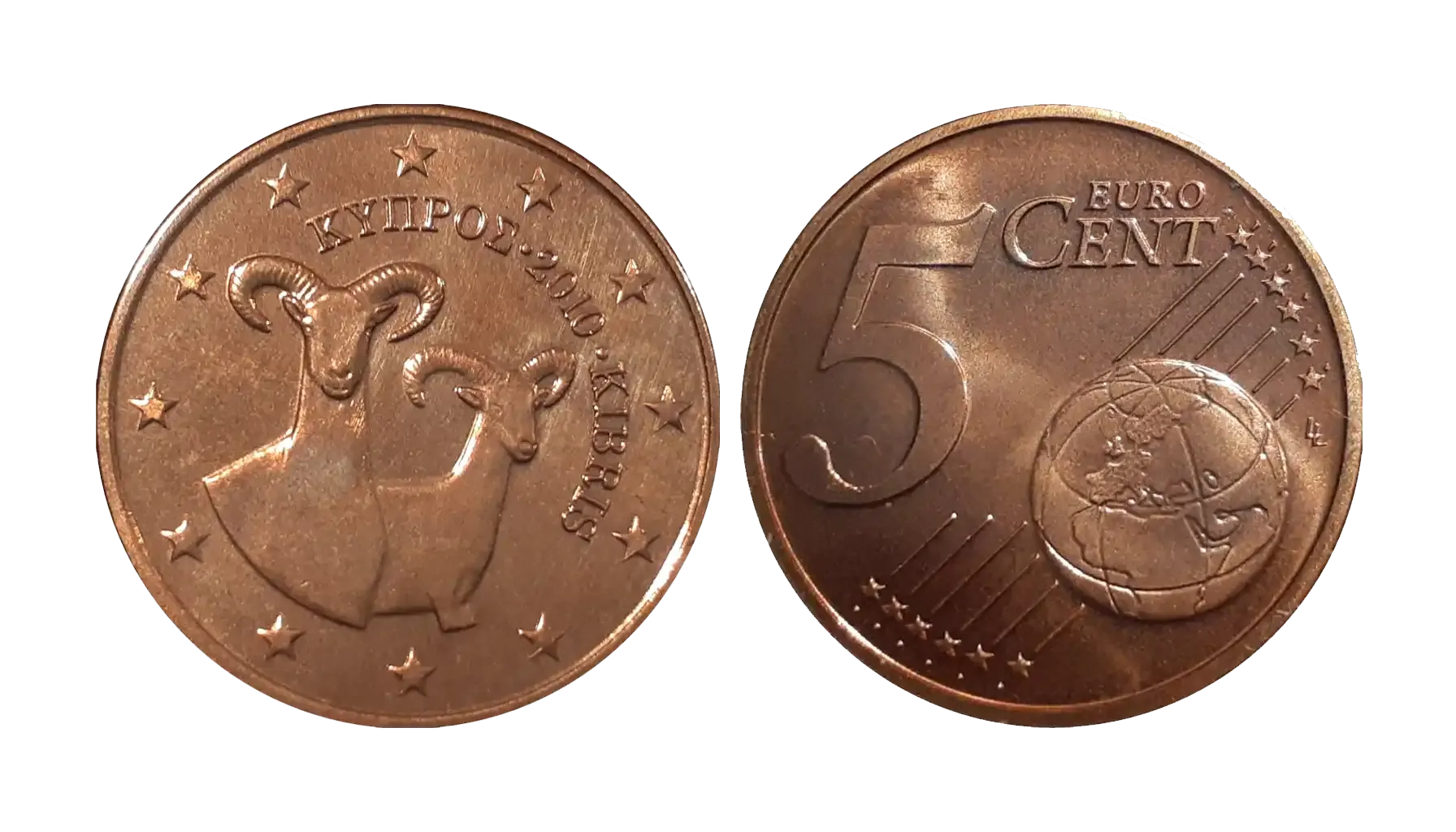
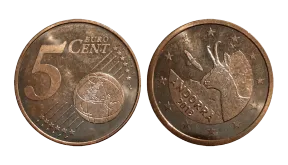
Most pieces are worth face value. But you still may meet some errors, small-mintage editions, or early national strikes can be worth more. Seek something in high-grade uncirculated condition, from small EU states like Monaco, Vatican City, San Marino, or Andorra.
Factors affecting 5 cent euro coin value are:
Minting year and country
Mintage quantity
Condition (circulated vs. uncirculated)
Variants, redesigns, or rare errors
Collectible demand for a specific series
Some pieces, like early microstate issues, can sell for several euros; rare examples may be higher values in auctions or private collector groups.
Most circulated examples still have everyday value, so it is an easy entry-level find for collectors. Still, even a common 5 cent coin euro can become more interesting when it is a part of a full national or date-based set.
Quick Notes for Collectors
The 5 cent euro coin worth more than its face value, is usually tied to rarity or errors rather than age alone. You may want to look for earching rolls, swap groups, or foreign travel change. Once sorted by country and year, these coins can be a part of a complete multinational set.

 Facebook
  X (Twitter)
  Pinterest
  LinkedIn