Contents:
Some coins are rare, and some are common. You can't find uncirculated coins in change or on the ground. But you can find these pristine bits in Сoin Sets.
Today, we will learn what those coins are and the proper way to store, buy, or sell them.
What Is an Uncirculated Coin?
An uncirculated coin is a bit that has never been used. Nothing was bought or sold through this coin. It came to you fresh off the presses, and no other hands or pockets “knew” this bit in everyday commerce.
What is uncirculated coin discerning feature? There are a few, actually:
Full mint luster: A sheen caused by the way light reflects off pristine metal surfaces.
Sharp details: The overall design is clear.
No signs of wear: Under a couple, the coin has no scratches or smears. You might find minor bag marks, but that’s to be expected.
Any coin set, from the older 1950 Proof Sets to more modern ones, have these uncirculated coins. They are further divided into these classes:
Brilliant Uncirculated (BU)
Mint State (MS)
Proof
Three varieties are often confused, but in fact are different.
Term | Meaning | Characteristics |
Brilliant Uncirculated (BU) | Refers to coins that have not been circulated and retain their original luster. Technically, it is the same quarter or penny you see every day, but just preserved in excellent condition. | May show minor contact marks. Lustrous. Most came from the Philadelphia or Denver Mints. |
Mint State (MS) | A grading term used on the 70-point Sheldon scale (MS60–MS70). Technically, the same common penny or quarter, just preserved. | Indicates an uncirculated coin with varying degrees of perfection. Most came from Philadelphia or Denver Mints. |
Proof | A special strike made with polished dies and planchets, usually for collectors. A premium class. | Has a mirror-like finish and frosted designs. Such coins are struck at least twice for detail. Most came from the San Francisco Mint. |
Among the three classes, Proof Coin Sets are the highest quality and look very appealing to collectors.
Collectors look for finish and strike quality in the best coins. The stronger the strike, the better the details. Finish is the way coins reflect light. Some collectors prefer a satin finish, similar to matter, and others prefer their coin to glow.
What Is an Uncirculated Coin Set?
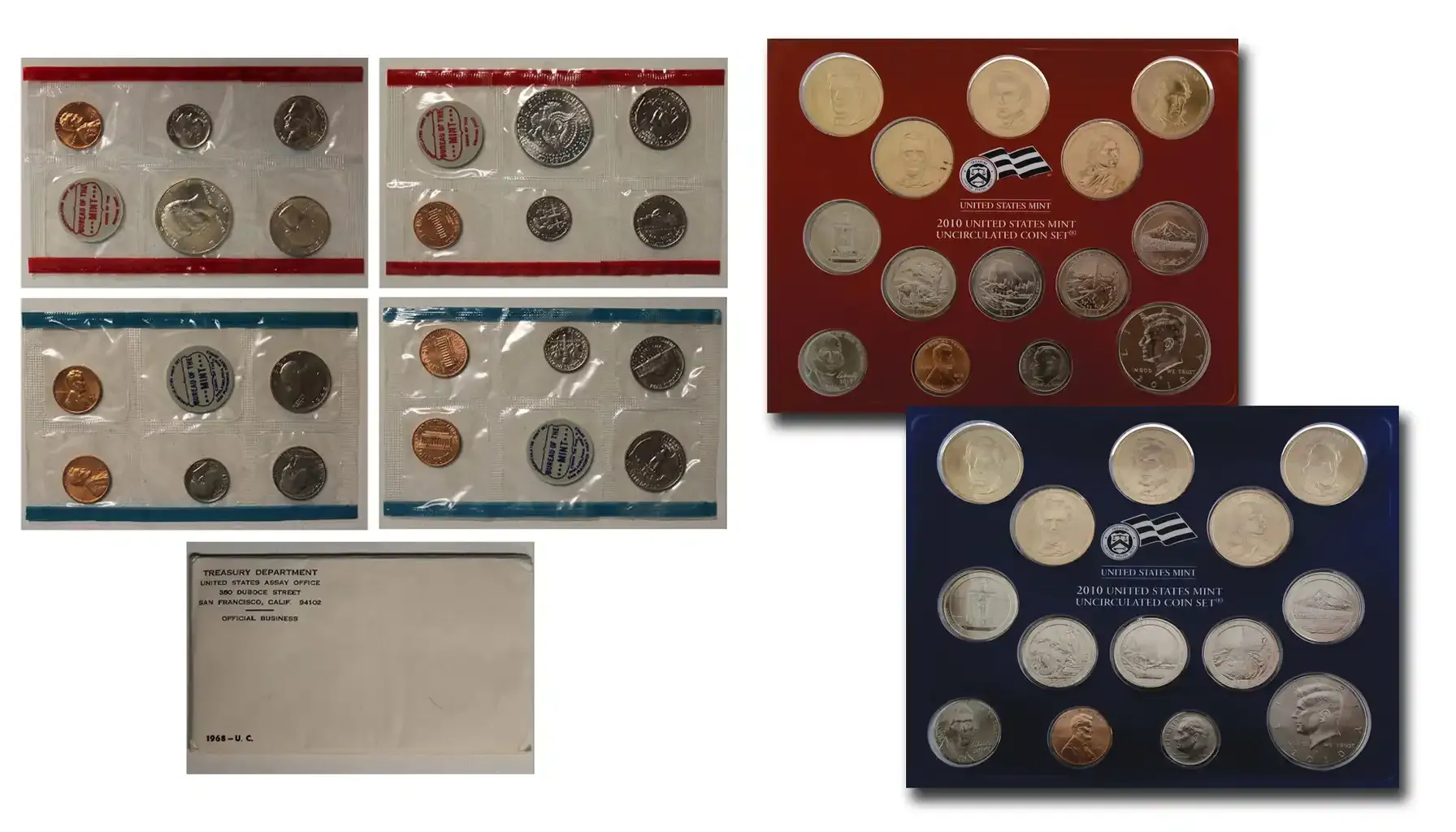
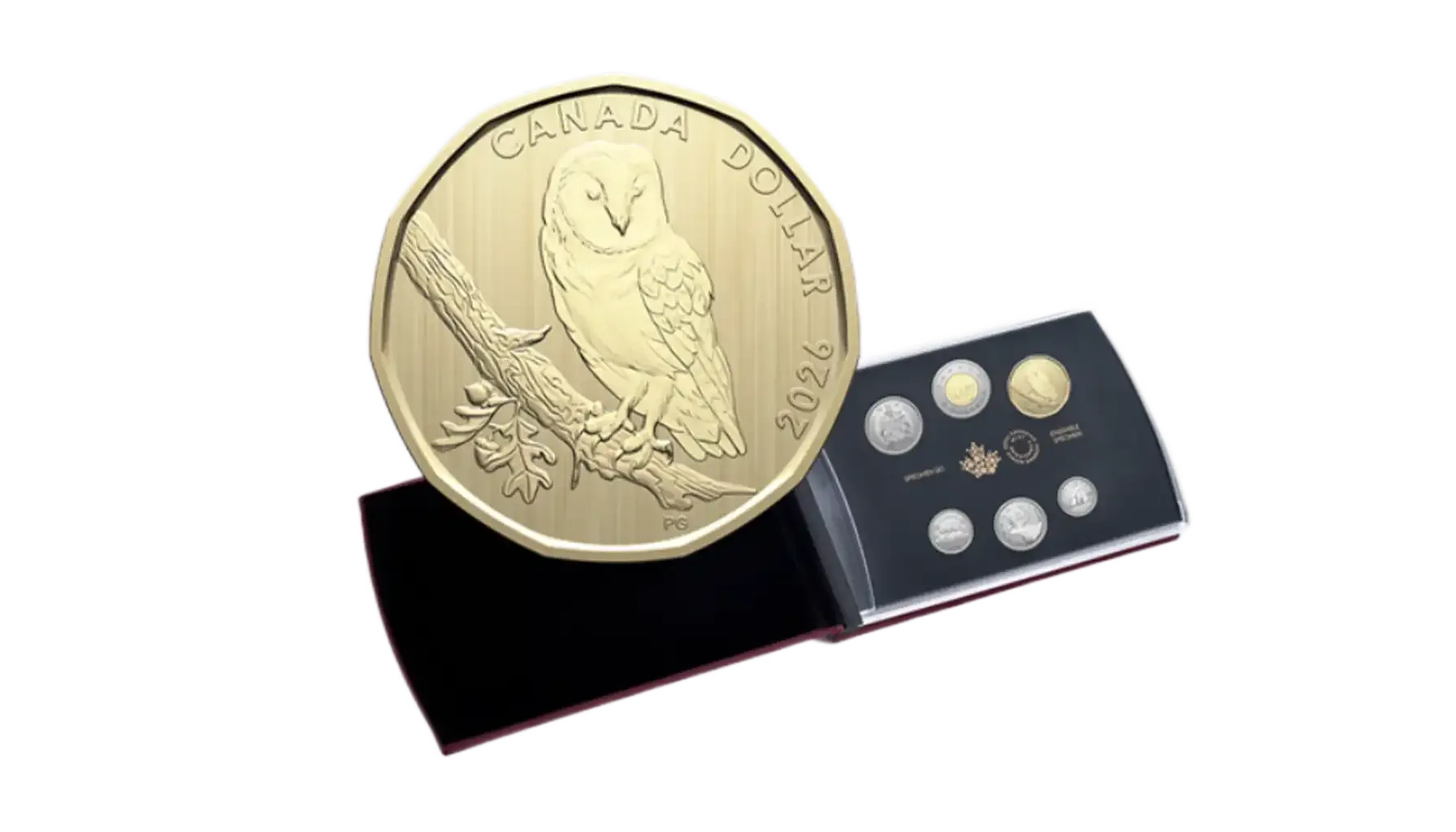
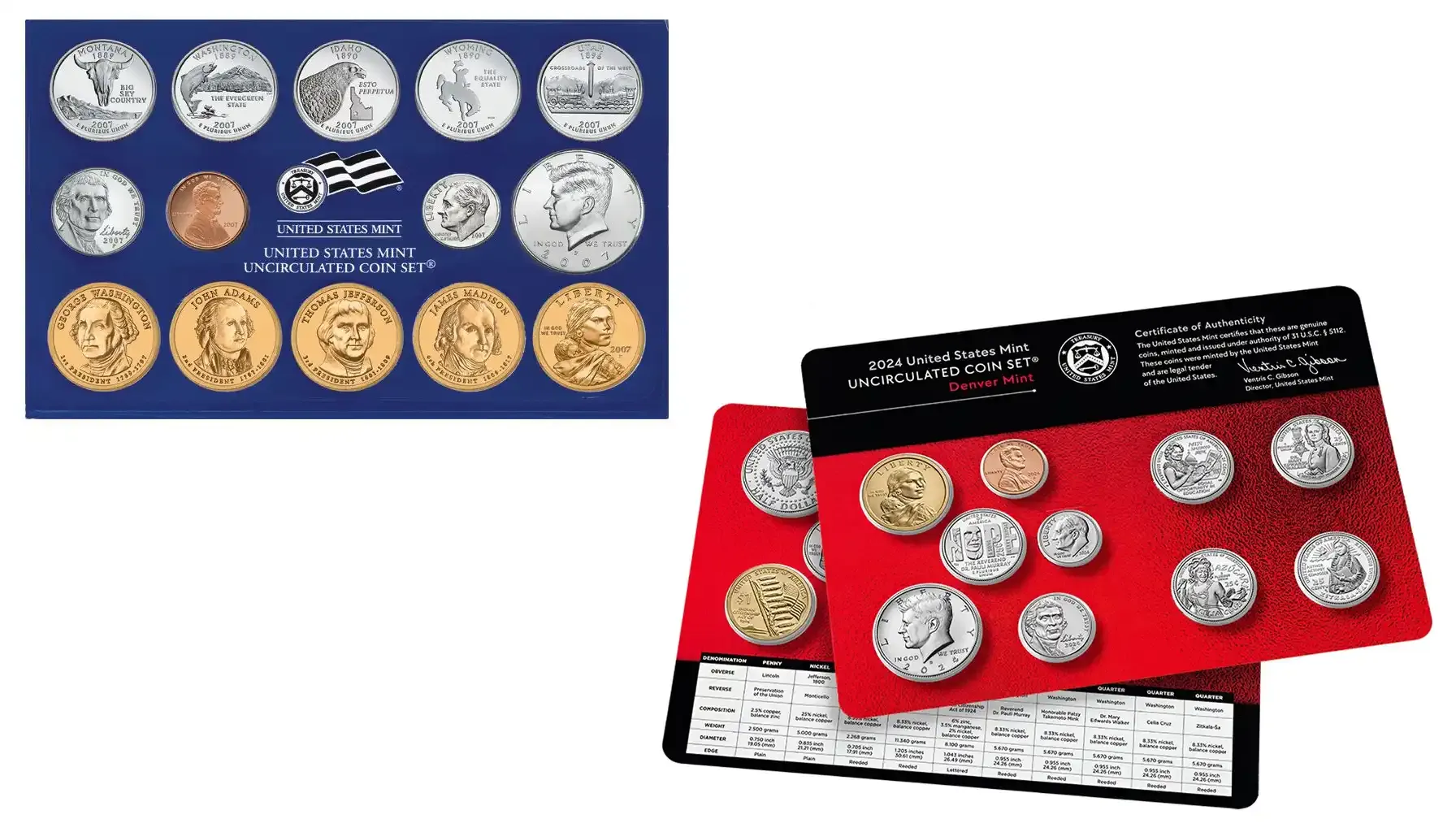
When the US Mint combines a couple of these uncirculated coins in a package, you get yourself a Coin Set (often called a “mint set”).
A typical U.S. Mint set includes:
One bit of each denomination from the year’s release.
Protective packaging to prevent wear
A Certificate of Authenticity (COA) confirming the bit’s origin and quality
The U.S. Mint and many world mints distribute these sets in many ways. Most have annual releases, but you could subscribe to the mint and get notified about new and premium arrivals.
As we’ve seen, there are proof and bullion (BU) coins, and their respective sets. Most proof bundles are more expensive, but their quality is also significantly higher.
How Uncirculated Sets Are Valued
Uncirculated coins value depends on:
Mintage: The fewer the bits, the rarer they are.
Year of issue: Older sets tend to gain value as they become harder to find.
Condition and packaging: Intact packaging with a certificate always goes for full value, or as close as possible.
Grade: Coins sought-after in high grade and certified by services like PCGS or NGC are more authentic—and worth significantly more.
How can anyone discern the value of a particular bundle or coin? Price guides (PCGS, NGC, and Greysheet-type) are the easiest source of essential information. Population reports report how many bits of a certain year and grade are in existence, so you can get an idea of rarity.
Let’s analyze some prices. We’ve looked at some annual releases and their prices.
Year | Mintage (Uncirculated) | Typical Retail (Set) | High-Grade Value (MS68+) |
1968 | 2,105,128 | $12–$20 | $150+ (Lincoln cent) |
1976 | 4,908,319 | $10–$18 | $200+ (Bicentennial quarter) |
1987 | 1,490,000 | $25–$40 | $300+ (Kennedy half) |
2005 | 1,100,000 | $30–$45 | $250+ (Westward Journey nickel) |
2023 | 250,000 | $40–$60 | $120+ (MS70 set) |
Where and How to Buy Authentic Uncirculated Coins
How to get uncirculated coins?
Your safest bet is the official sources (U.S. Mint) and vetted dealers. For those who live outside the US, think of the Royal Mint, Royal Canadian Mint, Perth Mint, etc.
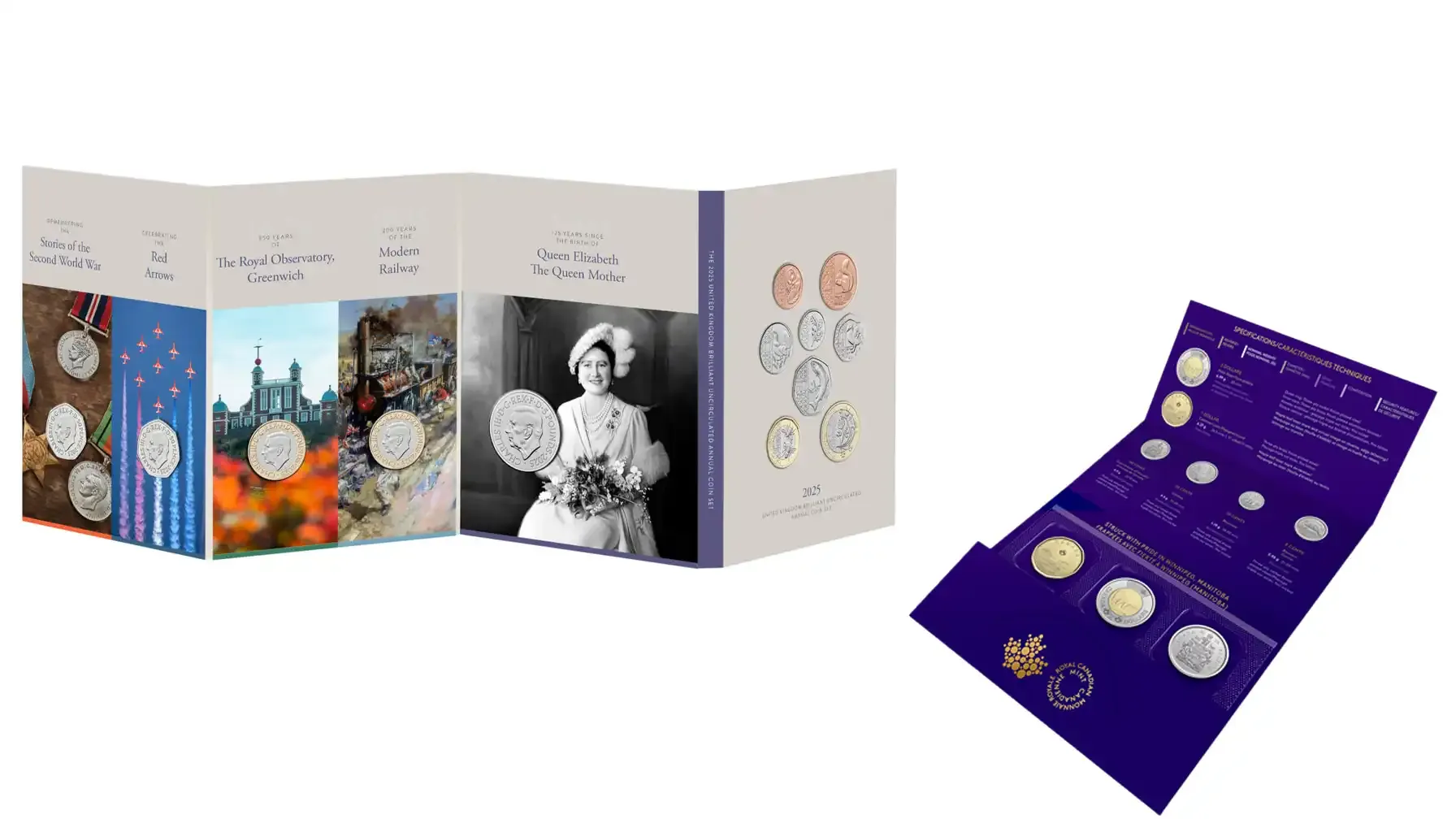
These sources guarantee authenticity, packaging, and full product descriptions.
Online Marketplaces are another option, but here you'll have to be more careful and properly evaluate your deals.
Check seller rating.
Look for clear, high-resolution photos of both sides and the packaging.
Avoid listings with vague descriptions (“appears uncirculated,” “from collection”).
Make sure the listing has a certificate and original mint packaging (OMP).
Red Flags and Negotiation Tips
If you find a listing, and it is similar to what we will describe below, avoid it. You might be scammed:
Listings with words like “Unsearched rolls” or “estate finds” are risky. Often, you might find circulated (used) pieces there.
Listing is missing a COA or damaged packaging, but tries to hide the fact.
The listing has unrealistically low prices compared to recent sales.
Some negotiation tips to not being scammed:
Compare prices across multiple dealers before you take a deal.
Politely request additional photos or certification numbers, especially if the whole thing looks uncertain.
Ask for a bundle discount or free shipping if you’re buying multiple sets.
FAQ
What is an uncirculated coin?
It is a coin that has never been released into general circulation. It retains its original mint luster and sharp details. Some were initially stuck in excellent quality, and others were lucky to never be touched before.
What’s included in an uncirculated coin set?
Typical uncirculated mint sets include one uncirculated example of each denomination issued in a specific year. Typically, those are bits from both the Philadelphia and Denver Mints. The bundle is packaged in protective holders with a Certificate of Authenticity (COA). Some mints also include special tokens or medals.
How much are uncirculated coin sets worth?
Their values depend on the year, mintage, condition, and whether the original mint packaging is intact. Common modern sets usually sell for $25–$60. Older or low-mintage sets (1960s–1980s) can be $50–$200+.
How do uncirculated sets compare to proof sets?
Uncirculated coins are those that have never been in use. They are a minority, an exception among many others. Proof coins are made for non-circulation, as a collectible item.
Where can I buy genuine uncirculated coin sets?
Your safest options are official government mints (e.g., Royal Mint, Royal Canadian Mint). Reputable online marketplaces (Apmex, JM Bullion, or eBay with top-rated sellers) are the second-best option.
Should investors get uncirculated sets graded?
Definitely. Grading can add significant value. Especially for older or low-mintage sets. It’s not always necessary, but if the bit has luster and all the details, it is probably worth grading. Professional graders like PCGS and NGC will even give you certificates of authenticity afterwards.
How do I store uncirculated sets to preserve value?
Original mint packaging is the best bet. Store your coins in a cool and dry place. Preferably, somewhere dark. Don’t use PVC-based plastics. They could tarnish the coin. Handle coins only by the edges and never touch the surfaces directly. An accidental scratch can forever ruin the bit.
How liquid are uncirculated coin sets for resale?
Pristine bundles are moderately liquid. Recent issues (2000s+) sell quickly as long as you price them for middle or low value. Older, scarcer sets often attract collectors and could go for a higher value. If the set includes popular designs (like Bicentennial issues), they are even easier to resell.

 Facebook
  X (Twitter)
  Pinterest
  LinkedIn