Contents:
Introduction to the 1950 Proof Set
The 1950 Proof Set was the return of proof coin set production after an eight-year break. The break was caused by World War II. Did you know that from 1943 through 1949, collectors had no new proof coins to buy?
This is why the first modern-era proof box has a special place in American numismatics. Collectors today really like this set, even above the 1990 or the 1996 set, because of its low mintage and its historical importance. Only 51,386 sets were sold; it is one of the scarcest post-1936 issues.
Composition and Coins in the 1950 Proof Set
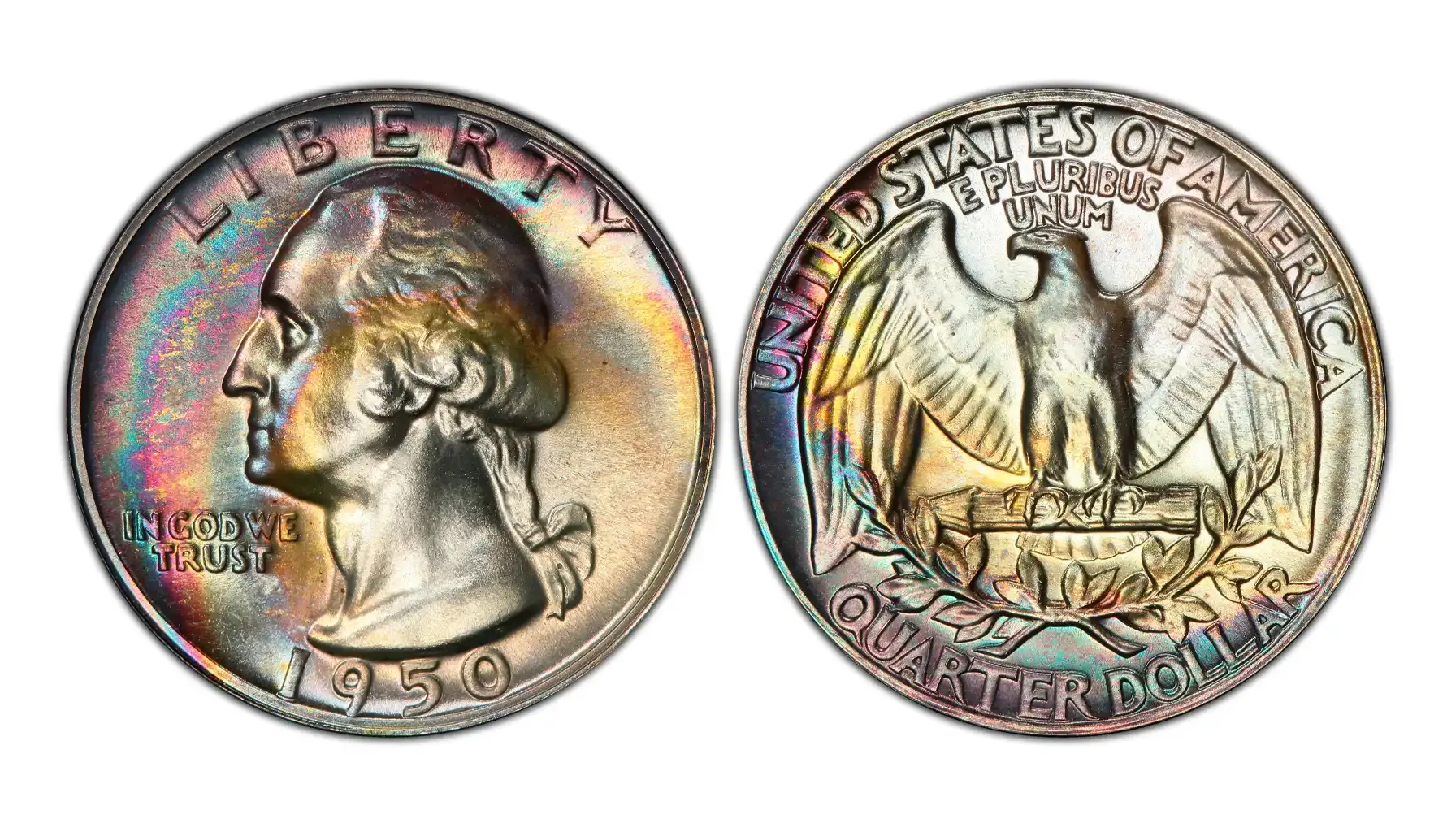
Each box had the five standard circulating denominations of the time:
Lincoln cent (bronze)
Jefferson nickel (cupro-nickel)
Roosevelt dime (90% silver)
Washington quarter (90% silver)
Franklin half dollar (90% silver)
Every piece was struck multiple times to produce mirrored fields and sharp details. Early 1950 examples have deep mirrors and strong contrast, though heavy cameo finishes were still rare in this era.
1950 Proof Set Packaging & Original Box Details
The 1950 release came in simple packaging. The coins were sealed individually in cellophane sleeves, then all five sleeves were stapled together and placed inside a plain cardboard box marked “U.S. Mint, Philadelphia.” This early “box type” format was used only from 1950 through 1954.
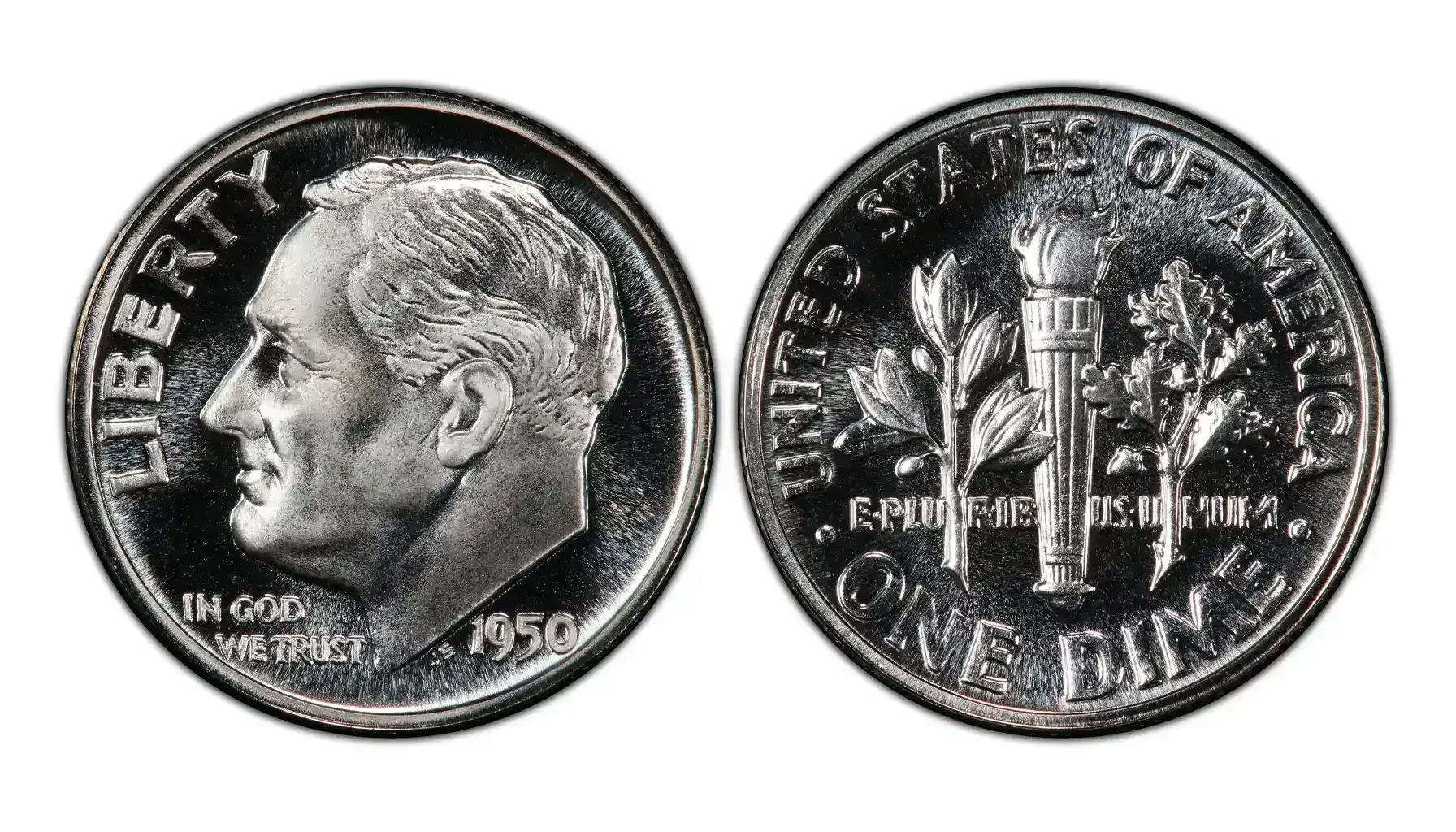
It is a rare thing to find a box still housed in its original box. Collectors need authenticity, and having all five coins with the correct early packaging confirms the set wasn’t reassembled later from random proofs.
And yes, packaging condition matters more than most realize. A crisp Mint box with matching cellophane can cost much more, especially if the coins show attractive toning and no signs of tampering.
1950 Proof Set Value & Pricing Trends
As of today, a complete ungraded box in original Mint packaging usually sells in the $1,100–$1,600 range. High-grade certified coins (NGC or PCGS) can give you more, especially if you have cameo or deep-cameo examples, which are quite rare for this year.
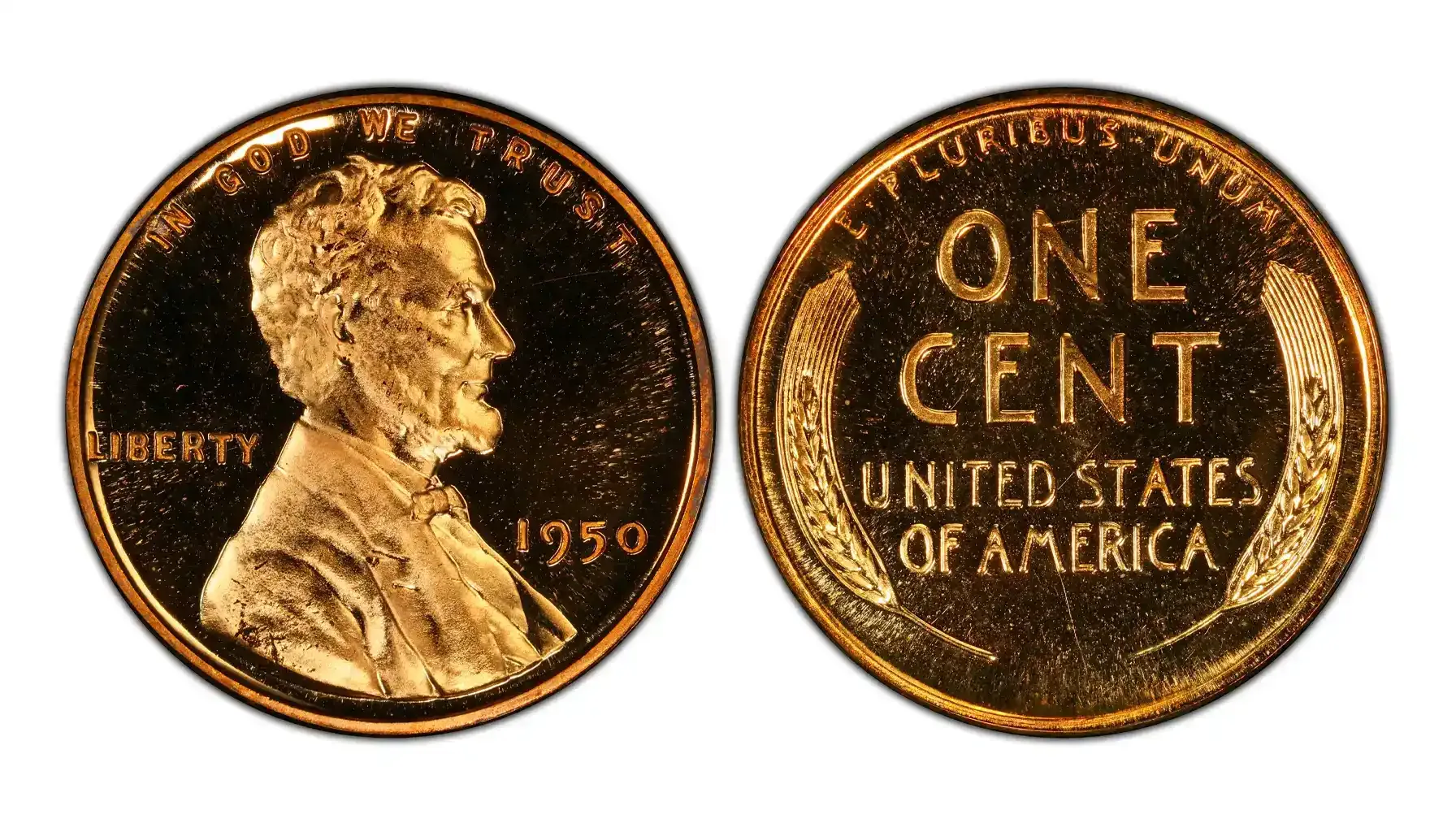
Factors that influence value:
Condition: mirror depth, strike sharpness, and haze or spotting
Completeness: all five coins present, original box and cellophane intact
Color and toning: natural rainbow toning can push prices higher
When compared with later years (1951 through 1955), the 1950 set is typically a more expensive one. It’s the “first of its era,” and collectors chasing a full run of early-50s proofs usually start here.
How to Identify an Authentic 1950 Proof Set
Original U.S. Mint packaging: coins in individual cellophane sleeves, stapled together at the top. The cardboard box should show age-consistent wear but no modern printing
Coin appearance: each coin should have mirrored surfaces and strong edge details. Proof coins lack the dull, grainy texture of business strikes
Matching toning: all coins should share similar aging and coloration, a sign they’ve been stored together since 1950
Certification: send the set or individual coins to PCGS or NGC for grading and authentication. These services confirm strike type and guarantee authenticity
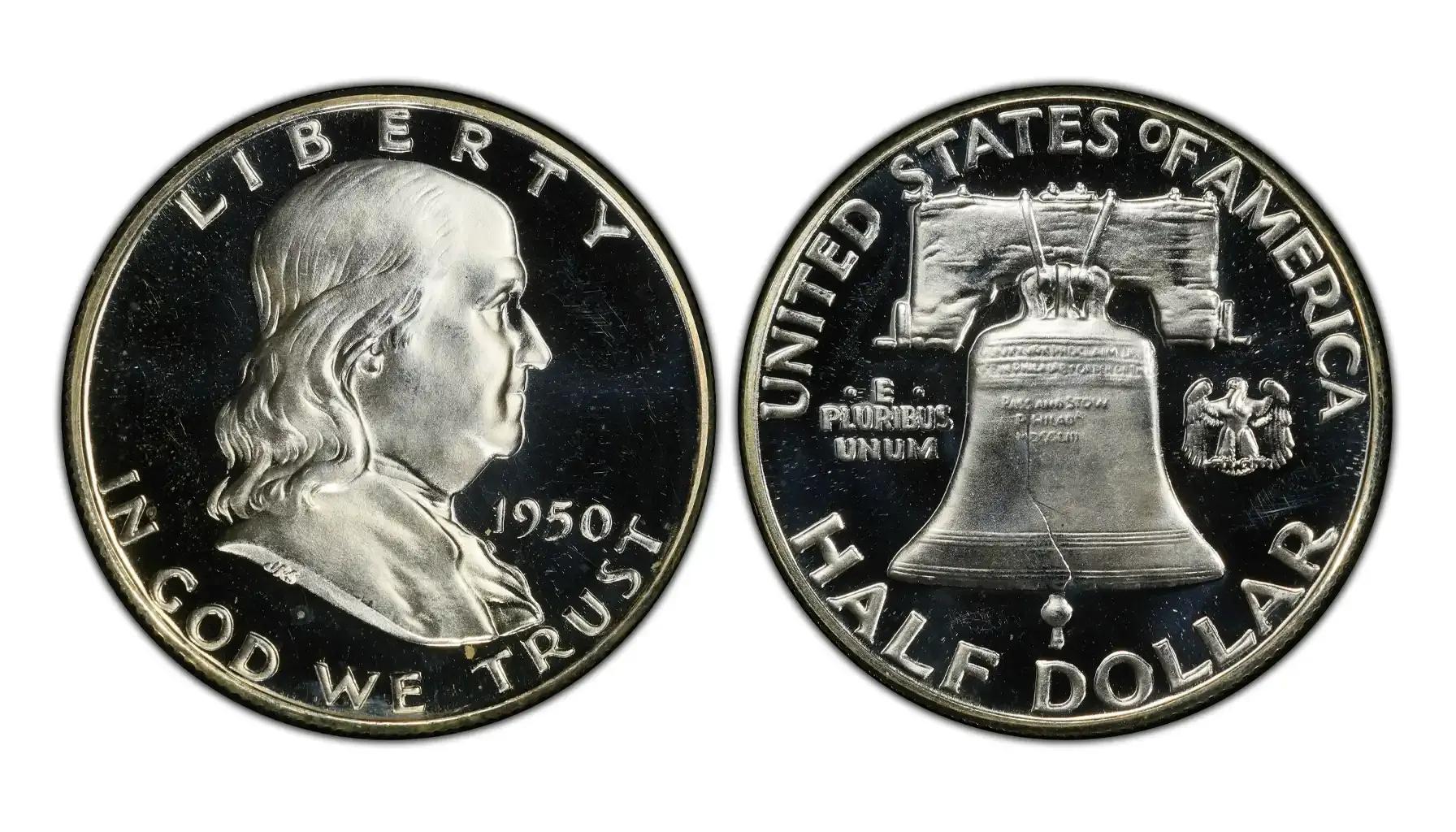
The 1950 Mint Set vs Proof Set: Key Differences
Feature | 1950 Proof Set | 1950 Mint Set |
Purpose | Made for collectors; produced to show superior strike quality and mirror-like surfaces | Created for collectors who wanted one example of each coin struck for circulation that year |
Production Method | Coins struck multiple times using specially polished dies and planchets for mirrored fields | Regular business-strike coins; no special finish or polishing applied |
Packaging | Individual coins sealed in separate cellophane sleeves, stapled together, and boxed by the U.S. Mint | Coins mounted in cardboard panels, showing both obverse and reverse sides |
Mintage | Approximately 51,386 sets | Around 18,000 sets, each containing two of every denomination (one from Philadelphia, one from Denver) |
Finish Quality | Highly reflective fields, sharp details, occasional cameo contrast | Standard uncirculated finish typical of coins struck for circulation |
Collector Appeal | Favored for artistry, craftsmanship, and historical importance, often considered the “first modern set | Valued by collectors who focus on mint mark varieties and date runs |
Market Prestige | Has a higher price and long-term demand | More affordable |
FAQ
What coins are included in the 1950 Proof Set?
Inside there are five coins: the Lincoln cent, Jefferson nickel, Roosevelt dime, Washington quarter, and Franklin half dollar. Those coins were all made at the Philadelphia Mint, by the way. At the time, it was the only U.S. facility making proofs.
How much is a 1950 Proof Set worth today?
Prices move with the market, but most complete sets land somewhere around $1,100–$1,600. But! If your coins have strong cameo contrast or are graded in top condition, they can be worth past $3,000.
How can I tell if my 1950 Proof Set is in its original U.S. Mint box?
The real 1950 packaging was pretty simple. Well, they made this box right after the war. It was a small brown cardboard box with no logos or print. Inside, there are five separate cellophane sleeves. Each sleeve has one coin, stapled together at the top.
What’s the difference between the 1950 Proof Set and the 1950 Mint Set?
Proof coins were made just for collectors and struck several times for extra-sharp detail. Mint Set coins were regular business strikes, simply pulled aside and sold in pairs from each mint.
Are 1950 Proof Sets considered rare or hard to find?
Pretty rare. The Mint sold a little over fifty thousand sets, and many were later broken up for individual coins. Finding one still boxed and untouched isn’t easy anymore.
Should I get my 1950 Proof Set professionally graded?
Well, if they are deeply mirrored or cameo-like, try to send them to PCGS or NGC. A professional grade confirms authenticity, and it doesn’t matter how unique or regular your coin is. As a bonus, you would get a pretty sealed package to keep the coins from the environment.
How do I properly store or preserve a 1950 Proof Set?
It’s better to keep it somewhere cool and dry, definitely not in damp basements or attics. Also, you should avoid PVC flips or soft plastic holders, it’s because they can leave residue over time.
Where can I buy or sell authentic 1950 U.S. Proof Sets safely?
Buy from trusted coin dealers, auction houses, and big marketplaces that deal with certified coins.

 Facebook
  X (Twitter)
  Pinterest
  LinkedIn