Contents:
Who is a collector if they have no Сoin Sets?U.S. coinage had numerous series you could dabble in, and today we will focus on the post-1936 era.
Why 1936? Because it was the first year that the U.S. mint started issuing proof sets.
Understanding U.S. Proof Coin Sets
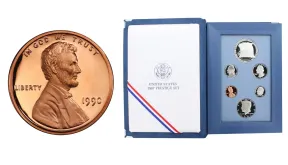
What is a proof, and how is it different from a normal circulating coin?
Proof coins are the ones specifically made for collectors. Standard circulation coins are struck once on presses. Proof bits are struck multiple times on superior planchets. It makes them more detailed, perfect for collectors. Proofs are given out as gifts, and you would never see them as change in a supermarket.
The 1936 set was the first official bundle from the U.S. Mint. Before that, proofs were sporadically produced for presentation or special requests, without a big, real system behind them. Since 1936, there have been numerous other editions, like 1940, 1950 Proof Sets, and more.
To make these beautiful coins, mint workers need to prepare. Dies should be polished, and planchets cleaned.
A Brief History of U.S. Proof Sets (1936–Present)
Designs and techniques evolve through the years. We mainly have three periods to remember.
The Early Sets (1936–1942)
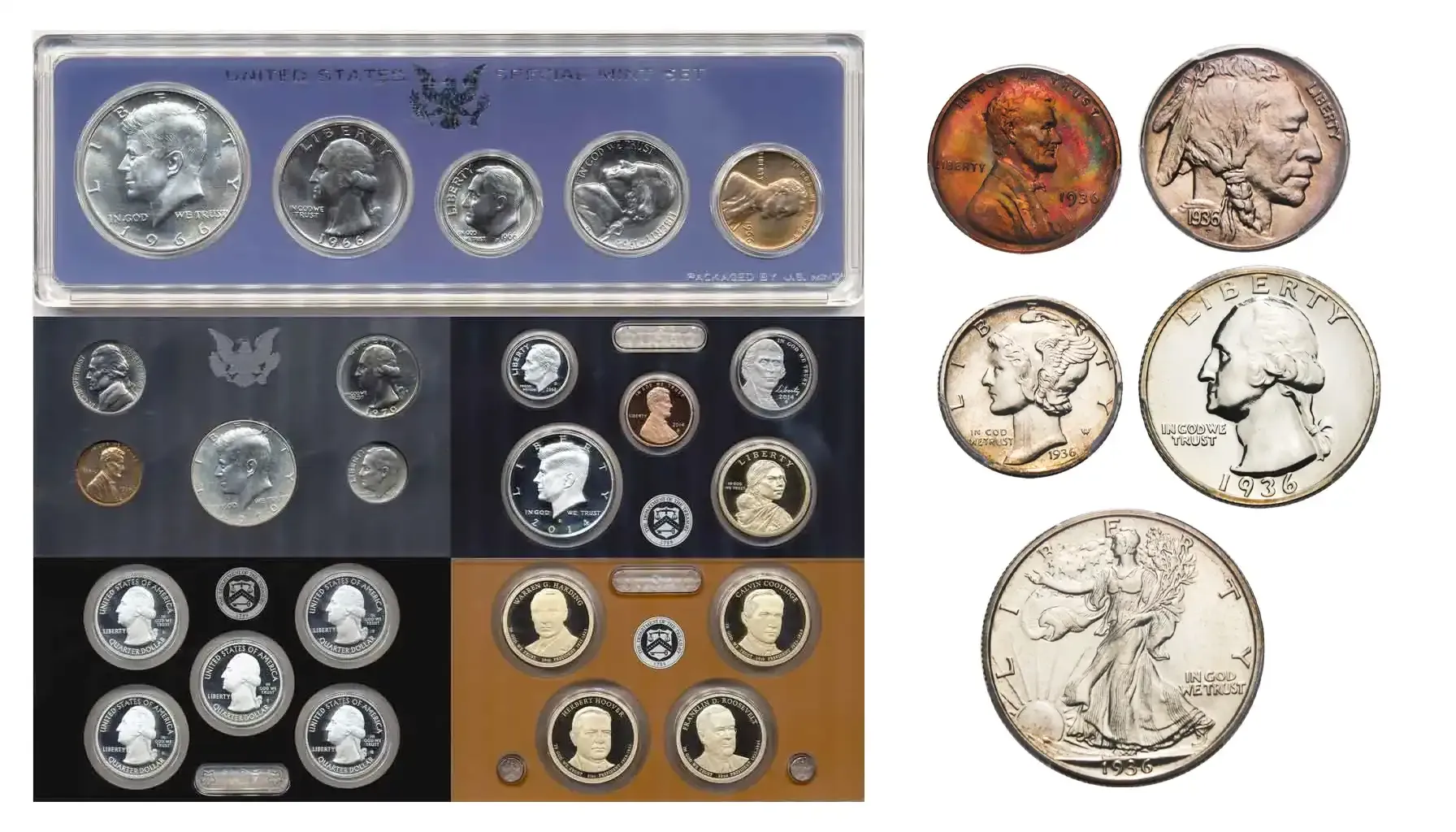
The first few coin proof sets were modest. Typically, one coin from the chosen year is in a humble plastic holder. Production stopped in 1942 due to World War II. This disastrous event gave us interesting coinage like a 1942 penny, but also temporarily took away our sets.
Postwar Revival and the 1950s–1960s Era
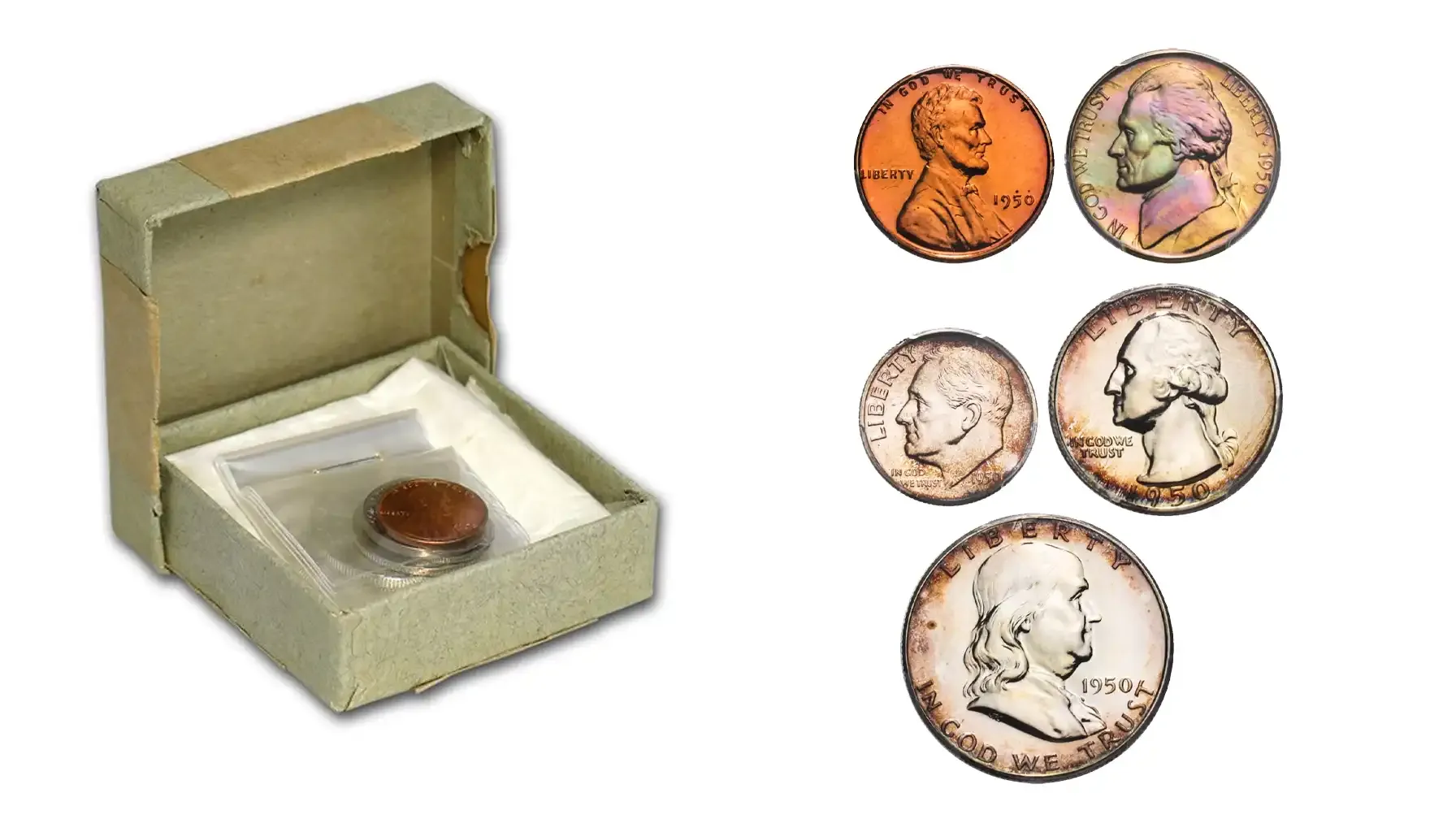
In 1950, the Mint resumed proof production after an eight-year hiatus. "Cameo" appearance became especially popular during the era.
Modern Era Sets (1970s to the Present Day)
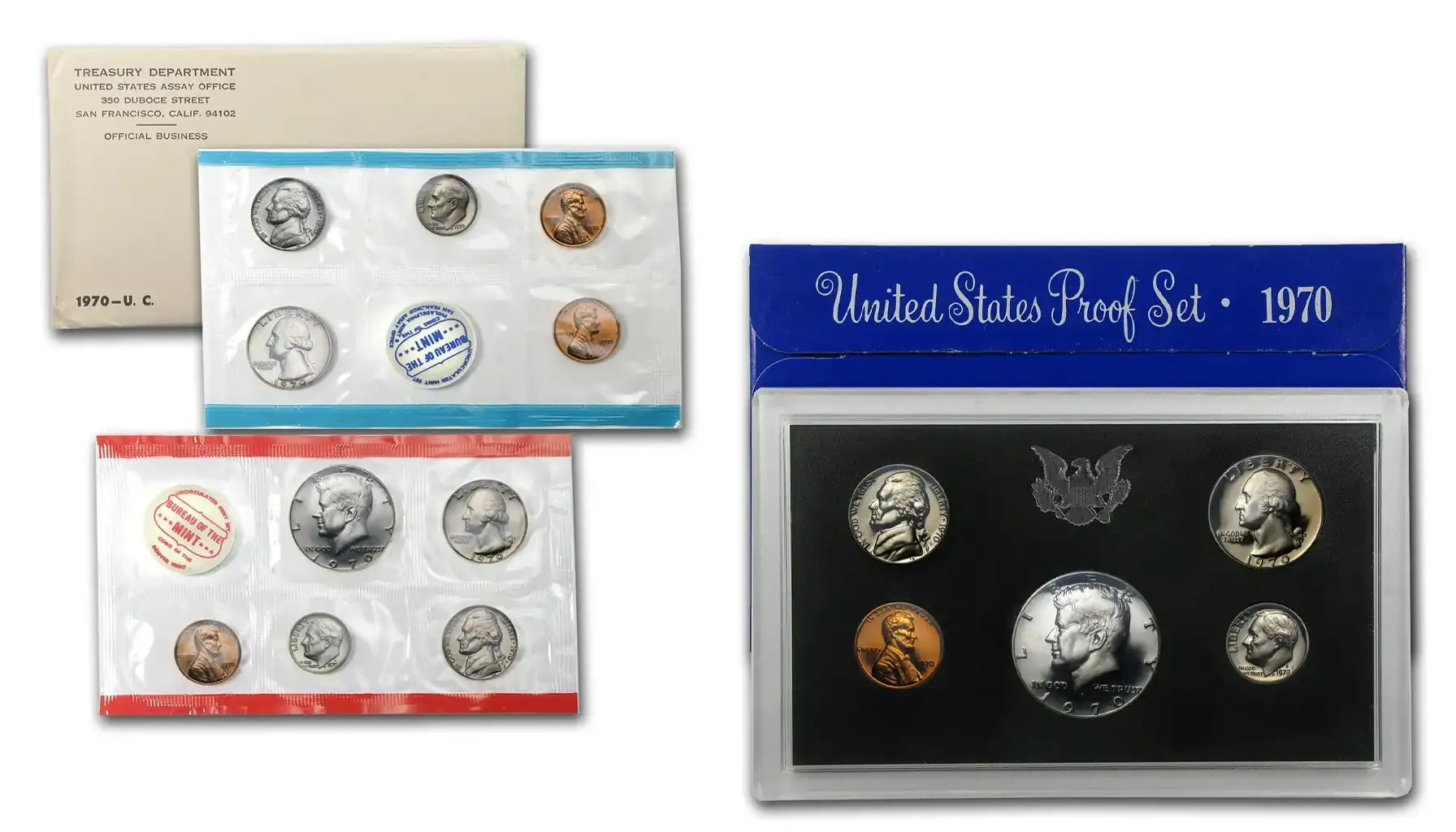
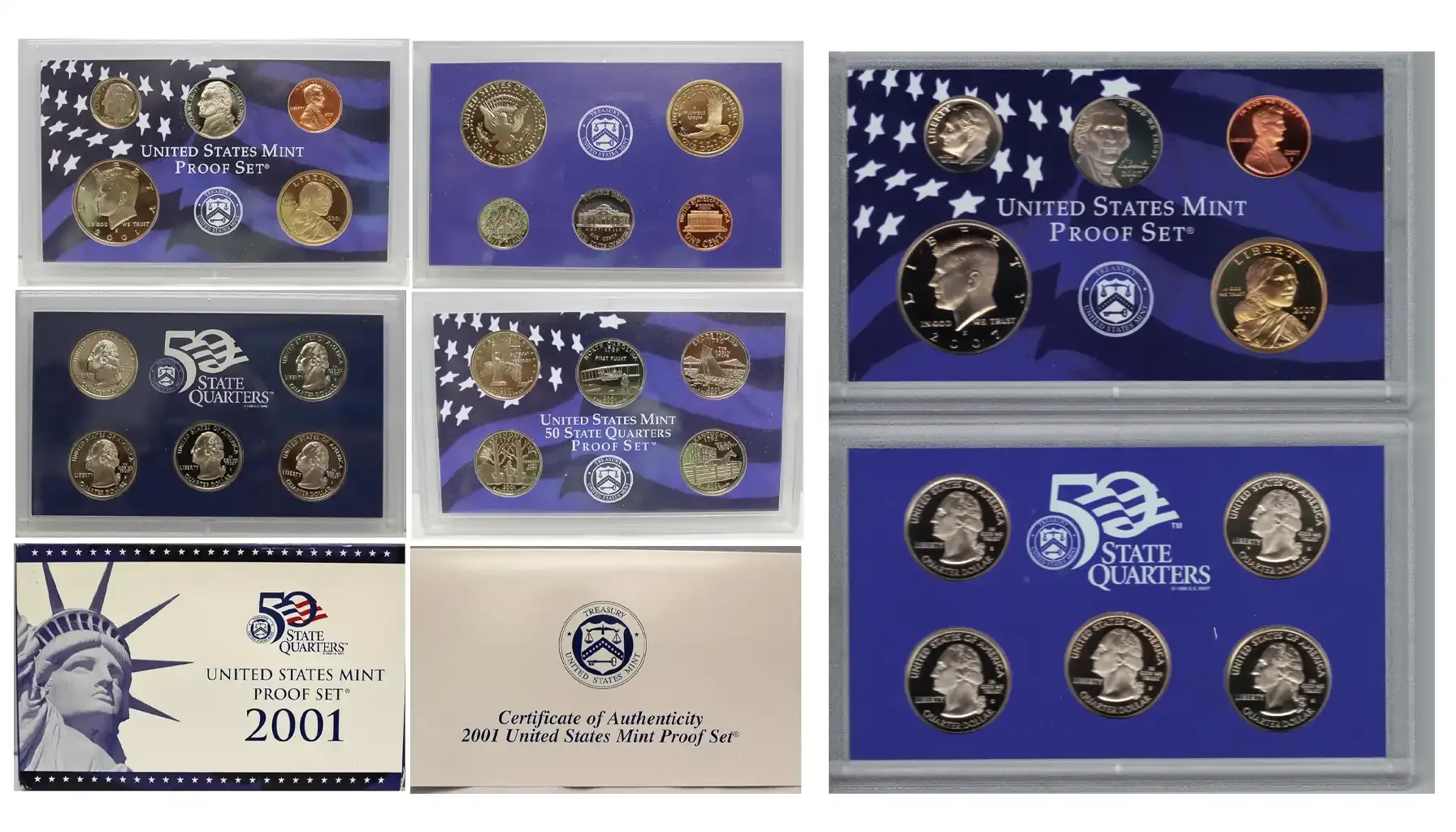
From the 1970s onward, the U.S. Mint began releasing premium bits in harder plastic cases. New packages for more appealing and safer. The newer arrivals, like 1996 Sets, had many variations: rainbow patinas, differently colored cases, and more.
Composition and Design Features of Proof Coins
A typical proof piece has one or more of the following features:
Polished dies and mirror-like surfaces. A key sign. The coin should be reflective and lustrous.
Frosted relief and cameo contrast. A few modern proofs have a “cameo” effect. They look frosted. Perhaps less reflective, but with a strong contrast.
Materials: from silver and copper to modern alloys. Early proofs were either the original material, like bronze or silver. Modern ones usually have precious metals, like silver and gold, and in a fine (99%) composition.
The Value of U.S. Proof Coin Sets by Year
US proof set values for each series differed, but we could compile them all in a general table, from the 1936 proof set value to the newer ones.
Era | General Value Range (USD) | Notable Issues and Record Sales |
1936–1942 | $600 – $6,000+ (depending on year) | 1936 (first official set, $6,000), 1937 ($3,150), 1942 (transitional, $1,100) |
1950–1970 | $30 – $500+ (depending on year) | 1950 ($625), 1951 ($600), 1968-no S (error, $17,000). |
1970–today | $7 – $40+ (for most, but notable issues go for much more) | 1970-S ($950), 1968-no S (error, $410,000!), 1983-S ($850), 1990-S ($5,000) |
What made each of these sets more valuable than the others? Mostly, because they were rare and special.
Rare and Special Edition Proof Sets
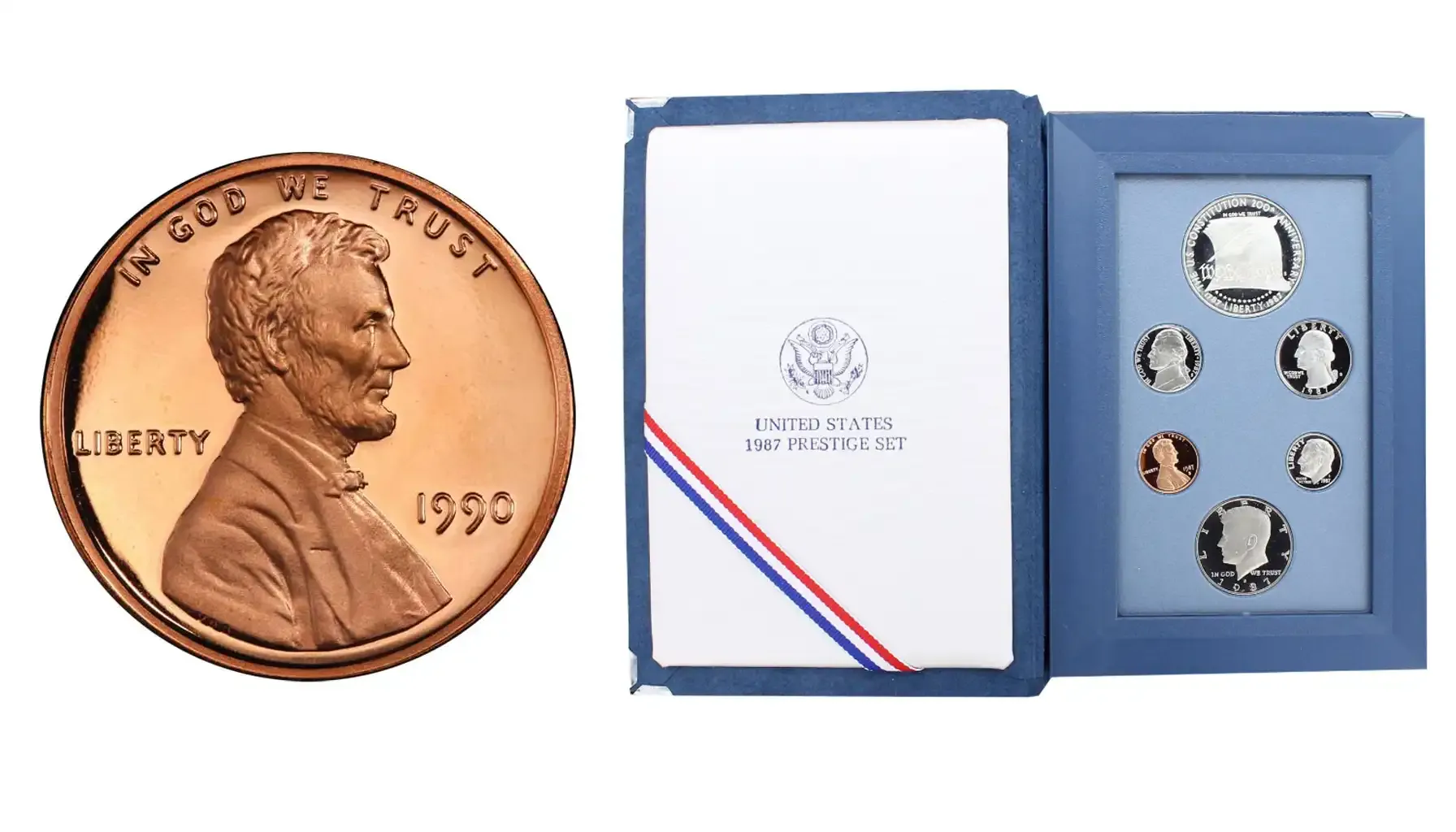
Silver Sets and Limited Editions: Most are plated, and logically, their silver versions are more limited. Some sets also commemorate important events (for example, 2009 Penny proofs celebrated Lincoln’s anniversary).
Error Varieties: Most premium editions come from San Francisco and bear their “S” mintmark. If this letter is missing, then we have a very valuable error.
Prestige and Commemorative Editions: Between 1983 and 1997, the Mint issued many similar collections. Each featured a pack of this year’s Kennedy half dollar, Washington quarter, Roosevelt dime, Jefferson nickel, and Lincoln cents. At the time, they were considered premium.
Packaging and Presentation Through the Years
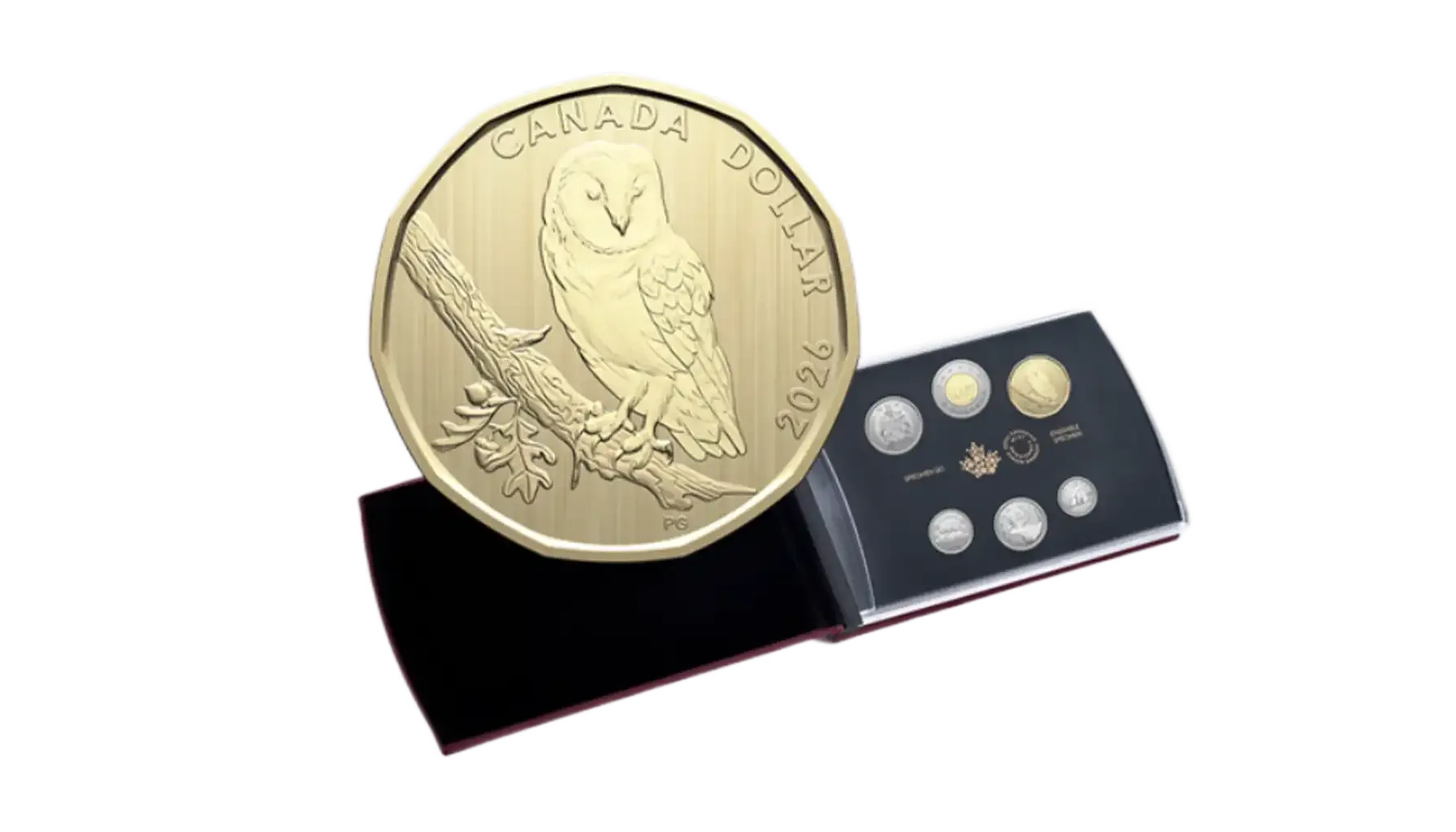
The US Mint started with cardboard boxes and cellophane wrappers. Today, we have sleek plastic cases. Good looking and protective.
Some con artists attempt to copy the official packages. With a trained eye, you can discern them. Official packages have logos and seals.
The condition of the box matters, too. A roughed-up package often sells cheaper. Original packaging gives you a premium experience, the exact kind any proof bit should give.
FAQ
What are U.S. Proof Coin Sets and why were they created?
Such coins were created for collectors and on better dies. The U.S. The Mint began issuing them in 1936 because collectors demanded special issues.
How can you tell if a coin is a Proof coin?
Such coins have sharper details. Their surfaces are frosted or mirror-like. Most of them bear the “S” mintmark for San Francisco.
Which U.S. Proof Coin Sets from 1936 to today are the most valuable?
The older, the better. The 1936–1942 editions are the rarest and most valuable. As an exclusion, examples with errors (from any year) could be worth thousands of dollars. 1936 proof set original packaging is easily $1000+.
How has the packaging of Proof Sets changed over the years?
Older editions came in simple cellophane or boxes. In the 1950s–60s came flat-pack envelopes. The modern era mostly uses plastic lens holders.
What is the difference between a Proof Set and a Mint Set?
Proof sets are higher-quality, made on a different base than circulated bits. Mint sets are technically the same business-strike coi;s, they just were never in use.
Are modern Proof Coin Sets still made with silver?
Yes. Moreover, modern editions often have more silver (99%) compared to older editions (only 90).
How should U.S. Proof Coin Sets be stored to preserve their condition?
Keep your collectibles in their original packaging. The best spot for storage is somewhere in a cool, dry place.
Where can collectors buy authentic U.S. Proof Coin Sets from 1936 to date?
You can go to the U.S. Mint website and comfortably buy the newer sets. You can buy the older editions from reputable coin dealers, auctions, and certified marketplaces. PCGS, NGC, or eBay are the more popular options.

 Facebook
  X (Twitter)
 ) Pinterest
Pinterest  LinkedIn