Contents:
How much is a 20 cent euro coin worth? Do you need to use a coin scanner online to find the answer to this question? Or have you carefully read this guide with rare variations, national designs, and other useful information, and do you know the answer to this question?
What Is the 20 Euro Cent Coin?
Nominal 20 euro cent coin value | €0.20 |
Weight | 5.74 g |
Diameter | 22.25 mm |
Edge | plain but with seven broad indentations consistent with the Spanish flower shape of an example |
Composition | Nordic Gold |
Years of minting | 2002–present |
This is still an official means of payment in the Eurozone countries. It was introduced into circulation on January 1, 2002, just like the 50 euro cent coin. It is used for small transactions, change, and trade involving small amounts. It is the second-largest example in this series.
The first such specimens were minted in the late 1990s at the national mints of the member countries. Immediately after the introduction of this issue, a joint program for a single design for all cent denominations, including the 20, was launched.
Design Features and Symbolism
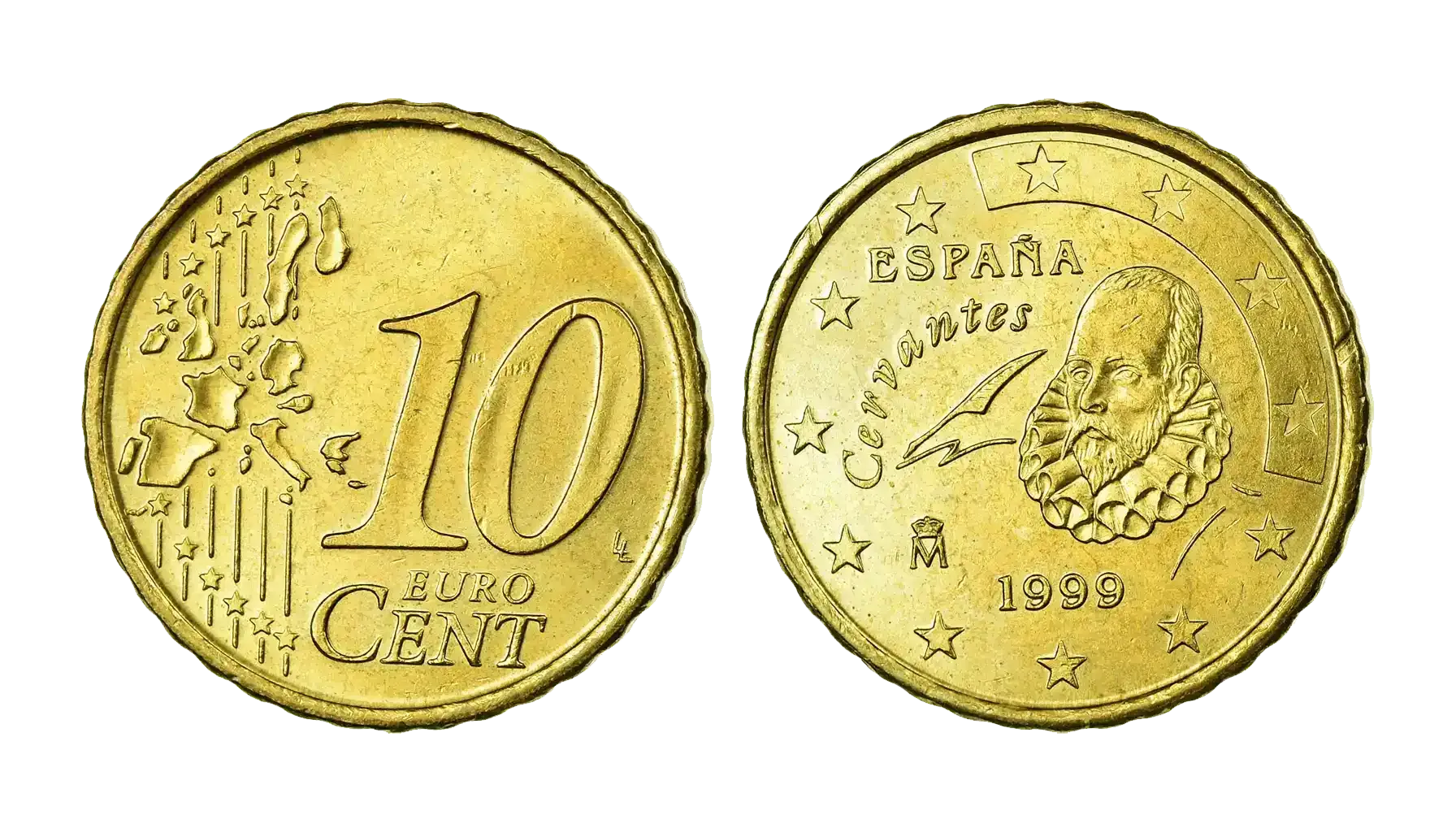
The obverse of the 20 euro cent gold coin traditionally has a common design for the entire Eurozone. It depicts a map of Europe on a background grid. Twelve stars are arranged around it. They symbolise the unity of the Eurozone countries.
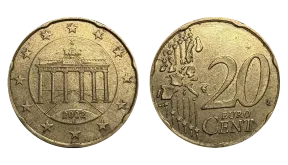
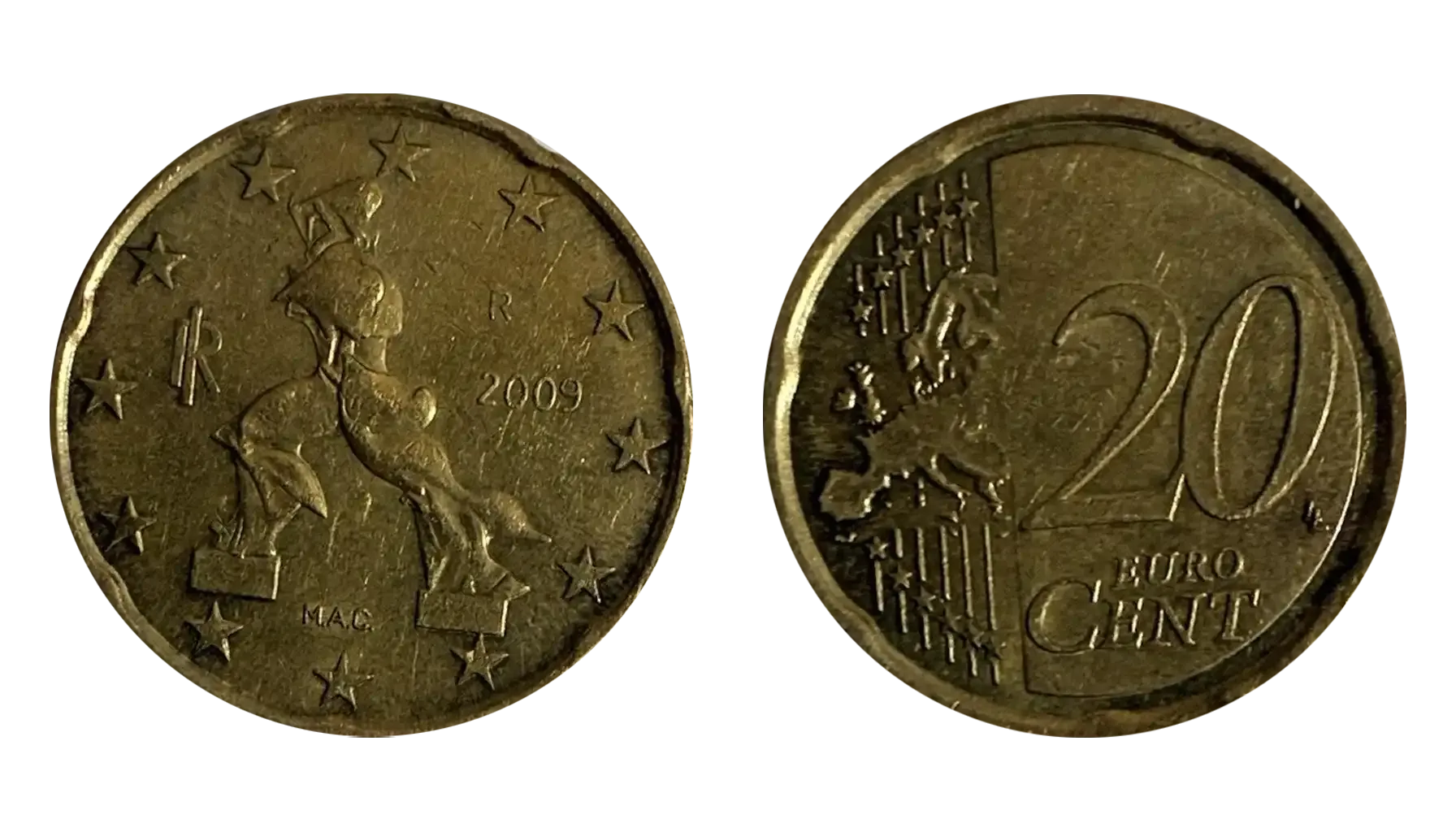
On the reverse, each participating country uses its own design; for example, German coins — the Baltic rose, France — a Provencal braid around Marianne or figures of Liberty, Italian euro 20 cent coin — Victoria with a Santorium and a laurel branch, Spanish coins — a portrait of King Felipe VI or Queen Sofia.
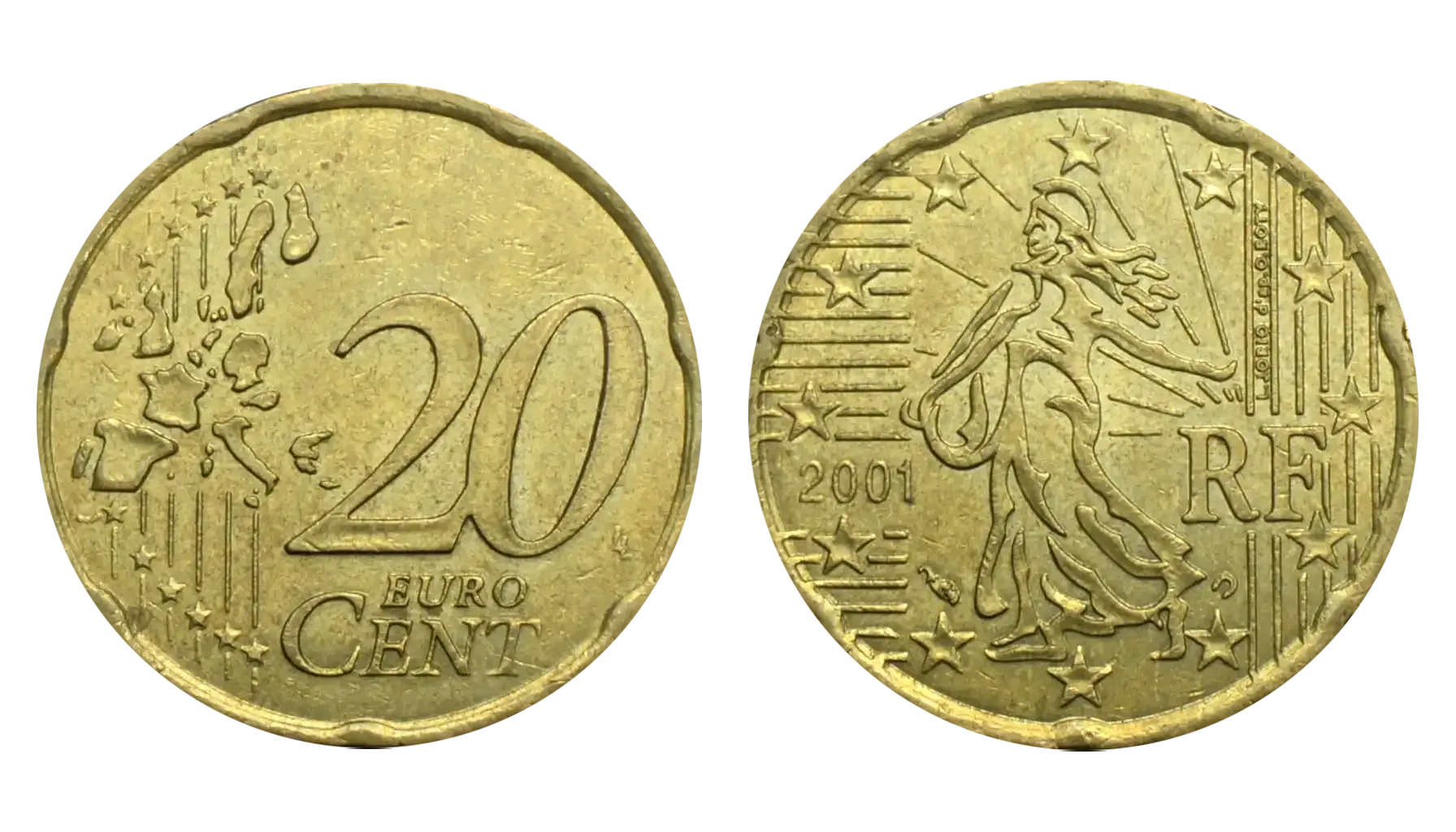
Everything depends on the year and the specific series. The German 20 cent coin euro symbolises peace and light, Marianne in France represents liberty and the Republic itself, and Victoria Vitalia in Italy is the goddess of victory, who symbolises culture and crafts.
Rare 20 Euro Cent Coins and Scarce Years
Rarity features
Pay attention to low mintage, especially at mints of countries with low euro usage, for example, Slovakia or Estonia.
Find errors, for example, design misalignment, double strike, and defects on the edge.
Look for commemorative series or limited-issue sets.
Examples of Rare Years and Issues
Austria 2002 (A): early issues, edge defect.
Slovenia 2007: low mintage, most examples went into bank circulation.
Finland 2004: rare variation with a poorly struck edge.
Slovakia 2009: the starting year of joining the Eurozone, officially, a few coins were minted.
Factors
Specimens should be graded by the Sheldon scale: from Poor to Mint State.
Original packaging should be present — a fitted capsule or a gift set.

 Facebook
  X (Twitter)
  Pinterest
  LinkedIn