Contents:
- What Is the Value of a 1951 Wheat Penny?
- 1951 Lincoln Wheat Penny: Key Facts and Mint Varieties
- 1951 Wheat Penny Value Chart
- Rare 1951 Wheat Penny Error List
- Most Valuable 1951 Wheat Penny Examples
- How to Identify a Valuable 1951 Wheat Penny
- Is a 1951 Wheat Penny Worth Anything Today?
- Where to Sell or Appraise Your 1951 Penny
- FAQ
The copper coins are the final part of the Lincoln Wheat cent series, 1909–1958 period. The Wheat item value opportunities are discovered in a year with high mintages and distinct mint mark varieties. The price starts from $0.10 to $300 for Mint State pieces.
What Is the Value of a 1951 Wheat Penny?
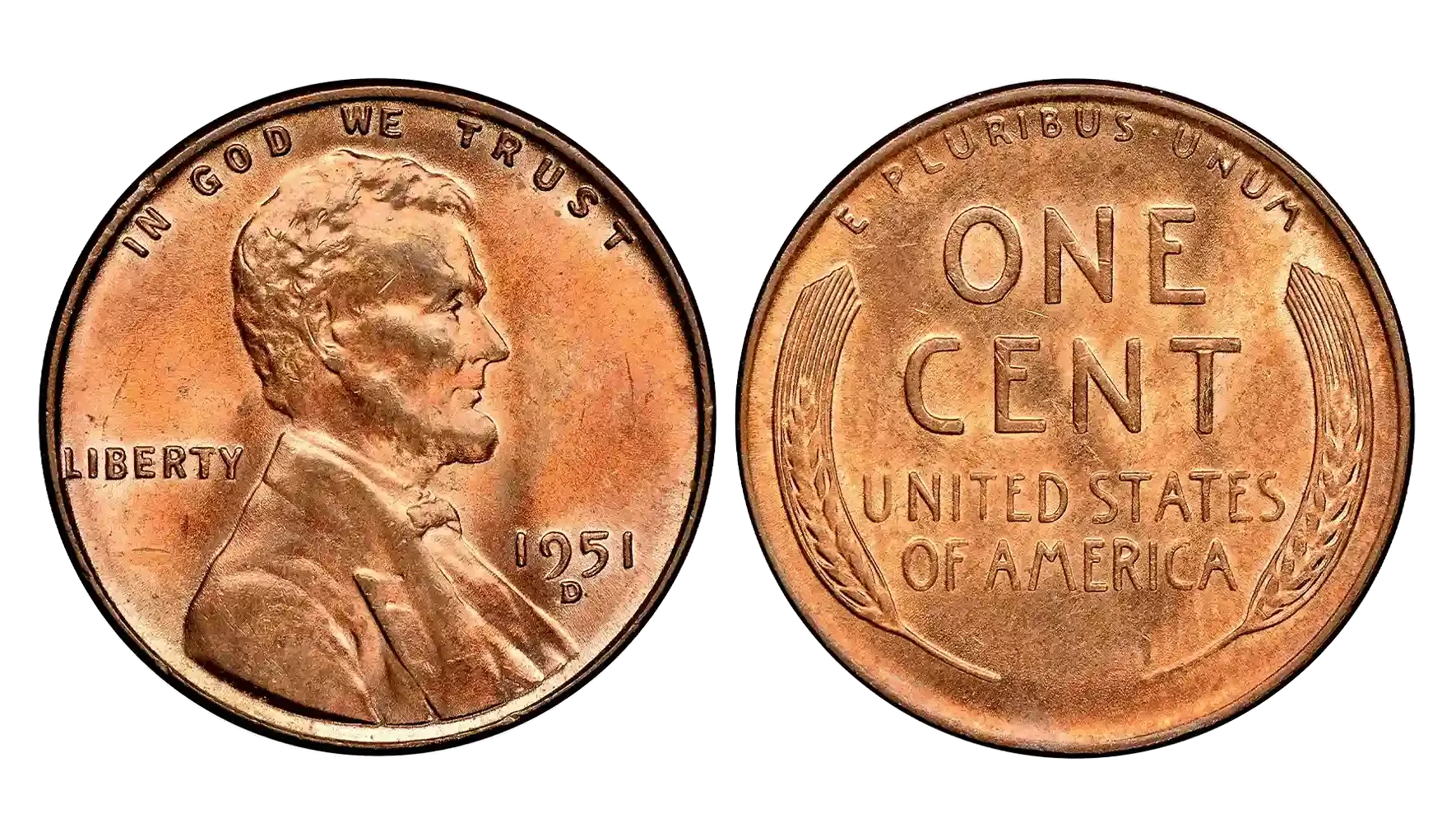
How much is a 1951 D Wheat penny worth in the modern market? Circulated examples across all three mint facilities trade in a relatively narrow band determined primarily by copper content and date popularity. An ordinal in Good to Fine condition sells for $0.10 to $0.25. Extremely Fine examples – $0.35 to $0.50.
The 1951 penny value increases significantly when coins reach uncirculated condition. Mint State 60 examples deal for $2 to $4. MS-63 equilibrium between $5 to $8. MS-65 coins with minimal marks – $15 to $30.
Mint mark plays a substantial role in determining value at higher grade levels. Philadelphia 1951 penny no mint mark produced 284,576,000 wheat pennies with no mint mark, making them the most common. Denver struck 625,355,000 examples bearing the D mint mark – the highest mintage of the year. San Francisco had the lowest mintage – 136,010,000.
1951 Lincoln Wheat Penny: Key Facts and Mint Varieties
Is a 1951 penny copper? The question receives a definitive yes – these coins contain 95% copper, giving them intrinsic metal value above face.
Designer | Victor David Brenner |
Diameter | 19 mm |
Weight | 3.11 grams |
Composition | 95 % copper, 5 % tin, and zinc |
Edge | Plain |
History Background & Design
The coin provides a notable representation of mid‑century America. At this time, the United States was experiencing a strong economic boom that followed the end of World War II, and the demand for small currency increased significantly. This rise occurred as the Baby Boomer generation began to have an impact on the economy.
By this year, the design of the Lincoln Cent was already a well‑established tradition. The United States Mint showed the design in 1909 to highlight the 100th anniversary of Abraham Lincoln’s birth. The obverse – the bust of Lincoln. Victor David Brenner created this portrait.
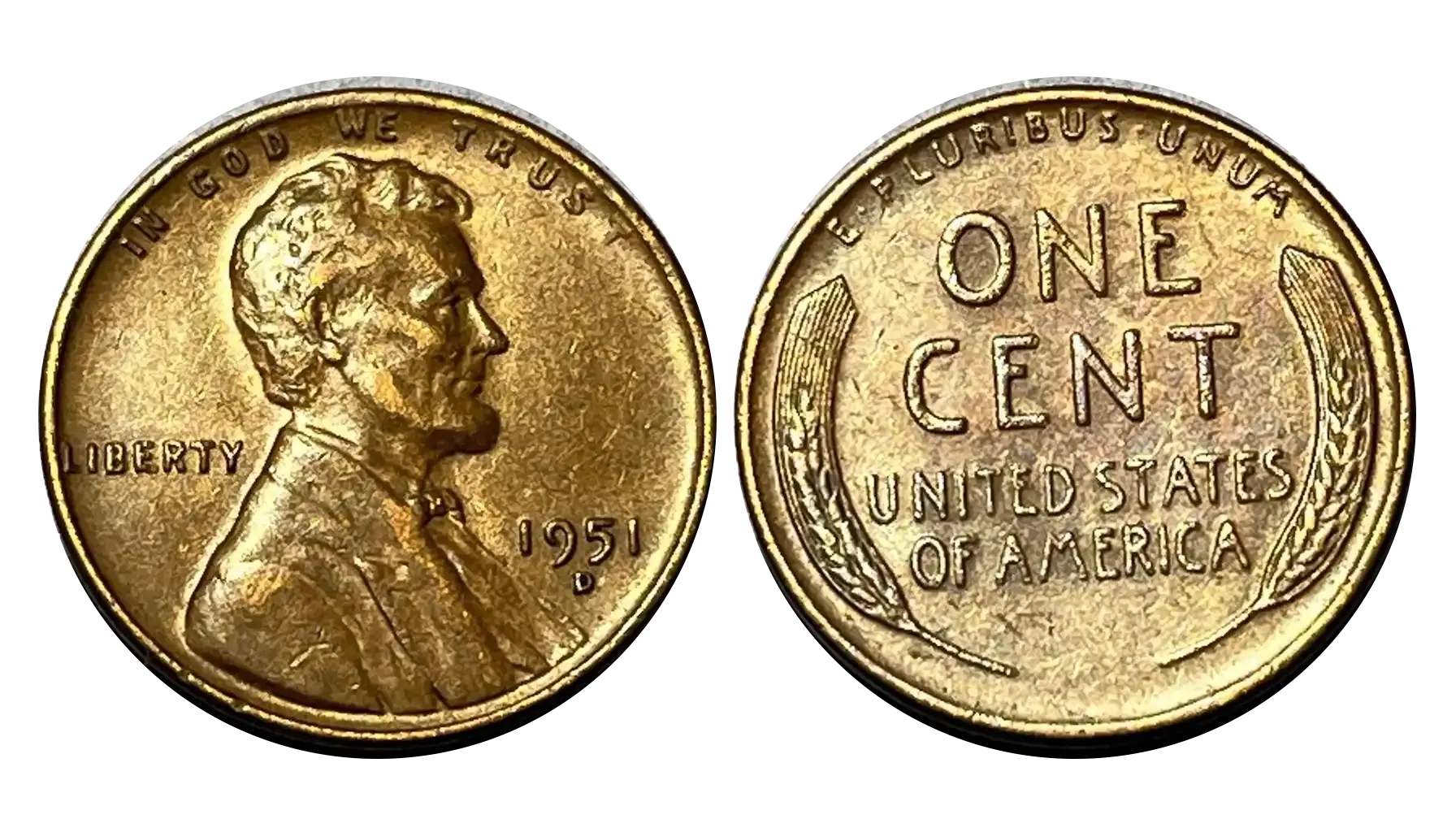
The reverse side shows the Wheat Ears design. This image represents American agricultural productivity. The design remained on the coin until 1958. Because of this, the 1951 issue is part of the final decade of what collectors call the Wheatie period.
1951 Wheat Penny Value Chart
The color matters. Look for possible varieties:
Red
Brown
Red-Brown
Is a 1951 penny worth anything? Values below are for Red (RD) specimens, which are the market standard for high value.
Grade | P | D | S |
Uncirculated | $0.05–$0.15 | $0.05–$0.15 | $0.10–$0.25 |
MS-63 | $4–$7 | $4–$6 | $5–$9 |
MS-65 | $15–$25 | $12–$20 | $20–$35 |
MS-66 | $110–$130 | $35–$50 | $35–$75 |
MS-67+ | $1,200–$1,500+ | $190–$350+ | $225–$450+ |
1951-D Wheat Penny Value
The 1951 D Wheat penny value reflects an occasion – the highest mintage of the year, more than 625 million pieces. Circulated D wheat pennies start from $0.10.
Uncirculated specimens in MS-63 – $4 to $6, while MS-65 examples command $12 to $20. The 1951 D penny value reaches $1,200 to $1,500 in MS-67 and has exceeded $2,000+ for the finest certified MS-68 examples.
1951-S Wheat Penny Value
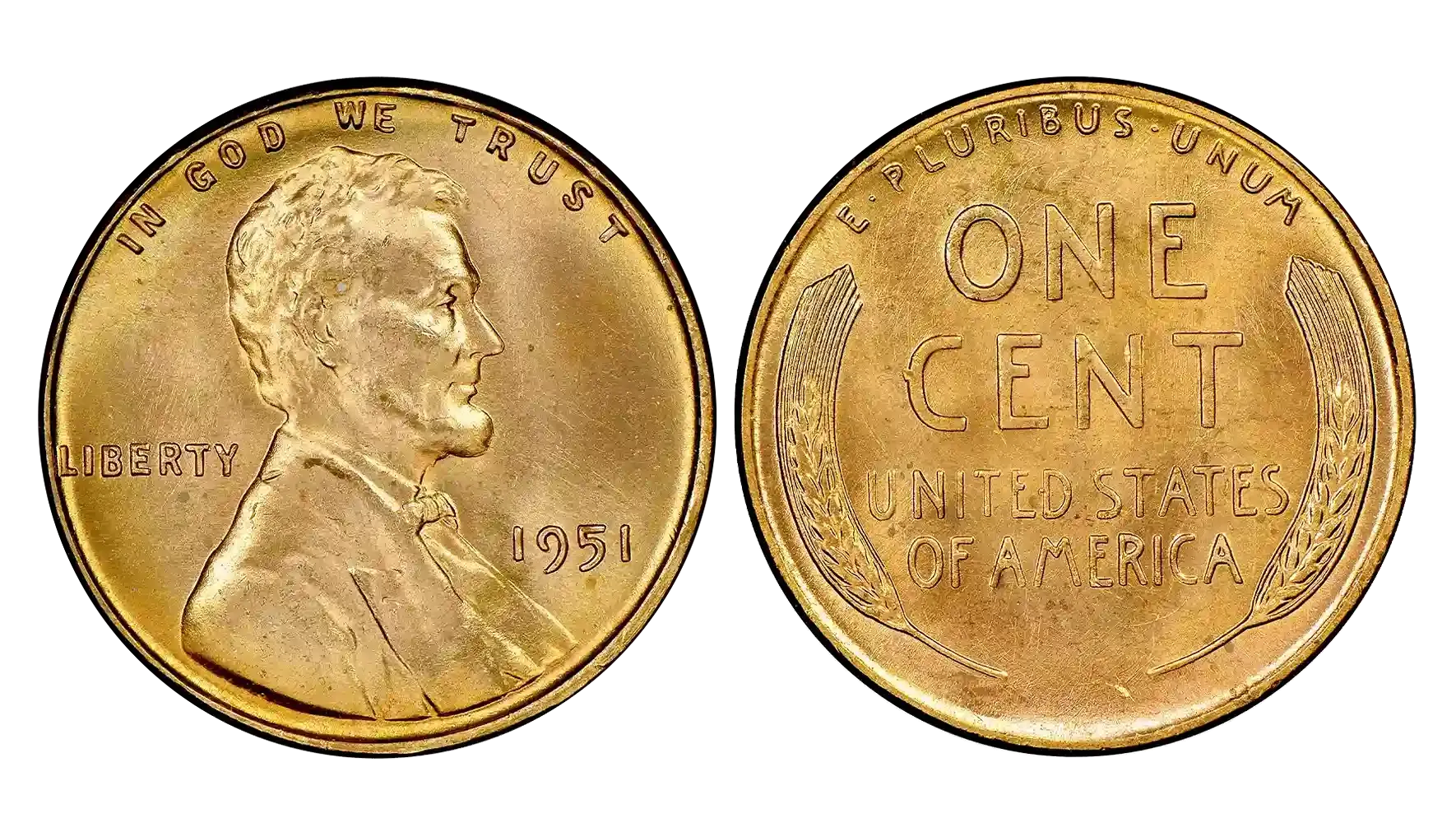
The 1951 S wheat penny value consistently leads the three mint issues because San Francisco struck the lowest mintage of more than 1 million pieces. Circulated S wheat pennies trade for $0.15 to $0.50. Uncirculated specimens in MS-63 cost $5 to $9, while MS-65 examples command $20 to $35.
1951 Wheat Penny No Mint Mark Value
The Philadelphia item represents the most common variety by mintage (over 284 million coins struck). Circulated examples trade at modest premiums above copper value – $0.05 to $0.15, and condition matters. Uncirculated examples in MS-63 to MS-65 have sold for $15 to $25, while the finest specimens in MS-68 have sold for $1,500 to $2,500+ at auction.
Rare 1951 Wheat Penny Error List
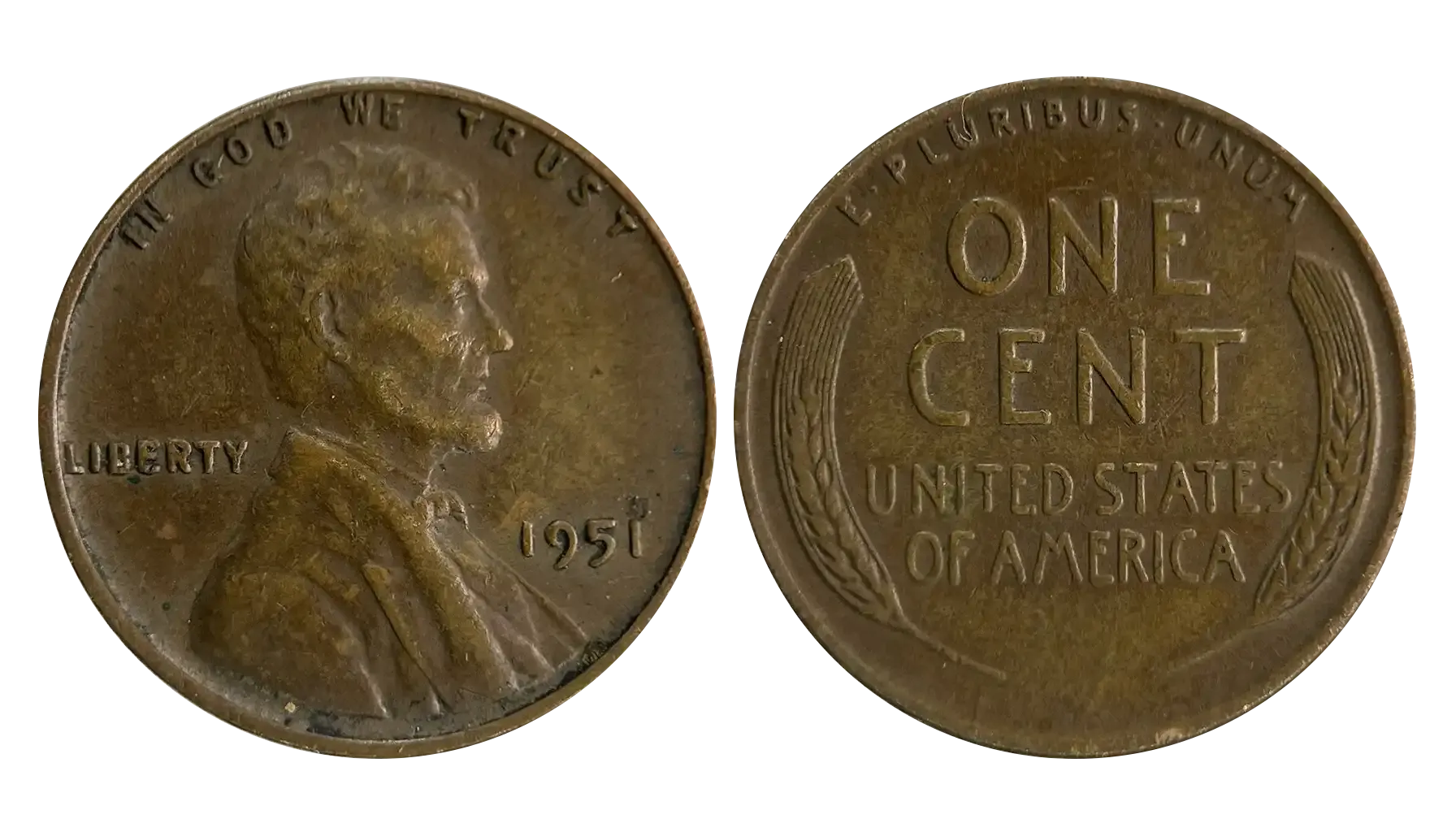
Below is the definitive list of US penny errors and varieties, along with their identifying markers and 2026 market values.
D / S Overmintmark
It occurred when a Denver D was punched over a San Francisco S on the same die. Look for the curves of a 1951 S penny value protruding from the left and right sides of the D mint mark.
How much is a 1951-d wheat penny worth? – $50–$150
MS-65 (Red color) $600–$1,200+
Doubled Die Obverse (DDO)
Look for thickness or clear separation lines in the digits of the date and the word "LIBERTY." The most famous DDO shows distinct doubling on the "19" and the "L" in Liberty.
Circulated $15–$40
MS-63 to MS-65 $150–$450
1951 D Wheat Penny Error Repunched Mint Mark (RPM)
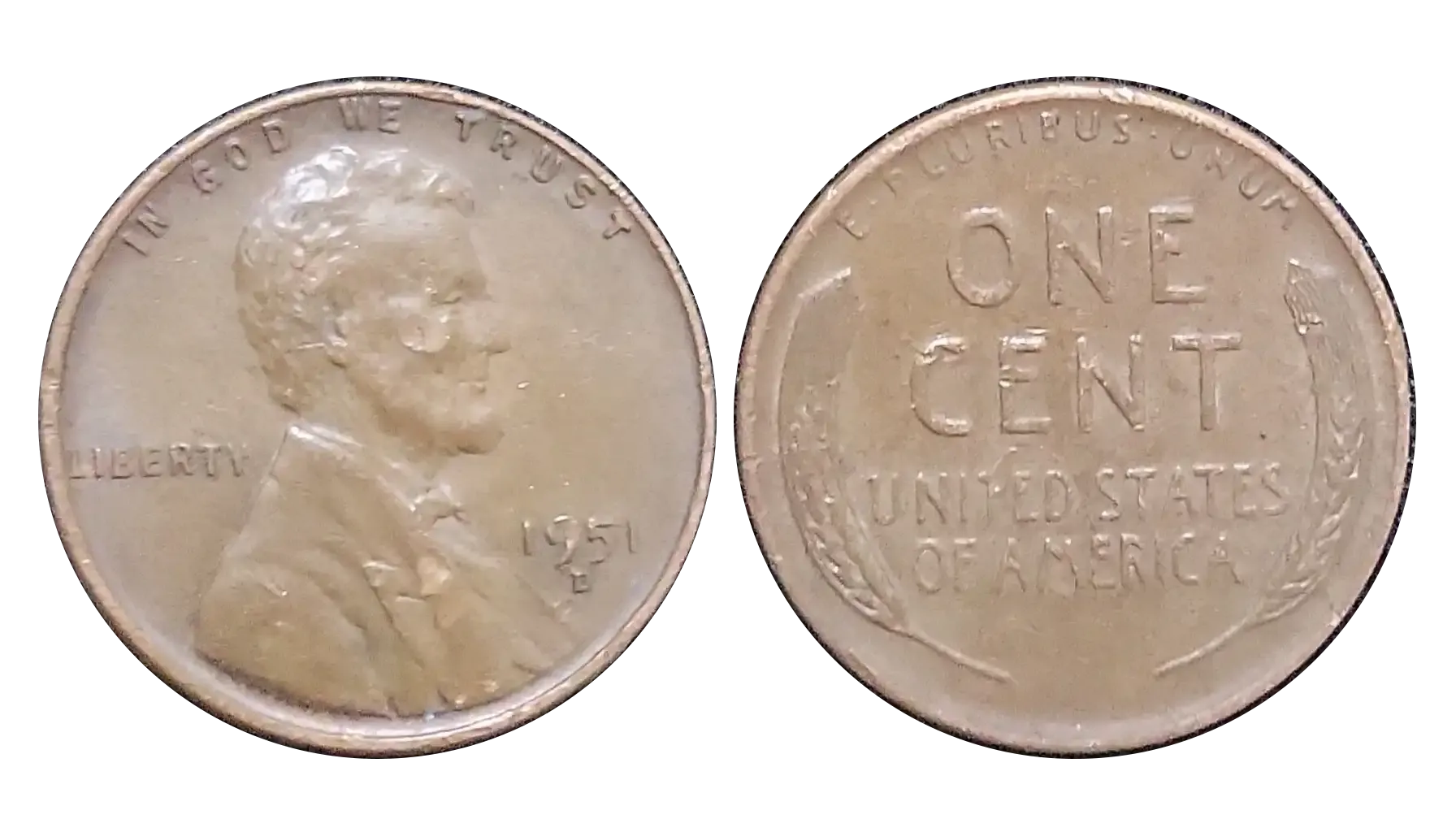
There are over a dozen known RPMs for 1951 penny D. These occur when the D was punched into the die twice at slightly different angles. Look for a Split Serif (the tips of the D look like they have two points) or a secondary D visible inside the loop of the main D.
$10 – $75+
Striking Errors
These errors happened during the physical striking of the coin and are often one-of-a-kind. For example, the off-center strike of the coin was not centered between the dies.
$15–$500+
Most Valuable 1951 Wheat Penny Examples
To find one with a Deep Cameo (DCAM) effect through the 57 thousand proof coins is a miracle. The background is a deep and dark mirror image.
Type | Grade | Value Item Range |
Proof Deep Cameo | PR-67 DCAM | $15,000+ |
San Francisco | MS-68 Red | $9,000+ |
Philadelphia | MS-67+ Red | $8,500+ |
Denver D / S Error | MS-67 Red | $2,300+ |
Denver Item | MS-67+ Red | $350–$500 |
How to Know Your Coin Is Rare?
Color: It must be Red. Brown or Red-Brown coins rarely exceed $50.
Steps / Details: On the reverse, the wheat stalks must be razor-sharp with no wear.
Certification: The two main services are PCGS or NGC. Uncertified coins rarely sell for more than a few dollars because of the guarantee.
How to Identify a Valuable 1951 Wheat Penny
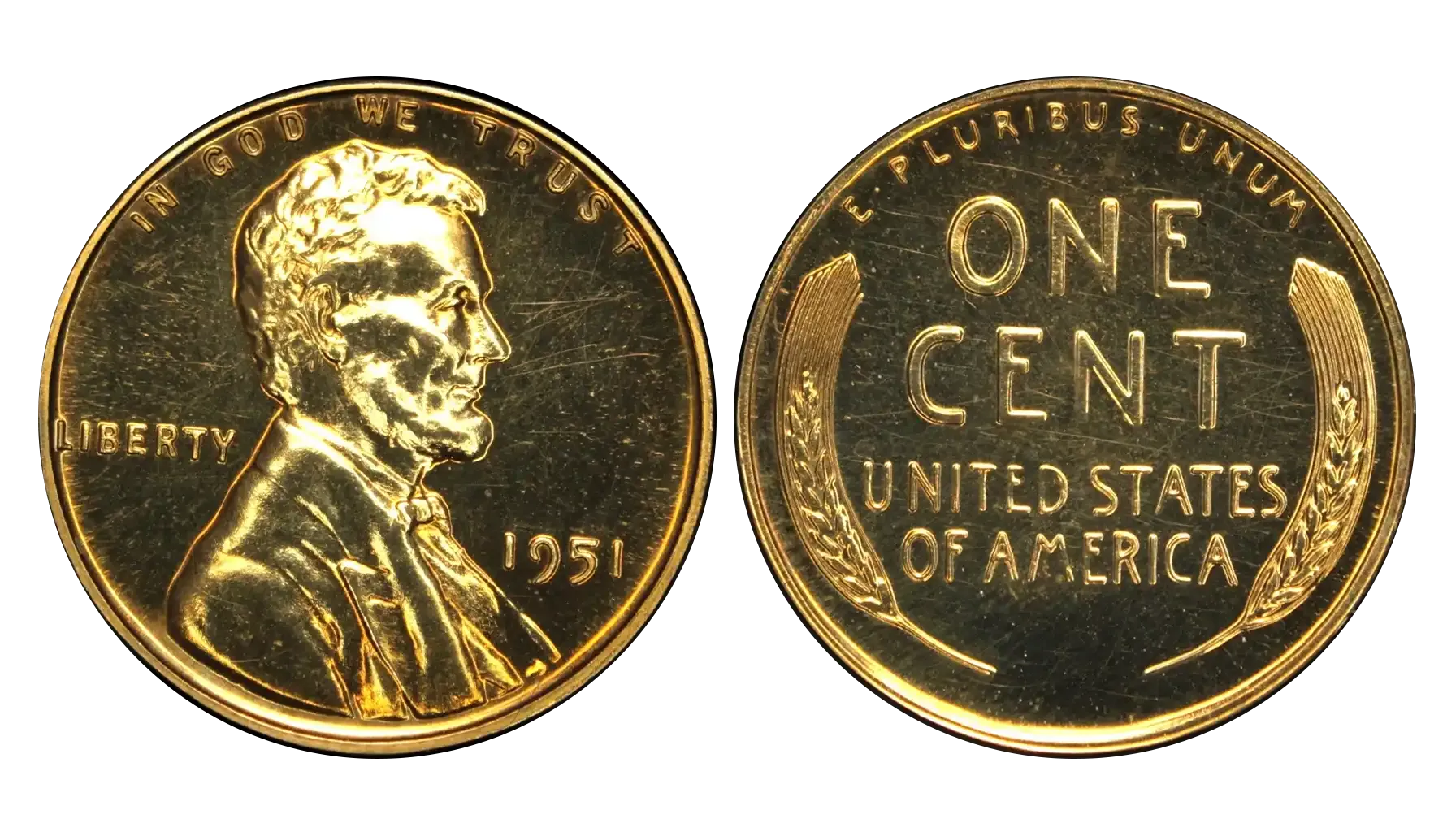
Determine the 1951 Wheat penny D / S / no mint mark issue. This identification immediately establishes the baseline variety type.
Check the date and letters for doubling. The Wheat penny 1951 error list includes doubled die obverses that show clear separation in letters. Rotate the coin under the light to catch the doubling effect. It appears as shadows or extra thickness in the letters.
Examine the coin's condition. Look for full, unbroken mint luster across the obverse and reverse. Check Lincoln's hair for detail—sharp curls indicate higher preservation. Examine the wheat stalks; full separation between the grains represents a well-preserved coin.
Evaluate surface preservation. Turn the coin slowly under a single light source to reveal contact marks. Coins with minimal marks in the fields and on Lincoln's cheek have higher grade potential. The absence of distracting marks indicates a coin worth professional certification.
Is a 1951 Wheat Penny Worth Anything Today?
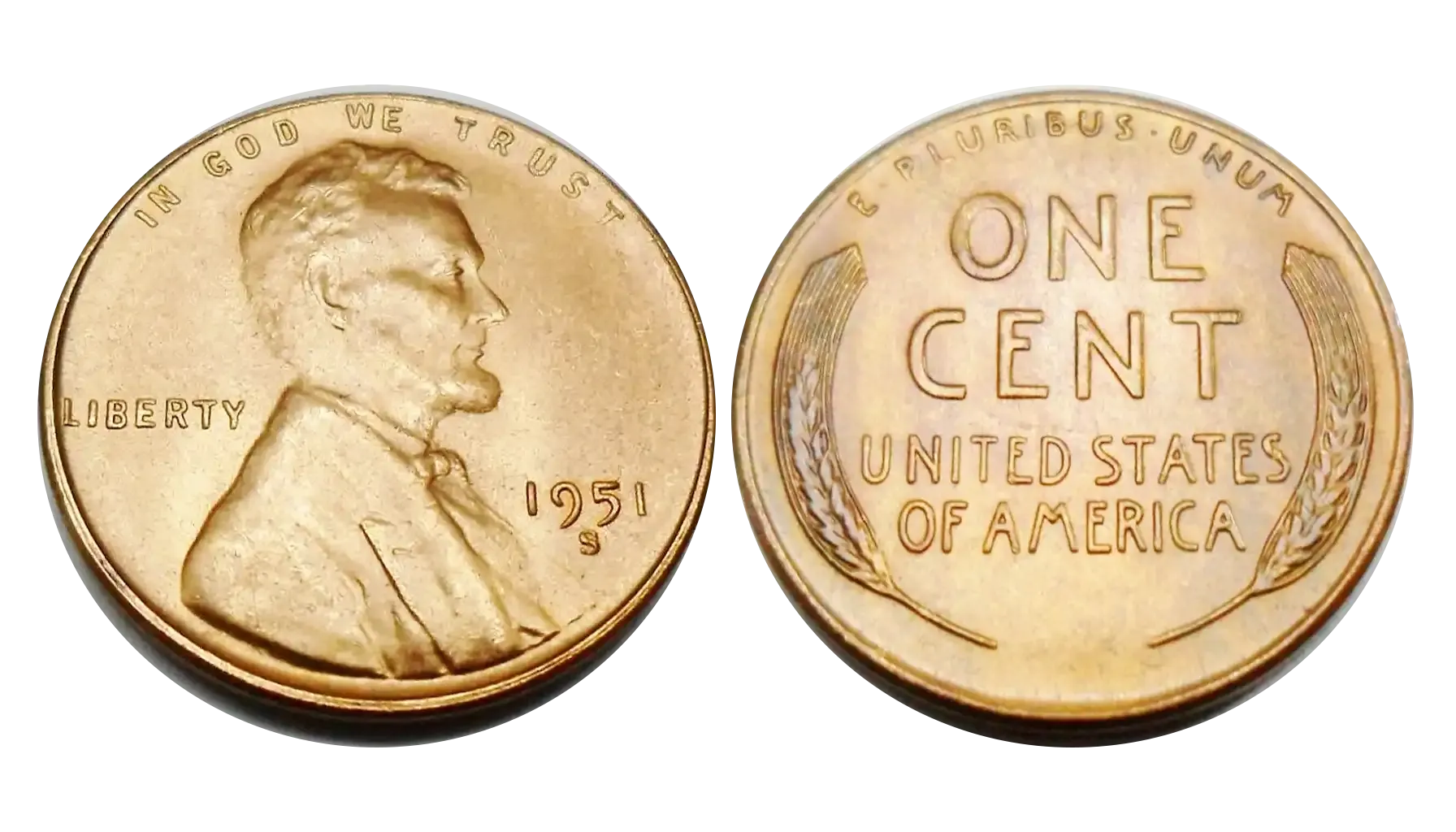
What is a 1951 wheat penny worth? The item value potential extends significantly upward for quality examples. Uncirculated specimens start at $2 and climb into the thousands for the highest grades. Error varieties add another dimension, with certain doubled die and repunched mint mark examples fetching hundreds of dollars.
How much is a 1951 penny worth today? A worn Philadelphia or Denver item shows prices of less than $1 prices. An MS-65 example brings $12 to $35. The wide value of 1951 Wheat penny range means careful examination of every item pays dividends.
An important reason is lamination errors. Because of the high speed of production in the early 50s, many coins left the mint with flaking metal, which is a common but interesting historical artifact for error numismatists.
“For Proof Lincoln cents from 1950 to date, the 1951 Proof Lincoln cent is the most difficult coin to find with Deep Cameo surfaces.”
– Jaime Hernandez, numismatist
PCGS
Where to Sell or Appraise Your 1951 Penny
How much is a 1951 D penny worth in 2026? A professional appraisal provides an accurate valuation for the year wheat pennies. Local coin shops offer in-person evaluations, and most provide free verbal appraisals for walk-in customers. These establishments can identify:
Varieties
Mint marks
Condition factors
Online auction platforms (eBay and Heritage Auctions) have an active customer audience for selling. Error varieties also attract strong bidding when properly identified and photographed.
Professional grading service PCGS provides certification that increases marketability and the 1951 penny value D item. In the actual auction market, a PCGS holder often commands more than the same one in an NGC.
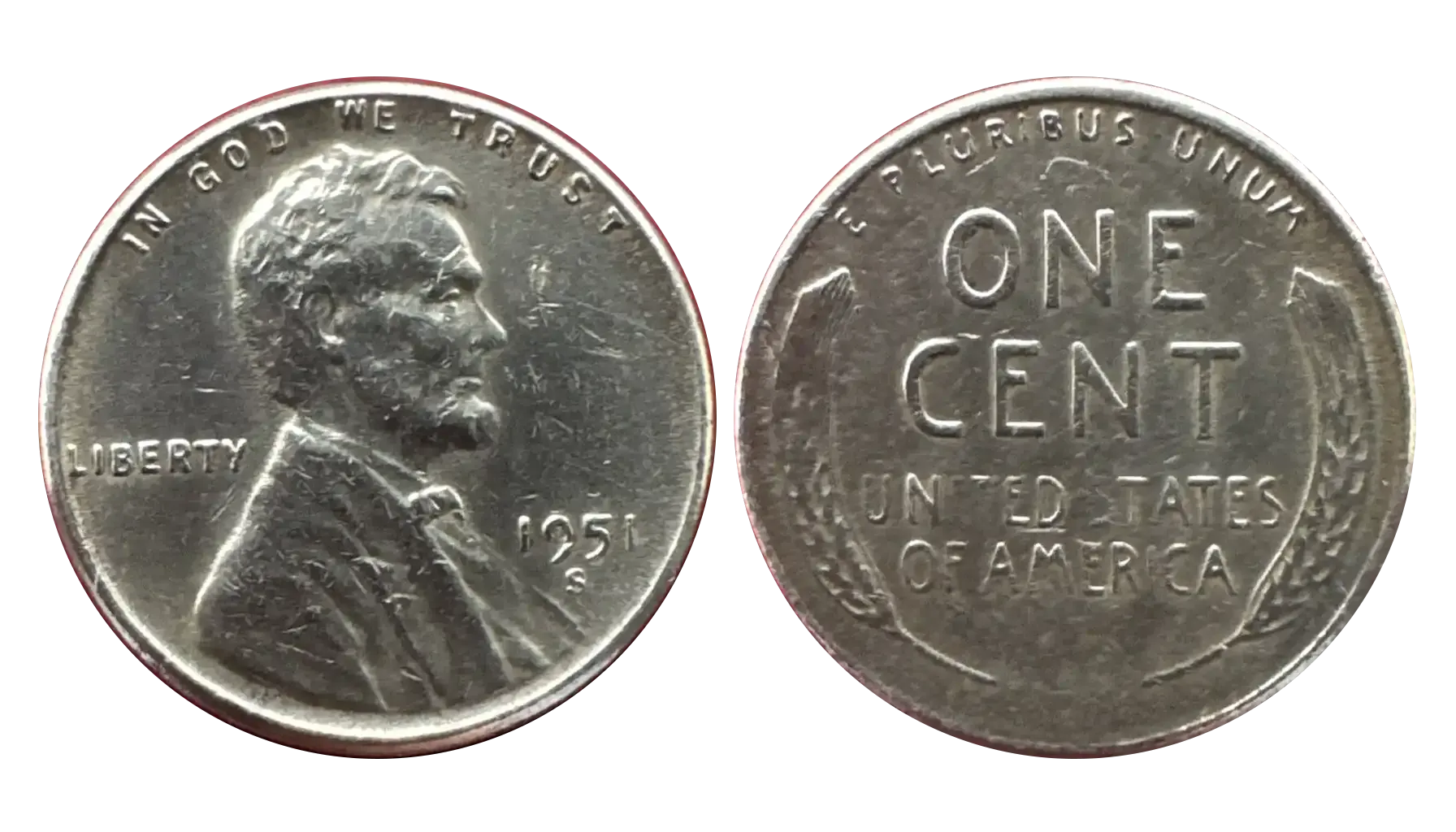
When a coin has a value of $50 or more, the expense of professional grading is usually justified. Coins that receive certification tend to sell for higher prices compared to uncertified examples. In addition, third‑party grading verifies the authenticity of coins with errors. Buyers feel more confident when they purchase certified error varieties.
FAQ
How valuable is a penny from 1951?
Before the answer, you should check the mint state and possible anomalies. The price ranges from circulated issues (less than $1) to auction records of $1,000 and more USD.
How much is a 1951 one penny worth?
The average MS-63 item costs $4–$9. Analyze the guide and auction prices for more information.
Why is the 1951 D penny rare?
On the one hand, the D mintage talks about the reverse situation. Rather, the rare defects can exponentially increase the item price
Is a 1951 penny copper?
Talking technically, it is a bronze alloy. But after the overview analysis, it is 95 % copper.
What is the error on a 1951 D penny?
The most famous error for this year is the D / S Overmintmark, where a Denver D was stamped over a San Francisco S. Other anomalies include Repunched Mint Marks (RPMs) and die cracks ("BIE").
How much is a 1951 S mint mark penny worth?
The ordinary items cost in the diaposon from $0.10 to $0.25. The high-grade MS pieces range from $20 to $450 USD.
What is a 1951 D penny made of?
The full 5 % contant is zinc and tin. Other metals are copper.
Are 1951 pennies worth money?
In any case, the items are gem pieces with a long history. Look for the colored red, brown, or mixed variants.
How much copper is in a 1951 penny?
The copper in the item is 2.95 grams. For a professional numismatist, it is a crucial factor during analysis.

 Facebook
  X (Twitter)
  Pinterest
  LinkedIn