Contents:
Even though the face value of the 1999 Wide AM penny is 1 cent, the prices on the numismatic market vary and may even reach $3,960 at auction (the sales via Heritage Auctions in 2020). The design of the regular coins did not really change over time, but the Wide AM variety is different because of one small reverse detail: the letters A and M in “AMERICA” are more prominently separated.
This spacing makes the coin much more collectible than a common type, and even though circulated examples are usually worth the face value, it is a matter of condition, color, and certification that determines the final price. So, what does a 1999 penny wide AM look like? Learn how to identify these coins and what makes them so distinctive.
“There are three recognized dates for the Lincoln cent business strike cents which display a proof reverse design. <...> The 1999 Wide AM is by far the scarcest of the three. As of 2009, this coin commands over $100 even in the lowest condition. Furthermore, thousands of examples of this variety are probably still in circulation…”
— Jaime Hernandez, PCGS price guide editor
PCGS CoinFacts
What Is the 1999 Wide AM Penny?
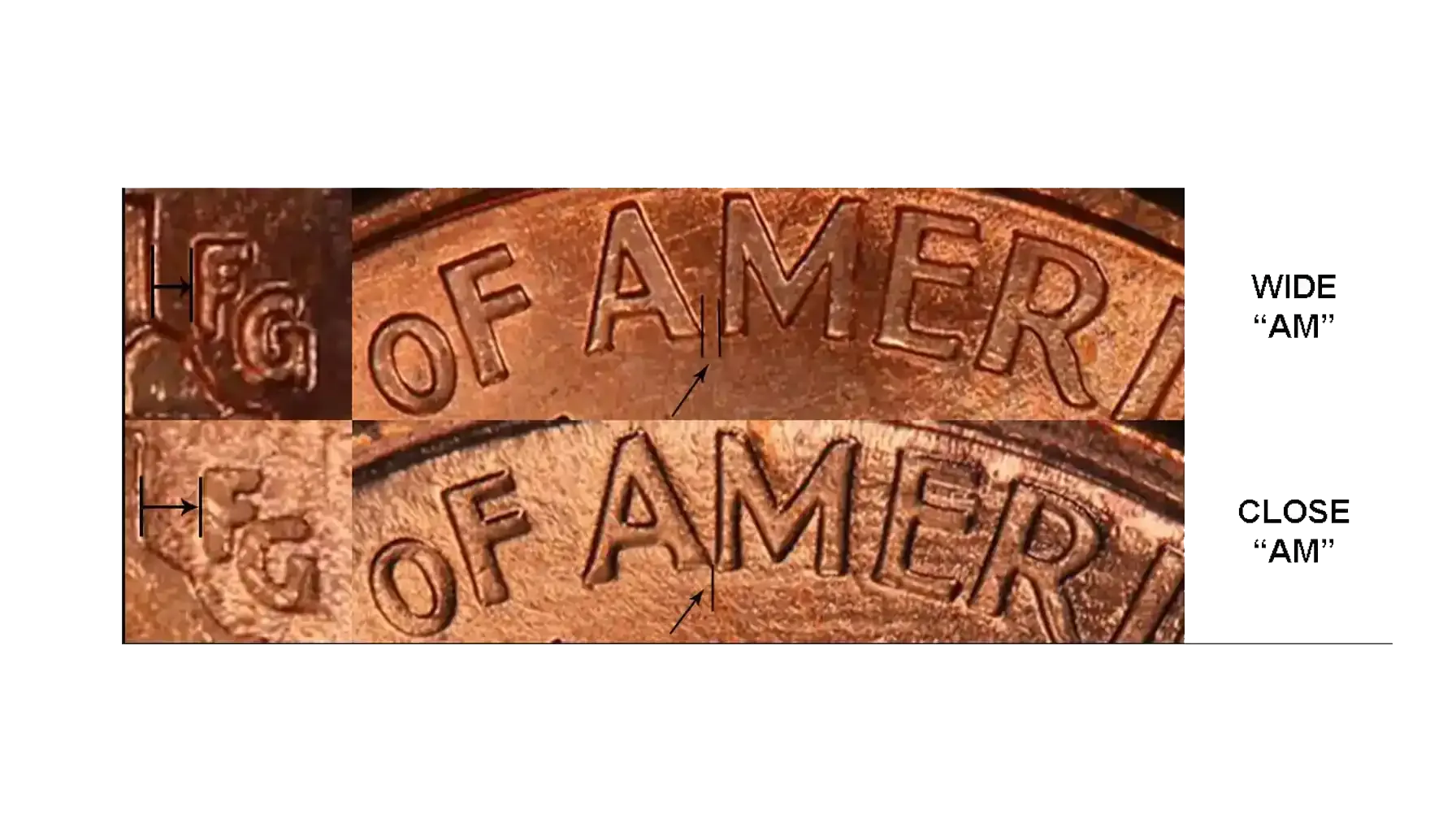
The most important aspect when identifying a 1999 penny wide AM is distinguishing it from its far more common Close AM variety. As such, the difference lies in the spacing between the letters "A" and "M" in the inscription "America", located on the reverse side.
Wide AM
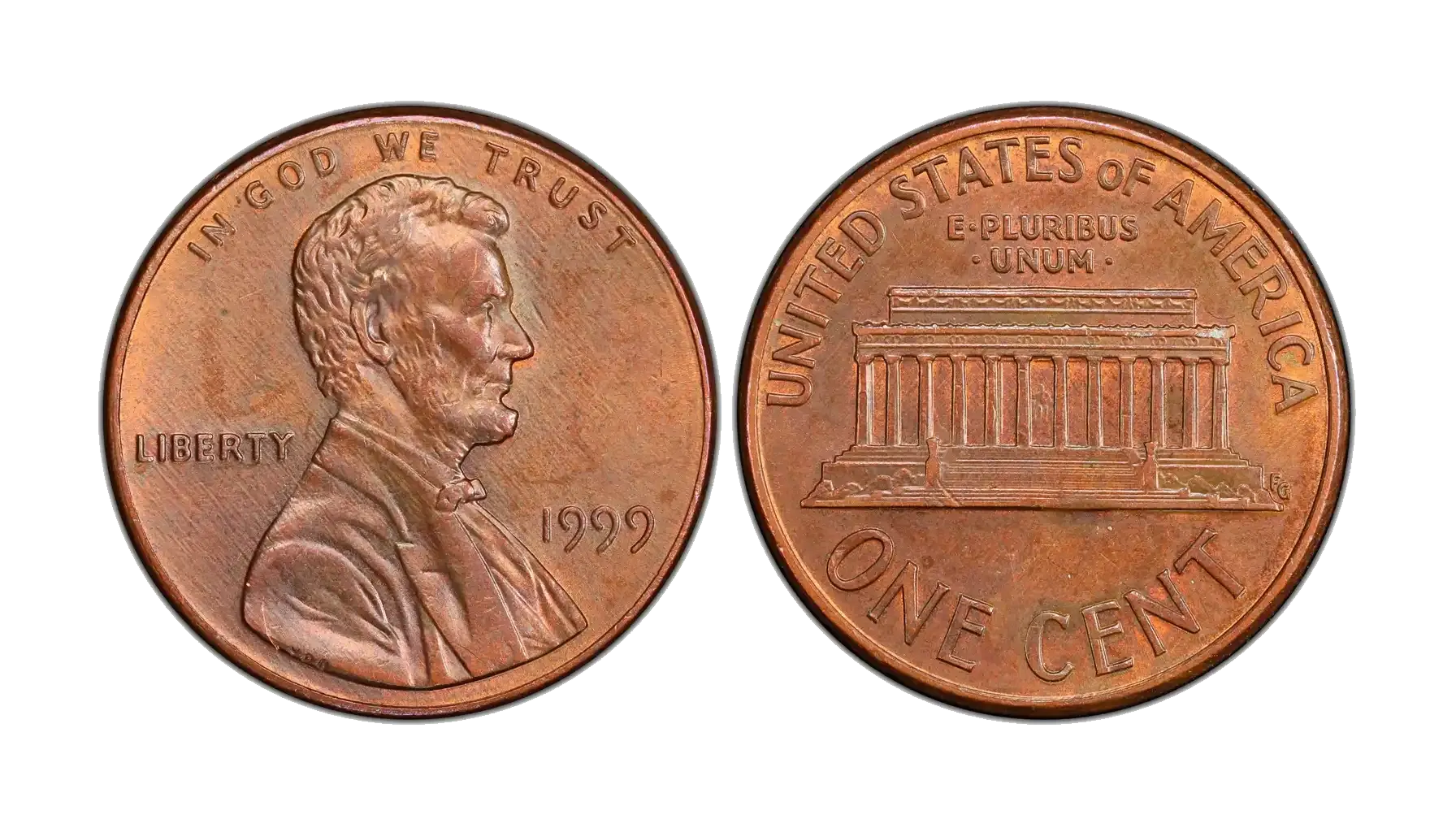
What makes this iteration unique is a noticeable gap between the letters A and M. The FG initials (the mark of its engraver, Frank Gasparro) are located farther away from the Lincoln Memorial. Although this design was intended for proof coins, a few instances produced by the Philadelphia Mint accidentally entered the market anyway.
Composition | 97.5% zinc, 2.5% copper (copper-plated zinc) |
Diameter | 19 mm |
Weight | 2.5 grams |
Edge | Plain (smooth) |
Designer | Victor D. Brenner (obverse), Frank Gasparro (reverse) |
Mint Locations | Philadelphia (no mint mark) |
*The Wide AM variety only exists in coins struck at the Philadelphia Mint.
Close AM
In this case, there is little to no space between the letters A and M. The initials FG are spotted closer to the Lincoln Memorial. In 1999, this was the most widely used design, as it was honorably considered the standard for all business strike pennies.
Are All 1999 Pennies Valuable?
The 1999 wide AM penny cannot be considered valuable on its own. The regular type is a common coin found in circulation to this date, and its worth is set at the price of 1 cent. The regular 1999 penny was produced in large numbers, so ordinary circulated examples do not usually attract collectors whatsoever.
However, some 1999 pennies can be worth more if they have a rare variety, a minting error, or are preserved in excellent condition. The most famous collectible variety from this year is the 1999 Wide AM penny, which can be identified by the wider spacing between the letters A and M in “AMERICA” on the reverse side.
Why Is the 1999 Wide AM Penny So Valuable?
The 1999 Wide AM penny is valuable because it has a reverse design detail that should not appear on the regular circulation-strike penny. On common 1999 cents, the A and M in “AMERICA” are close together, but on the Wide AM variety, these two letters are separated from one another, and it is clearly visible.
How Much Is a 1999 Wide AM Penny Worth?
The value of the 1999 penny AM error (or, rather, the variety) depends on the mint mark and condition. It is an inherently collectible piece because of the gap in the inscription. Nevertheless, according to the PCGS statistics, the 1999 penny wide AM value may fluctuate significantly. It is a modern rarity that can be worth hundreds or even thousands of dollars, yet when a coin is appropriately stored and maintained.
Grade | Regular 1999-(P) | Wide AM 1999-(P) |
G | $0.01 | – |
VG | $0.05 | – |
F | $0.06 | – |
VF | $0.12 | $0.08 |
XF | $0.12 | $0.20 |
AU | $0.19 | $0.38 |
UNC | $0.34 | $1.99 |
Most Valuable 1999 Wide AM Penny Values Ever Sold
1999 1C Wide AM MS68
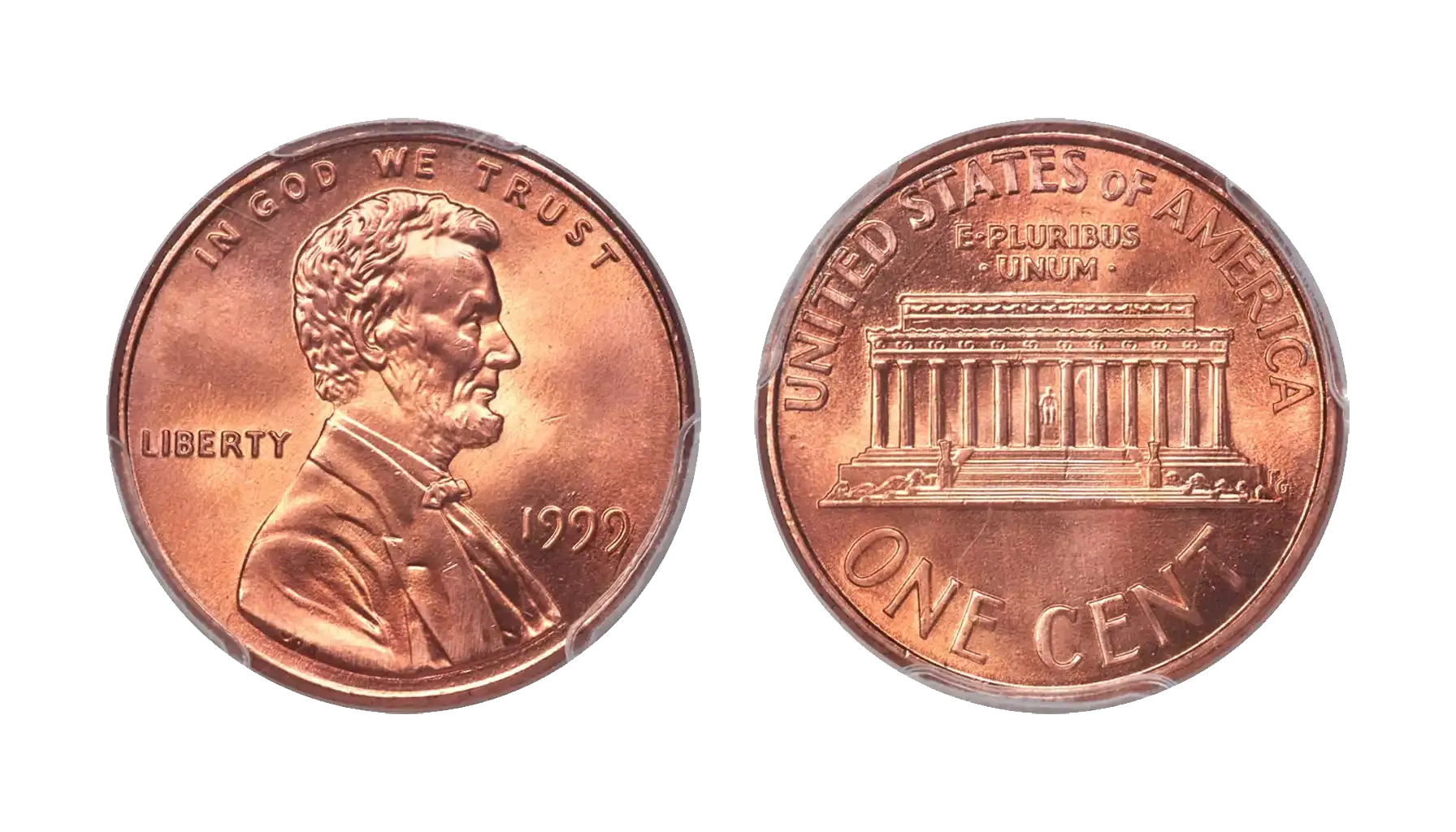
Produced by: Philadelphia Mint
Auction record: $3,960
This is a top-grade red (RD) example with the highest 1999 AM penny error worth. Heritage noted that the Wide AM reverse was intended for San Francisco proof cents but was instead used on a small number of Philadelphia circulation strikes, which made an exceptionally bright and high-quality numismatic creation in MS68 Red and none finer at the time of sale.
1999 1C Wide AM MS67
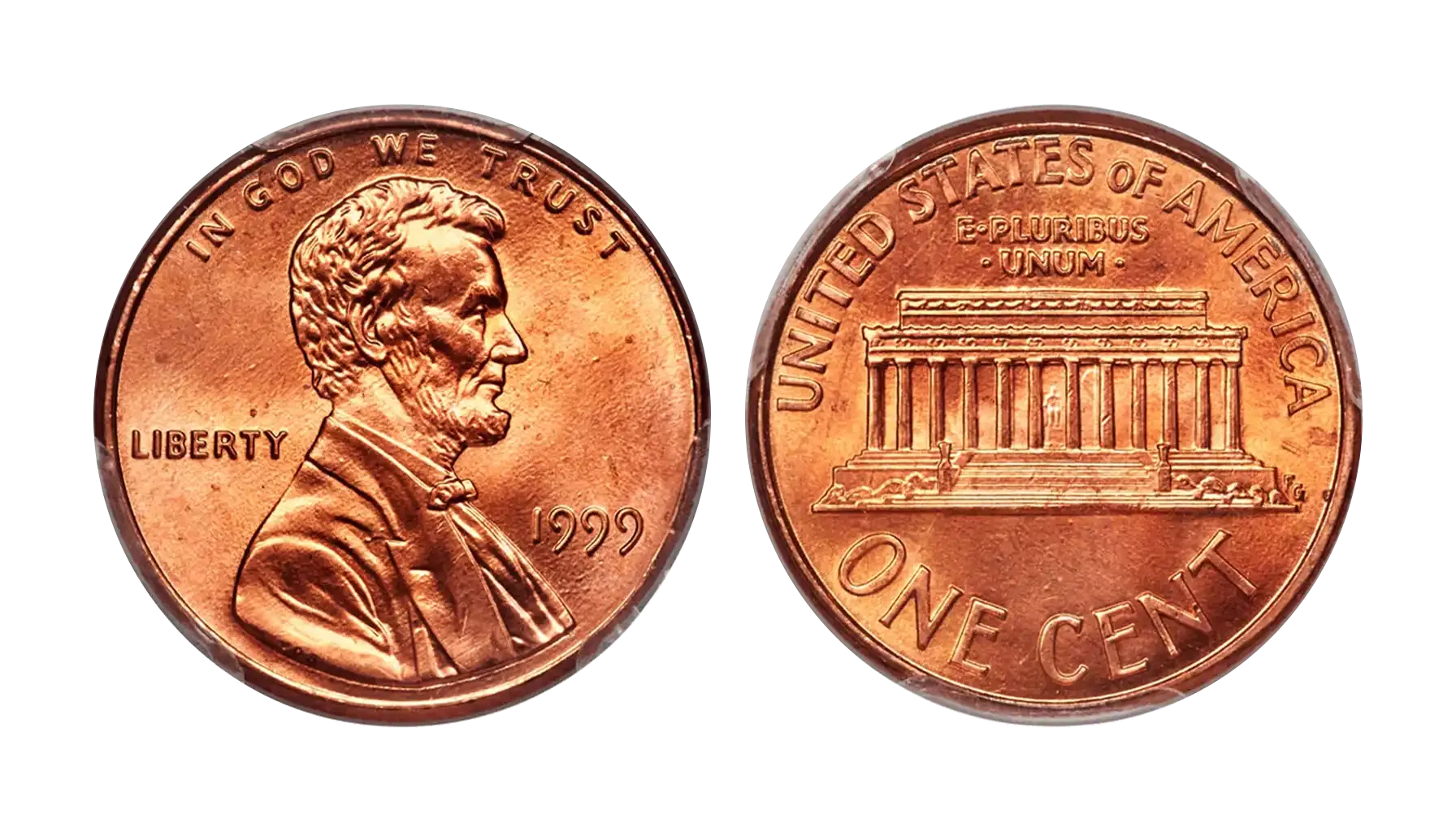
Produced by: Philadelphia Mint
Auction record: $1,260
Here comes the Superb Gem red cent, i.e., another major sale for the wide AM 1999 penny error. It also features the reverse style normally associated with proof cents, with strong orange mint luster and very clean surfaces, which is quite rare.
1999 1C Wide AM MS65
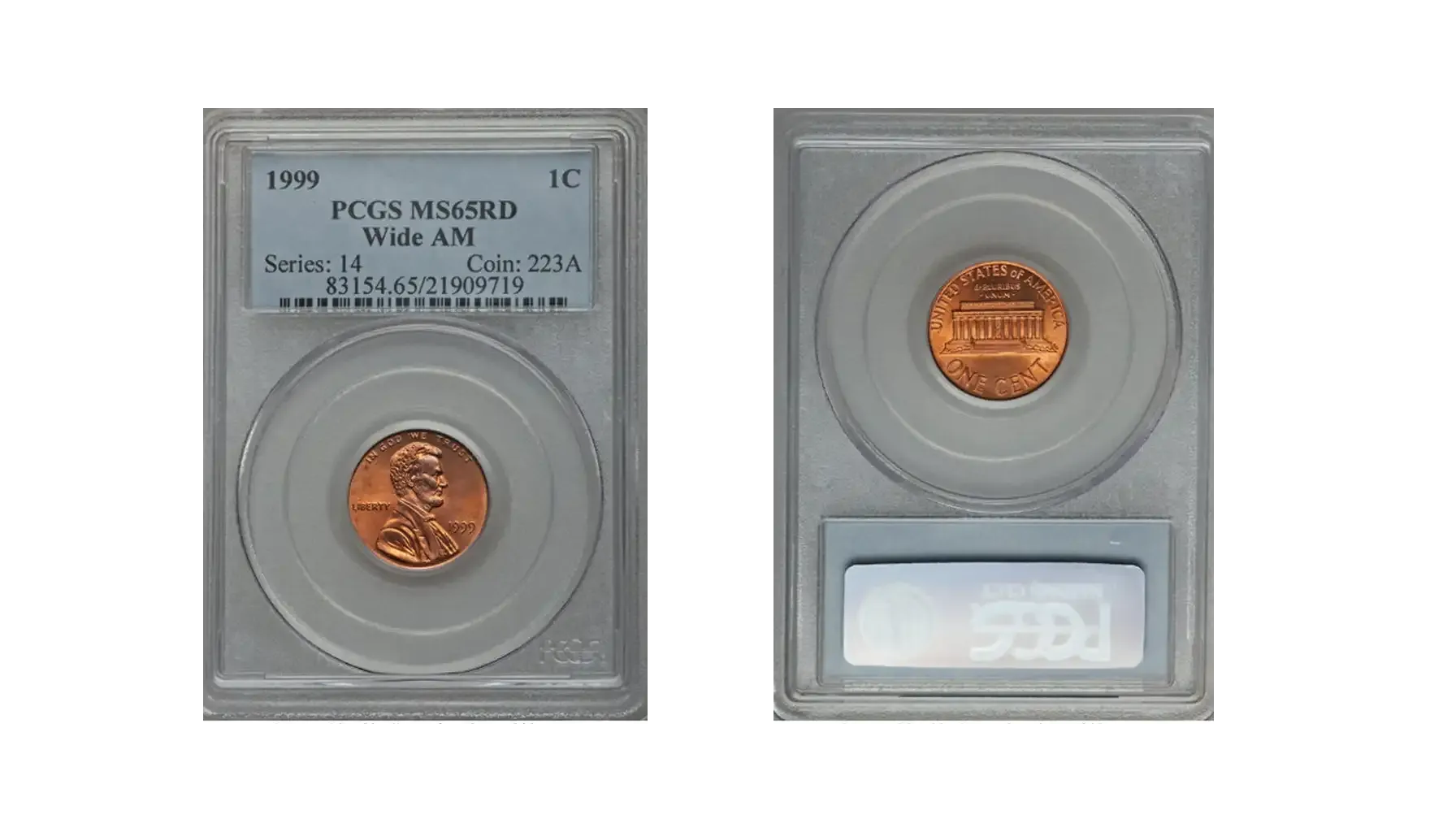
Produced by: Philadelphia Mint
Auction record: $763.75
This MS65 Red example came from the Brian Loncar Collection, and it proves that even lower mint-state grades may be worth a lot (76,375 times more than the face value). Still, it remains desirable because of its unique reverse feature, as it is far scarcer than the regular Close AM design.
How to Identify a 1999 Wide AM Penny
Indeed, at the dawn of the new millennium, there should have been released an exclusive instance (just like the time and circumstances it was surrounded by). Let us consider several notable characteristics necessary to identify this valuable coin.
Obverse Design
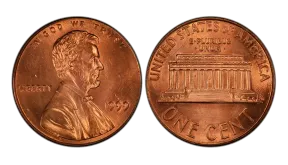
The obverse of a 1999 penny features a portrait of Abraham Lincoln, originally created by Victor D. Brenner for the 1909 VDB wheat penny. Prior to the start of the Lincoln Bicentennial series in 2009, this design was a standard and has been in use since the centennial of Lincoln's birth. Apart from the portrait, one may see inscriptions like "LIBERTY" (to the left), "IN GOD WE TRUST" (above Lincoln's head), and the date on issue "1999" (to the right).
The penny's obverse does not reveal whether it is a Wide AM or Close AM type.
Reverse Design
The reverse side, on its part, demonstrated the Lincoln Memorial in Washington, D.C., as well as the inscriptions "UNITED STATES OF AMERICA"* (curved at the top), the words "E PLURIBUS UNUM" (atop the memorial), the designer's initials "FG", and its denomination "ONE CENT" at the bottom.
This is where the difference between the Wide AM and Close AM varieties can be found.
Mintage and Rarity
According to statistics, only a small number of the Philadelphia Mint production of over 5.2 billion Lincoln cents are Wide AM. Wide AM pennies are rare, especially in high grades; however, it is unclear how many still exist. Anyway, the truth is as follows: it is scarce in circulated grades and even rarer in Mint State (MS) condition.
Always try a different approach. Instead of exploring dozens of resources, employ one single tool that incorporates everything you need – Coin ID Scanner, i.e., an innovative tool that opens the door for quick yet precise identification of coins, even those from the error pennies list.
How rare is the 1999 wide AM penny? Well, as much as a coin might be. So, explore the world of coins and learn what to grab next.
FAQs
How much is a 1999 wide AM penny worth?
From the face value to $3,960 (for a PCGS MS68 Red example as an auction record and the top reference).
Is a 1999 Wide AM rare?
The 1999 Wide AM cent is a rare variety when compared to the regular, standard 1999 strikes. However, it is not rare in general.
How much is a 1999 Wide AM penny worth?
The prices may vary and fluctuate daily, but the truth is that circulated examples may not show such impressive results at auctions. Only professionally graded red mint-state pennies are worth a lot (up to $3,960, as of today).
What is the mistake on the 1999 penny?
The “mistake” is the reverse design: the letters A and M in “AMERICA” are clearly separated. Technically, this is a die variety rather than a typical minting error.

 Facebook
  X (Twitter)
  Pinterest
  LinkedIn