Contents:
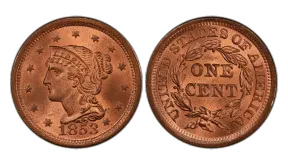
This copper item is a great indicator of the earliest US series before modern intervention. The half of the 19th century issue belongs to the Large Cent era and reflects all changes in metal supply and public use.
The category Pre-Civil War cents is a strong marker of reports about the 1853 penny value today. For new insights about rare coins and other items – download the best coin value checker app.
1853 U.S. Penny Design and Metal Content
The 1853 US penny belongs to the Braided Hair Cents series. Compared to the 1853 half dime, the percentage of copper is lower, as well as the diameter and weight.
Period | 1839–1857 |
Designer | Christian Gobrecht |
Diameter | 27.5 mm |
Weight | 10.89 mm |
Edge | Plain |
Composition | Copper |
The Designer: Christian Gobrecht
Christian Gobrecht (1785–1844) was the 3rd Chief Engraver of the United States Mint and is considered one of the most technically proficient artists in American numismatic history.
While Charles Barber (who followed him years later) focused on durability, Gobrecht is celebrated for bringing Neoclassical elegance to the United States gems. His Seated Liberty design became the face of American silver for over 50 years.
Note: Examples of Charles Barber series are 1892, 1898, and later versions.
Christian Gobrecht made an unconditional contribution to the production and establishment of America in the numismatic field. Below is a list of the most important moments and his achievements.
The Seated Liberty – the creation based on sketches by Thomas Sully and Titian Peale
The Flying Eagle Dollar later became the primary image for the 1856 Flying Eagle Cent.
Copper & Gold Masterpieces
1853 Penny Value Today by Condition
Analysis of this item issue reveals that condition remains the most significant factor influencing price movements. Market data shows heavily worn specimens consistently trade near base collector values.
"While the Proof is admittedly not well made when compared with other Proof coins of the 1850s, this situation is seen on Proofs of other denominations of this year. Perhaps the best made is the 1853 dollar, but that seems to have been struck later."
– Unnamed opinion piece “Braided Hair Cent”
Stack’s Bowers
However, coins with well‑preserved hair details attract substantially higher premiums. Third‑party grading services prioritize surface quality and color characteristics in their evaluations.
Notably, the 1853 penny worth demonstrates increased value when exhibiting uniform wear patterns and natural surface preservation.
Market Reality: Actual Prices
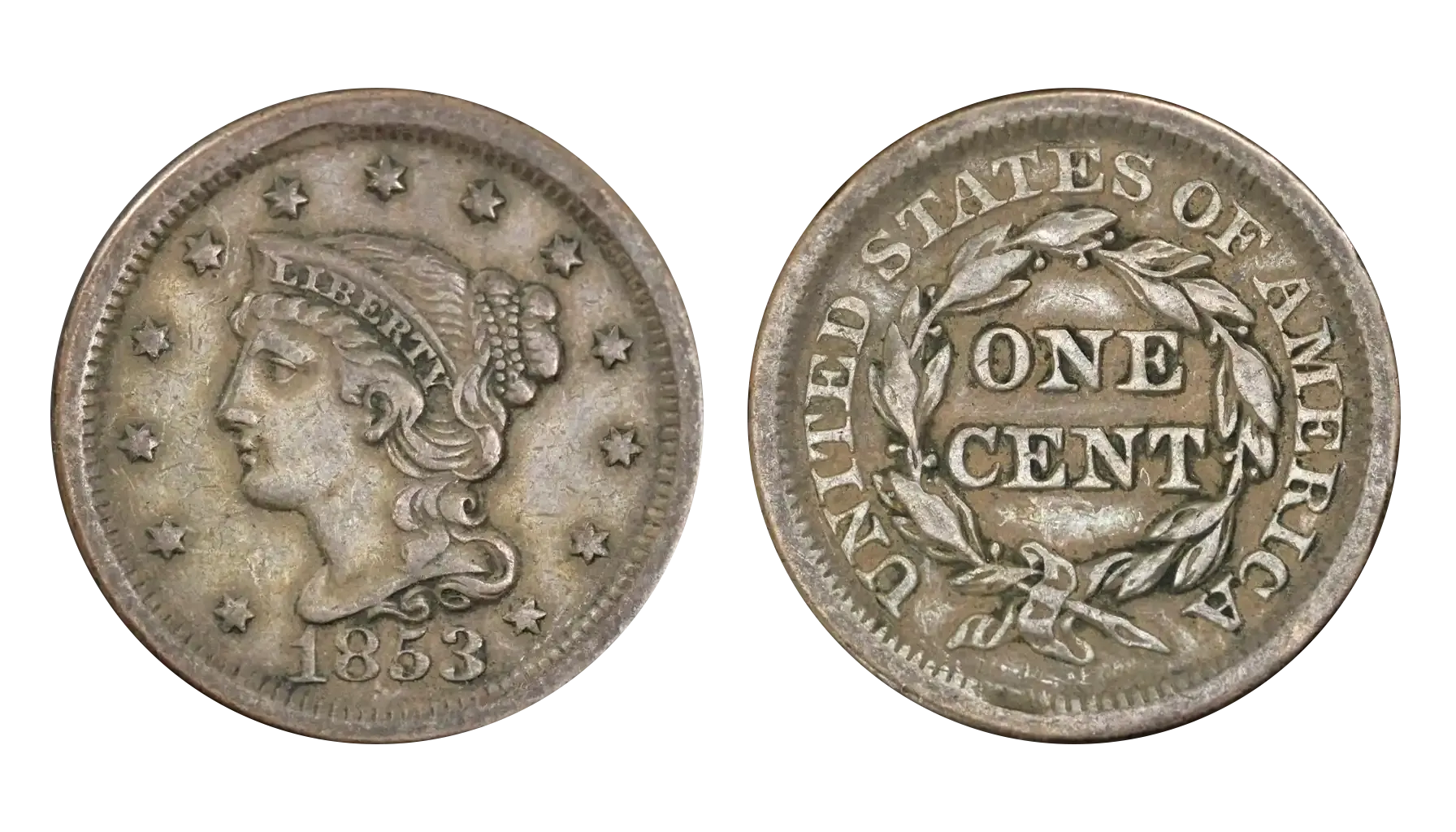
How much is a 1853 penny worth in the 2026 market? According to NGC, the price ranges from $22 to $4,750 (Good & High-Mint Conditions). The table shows the established USD per item for the Philadelphia mint.
G–VF | XF | 50–55 | 55–60 | 60–64 | 65 |
$22–$38 | $65 | $130–$160 | $160–$205 | $205–$500 | $850 |
Note: High-Mint examples can reach more than four thousand dollars for the value of 1853 penny.
MS-65+ – $1,300
MS-66 – $1,950
MS-67 – $4,750
Are 1853 Pennies Collectible or Rare?
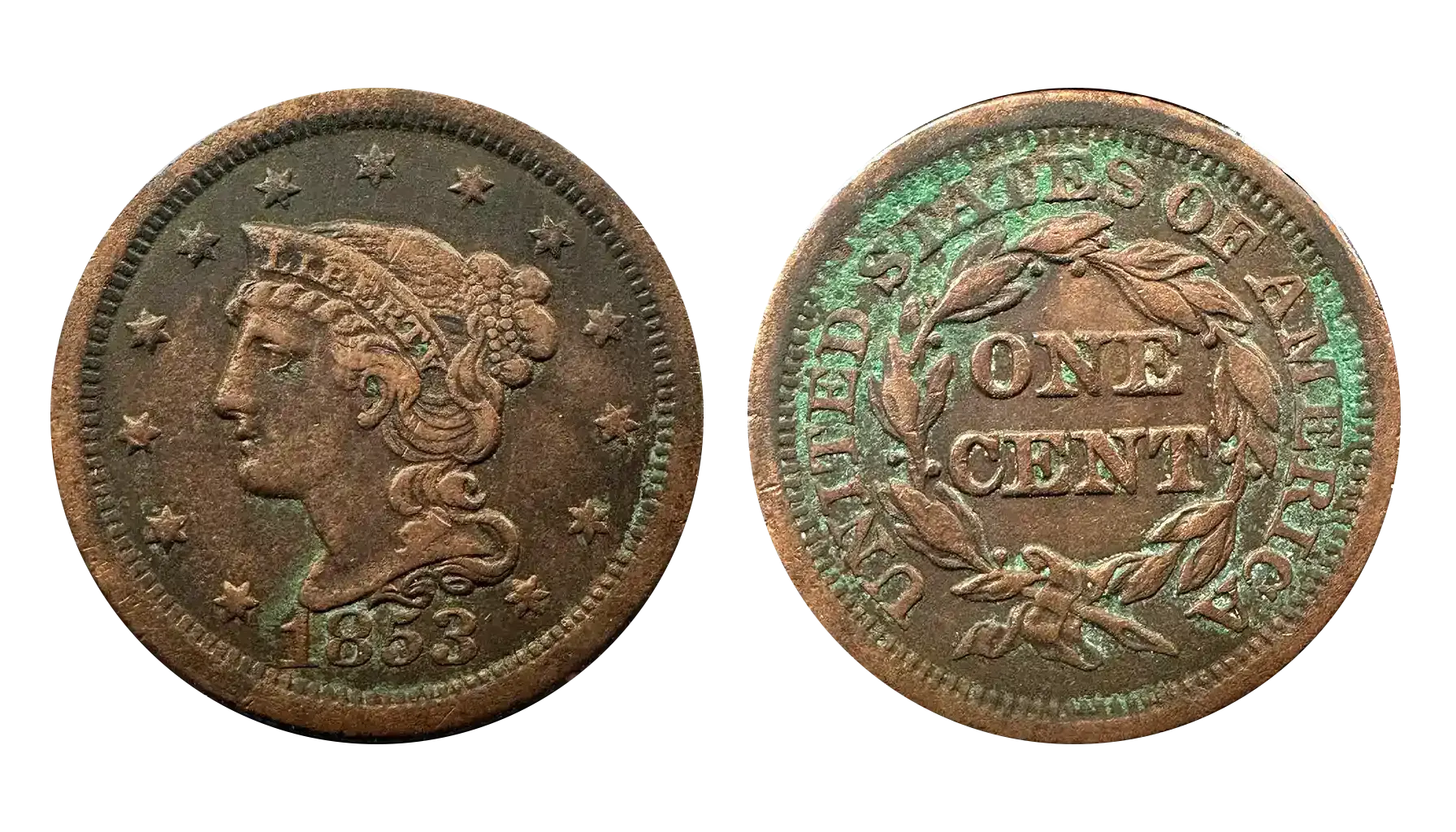
Numismatic research confirms that survival rates for this date remain moderate. Historical records indicate that Large Cent production reached peak levels during the early 1850s, resulting in a healthy supply of available specimens.
While collectors can generally locate examples without extensive searches, high‑grade items appear significantly less frequently. Market analysis reveals that the value of the 1853 penny correlates directly with:
Condition
Color
Surface quality metrics
Brown‑toned items dominate current market offerings, though Red‑Brown examples consistently command higher demand.
Collector Alert: Common Trap
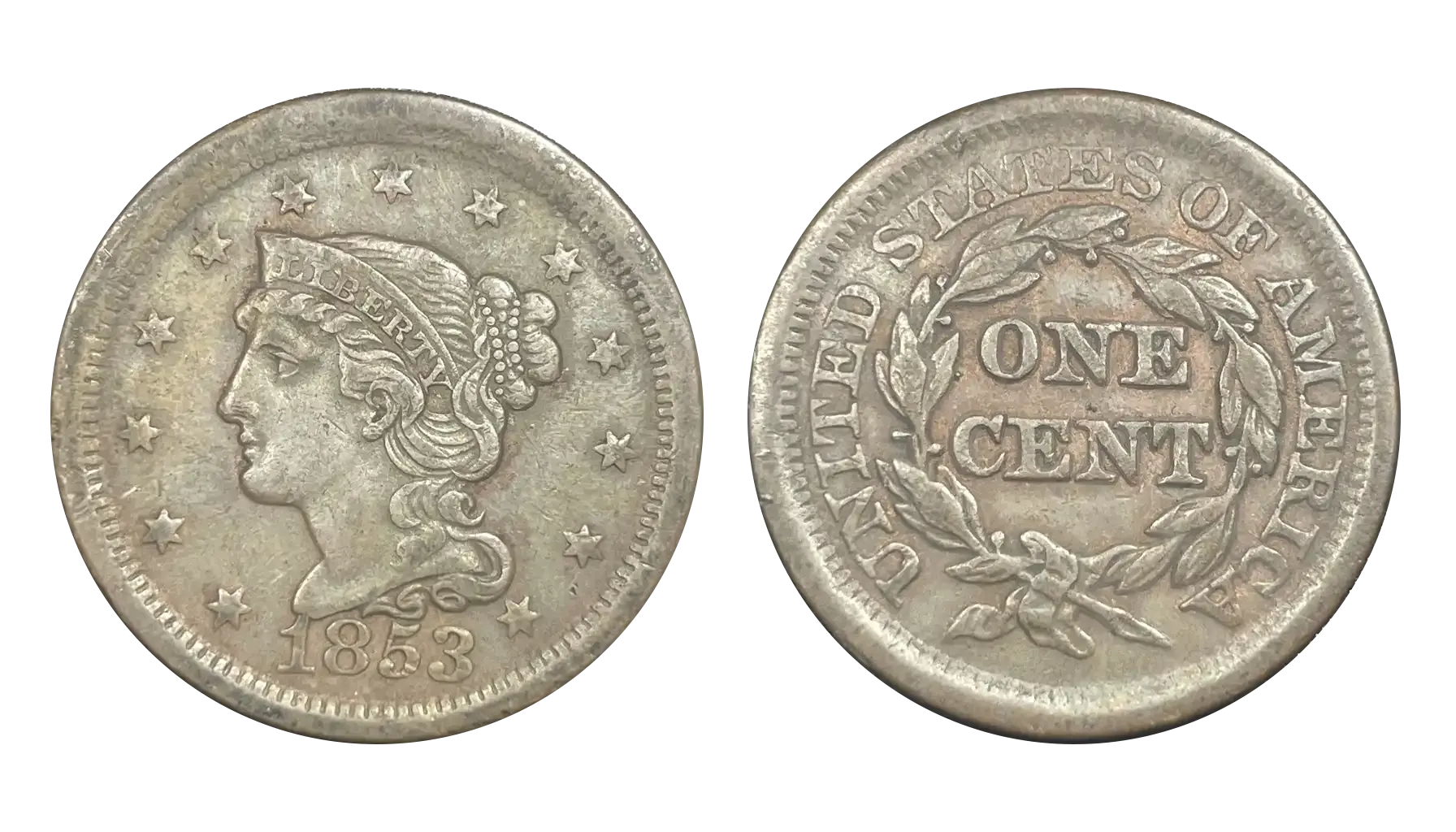
A phantom haunts some numismatic references: the mythical 1853 Indian Head penny. History tells a different tale – Indian Head cents emerged years after 1853.
This spectral entry owes its existence solely to catalog errors, not genuine coin varieties. Meanwhile, the 1853 Large Cent stands firmly rooted in reality, welcoming collectors as their gateway to early American copper.

 Facebook
  X (Twitter)
  Pinterest
  LinkedIn