Contents:
Worth comes from different perspectives, and this is not necessarily about the melt value of a material used. Nevertheless, many collectors still enter the hunt, pursuing coins for their history, rarity, and aesthetic appeal, not to mention. Silver, as one of the precious metals employed during coin production, is always a desirable compositional unit that may boost the value of the entire collection for good.
In 1978, however, silver coins were not a focus for the US Mint. Instead, they deployed their power in other denominations, design modifications, and monetary revolution as a whole. Even though 1978 was not actually long ago, the numismatic creations of that year may still attract attention due to their place in the series and unique features in design. So, can we estimate the 1978 silver dollar value? Which types of coins were released, and what features identify these coins as unique?
Coin Denominations and Silver Content
The history of silver in coin composition is rather long and peculiar. As such, the first American silver coins appeared in the late 18th century, soon after the establishment of the US Mint in 1792. For many years, silver was a standard component in circulating dimes, quarters, half dollars, and dollar coins. But times changed, and so did the requirements.
Over time, rising silver prices and updates in monetary policy prompted gradual reductions and, eventually, the removal of silver from the main part of circulating coins by the late 1960s. Unfortunately for us, collectors, there were no 1978 silver dollars in regular issues or even special collector’s sets.
Silver content varied by denomination:
Lincoln Cent: Never silver; primarily copper.
Jefferson Nickel: Only during 1942-1945 wartime issues.
Roosevelt Dime: From 1946-1964; later in special proof or collector issues starting in 1992.
Washington Quarter: From 1946-1964; 1976 Bicentennial; and 1992-1998 special collector editions.
Kennedy Half Dollar: In 1964, 1965-1970, 1976 Bicentennial, 1992 onward, and selected 2014 special editions.
Eisenhower Dollar: In 1971-1974 and 1976, mainly in collector or proof sets.
Special Editions: Certain commemorative coins, proof sets, or collector issues issued outside regular circulation occasionally contained silver.
Nevertheless, metal composition is not the only definitive factor that sets the standard for the pricing trends. So, let us review the 1978 dollar coin value today to find the most precious items on the market.
You might also enjoy: Silver Price Predictions 2030: How High Could It Go?
1978 Lincoln Cent
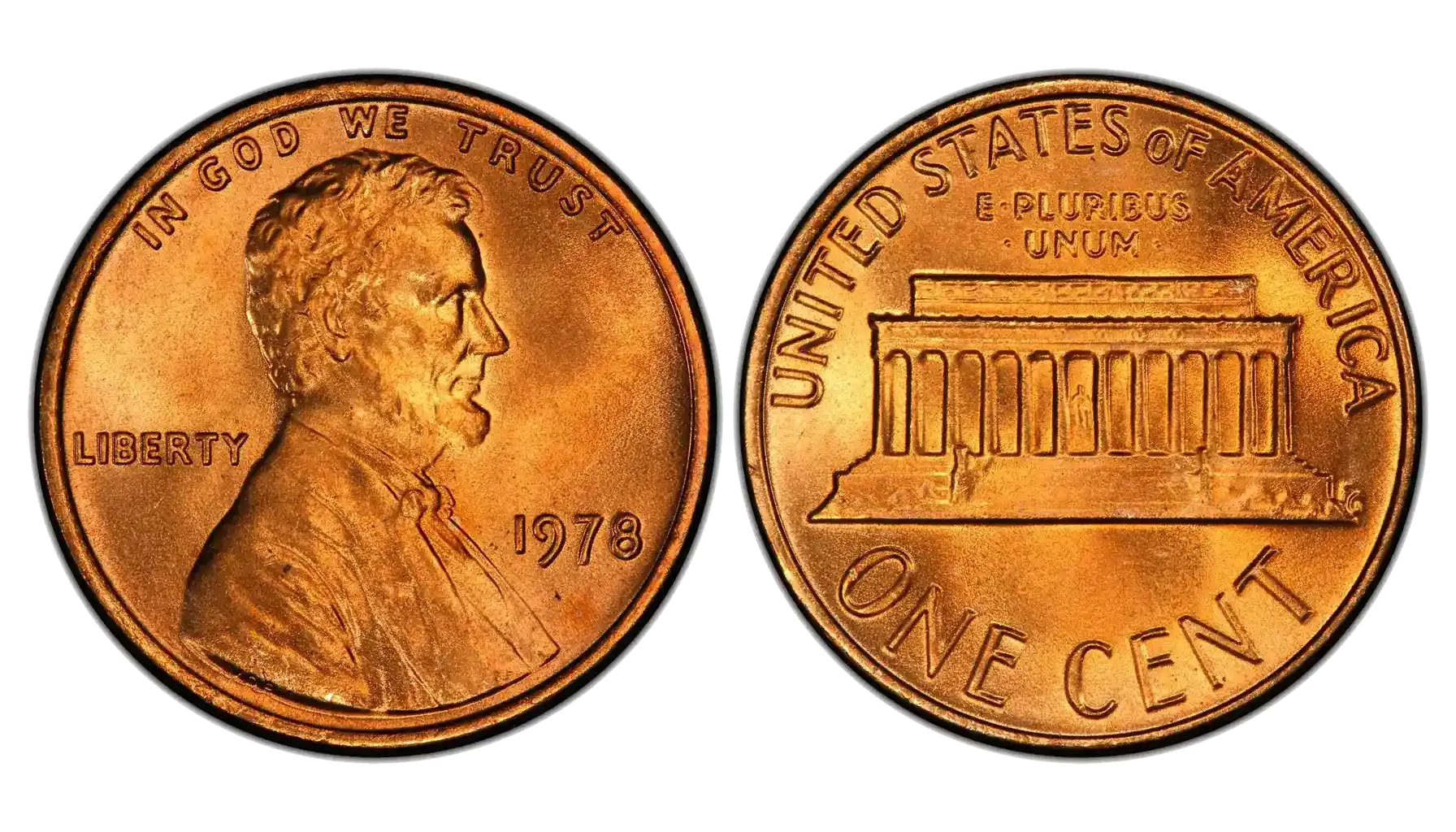
Produced by: Philadelphia Mint, Denver Mint, San Francisco Mint (proofs)
Composition: 95% copper, 5% zinc
Total Mintage: 9,841,966,181
Designations: BN, RB, RD, DCAM (for proofs)
Auction Record: $4,313 for PR70
Obverse Design: Portrait of Abraham Lincoln by Victor David Brenner, introduced with the release of the 1909 VDB penny to honor the centennial of Lincoln’s birth.
Reverse Design: The Lincoln Memorial by Frank Gasparro, introduced in 1959 to celebrate the sesquicentennial of Lincoln’s birth.
These days, cents are considered the lowest denomination in circulation, but their importance is far from being equal to their size. The 1978 Lincoln cent is a fine representative of the long-running series that remains one of the most recognized American coins.
During that year, the production was passed to three main minting facilities in the US, i.e., Denver, San Francisco, and Philadelphia Mints. As noted by numismatist Jaime Hernandez, uncirculated examples are available, though their scarcity increases considerably with higher grades.
1978 Jefferson Nickel
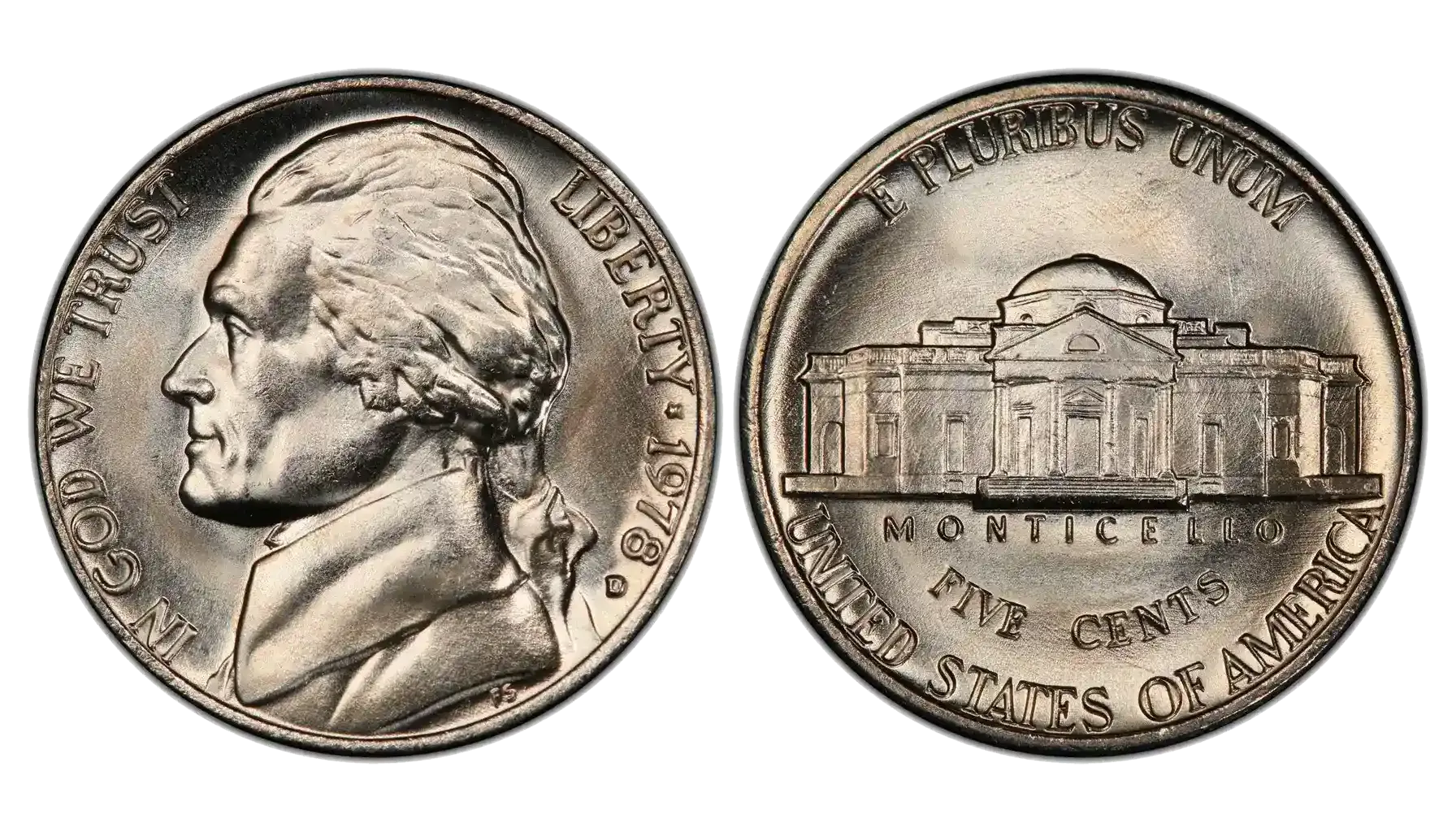
Produced by: Philadelphia Mint, Denver Mint, San Francisco Mint (proofs)
Composition: 75% copper, 25% nickel
Total Mintage: 707,528,561
Designations: MS, Full Step, and DCAM
Auction Record: $16,000 for MS67FS
Obverse Design: Portrait of Thomas Jefferson by Felix Schlag, first released with the 1938 nickel.
Reverse Design: Monticello, Jefferson’s Virginia home, also designed by Schlag.
Nickels, on their part, have always been captivating due to their peculiar design changes (one and only Shield Design, "V" 5Cs, and Indian Head nickels, etc.). The 1978 iteration belongs to the Jefferson Nickel series and is composed of 75% copper and 25% nickel.
Despite the melt value, there are other defining aspects like the "Full Step" designation that boost the prices and drive auctions, too. Although these are rather easy to obtain in Almost Uncirculated condition, pristine items are of great interest anyway.
1978 Roosevelt Dime
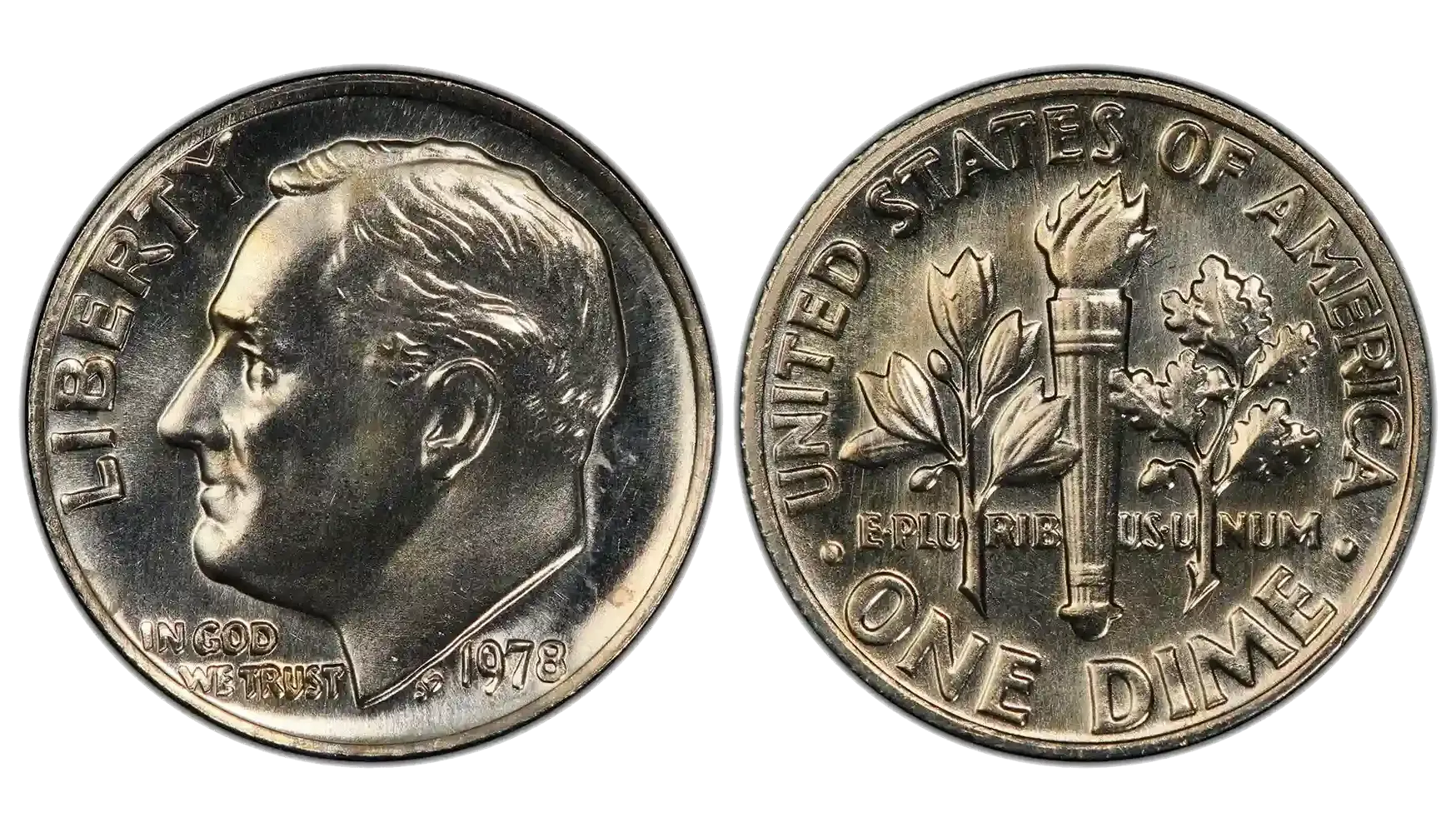
Produced by: Philadelphia Mint, Denver Mint, San Francisco Mint (proofs)
Composition: 75% copper, 25% nickel over a pure copper core
Total Mintage: 949,955,321
Designations: MS, Full Band, and DCAM
Auction Record: $4,025 for MS66
Obverse Design: Portrait of President Franklin D. Roosevelt by John R. Sinnock, first released with the 1946 dime to honor Roosevelt after his passing.
Reverse Design: Torch, olive branch, and oak branch as symbols positioned in the center, also designed by John R. Sinnock.
10-cent coins may not be the most popular among everyday users, but collectors do appreciate their scarcity and underrated status on the market. As per PCGS, there is no direct evidence that Full Band examples in immaculate condition exist because of worn-out dies used during production. Nevertheless, it is an affordable option for newcomers to obtain and start the collection with a decent numismatic creation in possession.
1978 Washington Quarter
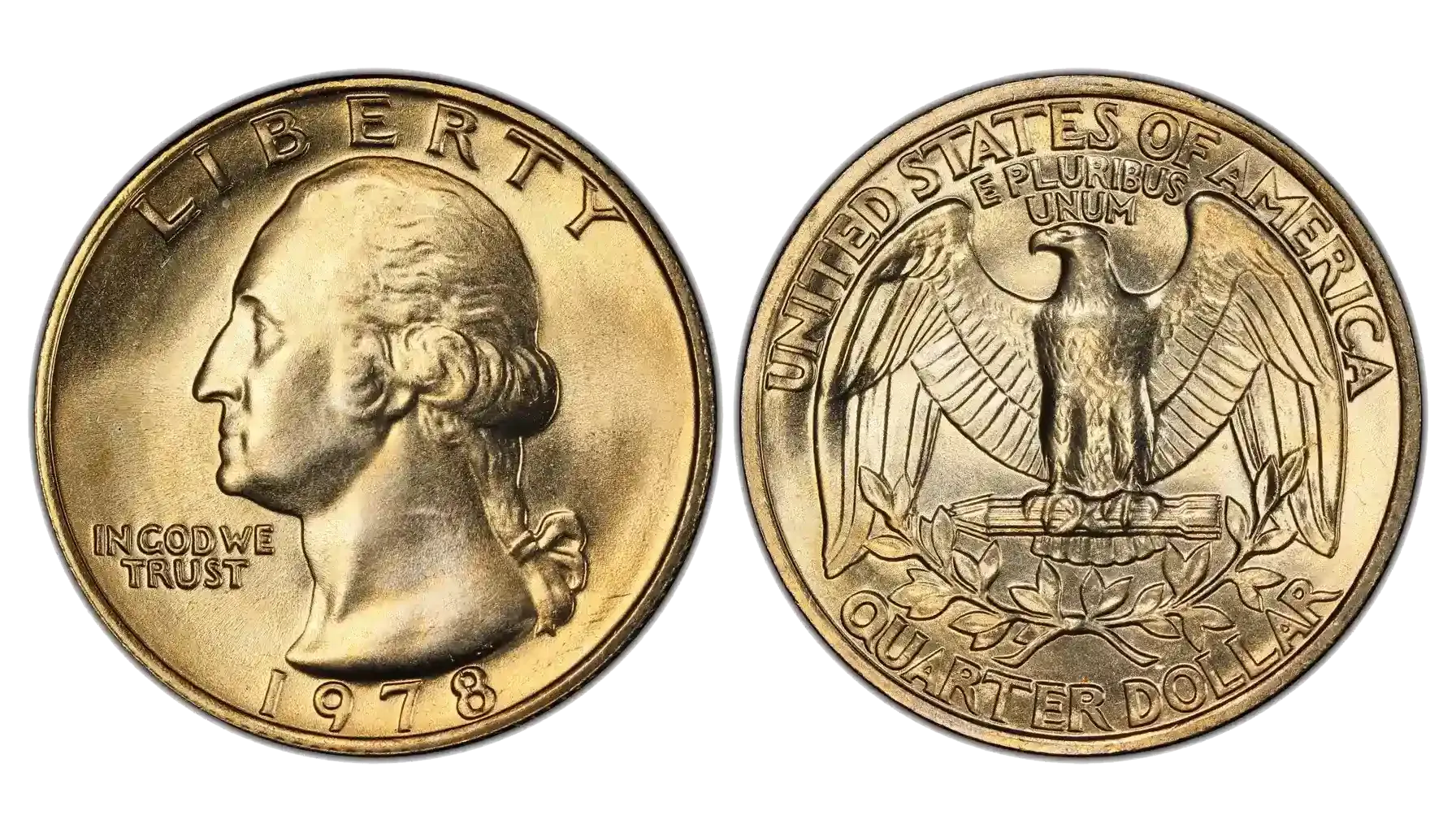
Produced by: Philadelphia Mint, Denver Mint, San Francisco Mint (proofs)
Composition: 75% copper, 25% nickel over a pure copper core
Total Mintage: 811,952,933
Designations: MS and DCAM
Auction Record: $2,875 for MS67+
Obverse Design: Portrait of George Washington by John Flanagan (the first was the 1932 Washington quarter introduced to commemorate Washington’s 200th birthday).
Reverse Design: Heraldic eagle with outstretched wings on a bundle of arrows, designed by John Flanagan.
The Washington quarter series has always been a vivid example of coins of different metals (silver included) and designs that may bring wealth. Nevertheless, the 1978 issue may only boast a clad composition and an immense volume of produced units, which makes it a common circulation piece.
Should you spot a flawless instance certified at MS67+ or higher, rest assured: it is a rare piece that may become a valuable asset, which is also destined to remain a point of numismatic interest over the years.
1978 Kennedy Half Dollar
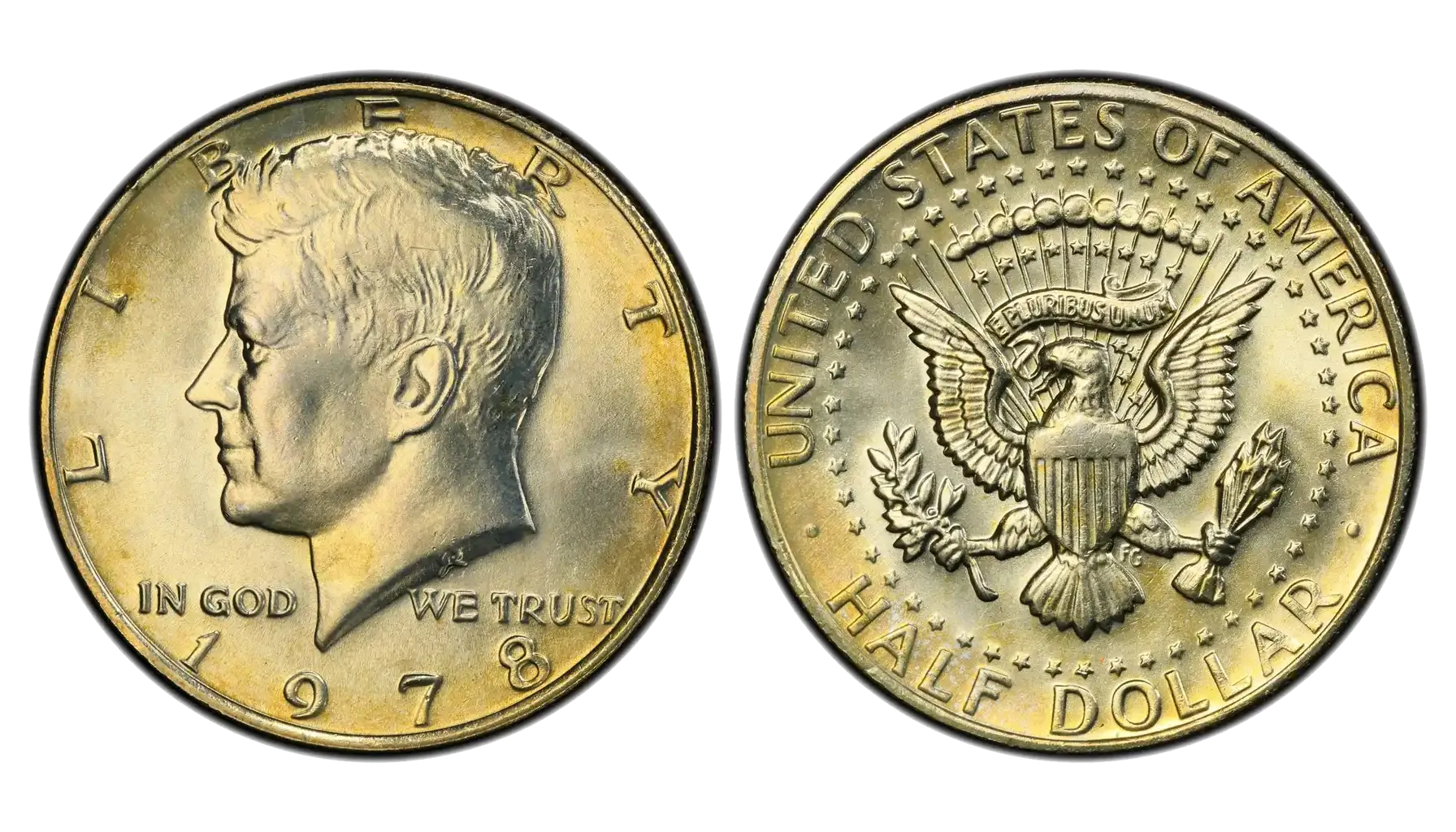
Produced by: Philadelphia Mint, Denver Mint, San Francisco Mint (proofs)
Composition: 75% copper, 25% nickel over a pure copper core
Total Mintage: 31,243,580
Designations: MS and DCAM
Auction Record: $3,760 for MS67+
Obverse Design: Portrait of President John F. Kennedy by Gilroy Roberts, first issued in 1964 following his assassination.
Reverse Design: Presidential Seal designed by Frank Gasparro with a heraldic eagle bearing a shield, olive branch, and arrows.
1978 was indeed a vital year for the Kennedy Half Dollar series, for it was the time when the US Mint began to reduce half dollar production for circulation. As such, public demand for the denomination had declined, and it was not beneficial for the country to issue great volumes of these coins each year. The 1978 half dollar value, however, remains modest in circulation, but uncirculated or proof coins can be worth significantly more than their face value suggests.
Related article: 1964 Kennedy Half Dollar Value: Key Dates, Mint Marks & Market Trends
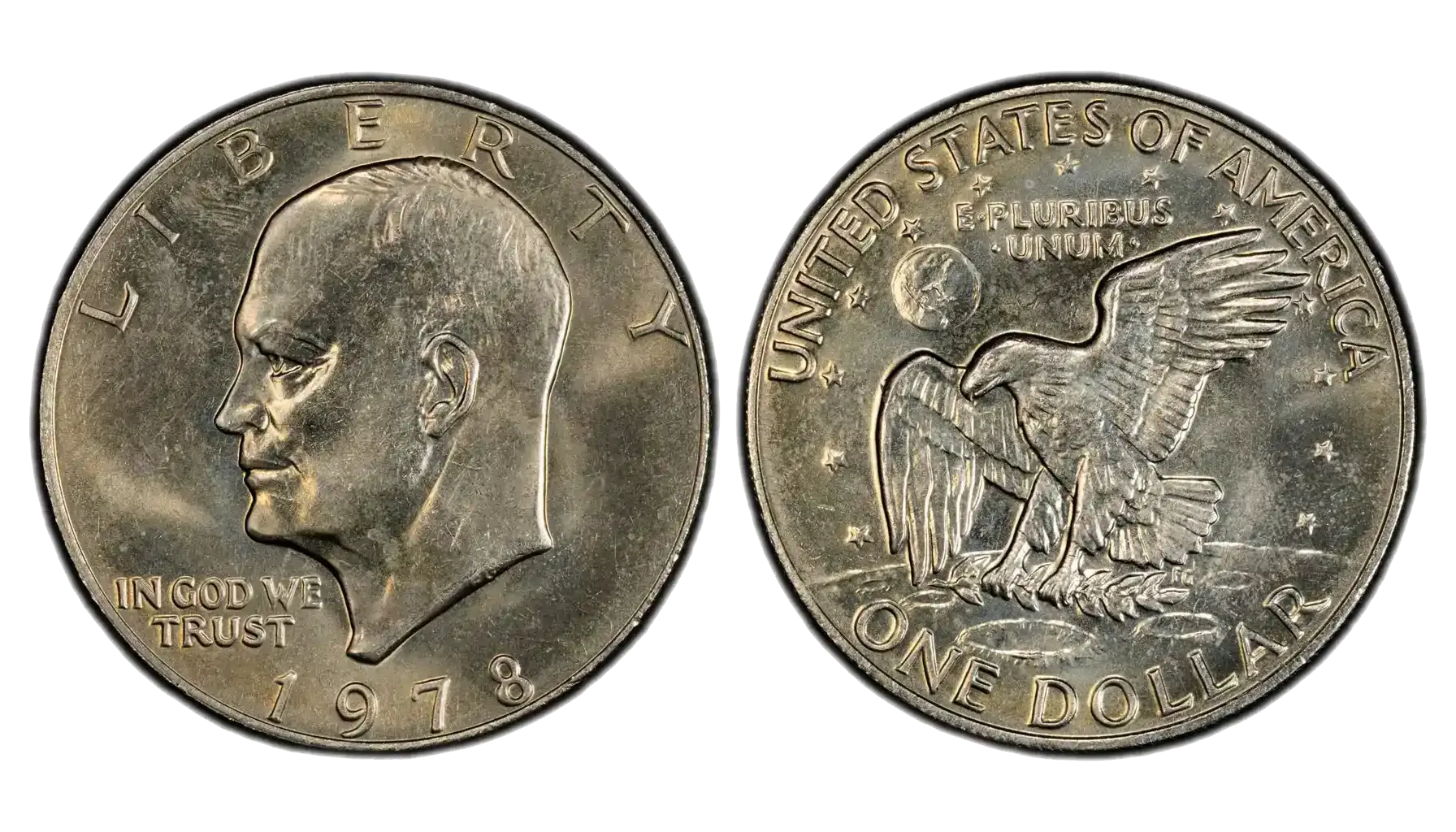
1978 Eisenhower Dollar
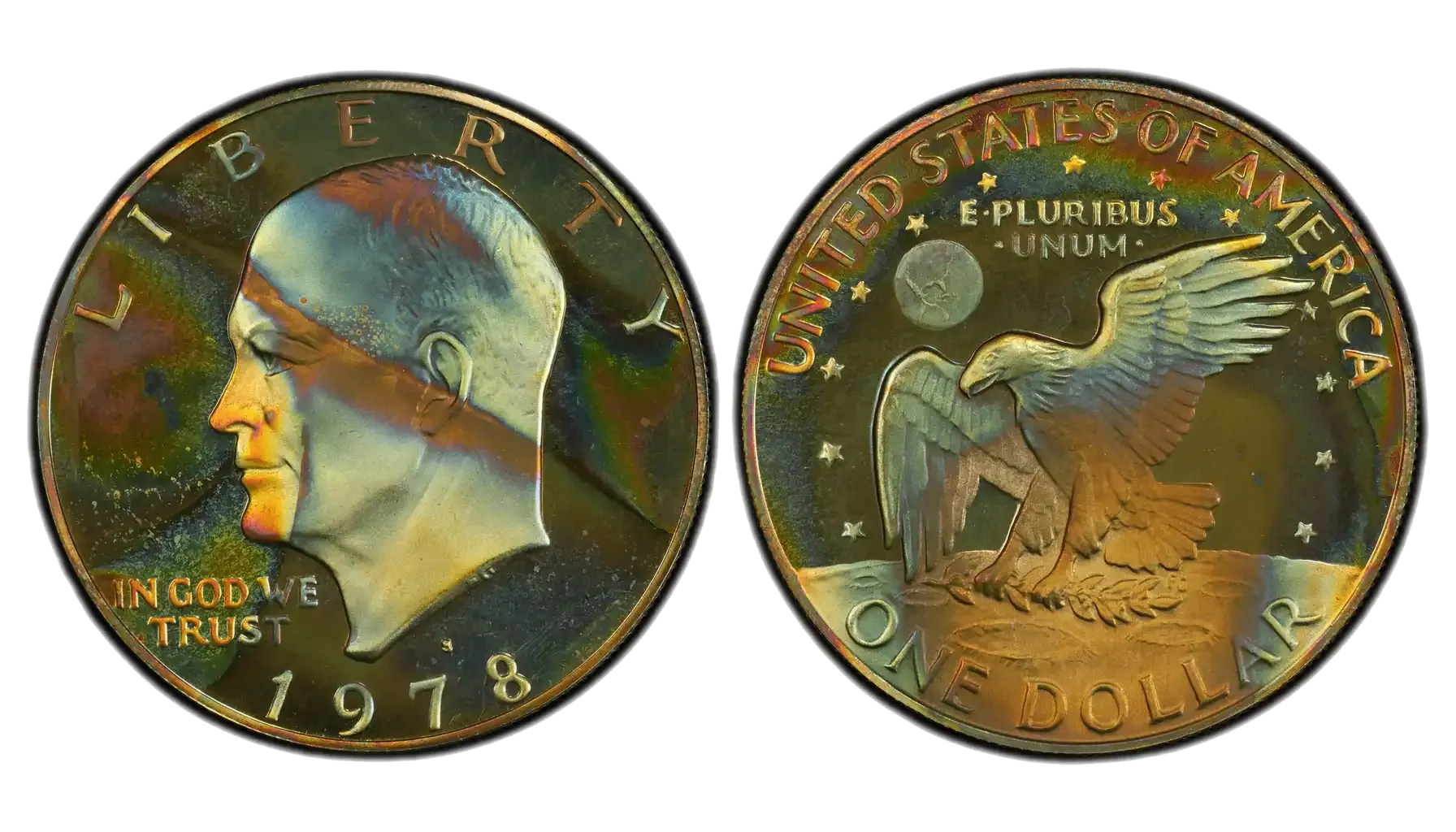
Produced by: Philadelphia Mint, Denver Mint, San Francisco Mint (proofs)
Composition: 75% copper, 25% nickel over a pure copper core
Total Mintage: 61,842,671
Designations: MS, PR, CAM, and DCAM
Auction Record: $8,750 for MS67
Obverse Design: Portrait of President Dwight D. Eisenhower by Frank Gasparro.
Reverse Design: An eagle landing on the moon with an olive branch in its talons by Frank Gasparro.
Finally, here is the coin that comes from a series that, while historically significant, was among the shortest in duration (in this selection), but this is what makes the 1978 one dollar coin value so fascinating to explore. In fact, 1978 was the final year of issue for the Eisenhower series, with no silver versions released that year.
Mint State pieces are rather difficult to obtain, but those with peculiar designations (e.g., Deep Cameo) may be worth hundreds, if not thousands, of dollars, turning a relatively decent 1978 Eisenhower dollar value into a stunning sum.
See also: 1971 Eisenhower Silver Dollar: Value, Varieties & Collecting Guide
When Coins Were Silver…
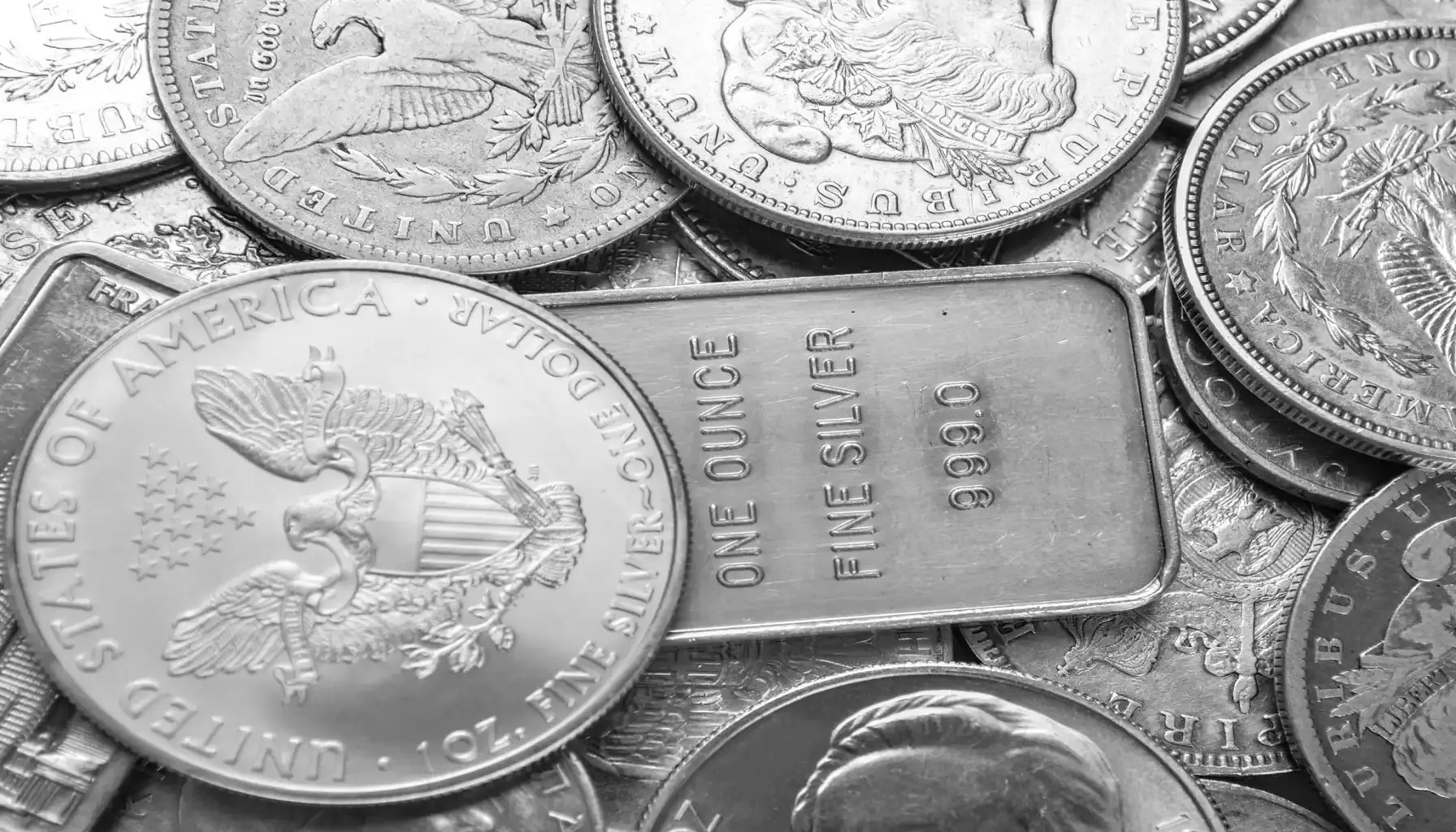
For decades, the US Mint released coins that were made of silver or at least with a substantial percentage of this precious metal. Yet, times do change, and the need for such expensive compositions decreased due to rising silver prices, shortages, and general crises to tackle.
The Coinage Act of 1965 ended this era and eliminated silver from circulating pieces, having replaced them with copper-nickel clad (this affected dimes and quarters in 1965, as well as half dollars and even dollar coins in 1971). Since then, silver has remained absent from everyday change but has become part of special editions or proofs never intended for circulation.
By the way, to learn more about numismatics, do not hesitate to appeal to Coin ID Scanner, an innovative application for quick coin identification, error analysis, collection management, and numismatic education in general. Be a sensible collector – explore the industry with the right tools by your side!
1978 was the year free from precious metals in circulation but full of valuable pieces that gained recognition, thanks to their stories to tell and designs to praise. Explore their potential and remember: all that glitters is not gold.

 Facebook
  X (Twitter)
  Pinterest
  LinkedIn