Contents:
In the modern world, the value of 1927 dime has become an important part of numismatic collections. Since 1916, production of this series has been stable every year. The average mintage is more than twenty million coins from Philadelphia.
To identify your mint mark clearly, open the best website to check coin values.
1927 Mercury Dime Silver Content and Composition
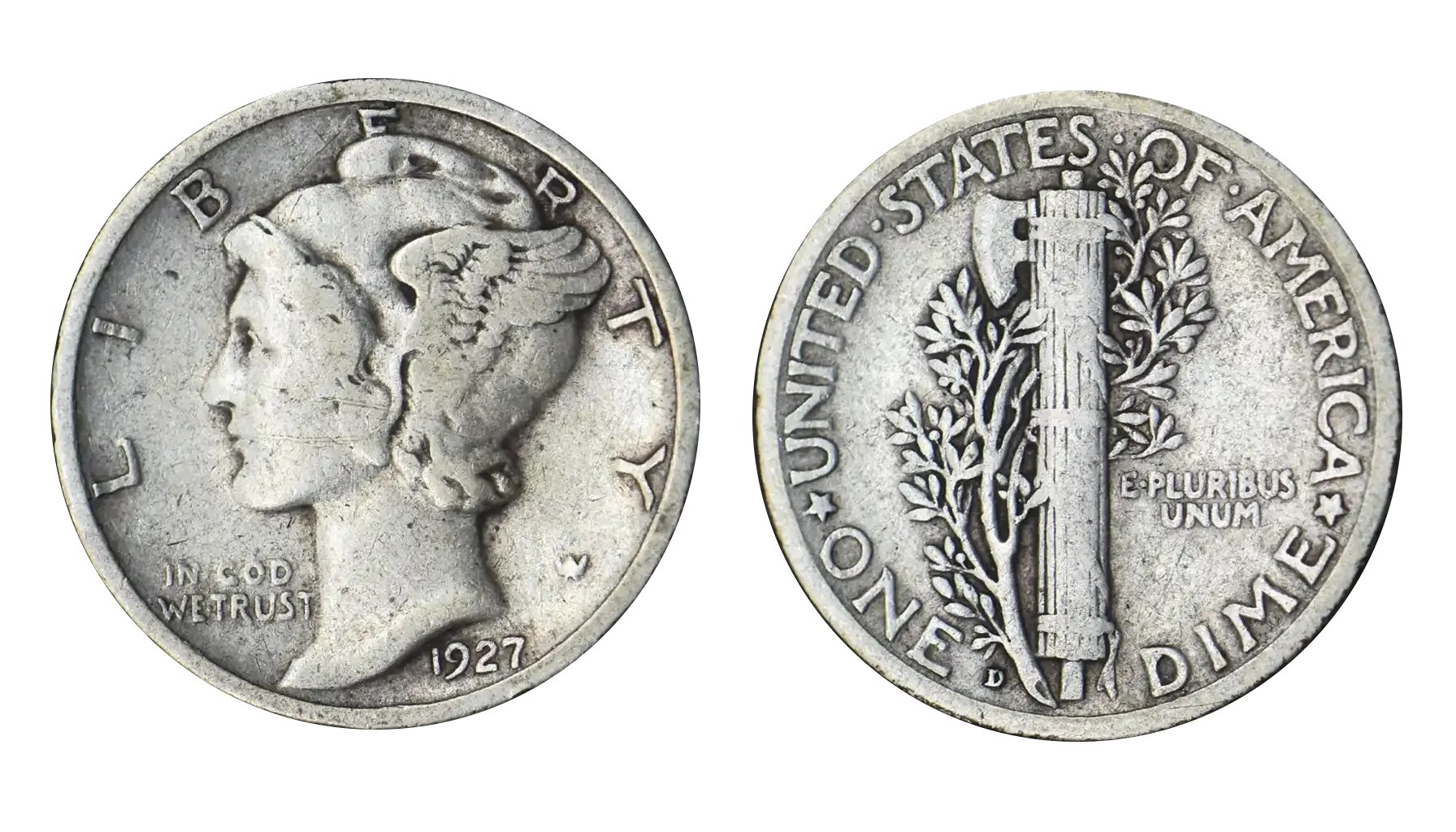
Research confirms that the United States Mint manufactured this coin with a standardized alloy of 90 % silver and 10 % copper. Each coin maintains a consistent weight of 2.5 grams, equating to approximately 0.0723 troy ounces of pure silver.
Market analysts consistently identify the 1927 silver dime value as a dual function of current bullion prices and numismatic demand. Notably, while surface wear may diminish the item’s visual appeal, it does not materially alter its silver content.
Major Characteristics
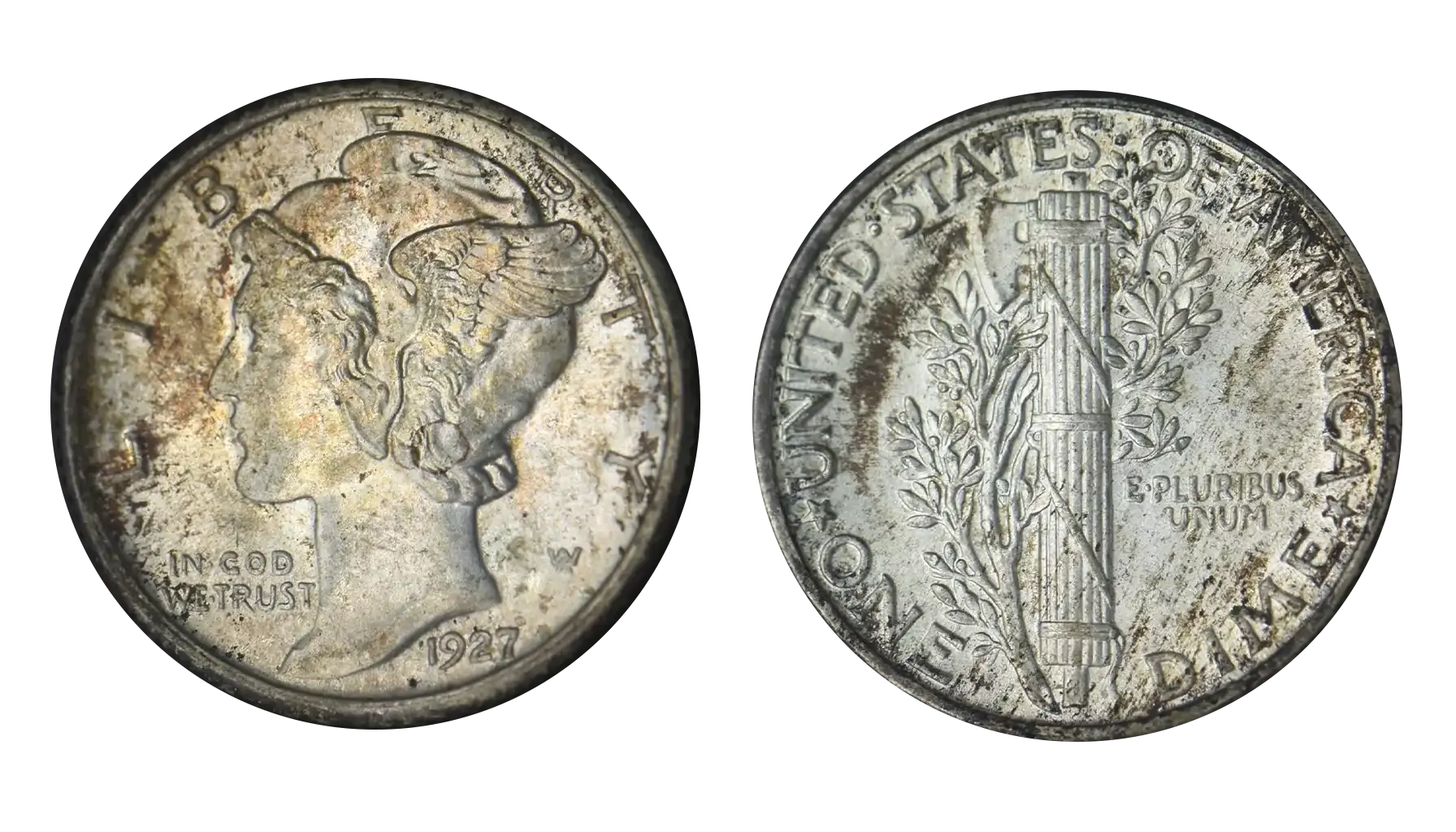
The base factors of a rare gem are the historical period, diameter, weight, edge, composition, and designer. These details are crucial for professional identification.
The composition of silver and copper continue produces in later coin types. The 1939 silver penny is not an exception.
Period | 1916–1945 |
Diameter | 17.8 mm |
Weight | 2.5 g |
Edge | Reeded |
Composition | Silver / Copper |
Designer | Adolph A. Weinman |
Note: The same designer created the 1919 Mercury gem.
1927 Dime Value by Mint Mark (P, D, S)
San Francisco, Denver, and Philadelphia are three cities that produce the item. Philadelphia‑issued coins lack a mint mark, while Denver coins bear a “D” and San Francisco coins display an “S.”
The 1927 Philadelphia item appears with greater frequency in the marketplace. The 1927 D Mercury dime value typically commands higher values than Philadelphia issues when graded equally.
San Francisco mintages demonstrate lower availability. Prospective buyers evaluate strike sharpness and luster prior to making pricing decisions of a 1927 US dime. Below is a summary list for mints.
San Francisco (Mintage 4,770,000) – Low Relative Supply
Denver (4,812,000) – Moderate
Philadelphia (28,080,000) – High
1927-S Mercury Dime Value and Scarcity
Pay attention to the 1927 S dime, which is a hot ticket for folks who want nice, clean coins. Here’s why: San Francisco didn’t pump out as many that year, so they’re naturally worth more down the line.
What would you surmise occurred subsequently? This price tends to climb faster than other 1927s. Could you confirm whether all fascia bands are present with sharp, clear definition? That is an approachable bonus; people pay extra currency for this lot.
And when it’s certified? Watch it smash auction records. Oh, and one more thing: old catalogs might say about a 1927 Liberty dime value, but don’t let that fool you – it’s priced just like any other Mercury item.
1927 Dime Errors and Varieties
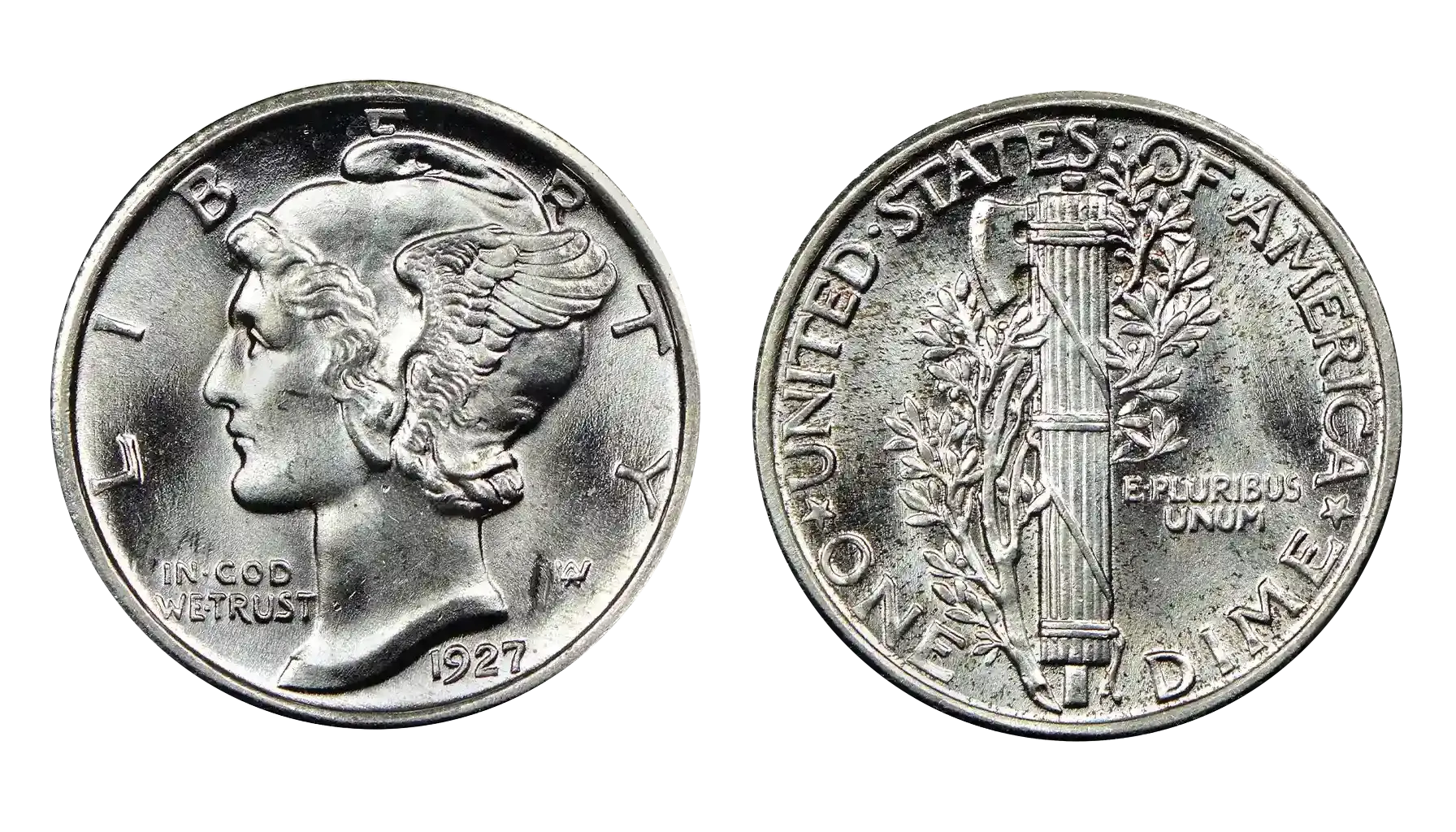
How much is a 1927 dime worth in 2026 with errors? Mint production occasionally resulted in visible flaws. Collectors systematically document popular item errors:
Off‑center strikes
Weak strikes
Die cracks
The designation 1927 dime error encompasses these manufacturing irregularities. The majority of such errors occur on Philadelphia‑minted coins, while Denver and San Francisco issues exhibit fewer error varieties.
Error coins transact outside conventional price guide parameters. Specialists conduct thorough examinations of weight, alignment, and edge detail before final attribution.
The Feature: Full Split Bands
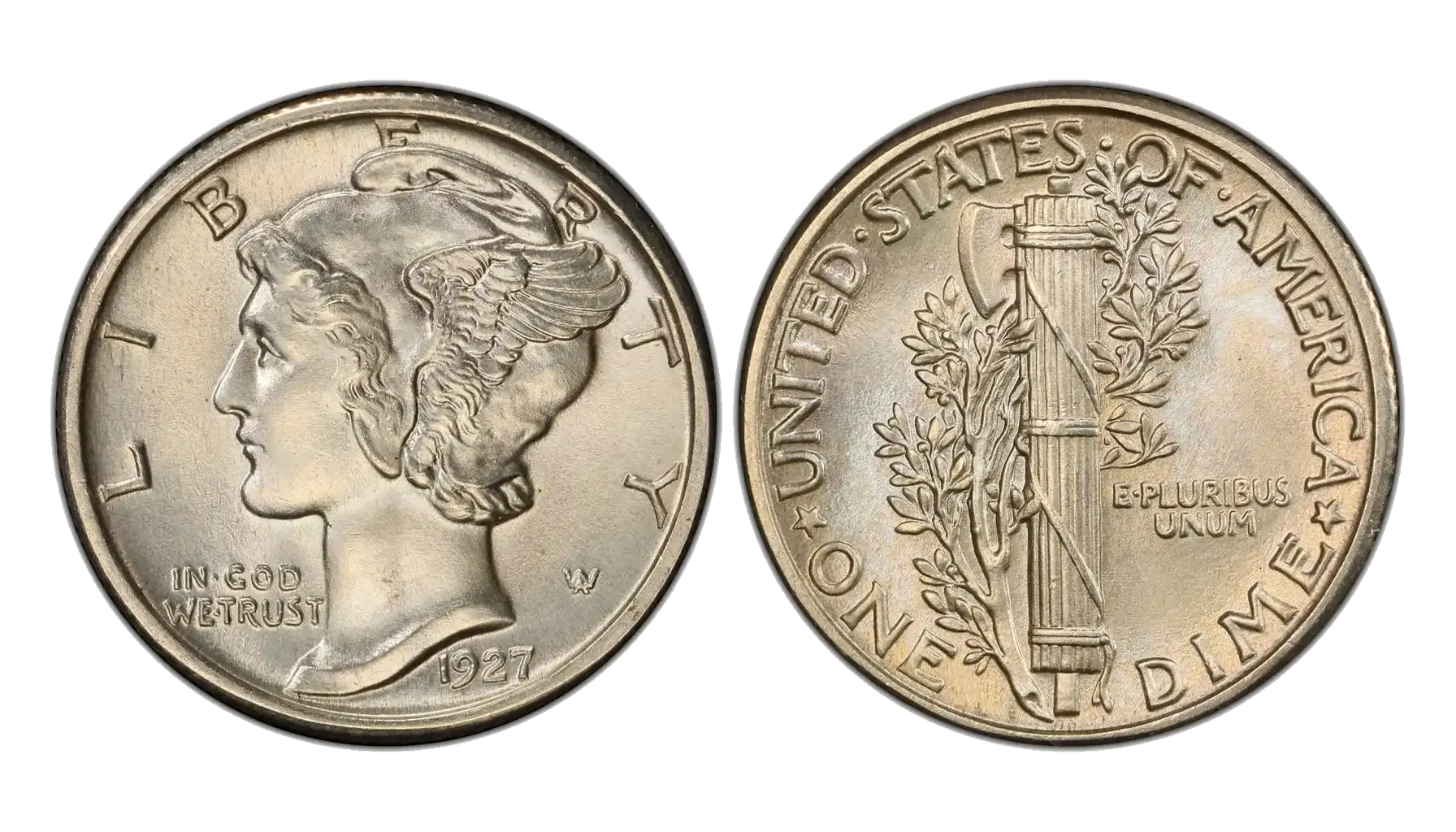
The reverse of the Mercury features two central bands securing the fasces’ bundle of sticks. A significant proportion of uncirculated coins fail to exhibit complete separation between these bands. Coins demonstrating clear band separation command premium pricing, frequently reaching substantially higher values than those without this feature.
1927 Dime Value Today in the Collector Market
“During the deepest part of the depression, 1932-1933, no dimes were struck. As a result, collectors today divide Mercury Dimes into the early dates (1916-1931) and late dates (1934-1945).”
– Unnamed opinion piece “Mercury Dimes”
PCGS
Today’s worth sings through three voices: the coin’s grade, its mint mark, and appeal. Circulated specimens transact at prices approximating their silver content, with limited premiums applied.
Uncirculated coins demonstrate enhanced demand dynamics. Value appreciation correlates directly with the visibility of sharp wing details and well‑defined fasces bands. Market analytics derived from auction data confirm sustained numismatist interest across segments.
2026 Market Prices
The range of the Philadelphia mint fluctuates between $3 to $15, while the 1927 S Mercury dime value fluctuates between $3.25 to $50. The leader position in Denver ranges from $3.50 to $100.
The pricing matrix for copies reflects a graded scale that spans from Good condition at the lower end to Uncirculated status at the premium tier. Each condition category maintains its own defined price point within this structured range.
Mint | Good | Fine | Extremely Fine | Uncirculated |
None | $3 | $3.50 | $7 | $15 |
D | $3.50 | $8 | $80 | $100 |
S | $3.25 | $6 | $28 | $50 |
Speaking of high-level specimens, the cost spectrum gets one thousand dollars.
MS-65 – $200
MS-65+ – $350
MS-66 – $500
MS-66+ – $600
MS-67 – $1,000
Use the Coin ID Scanner online app to compare your silver gems and dollars and create collections.

 Facebook
  X (Twitter)
  Pinterest
  LinkedIn