Contents:
The Pound Sterling is one of most known currencies worldwide. But even now a few people know about its history, value, or use in daily transactions. To identify foreign coins, and receive quick answers about their origin, minting details and values try our reliable app.
Today we discuss British pound sterling – the official currency of the United Kingdom that remains an important part of the global financial system and is still used in daily payments across the UK.
What Is the Pound Sterling
“The British pound is the world's oldest currency still in use at around 1,200 years old. The British pound is both the oldest and one of the most traded currencies in the world.”
— Unnamed article “World’s Oldest Currency Still in Use?”
CMC Markets
The Pound Sterling (GBP) is the currency of the United Kingdom and several related territories. One pound = 100 pence. Now it is one of the major reserve currencies in global finance and is used frequently in international trade and banking.
You can often see the pound sterling symbol (£). It comes from the Latin word “libra”, i.e., a unit of weight connected to the value of silver.
Now the current money in use are:
Banknotes: £5, £10, £20, £50 (and a £100 note in Scotland)
Coins: 1p, 2p, 5p, 10p, 20p, 50p, £1, £2
The pound sterling sign £ is not decorative; it shows the historical connection between currency and measured weight in precious metal. And this link to weight and metal content is still important when studying early British coins.
Historical Background
The pound sterling began as a weight measure of silver. One pound meant one pound of sterling-grade silver formed into coins. Early English coinage followed this rule directly: the value of money was the metal itself. As the state standardized production, the currency shifted from weighed bullion pieces to issued denominations.
Gold and silver were used together until the 19th century. Then the golden standard linked the pound to a certain amount of gold. But even after the 20th century the pound kept its importance in trade and banking. Because of this metal-based history, early British coins are still evaluated by weight, purity, and strike quality.
Main Historical Periods
Period | System | Metal Basis | Notes |
Middle Ages | Silver weight standard | Sterling silver (~92.5% purity) | Value directly based on metal weight |
16th–18th Century | Bimetallic circulation | Gold and silver coins | Ratios adjusted as markets shifted |
1816 | Gold Standard Act | Gold becomes valuation base | Sovereign coin becomes reference |
1931 | Gold standard suspended | Fiat monetary system | The pound is no longer exchanged for metal. |
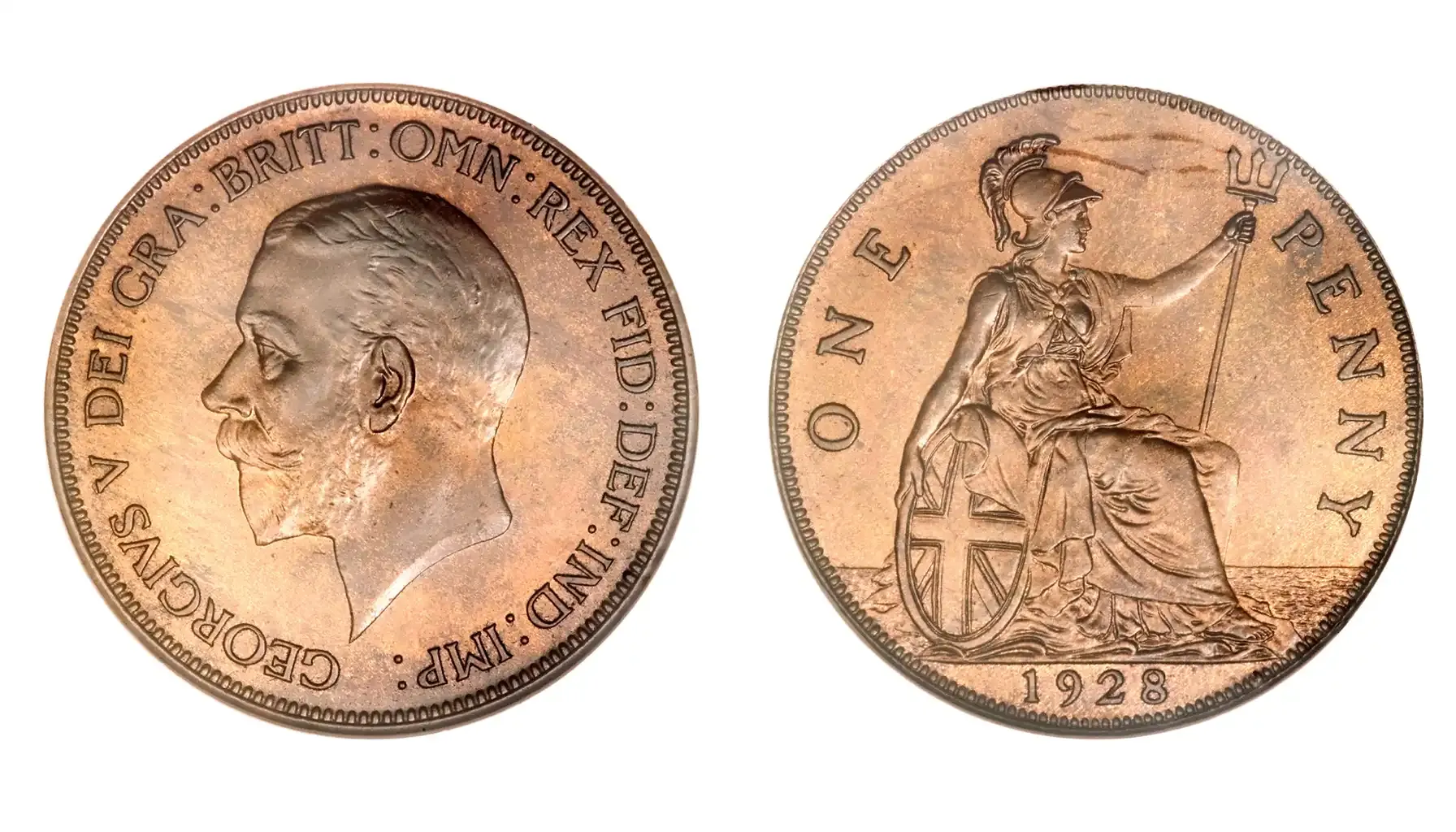
The historical move from a metal-weight system to a fiat currency explains why many older British coins are collected today for rarity and date, but also for metal content and preservation of original surfaces.
The British Pound Sterling Today
Today the pound sterling functions as a fiat currency supported by the UK financial system, not by metal reserves. Circulating coins are issued by the Royal Mint using standardized alloys and strict production controls. For collectors, this means that modern UK coins are identified not by metal value, but by design, finish, and series.
Main points to know:
Decimal system (1971–present): £1 = 100 pence; this change clearly separates the old pre-decimal coins from modern circulation pieces.
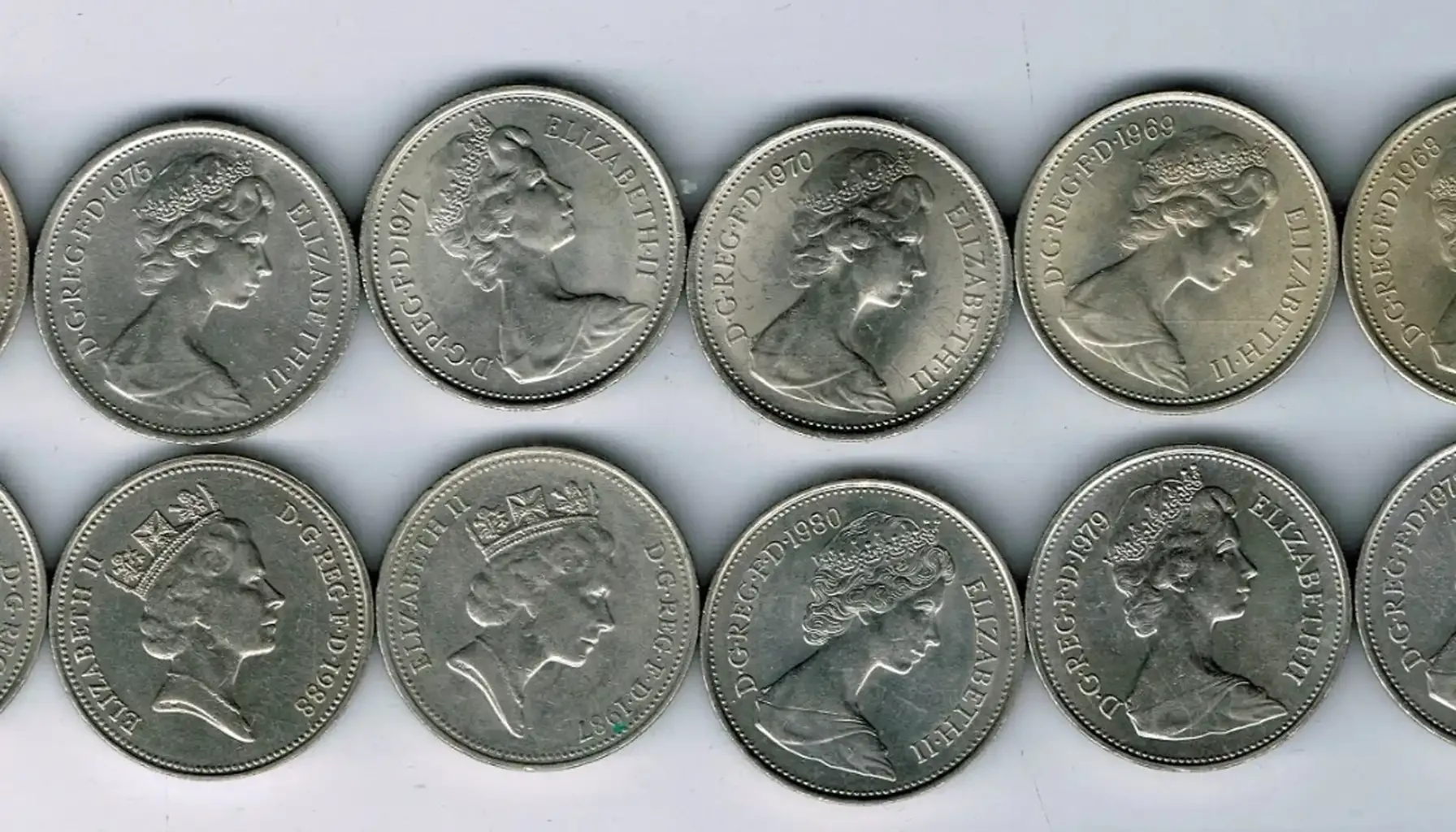
Royal portraits: portraits of Queen Elizabeth II (and now King Charles III). Portrait style changes over the years, giving natural collecting stages.
Commemorative 50p and £2: Themed designs; many of them appear directly in circulation, which makes them popular to search for.
Bimetal £1 and £2: Two-metal composition; also used as an anti-counterfeit feature.
Proof and bullion issues: Separate from circulation strikes; lower mintages and premium finishes.
Modern pound coins attract attention due to date, design, and portrait era. The silver or gold value no longer defines worth; instead, surviving condition, limited designs, and complete series sets are what create collecting interest over time.
Interesting Facts about the Pound Sterling
Portrait Eras and Collecting Logic
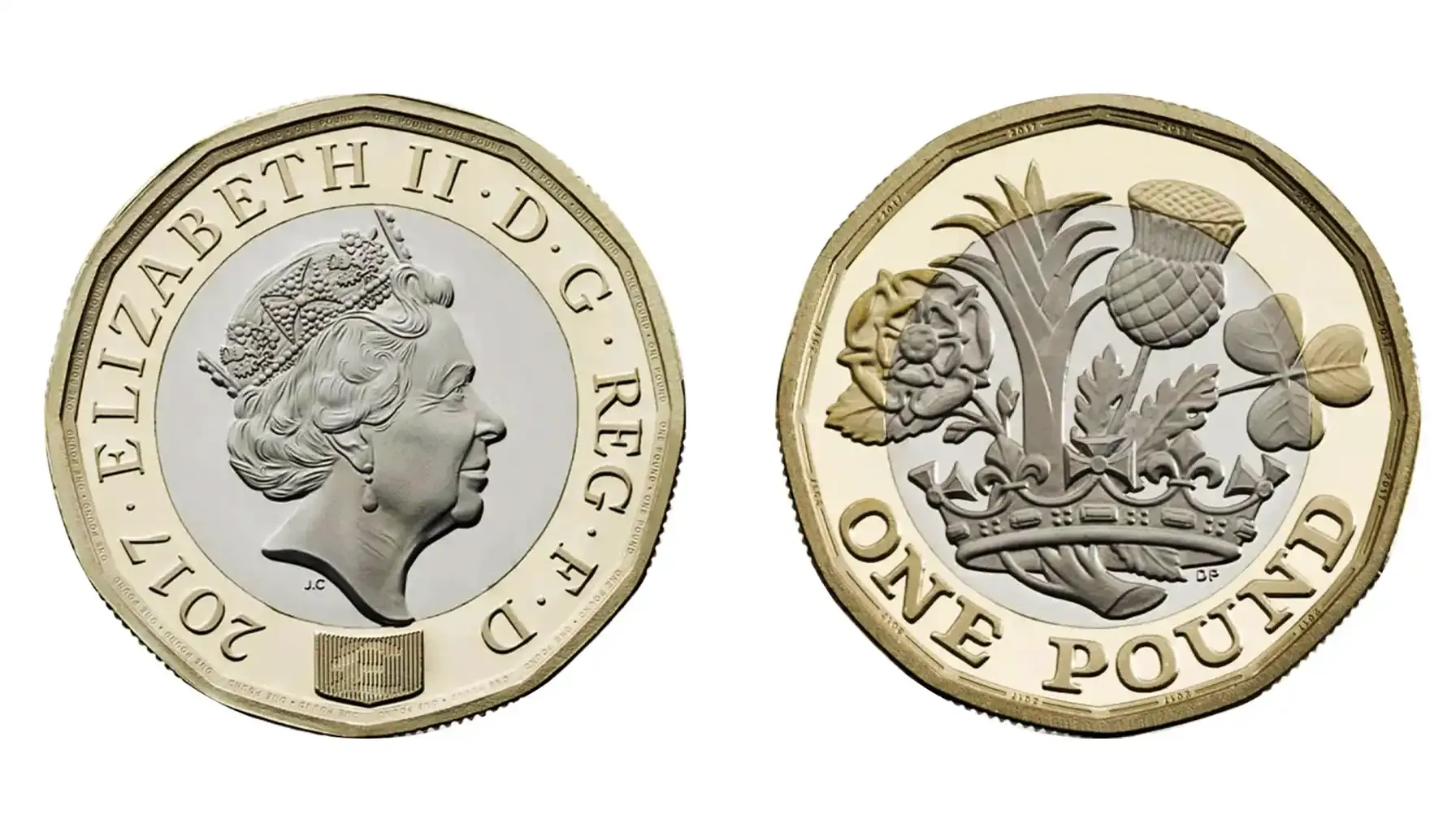
Portrait changes mark clear collecting periods. Each monarch’s portrait is updated over time to show visible differences across dates. The portrait is the fastest way to sort modern UK coins by issue period.
For example, for Queen Elizabeth II, five main circulating portraits were used:
Young Head (1953–1967)
Decimal Portrait (1968–1984)
Mature Profile (1985–1997)
Senior Profile (1998–2015)
Final Portrait (2015–2022)
Today’s new coins show King Charles III. By tradition, the portrait faces the opposite direction from the previous monarch, so he faces left. If you are interested in collecting foreign pieces with portraits of monarchs, you can also consider Canada Elizabeth II coins.
Thus, for collectors the portraits help identify the reign period quickly. Low-mintage changeover years between portraits can be of special interest.
The 2017 Redesign of the £1 Coin
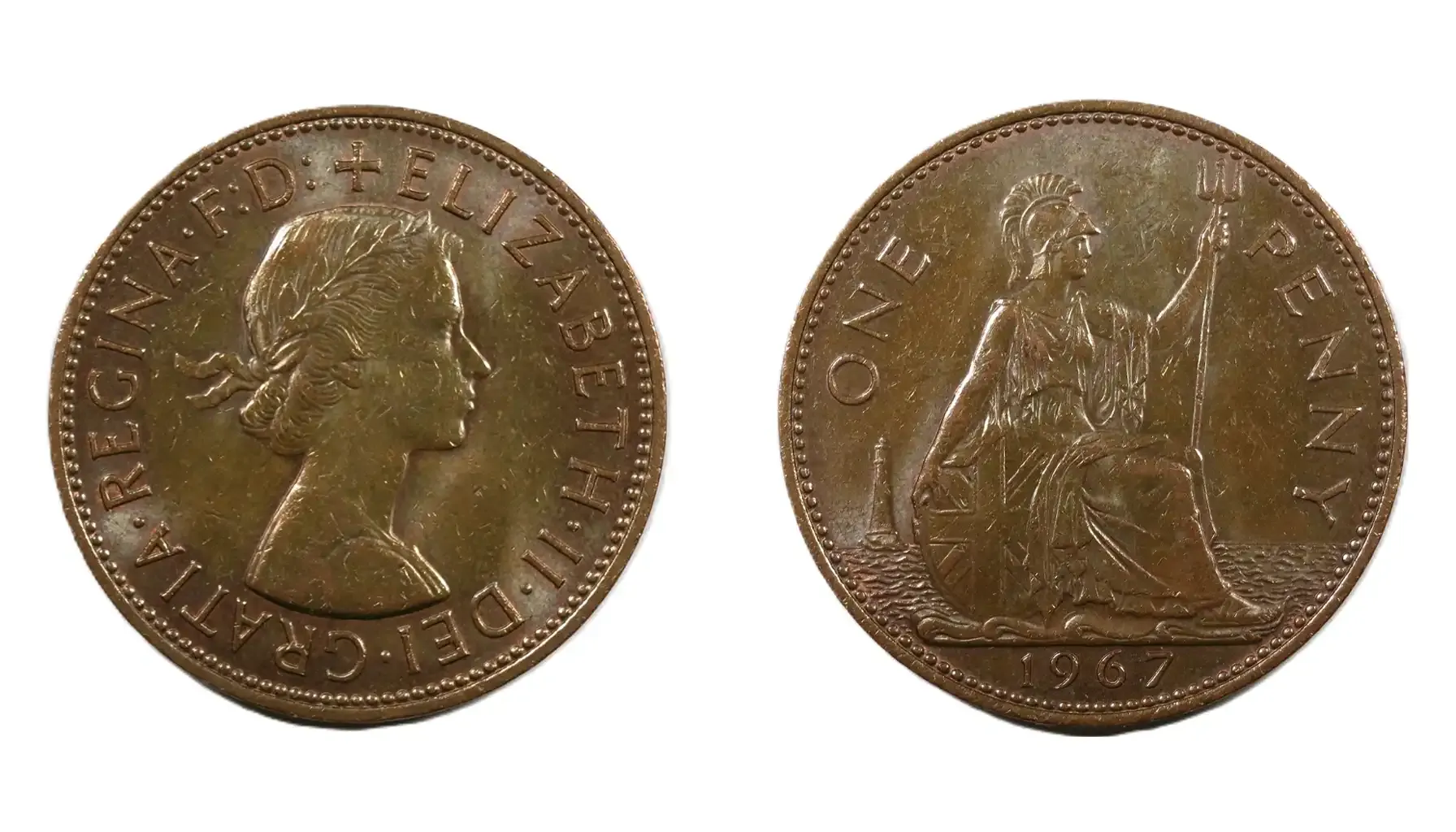
In 2017, the Royal Mint replaced the round £1 coin with a 12-sided bimetal version to reduce counterfeits and make authentication easier. The new coin is easy to recognize by shape and by the contrast between the outer and inner metals.
Feature | Round £1 (1983–2016) | 12-Sided £1 (2017– ) |
Shape | Round | 12-sided |
Construction | Single alloy | Bimetal (outer nickel-brass, inner nickel-plated) |
Circulation Status | Withdrawn | Current issue |
Collectors separate £1 coins into two periods:
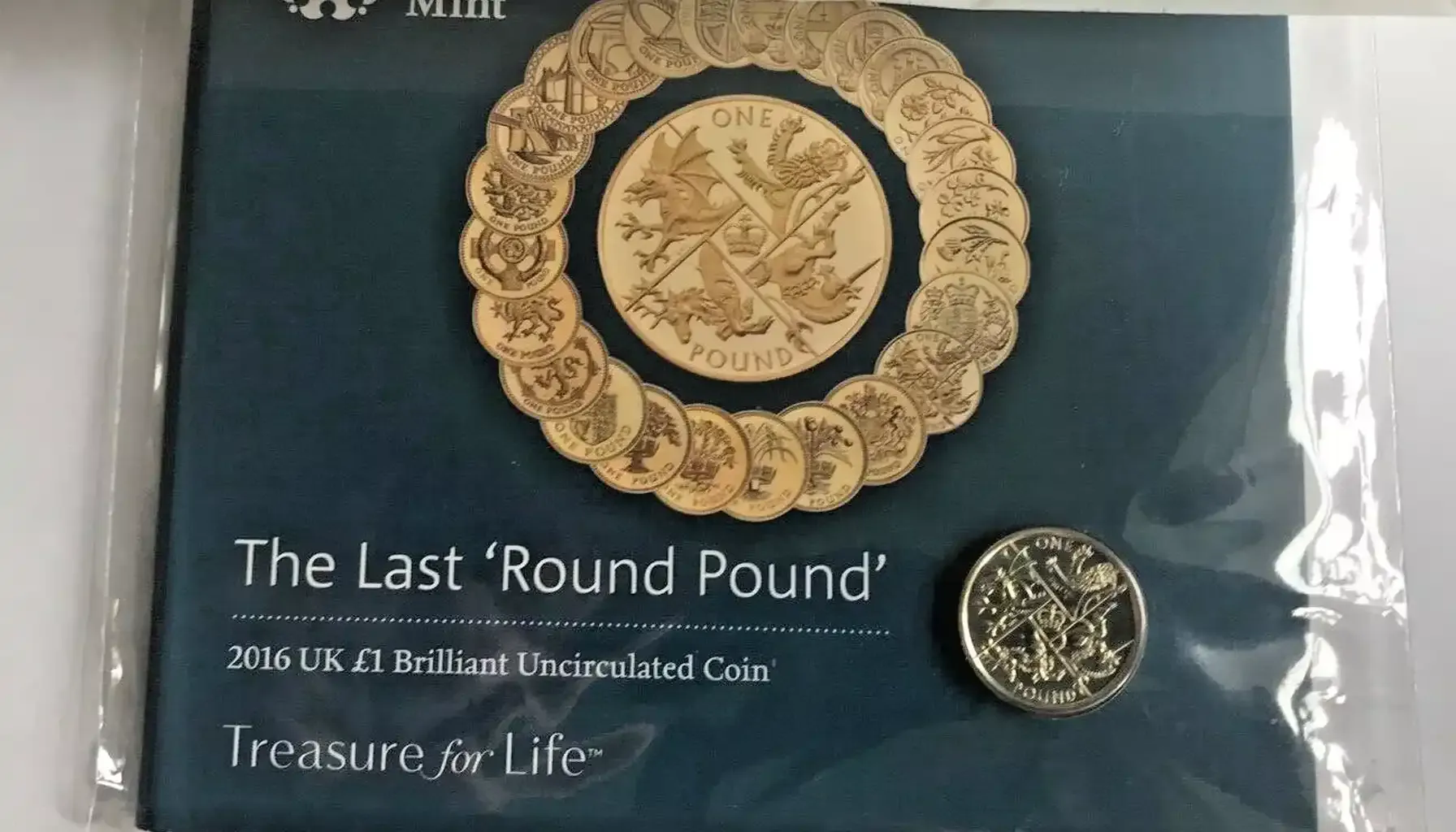
Pre-2017 round coins — wide range of national and regional designs.
Post-2017 12-sided coins — new format with updated security features.
After the redesign most round £1 coins were withdrawn from circulation, so to find an earlier piece in good condition is not an easy task.
50p and £2 Circulating Commemoratives
The 50p and £2 coins carry most of the commemorative designs available directly from circulation.
They show historical events, literature, science, national anniversaries, and cultural figures.
Some designs are common. Others have low mintages or strong thematic interest, which makes them actively collected.
Examples worth noting:
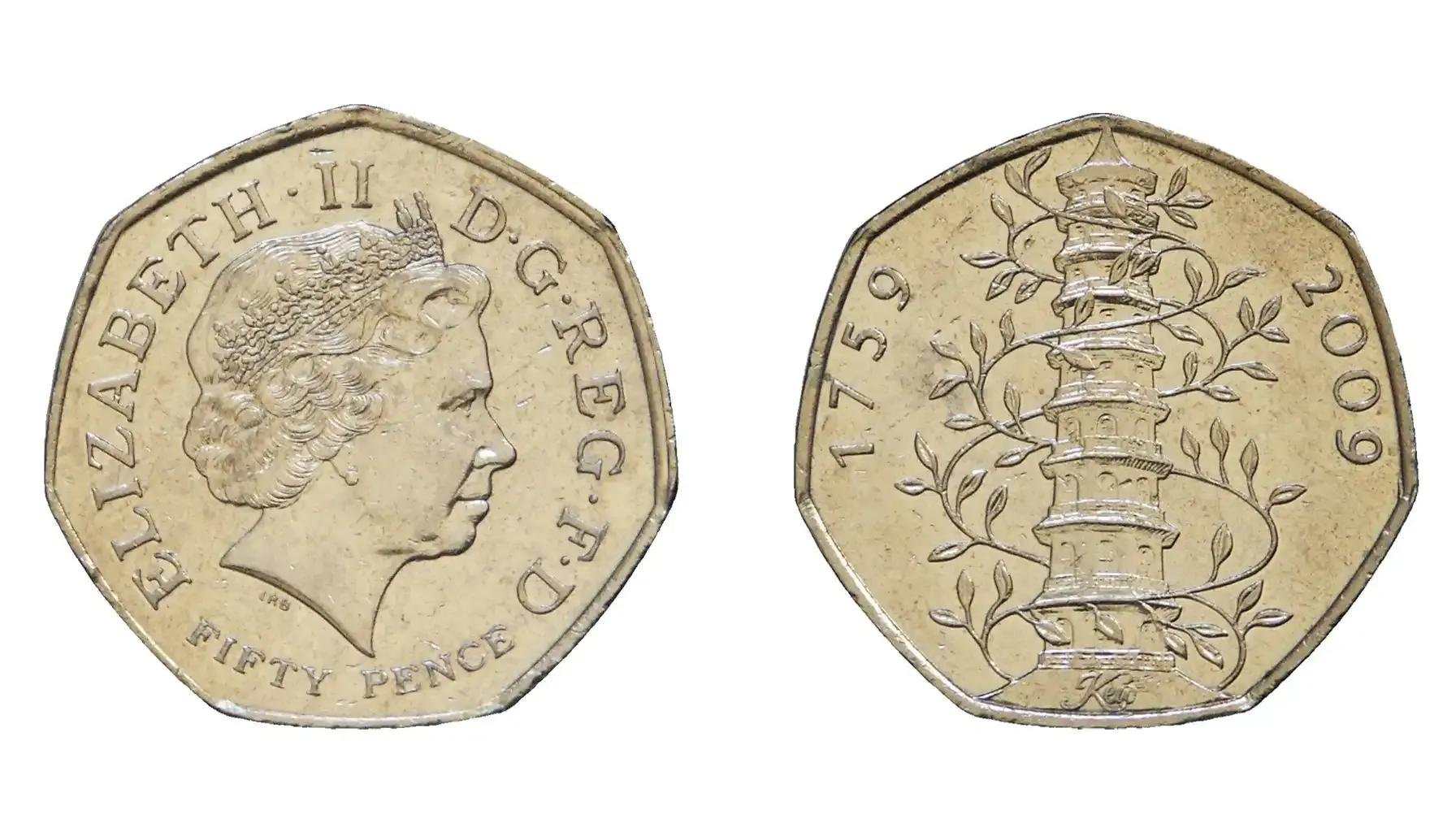
50p “Kew Gardens” (2009) — low mintage; one of the rarest pieces of the modern 50p series.
50p “Peter Rabbit” Beatrix Potter series — collected due to literary themes and famous beloved characters.
50p “Sherlock Holmes” (2019) — popular among non-numismatists, which additionally increases demand.
£2 “Charles Darwin & Evolution” (2009) — scientific theme with broad recognition.
£2 “WWI / WWII and History of the Royal Navy” series — interest driven by national history themes.
Some designs were struck once and not repeated, so these pieces are limited only to what can be found in circulation. In this case, conditions always affect value. High-grade circulation finds are significantly harder to find because of handling wear.
Because of this, checking pocket change still makes sense. Collections are formed slowly, by adding only the better pieces with clear detail, sharp edges, and few signs of wear.
The Gold Sovereign and the Metal Standard
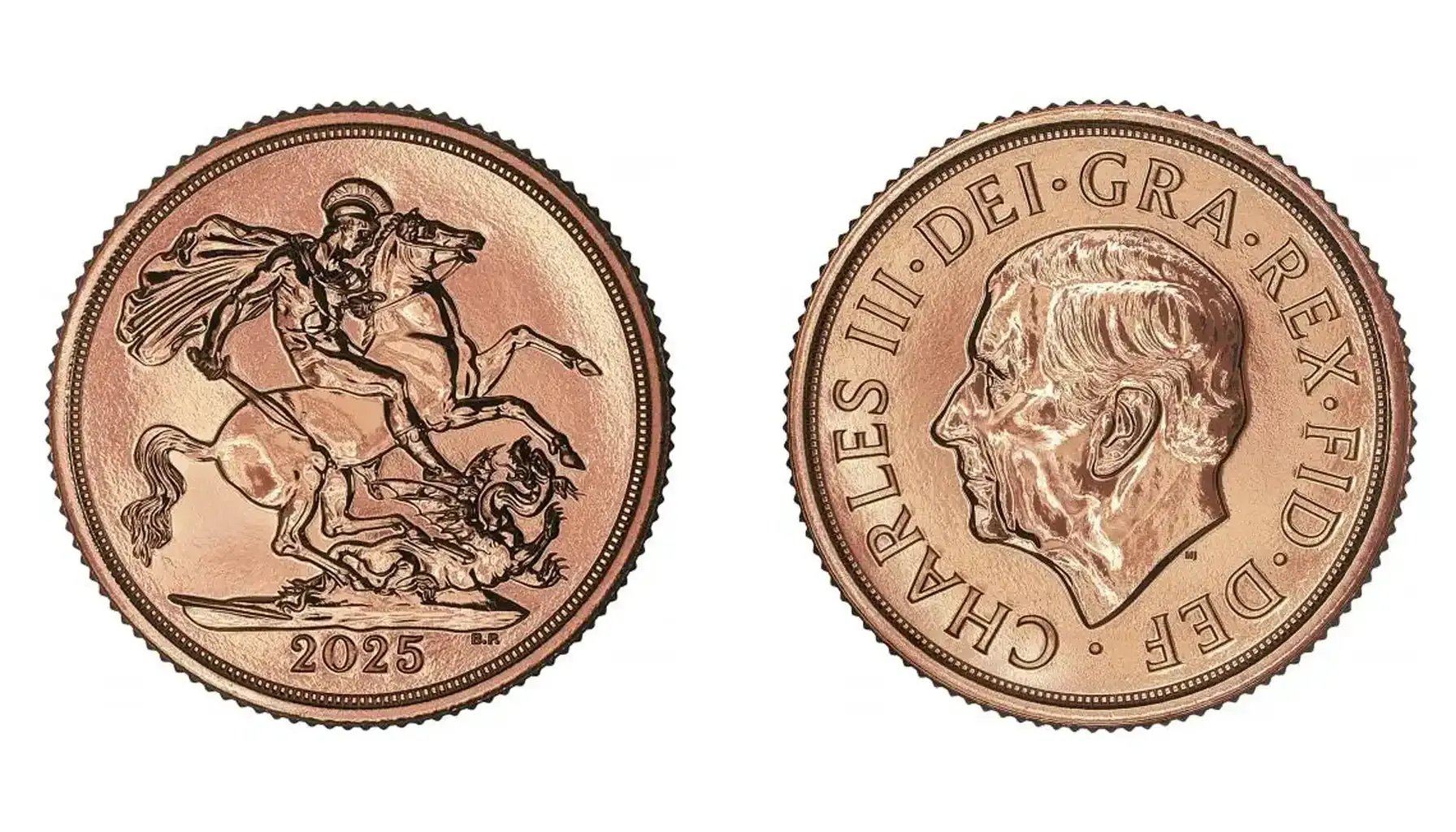
The modern gold sovereign still reflects the metal-based system suggested by the sterling pound symbol (£). It means the value of the coin directly depends on the metal weight. The coin still follows the same standard of 7.98 g and .9167 gold (22-carat), i.e., parameters remain stable for more than two centuries.
Main details:
Weight: 7.98 g
Gold fineness: .9167 (22-carat)
Diameter: 22.05 mm
Design: St. George and the Dragon (common reverse type)
The sovereign is issued today in two main forms: bullion version (for investing in) and proof strikes for collecting and presentation sets. This piece is well known and easy to confirm by its standard weight and size (easy to trade and collect). Thus, it works both as a historic coin and a trusted asset of gold for storage.
Final Notes on the Pound Sterling
The pound sterling began as a silver-based unit and today serves as the UK’s official currency. Older coins are linked to metal weight and purity. Modern issues focus on design, security features, and series themes.
To check all nuances: origin, date, and value, use the Coin ID Scanner app. Its database includes more than 187,000 coins including foreign ones. With the app you can easily identify foreign coins worth money and manage your digital collection online. Still have some questions? Just address them to built-in AI assistant to receive quick answers and refer to the blog for other reviews and insights.

 Facebook
  X (Twitter)
  Pinterest
  LinkedIn