Contents:
The Australian Penny was a bronze coin used in Australia before the country adopted decimal currency in 1966. It belongs to the pre-decimal system where 12 pence = 1 shilling and 20 shillings = 1 pound.
But how much is a penny worth? You’ll see soon.
Feature | Details |
First issued | 1911 (under King George V) |
Last issued | 1964 (under Queen Elizabeth II) |
Composition | Bronze — 97% copper, 2.5% zinc, 0.5% tin |
Weight | 9.45 grams |
Diameter | 30.8 mm |
Edge | Plain |
Demonetized | 1966 (replaced by the 1-cent coin) |
Introduction to Australian Pennies
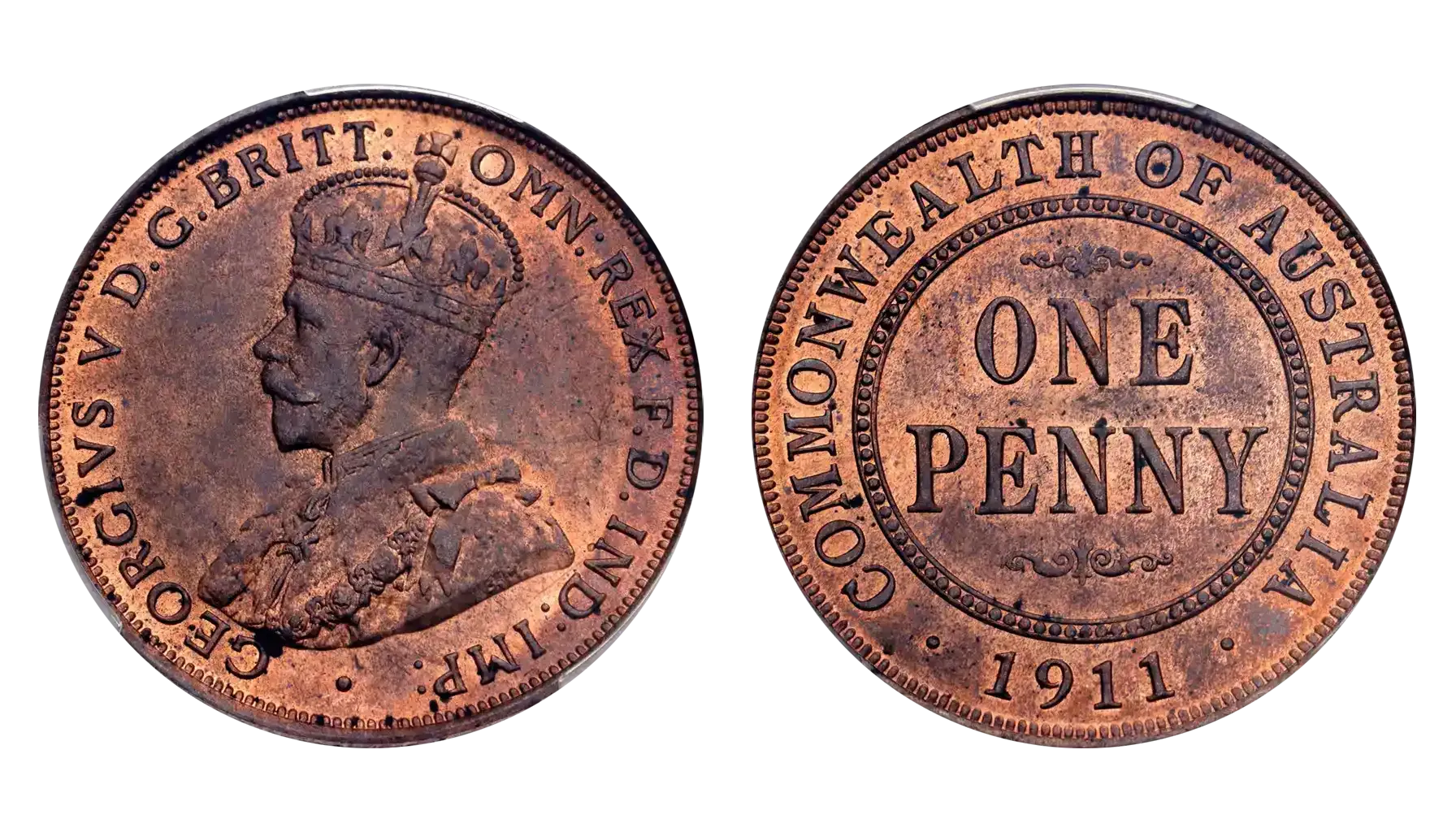
The Australian money penny entered circulation in 1911. It was ten years after the Commonwealth of Australia was established.
The early coins were struck under King George V. They were minted in London, Birmingham, Calcutta and Melbourne. Their design followed a traditional British pattern with the king’s portrait on the obverse and a simple inscription within a beaded circle on the reverse.
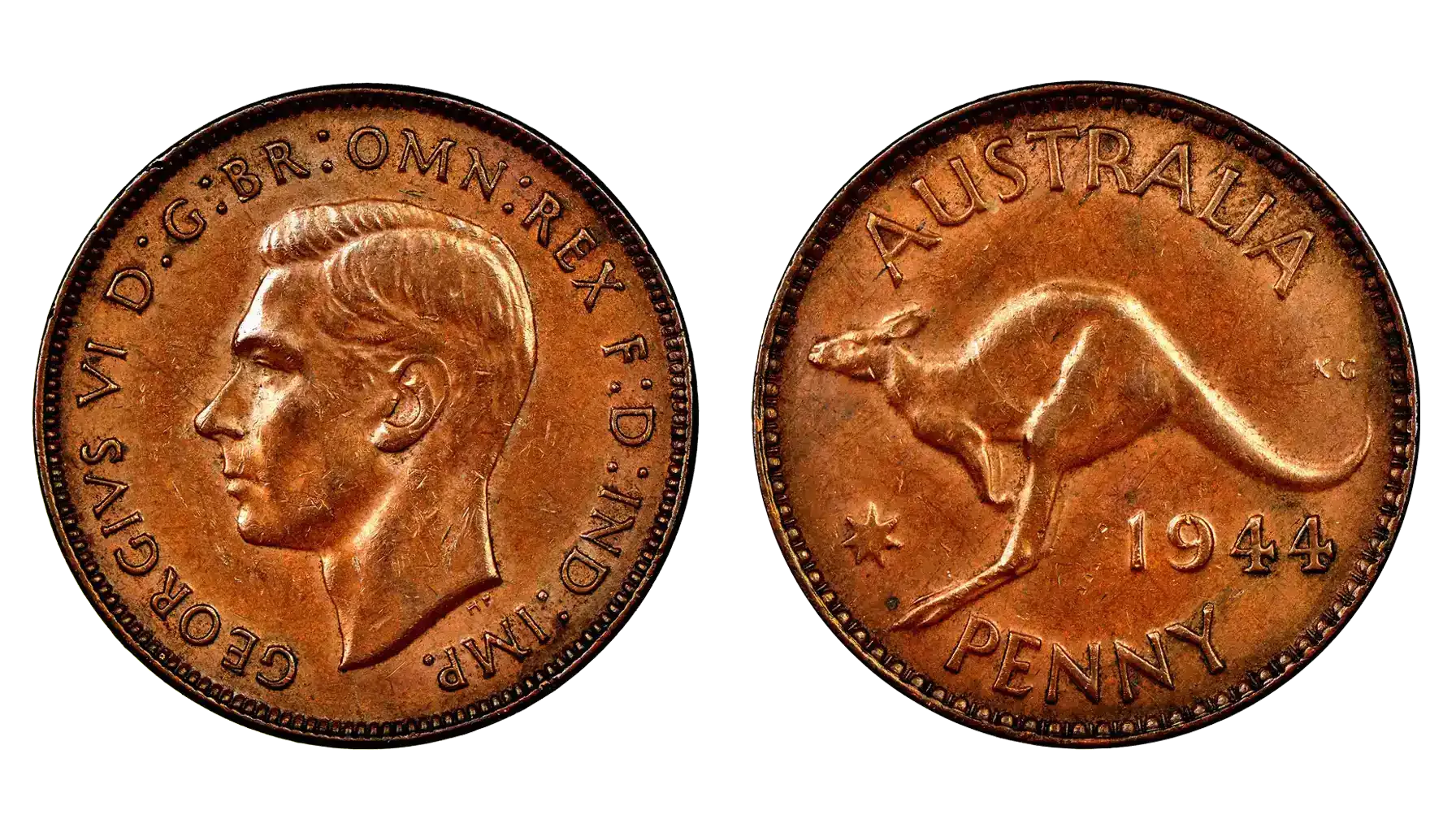
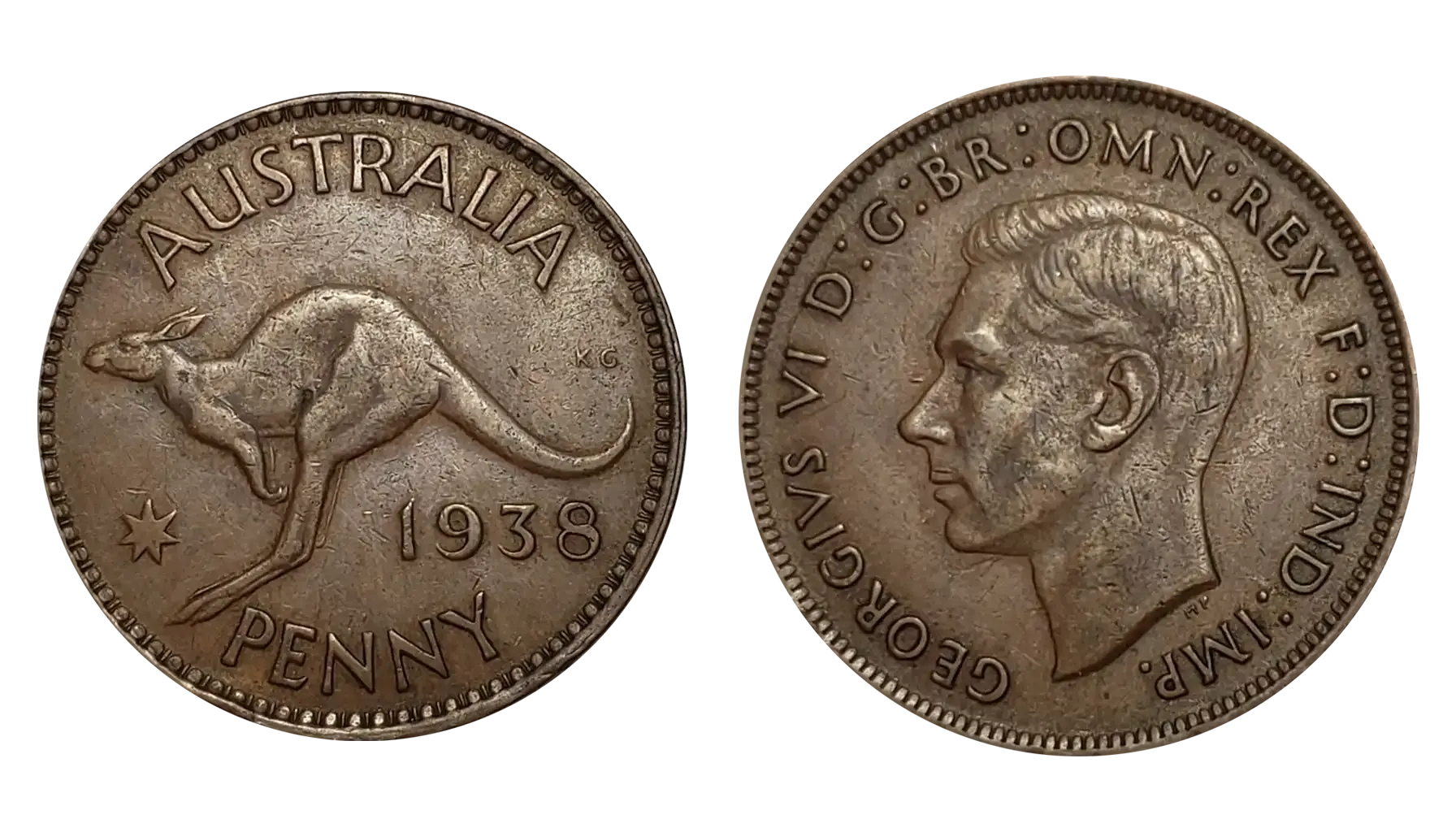
George VI became king in 1936 and a new design appeared in 1938. Artist George Kruger Gray replaced the old one with a leaping kangaroo. The design remained until 1964 but there were portrait updates for each monarch.
The decimalisation of 1966 ended the circulation of this coin. It was replaced by the 1-cent coin, equivalent to one-hundredth of a dollar.
Design
The obverse always showed the reigning monarch. It had three main portraits:
George V (1911–1936) — by Bertram Mackennal
George VI (1938–1952) — by Thomas Humphrey Paget
Elizabeth II (1953–1964) — by Mary Gillick
The reverse changed only once:
1911–1936: A circular design with text and a dot border.
1938–1964: A leaping kangaroo with the Southern Cross and denomination.
Understanding Penny Value
1. Year and Rarity
Certain years had very low mintages. These coins are rare today. The 1930 specimen is the most famous example — only a few dozen were struck. Its value can exceed AUD $20,000 even in worn condition.
Other rarities include the 1925 and 1946 issues. They often cost several hundred dollars.
2. Mint Marks and Varieties
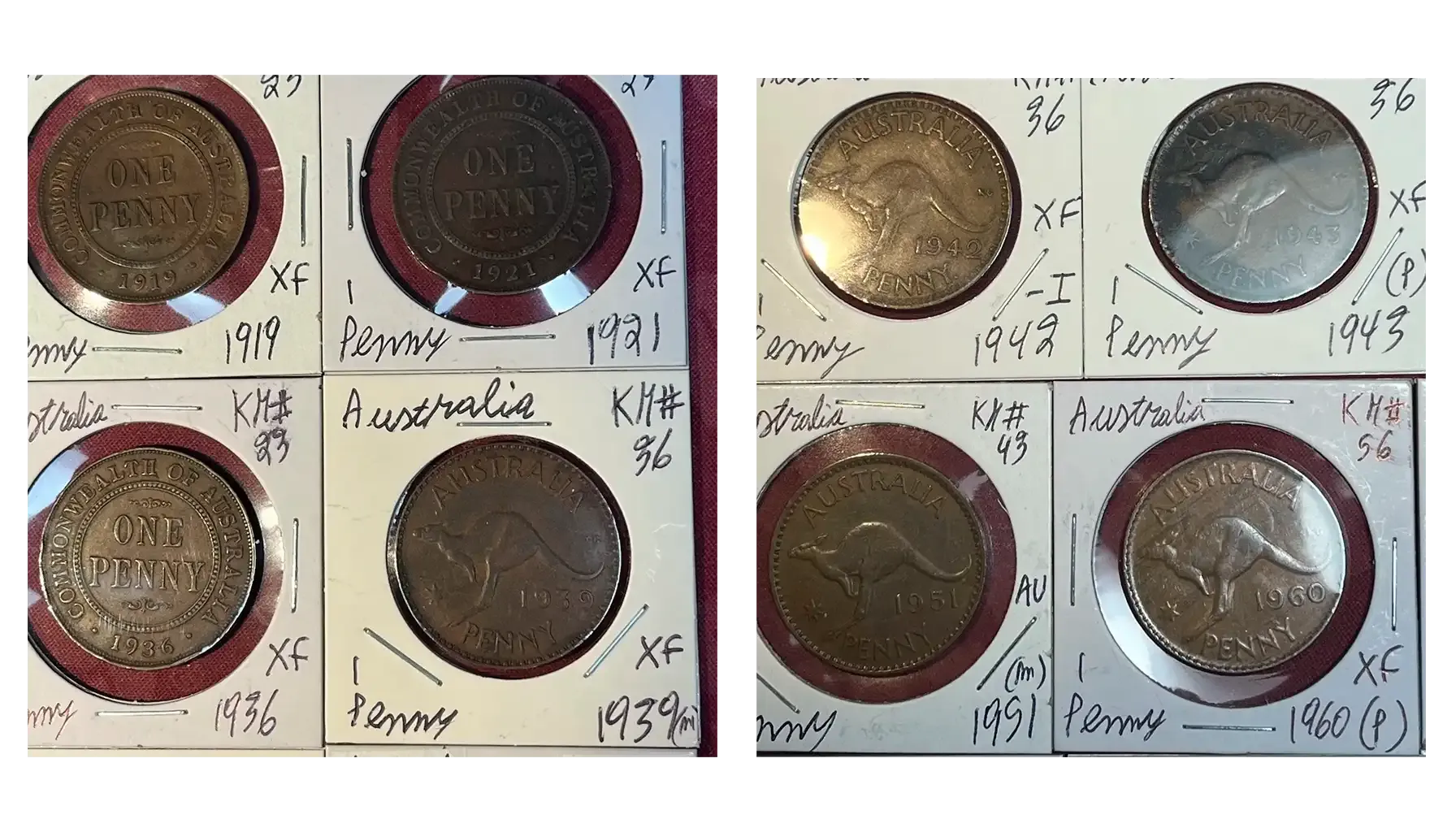
Pennies were struck at multiple mints, most commonly Melbourne and Perth. Small details, e.g., mint marks, die varieties or misstruck edges, can influence value. Collectors often look at lettering, dots or spacing to find such varieties.
3. Condition and Grading
The coin’s state of preservation is known as grade. It’s also important. Here’s an estimate Australian penny value list by grade:
Grade | Description | Value Range* |
Good (G) | Heavily worn, details faint | $1–$5 |
Fine (F) | Moderate wear, main features visible | $5–$20 |
Very Fine (VF) | Light wear, clear design | $20–$60 |
Extremely Fine (EF) | Minimal wear | $60–$150 |
Uncirculated (UNC) | Sharp details, no wear | $200–$800+ |
*Approximate retail prices in AUD; rare dates exceed these ranges.
4. Market Conditions
Values also fluctuate with collector demand and auction results. Professional verification can increase the total price. Tools like Coin ID Scanner can help identify official coin types and base specifications before formal grading.
Rare Australian Penny List and Visual Guide
Rank | Coin | Rarity | Est. Mintage / Survivors | Est. Value (AUD) |
1 | 1930 Penny (Proof) | Presentation-only issue, 6 known | 6 | 500,000 – 1,200,000 |
2 | 1930 Penny (Circulation) | Accidental issue, ~1,600 exist | about 1,600 | 20,000 – 1,000,000+ |
3 | 1920 Dot Varieties | Experimental dot placement; die trials | <2,000 | 500 – 10,000+ |
4 | 1931 English Obverse | Rare obverse variety | Few thousand | 300 – 4,000 |
5 | 1925 Penny | Low mintage; George V key date | 1,639,200 | 150 – 2,000 |
6 | 1914 Penny | Early Commonwealth low mintage | 720,000 | 150 – 2,000 |
7 | 1918 Penny | Pre-reform rarity | 1,200,000 | 150 – 1,800 |
8 | 1915 Penny | Early Commonwealth low output | 2,280,000 | 130 – 1,500 |
9 | 1913 Penny | Second-year Commonwealth coin | 2,520,000 | 120 – 1,200 |
10 | 1946 Penny | Post-war key date, lowest mintage | 240,000 | 100 – 1,500 |
11 | 1911 First Issue | First Australian piece of this denomination | 3,768,000 | 100 – 1,500 |
12 | Depression-era issue | 4,286,000 | 100 – 1,200 | |
13 | 1932 Penny | Scarce above VF grade | 2,116,800 | 90 – 1,000 |
14 | 1935 Penny | Lower mintage pre-reform issue | 3,724,900 | 90 – 900 |
15 | Final George V issue | 9,890,000 | 80 – 1,000 | |
16 | Another denomination often confused with those of the topic; also an interesting specimen | 26,000,000 | 80 – 1,000+ | |
17 | Scarcer inter-war date | 3,479,600 | 80 – 900 | |
18 | Low post-WWI output | 2,381,000 | 70 – 700 | |
19 | Post-war issue with limited runs | 5,806,400 | 60 – 600 | |
20 | 1920 Penny (Standard) | Regular issue, still desirable | 9,041,600 | 60 – 800 |
21 | 1952 Perth Varieties | First Perth specimen, numeral varieties | 16,995,000 | 50 – 600 |
22 | Wartime transitional production | 12,055,000 | 50 – 500 | |
23 | 1942 Penny (Perth Mint) | Wartime P-mintmark issue | 21,328,000 | 50 – 400 |
24 | Late George VI Perth issue | 15,214,400 | 40 – 500 | |
25 | 1951 Penny (London) | Final London-minted piece | 12,449,600 | 40 – 350 |
26 | Post-war common issue, some mint errors | 33,056,000 | 30 – 400 | |
27 | 1938 First Kangaroo Type | First kangaroo reverse | 5,552,650 | 30 – 300 |
28 | 1953 1st Elizabeth II | First QEII obverse | 13,138,816 | 30 – 300 |
29 | 1964 Final Issue | Last pre-decimal one | 10,173,200 | 25 – 150 |
30 | 1948–1964 Common Issues (collective) | Common later strikes | High | Face value – 50 |
Now let’s look at the top 5 most valuable and rare Australian penny list with pictures in detail.
1. 1930 Proof
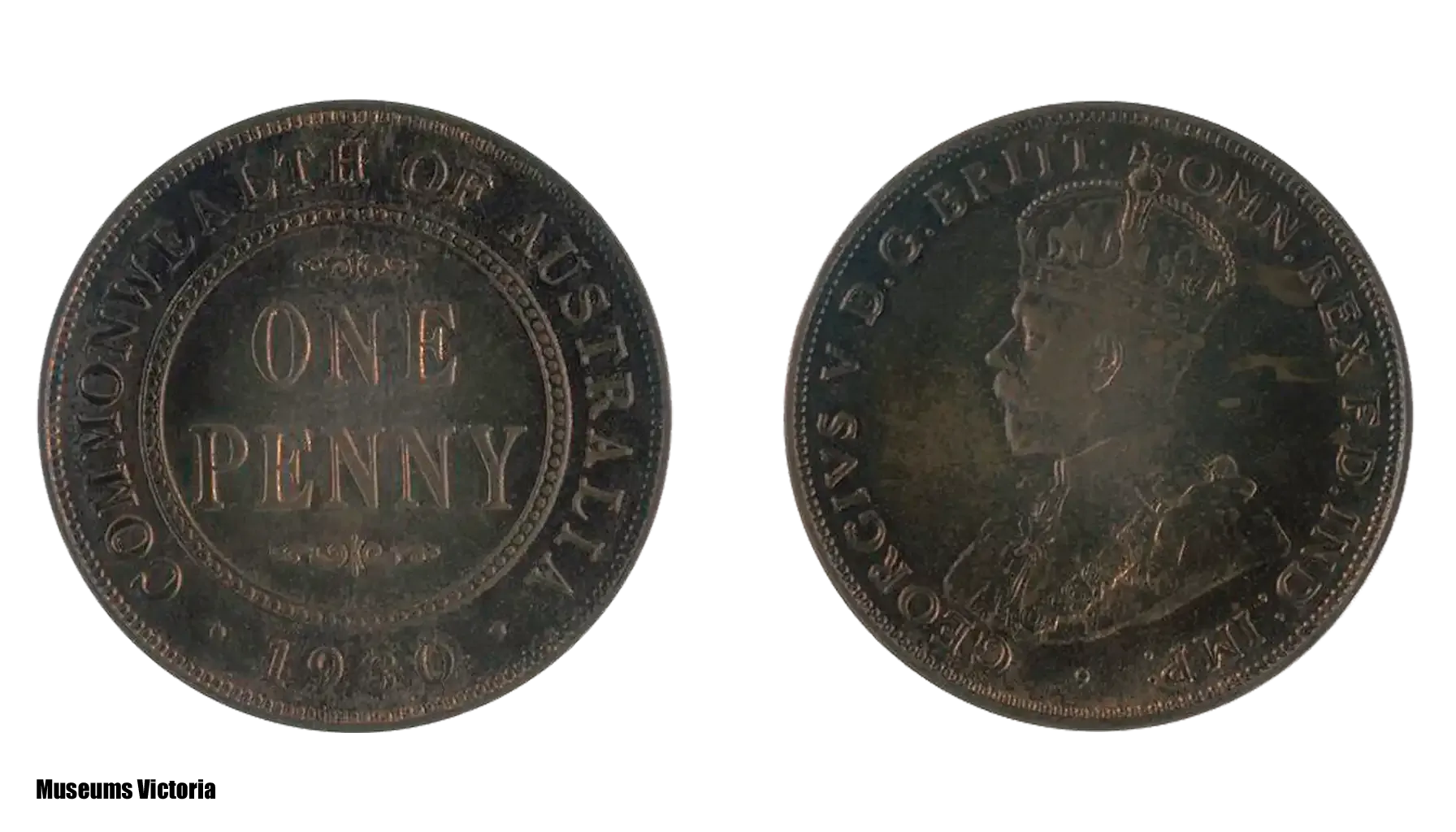
Only six pieces were struck as presentation examples, made with polished dies that gave them a mirror finish.
Mintage: 6 proofs
Metal: Bronze
AUD 500,000 – 1,200,000
This is Australia’s most prestigious and valuable coin. Almost all are in museums or high-end private collections. That’s why each sale attracts international attention.
“The 1930 penny is undoubtedly Australia’s most well-known rare coin.”
— Andrew Crellin, Australian numismatic expert
Australasian Coin & Banknote (2002)
2. 1930 Circulation

It was never meant for wide release. A small batch left the Melbourne Mint during the Great Depression, and only about 1,600 coins are known today.
Estimated survivors: Around 1,600
Mint: Melbourne
AUD 20,000 – 1,000,000+
It’s one of the most famous Australian coins. But remember that it’s frequently counterfeited; expert authentication is a must in turn.
3. 1920 Dot Varieties
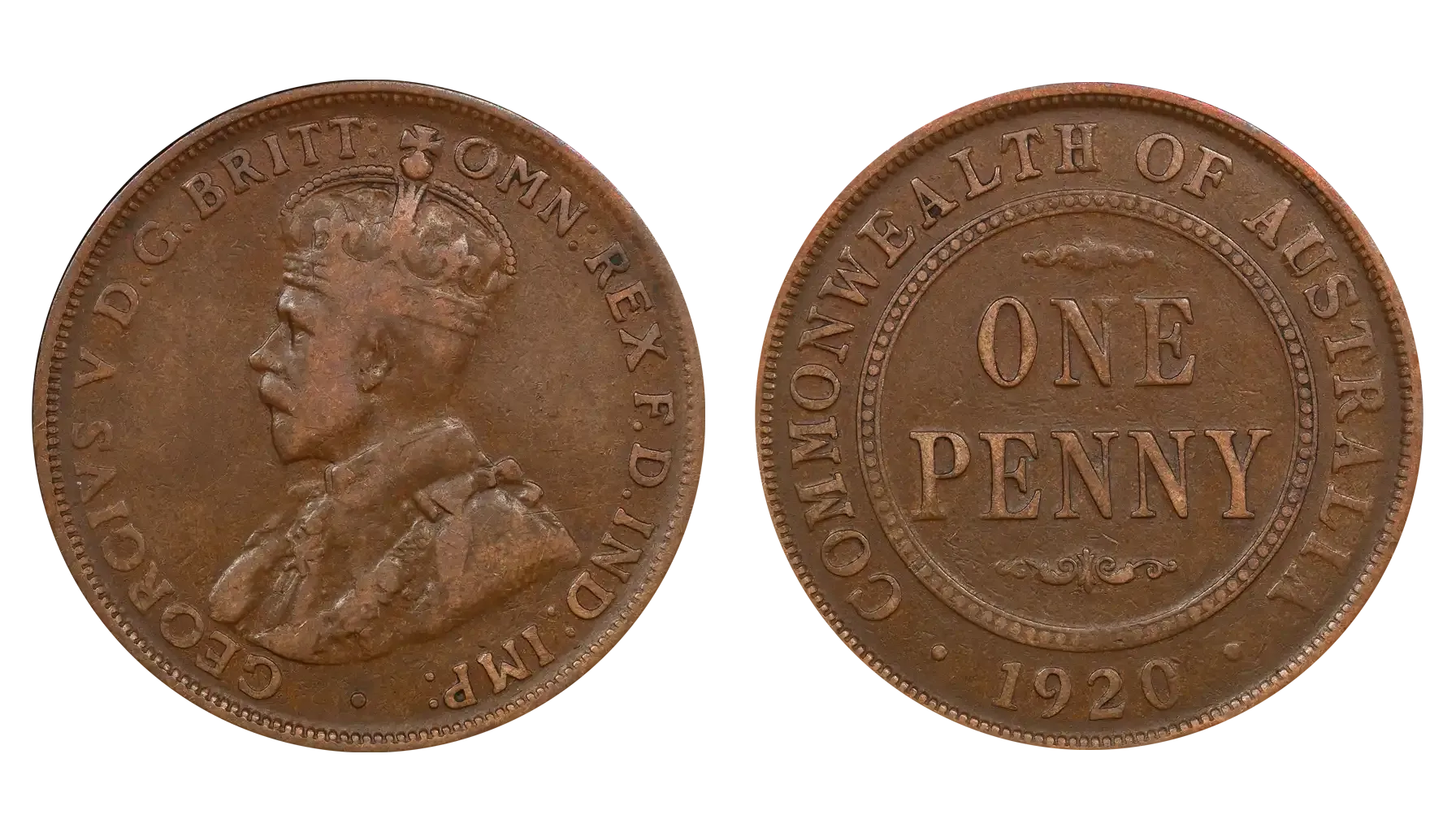
The 1920 dot varieties were experimental pieces produced during die trials. Tiny raised dots appear above or below the scroll on the reverse to mark test dies.
Estimated mintage: Fewer than 2,000 across all types
Main varieties:
Dot above bottom scroll
Dot below bottom scroll
Dot above top scroll
AUD 500 – 10,000+
This coin represents Australia’s first deliberate die-marker tests. Misidentifications are common; true dots are raised and distinct. All specimens are loved and wanted by variety collectors.
4. 1925 Coin
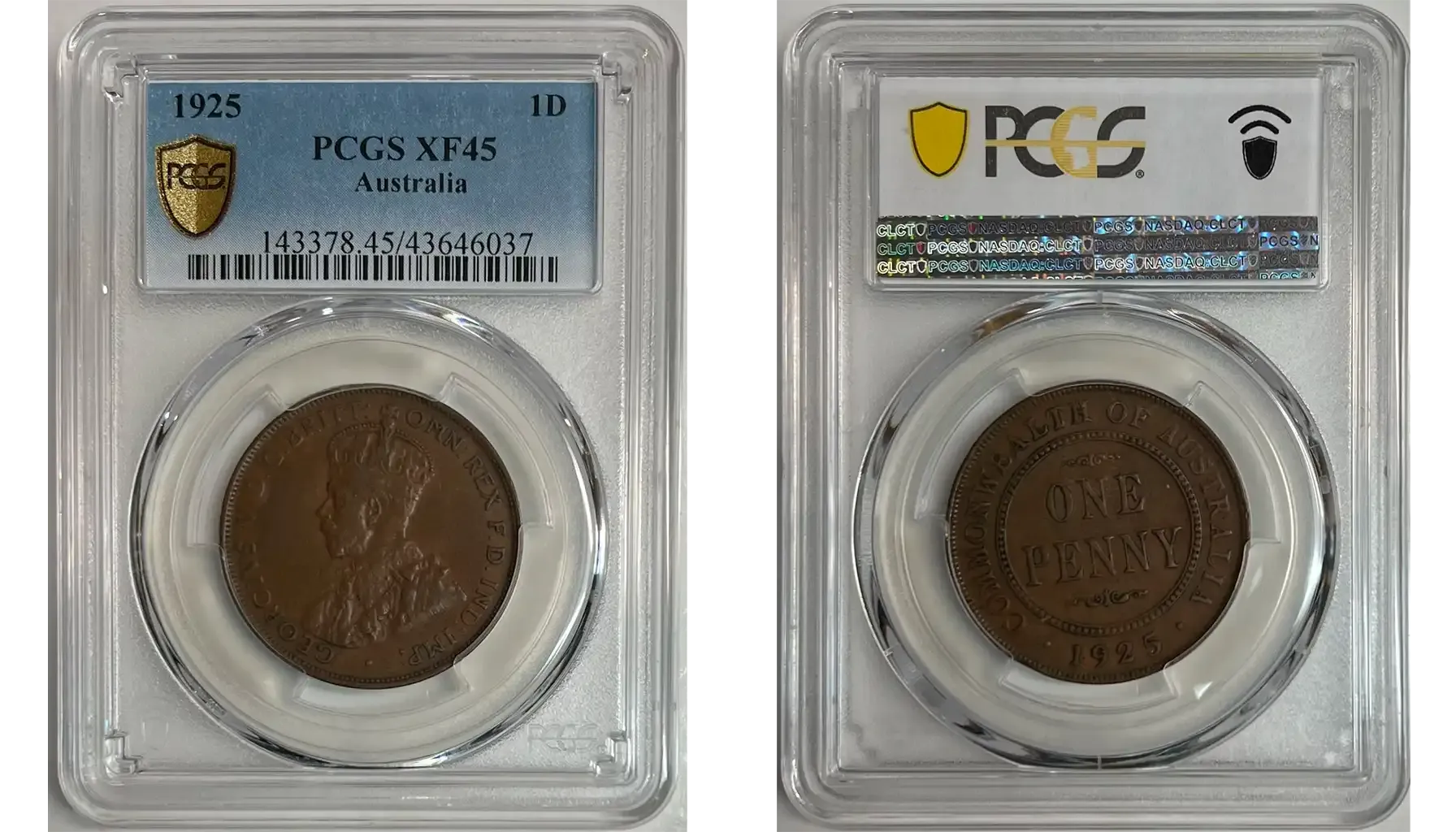
It’s the key date in the George V series. With just over 1.6 million struck, it remains difficult to find in good condition because most circulated heavily.
Mintage: 1,639,200
AUD 150 – 2,000
You may choose it as an essential coin for any early collection. It’s rather rare in grades above Very Fine, which is a realistic but still challenging goal for serious collectors.
5. 1946 Coin
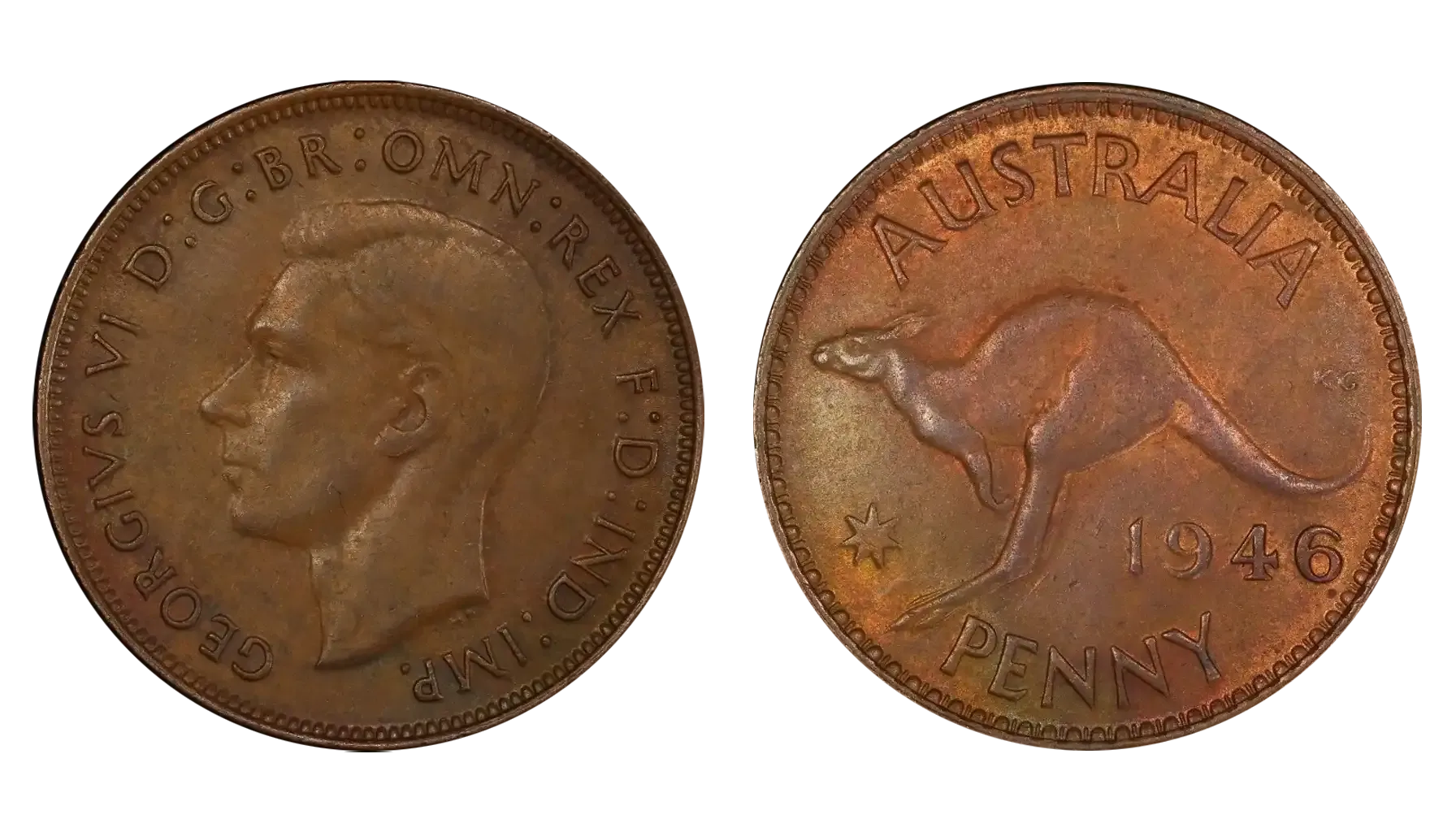
The coin was minted in Perth and had the smallest post-war production run. It’s the final major rarity of the kangaroo-reverse series.
Mintage: 240,000
AUD 100 – 1,500
It represents the rarest specimen of the post-war period that is highly sought in uncirculated condition. Moreover, it’s often used to complete mid-century Australian coins sets.
Tips for Collecting and Preserving Australian Pennies
Learn the Basics
Get to know important years and learn how mintmarks and varieties affect value.
Reference books, mint reports and reliable apps, e.g., Coin ID Scanner, can help you confirm details and spot differences between types.
Collect with Purpose
Choose a clear goal for your collection, e.g., by year, by design, by mint, etc. Begin with affordable coins in decent condition and gradually upgrade as you understand it better.
Keep notes about each coin: when and where you bought it, its condition, price, etc. A well-documented collection is easier to manage and more valuable to future collectors.
Handle With Care
Bronze coins are delicate. Fingerprints can leave permanent marks. Always pick up pennies by the edges and, when possible, wear cotton gloves.
Avoid cleaning or polishing them because this removes the natural patina that collectors prefer.
Store Properly
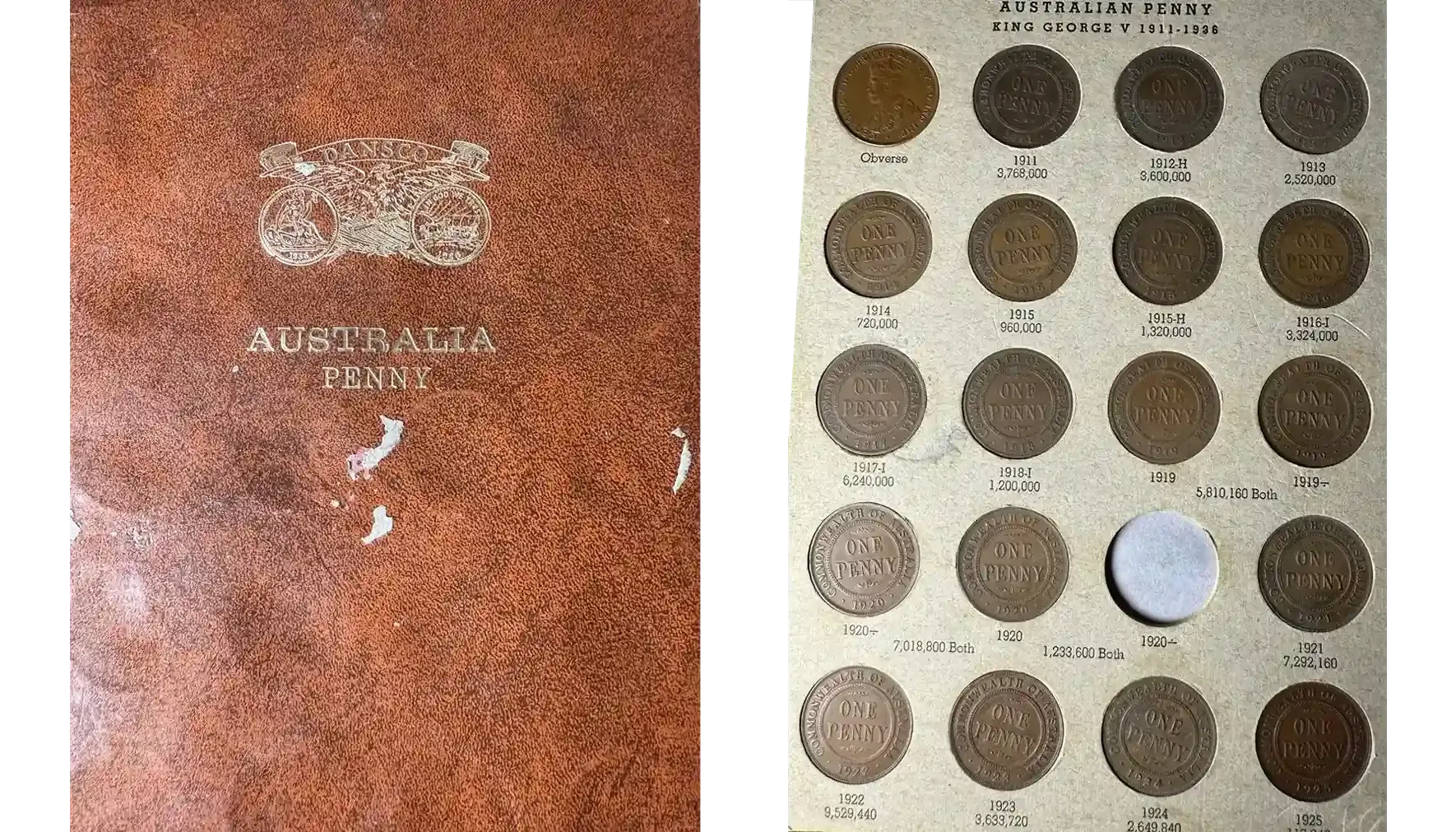
Storage conditions influence long-term preservation. Use acid-free holders or archival-quality albums; keep coins in a stable, dry environment away from sunlight.
Moisture and heat cause corrosion. PVC plastics can lead to green spotting. Simple measures, e.g., silica gel or labeling each holder, help protect your coins for many years.
Maintain Long-Term Condition
Regular checks keep your collection in good shape. Look for signs of toning or verdigris and separate affected coins immediately. Photograph valuable pieces and store the images with your records for insurance and tracking.
Careful storage and other tips for preserving can make a big difference in appearance and market value of your collection over time.

 Facebook
  X (Twitter)
  Pinterest
  LinkedIn