Contents:
The 1936 Australian penny stands as the final year of King George V’s reign. It is a rarest pennies – symbol of the end of the George V era and the transition toward new royal effigies.
Collectors value this coin for its historical placement at a time of global economic recovery. The 1936 Australian coin represents a conclusion, not just another mintage. While many Australian pennies share similar bronze composition and size, the 1936 issue reveals subtle differences in strike sharpness and die details.
Introduction
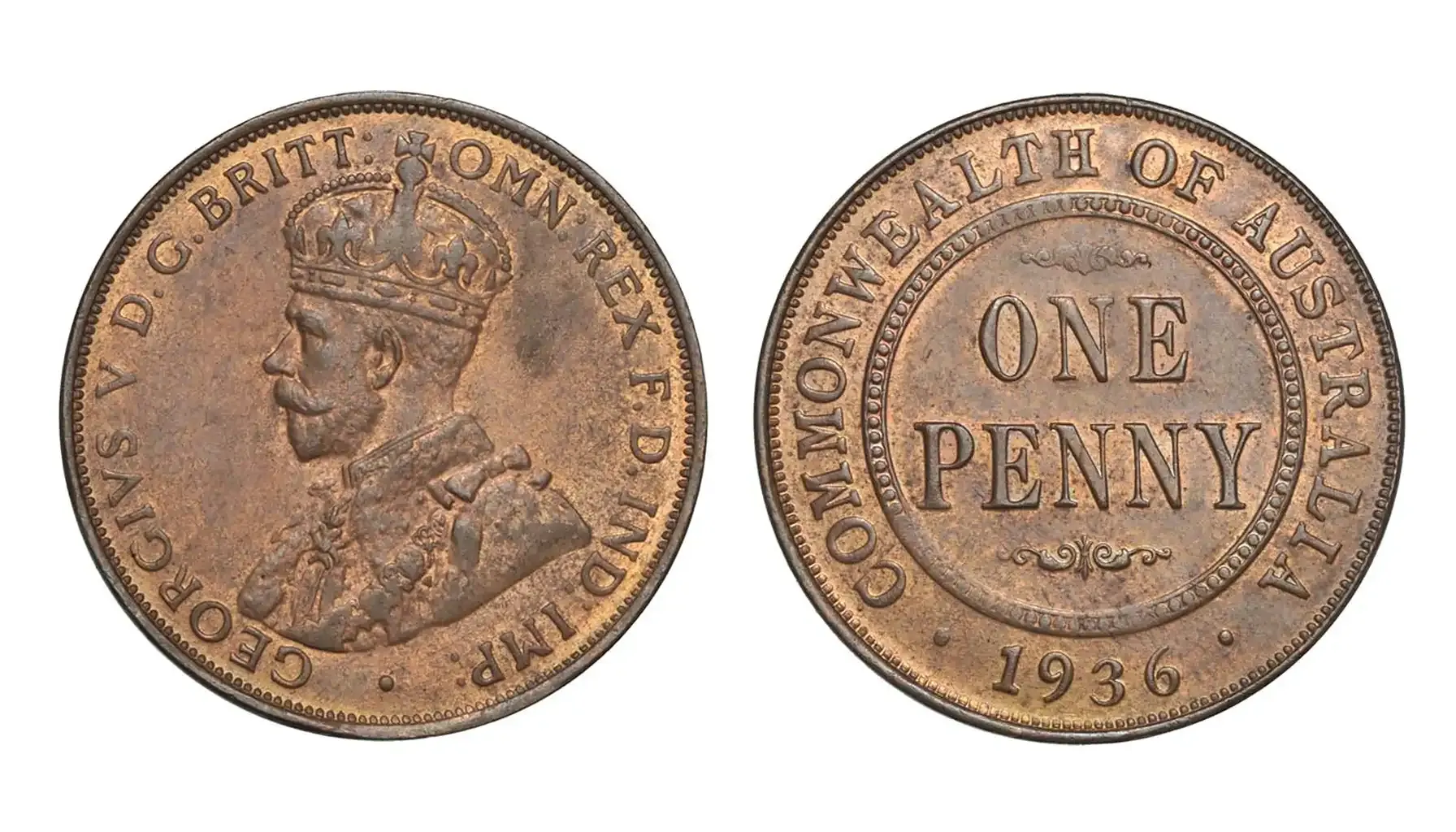
The Australian coin first appeared in 1911 and continued until decimalisation in 1964. The 1936 version carries the portrait of King George V on the obverse and the iconic Commonwealth of Australia kangaroo reverse.
"The numismatic value of these coins is quite high... due to their extreme scarcity."
– John Sharples, a collector
Museums Victoria
Introduction to the 1936 Australian Penny
Composition | Bronze |
Diameter | 30.8 mm |
Weight | 9.45 grams |
Edge | Plain |
Mintage | 9,890,000 |
Collectors often compare the 1936 item with later issues, such as the 1943 penny. Both of those coins reflected post-war design adjustments and mint transfers, yet the 1936 issue retains a classical finish admired for its uniform strike and balanced lettering. While 1943 emerged in large wartime numbers.
The 1936 penny Australia value depends on its condition and mint of origin. Coins in Very Fine condition trade at modest prices, while uncirculated pieces with full mint luster can reach hundreds of dollars.
Why the 1936 Penny is Valuable
The 1936 Australian penny value comes from several interacting factors. First, it represents the final mintage under King George V. High-grade examples show sharp relief and clean fields — traits that signal careful die preparation before minting operations shifted in 1937.
The 1936 one penny Australia value rises dramatically for specimens certified above Mint State 65. Professional grading services such as PCGS and NGC report relatively few coins in this top bracket. Slight variations in rim definition or the clarity of COMMONWEALTH lettering can influence price considerably.
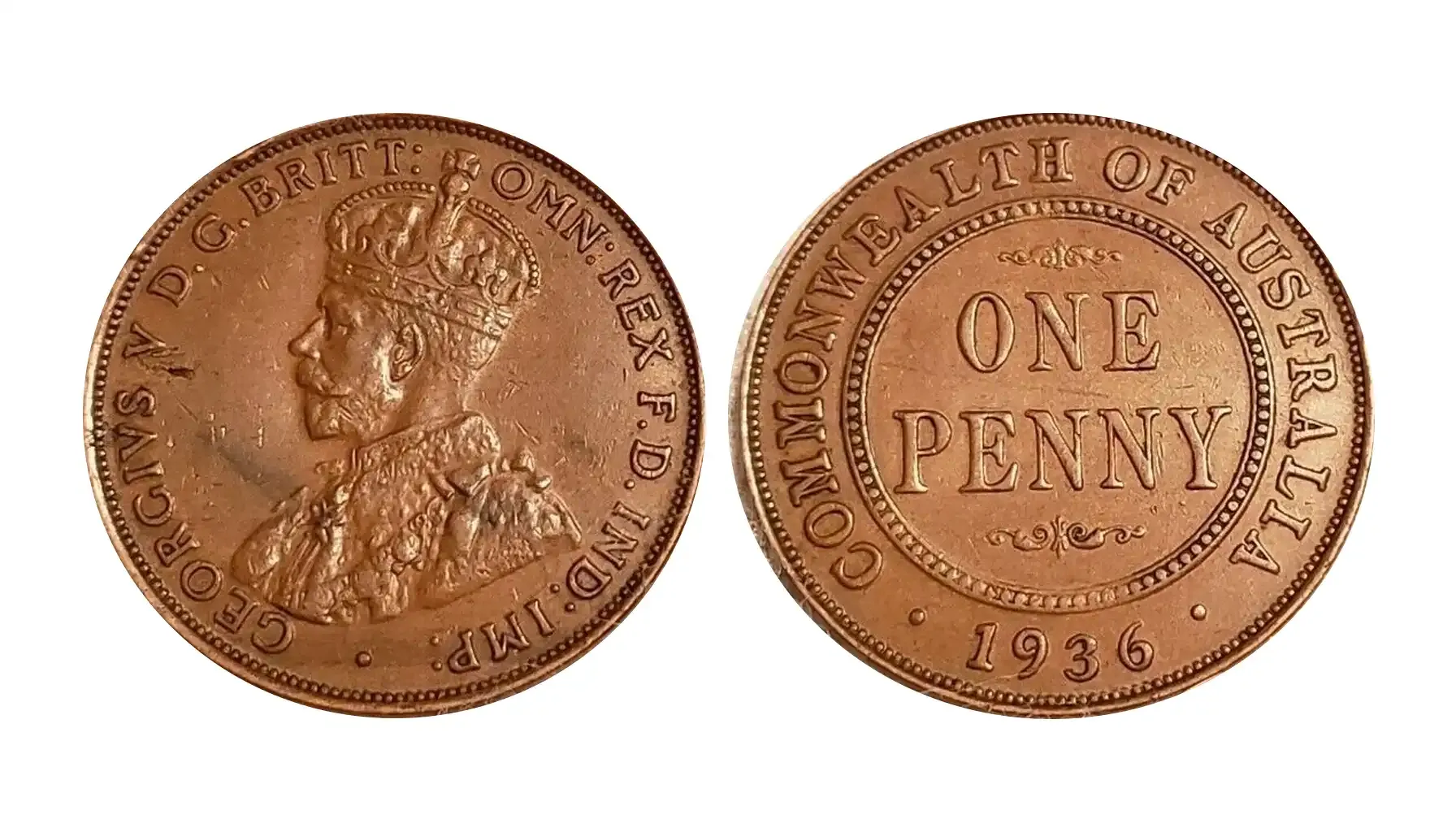
The market tracks 1936 half penny Australia value alongside its full-coin counterpart. Although the half penny saw larger production, finding it in a brilliant uncirculated state remains challenging. Some sets pair the two coins together, enhancing overall investment appeal.
Why Is a 1936 Penny So Valuable?
VG | F | VF | EF | aUnc | Unc |
$1 | $2 | $8 | $35 | $85 | $250+ |
The item occasionally appears in proof-like state, although no official proof sets were struck for public sale. These rare pieces likely originated as mint presentation coins.
Collecting Tips for the 1936 Penny
Collectors seeking the coin often start by verifying mint origin. Perth coins show a tiny dot beneath the scroll on the reverse side, while Melbourne coins display none. This subtle feature affects desirability and price because the Perth issues had smaller runs.
The collector should:
Inspect the high points of the king’s beard and the crown band (wear first appears there, so a crisp definition indicates minimal circulation)
Avoid corrosion
Avoid cleaning marks
Avoid uneven toning (original patina always enhances long-term value)
Use acid-free holders or coin capsules
Avoid PVC plastics (they emit chemicals that may dull the surface over time)
Temperature stability prevents toning changes and verdigris formation
The 1936 penny Australia value increases when accompanied by provenance, for example, coins once held in institutional or documented private collections.
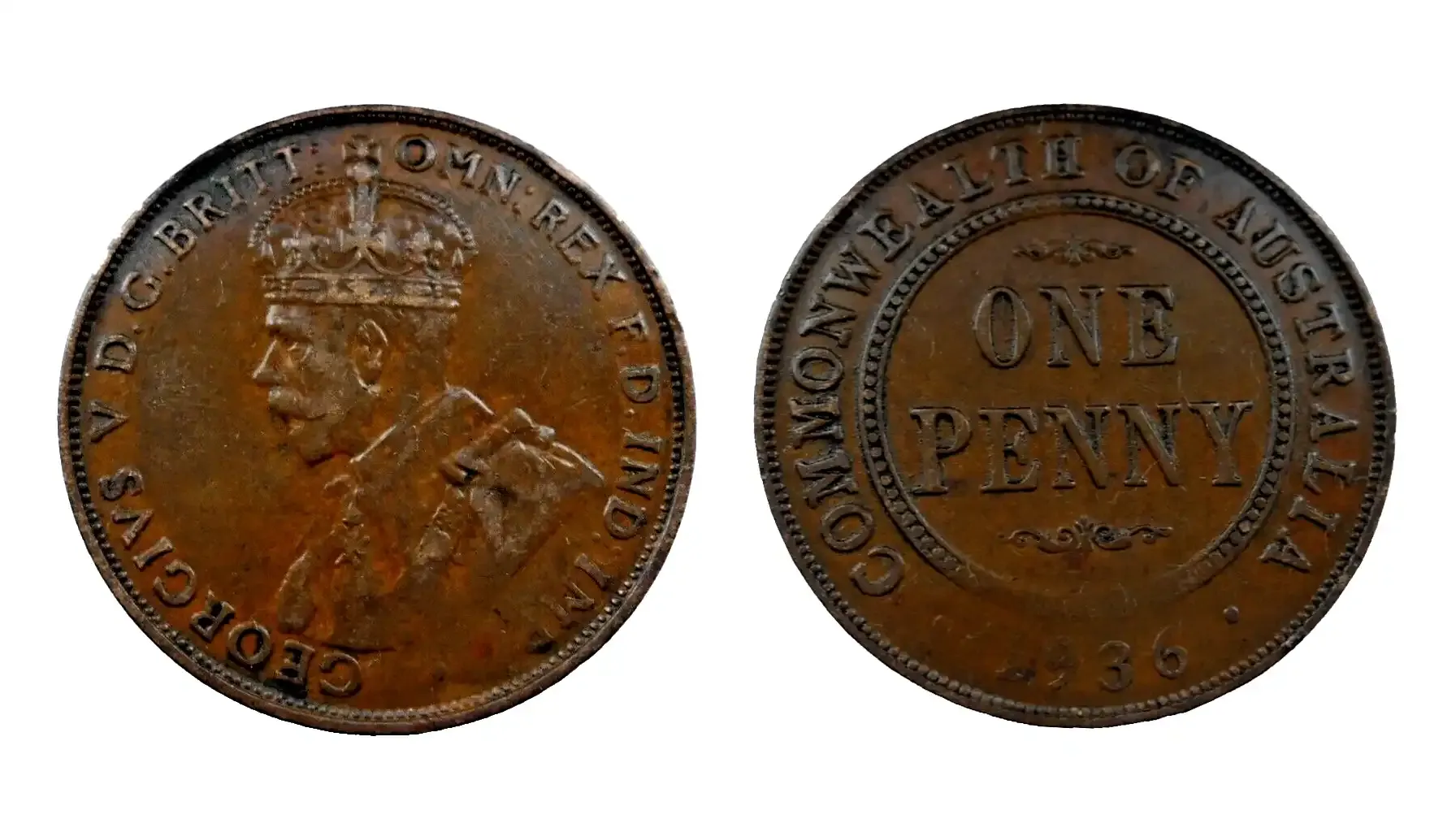
Melbourn (Not Dot): $10–$400
Perth (Dot Below Scroll): $400+
Proof: $40,000+
Remember: To study coin value, investors often cross-reference auction archives to identify price patterns. Heritage Auctions and Coinworks databases show steady appreciation for high-grade examples.
Legacy and Historical Significance
The item represents national history. Australia faced economic stabilization after the Depression and looked toward modernization.
Historians often view 1936 as a symbolic close to the colonial-style minting era. Later Australian pennies carried new royal portraits and, eventually, modernized motifs.
For enthusiasts comparing across decades, the 1936 coin pairs naturally with the 1948 penny. This later item reflected wartime adjustments and post-war recovery.

 Facebook
  X (Twitter)
  Pinterest
  LinkedIn