Contents:
Among Australian pennies, the 1943 coin holds a special place. Its minting occurred during the war, making it unique in both quality and place of production. Today, the 1943 Australian half penny is noteworthy for its combination of historical value and high liquidity.
Introduction to the 1943 Half Penny
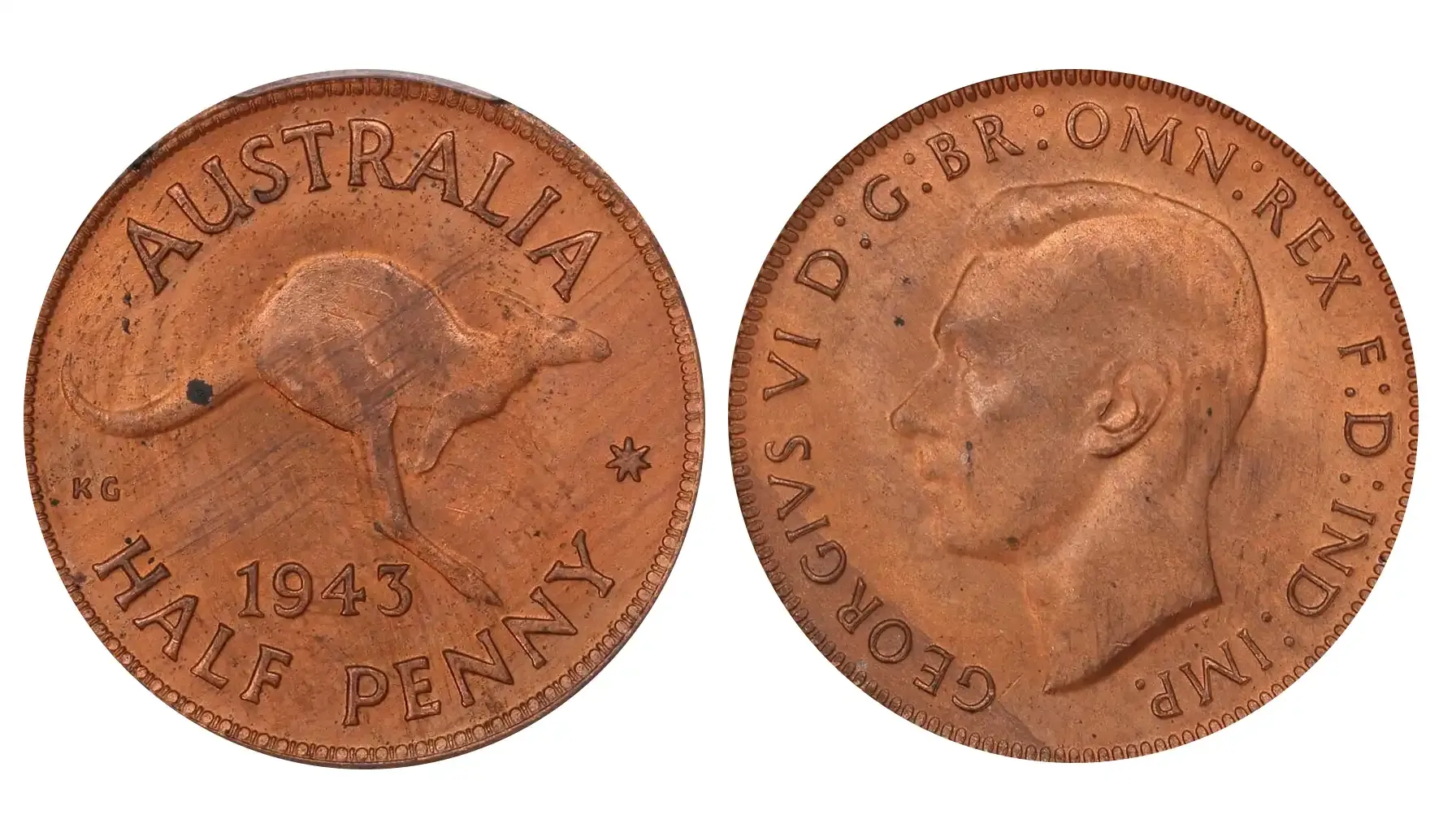
The coin was issued in three countries: Australia, Great Britain, and India. The reason is simple: during World War II, the Royal Australian Mint was unable to cope with the volume of minting, and some orders were transferred to its Commonwealth partners.
Hence the varieties:
1943 without mintmark – Australian mintage (Melbourne);
1943•I – Indian mint;
1943•PL – British issue (London).
Each version differs in details – the arrangement of the dots, the shape of the kangaroo's beak, and the depth of the bronze color.
Characteristic | Parameter |
Denomination | Half Penny |
Year | 1943 |
Metal | Bronze (97% copper, 2.5% zinc, 0.5% tin) |
Diameter | 25.5 mm |
Weight | 5.67 g |
Total Mintage | About 80 million pieces |
Errors and Rare Variants
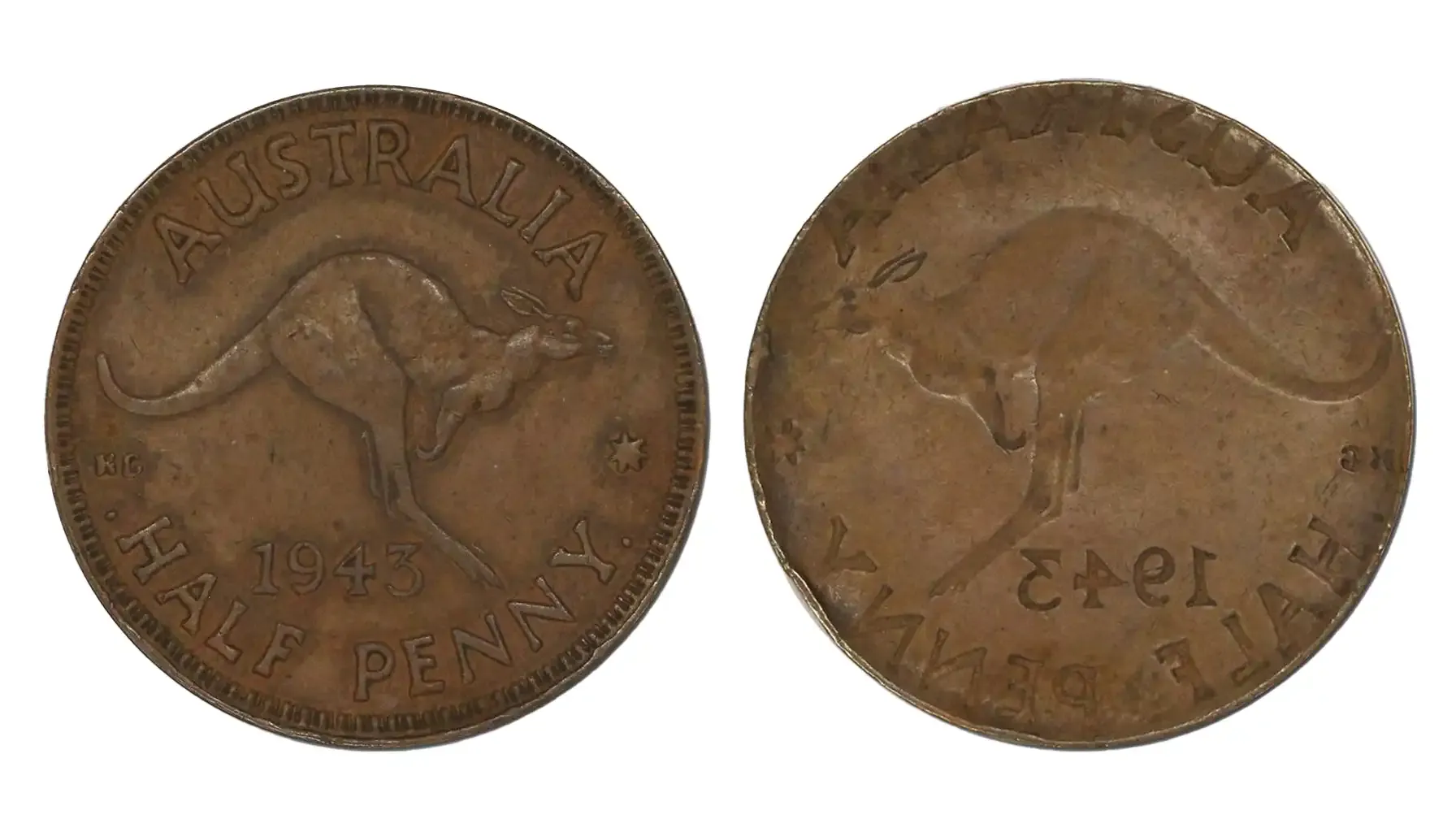
Among collectors, the 1943 half penny error is one of the most popular categories to search:
Off-Center Strike — a partial impression of the image, with the coin offset from the center.
Clipped Planchet — a piece of the planchet is missing; a characteristically uneven edge.
Die Crack — cracks in the die, leaving raised lines on the coin's surface.
Repunched Date — a repeated strike on the year digits, common on Indian issues.
Filled Die Error — partially unstruck parts due to a clogged die.
“This is when they’ve used the wrong-sized blank for the machine that the coin has been minted on… When you mint a coin, the blank goes into the machine, and then you’ve got the head side and the tail side that will put pressure onto the blank to create a coin.”
— Joel Kandiah, coin-and-banknote expert.
Numismatic News website
To compare rarity and condition, collectors often compare them to similar coins, such as the 1948 Australian Penny, to determine the level of wear and minting patterns across different years.
1943 Half Penny Value Today
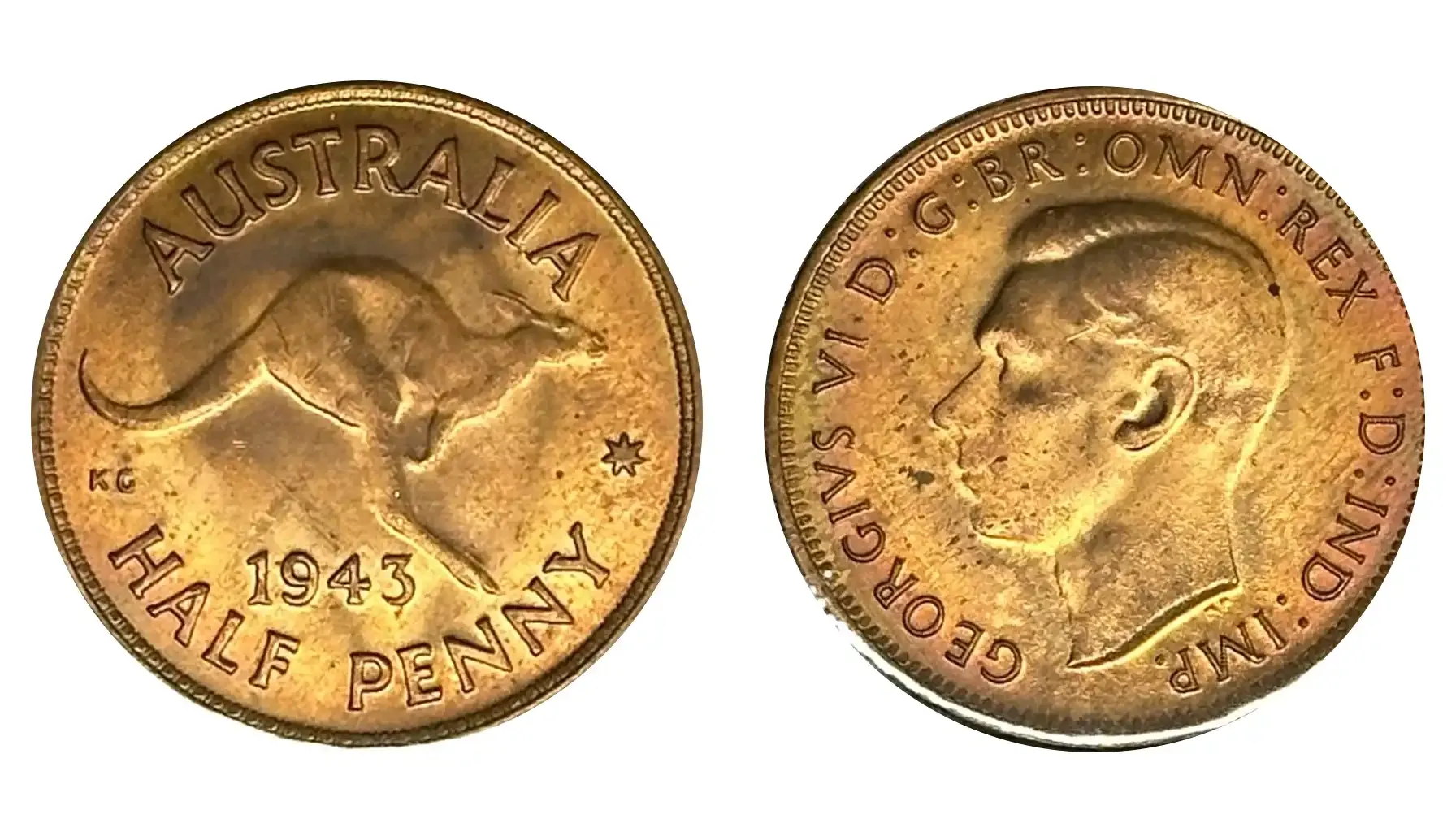
The current 1943 half penny Australia value today depends on the condition, variety and mint rarity.
Condition | Average Price (AUD) | Note |
Good (G) | 0.50 – 1.00 | Circulated coin |
Fine (F) | 2 – 4 | Light wear, visible details |
Very Fine (VF) | 6 – 12 | Clear relief, moderate luster |
Extremely Fine (EF) | 15 – 30 | Almost no wear |
Uncirculated (UNC) | 45 – 90 | Fully preserved strike |
Proof / Error | 150 – 400+ | Rare errors, low mintage |
Prices are current at the time of writing.
The Australian half penny 1943 value depends on a few things — how it was struck, how well it’s been kept, and whether it still has its natural patina. Coins that keep that original surface are usually worth more, since it shows they haven’t been cleaned or polished. Once a coin’s been scrubbed, its price almost always drops.
If you’re trying to find the 1943 Australian half penny value, online catalogs and auction databases are the fastest way.
You can also use the Coin ID Scanner app — take a clear photo, and it’ll show you the market price, coin variety, and any minting quirks.
Collecting and Preservation Tips
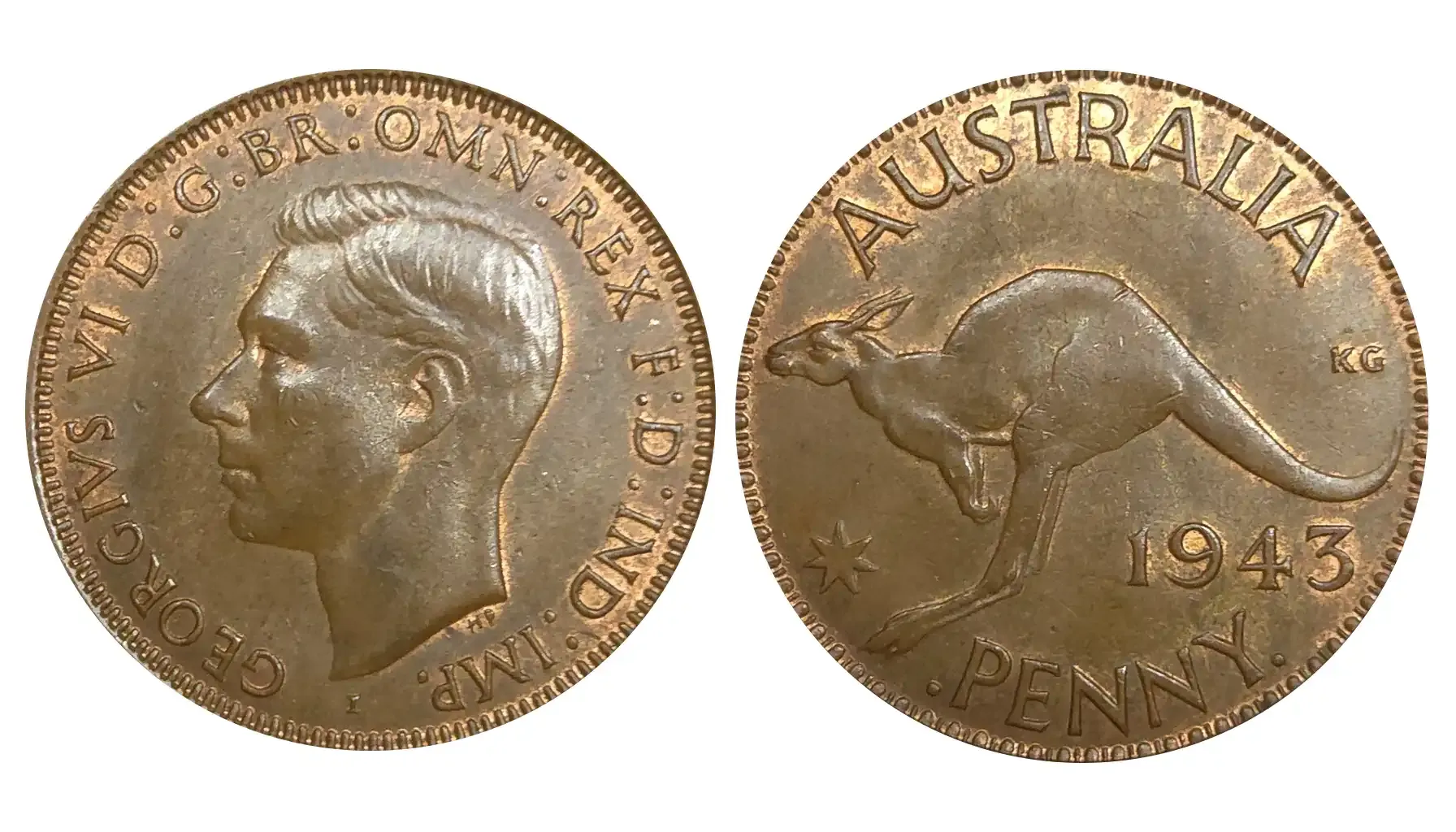
To preserve your coin's appearance, follow these rules:
Store it in a capsule so the air doesn’t reach the surface.
Avoid touching it with damp hands or using any harsh cleaning liquids.
If dust appears, skip the washing — just brush it off gently with something soft.
And for long-term storage, aim for around 18–22°C and humidity close to 50%.
If you’re building a set from different years, pay attention to the 1945 Australian Penny. It used the same bronze mix as the 1943 issue, but the shade and relief often differ.

 Facebook
  X (Twitter)
  Pinterest
  LinkedIn