Contents:
Australia. The year is 1930. One of the most difficult periods for the whole world. That's when this coin appears: special, rare, and filled with history.
A lot of collectors want to get it into their collections of unique Australian pennies. However, not everyone succeeds in this and not everyone is able to truly appreciate its potential.
Introduction to the 1930 Australian Penny
This story is based on coincidences and a combination of circumstances. From the outside, the coin looks like any other King George V with a portrait of the monarch on the obverse and a kangaroo on the reverse.
However... 1930, super low circulation. Of course, there was almost no demand for new coins at the height of the Great Depression.
Economic activity slowed down dramatically, and existing coins were widely distributed. The Melbourne Mint, which was responsible for issuing the Australian currency at the time, initially did not see the need to mint pennies for 1930.
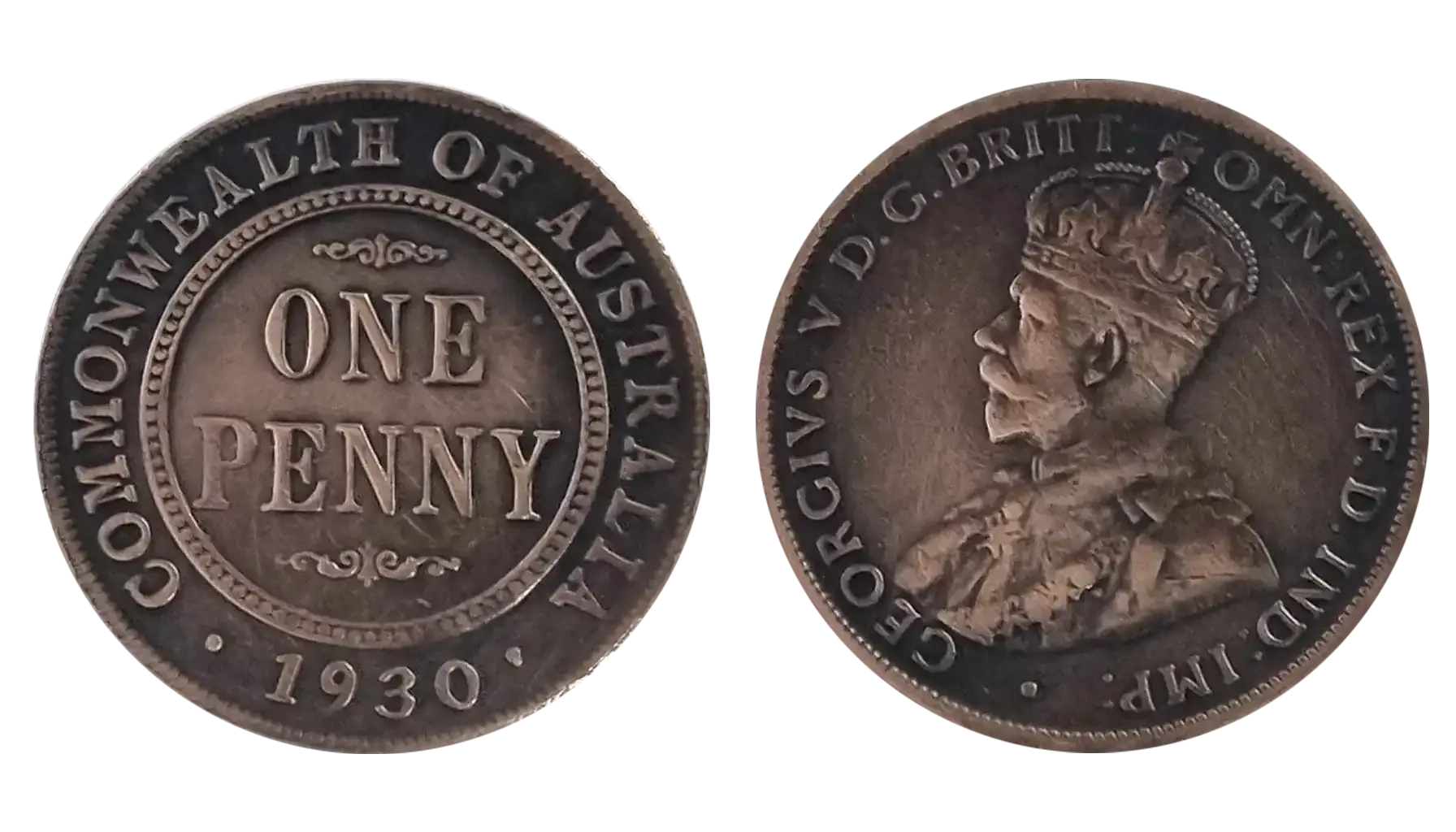
However, a small number of coins were issued.
There are many different theories here, but the main one is that it was all minted on stamps made in 1929, perhaps as test samples or to fulfill a small unexpected order.
Whatever the exact reason, the total number of coins put into circulation was
quite small. About 1500-2000 pieces.
This is what earns the title of one of the rarest issues of regular circulation.
Absolute scarcity is the main reason for its high cost even for 1936 Australian Penny.
Surprisingly, the coin has remained in circulation for decades. Of course, its rarity means that uncirculated copies that have not been released into circulation are extremely rare and have a high price.
Proof Versions and Special Editions
Characteristic | Regular 1930 Penny | 1930 Proof Penny |
Purpose | Standard Circulation | Collector/Official Set |
Minting | Standard Production | Polished Dies, Multiple Strikes |
Rarity | Low Mintage | Ultra-Rare: 6 known |
1930 penny Australia value | Thousands | Hundreds of Thousands |
In addition to the already low circulation, there is something else rarer. These are 1930 coins in the proof version.
In general, the 1930 issue was not intended for wide circulation. Instead, they were specially minted for collectors, exhibitions, or official purposes.
Polished dies and plates are used for their manufacture. They are often minted several times to achieve a clear, mirror-like shine. He highlights every complex detail of the design. This version is almost a legend in numismatics.
It is believed that only six trial copies were minted. It's really rare and so desirable to add to your collection on a par with the 1952 Australian Penny.
They were not made for commercial release. More like a trial set for official recordings or presentations.
Each of these six coins has been carefully accounted for by renowned collectors and institutions. Due to their extreme rarity, excellent condition, and historical significance, these coins reach very high prices at auctions.
How much is a 1930 penny worth?
The cost is highly dependent on the condition. Worn-out and with few parts, copies can cost from $3,000 to $5,000.
A well-preserved circulating coin can cost anywhere from 7,000 to 15,000 dollars.
Uncirculated copies are extremely rare and can easily exceed $20,000.
Tips for Collecting the 1930 Penny
Such a rare release requires maximum compliance with the rules of storage and care. Especially if you are the owner of the proof version. It would simply be unfair to mistreat such relics.
Authenticity: It's important to do just that first. Since the issue is very rare, you really need to know everything clearly. At a minimum, buy from well-known and reputable dealers, auction houses or other professional numismatists.
In this case, it is important to obtain a certificate of authenticity or a guarantee. And it's better to check with someone else again after that. In dealing with this issue, it is better not to make mistakes.
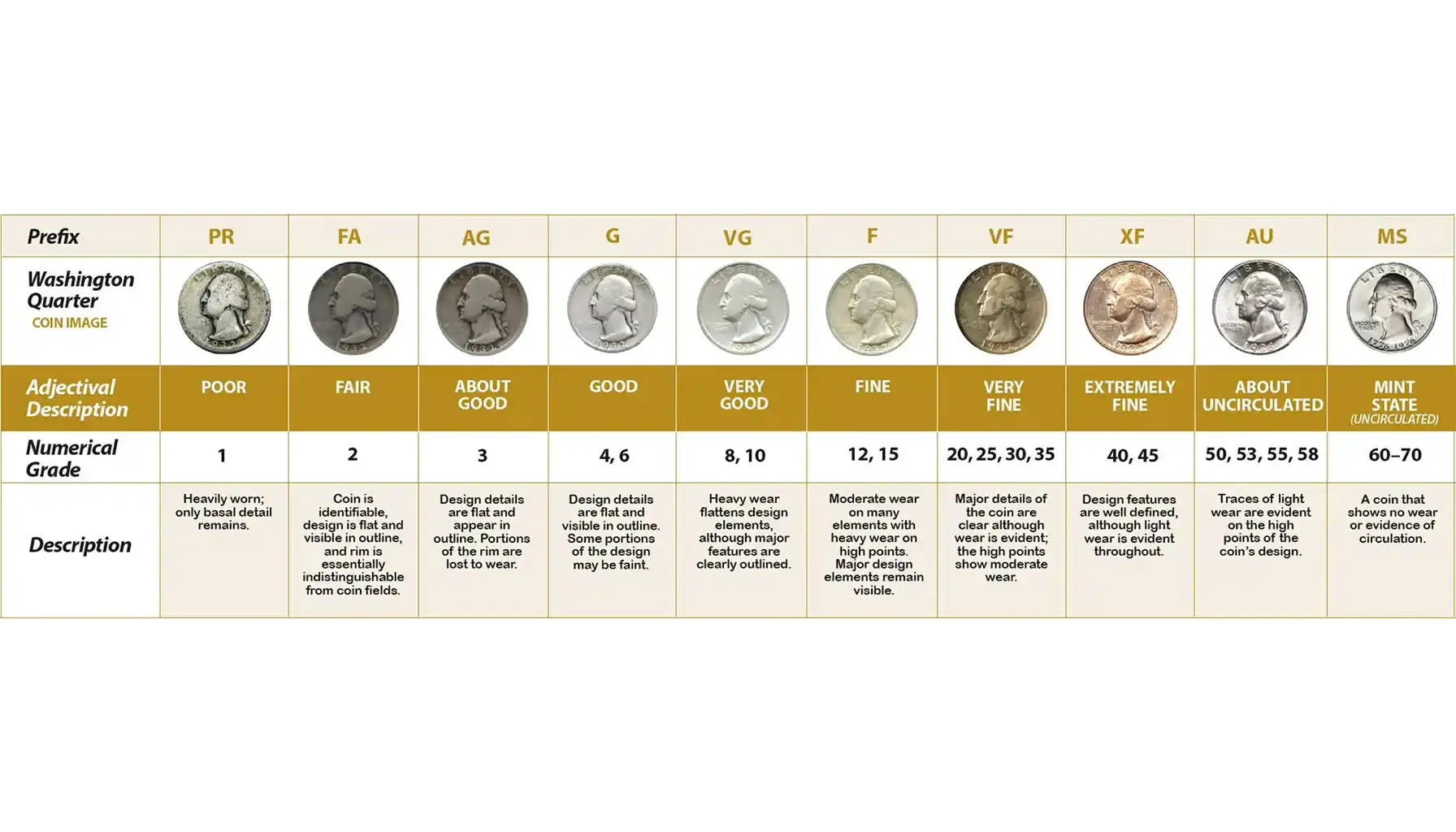
Professionals rate coins on a scale from poor (P-1) to excellent, not issued (MS-70).
For a 1930 penny, even a circulating copy in excellent (F-12) or very good (VF-20) condition will be much more expensive than other options.
However, those that are in very good condition (EF-40) or unsold (AU-50) are much more interesting and more expensive.
Truly unsold copies that retain their original mint sheen are very rare and in high demand. It will be really difficult to find something like this. Using a magnifying glass or magnifying glass, you can see many details. Take a closer look at the beard of King George V or the hind legs of a kangaroo.
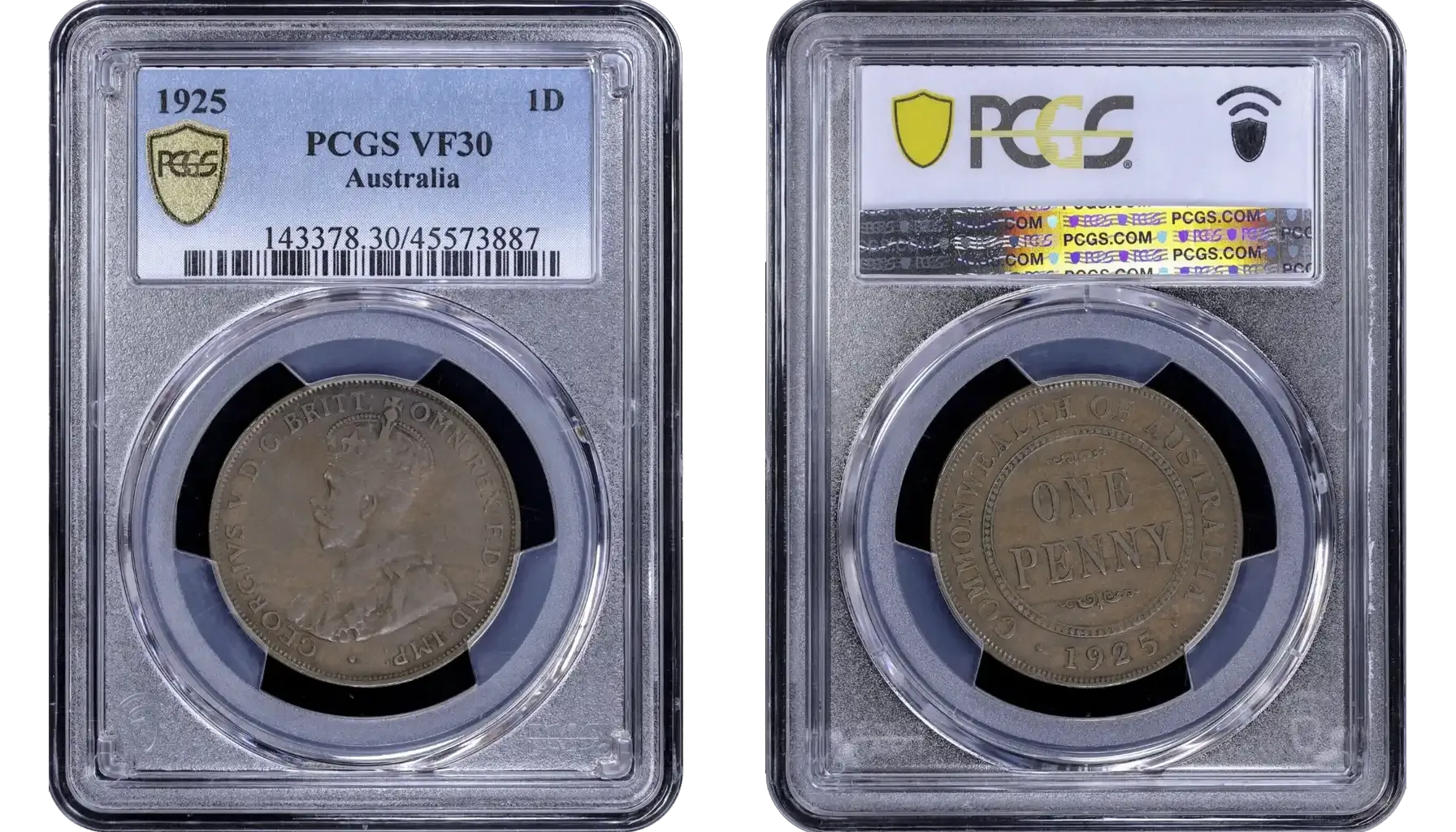
Contact professional assessment services: PCGS, NGC or ANACS. These independent services verify the authenticity of the coins, assign them a professional grade and place them in holders protected from unauthorized access. This not only protects the coin, but also gives confidence to both buyers and sellers.
In addition to evaluation, it is also important to store it correctly. Do not attempt to clean the coin, as this can significantly damage its surface and drastically reduce 1930 Australian penny value. Proper storage in inert materials, away from extreme temperatures and humidity, is important for safety.
Historical Legacy and Cultural Importance
The year 1930 brings with it a reminder of mass unemployment, economic difficulties and social changes. People always keep such things in their memory.
However, generations change over time, and everything is forgotten. But not the coins. They faithfully preserve all the pieces of our history, and especially such an important one as the Great Depression.
And that's just the historical 1930 penny value. Also remind you that the circulation is too small. The coin not only holds an important history, but is also very rare. Every numismatist would like to have such a collection.

 Facebook
  X (Twitter)
  Pinterest
  LinkedIn