Contents:
Few items in human history can claim the global influence of the 8 reales coin. Struck for nearly three centuries across the Spanish Empire, these silver pieces traveled farther than any previous currency.
From Andean mines to Chinese ports, from Caribbean shipwrecks to American pocketbooks. The Spanish 8 reales coin became the de facto international trade currency, accepted from Manila to Philadelphia, from London to Lima.
Its nickname "piece of eight" still conjures images of pirate coins, but the reality is even more fascinating. This item literally served as the basis for the United States dollar and remained legal tender in America until 1857.
Understanding the eight reales means tracing the flow of New World silver through the veins of global commerce. Download the old coin value checker free.
What Is an 8 Reales Coin
The eight reales coin originated from Spanish currency reforms in 1497, establishing a silver item worth eight reales – hence the name.
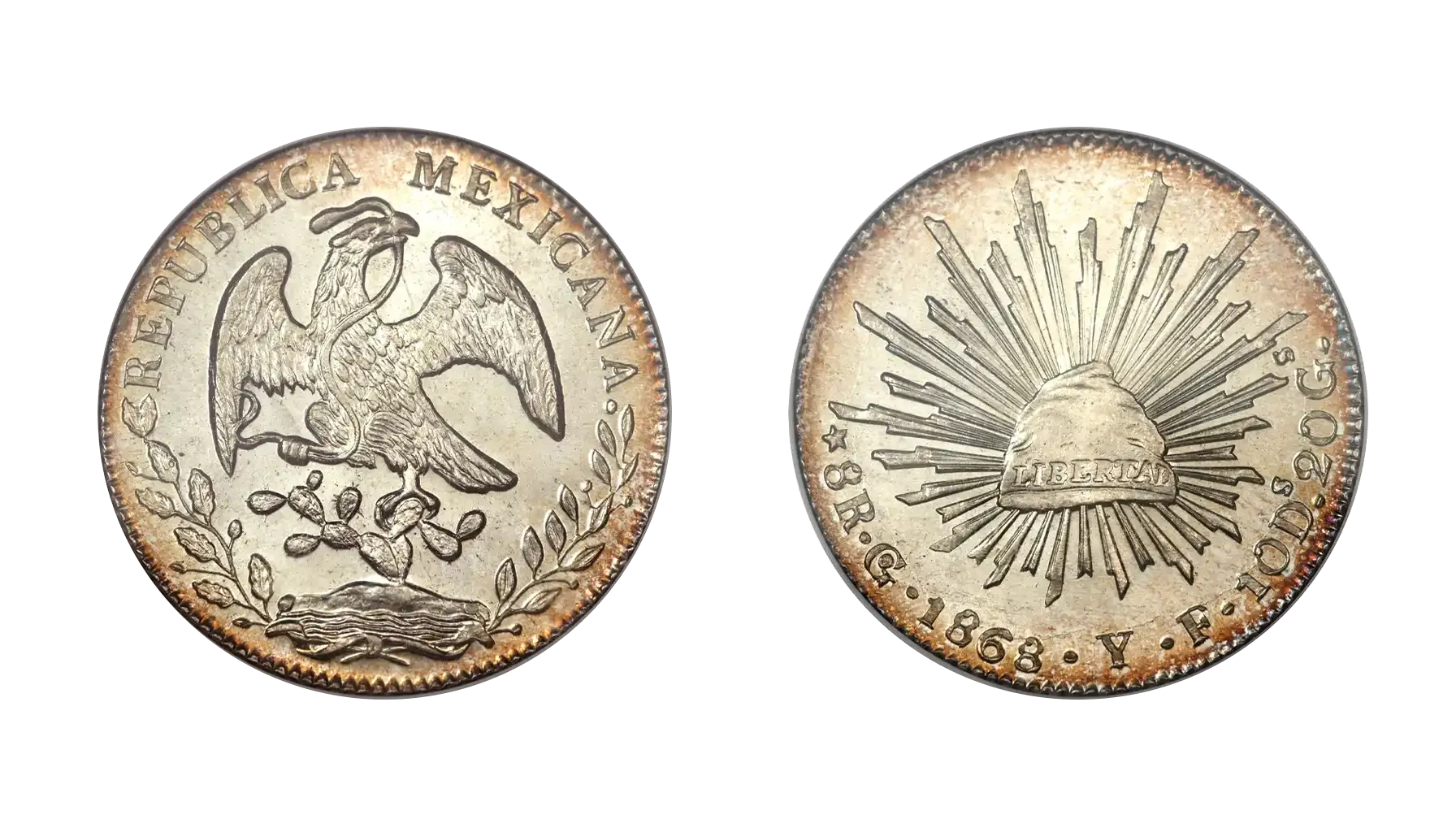
"The Republic of Mexico produced 'cap & ray' 8 Reales at fourteen different mints from 1823-1897. The mint located in Mexico City served as the primary mint for the central government."
– The Durango Mint Pattern 8 Reales of 1840
Numismatics International
Each real represented one-eighth of this item-sized dollar, giving rise to the term piece of eight that permeates pirate lore. The item measured approximately 38-40 millimeters in diameter, comparable to modern U.S. silver coins dollars but heavier at roughly 27 grams before wear.
Currency | Real 1535–1897 |
Composition | Silver |
Thickness | 2.7 mm |
Diameter | 38.9 mm |
Weight | 27.07 mm |
Basic Specifications Through the Ages
1497–1728: Silver purity .9306
Established by the Pragmática of Medina del Campo under Ferdinand and Isabella, this purity (roughly 93 %) made the 8 reales the most trusted item in the world.
During this long period – which includes the Cobs (hand-struck) era – the high silver content allowed it to dominate trade with China, where merchants were famously skeptical of impure foreign metals.
1728–1772: Silver .9167
King Philip V introduced new machine-milling technology to prevent the shaving of silver from the edges (clipping). Along with this technology, he slightly lowered the purity to .9167.
1772–1821: Silver .9028
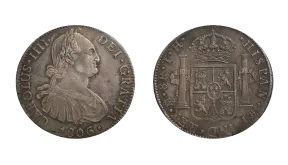
King Charles III initiated another reform in 1772, shifting to portrait-style ones and lowering silver purity again to .9028 (often rounded to .903).
This is the specific version of the item that circulated most heavily in the early United States. When the U.S. Mint was established in 1792, Alexander Hamilton performed an assay on these items and found that, due to wear, they averaged about 371 grains of pure silver.
This figure became the official legal standard for the first U.S. Silver Dollar – Flowing Hair and 1878 Morgan dollars.
Spanish 8 Reales Silver Coin
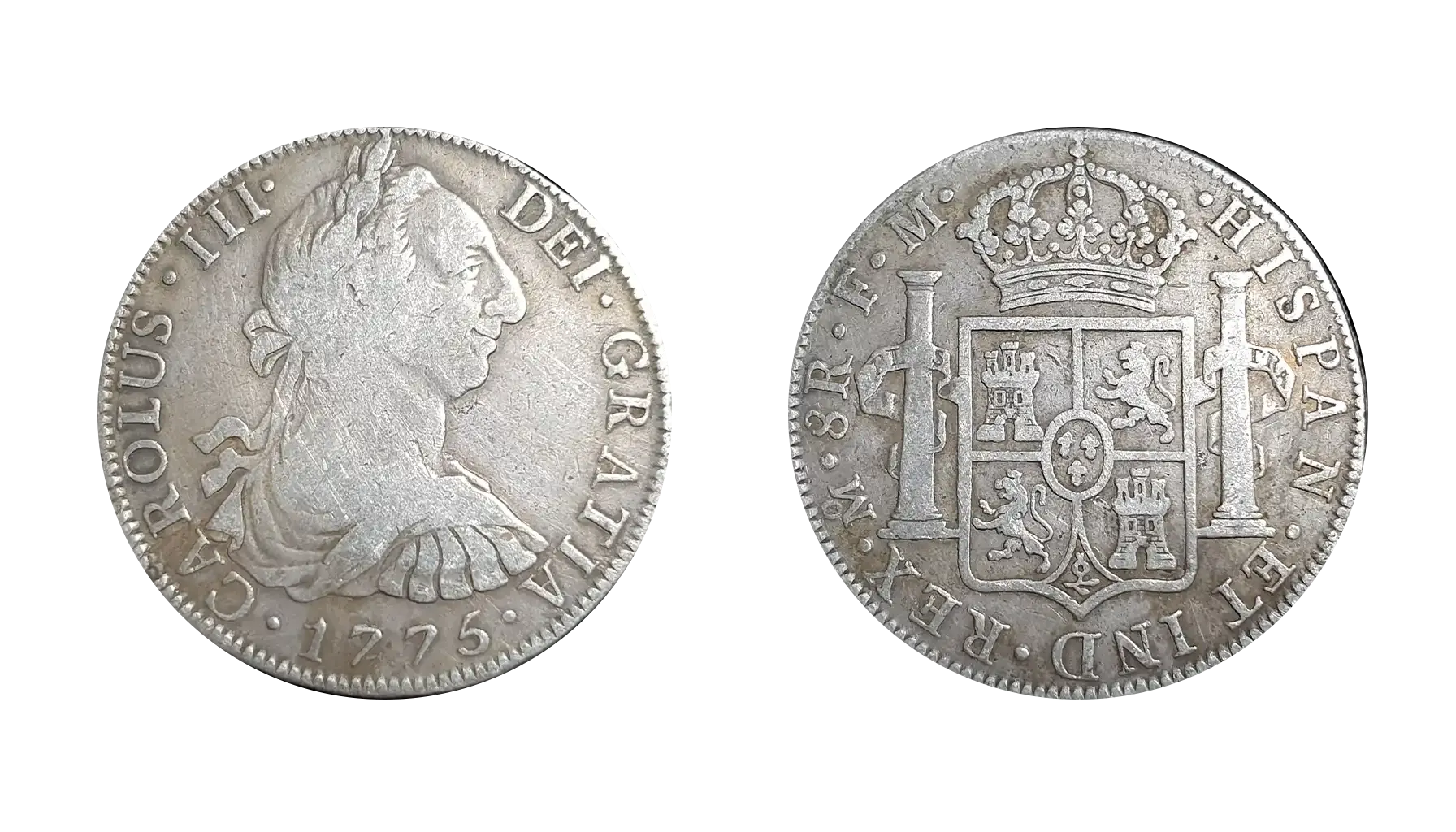
The silver 8 reales coin underwent systematic design changes reflecting royal succession and advances in minting technology. Numismatists can easily distinguish between early and later milled issues by looking at the obverse.
After 1772, this side of the item typically carried the portrait of the reigning monarch. In contrast, earlier versions showed the Spanish coat of arms. The reverse remained more consistent over time; it regularly displayed the Pillars of Hercules along with the motto. The motto conveyed a clear message: Spanish territories went beyond the limits of the classical world.
Design Eras: Comparison Table
Here is the comparison table of the two most famous eras of the Spanish silver items.
Feature | Pillar 1732–1771 | Portrait 1772–1821 |
Obverse | Spanish royal shield | Draped bust of the king |
Reverse | Two hemispheres | Spanish coat of arms and pillars |
Denomination | 8 or 8R | 8R |
Pillar Motif | Flanking the hemispheres | Flanking the central shield |
Mint / Assayer | Flanking the date on the reverse | Located at the bottom of the shield |
The 8 reales Spanish coin depends heavily on which monarch appears and which mint produced the piece. Mexican issues dominate the market because Mexico City operated the most productive mint throughout the colonial period.
Lima, Potosí, Guatemala, and other mints produced scarcer varieties commanding premiums.
Mexican 8 Reales Coin Issues
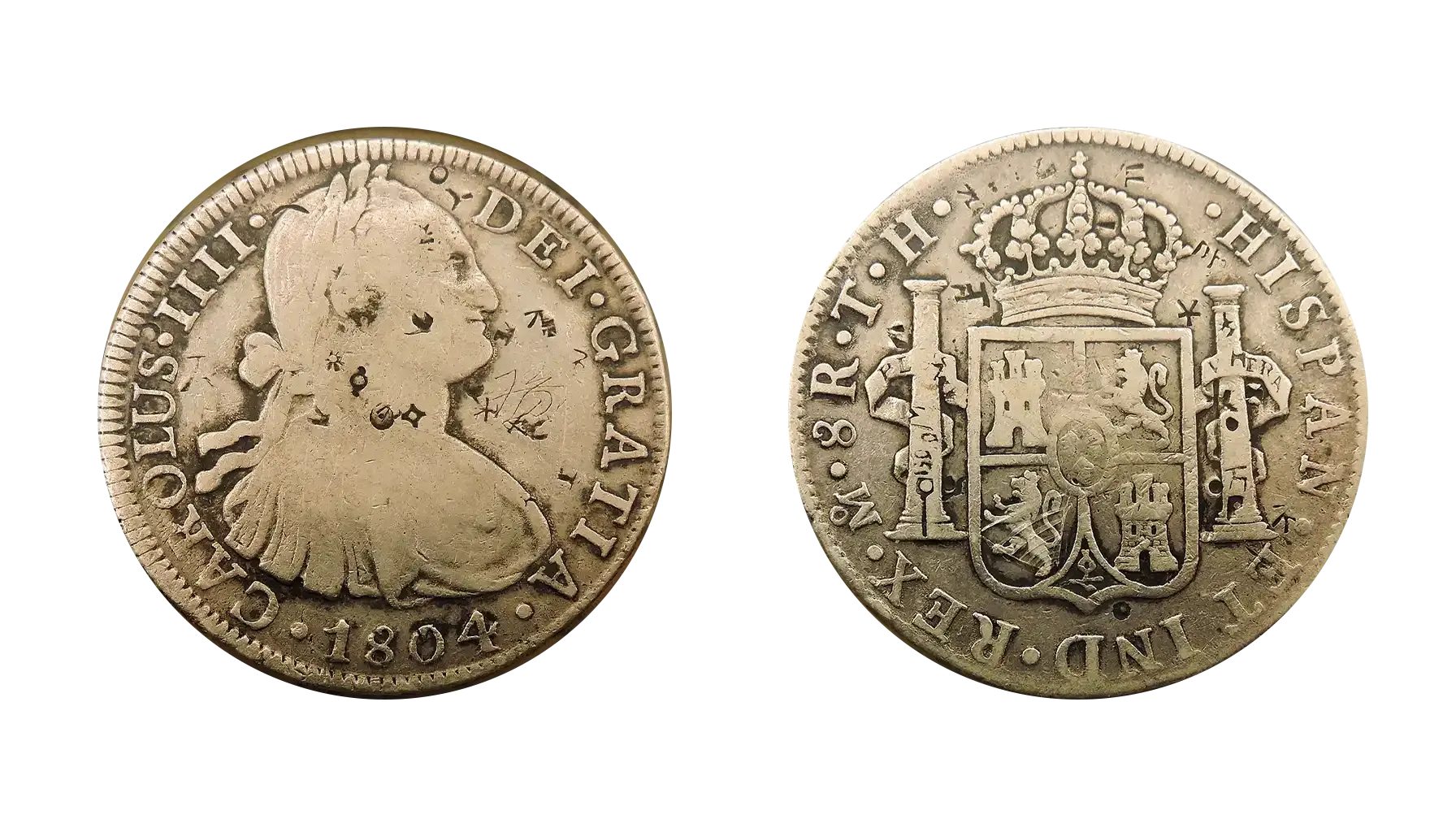
The 8 reales silver coin value represents the most common and widely collected variety within the series. In 1535, the mint in Mexico City began operations.
This fact gives the mint the distinction of being the first in the Americas. By the eighteenth century, Mexican item production had reached a level that exceeded the sum of all other mints’ output.
The silver pesos Mexico produced joined global trade networks. Important vessels in these networks included the Acapulco galleons and Manila junks, which transported goods to various markets.
Major Mexican Mint Production Periods
1535–1732: Hand-struck cobs with shield and cross designs
1732–1771: Pillar coinage (columnarios) with worldwide distribution
1772–1821: Portrait coinage featuring Charles III, Charles IV, Ferdinand VII
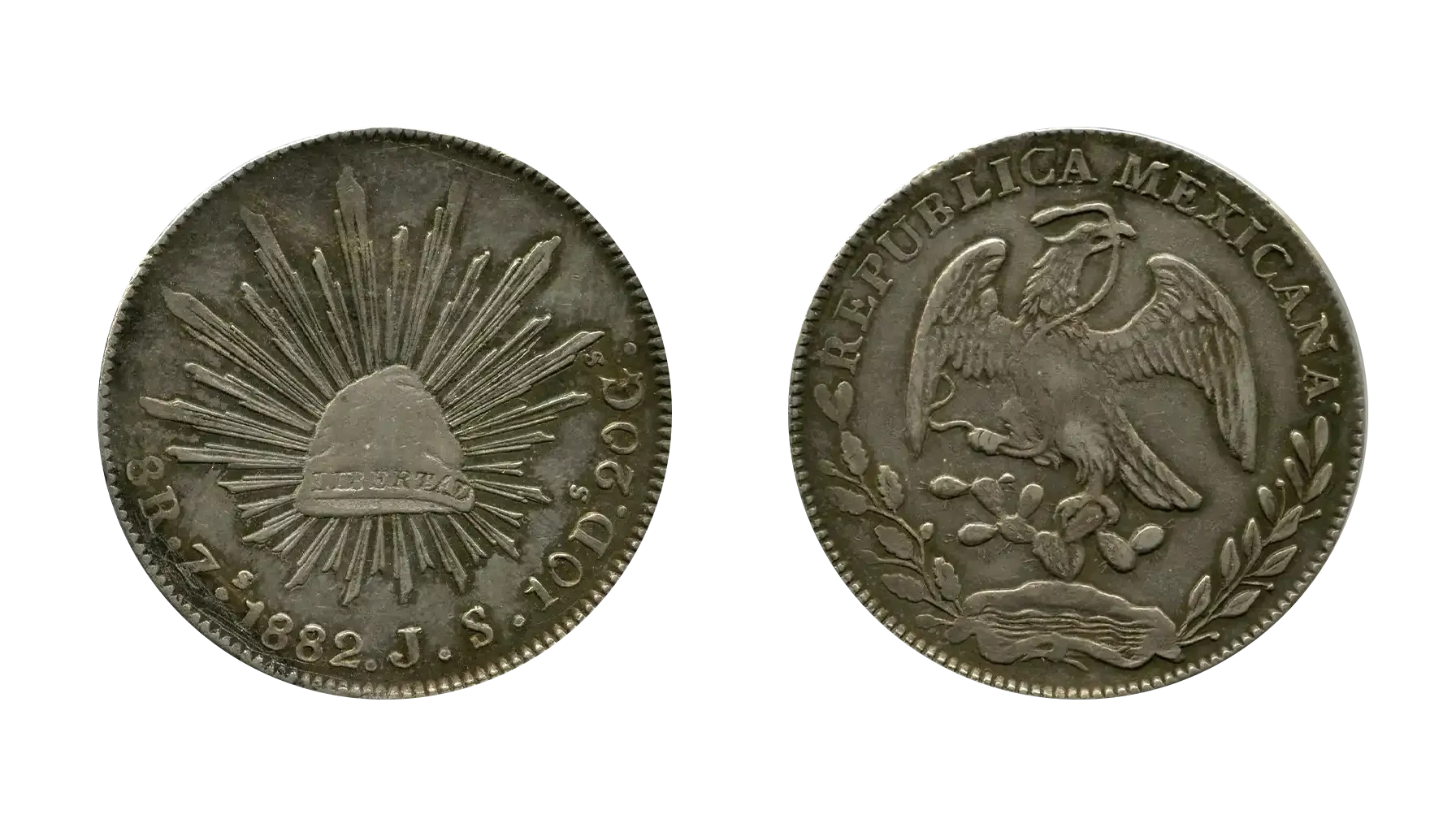
1821–1860s: Republican cap and ray design after independence
The 8 reales coin Mexico issues from 1732 onward, displays consistent quality and design execution. Numismatists prize the transitional 1772 portrait issues when Charles III introduced his bust to replace the pillar reverse.
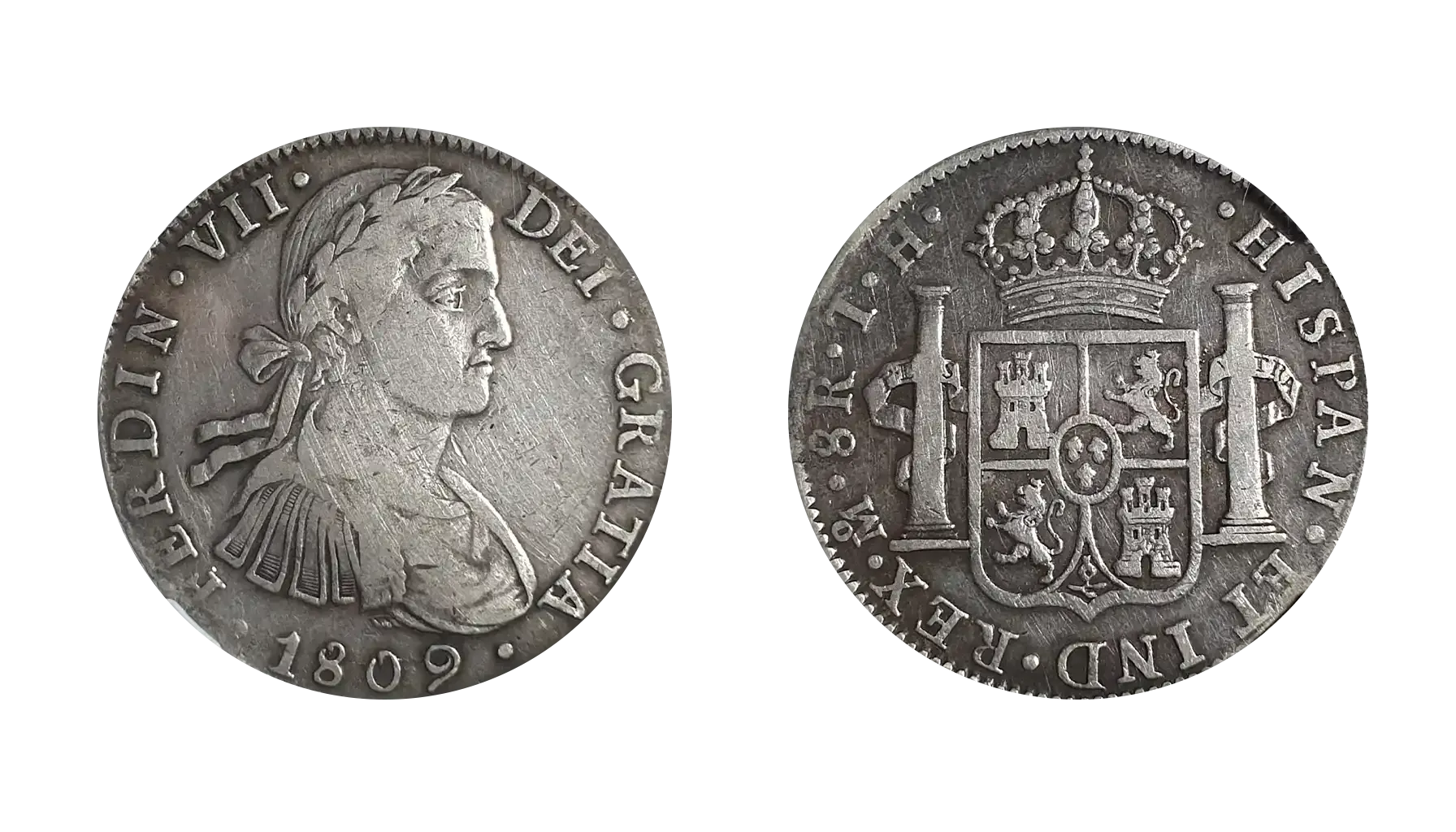
The Mexico 8 reales silver coin dated 1821 holds special significance as the final colonial issue before Mexican independence, bearing Ferdinand VII's portrait alongside revolutionary aspirations.
8 Reales Silver and Gold Coins Value
The face value of an 8 reales gold coin varies depending on several important factors:
Issues with portraits (Mexico, in circulation)
Condition
Pillars
Cobs
Gold ones with a face value of 8 reales, denominated in escudos rather than reales, had a similar design but had a much greater purchasing power. One gold one with a face value of 8 escudos ("doubloon" or "onza"), and it cost sixteen silver dollars.
These large gold items remain rare, and prices depend on the gold content and significant numismatic premiums, which often exceed $5,000–$20,000 for trouble-free copies.
Market Value 2026: List of Items
The gold 8 Escudos is the big brother of the 8 reales. It was the highest denomination gold item of the Spanish Empire and is the legendary Doubloon of pirate lore.
These items are massive, containing approximately 27.07 grams of 22k gold (about 0.76 troy ounces of pure gold). With gold trading near $2,800/oz in early 2026, the "melt value" alone is roughly $2,100+.
Type | Value | Condition |
Charles IV / Ferdinand VII Bust | $3,500–$5,500 | Extremely Fine (XF) |
Onza (1700s Mexico / Peru) | $6,000–$12,000 | Uncirculated |
Royal / Galano Cobs | $50,000–$250,000+ | Mint State |
Remember: The Spanish 8 reales coin value reais increases dramatically because of the dates when the circulation is low.
8 Reales Shipwreck Coins (El Cazador)
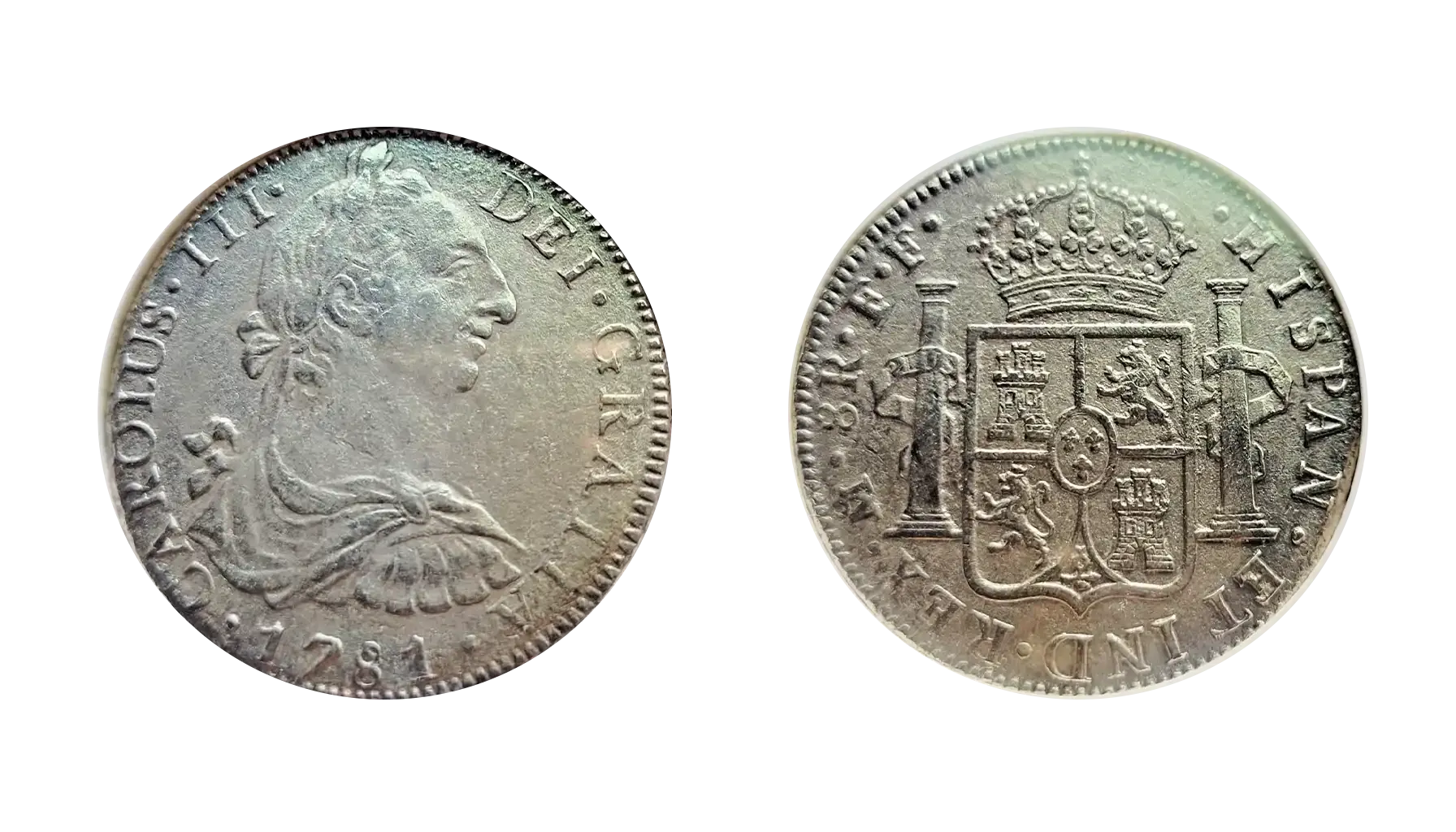
Among the most coveted 8 reales coin for sale listings, shipwreck specimens occupy a special category in the numismatic field.
The El Cazador Shipwreck coin 8 reales is an example since the Spanish brigantine El Cazador sailed from Vera Cruz to New Orleans in 1784 carrying nearly 450,000 silver pesos – over 400,000 eight-real items intended to stabilize Spanish currency in colonial Louisiana.
El Cazador disappeared without a trace in early 1784. There were no survivors and no wreckage found at the time, leaving the Spanish government in the dark for over two centuries.
The wreck was found entirely by accident in 1993 by the crew of the fishing boat Mistake. They were 50 miles off the coast of Louisiana when their nets snagged on the remains of the ship in about 300 feet of water.
Where Are the Items?
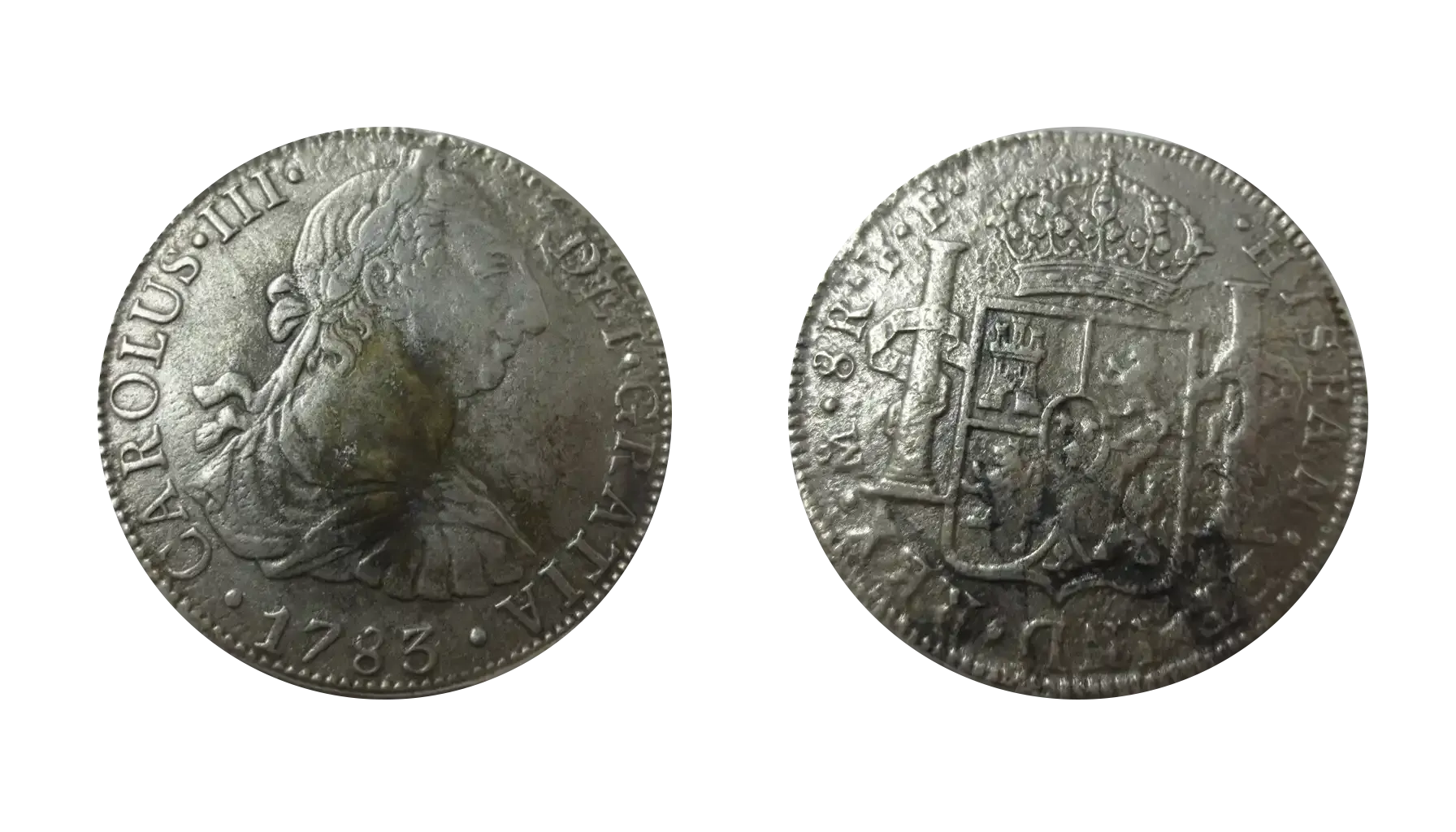
The overwhelming majority (roughly 95%+) of the shipwreck items recovered from El Cazador are dated 1783. It is actually quite rare to find a 1784-dated 8 reales from the wreck.
Because the ship sailed from Veracruz in January 1784, the Mexico City mint had only been striking the "1784" dies for a few days. Very few 1784-dated items made it into the chests before the ship departed.

 Facebook
  X (Twitter)
  Pinterest
  LinkedIn