Contents:
The Viking Age might be over, but a few artifacts remain. That list includes coins.
We will explore real Viking coins: what counts as them, what metals were used to make them, and what bits are the most valuable.
Collecting is rather an expensive hobby. Gladly, a free coin identifier will cost you money and will aid you on your collecting journey.
What Are Viking Coins
The bits produced during the Viking Age by Viking nations are all considered Viking coins.
The Viking Age roughly spanned from the late 8th century to the mid-11th century. Unlike later medieval coinage systems, Viking bits were not standardized. Vikings' nations were rapidly expanding, geographically and influentially, and it was too early and too hard yet to implement a real system/
These lands were likely issues of Viking bits during the 8th to 11th centuries:
Denmark
Faroe Islands
Finland
Greenland
Iceland
Norway
Scotland
Sweden
The mintage was rather chaotic, as we’ve just said, but by the late 10th and early 11th centuries, minting became more common in these Viking-controlled territories. Kings such as Olaf Tryggvason and Cnut the Great started issuing coins with their portraits, substantiating their rule.
Viking Age Coinage Overview
The Viking Age minting system underwent significant evolution over time and varied by region.
In the early Viking period, there was practically no minting. The bits that Viking possessed were often foreign coins, i.e., taken from other nations and lands. Usually, taken through trade, tribute, or raids. Anglo-Saxon pennies, Carolingian deniers, and Islamic silver dirhams were often used by Vikings.
Closer to the end of the Age, Vikings would settle in regions such as England, Ireland, and parts of Scandinavia. These leaders started producing their own coins; they mostly relied on silver. Coins, jewelry, and ingots made from silver were traded.
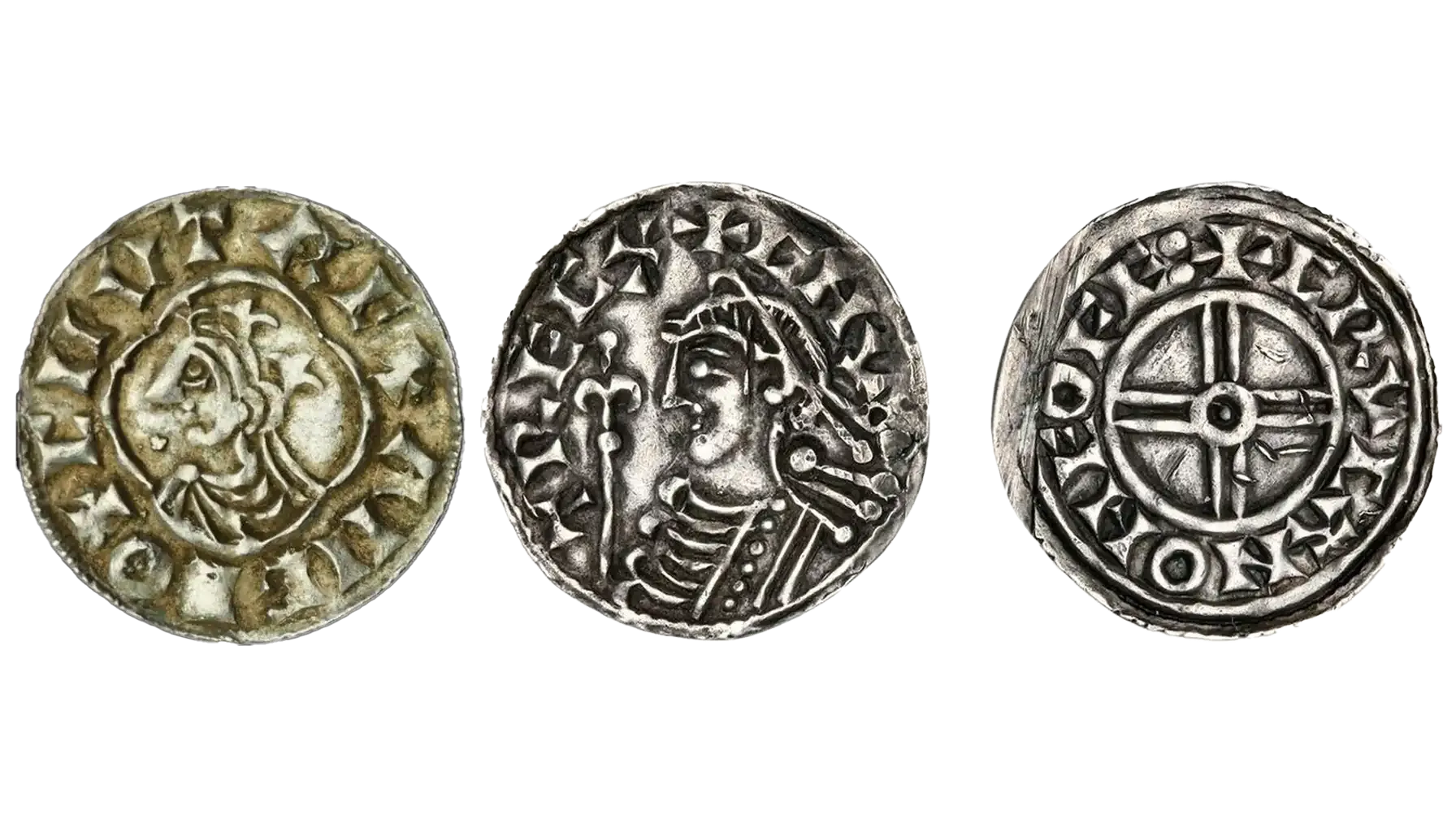
To better understand what kinds of bits came out during the era, let's look at a penny made during the reign of Cnut the Great:
Cnut Penny Overview | |
Country (Issuer) | England |
Year of Minting | 1029-1035 |
Type | Circulating (Short Cross type) |
Shape | Round |
Diameter | 18 mm |
Metal Composition | Silver |
Weight | 1.07 grams |
Viking Silver and Gold Coins
Silver coins dominated Viking mintage. Some Viking silver coins were imported, and some were locally minted. During that era, the value of a bit highly depended on its weight, so silver Viking coins were highly pure and heavy, making them very valuable by today’s standards.
“Up through the Viking Ages, silver became more and more important in commerce. Firstly as a commodity, when payment was made by weight. Later, in the form of coins when payment was made using a certain number.”
— The Viking Ship Museum
Official Website
Viking gold coins, by contrast, were extremely rare. Gold was primarily used for elite jewelry and ceremonial objects. Most people during that year would consider using gold for bits rather wasteful. Most gold bits that appear in Viking-era finds are usually Roman gold coins.
Rare and Ancient Viking Coins
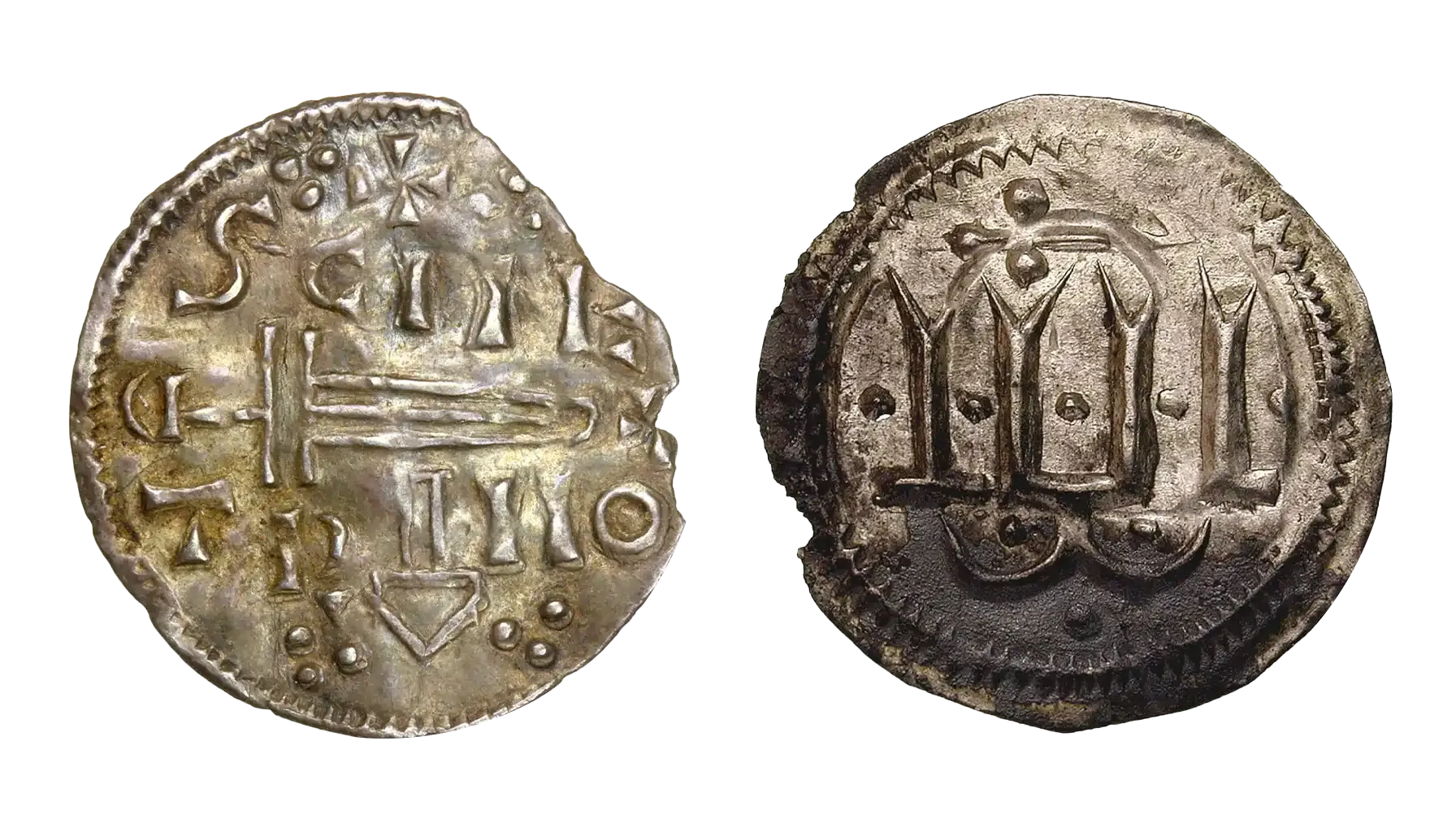
You can safely say that most bits produced during that era are rare. It's logical, as only a few would survive unmelted after all those centuries. What rare Viking coins are the most desirable?
Early Scandinavian mint issues. The earlier the century, the better.
Experimental designs and coins produced during brief reigns or transitional periods. Collectors love peculiarities.
Bits with errors are popular, but it's very unlikely to find them, as it is hard to prove which bit is made with an error when we haven't seen that many “proper” bits.
Bits associated with prominent rulers (Harald Bluetooth or Cnut the Great) are particularly popular among collectors.
How to Identify Real Viking Coins
You need to be an expert of sorts to identify an authentic Viking-age bit. A historian and a collector in one. Yet, with a little bit of help, this task is manageable.
Genuine bits typically show irregular shapes. The technology to make perfect circles was not yet known among seamen.
The bits were often a bit off-centered and had uneven thickness, again, due to technological constraints.
Being old, these bits show consistent wear patterns. It means that all slides are similarly aged.
Inscriptions are a key indicator of the era the bit came from. Authentic Viking-era bots usually feature Latin text, royal names, mint locations, or religious symbols.
The bit should be heavy and made of silver.
If you need help, you can use PGC or NGC Grading services. A specialist would prove the authenticity of the bit and assess the condition.
Authentic Viking Coins for Sale
Who should you turn to if you want to acquire an authentic Viking bit?
Reputable numismatic dealers, such as APMEX and JM Bullion, are consistent and fair. Unfortunately, they rarely have old bits.
Auction houses, like Heritage Auctions, often present old bits for sale. They might be pricey, but it is one of the safest ways to acquire a bit.
Historical coin retailers who specialize in such old bits could offer you something truly valuable. Make sure your trading partner has a certificate of authenticity for the bit they are selling.
Expect to pay at least $900 for such bits. An old piece made from real silver is a valuable thing and deserves more than a few dollars.
Conclusion
Old coins are always in favour. Perhaps the few survivors of the Viking era will become even more valuable after a few centuries.
Coin ID Scanner is a must-have app for a collector. It can scan, identify, and evaluate bits. A great time saver. As for the beginners, the app comes with many guides to help you start collecting.

 Facebook
  X (Twitter)
  Pinterest
  LinkedIn