Contents:
Travelers often bring back German cash without knowing what they are. Foreign coin identification clarifies denomination, era, and rarity.
What Is a Bundesrepublik Deutschland Coin?
This is a money piece issued by the Federal Republic of Germany — the official English name of Bundesrepublik Deutschland. The inscription appears on modern German coins struck after 1949, when West Germany was established.
Deutschland Bundesrepublik Coin Inscriptions
The inscription identifies modern Germany and appears on both Deutsche Mark and commemorative euros.
Country name: BUNDESREPUBLIK DEUTSCHLAND
Denomination: e.g., 1 PFENNIG, 5 DEUTSCHE MARK, 10 EURO
Year: Always shown
Mint mark:
A (Berlin)
D (Munich)
F (Stuttgart)
G (Karlsruhe)
J (Hamburg)
Coin Bundesrepublik Deutschland Designs
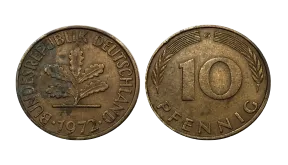
1949–2001: Deutsche Mark
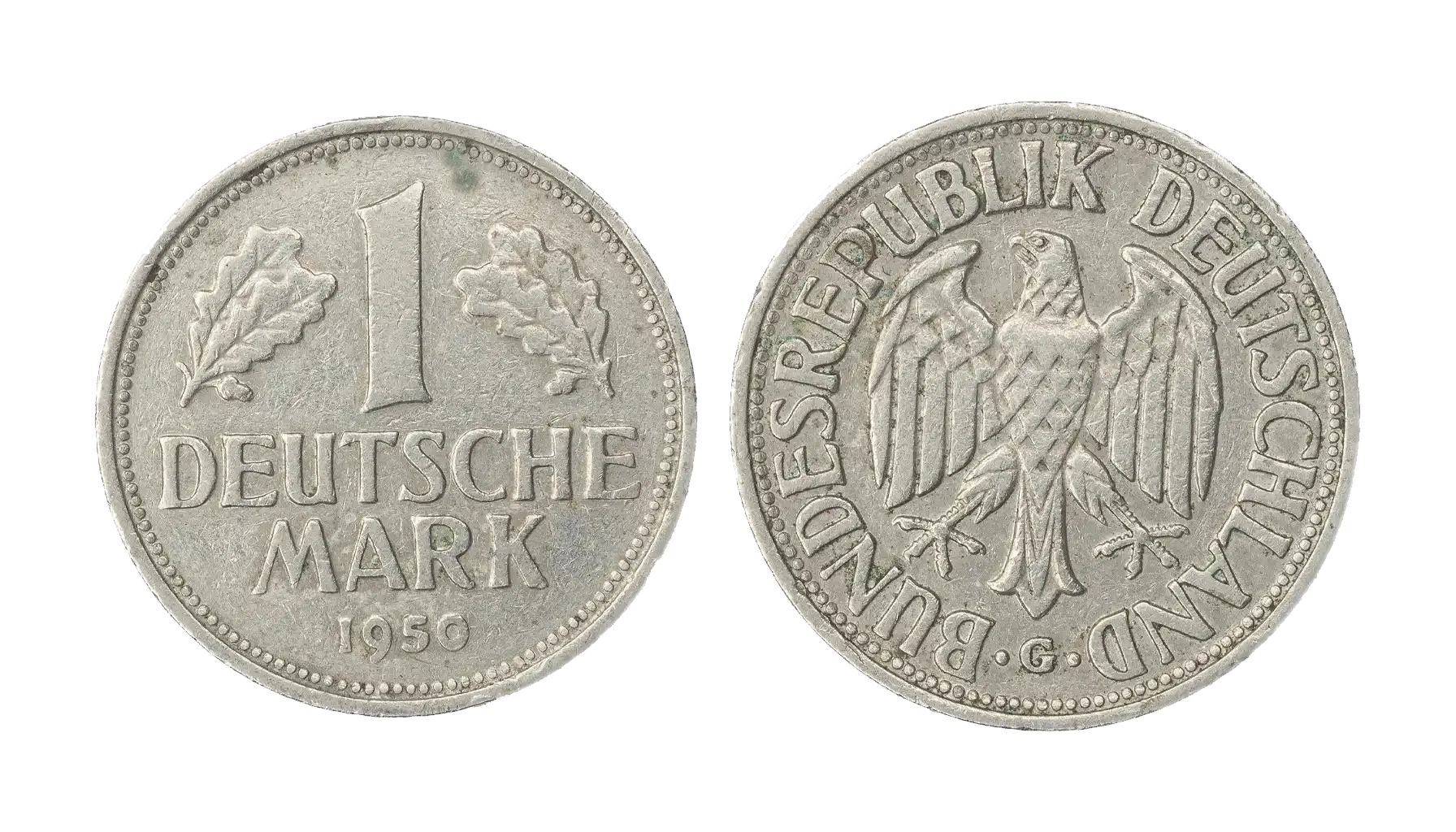
Before adopting the euro in 2002, Germany used the Deutsche Mark (DM). Money from this period typically read Bundesrepublik Deutschland.
Denominations:
1, 2, 5, 10, 50 Pfennig
1 DM, 2 DM, 5 DM
Example: The 5 DM silver specimens (1951–1974) were struck in .625 silver and are still actively collected. Later issues switched to copper-nickel.
Main features:
Federal eagle (Bundesadler)
Clean, modernist design
Mint marks: A (Berlin), D (Munich), F (Stuttgart), G (Karlsruhe), J (Hamburg)
Some early silver 5 DM issues, especially low-mintage years like 1958 J, carry noticeable premiums.
Euro (2002–Present)
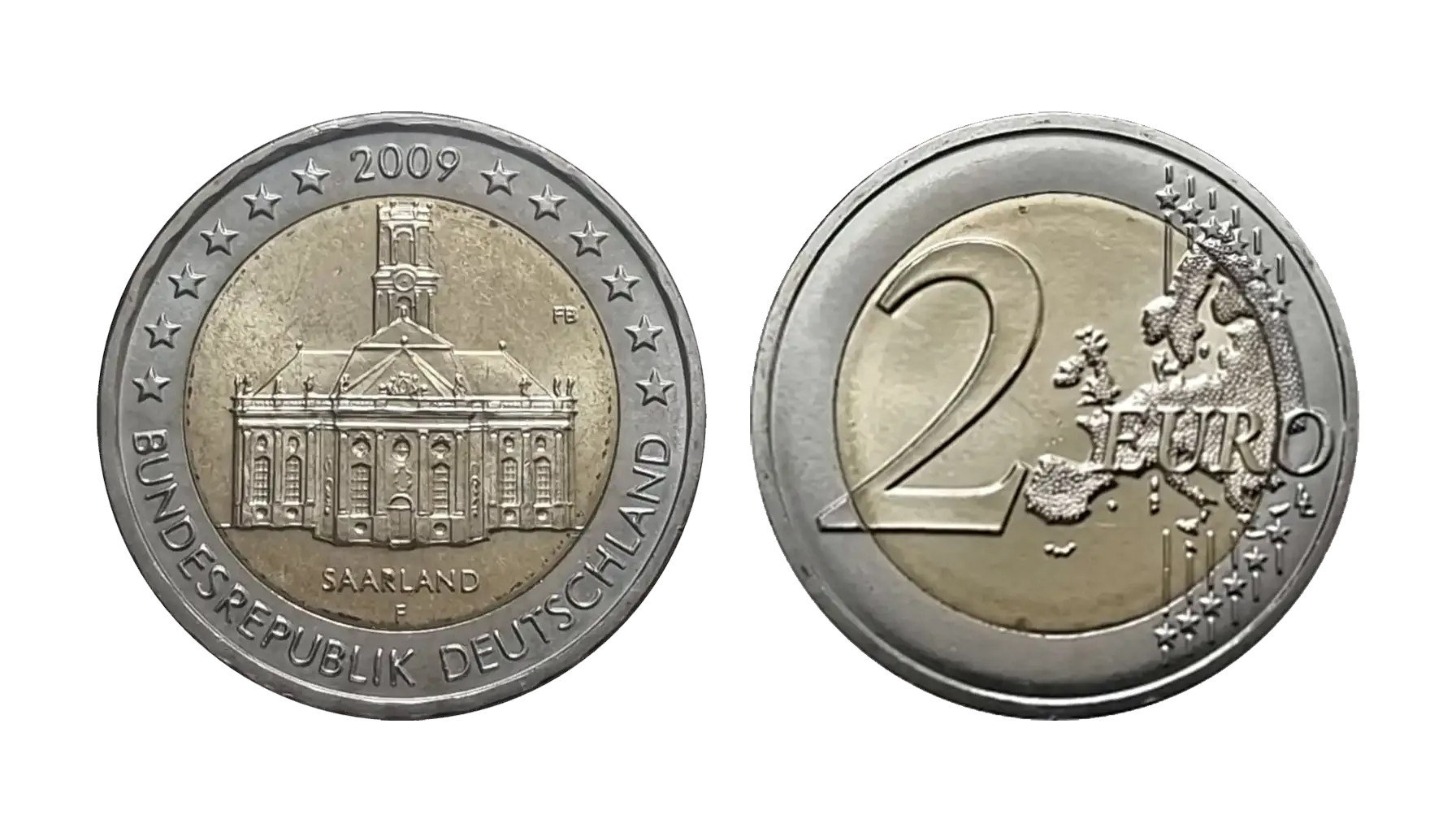
Germany adopted the euro in 2002. Modern pieces still include Bundesrepublik Deutschland on commemorative issues.
Germany issues:
€2 commemoratives (very popular)
€10, €20, €25, €50, €100 collector pieces (silver and gold)
Example: German €2 commemoratives feature each federal state (Bundesländer series), widely collected across Europe.
Bundesrepublik Deutschland Euro Coins
Circulating Euros
German euros (1 cent to €2) feature three main designs:
Oak branch (1–5 cent)
Brandenburg Gate (10–50 cent)
Federal eagle (Bundesadler) (€1 and €2)
Mint marks remain: A, D, F, G, J (Berlin, Munich, Stuttgart, Karlsruhe, Hamburg).
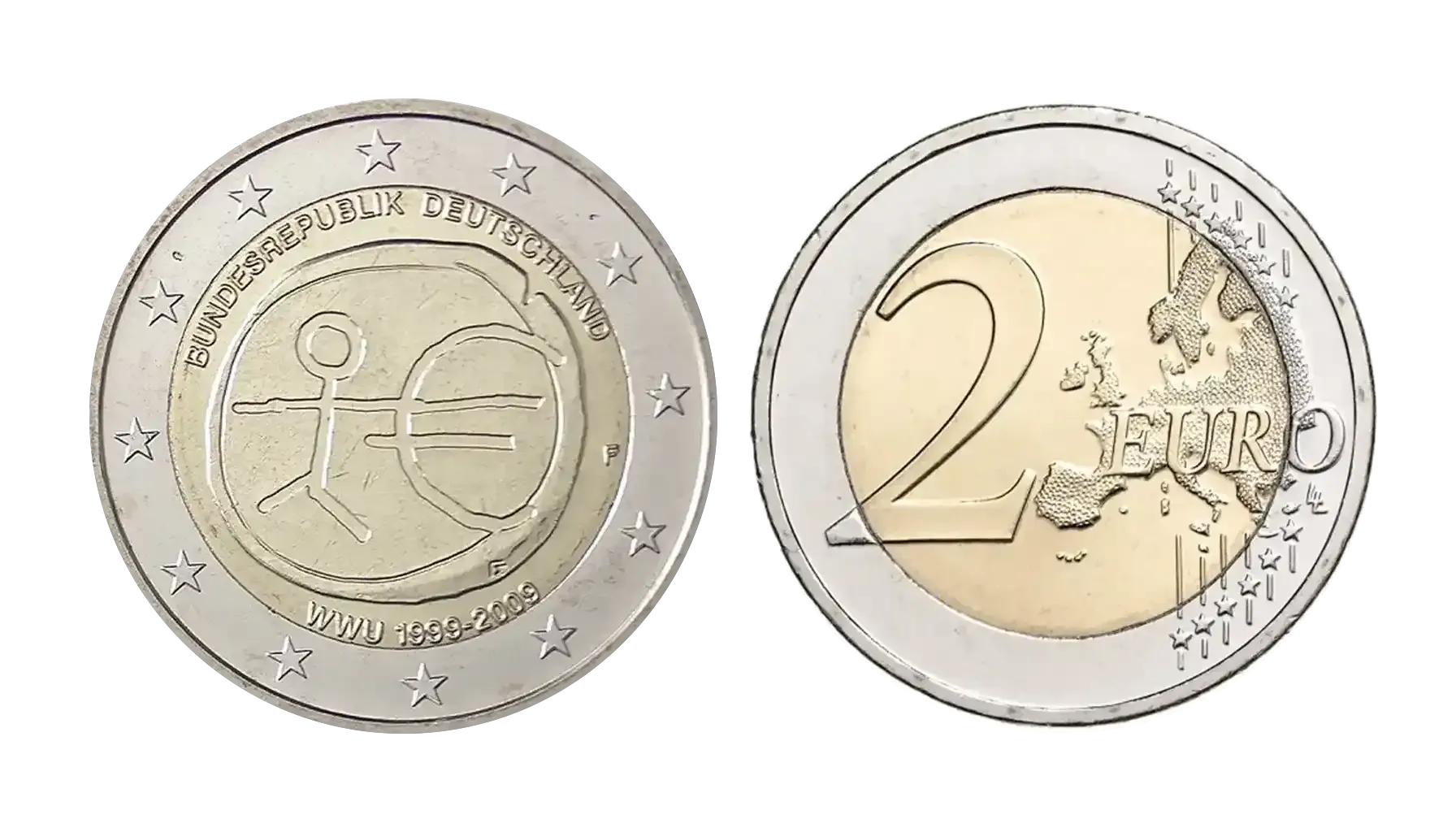
€2 Commemoratives
Germany regularly issues €2 commemoratives. These are legal tender across the eurozone and widely collected.
Collector Issues
Germany also produces:
€10 and €20 silver
€50 and €100 gold
Value depends on metal content and condition. Circulating pieces generally trade at face value unless rare errors or special mintages are involved.
Bundesrepublik Deutschland Coin Value Today
Type | Value Range |
Circulating euros (1c–€2) | Face value |
€2 Commemoratives (common) | €2–€6 |
€2 Commemoratives (scarce dates) | €8–€20+ |
Pre-euro DM (common) | $1–$10 |
5 DM Silver (1951–1974) | $10–$50+ |
5 DM Silver (scarcer dates) | $50–$150+ |
€10 / €20 silver commemoratives | $15–$60+ |
Gold collector items | Spot gold + premium |
Values are approximate and depend on condition, mint mark, and rarity. High grades or certified examples can sell above the ranges shown.
Rare and Collectible German Coins
Top 10 Most Sought-After Issues
5 Deutsche Mark 1951 J Silver – Early silver issue with lower mintage than other branches.
5 Deutsche Mark 1958 J Silver – Key date for collectors; premium over common dates.
5 Deutsche Mark 1965 F Silver – Popular with silver specialists due to design and relative scarcity.
5 Deutsche Mark 1970 G Silver – Late silver strike with collector demand.
10 Mark 1993 D “25 Years Federal Republic” – Modern commemorative with modest mintage.
€2 2006 A “10th Anniversary Euro” – Low survival numbers in high grade.
€2 Bundesländer Series (Selected Dates) – Some state issues have limited circulation.
5 Deutsche Mark Proof Sets (1950s–60s) – Early proof quality attracts specialists.
Silver €10 Commemoratives (Various) – Classic themes and limited production.
Gold €100 Commemoratives – Large metal weight plus collectible appeal.

 Facebook
  X (Twitter)
  Pinterest
  LinkedIn