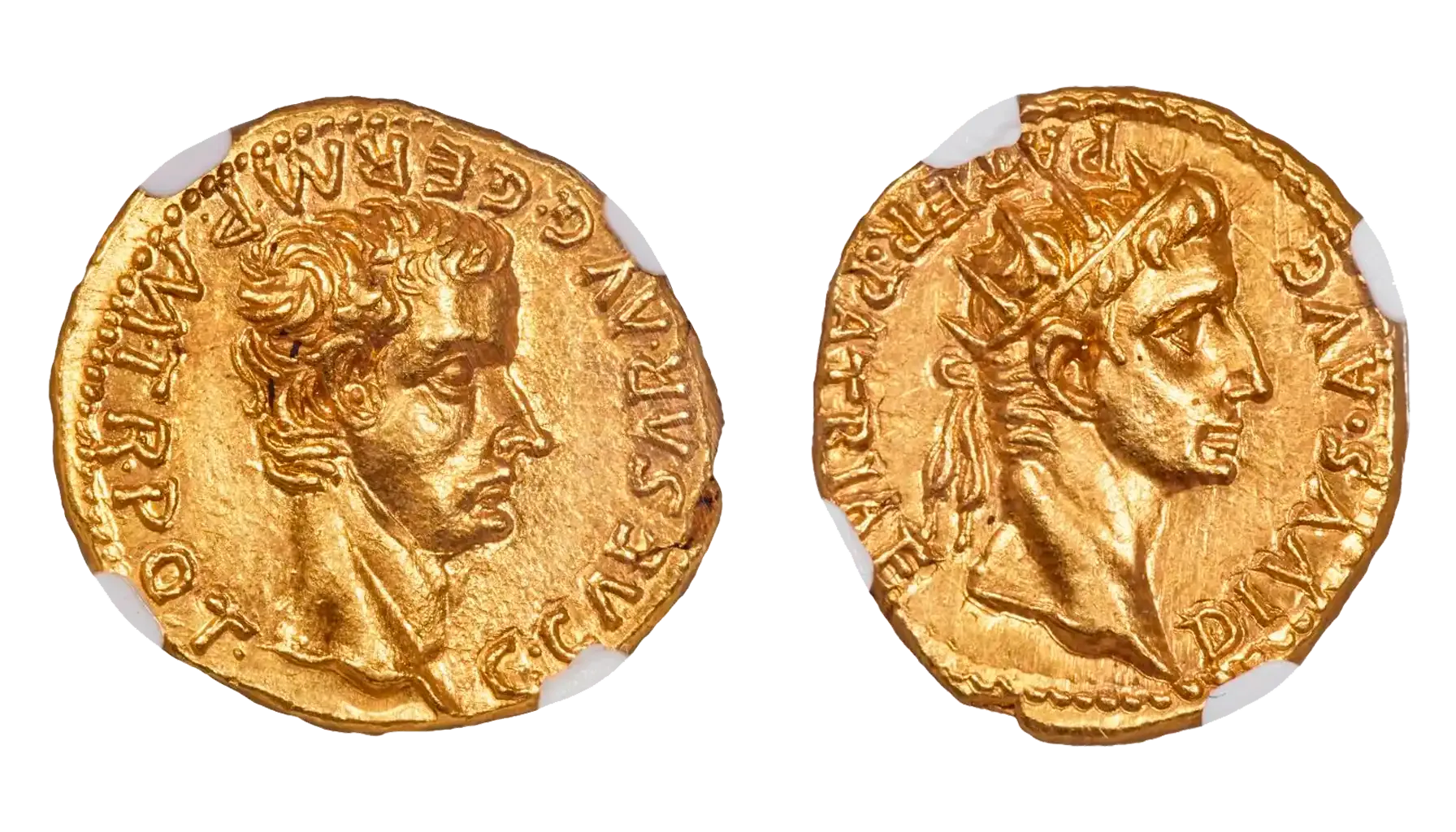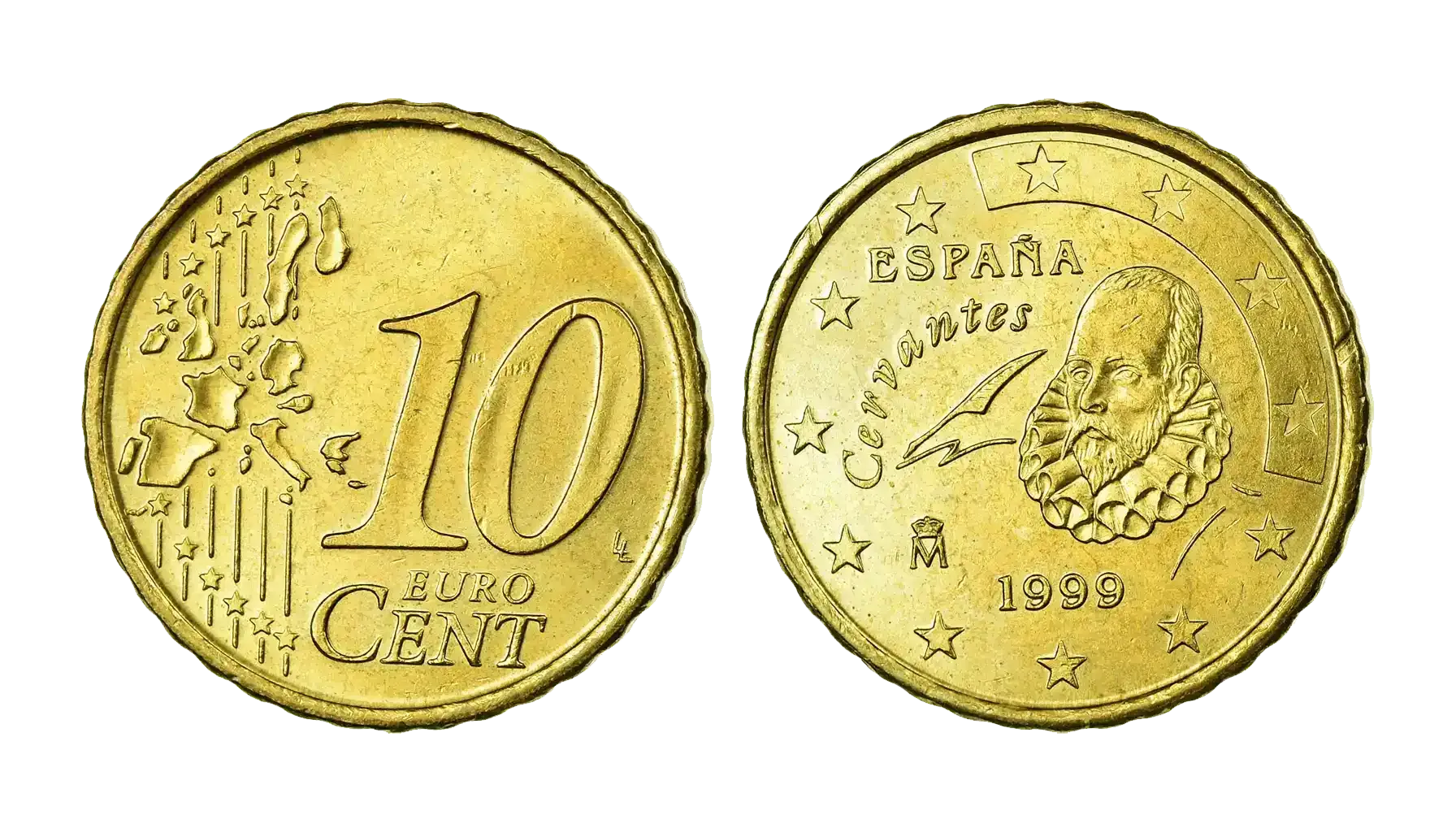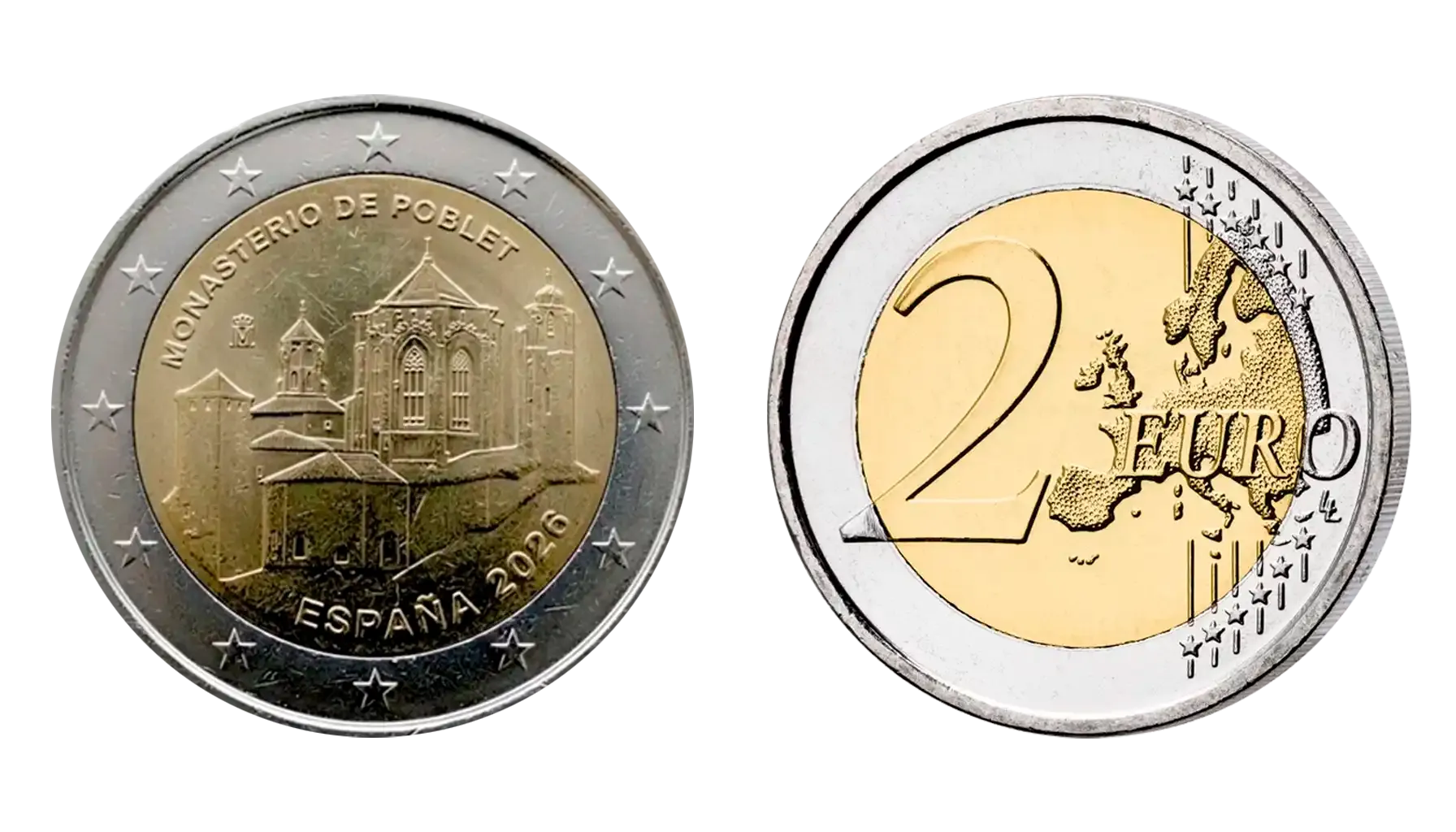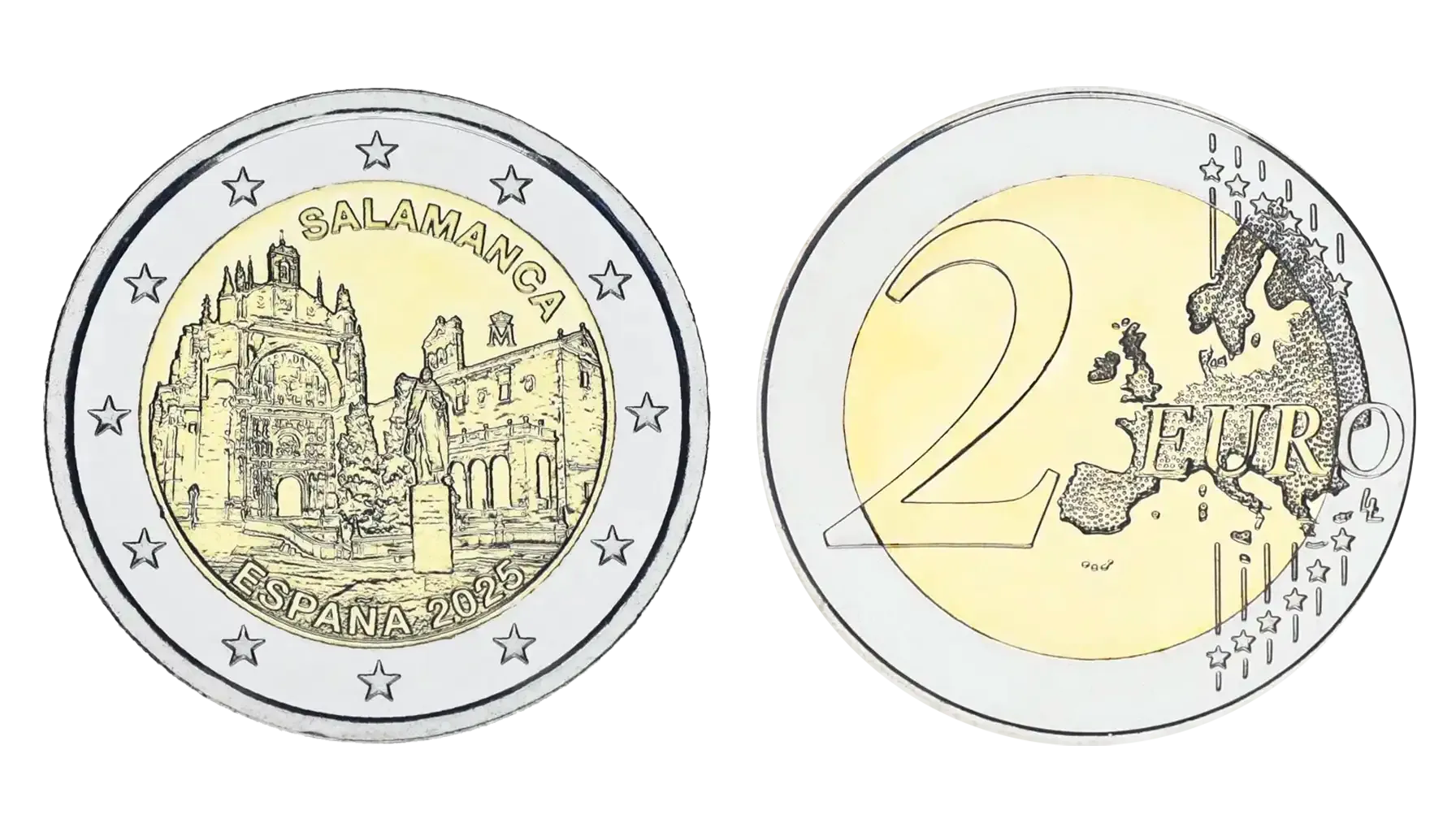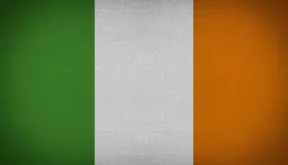
Irish coinage started in the Viking era with its pennies, and now they have modern euro coins. As you may imagine, it is a pretty big collection. You may need a whole room or two to contain pieces from such a country. And a coin scanner online to not get lost.
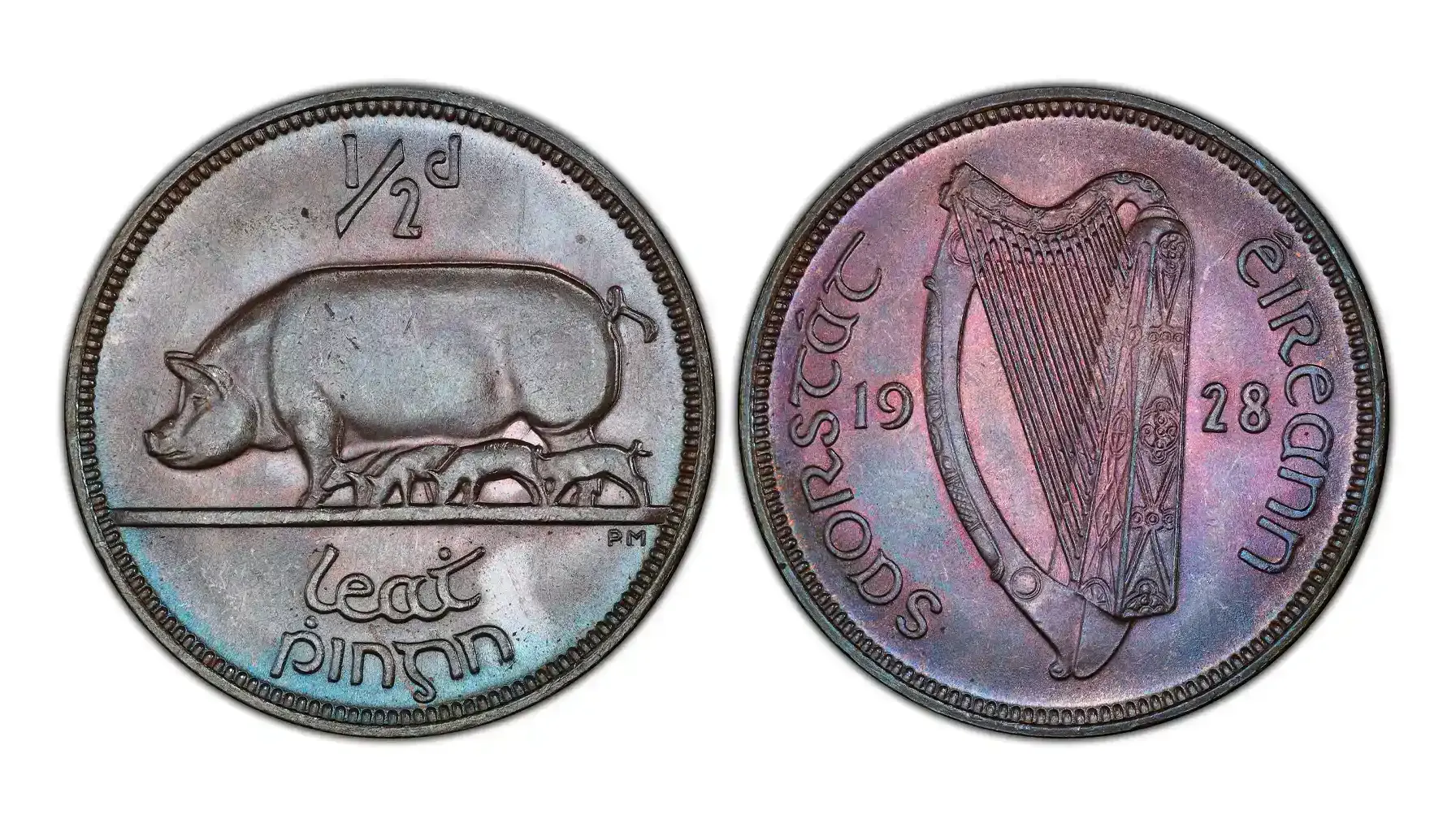
And the symbol of the harp, unchanged in spirit for more than 1,000 years, appears on nearly every Irish coin: medieval pennies, early Free State issues, or today’s circulating euro.
Overview of Irish Coinage
For the sake of keeping this article short enough, we will separate Irish pieces into three broad eras:
Ancient and medieval specimens struck under Norse and Anglo-Norman rulers
Pre-decimal Irish pound coinage (1928–1971), famous for Percy Metcalfe’s animal designs
Decimal and euro specimens, which introduced new metals, new denominations, and eventually Ireland’s single-harp euro design
You still may get animal reverse classics; others prefer commemoratives, fantasy tokens, or modern Ireland silver coins issued by the Central Bank. A few chase older Irish gold coins, which are pricey in high-grade.
“Since independence, there have been three sets of coins in Ireland. In all three, the coin showed a Celtic harp on the obverse. The pre-decimal coins of the Irish pound had realistic animals on the reverse; the decimal coins retained some of these but featured ornamental birds on the lower denominations; and the euro coins used the common design of the euro currencies.”
— Unknown author
from the Wikipedia page “Coins of the Republic of Ireland”
Ancient Irish Coins
Ireland’s earliest known coins appeared around 995 AD. They were issued by King Sitric Silkbeard in Dublin.
Those pieces were small silver pennies modeled after Anglo-Saxon designs, and the inscriptions included “DYFLIN,” one of the earliest numismatic mentions of the city. These coins circulated along Viking trade routes and are technically the first coins of Ireland ever produced.
After the Normans arrived, the kings of England minted coins specifically for Ireland: farthings, halfpennies, and pennies. Later, during the reign of Henry VIII, the harp became the defining national emblem on Irish currency.
Later on, they made another prominent specimen:
“Gun money” (1689–1691): emergency currency struck from melted gun barrels during the Williamite War. Collectors love it because every piece is dated by month
Hibernia-marked: widely used throughout the 18th and 19th centuries, often struck in copper or silver, leading directly into the era of the Irish Free State
Rare hammered silver: some are museum-level finds
A lot of ancient pieces have seen Viking history, English rule, and Ireland’s eventual independence.
Rare & Valuable Irish Coins
Most collectors know about the 1943 silver issues, but several other dates are just as interesting once you dig into the details:
1943 Florin (2 Shillings) — Melted Rarity, 4 Known in UNC
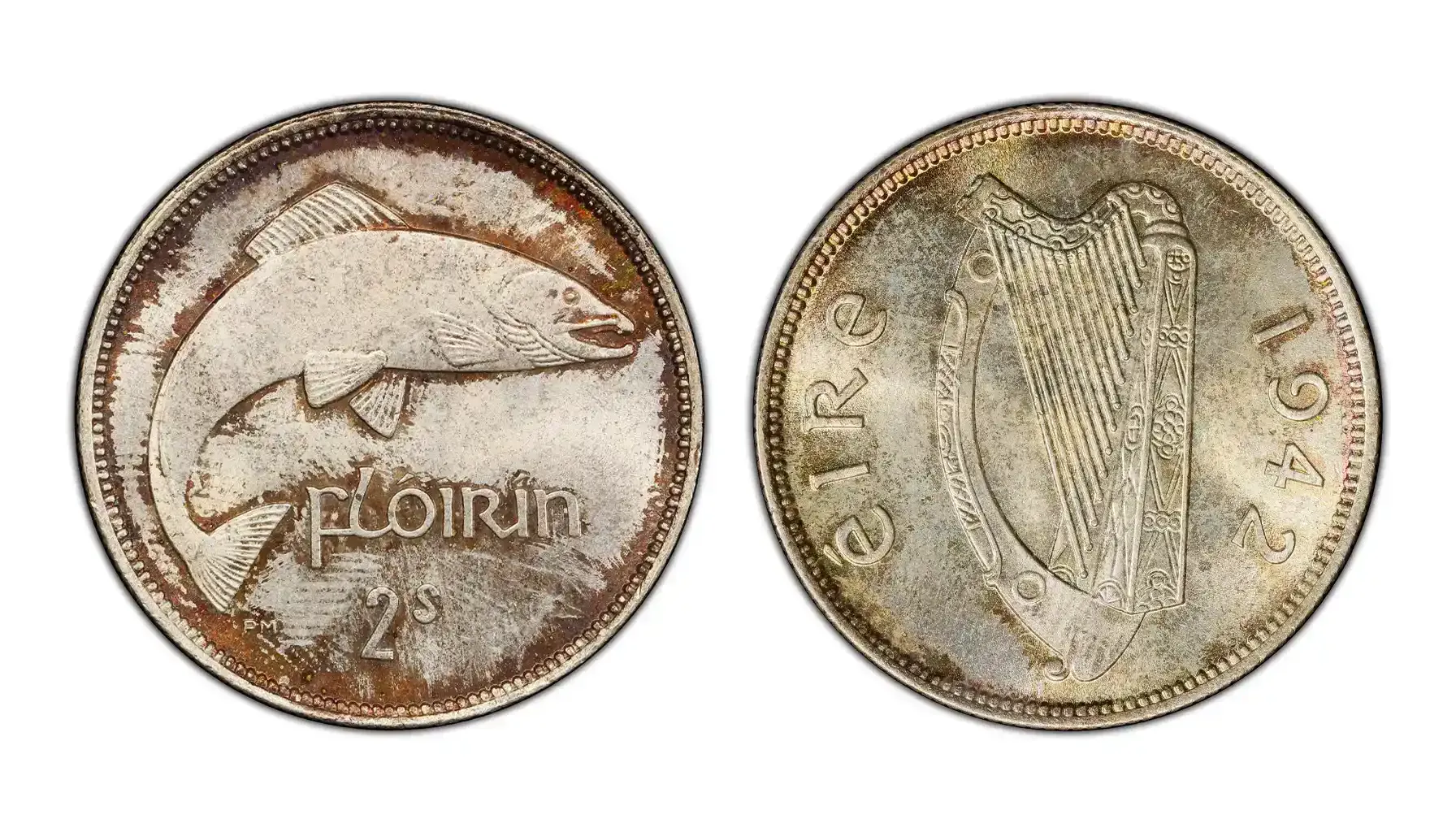
It should have been a normal .750 silver issue of the Irish Free State series (salmon reverse by Percy Metcalfe), but timing worked against it. Although struck in regular quantities at the Royal Mint in London, they were never released.
By the early 1950s, Ireland decided to eliminate silver coinage entirely and change to cupro-nickel. All unissued silver 1943 florins and halfcrowns were returned to the Mint and melted. Only a tiny handful of florins somehow escaped this fate.
The 1943 florin is so unusual because of the grade distribution:
Four Uncirculated (UNC) examples are known and tracked individually by tiny diagnostic marks
Almost everything else is Good Fine (GF) or lower
Virtually nothing exists in the “middle grades” (VF–EF), which is incredibly weird from a statistical standpoint
Collectors have passed on Fine examples for years, assuming a nicer VF or EF coin would eventually appear. Many learned the hard way that such grades barely exist. Don’t buy anything from marketplaces or any other spaces with no grading.
1943 Half crown — Scarce, but Not Florin-Level Scarce
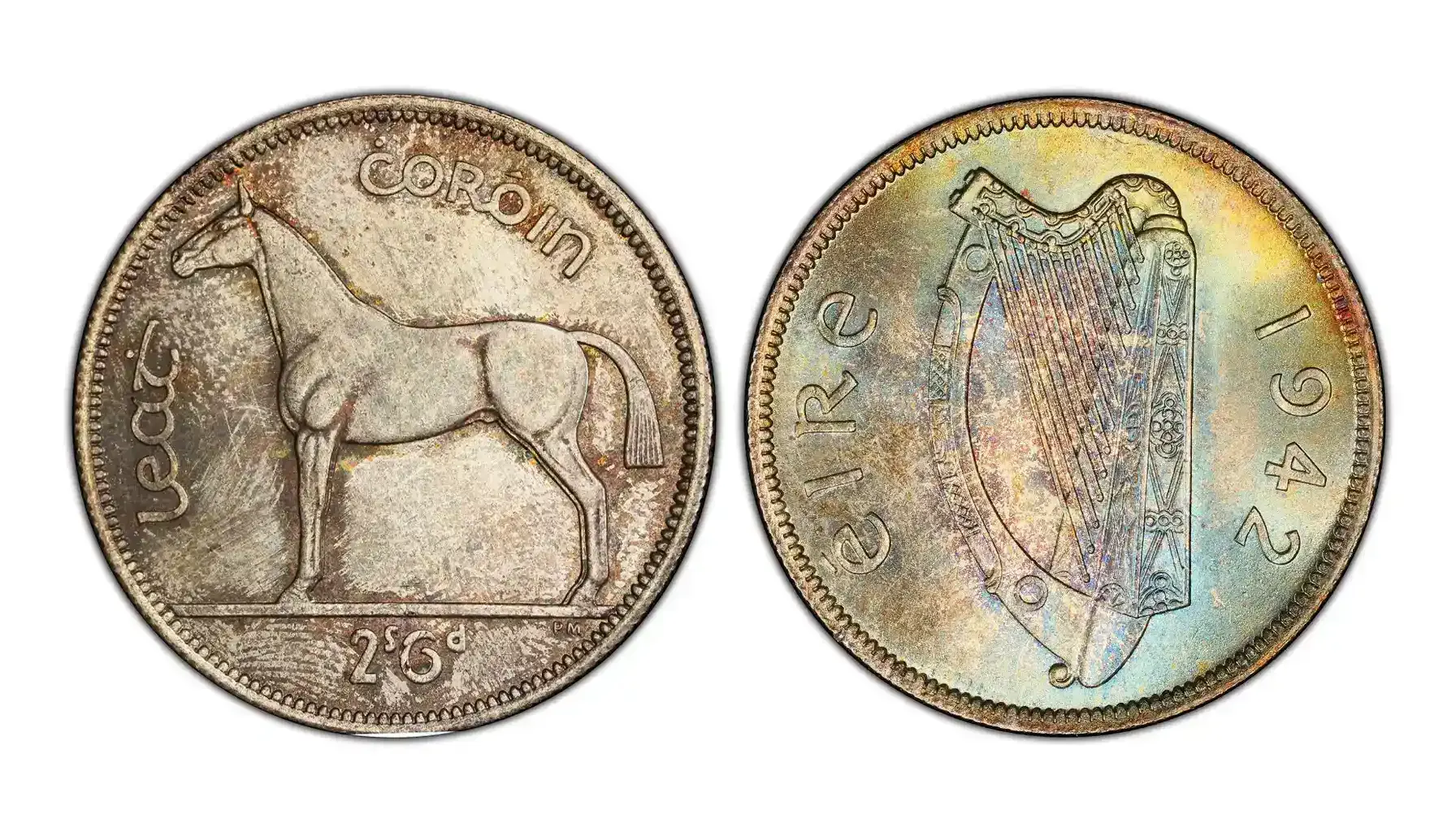
The halfcrown of the same year followed an identical path: struck, never issued, melted. But for reasons still not entirely understood, more halfcrowns survived than florins. High-grade examples are still very scarce, and the coin is a key date of the entire series. Uncirculated halfcrowns exist but are uncommon. Anything above Extremely Fine attracts immediate attention.
1938 Penny — Only Two Known, Both Specimens
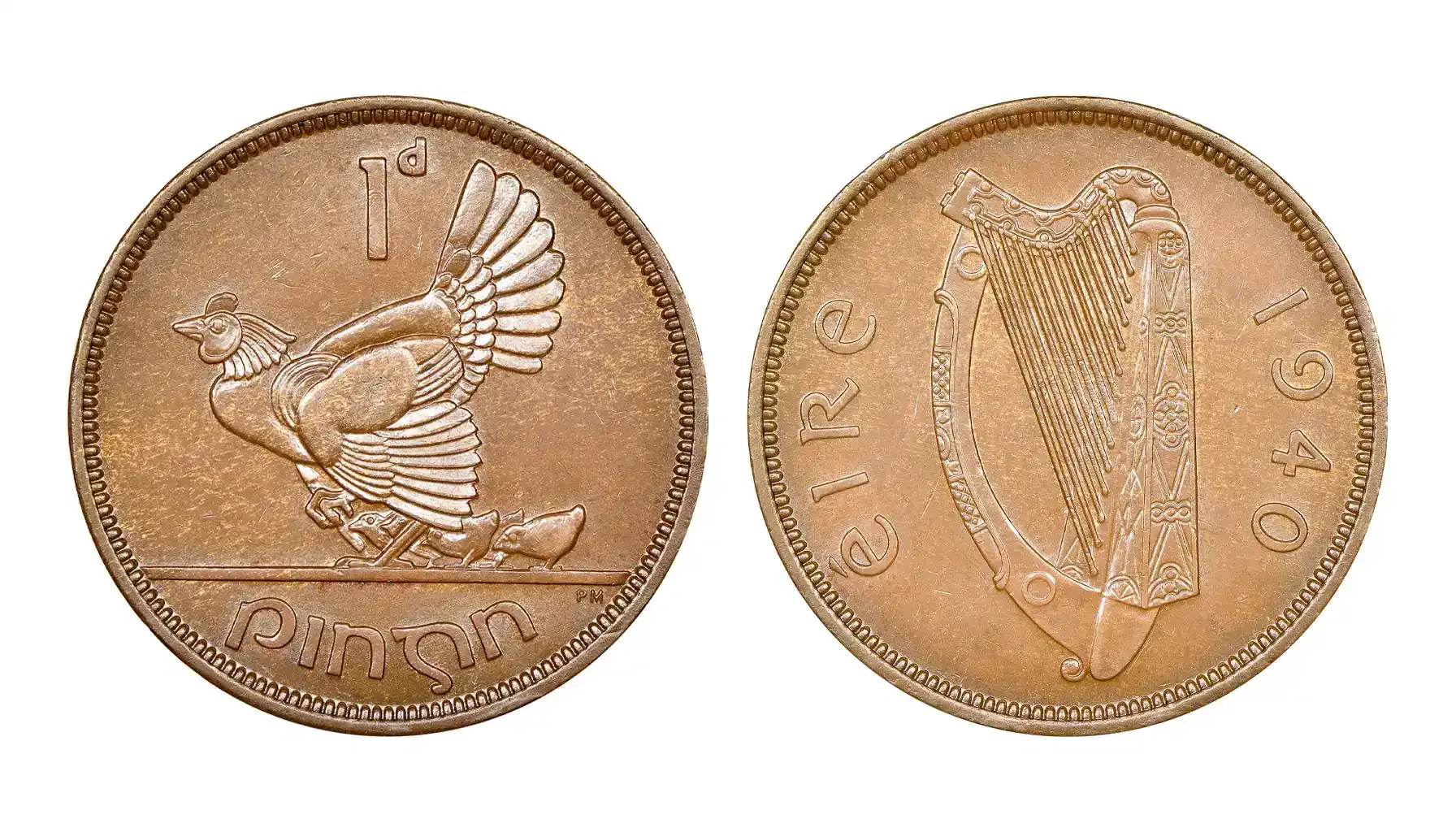
NGC’s certification of a 1938 penny (graded SP 66 BN) confirmed what specialists always suspected: this coin is a pattern.
What is known about this coin:
Only two known examples exist
Both were struck as Specimens, with a superior surface and sharper strike than business strikes
These show the design transition from Saorstát Éireann to the newer Eire legend following the 1937 Constitution
No regular 1938 pennies were ever intended for public use
The 1938 penny is considered the most difficult modern Irish coin (1928–present). It sits in the same tier as the great British pattern issues.
1937 Shilling — Scarce in Brilliant Uncirculated Only
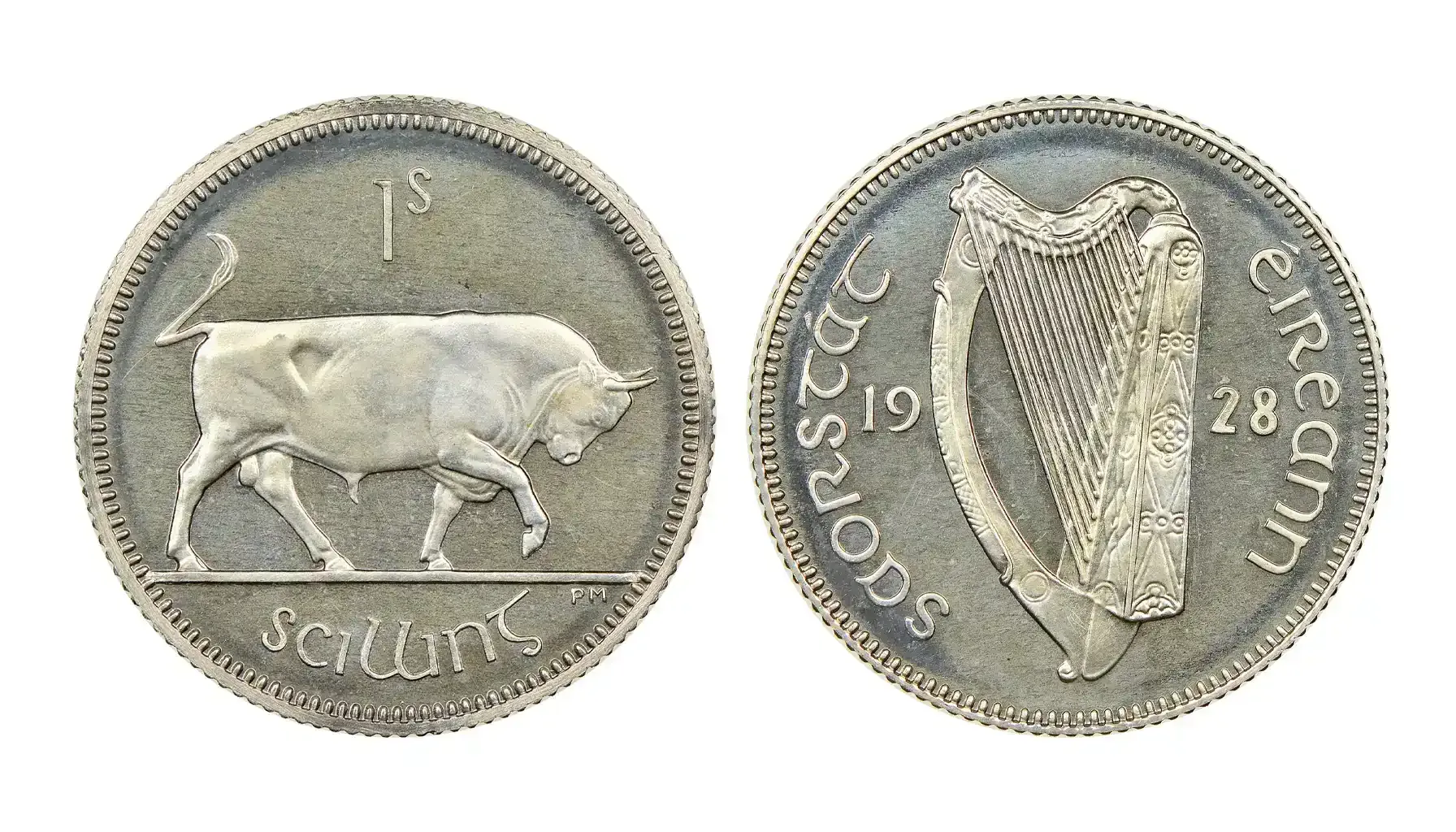
The same BU-only rarity applies to the 1937 shilling, which is common enough, but extremely tough in high grade. Silver shillings from the late 1930s experienced metal flow problems on the obverse, meaning most coins show softness on the top of the soundbox or around the handle.
1934 Florin — High-Grade Scarcity Rather Than Absolute Rarity
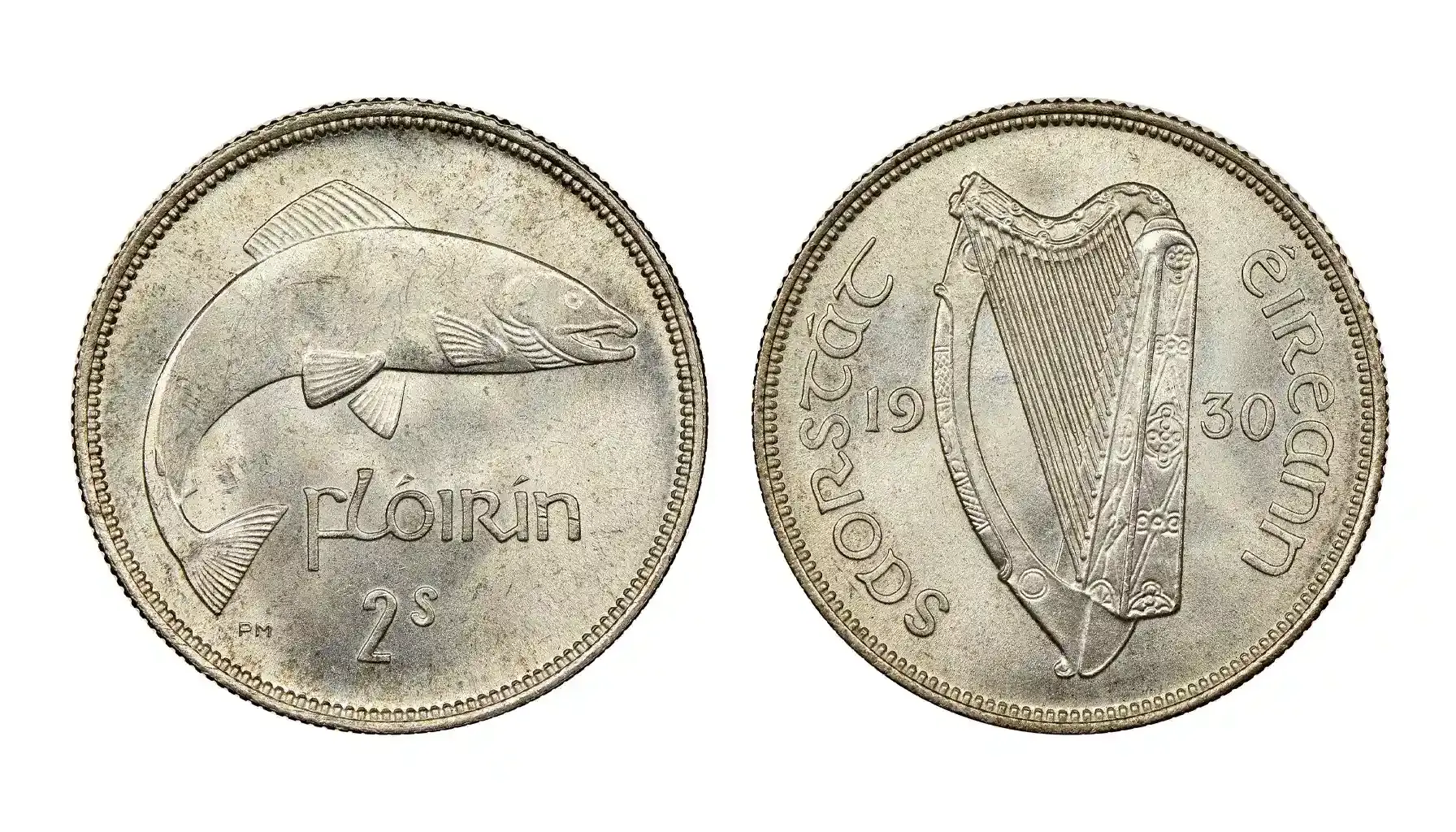
The 1934 florin is not rare in the same sense as the 1943 or 1938 issues. What is rare is:
Outstanding luster
Strong reverse salmon detail
Fully struck obverse harp lines
Most examples in the market are dark, softly struck, or heavily bag-marked.
Collectors of Irish silver coins often start with pieces like the shilling, florin, and halfcrown, since these were struck in .750 silver until 1943. Good examples are affordable, but true mint-state pieces spike sharply in price.
Irish Gold Coins
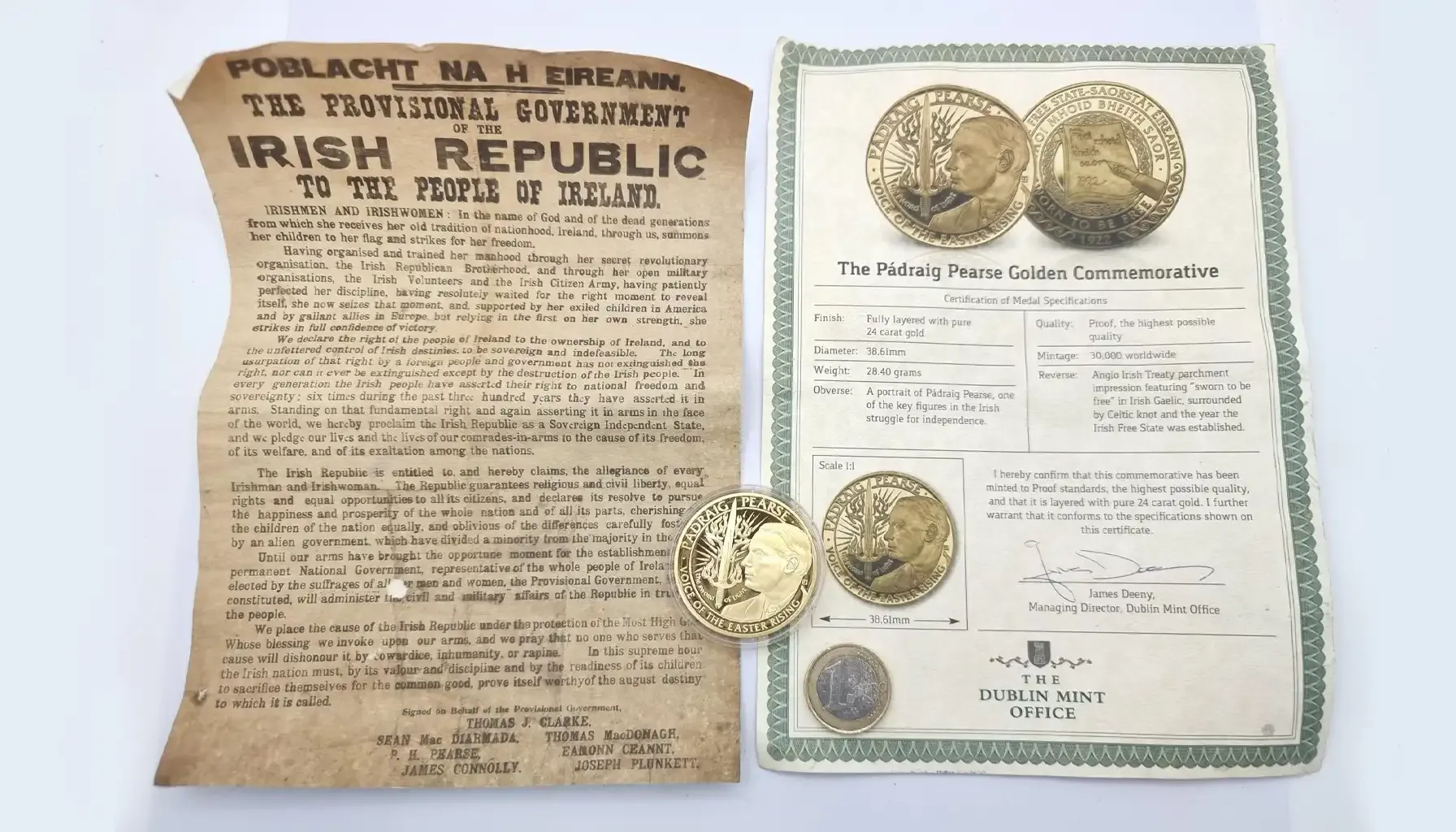
Ireland issued far fewer gold pieces than silver or bronze. Modern Irish gold coins from the 2000s (like the €20 commemoratives) are popular entry points because they’re attractive, limited in mintage, and easy to verify. Historically, Ireland rarely minted gold domestically, so “Ireland gold coins” usually refer to modern Central Bank commemoratives.
Prices for Unique Irish Coins
Coin | Approx. Price Range |
1943 Irish Florin (2s) | ~$8,000–$16,000+ |
1943 Half Crown | ~$900–$2,000+ |
1937 Shilling (key date) | ~$20–$2,400+ |
1934 Florin | ~$100–$900+ |
1940 Penny | ~$20–$225+ |
High-end pieces are genuinely hard to find, and collectors treat them as condition rarities.

 Facebook
  X (Twitter)
  Pinterest
  LinkedIn