Contents:
The Swedish krona has long been established as one of the most recognizable Scandinavian currencies. Interest in Swedish currency grows every year.
Collectors often turn to a rare coin identifier when they need to figure out a coin’s variety fast or check how its striking features match older series.
Swedish Krona Banknotes and Coins Overview

The structure of the Swedish krona coin has gone through several updates over the years. The last big change came in 2015–2016, when the Riksbank introduced a new set of coins and banknotes.
These elements are viewed together as the Swedish krona banknotes and coins, because the system divides payment operations between metal and paper denominations.
Current banknotes and their features:
All banknotes have a bright design and strong security features.
Denomination | Size | Main theme | Security features |
20 kr | 120×66 mm | Lindgren | watermark; shifting image |
50 kr | 126×66 mm | Taube | security thread |
100 kr | 133×66 mm | Garbo | vertical security strip |
200 kr | 140×66 mm | – | – |
500 kr | 147×66 mm | – | vertical strip with “windows” |
1000 kr | 154×66 mm | Hammarskjöld | vertical strip with three windows + motion effect (“motion thread”) |
The banknotes' security features are considered among the most advanced in Europe. Swedish krona news regularly reports on the Riksbank's activities, including reports on banknote issuances and the replacement of individual series.
Four denominations are in circulation:
1 kr (coated steel)
2 kr (copper-nickel alloy)
5 kr (steel + copper-nickel layer)
10 kr (bimetallic)
Some collectors compare the alloy structure with Scandinavian counterparts, using the Danish krone to understand the differences in relief formation and metal structure.
Swedish Krona Coins and Their Modern Designs
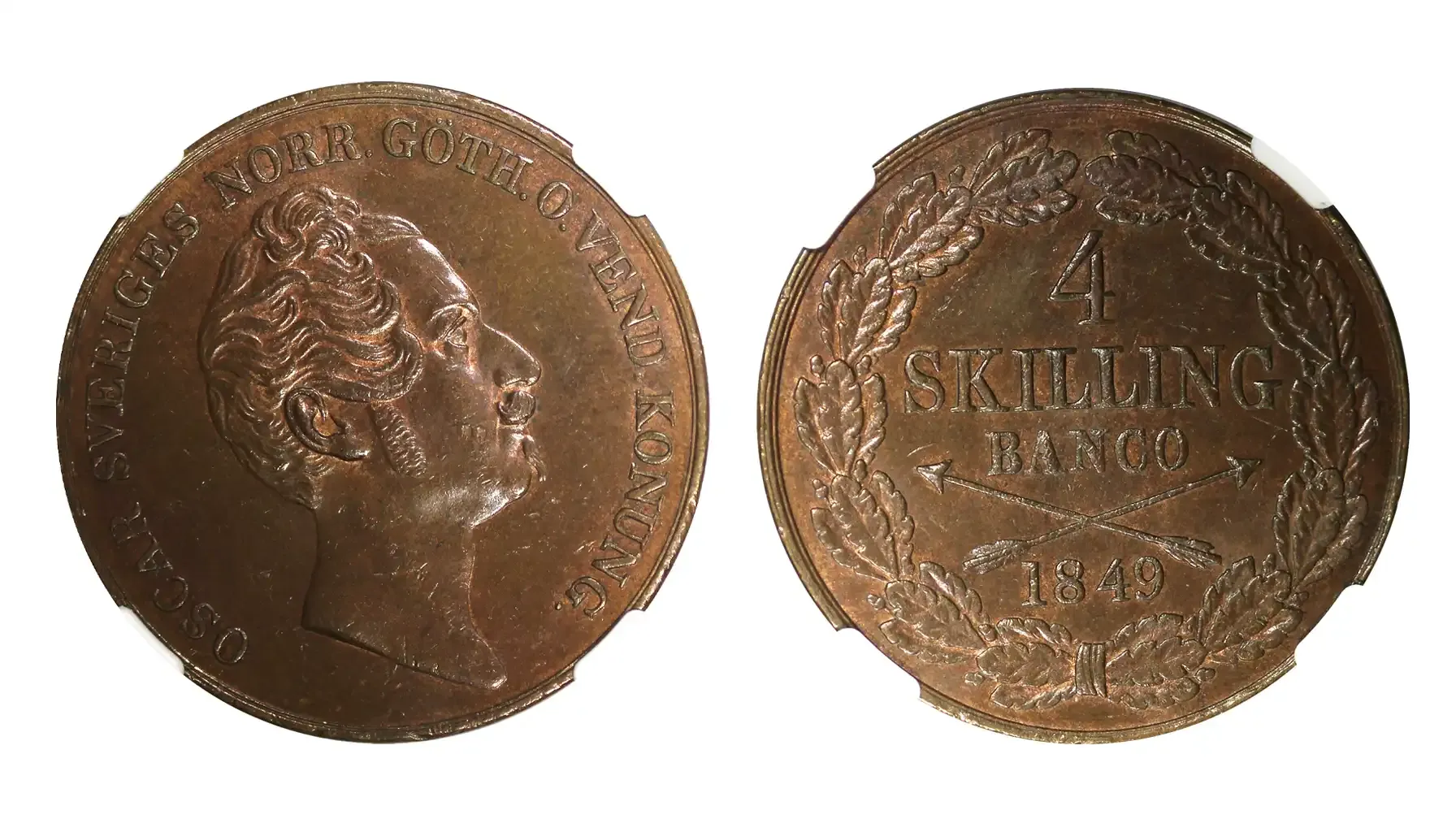
The Swedish krona symbol remains an important part of the design, appearing both on banknotes and on price tags in stores.
The main elements of Swedish coin relief:
Portrait of King Carl XVI Gustaf;
Crowns – one of the main heraldic symbols;
Smooth border and clear background;
Clear shadowing along the edges of the denomination numerals.
Each denomination is designed to differ from others not only in diameter but also in the color of the metal:
1 kr – light shade, thin edge;
2 kr – slightly warmer shade;
5 kr – a more massive and visually "flat" surface;
10 kr – a combination of a steel ring and a brass center.
Denomination | Composition | Weight | Diameter | Features |
1 kr | steel/brass | 3.6 g | 19.5 mm | minimalist relief |
2 kr | Cu–Ni | 4.8 g | 21.5 mm | two crowns |
5 kr | Cu–Ni | 6.1 g | 23.75 mm | large numerals |
10 kr | bimetal | 6.6 g | 20.5 mm | brass center |
Sometimes collections feature sets that group coins from different countries into a single category. In such cases, it's more convenient to use broader categories—including foreign coins—which helps you quickly see the overall structure of a collection.
“So cash fills a very specific role in the payment system, both because it’s issued by the state but also because it’s the only form of payment that we can use if the systems for electricity or communications networks don’t work as they usually do.”
— Max Brimberg, researcher at Sweden’s central bank
The article “Sweden and Norway rethink cashless society plans over Russia security fears”, The Guardian
Swedish Coins Value and Collectible Pieces
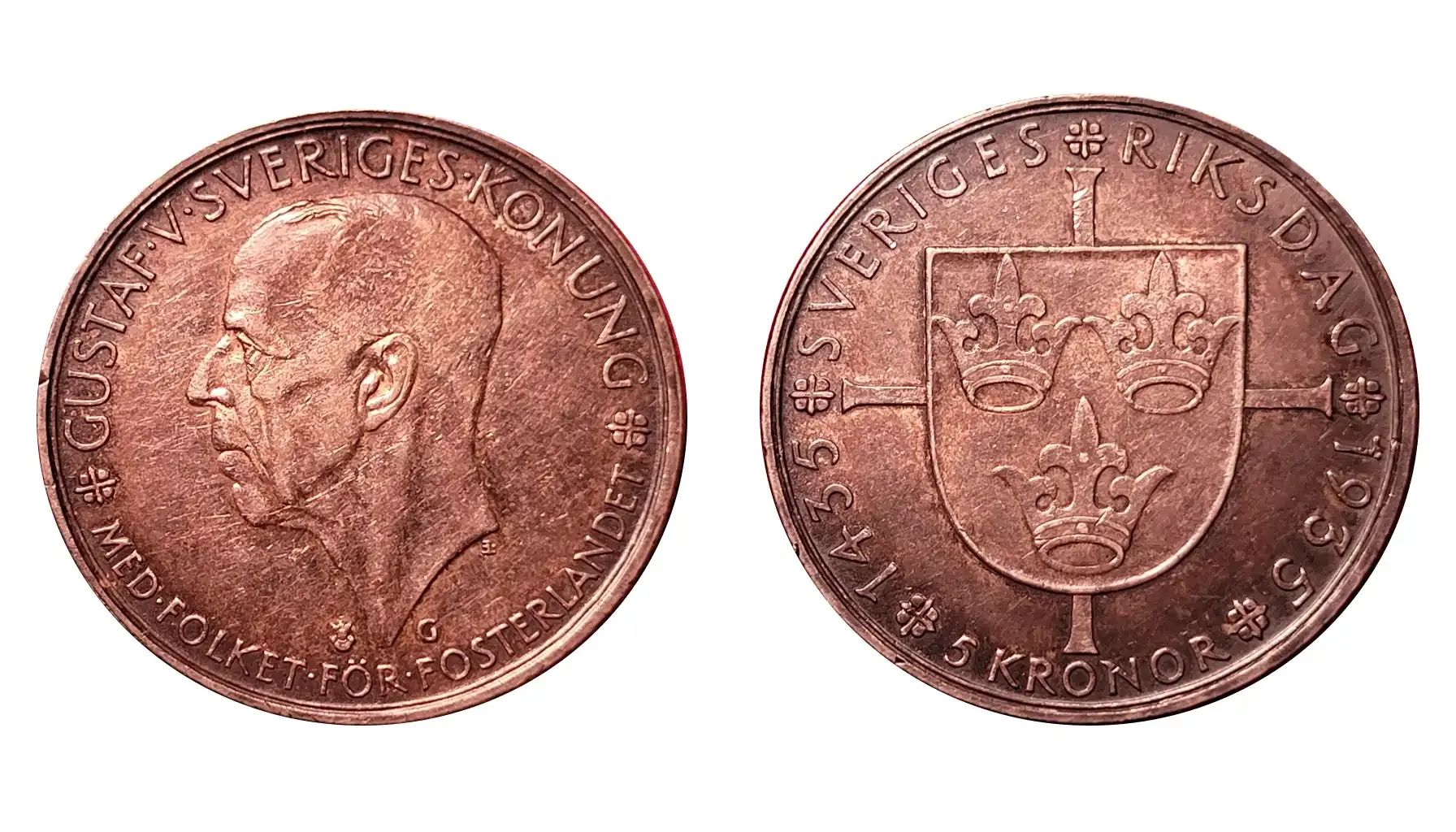
The value of Swedish money coins depends on:
the rarity of the batch and its actual availability on the market;
the condition of the surface, including luster and the absence of damage;
the metal composition and its preservation over time.
Early Swedish silver coins remain the most popular, as silver is the main factor driving price increases.
What collectors look for:
the definition of relief details and the overall clarity of the design;
the condition of the edge, including minor chips or deformations;
the presence of striking defects;
the rarity of the year and specific variety;
the compliance of weight and diameter with the stated standards, without any inconsistencies.
Price benchmarks are often compared to market dynamics in other countries, and looking at data on the Indian rupee is useful here, as such a parallel analysis helps better understand how the metal performs in different economic conditions.
Market values of popular coins:
Coin | Year | Composition | XF | UNC |
1 Kr | 1942 | Ag 40% | 8–12 USD | 18–30 USD |
2 Kr | 1952 | Ag 40% | 10–16 USD | 20–35 USD |
1 Kr | 1910 | Ag 80% | 25–40 USD | 60–100 USD |
10 Kr | 1991 | Cu–Ni | 3–5 USD | 6–10 USD |
Prices are current at the time of writing and are approximate.
If you want a quick sense of a coin’s value or just need to check its weight and diameter, the Coin ID Scanner app does the job fast. You take a photo, and it brings up the composition, the year, and an approximate price range. You can also save the coin in your digital collection so it doesn’t get lost among other finds.

 Facebook
  X (Twitter)
  Pinterest
  LinkedIn