Contents:
The rupee is a legendary currency for many reasons. The rupee alone is older than most nations, and ingrained in culture. Learning about such currency is important, not just for numismatists, but for historians and theists, too.
What is a rupee? How was it made, and what does it look like? This article will give this currency a proper overview from many sides.
Does it seem tedious to identify rare coins? Scanner apps could help you out. They need just a few seconds to give you a full coin overview.
What Is the Indian Rupee?

The Indian Rupee (INR) is the official currency of the Republic of India, issued and regulated by the Reserve Bank of India (RBI). The Indian rupee symbol is ₹.
The rupee is divided into 100 smaller units called paise, though due to inflation nowadays, coins of smaller denominations are rarely used in daily transactions.
Today, rupees are the most traded currencies in Asia. A reflection of India’s growing economic influence.
1₹1 Coin Specifications | |
Country | Republic of India |
Years of Minting | 2011 – Present (current series) |
Type | Circulating |
Shape | Round |
Edge | Smooth |
Metal Content | Ferritic Stainless Steel (mainly Iron ~83%, Chromium ~17%) |
Diameter | 20 mm |
Weight | 3.09 grams |
The Origin and History of the Indian Rupee
The history of the Indian rupee stretches back over 2,000 years. It is not exactly the oldest coin in the world, but among the world’s continuously used currencies, it is one of the oldest.
The term “rupee” originates from the Sanskrit word “rūpya”, meaning wrought silver or a coin of silver. Coins of such name existed even in the third century BC, but they are not directly tied to the Indian rupee we know today. The actual line, without much interruption and discrepancies, started more than 10 centuries later.
The first known type of takas was issued in the 16th century by Sher Shah Suri (1540–1545), the Afghan king of northern India. The silver coin was known as the “Rupiya”, weighing approximately 178 grains (11.53 grams).
Under British rule, the rupee became officially tied to the pound sterling (older AU bits, like 1920 pennies, were, too, tied, as were many colonies). After India gained independence in 1947, the government formally issued a new rupee in 1950 to replace the King George VI-designed currency.
Since then, there have been serial redesigns, demonetizations, and improvements in the rupee, the largest of which happened in late 2016, when the government abolished two large denomination forms of currency (1000 rupee and 500 rupee notes) for fear of counterfeit and corruption.
That is the “barebones” history of the currency. Many other stories surround a rupee: how it was used in other countries, like Kuwait, Bahrain, Qatar; how the government tried to turn it into a polymer banknote; and how the coins shrank with time down to 3 grams from 11.
The Indian Rupee Symbol Explained
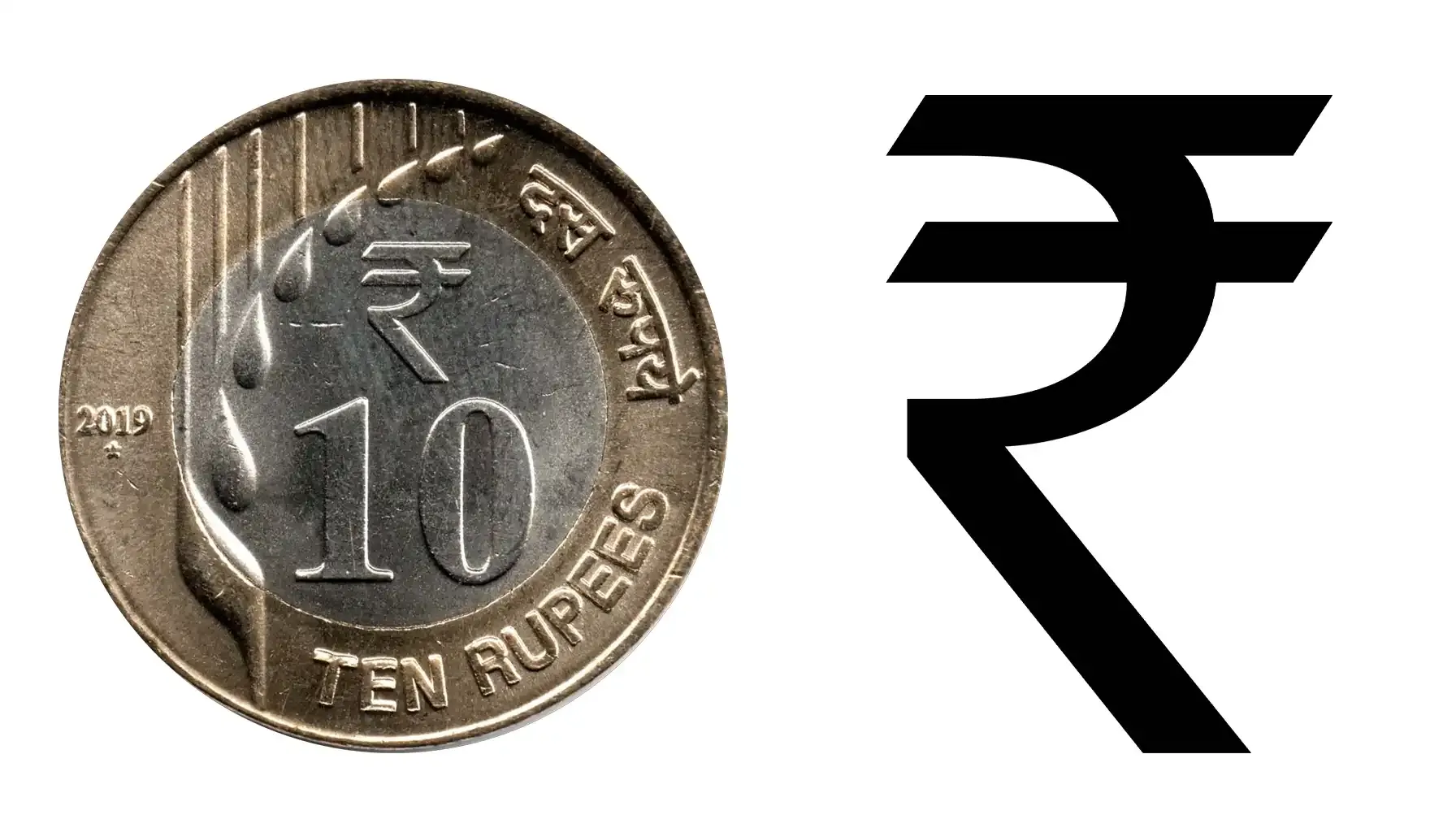
We are lucky to know what the ₹ rupee sign means. After all, not many currencies get to tell their sign origin and meaning. We still are not sure about where the dollar sign comes from, for example.
The symbol for the Indian Rupee (₹) was launched in 2010 and was designed by Udaya Kumar Dharmalingam, a design professor at IIT Guwahati. The ₹ symbol is derived from the Devanagari script letter "र" (Ra) + the upper case Latin letter "R," connecting Indian culture with the global economy.
The two parallel horizontal lines at the top represent the tricolor of the Indian flag and also stand for an equality sign. A reflection of the country’s desire for economic balance and stability.
The creation of the rupee symbol was a milestone in giving India’s currency a unique global identity, much like the dollar ($), euro (€), or yen (¥).
Indian Rupee Notes and Coins
Like almost any other currency, the Indian rupee is issued in notes and coins.
Type | Issuing Authority | Denominations | Notes / Coins Details |
The majority of Banknotes | Reserve Bank of India (RBI) | ₹10, ₹20, ₹50, ₹100, ₹200, ₹500, ₹2000 | ₹2000 notes are being gradually withdrawn. |
₹1 Banknote | Government of India | ₹1 | The ₹1 note is still printed by the Government of India, as an exception. |
Coins | Government of India | ₹1, ₹2, ₹5, ₹10, ₹20 | Minted in various metals; circulated widely for everyday transactions. |
With so many denominations and series, it’s next to impossible to give each series a proper look. Therefore, we will focus on the most basic model: a modern ₹1 banknote and a coin.
Let's start with the banknote:
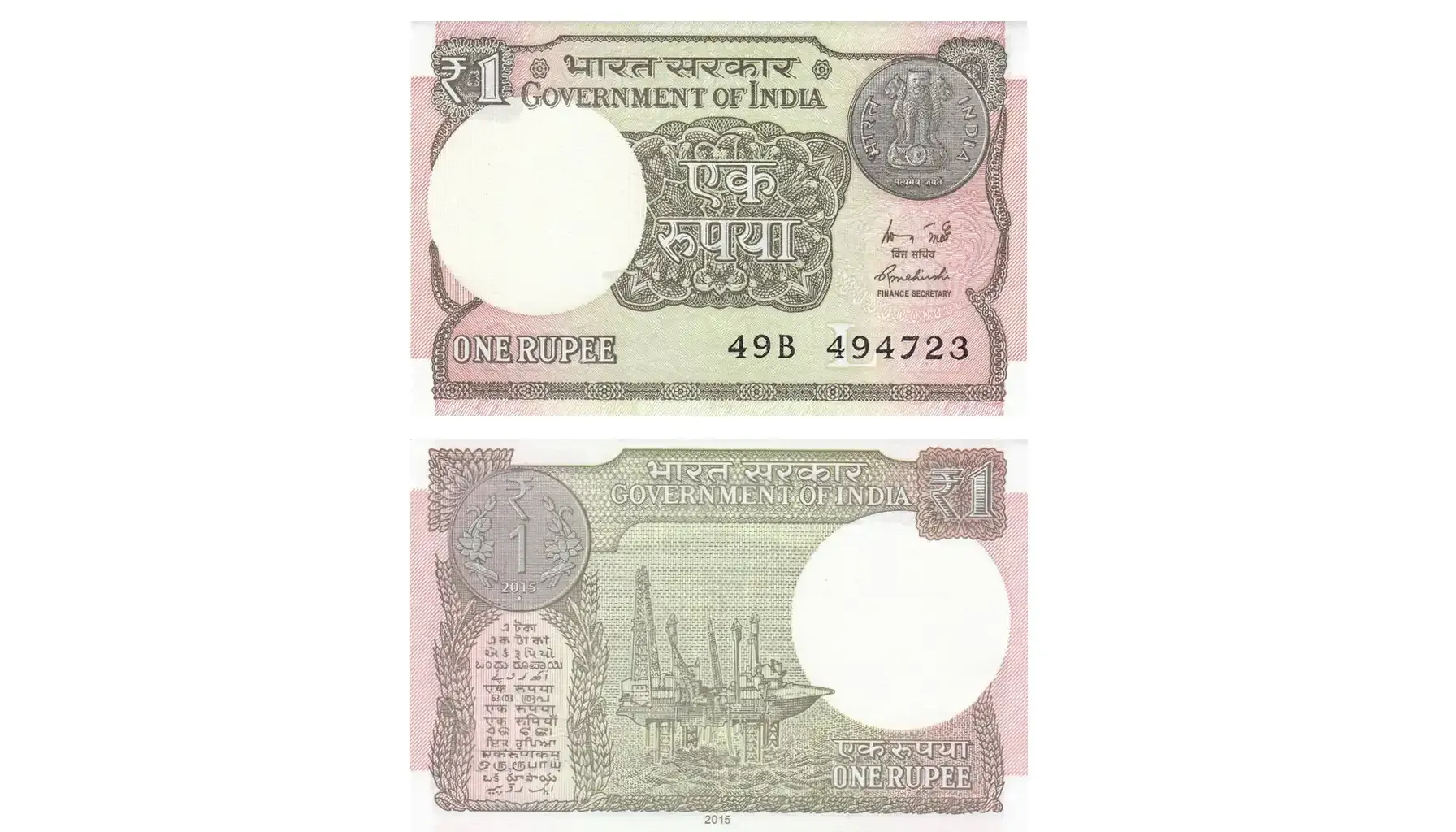
The ₹1 note’s obverse displays the numeral “1” in both English and Hindi. You will see the Lion Capital of Ashoka on the right, and inscriptions such as “भारत सरकार” (Government of India) and “Government of India” in English. The Lion Capital of Ashoka is a religious monument to Buddha.
The ₹1 note’s reverse features Sagar Samrat, India’s famous offshore oil drilling platform.A symbol of energy and industrial progress. The words “Government of India” and the denomination appear in 15 Indian languages: Assamese, Bengali, Gujarati, Kannada, Kashmiri, Konkani, Malayalam, etc.
The notes have common security features, like a watermark and a hidden numeral “1” visible under light. Not as progressive with security features like an Australian $5 Note, but good enough to fight most counterfeits.
Now, to the coin:
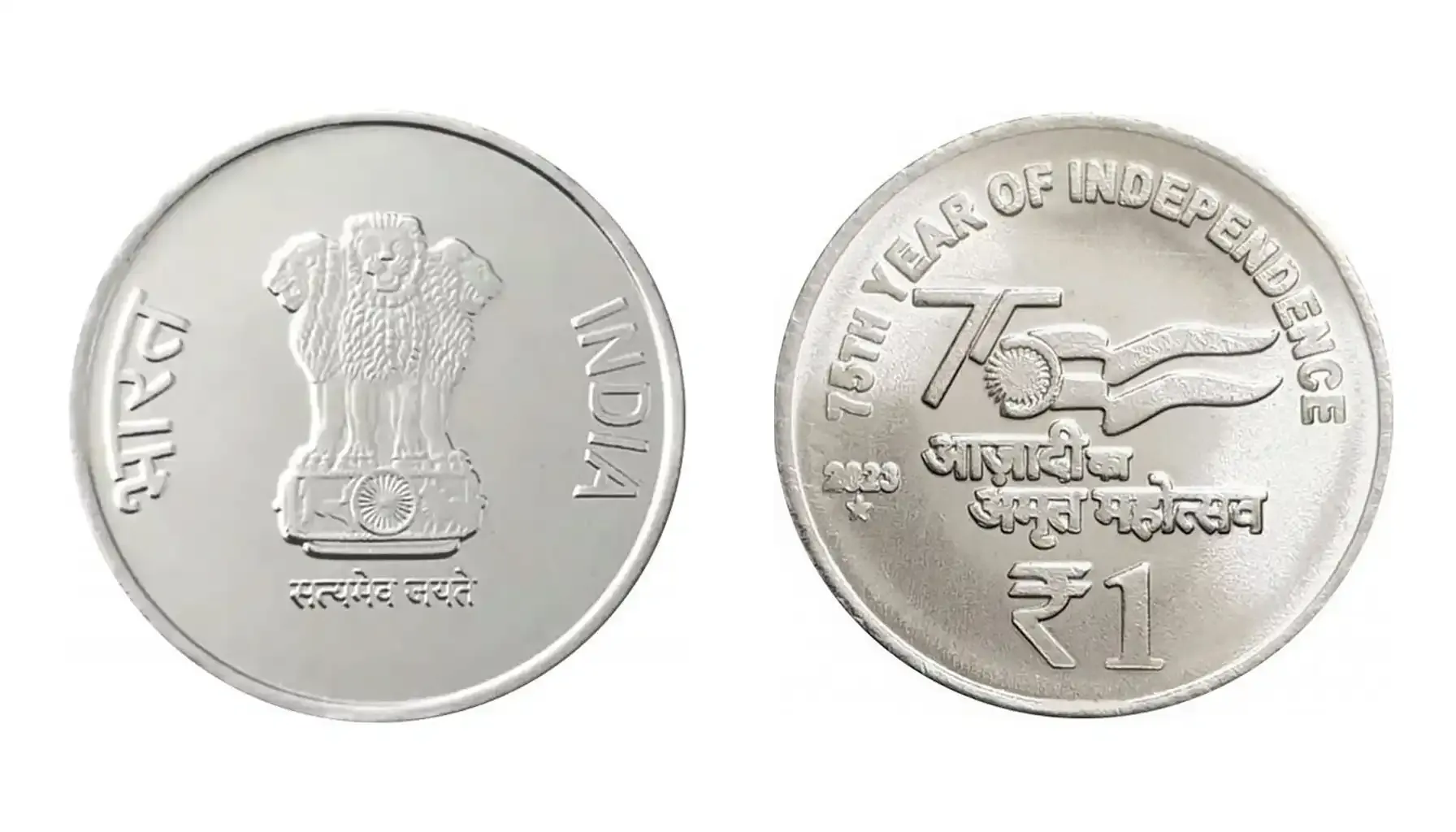
The ₹1 coin’s obverse features the Lion Capital of Ashoka at the center, with the motto “सत्यमेव जयते” (Satyameva Jayate) inscribed below it. The word “भारत” (Bharat) in Hindi is on the left, and “INDIA” in English on the right. The denomination “₹1” appears below.
The ₹1 coin’s reverse design currently celebrates the 75 anniversary of independence. You will see the “75 Years of Independence” inscription along with the Indian flag. The sign “₹1” is at the bottom, in big letters. This side varies slightly by mint year.
Conclusion
The India Rupee is now a currency and a national symbol. The government has ensured that the country's sovereignty, history, and economic aspirations are front and center in the design, the very sign. This currency went a long way from ancient silver coins to modern steel.
"I dream of Indian rupee as a reserve currency by 2047."
— Uday Kotak, Kotak Mahindra Bank MD and CEO
MONEYCONTROL News
As India continues to expand, perhaps we will hear and see more of this Asian currency.
Most Used Currencies
For now, in the list of the most used currencies, it still has some way up:
Rank | Currency | Iso Code | Approx. % Of Daily Trade Volume |
1 | U.S. Dollar | USD | 89.2% |
2 | Euro | EUR | 28.9% |
3 | Japanese Yen | JPY | 16.8% |
4 | British Pound Sterling | GBP | 10.2% |
5 | Chinese Renminbi (Yuan) | CNY | 8.5% |
6 | Swiss Franc | CHF | 6.4% |
7 | Australian Dollar | AUD | 6.1% |
8 | Canadian Dollar | CAD | 5.8% |
9 | Hong Kong Dollar | HKD | 3.8% |
10 | Singapore Dollar | SGD | 2.4% |
11 | Indian Rupee | INR | 1.9% |
12 | South Korean Won | KRW | 1.8% |
13 | Swedish Krona | SEK | 1.6% |
14 | Mexican Peso | MXN | 1.6% |
15 | New Zealand Dollar | NZD | 1.5% |
You could learn more about the coins around the world with the Coin ID Scanner. This app has a ginormous database with coins from all around the world in time: Ancient Greece, modern Japan, medieval England, and more.

 Facebook
  X (Twitter)
  Pinterest
  LinkedIn