Contents:
This coin is among the most expensive coins ever sold. And how much is it worth? First things first. Open any US coin chart, and you will see it. Gorgeous. Stunning. Expensive.
Introduction to the 1933 Double Eagle Coin
It is a $20 gold coin struck by the United States Mint at the end of the U.S. gold coin era.
In 1933, more than 445,000 coins were minted, but none were released to the public. A small number left the Mint before destruction. Only one coin was officially legalized for private ownership. It was sold at auction for a record price.
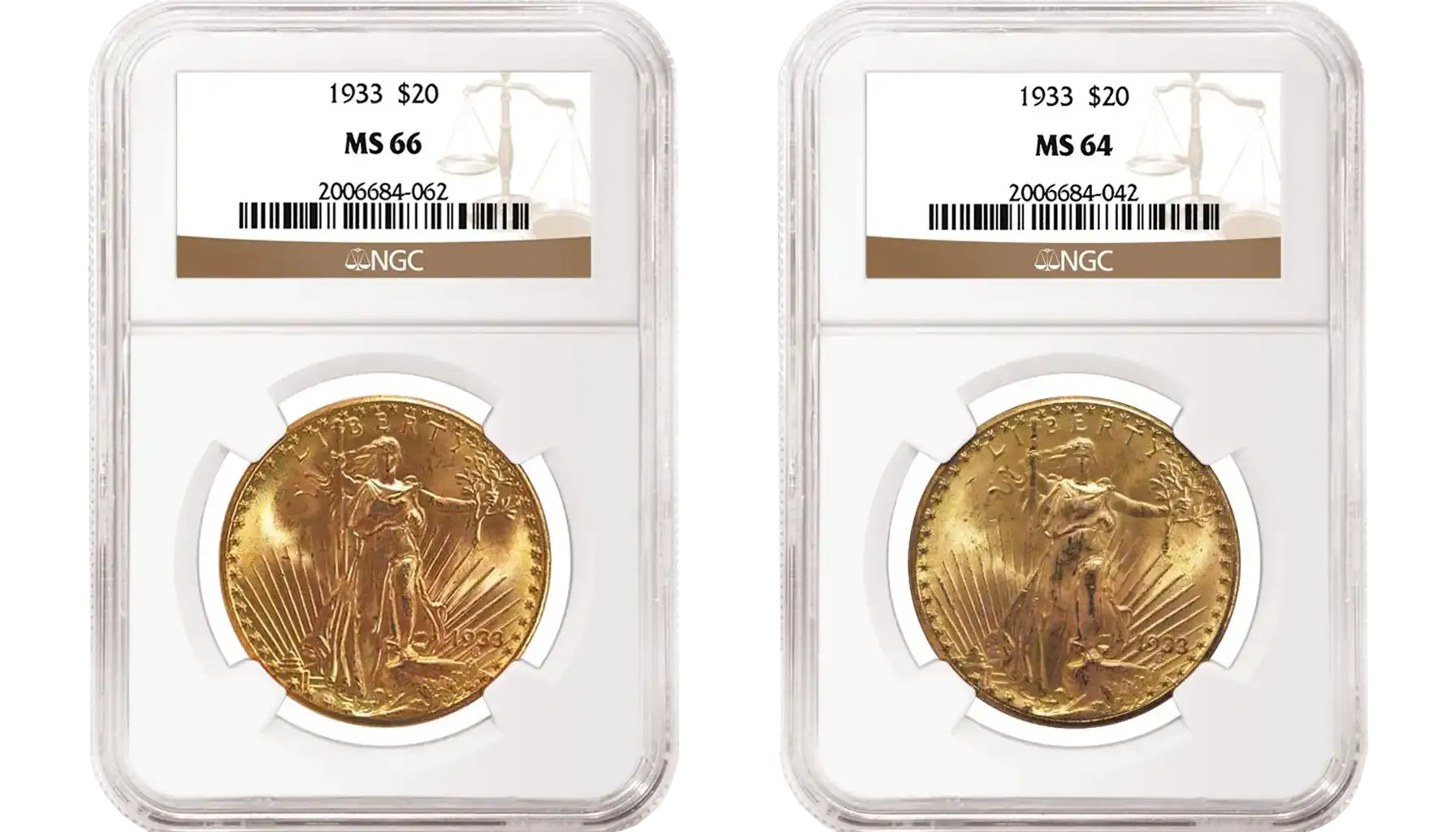
Here is the 1933 Double Eagle coin image.
History and Background of the 1933 Saint-Gaudens Double Eagle
By the early 1930s, gold coins were rarely used in everyday transactions and were held mainly by banks and the Treasury.
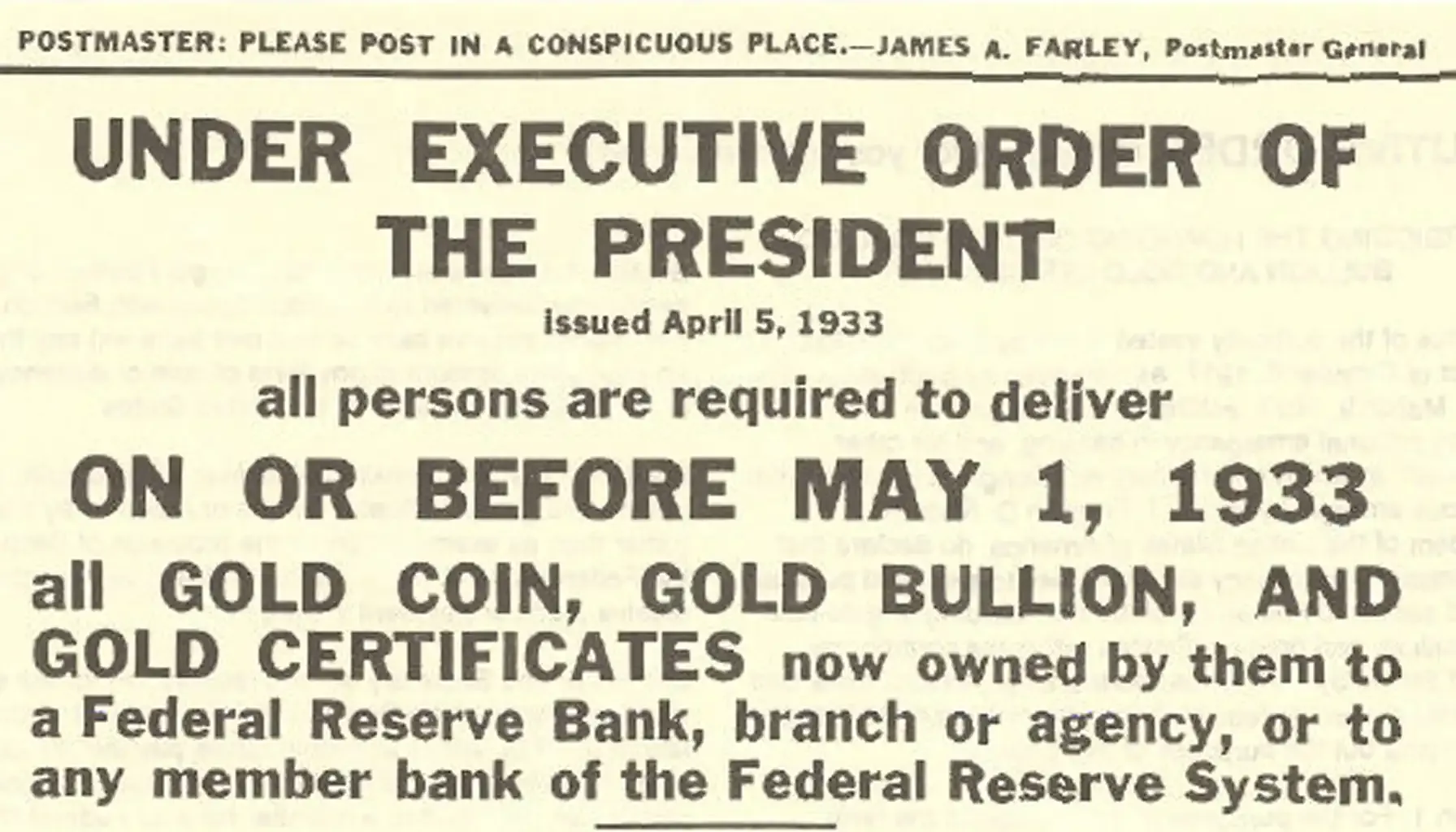
In 1933, the country was in the middle of the Great Depression. Bank failures and gold withdrawals put heavy pressure on the financial system. After taking office, Franklin D. Roosevelt moved to take control of the nation’s gold reserves. Executive orders required most gold coins to be turned in and removed gold from circulation as money.
That same year, 445,500 Double Eagles dated 1933 were minted, but none were officially released. They remained inside the Mint vaults. Later in 1933, the Mint was instructed to melt unreleased gold coins. Nearly all 1933 Saint Gaudens Double Eagle specimens were destroyed and converted into gold bars.
A small number left the Mint without authorization. When they surfaced years later, the government ruled that they had never been legally issued and therefore remained federal property. Most known examples were recovered and placed in government collections.
One piece was later legalized through a settlement and formally issued as money. All other known pieces are still considered government-owned.
Design and Specifications of the 1933 Double Eagle
Denomination | $20 |
Series | |
Designer | Augustus Saint-Gaudens |
Composition | 90% gold, 10% copper |
Total weight | 33.436 g |
Fine gold content | 0.9675 troy oz |
Diameter | 34.0 mm |
Edge | Lettered: “E PLURIBUS UNUM” |
Obverse | Liberty holding torch and olive branch, rising sun in background |
Reverse | Flying eagle with rays of the sun |
Mint location | Philadelphia |
Mintage | 445,500 (none officially released) |
Rarity and Proofs of Authenticity
The rarity of the 1933 Double Eagle is legal, not numeric. Only one specimen is legal for private ownership; all other known examples are held by the government.
For most U.S. coins, authenticity means confirming metal, weight, and strike. For the Double Eagle 1933, it also requires legal status. A genuine specimen can still be illegal to own.
What Counts as a 1933 Gold Double Eagle Proof of Authenticity
Documented provenance tracing the history through recognized holdings or court records
Formal monetization by the U.S. government (applies only to the single legal example)
Expert examination confirming correct dies, metal content, and strike characteristics
Archival references linking the piece to known, documented specimens
Others Are Illegal to Own
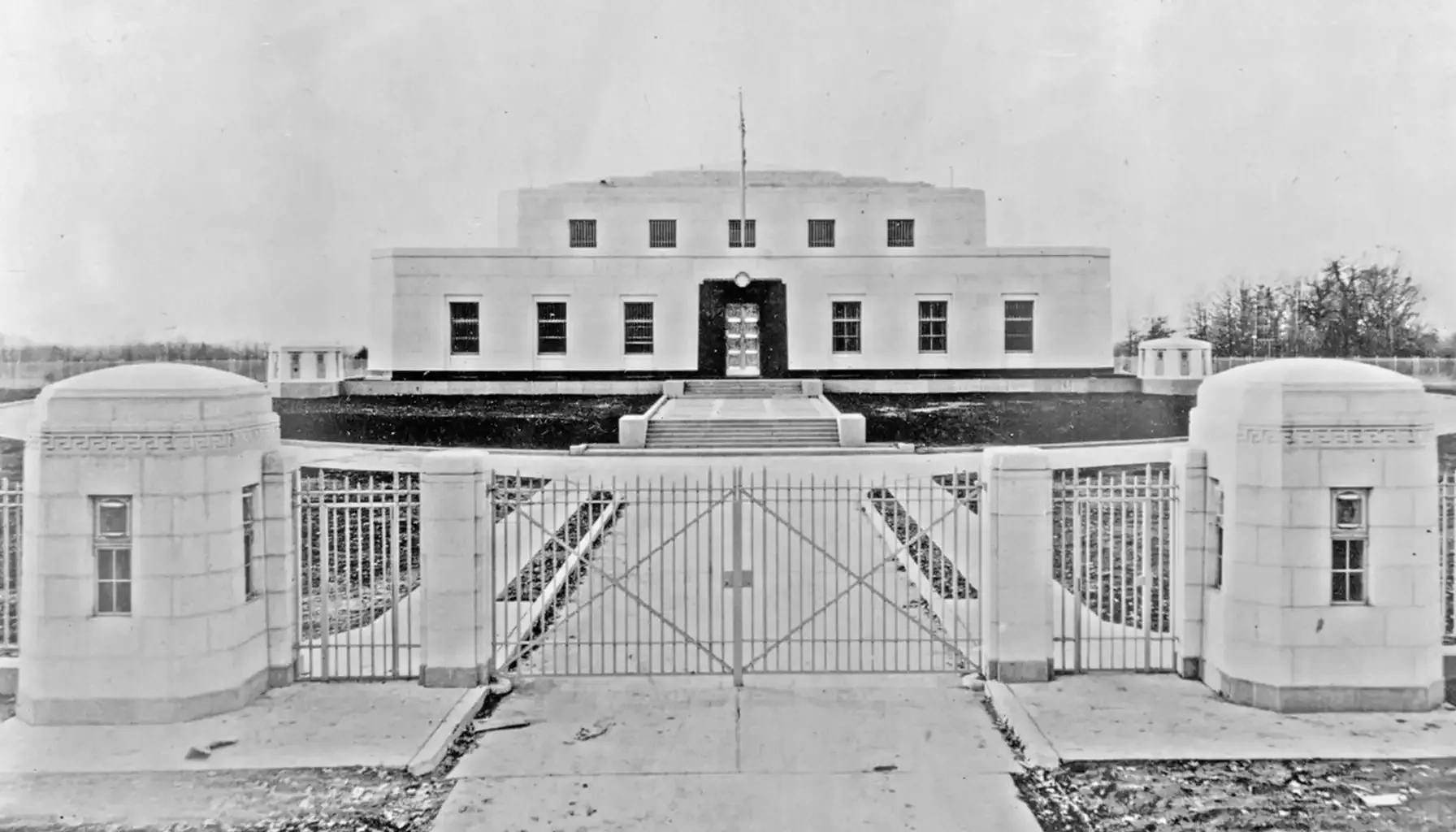
Most specimens were melted down, but a small number left Mint control through authorized and unauthorized channels.
One example entered the collection of King Farouk of Egypt and received an export license. It was scheduled for sale at a 1954 Sotheby’s auction, but the U.S. government requested its withdrawal. The coin then disappeared until 1996, when it resurfaced during a U.S. Secret Service sting operation.
This discovery led to a legal settlement and a 2002 auction, where the so-called Farouk specimen was declared the only Double Eagle coin 1933 legal for private ownership. At that time, two additional examples were held by the National Numismatic Collection at the Smithsonian Institution.
In later years, additional pieces appeared, including 10 coins claimed by the Langbord family, inherited from Israel “Izzy” Switt, identified by Sotheby’s as a key figure in the 1944 investigation. After extended litigation, all were ruled government property and remain illegal to own privately.
At the close of the 2002 auction, Sotheby’s reported that the Director of the U.S. Mint signed a Certificate of Monetization, accepting $20 in face value and authorizing the issuance of one single coin. It was sold again in 2021, with the auction announced on March 10 and covered by The New York Times the following day. Owner Stuart Weitzman cited estate planning as the reason for the sale.
Market Value and Auction Records of 1933 Double Eagles
The single legally owned 1933 Double Eagle was sold on June 8, 2021, in New York City at Sotheby’s auction for $18,872,250. This remains one of the highest prices ever realized for a U.S. coin.
Why the 1933 Double Eagle Coin Value Is Exceptional
It is the only Double Eagle from 1933 legal for private ownership.
Its history is tied to major U.S. monetary policy changes in the 1930s.
“Bidding slowed down once a bid of $16.75 million was taken on the phone from a specialist in the firm’s Impressionist and Modern department, and Doller brought down the gavel after five minutes of spirited bidding for a final price realized of $18,872,250 (originally stated as $19,509,750).”
— Steve Roach, Coin World’s editor-at-large
1933 Double Eagle Tops $18.8 Million for New Record, Coin World
Other Specimens
Other 1933 Double Eagles have appeared in private hands over the decades, but they were either seized by the government or their ownership was contested because they were never officially released. These pieces do not carry legal title and thus do not have any recognized market 1933 Double Eagle gold coin value in the normal sense.
Because there is only one legally tradable example, it does not have a price range like typical rare coins. Its 1933 Double Eagle value is set by exceptional auction performance and collectors’ willingness to pay record sums for a truly one-of-a-kind item.

Collecting Tips and Considerations for Investors
Understand the Legal Landscape
The 1933 Double Eagle is unlike other U.S. specimens. Only one example is legal for private ownership. Any discussion of value or acquisition must start with legal status, not rarity or gold content.
Focus on Provenance
For this issue, provenance outweighs condition. Verified court records, government monetization, and auction documentation are essential. Without them, a coin—however genuine—has no lawful market.
Track Auction History
Standard price guides do not apply. Value is established by exceptional auction results and collector demand for a singular artifact, not by comparable sales.
Set Realistic Expectations
There is no liquid market or entry-level path. Investment exposure is limited to institutions or ultra-high-end collectors.
Risk Awareness
Legal risk is absolute. Ownership claims without government approval can result in seizure. Due diligence is non-negotiable.
Coin ID Scanner
The app helps identify which coin you have. What if you really own this rare specimen? You better check it right now!

 Facebook
  X (Twitter)
  Pinterest
  LinkedIn