Contents:
Panama is one of the few countries that has not just one, but two official currencies. Balboa Panama coins are one of these two currencies.
What is your coin collection value? Scanner apps can help you identify the values and even recreate your collection digitally.
Overview of the Panama Balboa Coin
The Panamanian balboa is the official currency of Panama, alongside the dollar. While Balboa may not have a dollar sign and a big name like the latter currency, Balboa has a deep national meaning to Panama.
Panama has an interesting situation. The country issues its currencies in separate forms. The dollars stay in their paper (banknote) forms, and balboa are only used as coins. There is also a subdenomination called centésimo, used for smaller-scale purchases:
Denomination | Local Equivalent | Material / Notes |
1 Centésimo | Penny equivalent | Copper-nickel |
5 Centésimos | Nickel equivalent | |
10 Centésimos | Dime equivalent | |
25 Centésimos | Quarter equivalent | |
50 Centésimos | Half-dollar equivalent | |
1 Balboa | Dollar equivalent |
What is the Panama Balboa coin value? Nowadays, it is low, relative to face value. A trend that goes for almost any other copper coin nowadays. However, certain older issues are more valuable. We will have to dive into this currency’s past.
History of the Panamanian Balboa
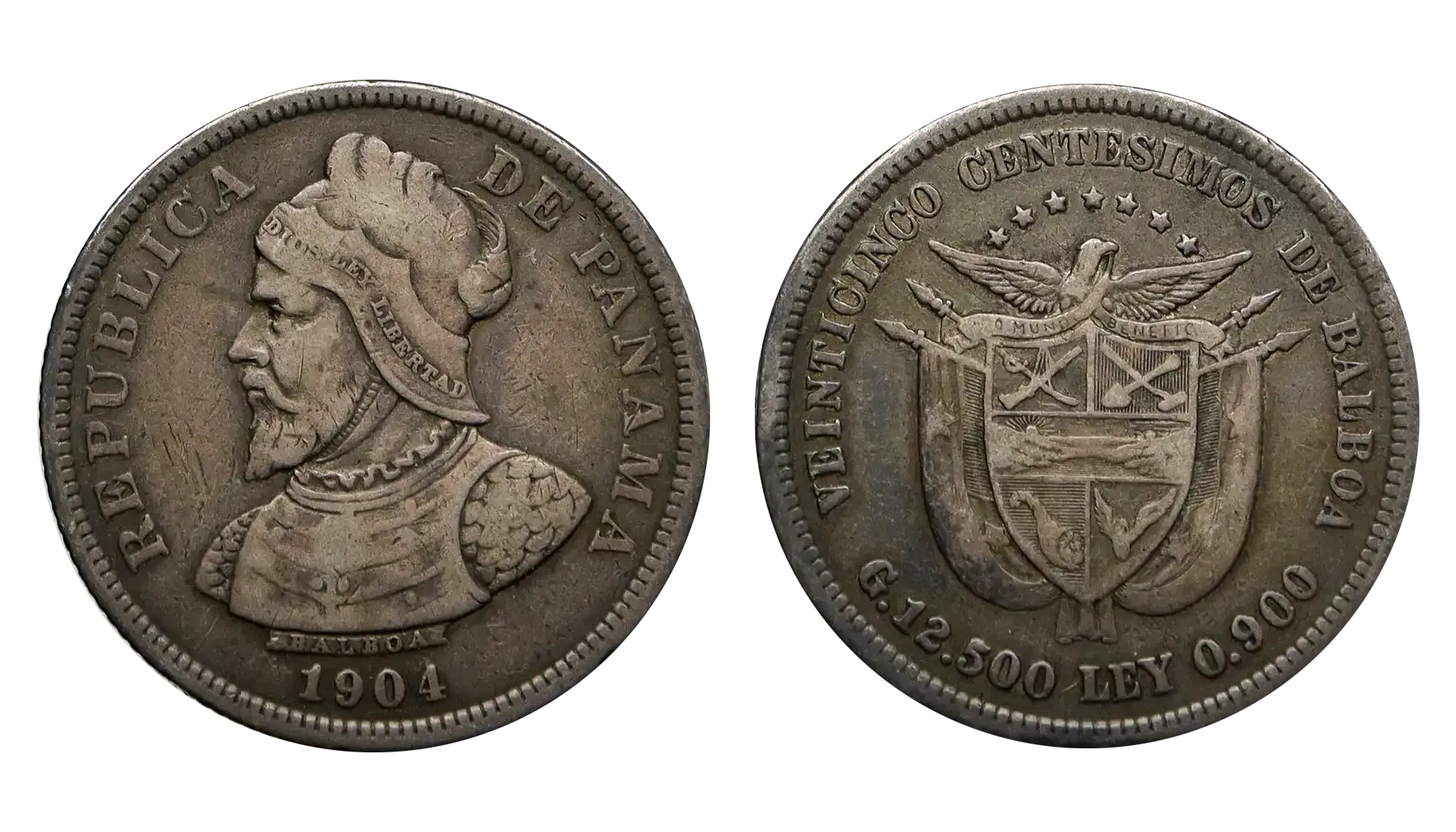
The Panamanian balboa was introduced in 1904, a year after Panama gained independence from Colombia.
From the beginning, Panama strived to create a monetary system closely aligned with that of the United States. The U.S. was involved in Panama’s independence and the construction of the Panama Canal, so fondness was understandable. As a result, the balboa was pegged to the U.S. dollar, and the dollar became the second currency.
The very first issue (in 1904) was the Balboa silver coin, a valuable coin nowadays. Panama coins' balboa value for these silver issues is $130+.
The latter issues adopted bimetallism and became cupronickel. The same material is used today in Panama, too. Functional, but not valuable.
Balboa Coins of Panama
Where does the name Balboa come from? The currency was named in honor of Vasco Núñez de Balboa. He was a Spanish explorer and a colonist.
“He was the first European to see the vast body of water that separates North and South America from Asia, claimed it for the Spanish crown, and established the first permanent European settlement in Panama, Santa María la Antigua del Darién. Balboa’s discovery opened the way for international trade and colonization...”
— US First Exchange
Official Website
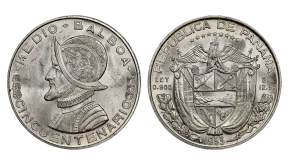
Vasco Núñez’s image remains one of the most iconic features on vn balboa coins. Vasco Núñez usually appears on the obverse side. He is typically depicted wearing a helmet. This design has remained largely consistent since the early 20th century.
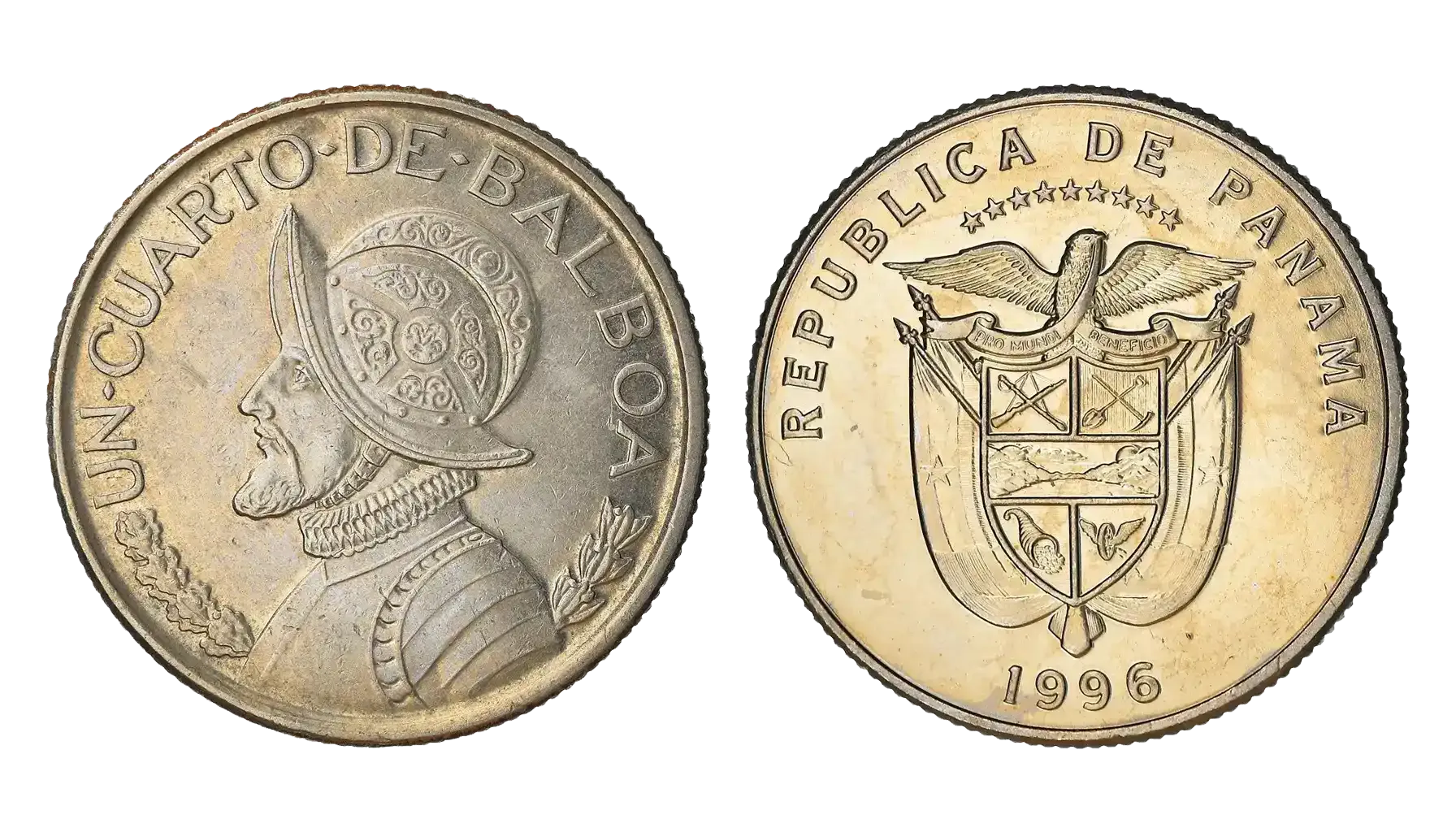
The reverse commonly shows the coat of arms of Panama. The shield, stars, and tools around the coat of arms represent the nation’s independence, labor, and peace.
Many bits also display bilingual or Spanish-language inscriptions as a way to reinforce the national identity. Think about the Dei Gratia Regina motto from British bits.
Identifying Panamanian Balboa Coins
To identify any bit, you need to know its size, weight, metal composition, and design elements. In technical terms, the currency is similar to the U.S. denominations. For example, the vn cvarto de balboa coin would be similar to the U.S. quarter. Now let’s look at the basic denomination and its specifications:
1 Balboa Specifications | |
Country (Issuer) | Republic of Panama |
Years of Minting | 1904–present |
Type | Standard circulation |
Shape | Round |
Diameter | 26.5 mm |
Metal Composition | Copper-nickel |
Weight (Total) | 7.2 grams |
The portrait of Vasco Núñez is a defining feature of many issues. The Panamanian coat of arms is another common design element. Finally, the inscriptions such as “República de Panamá”, “Centésimos”, or “Un Balboa” can help distinguish different issues and varieties.
Conclusion
After gaining its independence, Panama seemingly built its monetary system with the help of its neighbor, the U.S. Who knows, perhaps we will hear more from this collaboration in times to come.
Coin ID Scanner is an app that lets you scan dollars, euros, yen, and countless other denominations. After a quick scan, the app presents you with comprehensive information about the coin. A collector needs to know everything about the piece they own, and this app can help you with that.

 Facebook
  X (Twitter)
  Pinterest
  LinkedIn