Contents:
Pennies are perhaps the smallest denomination, but by no means ordinary. This denomination is encountered across continents, generations, and countries. Penny is a legendary denomination, but will it always stay with us? That is the question.
Is the penny being discontinued? Some collectors are anxious that it is. Today, we will solve this question and tell you about the fate of this small yet important denomination.
Do you know that apps can identify coins now? These apps have huge databases and recognize coinage in mere seconds.
Penny History and Evolution
Why won’t we have an overview of this denomination first?
The first U.S. pennies were minted in 1793, shortly after the establishment of the U.S. Mint. The initial design, known as the "Chain Cent," featured a chain of 13 links symbolizing the unity of the original 13 colonies. These coins were larger and made of pure copper. Don’t confuse it with the similarly designed 1794 Flowing Hair Dollar.
In 1909, to commemorate Abraham Lincoln's 100th birthday, the U.S. Mint introduced the Lincoln cent, likely the most famous series. This was the first U.S. coin to feature a real person's portrait, marking a significant departure from previous designs.
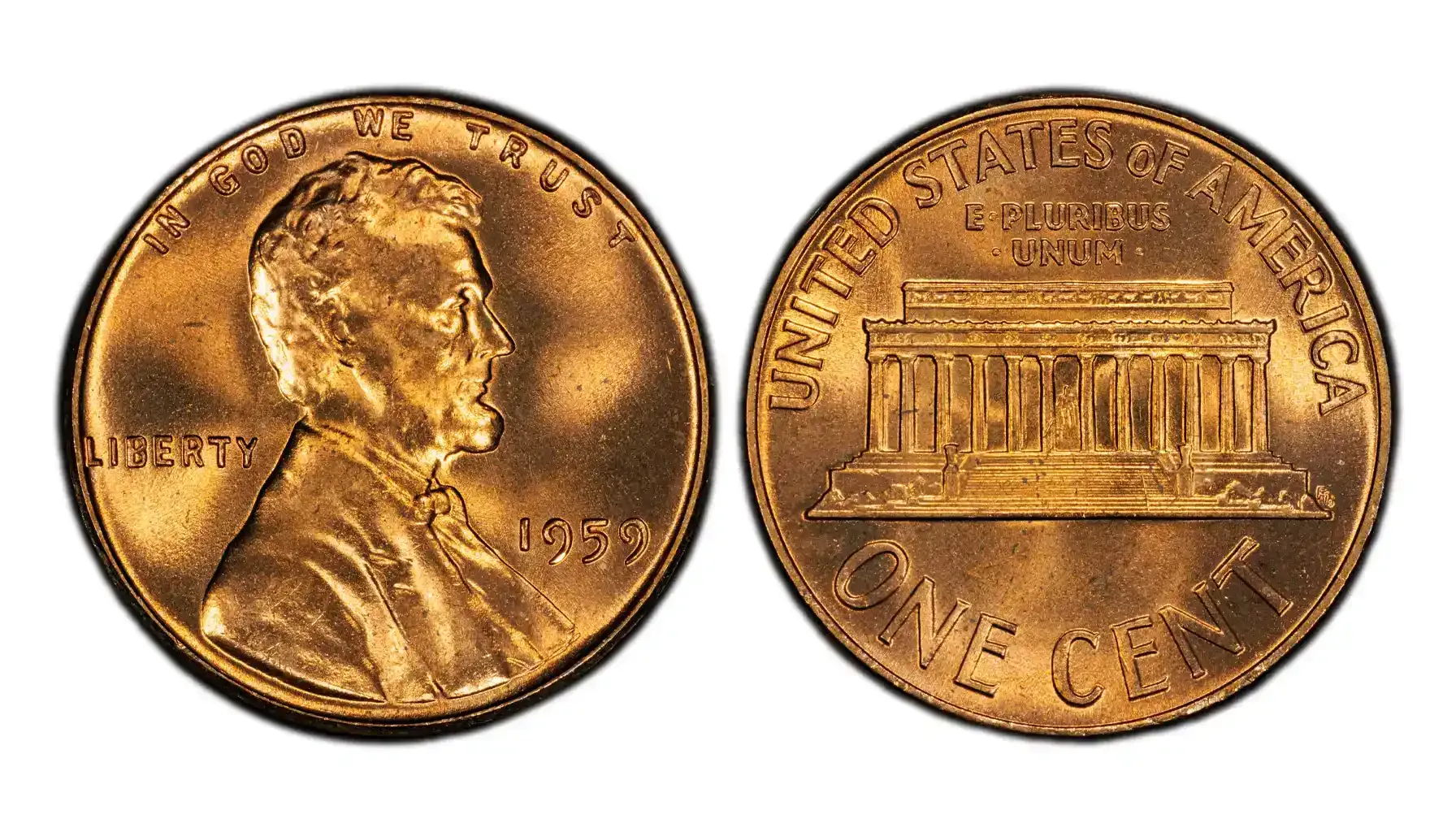
In 1982, due to rising copper prices, the penny's composition was changed to 97.5% zinc and 2.5% copper. The design also evolved, with the reverse side changing from the wheat ears to the Lincoln Memorial in 1959, and later to the Union Shield in 2010.
And now we are in 2025, with the Lincoln cent.
US Cent Series
Throughout these centuries, a few penny series came out of the American presses:
1. Large Cents (1793–1857). The very first U.S. cents were much larger than today’s penny and made primarily of pure copper:
Flowing Hair Cent (1793–1796) – the earliest circulating design.
Draped Bust Cent (1796–1807)
Classic Head and Matron Head Cent (1808–1839)
Braided Hair Cent (1839–1857)
2. Flying Eagle Cent (1856–1858):
Smaller than the large cent, made of 88% copper and 12% nickel. The most popular example is the 1857 Flying Eagle.
Designed to be easier to carry and more practical for commerce, but were discontinued soon precisely because they were not ideally practical.
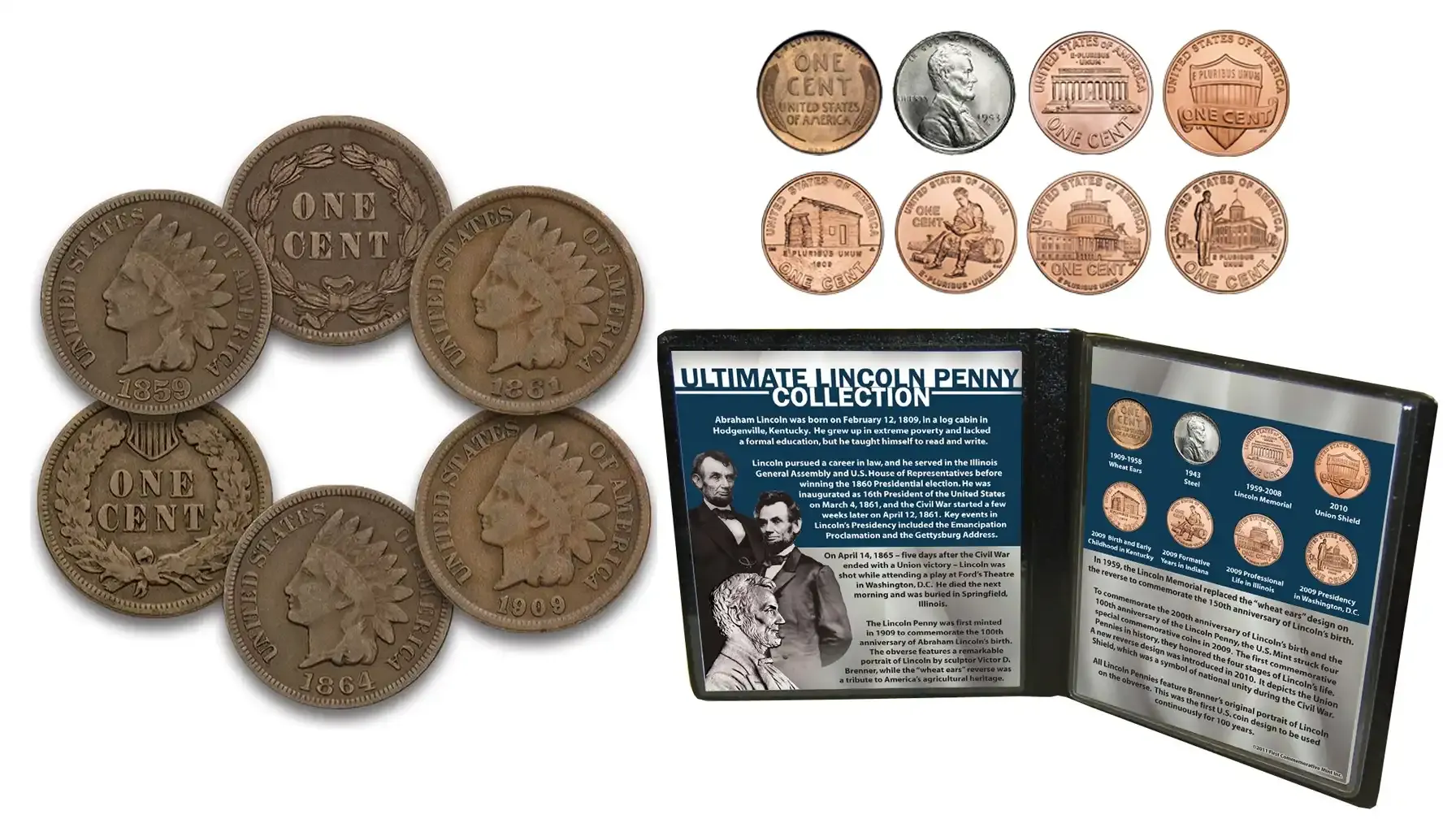
3. Indian Head Cent (1859–1909):
Featured Liberty wearing a Native American headdress on the obverse. More practical and simpler to make.
Initially bronze, but later made from 95% copper and 5% tin, and zinc.
4. Lincoln Cent / Penny (1909–Present):
Introduced to commemorate Abraham Lincoln’s 100th birthday.
Had different designs through the years: Wheat Ears (1909–1958), Lincoln Memorial (1959–2008), and Union Shield (2010–Present). Technically, there were more designs, all under the commemorative 2009 Penny, issued to celebrate the 200 years of Lincoln.
Fun faсt: Copper has always been used for pennies in some capacity, but there was one exclusion. During World War II, in 1943, copper was needed for the war effort, leading the U.S. Mint to produce pennies from zinc-coated steel. Such 1943 Steel pennies are a big rarity nowadays.
Why the US Might Lose Pennies
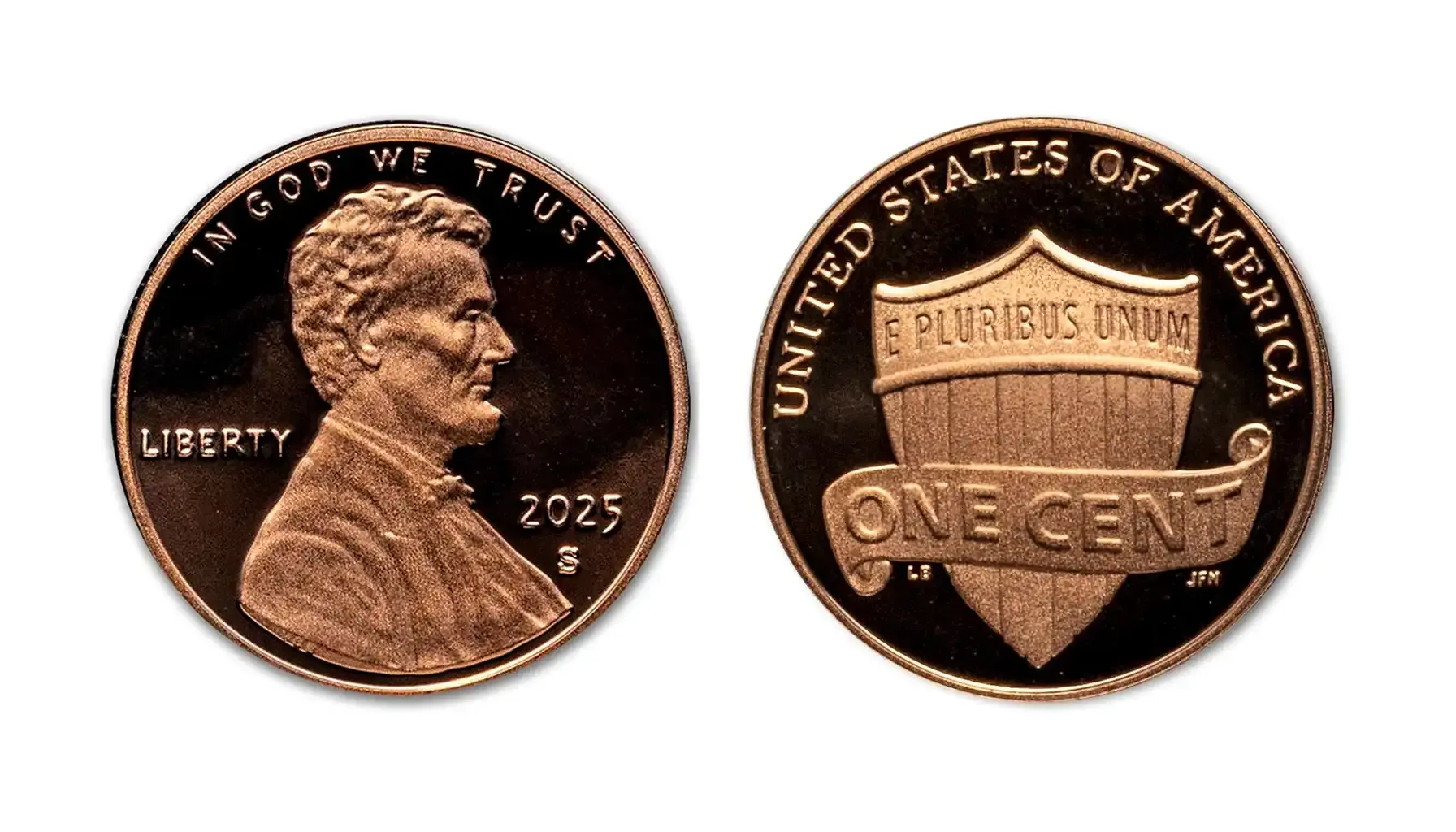
Recently, there has been talk that the US Mint might discontinue pennies. It’s not just a rumor, as big channels and news platforms like CNN are talking about it.
Such an idea is not a whim. There is a practical reason why the US Mint would want to stop issuing this denomination.
In 2025, here is what the US president Donald Trump said: “For far too long, the United States has minted pennies which literally cost us more than 2 cents. This is so wasteful! I have instructed my Secretary of the US Treasury to stop producing new pennies…”
While not all monetary system decisions the President took were supported by the public (for example, postponing the issue of the Harriet Tubman $20 Bill), there is truth in his words. This small denomination puts big pressure on the monetary system.
Here is why the US Treasury wants to discontinue cents:
1. High Production Costs
It costs the U.S. Mint about 3.7 cents to produce a single penny, more than its face value of 1 cent. This creates a net loss for the government every time a penny is made.
2. Declining Purchasing Power
A cent today buys very little. In fact, its purchasing power has dropped by over 95% since 1950.
3. Inefficiency in Transactions
Most cash transactions don’t rely on pennies anymore, so they are becoming increasingly obsolete in everyday commerce.
Businesses spend time counting and managing pennies, which is inefficient.
The rise of digital payments and contactless transactions reduces the need for coins in general, especially low-denomination coins like pennies.
If the penny is discontinued, cash transactions can be rounded to the nearest five cents, a practice already in place in countries like Canada and Australia with similar low-value coins.
US Penny Fate

Is the penny going to be discontinued?
Yes, the US Mint confirmed in 2025 that from the beginning of 2026, they will stop making new pennies. The U.S. Mint estimates that not making pennies will save the US budget $56 million.
While the penny will no longer be produced, it will remain legal tender and continue to circulate. However, businesses are expected to round cash transactions to the nearest five cents once the existing supply of pennies is exhausted.
If you remember, 5 cents is a nickel, making the new lowest denomination.
Will this decision do good for the economy? Only time can tell. The collectors could find advantage in this situation, as a 2025 penny, which would otherwise not be much of note, could become the last of the series, boosting its numismatic value.
Who knows? Maybe one day cents could return, or the Treasury will rethink and decide to continue circulating, but as of now, we should prepare to say goodbye.
Coin ID Scanner
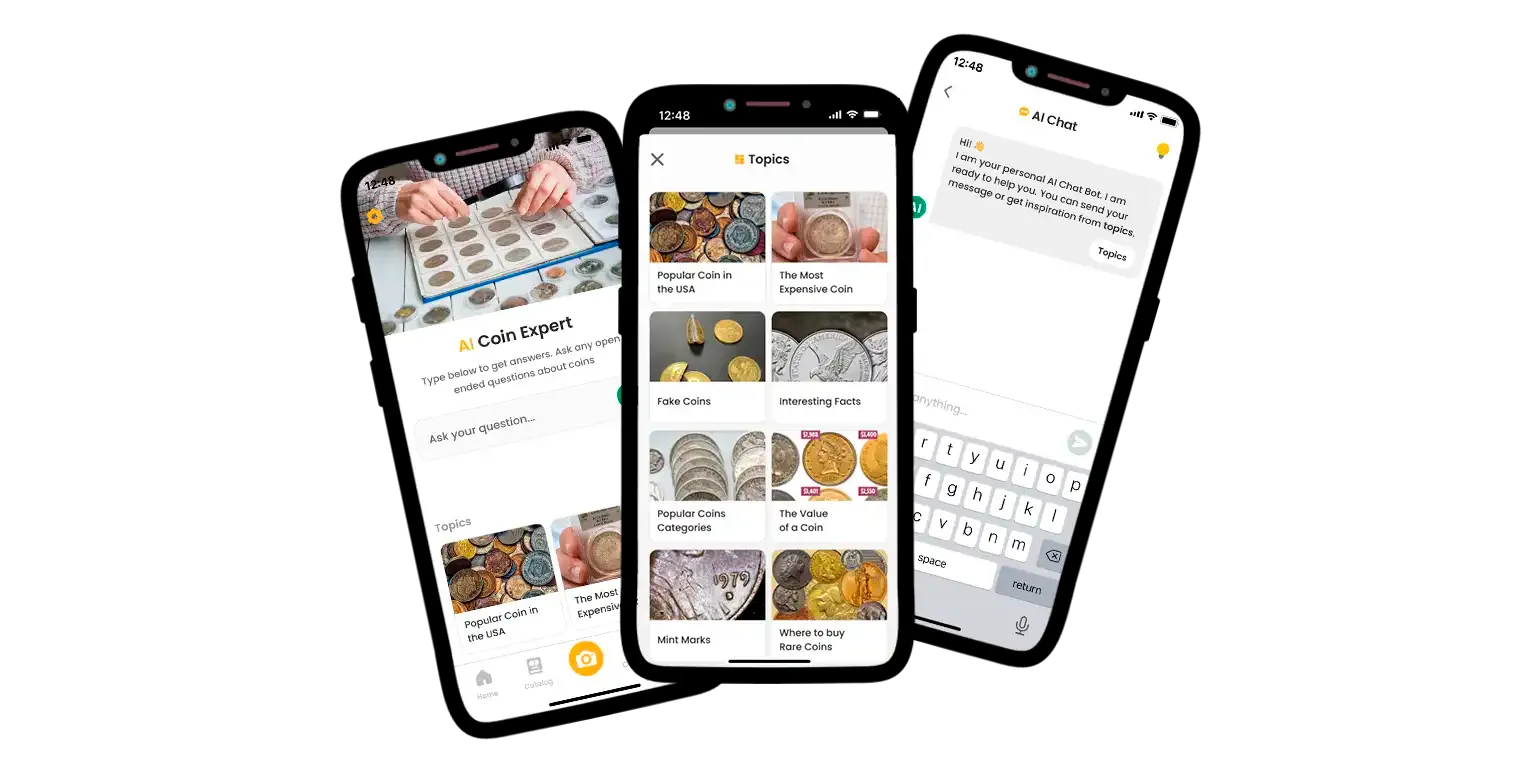
Coin ID Scanner is a mobile app designed to help users identify and value coins using their phone’s camera. It’s available for both iPhone and Android devices.
What does this app do? It does many things, from identification to guiding:
Value Estimation: After identifying the coin, the app provides an estimated market value. Estimates are based on historical sales, online listings, and average condition ranges.
Coin Collection Management: Users can build a digital collection within the app. You can save images, identification data, and personal notes for each coin. The app organizes coins by type, country, or year, helping track what you own and what you’re missing.
Search and Database Access: The app includes a database of roughly 150,000 coins covering ancient, modern, and commemorative issues. You can search manually by year, denomination, or keyword, or rely on automatic recognition.
AI Assistant / Consultant: The app features an AI chat tool that can answer coin-related questions. You can ask about a coin’s history, metal content, or numismatic context.
Are you intrigued? You can download Coin ID Scanner on your device today, free of charge!
FAQ
What Is the Most Valuable Cent in the US?
The 1793 Flowing Hair Large Cent is considered the most valuable U.S. penny. Some rare Lincoln cents, like the 1909-S VDB or the 1943 copper penny, can also fetch hundreds of thousands of dollars at auctions, depending on condition. Value depends heavily on rarity, condition, and historical significance.
Will the Penny Be Discontinued in the US in 2025?
Yes, the U.S. The Treasury Department has announced plans to cease production of the cent by early 2026. This decision was supported by President Donald Trump, who cited the rising cost of manufacturing the coin, leading to an annual loss of approximately $56 million.
Will I Be Able to Pay with Cents in 2026?
Yes, but with limits. Cent will remain legal tender, so you can still use them for transactions. However, cash transactions may be rounded to the nearest five cents, as businesses phase out routine use of pennies.
Does Canada Still Have Pennies?
No. Canada is similar to the US in the monetary system, but Canada officially phased out the penny in 2013. Cash transactions in Canada are now rounded to the nearest five cents, though electronic payments still calculate exact amounts.

 Facebook
  X (Twitter)
  Pinterest
  LinkedIn