Contents:
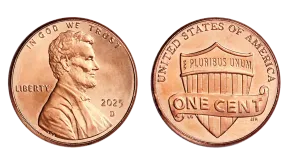
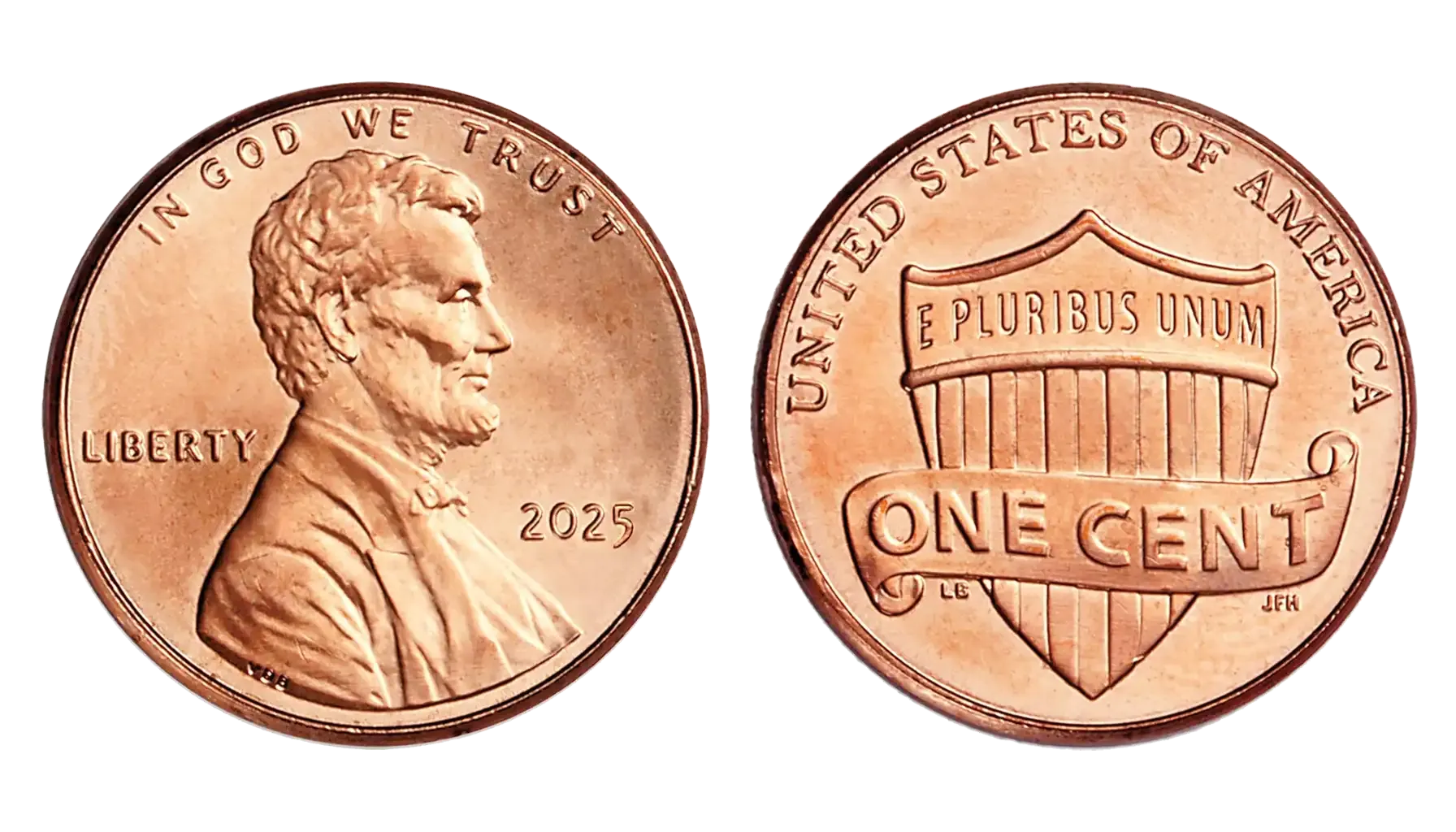
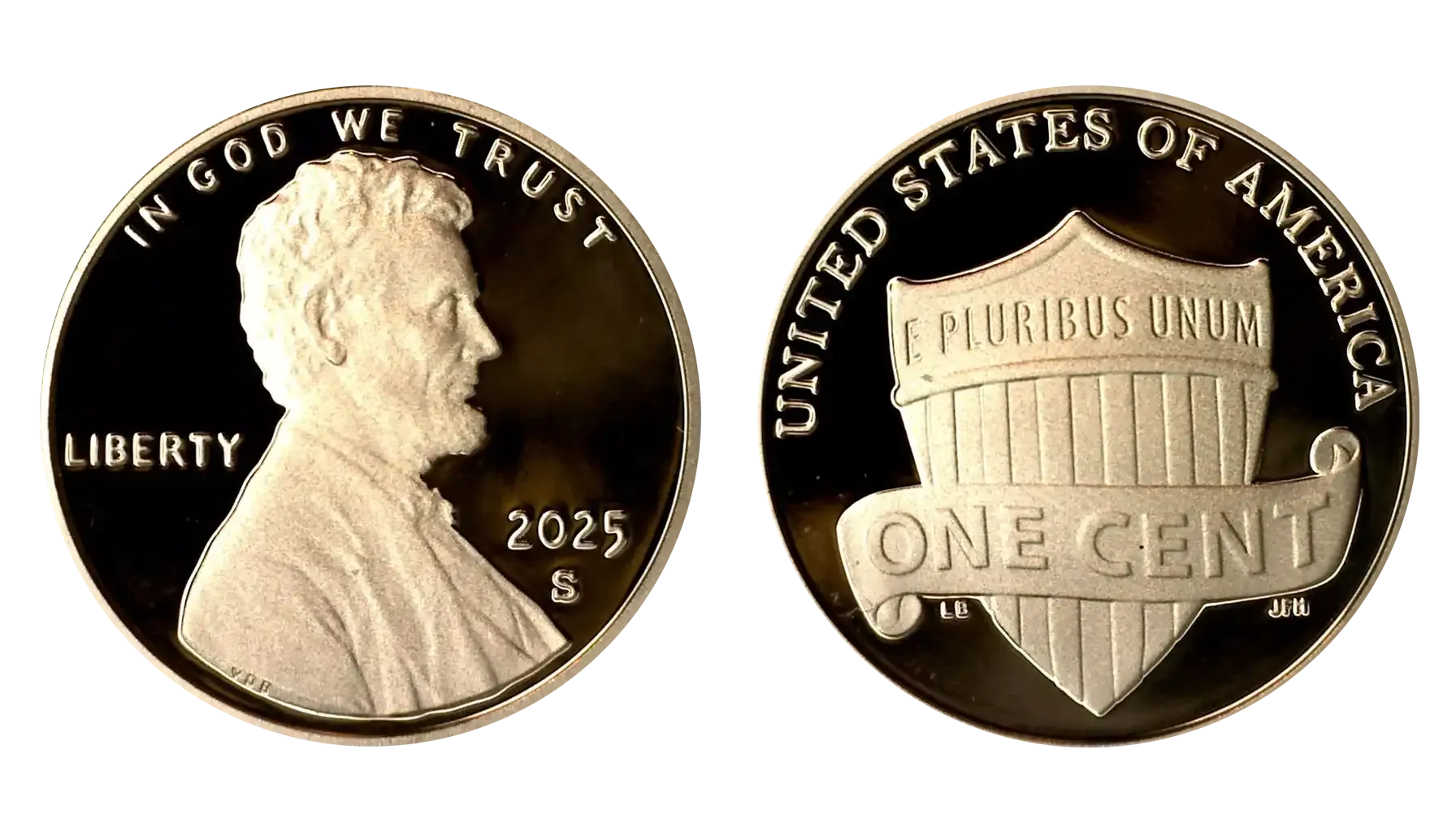
Is there a 2025 penny? Yes! It’s the U.S. one-cent coin, part of the long-running Lincoln cent series. It continues to feature Abraham Lincoln’s portrait on the obverse, first introduced in 1909.
The reverse still carries the Union Shield design, introduced in 2010, which replaced the Lincoln Memorial design that had run from 1959 through 2008.
In terms of specifications, the 2025 penny is made of 97.5% zinc and 2.5% copper plating, weighs 2.5 grams, measures 19.05 mm in diameter, and has a plain edge. It is struck at the Philadelphia and Denver mints for circulation, with proofs made in San Francisco.
But how much is a 2025 penny worth? Moreover, is there a free app to scan coins for value?

2025 Penny Release Date USA
The 2025 Lincoln penny does not have a single ceremonial “release date.” Instead, the U.S. Mint typically begins striking coins for the new year in late December of the previous year, and they enter circulation gradually through banks and the Federal Reserve in early January 2025.
Here’s the schedule for 2025 proof penny sets:
2025 Uncirculated Coin Set (“Mint Set”) went on sale July 17, 2025 at noon ET.
2025 Proof Set is scheduled for release on March 4, 2025.
2025 Silver Proof Set will be available August 7, 2025 at noon ET.
2025 Penny Mintage
The U.S. Mint posts circulating-coin production totals monthly; when the December 2025 data goes up (early January 2026), you can derive the full-year 2025 penny mintage. Minor revisions can follow later in the Mint’s annual reporting.
Through August 2025, there is the latest data available:
Mint | Type | Mintage |
Philadelphia | Circulation (no mint mark) | ~754.6 million |
Denver (D) | Circulation | ~545.8 million |
San Francisco (S) | Proof | ~0.5 – 1.0 million (est.) |
Total | — | ~1.3 billion circulation + <1 million proofs |
The Philadelphia and Denver mintage numbers are confirmed through August 2025, while the San Francisco proof cent figure is an estimate based on typical proof set sales (usually in the hundreds of thousands, sometimes near one million annually). Final proof mintage will be published by the Mint after the full year closes.
2025 Penny Value
Coin | Grade | Value (USD) |
Regular 2025 Shield Cent (no mint mark / Philadelphia) | Good / Circulated | ≈ $0.01 (face value) |
Fine / Very Fine | ≈ $0.05 – $0.20 | |
About Uncirculated (AU) | ≈ $0.20 – $0.50 | |
Mint State (MS-60 to MS-63, Red / Red-Brown) | ≈ $0.50 – $5.00 | |
Higher Mint State (MS-65+) | ≈ $5 – $24 (possibly more in gem condition) | |
2025 D Penny Value (Denver) | Circulated | ≈ $0.01 – $0.10 |
Mint State (MS-60 to MS-63) | ≈ $0.50 – $5.00 | |
Higher Mint State (MS-65+) | ≈ $5 – $24+ | |
2025 S Penny Proof | Proof in lower grades | ≈ $10 – $50 |
High proof grades (PR-69 / PR-70, Deep Cameo) | ≈ $150 – $300+ (or more for exceptional pieces) kcgoldsilver.com | |
2025 Penny Error / Varieties (die chips, doubled dies, missing plating, etc.) | Minor errors, circulated | ≈ $5 – $20 |
Bigger errors or high-grade error varieties | ≈ $50 – $200+ depending on rarity and appeal |
Disclaimer: The “regular” and “mint state” values are based on listings from coin value guides for the 2025 Shield cent series. These are estimated values—not guarantees. Actual sale prices can be higher or lower depending on demand, condition, provenance, and market trends. Try to check it in the Coin ID Scanner app!
Error Coins
Even though the 2025 US penny is brand new, error coins do exist, just as with nearly every modern U.S. cent issue. They are not intentional varieties, but the result of mistakes in minting or planchet preparation.
The kinds of errors you might see include:
Off-center strikes — where part of the design is missing because the blank was misaligned during striking.
Clipped planchets — coins missing a curved or straight section at the edge due to mis-cut blanks.
Die cracks and cuds — raised lines or blobs of extra metal caused by worn or broken dies.
Doubled dies — parts of the design (like lettering or the date) show doubling from a hubbing misalignment, though these are rare in modern cents.
Missing or thin plating — since today’s pennies are zinc with a thin copper layer, plating defects can expose the silvery zinc core.
Struck-through errors — foreign material (like grease or wire) interferes with the strike and leaves impressions or gaps.
So far in 2025, no major new variety like the “Wide AM” type of the late 1990s has been confirmed, but error examples have already appeared in circulation.
2025 Penny Rolls for Sale
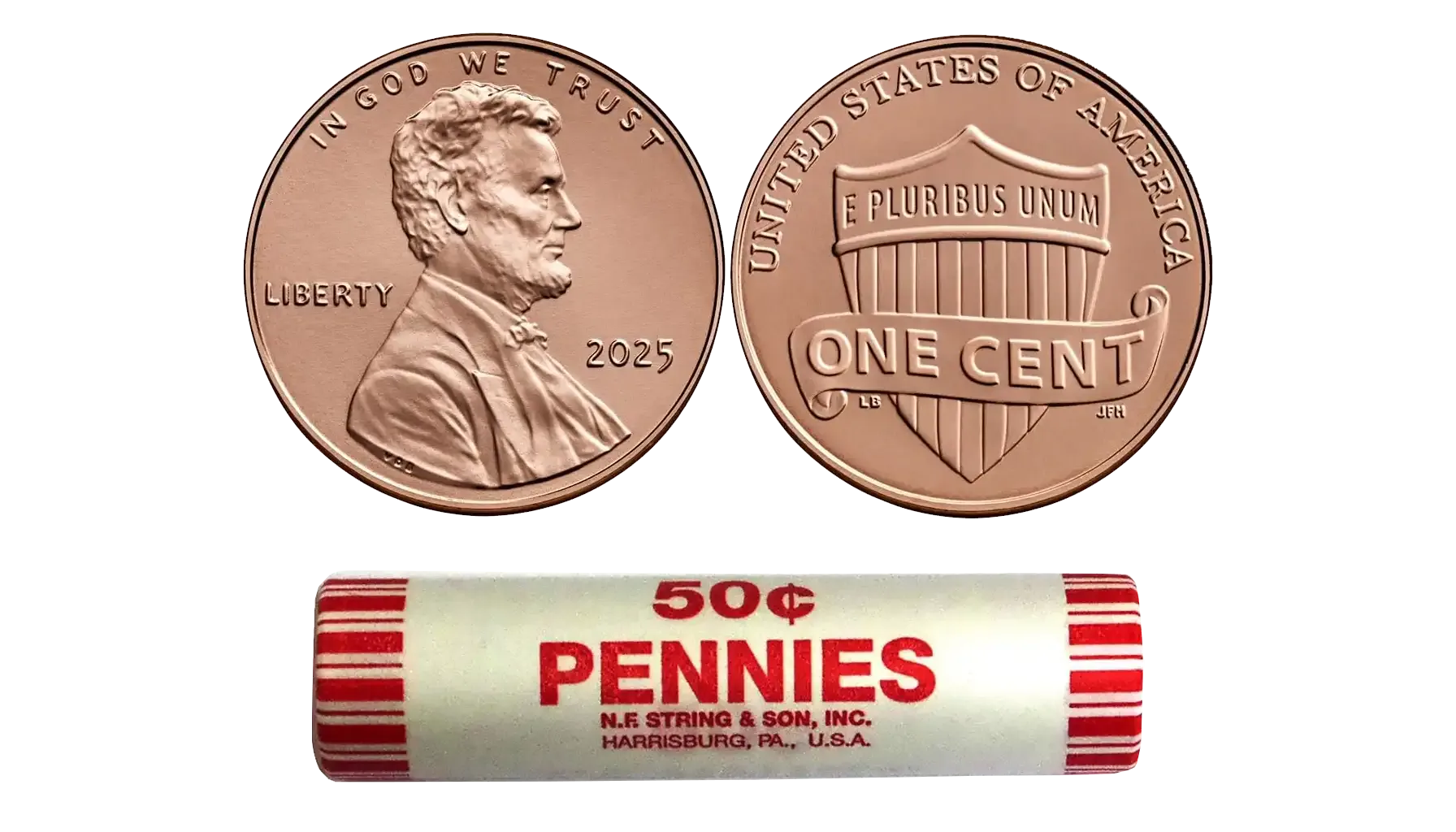
A 2025 penny roll is one of the easiest and most affordable ways to own the newest issue of the Lincoln cent. Each penny roll contains 50 coins, usually in fresh uncirculated condition straight from the Mint or bank-wrapped in original paper. Collectors and dealers often sell them at a small premium above face value, since the rolls are both a convenient way to store coins and a chance to find high-grade examples or minting errors.
The most direct source is the U.S. Mint, which releases rolls as part of its annual product line, often paired with larger bags and boxes. These rolls tend to sell out quickly when demand is high.
Large coin dealers also stock 2025 penny for sale in rolls shortly after release. Online marketplaces frequently have listings as well, ranging from single rolls to bulk lots.
Interesting Fact!
How much does it cost to make a penny in 2025?
In 2025, the U.S. Mint reports that it costs about 3.69 cents to produce and distribute each one-cent coin. That figure includes the price of raw materials, labor, energy, and distribution, all of which have risen in recent years due to higher zinc and copper costs as well as general inflation.
This means that every new penny leaves the Mint at a net loss of more than two cents per coin. Multiplied by the more than a billion pennies struck each year, the gap adds up to tens of millions of dollars in losses for the government. This situation is not new—the Mint has consistently reported negative margins on both pennies and nickels for over a decade.
This ongoing imbalance fuels the debate about whether the penny should remain in circulation. Critics argue that it wastes taxpayer money, while supporters say it is an important part of U.S. tradition and helps keep pricing precise.

 Facebook
  X (Twitter)
  Pinterest
  LinkedIn